Where Is Kyoto Nightlife Concentrated: Kiyamachi, Pontocho, Gion?
Kyoto after dark runs along one river. Kiyamachi supplies the volume, Pontocho the atmosphere, and Gion the etiquette test, and knowing which one suits your night is the difference between a good evening and a wasted one.
Short answer
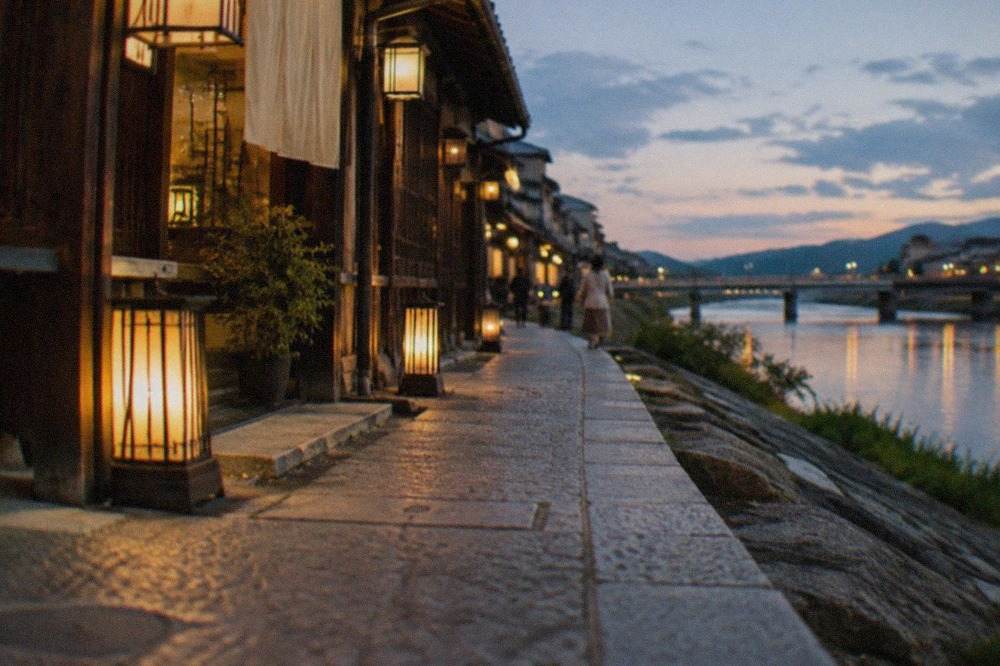
Kyoto nightlife is concentrated along the Kamo River in three adjacent districts: Kiyamachi (bars, clubs, izakaya, the loudest and youngest scene), Pontocho (narrow lantern alley with restaurants and riverside dining) and Gion (geisha districts, quiet streets, strict conduct rules). Most venues open by 18:00 and the core scene runs until the last trains around 24:00, with clubs in Kiyamachi continuing later.
Kyoto closes its temples at five and its bars at midnight, give or take, and almost everything worth doing after dark sits within a fifteen-minute walk of the Kamo River. The city's 2025 tourism survey, released in June 2026, counted a record 62.79 million visitors over the year, and a large share of them discovered the same thing by their second evening: this is not an all-night city, but the strip between Shijo-dori and Sanjo-dori punches well above its size. This guide from Kyoto Travel Guide covers where the night actually happens, what it costs, how the rules in Gion work, and how to get home when the trains stop.
Where Is Kyoto Nightlife Concentrated: Kiyamachi, Pontocho, Gion?
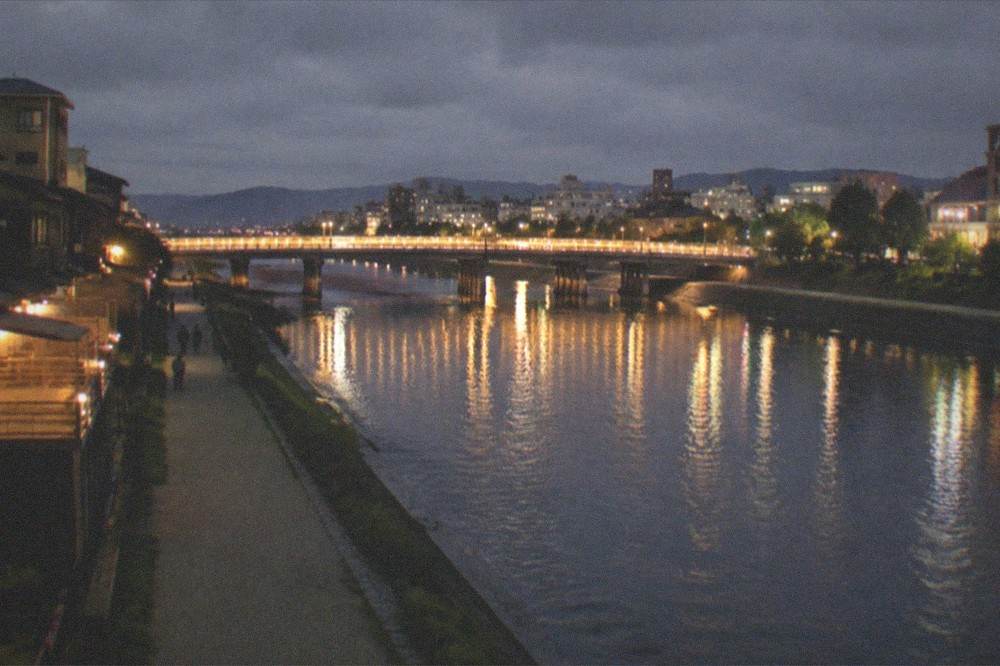
Kyoto nightlife concentrates along the Kamo River in three adjacent districts. Kiyamachi, the canal-side street running parallel to the river, holds the bars, izakaya and clubs and stays loud latest. Pontocho, the narrow lantern alley between Kiyamachi and the river, is the atmospheric core with restaurants and riverside terraces. Gion, east of the river, is the geisha district, quiet, expensive and governed by conduct rules rather than noise.
The three are walkable end to end in about ten minutes, but they are not interchangeable, and mixing them up is how evenings go wrong. Kiyamachi is where a group of twenty-five-year-olds from Osaka ends up. Pontocho is where a couple books a terrace table in summer. Gion is where you go to see architecture and history, not to drink, and treating it like a nightlife strip is exactly what the district's signage now prohibits.
A useful frame: Kiyamachi is volume, Pontocho is setting, Gion is restraint. The rest of this guide works through each in turn, then covers money, rules and the practical question of getting back to your hotel after the last train.
What Are the Three Nightlife Districts Like on the Ground?
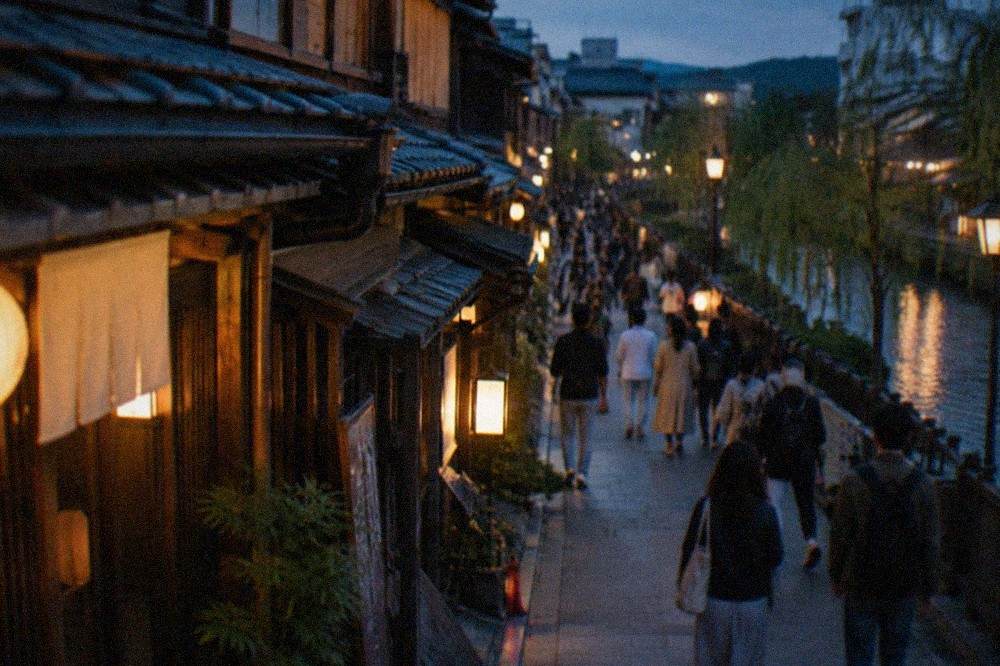
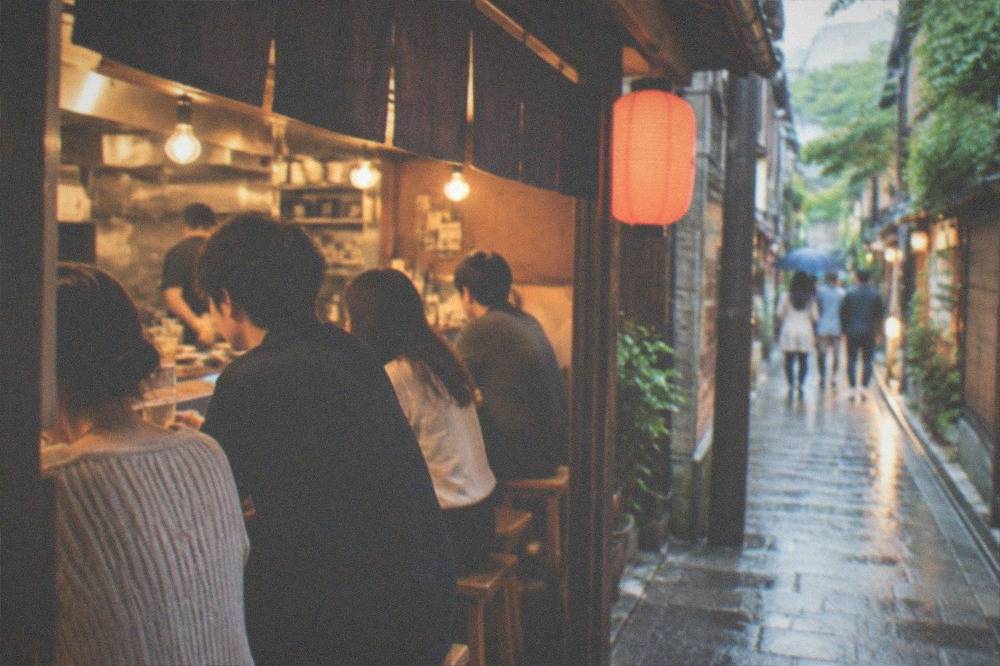
Kiyamachi is a single north-south street with a canal down its middle, lined with standing bars, izakaya, karaoke and clubs, densest between Shijo and Sanjo. Pontocho is a two-metre-wide stone alley running the same stretch, one restaurant deep on each side, lantern-lit, with summer terraces over the water. Gion is a residential and entertainment grid east of Hanamikoji, where the nightlife is teahouses and private establishments, not bars you can walk into.
Kiyamachi's canal gives the street its shape. In summer the banks fill with people drinking from convenience stores, which is legal and normal, and the bars range from 500-yen standing counters to basement cocktail rooms. It is the youngest and cheapest of the three, and the only one where clubs operate past the last train.
Pontocho is the postcard. The alley is private road maintained by its restaurant association, the lanterns are real, and the dining runs from affordable yakitori to kaiseki-level rooms with century-old histories. Reservations matter more here than anywhere else in the city at night, because the alley simply has no room for walk-in volume. Our Pontocho alley guide covers the dining side in detail.
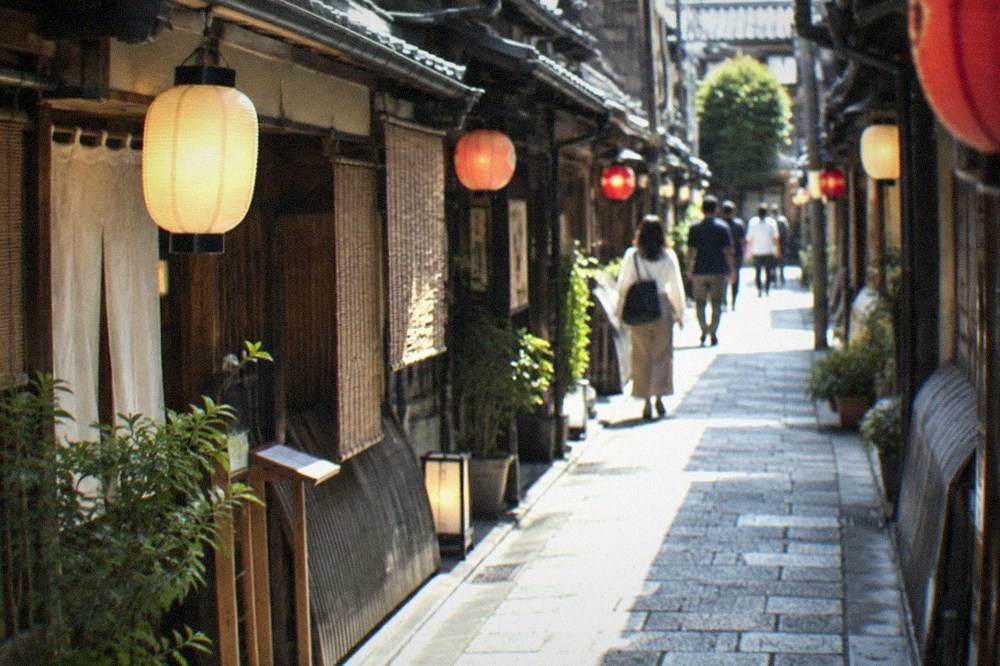
Gion after dark is mostly dark. The wooden facades are the attraction, the establishments are invitation-only or reservation-only, and the district council has spent two years making the conduct rules impossible to miss. If your night plan for Gion is "walk Hanamikoji, look at the machiya, then leave for drinks elsewhere", it works. If it is "bar-hop through Gion", it does not exist as an activity.
What Time Does Kyoto Nightlife Actually Start and End?
Kyoto nightlife starts earlier than most visitors expect and ends earlier too. Restaurants take dinner bookings from around 18:00, izakaya and standing bars fill between 19:00 and 20:00, and the whole scene peaks between 21:00 and 23:00. The last trains on most JR and subway lines run between roughly 23:30 and 24:30, and after that Kiyamachi's clubs are nearly the only thing still open, with some running to 04:00 or later on weekends.
The early peak is structural, not cultural preference. Kyoto's subway and bus network, per the city's own fare pages, is built for commuters and sightseers, and the city has spent 2025 and 2026 actively pushing visitors toward off-peak and early-morning sightseeing rather than late nights. The practical consequence: a night that starts at 18:00 gets you six good hours before transport becomes a taxi question.
Kiyomizu-dera's published schedule shows how early the evening closes elsewhere in the city: regular closing is 18:00, extended to 18:30 through July and most of August, with night viewings only on specific festival dates. The temples are simply not part of the night economy, with the exception of a handful of scheduled illuminations in spring and autumn.
| Time | What is happening | Where |
|---|---|---|
| 17:00-18:00 | Bars open, early diners seated, streets still daylight-busy | Pontocho, Kiyamachi |
| 18:00-20:00 | Dinner service peak, terraces fill in summer | Pontocho, Gion restaurants |
| 20:00-22:00 | Izakaya and standing bars at full tilt, karaoke opens | Kiyamachi |
| 21:00-23:00 | Peak of the whole night, queues at popular spots | All three districts |
| 23:30-00:30 | Last trains, crowd splits: home or club | Stations and Kiyamachi |
| After 00:30 | Clubs and a handful of late izakaya only | Kiyamachi |
One more timing fact worth knowing: the city's tourism association runs a live crowd-comfort forecast using smartphone location data, weather and machine learning, publishing five-level crowd predictions by spot, area and time slot. It is aimed at daytime sightseeing, but it works for the walk between districts too, and it is the difference between a pleasant stroll down Hanamikoji and a shuffling queue.
How Much Does a Night Out in Kyoto Cost?
A night out in Kyoto runs from under 3,000 yen to well past 30,000, and the spread is wider than the districts suggest. A convenience-store beer by the Kamo River costs a few hundred yen, a Kiyamachi izakaya evening with several drinks and dishes typically lands between 3,000 and 6,000 yen per person, Pontocho dinners start around 4,000 and climb steeply, and kaiseki at one of the city's most famous houses opens above 30,000 yen.
The honest anchor for the top end comes from a restaurant's own page, which is the only kind of price this site prints. Hyotei, by Nanzen-ji, publishes its prices on its own site, tax and service included: kaiseki from 31,625 yen at lunch and from 37,950 yen at dinner in the main building, with reservations taken from two people. The same house's annex serves asa-gayu at 5,445 yen and a Shokado bento at 7,260 yen. That is Hyotei's own price list, not a Kyoto average, but it shows the real shape of the market: the same kitchen, the same address, and a factor-of-five difference between the annex and the main building.
At the other end, the drinking floor is cheap by any standard. The city's flat bus fare is 230 yen and the subway runs 220 to 360 yen by zone, so transport within the night strip barely registers. The Subway and Bus One-Day Pass at 1,100 yen only pays off if you are moving all day, not for a night out.
| Spend level | What you get | Where it works |
|---|---|---|
| Under 1,000 yen | Convenience-store drinks by the river | Kamo River banks, Kiyamachi canal |
| 1,000-3,000 yen | Standing bar, a drink and a snack at each | Kiyamachi |
| 3,000-6,000 yen | Full izakaya evening, several drinks and dishes | Kiyamachi, Kawaramachi side streets |
| 4,000-10,000 yen | Casual to mid-range dinner with drinks | Pontocho, Gion-adjacent |
| Above 30,000 yen | Kaiseki in a famous main building (Hyotei's own prices) | Nanzen-ji area, Pontocho high end |
For the middle of the market, a guided evening takes the guesswork out. The Kawaramachi izakaya bar crawl runs three hours from 37 dollars and is rated 4.9 from 1,042 reviews, which for a first night in the city is a reasonable way to learn what an izakaya actually is before ordering solo.
What Are the Rules for Gion After Dark?
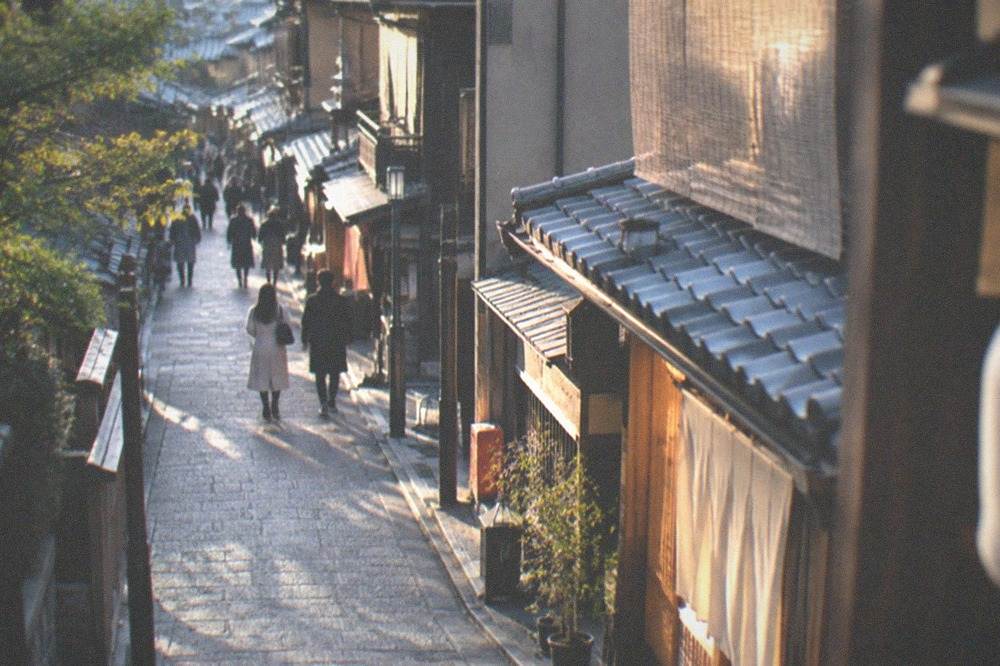
Gion after dark is governed by conduct rules, not bar culture. The Kyoto City Tourism Association's published guidance is: do not touch, chase or photograph geiko and maiko without permission, and do not enter private property or photograph it where that is prohibited. On the private alleys off Hanamikoji, signs put up by the Gion South Side district council threaten a 10,000 yen penalty for photography. Hanamikoji's main street is public road and photography is allowed there.
That distinction, public main street versus private alleys, is the entire section. Hanamikoji itself is a public road and taking pictures along it is fine. The alleys off it, on the east side toward Kennin-ji, are private roads, and the district council's signs make the consequence of ignoring that explicit. Write it as signage from the district council, because that is what it is: this is not a city ordinance, not a police matter, and not a criminal law.
The city-level guidance is about behaviour rather than money, and it is worth reading the four points as written: no touching, chasing or photographing geiko and maiko without permission, no entering private property, no photographing where prohibited. A geiko or maiko walking between engagements is commuting, not performing, and no source on this site will ever suggest one will stop and pose.
The practical version for a night out: walk Hanamikoji, see the machiya facades, take your pictures on the main street, and if you spot a procession of tourists standing silently at an alley mouth, that is the queue for a glimpse, and the correct response is to keep walking. Our Gion area guide and the answer to is Gion worth visiting cover the daytime side.
| Rule | Who sets it | What it says |
|---|---|---|
| Conduct toward geiko and maiko | Kyoto City Tourism Association | No touching, chasing or photographing without permission |
| Private property | Kyoto City Tourism Association | No entering, no photographing where prohibited |
| Photography on private alleys | Gion South Side district council signage | Signs threaten a 10,000 yen penalty |
| Hanamikoji main street | Public road | Photography allowed |
A guided walk keeps you on the right side of all of this. The Gion Magical Night Walking Tour runs an hour and forty minutes from 22 dollars, rated 4.9 from 4,616 reviews, and a guide who knows the district means the etiquette is handled for you.
Where Does Sake Fit Into a Kyoto Night?
Sake is Kyoto's home drink and Fushimi, the city's southern brewing district, is its source. Fushimi's breweries supply the izakaya of Kiyamachi and the cellars of Pontocho, and a three-hour guided brewery tour with tastings and pairings, rated 5 from 1,027 reviews and from 87 dollars, is the structured way into it. Fushimi is one train ride from the nightlife strip and the breweries close by late afternoon, so it is a pre-dinner activity, not a night one.
The sequencing matters. Breweries in Fushimi finish their tasting rooms in the early evening, which makes the district a 15:00-to-18:00 destination that feeds directly into dinner back downtown. Doing it in reverse, drinking first and reading sake labels second, teaches nobody anything.
The tour itself walks through working breweries with a guide who explains what the region's soft water does to the ferment, then pairs the tastings with food. At 87 dollars from and five stars across 1,027 reviews it sits in the middle of this site's food-and-drink range, and it ends early enough that the night is still ahead of you when it finishes.
Is Kyoto Nightlife Safe Late at Night?
Kyoto is one of the safest large cities in the world for a late walk, and the main night-time risks are transport gaps and July rain rather than crime. The last trains run between roughly 23:30 and 00:30 depending on the line, taxis fill the gap afterwards, and the city's own tourism materials promote evening and off-peak movement as part of its crowding strategy. Violent crime against visitors is rare enough that it does not register in any city publication this site holds.
The transport gap is the real planning issue. The subway's last departures cluster around midnight, and after that the options are taxis, which are plentiful around Shijo-Kawaramachi, or the clubs of Kiyamachi, which are precisely where people who missed the last train tend to end up. The city's flat bus fare of 230 yen and the subway's 220 to 360 yen range are irrelevant after closing, so budget for a taxi if your night runs past 00:30.
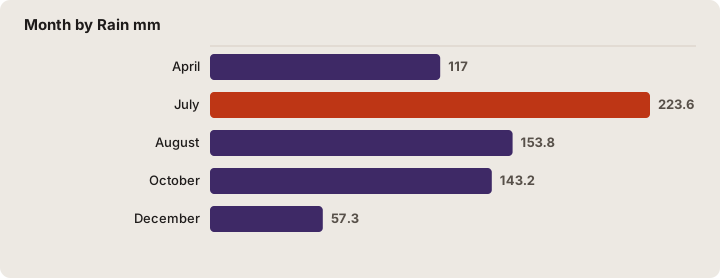
Weather deserves a line, because it shapes the river-side scene more than any other single factor. The JMA 1991-2020 normals for Kyoto show July as the wettest month at 223.6 mm, ahead of June at 199.7 mm, a fact most guides get backwards. August is hotter, mean 28.5 C with a mean daily high of 33.7 C, but drier. Summer nights by the canal are correspondingly sticky, and the terraces of Pontocho, which open in the May-to-September river season, are the premium response to that.
| Month | Rain mm | Mean C | Night character |
|---|---|---|---|
| April | 117.0 | 14.4 | Cherry season, cool evenings, peak crowds |
| July | 223.6 | 27.3 | Wettest month, hot, Gion Matsuri all month |
| August | 153.8 | 28.5 | Hottest, Gozan no Okuribi on the 16th |
| October | 143.2 | 18.4 | Comfortable, autumn illumination season begins |
| December | 57.3 | 7.2 | Cold and quiet, Arashiyama lantern event in December |
What About Festivals and Special Nights?
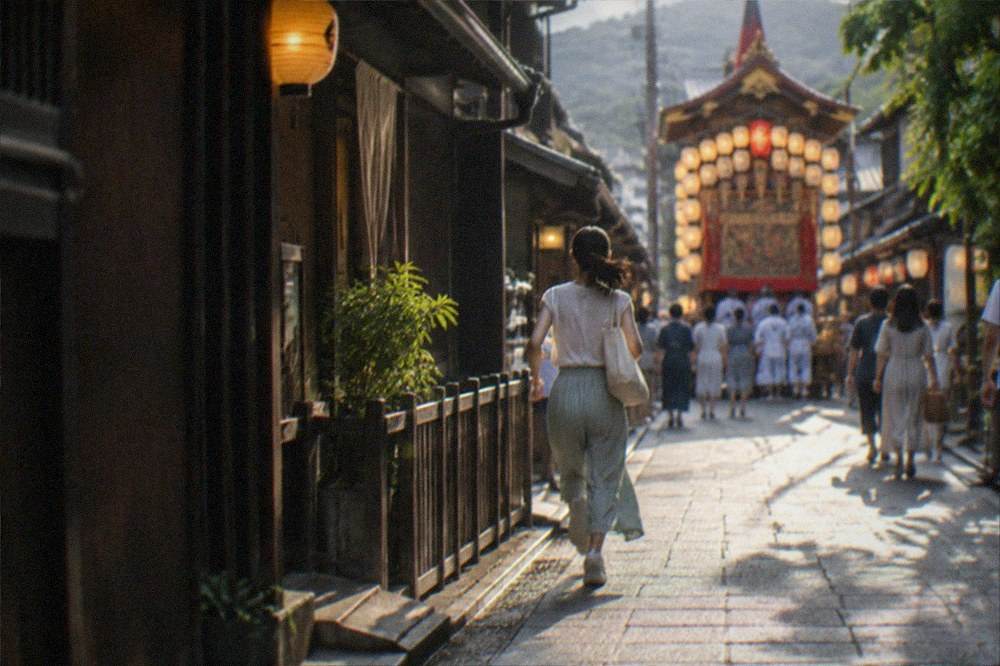
Kyoto's calendar supplies the city's biggest nights, and none of them are bookable products. Gion Matsuri runs the whole of July, with the Yamaboko Junko parades on 17 and 24 July and the Yoiyama evenings of lit floats on the nights before each. Gozan no Okuribi lights five mountains on 16 August. Jidai Matsuri processes through the city on 22 October. Each one transforms the night districts, and each one is free to watch from public ground.
Gion Matsuri is the one that matters for a nightlife guide, because for the entire month the festival takes over the streets between Kiyamachi and Gion. The float parades start at 9:00 on the 17th and 9:30 on the 24th, per the city's tourism pages, but the Yoiyama nights before them, when the floats stand lit in the streets and the center of the city goes pedestrian-only in the evenings, are the genuine night event. The wider festival calendar covers Aoi Matsuri in May and the rest.
Gozan no Okuribi on 16 August is a single evening: five bonfires in the shape of characters and torii, lit one after another on the mountains surrounding the city, and the city's own tourism notice states plainly that entering the hills that day is prohibited. The crowds on the river banks are immense, and the Kiyamachi strip afterwards is the busiest single night of the city's summer.
How Do You Get Home After the Last Train?
After the last train, roughly 23:30 to 00:30 depending on the line, the options are taxis, walking if your hotel is central, or staying out until first train around 05:00 to 06:00. Taxis queue at Karasuma and Kawaramachi on Shijo-dori through the night. The city has no night bus network, and the EX100 and EX101 tourist express buses, at 500 yen a ride, are daytime and evening services, not late-night ones.
The EX100 deserves a mention precisely because of what it is not. It runs from Kyoto Station past Gojo-zaka, Gion and Heian Shrine to Ginkaku-ji, mainly on weekends and holidays, at 500 yen adult and 250 yen child, and the city's transport bureau pages confirm it accepts IC cards and the Subway and Bus One-Day Pass. It is a crowding measure for the sightseeing corridors, and its last departures are early enough that it plays no part in the nightlife economy.
For airport-bound readers with a morning flight, the practical night-time note is that neither Kansai nor Itami is reachable by train late: the HARUKA visitor ticket at 2,200 yen and the Itami limousine bus at 1,500 yen both stop running well before midnight, and a late-night private transfer from around 108 dollars is the alternative. Our Kansai Airport to Kyoto guide covers the daytime versions.
What Should Your First Kyoto Night Actually Look Like?
A strong first night is dinner in or near Pontocho from 18:00, drinks on the Kiyamachi canal or in a Kawaramachi izakaya from 20:00, a walk across the river and down Hanamikoji before 22:00, and a train or taxi home before 00:30. If sake is the point rather than the accompaniment, put the Fushimi brewery tour in the late afternoon before any of it, and if it is festival season, replace the whole plan with whatever the calendar is doing that night.
The order is deliberate. Pontocho's kitchens take the last big bookings early, the canal-side drinking gets less pleasant as it gets later and louder, and Gion's streets are at their best before the crowds thin and the alleys go fully quiet. Doing Gion first at dusk, dinner second, and Kiyamachi last in reverse also works, and suits anyone whose energy fades rather than builds.
For a fuller plan around it, the one-day Kyoto itinerary slots an evening like this into a whole day, and the best restaurants in Kyoto guide covers where to book. If the night is the main event rather than the epilogue, the things to do in Kyoto page indexes everything by mood.
Common Questions About Kyoto Nightlife
Where Is Kyoto Nightlife Concentrated: Kiyamachi, Pontocho, Gion?
Along the Kamo River, in three adjacent districts. Kiyamachi is the bar, izakaya and club street, Pontocho is the narrow lantern alley of restaurants, and Gion is the geisha district with quiet streets and strict conduct rules rather than bars.
Does Kyoto have clubs?
Yes, a small number, nearly all in the Kiyamachi area, and some run past the last train to 04:00 or later on weekends. The club scene is modest compared with Osaka or Tokyo, and the last trains between roughly 23:30 and 00:30 are the real curfew for most of the city.
Can you drink by the Kamo River?
Yes. Drinking in public is legal and normal in Japan, and the canal banks of Kiyamachi and the river terraces fill with people in summer, many drinking from convenience stores. Glass is discouraged and taking your rubbish with you is expected.
Is it safe to walk around Kyoto late at night?
Yes. Violent crime against visitors is rare enough that it does not register in any city publication this site holds. The practical risks are the transport gap after the last train and summer heat and rain, July being the wettest month at 223.6 mm in the JMA 1991-2020 normals.
Can you photograph geisha in Gion at night?
On Hanamikoji's main public street, yes. In the private alleys off it, no: signs put up by the Gion South Side district council threaten a 10,000 yen penalty for photography. The city tourism association's conduct guidance adds that geiko and maiko must not be touched, chased or photographed without permission.
What time do bars close in Kyoto?
Most izakaya and bars close between 23:00 and 01:00, with last orders called before that. Kiyamachi's clubs run later on weekends. Restaurants in Pontocho take their last bookings around 20:00 to 21:00, which is why dinner starts early in Kyoto.
The honest summary of Kyoto at night is that it is a river with three streets attached, and each street answers a different question. Kiyamachi answers where to drink, Pontocho answers where to eat well in beautiful surroundings, and Gion answers what the city was before any of it. Plan around the last train, respect the signage in the alleys, and put a sake brewery in the afternoon if the evening is going to be long.