What Is The Famous Alley In Kyoto?
Pontocho Alley is Kyoto's most famous alley, a narrow stone lane of restaurants and tea houses between the Kamo River and Shijo-dori. Here is what to expect, plus the other alleys worth walking.
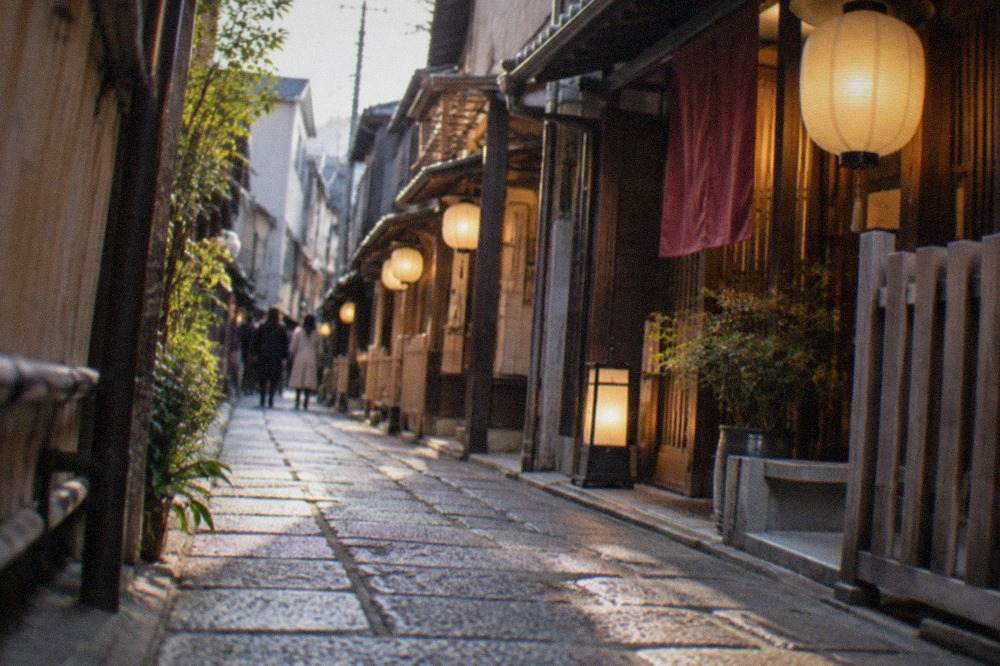
Pontocho Alley is the name most people are reaching for when they ask about the famous alley in Kyoto. It is a narrow lane, roughly 200 metres long and only a few steps wide, running north to south between Shijo-dori and Sanjo-dori, sandwiched between the backs of buildings and the west bank of the Kamo River. The lane is lined with wooden-fronted restaurants, tea houses and bars, many with riverside terraces in summer, and lantern light on stone paving is its signature look after dark. Kyoto drew a record 62.79 million visitors in 2025 according to the city's own tourism survey, and this small lane absorbs a remarkable share of that attention.
What Is The Famous Alley In Kyoto?
The famous alley in Kyoto is Pontocho, a narrow stone-paved lane between Shijo-dori and Sanjo-dori on the west bank of the Kamo River. It is packed with traditional wooden-fronted restaurants, tea houses and bars, opens riverside dining terraces in summer, and sits inside one of the city's historic entertainment districts. Most photos tagged as Kyoto's famous alley were taken on this one lane.
The name is usually written Pontocho, sometimes Ponto-cho, and the district has operated as a licensed restaurant and entertainment area for centuries. The lane is narrow enough that two people walking abreast can block it, which is exactly the point: it was built to the scale of a person on foot, not a vehicle. The buildings on either side are machiya-style town houses, some three storeys, and the alley's character comes from the fact that the street has stayed commercial and lively rather than being converted into a museum street.
The word to be careful with is geisha. Pontocho is one of Kyoto's five hanamachi, the geisha districts, and geiko and maiko still work in the tea houses here in the evenings. That does not mean you will see one on the lane: they move between engagements by the back routes and the shortest paths, not for the benefit of cameras. The city's tourism association publishes conduct guidelines that are blunt on this point: do not touch, chase or photograph geiko and maiko without permission. Treat an encounter as luck, not an itinerary item.
For planning a wider trip around the city, our things to do in Kyoto overview is the natural next stop.
Why Is Pontocho Alley So Famous In Kyoto?
Pontocho is famous because it compresses old Kyoto into a single walk: stone paving, wooden facades, lantern light, the Kamo River at the end of the view and working tea houses behind the doors. It is also genuinely central, a two-minute walk from the Shijo-dori shopping spine, so nearly every visitor to downtown Kyoto passes within a block of it. Scarcity does the rest: the city has very few lanes left at this scale.
The lane's fame is not a recent social-media invention. Pontocho has been a destination for evening dining for generations, and its restaurant association has maintained the street's appearance, the paving, the lanterns and the rules against garish signage, for decades. That self-discipline is why the alley photographs the same way today as it did in guidebooks decades ago.
The summer terraces are the other engine of its reputation. From roughly May through September, restaurants along the river side build platforms out over the water, a dining arrangement called kawadoko, and dinner on the platform with the river running underneath is one of Kyoto's signature experiences. The terraces are seasonal, they are not cheap, and reservations are generally needed, so treat them as a planned splurge rather than a walk-in.
A practical note on crowds: the city's 2025 survey counted 62.79 million visitors, of whom 46.20 million were day visitors, and lanes like Pontocho are where day visitors concentrate in the evenings. The lane never closes, so there is no queue to beat, but the middle stretch between Shijo and Sanjo is thickest between roughly 18:00 and 21:00. Walk it early morning for near-silence, or after 21:00 when the lanterns are still lit and the crowd thins.
What Other Alleys In Kyoto Are Worth Walking?
After Pontocho, the alleys worth seeking out are Ishibei-koji near Kodai-ji, the stone steps of Ninenzaka and Sannenzaka below Kiyomizu-dera, and the lanes of the Higashiyama and Gion quarters generally. Ishibei-koji is the quietest and most traditional, Ninenzaka and Sannenzaka are the most atmospheric slope streets, and the private alleys off Hanamikoji in Gion are the ones you must not enter or photograph.
Ishibei-koji is a stone lane with earthen walls and wooden gates, a few minutes south of Kodai-ji, and it reads more like a residential lane of the old city than a commercial one. There are a small number of ryokan and restaurants on it, and nothing else: no shops, no signage clutter. Kodai-ji itself charges 800 yen for adults, with night illuminations from 23 October to 13 December 2026, so the lane pairs naturally with an evening visit.
Ninenzaka and Sannenzaka are the two sloped, stone-paved streets climbing toward Kiyomizu-dera, lined with machiya shops selling pickles, ceramics, sweets and matcha. They are the busiest of the alleys named here precisely because they sit on the approach to one of the city's most visited temples, the one Kiyomizu-dera is so famous for. The temple opens at 6:00, per its own published schedule, and the lanes are at their calmest in the first hour after that.
Gion deserves a specific warning rather than a general one. The private alleys off Hanamikoji, on the south side, carry signage from the local district council threatening a 10,000 yen penalty for unauthorised entry or photography. These are private roads, the rule is posted by the residents' council rather than by the city, and the main Hanamikoji road itself remains open to photography. Read the signs and stay off the marked lanes. For more on that district, see whether Gion is worth visiting.
| Alley | Nearest landmark | Character | Best time |
|---|---|---|---|
| Pontocho | Kamo River, Shijo-dori | Dining lane, lanterns, summer terraces | After dark |
| Ishibei-koji | Kodai-ji | Quiet, walled, traditional | Early morning or dusk |
| Ninenzaka and Sannenzaka | Kiyomizu-dera | Sloped shop streets, stone paving | From 6:00 to 8:00 |
| Hanamikoji (main road) | Gion | Tea houses, geisha district | Early evening |
If your evening is flexible, a guided walk takes the guesswork out of which lanes matter. The Perfect 1-Day Bus Tour covers the headline sights with transport handled, which leaves the evening free for Pontocho at your own pace.
When Is The Best Time To Walk Pontocho Alley In Kyoto?
There is no closing time on Pontocho, so the question is crowd timing rather than opening hours. The lane is at its calmest before mid-morning and after about 21:00, and at its densest between roughly 18:00 and 21:00 when dinner service and day-visitor traffic overlap. Summer adds the riverside terraces; winter adds lantern light on cold stone and far fewer people.
The JMA 1991-2020 normals give a practical frame for choosing a season. July is Kyoto's wettest month at 223.6 mm, ahead of June at 199.7 mm, which surprises visitors who assume the rainy season peaks in June. August is the hottest month, with a mean daily maximum of 33.7 C, while January is the coldest and driest, at a mean of 4.8 C and 53.3 mm of rain. A winter evening on Pontocho is genuinely atmospheric and genuinely quiet; a July evening is warm, green and wet.
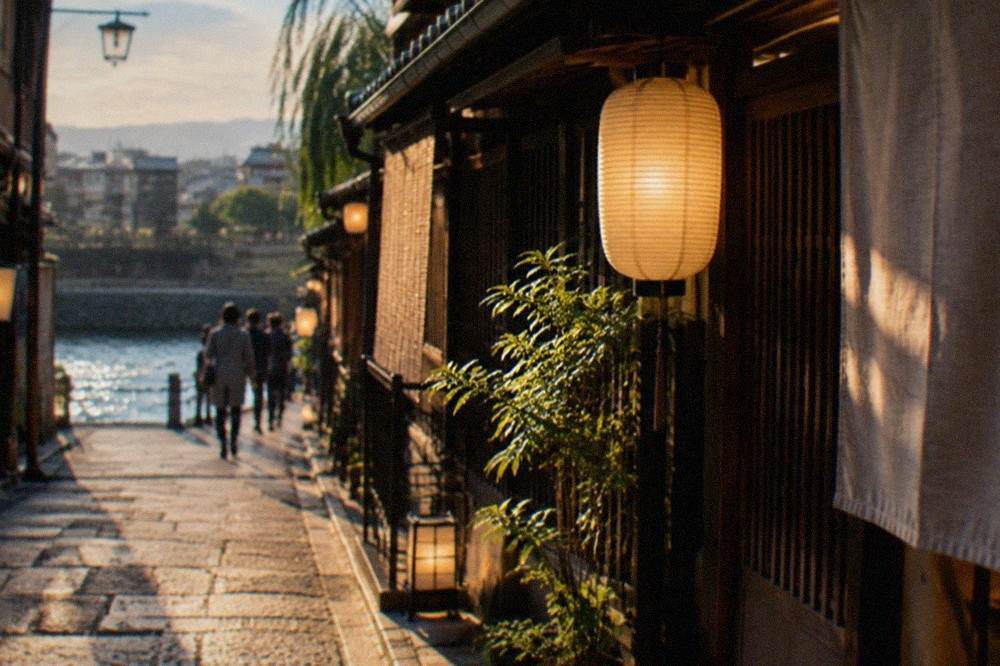
One more timing note: the city's tourism association runs a crowd-comfort forecast that rates spots and time slots on a five-level scale using location data, and Fushimi Inari links to it from its own site. Checking it before an evening walk is the closest thing Kyoto has to an official crowd prediction, and no invented queue time can compete with it.
What Can You Eat On And Around Pontocho Alley?
Pontocho runs the full price range of Kyoto dining, from standing bars and small izakaya to kaiseki houses where the course alone opens above 30,000 yen. The lane's own published menus are the only honest guide to price: Hyotei, a famous kaiseki house near Nanzen-ji, prints kaiseki from 31,625 yen at lunch, while its annex serves porridge from 5,445 yen and a bento from 7,260 yen. Those are Hyotei's prices, not a city average.
The practical reading of that spread is that Pontocho does not have a price level, it has several. The lane's narrow buildings mean small dining rooms, small covers and, in the cheaper places, quick turnover. Walk the lane end to end before choosing: the places at the Shijo end skew polished and pricier, and the lanes just off Pontocho, on the downtown side, hold cheaper izakaya where the food is just as serious.
For the food-street comparison, the most famous food street in Kyoto is a different animal entirely: Nishiki Market is a covered shopping street, and its own rules ask visitors not to eat while walking, but to eat at the stall. Pontocho is for sitting down, Nishiki is for grazing, and the two pair well as an afternoon followed by an evening.
| Dining type | Where | Rough character |
|---|---|---|
| Standing bars | Pontocho side lanes | Cheap, quick, local |
| Izakaya | Pontocho and Kawaramachi lanes | Small plates, drinks, walk-in friendly |
| Kaiseki | Pontocho and Nanzen-ji area | Multi-course, reservations, high price |
| Summer terraces (kawadoko) | Pontocho river side | Seasonal, reservations needed |
How Do You Get To Pontocho Alley In Kyoto?
Pontocho sits between the Kawaramachi and Karasuma sides of downtown, with the main entrance on Shijo-dori a short walk from Hankyu Karasuma Station or Keihan Gion-Shijo Station. The city subway runs 220 to 360 yen by zone, the flat bus fare is 230 yen, and the Subway and Bus One-Day Pass costs 1,100 yen, so a day of sightseeing plus an evening on the alley is easily stitched together.
The simplest approach from Kyoto Station is the Karasuma subway line to Shijo, then a five-minute walk east along Shijo-dori to the alley's stone marker. From the Gion side, cross Shijo Bridge and the lane begins almost immediately on the right. Buses on Shijo-dori stop at Kawaramachi Shijo, one block away, and the tourist express buses EX100 and EX101 connect Kyoto Station with the Gion and Kiyomizu side for a flat 500 yen adult fare, which is useful when you are returning to the station late.
The one-day pass deserves a word of caution because older guides get it wrong: the bus-only one-day pass no longer exists. Sales ended in September 2023 and the pass was valid for the last time on 31 March 2024. The current product is the Subway and Bus One-Day Pass at 1,100 yen for adults and 550 yen for children, and it is the one to buy.
Common Questions About Kyoto's Famous Alley
What Is The Famous Alley In Kyoto?
Pontocho Alley, the narrow stone-paved lane of restaurants and tea houses between Shijo-dori and Sanjo-dori on the west bank of the Kamo River. It is the alley in most photos labelled as Kyoto's famous alley.
Is Pontocho Alley the same as Gion?
No. Pontocho is its own district on the downtown side of the Kamo River, while Gion sits on the opposite, eastern bank around Hanamikoji. Both are historic entertainment districts, but they are separate quarters separated by the river.
Can you see geisha on Pontocho Alley?
Sometimes, in the evening, but never on demand. Pontocho is one of Kyoto's five geisha districts and geiko and maiko work in its tea houses. The city's guidelines prohibit touching, chasing or photographing them without permission.
Is Pontocho Alley free to walk?
Yes. The lane is a public street with no closing time and no admission. Costs start only when you sit down to eat or drink, and the range on and around the lane runs from cheap standing bars to kaiseki courses.
What is the quietest famous alley in Kyoto?
Ishibei-koji, near Kodai-ji. It is a walled stone lane with almost no commerce, and early morning is the calmest window. Ninenzaka and Sannenzaka are also quiet from about 6:00, when Kiyomizu-dera opens.
Pontocho earns its fame honestly: it is a working street of food and lantern light that happens to be beautiful, not a reconstruction. Walk it once after dark, walk it again before the city wakes up, and if you have an evening to spare, Kyoto Travel Guide has the rest of the city mapped out around it. The other alleys, Ishibei-koji for quiet, Ninenzaka for the climb to Kiyomizu-dera, the open stretch of Hanamikoji for the tea-house fronts, are all within a short bus or subway ride of the same bridge.