Is It Better To Fly Or Take A Train From Tokyo To Kyoto?
Flying Tokyo to Kyoto means connecting through Itami or Kansai International, while the Shinkansen runs city centre to city centre. Here is the honest comparison.
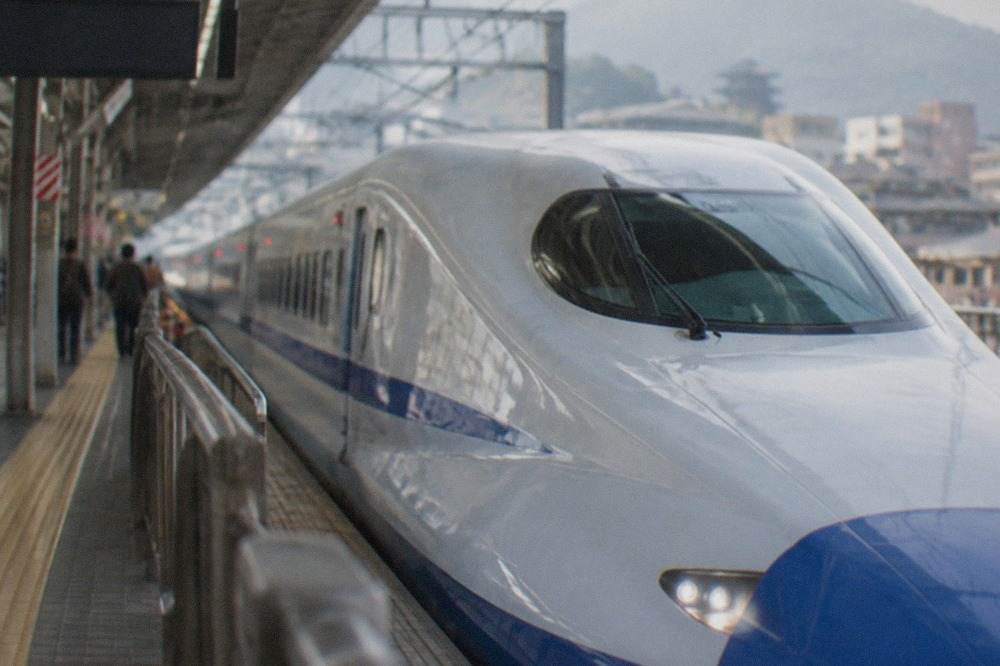
A Shinkansen seat from Tokyo Station to Kyoto Station covers the distance in about two hours and fifteen minutes, with no airport anywhere in the journey. Flying, by contrast, is a three-part trip: a train or bus to Haneda or Narita, the flight itself to Itami or Kansai International, and then a further 50 minutes to two hours of ground transport into Kyoto, because Kyoto has no airport of its own. That single fact reframes the whole question, and it is the reason the train wins for most itineraries, though not for every budget or every starting point.
This page works the comparison honestly: door-to-door times, real fares on both sides, the airport-connection arithmetic at the Kyoto end, and the situations where flying genuinely makes sense. For the full rail-side planning picture, the Tokyo to Kyoto transport guide covers the route in depth, and the broader Kyoto versus Tokyo comparison handles the which-city-first question.
Why Doesn't Flying To Kyoto Save Time?
Because Kyoto has no airport, a flight from Tokyo lands you 50 to 100 kilometres away from the city, and the ground connections eat the time the plane saved. The flight itself is about 70 minutes, but door to door the trip typically runs four to five hours once you count getting to Haneda or Narita, airport processing, and the transfer from Itami or Kansai International into Kyoto.
The arithmetic is unforgiving. Tokyo Station to Kyoto Station on the Nozomi is about two hours and fifteen minutes, and both stations are exactly where you want to be: central, connected to the subway, and walking distance from major hotels. A flight asks you to leave for the airport an hour or more before departure, fly to Itami or Kansai International, then keep moving. From Itami, the Hankyu Kanko limousine bus to Kyoto Station costs 1,500 yen adult and 750 yen child and takes about 50 to 55 minutes from the Hachijo exit, with contactless card payment accepted since 1 March 2026. From Kansai International, the JR West HARUKA train covers the distance in about 80 minutes, and the JR West HARUKA One-way Ticket for foreign visitors costs 2,200 yen adult and 1,100 yen child.
Add it up and the flight that took 70 minutes in the air becomes a four-hour-plus journey, while the train was a two-and-a-quarter-hour sit in a reserved seat with a tray table. The one scenario where flying wins on time is a departure from central Tokyo to a Kyoto hotel near Itami's bus drop, with a perfectly timed connection, and even then the margin is thin.
There is a comfort argument too. The Shinkansen has no boarding procedure beyond walking to your platform, no seatbelt sign, no baggage sizer anxiety for normal luggage, and you can stand up and walk to the kiosk car whenever you like. The operator's timetable gives departures every few minutes through the day, so a missed train is a ten-minute problem, not a rebooking problem.
If you are weighing the arrival end of the trip rather than the Tokyo end, the HARUKA express guide covers the airport-to-Kyoto leg in detail.
Is It Better To Fly Or Take A Train From Tokyo To Kyoto On Price?
For most travellers the train is cheaper door to door, because the flight's low base fare does not include the airport transfers at either end. The Shinkansen fare from Tokyo to Kyoto is a single published price, while the flying total stacks the airport access in Tokyo, the flight, and the 1,500 yen Itami bus or the 2,200 yen HARUKA visitor ticket from Kansai International.
The rail side is simple to budget. The Tokaido Shinkansen fare with a reserved Nozomi seat is the number you pay, and it is the same whether you book a month ahead or walk up on the day, which removes the fare-hunting stress entirely. Domestic flights between Tokyo and Osaka's airports are frequently cheaper than the rail fare as a base ticket, sometimes dramatically so on sale, and this is where the fly case gets its traction.
But the base ticket is not the trip. Getting to Haneda from central Tokyo is a monorail or Keikyu fare, and Narita is a longer and costlier trek on the Narita Express or Keisei lines, roughly an hour before you have even checked in. At the Kyoto end, the Itami limousine bus adds 1,500 yen per adult, or the Kansai International arrival adds the 2,200 yen HARUKA One-way Ticket, both verified current operator prices. The cheap flight starts looking like a mid-priced journey, and the time saving has already gone negative.
| Journey component | Train route (Shinkansen) | Flying route (via Itami) |
|---|---|---|
| Getting to departure point | Tokyo Station, already central | Haneda or Narita access, extra fare and 30 to 60 min |
| Main leg fare | One published Shinkansen fare, reserved seat | Discounted domestic base fare, varies by date and booking |
| Arrival into Kyoto | Kyoto Station, city centre | Itami, then 1,500 yen adult bus, about 50 to 55 min |
| Door-to-door time | About 2 hours 15 min station to station | Typically 4 to 5 hours door to door |
| Missed connection cost | Next train, usually minutes away | Rebooking, possibly hours |
| Luggage | Normal luggage, no extra fee | Airline rules apply |
One honest caveat: if you hold a Japan Rail Pass or a regional JR West pass that covers the Tokaido line, the rail side can effectively drop to zero marginal cost, and the flight comparison collapses entirely.
When Does Flying From Tokyo To Kyoto Actually Make Sense?
Flying makes sense in three situations: when you are connecting onward through Osaka's airports to somewhere else entirely, when a deep-discount domestic fare undercuts the rail price by enough to absorb the transfer costs, and when you are starting far from Tokyo Station, for example near Narita, so the airport is already on your doorstep rather than a detour.
The connecting-itinerary case is the strongest. If your journey is really Tokyo to Hiroshima, Kyushu, or an international departure from Kansai International, the flight segment to Osaka is a leg of a longer trip, not a Tokyo-to-Kyoto decision at all, and judging it as one is a category error. The day trips from Kyoto guide covers the western continuation from Kyoto.
The discount-fare case is real but fragile. Domestic carriers do sell fares well below the Shinkansen price, and a traveller flexible on dates and times can genuinely save money even after the bus or train at the Itami end. What the discount fare cannot buy back is the schedule resilience: the Shinkansen runs every few minutes and a missed one is a shrug, while a missed flight is a negotiation.
The Narita-start case is the least obvious and worth stating plainly. If you are staying in the Narita area, or your hotel sits on the Keisei line, the airport is not a detour but your local station, and the fly-first arithmetic tilts. Most Tokyo visitors, though, are staying in Shinjuku, Shibuya, the Ginza or near Tokyo Station, and for all of those the Shinkansen's city-centre-to-city-centre logic dominates.
For the departure side of a Kyoto trip, a pre-booked private transfer to Kansai International removes the last piece of uncertainty: the transfer is rated 4.8 from 91 reviews, costs from $108 per person, and takes about two hours from your accommodation to the terminal.
What Does The Train Journey From Tokyo To Kyoto Look Like In Practice?
In practice the Tokyo to Kyoto rail trip is a reserved seat on a Nozomi train, about two hours and fifteen minutes, with departures every few minutes through the day, Mount Fuji on the right side for part of the ride, and an arrival directly into Kyoto Station with subway, bus and luggage facilities in the same building.
The Nozomi is the fastest service and the most frequent; the Hikari takes a little longer and is the fastest service valid on the national Japan Rail Pass. Seat reservations are standard on this line, and the cars are quiet, clean and punctual to the minute in normal operation. Luggage over the oversize threshold requires a reservation for the special baggage area, but ordinary suitcases fit the overhead racks without any procedure at all.
Kyoto Station itself is a destination-grade building: a ten-storey atrium, a department store, the subway Karasuma Line directly underneath, and the City Bus terminal on the north side for hotel connections. The flat City Bus fare is 230 yen adult and 120 yen child, the subway runs 220 to 360 yen by zone, and the Subway and Bus One-Day Pass at 1,100 yen adult and 550 yen child is the current all-day product. Note that the old bus-only one-day pass no longer exists: sales ended in September 2023 and the last day of use was 31 March 2024, so any guide recommending it is out of date.
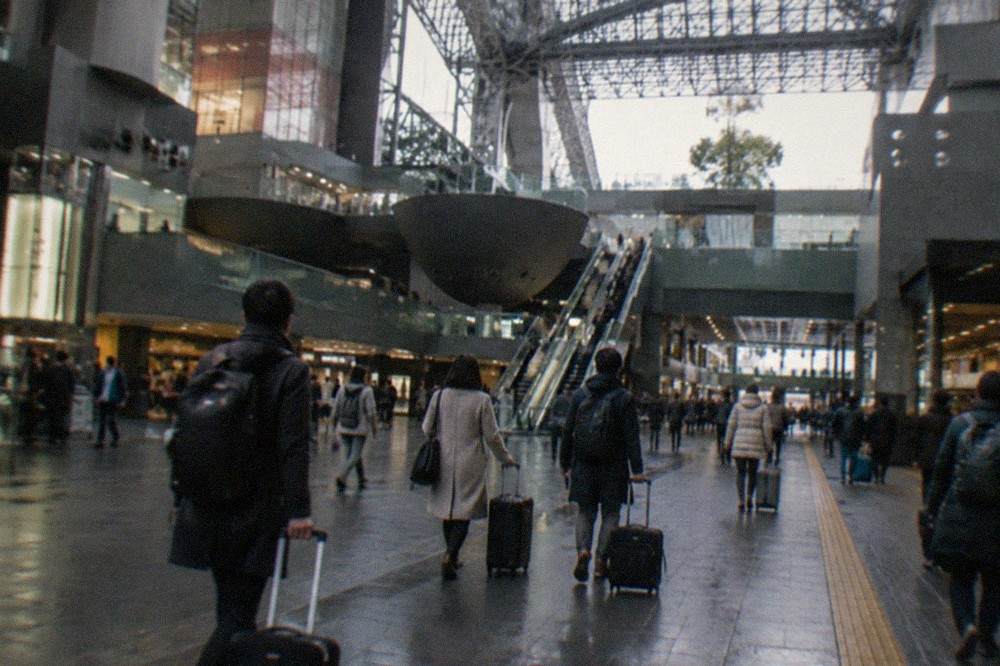
Arriving by train also drops you at the top of the sightseeing geography. The station sits at the south end of the Karasuma spine, with the Higashiyama temple district, the Gion evening walks and the Nishiki Market food street all within a short subway or bus hop, and the one day in Kyoto itinerary is built around exactly that station-first arrival.
Does The Season Change The Fly-Versus-Train Answer?
Season changes the comfort of the choice more than the choice itself: summer heat and typhoon-season disruption from July to October, and winter snow risk on some lines, both argue for the train's frequency and resilience, while the fare comparison stays roughly stable year-round because Shinkansen prices do not swing the way discount airfares do.
Kyoto's climate is worth knowing before you book either mode. The JMA 1991-2020 normals for the Kyoto station show July as the wettest month at 223.6 mm, ahead of June at 199.7 mm, a fact that contradicts most guides' rainy-season framing. August is the hottest month, mean 28.5 C with a mean daily maximum of 33.7 C, and also the sunniest at 182.7 hours. January is both the coldest, mean 4.8 C, and the driest, at 53.3 mm. Kyoto has a real winter: the station's record low is -11.9 C and its deepest snow 41 cm.
What that means for the fly-or-train call is mostly about disruption tolerance. Typhoon season runs roughly July to October, and when a typhoon lands, both flights and trains can stop, but the Shinkansen resumes on a schedule measured in hours while airport recovery is measured in days of rebooked passengers. On the heat side, three of Kyoto's six hottest days on record fell in the summers of 2024, 2025 and 2026, and July and August 2025 were both among the five hottest calendar months ever measured at the station, so summer travellers should plan for serious heat at both the airport transfer and the station arrival, whichever mode they choose.
The seasonal timing question is bigger than the mode question, and the best time to visit Kyoto guide handles it properly, including the cherry and autumn foliage timing that shapes crowd levels.
Is It Better To Fly Or Take A Train From Tokyo To Kyoto: The Verdict?
Take the train. For a traveller starting anywhere in central Tokyo and ending anywhere in central Kyoto, the Shinkansen is faster door to door, comparable or cheaper once transfers are counted, more resilient to disruption, and lands you in the middle of the city rather than 50 to 100 kilometres away from it. Fly only when the flight is a leg of a longer journey, or when a deep discount fare and a Narita-side start genuinely tip the math.
The verdict is not close, and pretending otherwise would be dishonest balance. The only real contest is price at the base-fare level, and that contest evaporates once the Itami bus at 1,500 yen or the Kansai International HARUKA at 2,200 yen enters the column. Time, comfort, luggage handling and schedule resilience all point the same way.
Once you are in Kyoto, the arrival logistics are cheap and simple: 230 yen on a city bus, 220 to 360 yen on the subway, or a 1,100 yen day pass if you are moving around a lot, with an ICOCA card at 2,000 yen including a 500 yen deposit covering the touch-on basics. The things to do in Kyoto overview picks up exactly where the train doors open, and this whole comparison sits inside the wider planning picture that Kyoto Travel Guide covers end to end.
For the flight-home day itself, the private departure transfer from Kyoto city to Kansai International Airport is the one piece of the flying itinerary worth pre-booking: from $108 per person, rated 4.8 from 91 reviews, about two hours from door to terminal, and it removes the last connection risk from an airport departure.
Common Questions About Flying Or Taking The Train From Tokyo To Kyoto
Is It Better To Fly Or Take A Train From Tokyo To Kyoto?
Take the train. Kyoto has no airport, so flying means a connection at Itami or Kansai International plus 50 minutes to two hours of ground transport, and the door-to-door total typically runs four to five hours against the Shinkansen's two hours and fifteen minutes. Fly only if the flight is a leg of a longer journey or a deep discount fare and a Narita-side start tip the math.
How long is the Shinkansen ride from Tokyo to Kyoto?
About two hours and fifteen minutes on the Nozomi, the fastest and most frequent service, running city centre to city centre from Tokyo Station to Kyoto Station. The Hikari takes a little longer and is the fastest service valid on the national Japan Rail Pass.
Which airport do you fly into for Kyoto?
Either Osaka Itami, the closer domestic airport, or Kansai International. From Itami, the Hankyu Kanko limousine bus to Kyoto Station costs 1,500 yen adult and 750 yen child and takes about 50 to 55 minutes. From Kansai International, the JR West HARUKA One-way Ticket for foreign visitors costs 2,200 yen adult and 1,100 yen child, with the journey taking about 80 minutes.
Is flying Tokyo to Kyoto cheaper than the train?
Sometimes, at the base-fare level: discount domestic fares can undercut the Shinkansen price. But the trip total has to include airport access in Tokyo and the transfer at the Osaka end, and once those are counted the saving usually shrinks or disappears while the time cost stays firmly negative.
Does the Japan Rail Pass cover the Tokyo to Kyoto Shinkansen?
It covers the Hikari and Kodama services on the Tokaido line, not the fastest Nozomi trains. Whether the pass pays off depends on the rest of your itinerary, and the JR Pass for Kyoto guide on this site works through the arithmetic.
What is the best way to get from Kyoto Station to my hotel?
The subway runs from inside Kyoto Station at 220 to 360 yen by zone, the flat City Bus fare is 230 yen adult and 120 yen child, and the Subway and Bus One-Day Pass is 1,100 yen adult and 550 yen child. The old bus-only one-day pass no longer exists; sales ended in September 2023 and its last day of use was 31 March 2024.