Tokyo To Kyoto By Bullet Train
The Tokaido Shinkansen links Tokyo and Kyoto in a single seat, and the choices that actually shape the trip are which service you book, what you pay at the Kyoto end, and how you spend the first day after you step off the train.
Short answer
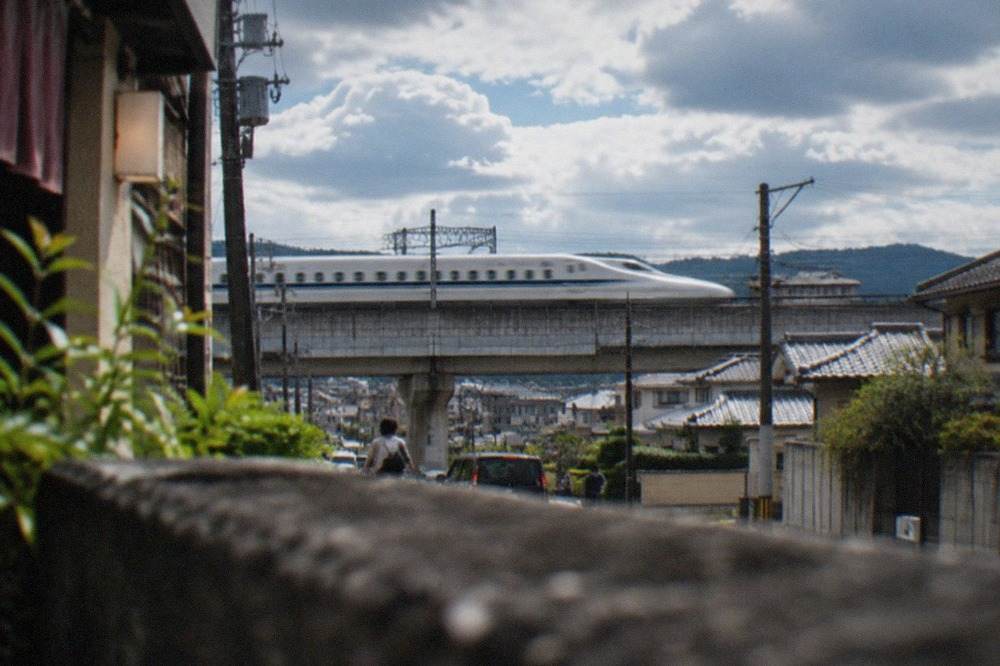
The Nozomi is the fastest of the three Tokaido Shinkansen services between Tokyo and Kyoto, with the fewest stops; the Hikari is slower but Japan Rail Pass eligible, and the Kodama stops everywhere. This guide does not print the Nozomi's minutes or fare, because the operator's own live timetable and fare table are the only honest source for those two numbers.
Tokyo To Kyoto By Bullet Train
Two cities, one of the most ridden rail corridors on earth: the Tokaido Shinkansen between Tokyo and Kyoto is the spine of most Japan itineraries. The ride itself is simple. The decisions around it are not. Which of the three services you book, whether you fly instead, what a day of getting around Kyoto actually costs once you arrive, and how you plan the first afternoon so you are not standing in a ticket queue at Kinkaku-ji at closing time, all matter more than the headline journey time. This guide from Kyoto Travel Guide works through each of them with verified figures, and it is honest about the two numbers it will not print.
How Long Does The Nozomi Take From Tokyo To Kyoto And What Does It Cost?
The Nozomi is the fastest of the three Tokaido Shinkansen services on the Tokyo to Kyoto run, stopping at the fewest stations, with the Hikari behind it and the all-stations Kodama behind that. This guide deliberately prints no minute count and no yen figure for the ride itself, because the operator's own live timetable and fare table are the only sources that stay correct, and any number copied into an article goes stale the next fare revision.
Here is what can be said with confidence, and what cannot. The Tokaido Shinkansen is operated by JR Central, and it runs three service tiers: Nozomi, Hikari and Kodama. The Nozomi makes the fewest stops and is the quickest; the Hikari adds stops and minutes; the Kodama calls at every station on the line and exists mainly for local hops. Seat classes are Ordinary and Green Car, and fares move with the season, the day of the week and the seat type, which is exactly why a fixed price printed in a guide is a trap rather than a service.
What this site's verified fact base holds instead is everything on the Kyoto side of your arrival, all of it read from the operators' own pages. The table below separates what this guide can stand behind from what only the operator's live pages can answer.
| Question | What this guide verifies | Where the live answer lives |
|---|---|---|
| Nozomi journey time, Tokyo to Kyoto | Not printed; no operator timetable figure in the verified base | JR Central's own timetable |
| Nozomi fare, Tokyo to Kyoto | Not printed; fares vary by season, class and seat | JR Central's own fare table |
| Fastest of the three services | Nozomi, then Hikari, then Kodama | Operator service structure |
| Kyoto Station to Kansai Airport | HARUKA One-way Ticket, 2,200 yen adult, 1,100 child, about 80 minutes | JR West's own ticket page |
| Kyoto city bus flat fare | 230 yen adult, 120 yen child | City transport bureau |
| Subway and Bus One-Day Pass | 1,100 yen adult, 550 yen child | City transport bureau |
One planning note that genuinely changes bookings: the Nozomi carries a supplementary express charge on top of the base fare, and that charge is why the arithmetic of a regional pass never works out the way first-time visitors expect. If a pass is in your plans, read the eligibility rules before you build the itinerary around a specific service, because the fastest train and the cheapest rail pass are not always the same train. For the fly-versus-train comparison in full, including airport transfer times at both ends, see fly or train from Tokyo to Kyoto.
Which Shinkansen Service Should You Take From Tokyo To Kyoto?
For most travellers the Nozomi is the right service: it is the fastest and it runs most frequently, so a missed train costs you minutes rather than an hour. The Hikari is the choice when a rail pass excludes the Nozomi, and the Kodama only makes sense for short intermediate hops, never for the full Tokyo to Kyoto run.
Frequency is the quiet advantage. Nozomi departures run so often through the day that arriving at Tokyo Station without a reservation is usually a matter of waiting for the next departure, not re planning the day. The Hikari runs less often and takes longer, but it is the service that regional pass products have historically covered when the Nozomi is excluded, so the pass question and the service question are the same question.
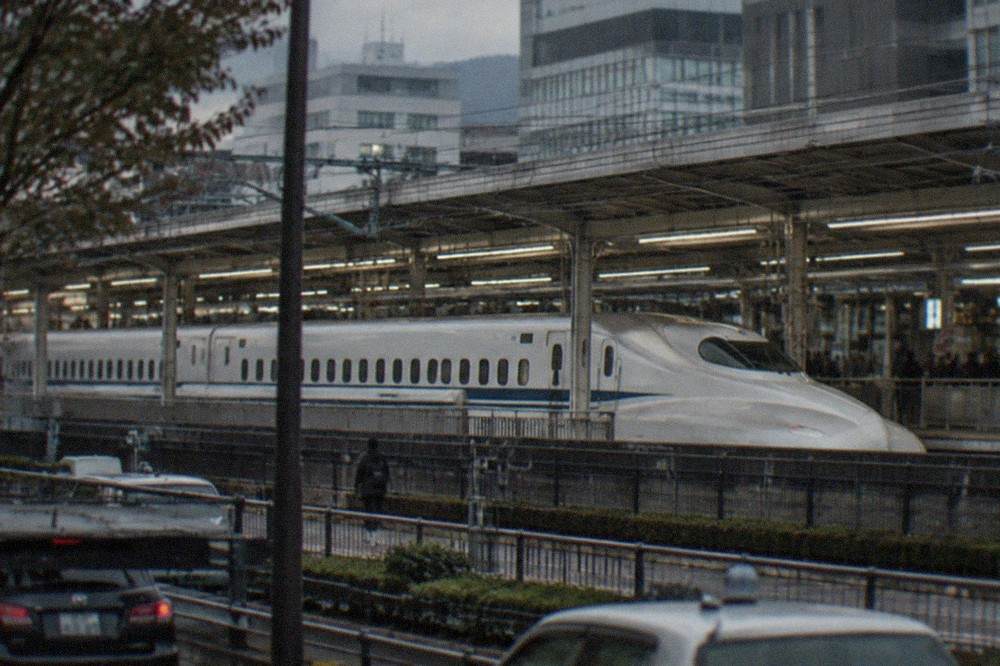
Three practical rules make the choice easy. Book the Nozomi when you are paying per trip and want the least time in transit. Book the Hikari when your pass excludes the Nozomi and the extra minutes are the price of the pass. Ignore the Kodama unless you are breaking the journey at a small station, because an all-stations run turns a quick ride into a slow one.
The seat question comes up almost as often. Ordinary cars on the Tokaido Shinkansen are comfortable and fully reserved-and-non-reserved mixed; Green Car costs more for wider seats and quieter cars. For a ride of this length, Ordinary is entirely adequate, and the money saved covers a good part of a day of Kyoto temple admissions, which the table later in this guide prices precisely.
If you are continuing beyond Kyoto, the same corridor logic applies south to Osaka, and the Osaka to Kyoto guide covers the short hop in detail. For the broader city-versus-city itinerary question, the Kyoto versus Tokyo comparison breaks down how many days each deserves.
What Does It Cost To Get Around Kyoto Once You Arrive?
A Kyoto city bus ride is a flat 230 yen for adults and 120 yen for children aged 6 to 11, and the subway runs 220 to 360 yen by zone. The best-value product for a full sightseeing day is the Subway and Bus One-Day Pass at 1,100 yen for adults and 550 yen for children, and the old bus-only one-day pass no longer exists: its sales ended in September 2023 and its last day of use was 31 March 2024.
The bus pass story matters because stale guides still recommend it. The city's transport bureau ended bus-only pass sales at the end of September 2023, closed use on 31 March 2024, and explained the decision at the time by noting that roughly nine in ten buyers were visitors and that the pass concentrated tourists onto a small set of bus routes. The replacement logic is simple: spread visitors across the subway and the buses, and sell one combined pass.
| Ticket or pass | Adult | Child | Notes |
|---|---|---|---|
| City bus, flat fare | 230 yen | 120 yen | Child band 6 to 11 |
| Subway, by zone 1 to 5 | 220 / 260 / 290 / 330 / 360 yen | 110 / 130 / 150 / 170 / 180 yen | Zone-based |
| Subway and Bus One-Day Pass | 1,100 yen | 550 yen | The current combined day pass |
| Subway One-Day Pass | 800 yen | 400 yen | Subway only |
| EX100 / EX101 tourist express bus | 500 yen | 250 yen | Cash or IC; runs Kyoto Station to Kiyomizu, Gion, Heian Shrine and Ginkaku-ji |
| ICOCA card | 2,000 yen including a 500 yen deposit | same structure | Refillable IC card |
The EX100 and EX101 tourist expresses are worth knowing about because they were created specifically to move visitors off the crowded ordinary buses. The EX100 links Kyoto Station with the Kiyomizu side, Gion, the Okazaki museum district and Ginkaku-ji; the EX101 runs direct to the Kiyomizu side, on some mornings as often as every seven or eight minutes. At 500 yen a ride they cost more than a normal bus, and the Subway and Bus One-Day Pass covers them, which is a detail most guides miss.
For the ride in from the airport, the JR West product to know by name is the HARUKA One-way Ticket for foreign visitors: 2,200 yen to Kyoto for adults, 1,100 for children, with the journey taking about 80 minutes. The HARUKA Express guide covers it in full, including the Itami alternative, a limousine bus at 1,500 yen adult and 750 child taking about 50 to 55 minutes from the Hachijo exit, with contactless card payment since 1 March 2026.
Is It Better To Fly Or Take The Train From Tokyo To Kyoto?
For almost every itinerary the train wins, because Kyoto has no airport of its own: flying means landing at Kansai International or Itami and then adding a transfer of about 80 minutes or more, while the shinkansen deposits you at Kyoto Station inside the city. The train also wins on frequency, with departures through the day rather than a handful of flights.
The geography decides it. Kyoto's own air link does not exist, so the fly option is really a fly-plus-transfer option, and the transfer legs are not short. From Kansai International the HARUKA takes about 80 minutes to Kyoto; from Itami the limousine bus takes about 50 to 55 minutes. Add airport processing time at both ends of the flight and the door-to-door comparison narrows to almost nothing, while the train keeps you seated, on time and in the centre of the city at the end.
There are two honest exceptions. If your Japan trip already includes a flight into Kansai International from elsewhere in Asia, starting in Kyoto and finishing in Tokyo by rail is often the cleaner loop, and the things to do in Kyoto page helps you size the Kyoto half. And if you are carrying heavy luggage across a peak travel day, the fly-plus-transfer route removes a train change, though the city's hands-free luggage delivery services, covered in the Kyoto luggage storage guide, solve the same problem on the rails.
The full decision, with the transfer times and costs laid out side by side, is in is it better to fly or take a train from Tokyo to Kyoto. The short version: the shinkansen is not just the faster option, it is the one that ends where you actually want to be.
How Do You Get From Kyoto Station To Your Hotel And Around On Day One?
Kyoto Station sits on two subway lines, the Karasuma and the Tozai, and most hotels in the centre are reachable by subway plus a short walk, at 220 to 360 yen a ride. The tourist expresses EX100 and EX101 link the station directly to the Kiyomizu and Gion side at 500 yen, and a flat-fare city bus is 230 yen, so the choice is speed against price.
Day one has a rhythm that works. Arrive, drop bags, and if the hotel is not walkable from the station, take the subway rather than a bus with luggage: drivers may refuse large or bulky bags on crowded buses, a rule the city encourages for exactly this reason. The hands-free services and station lockers exist so that the first afternoon is not spent dragging a suitcase up the Kiyomizu slopes.
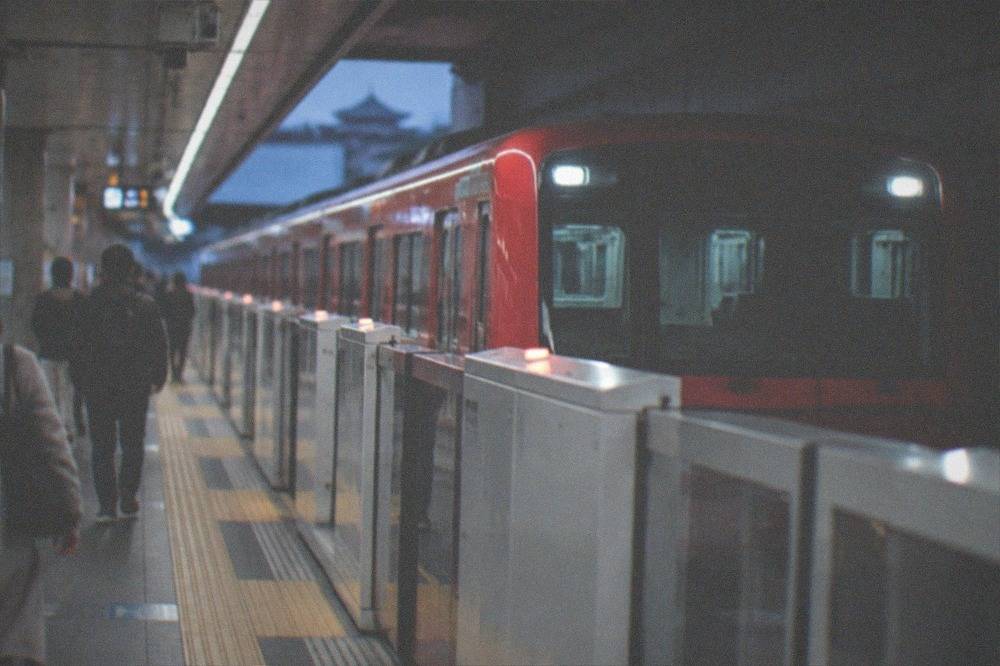
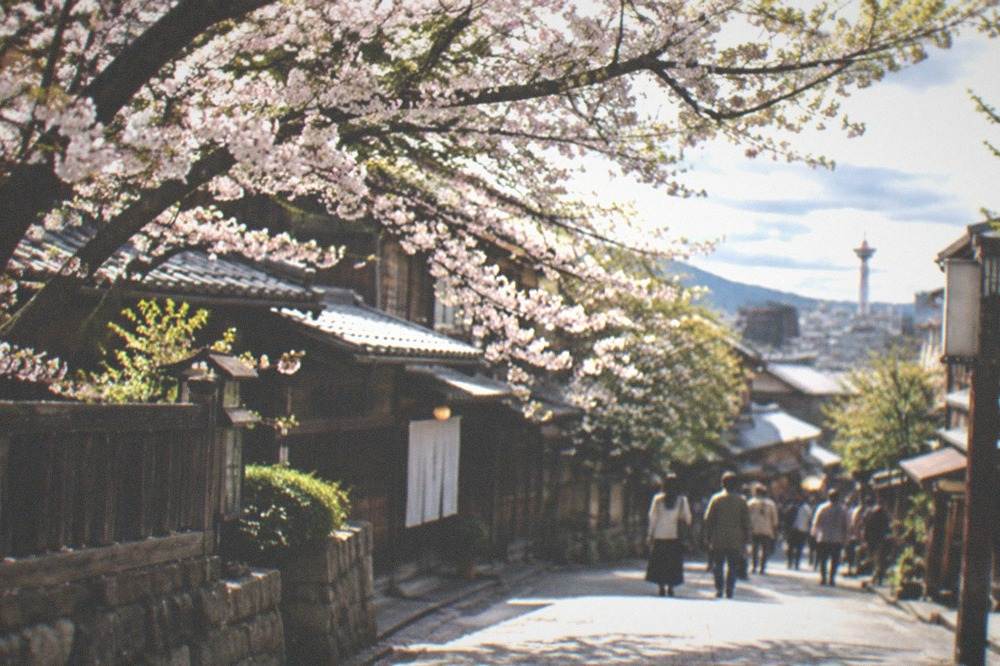
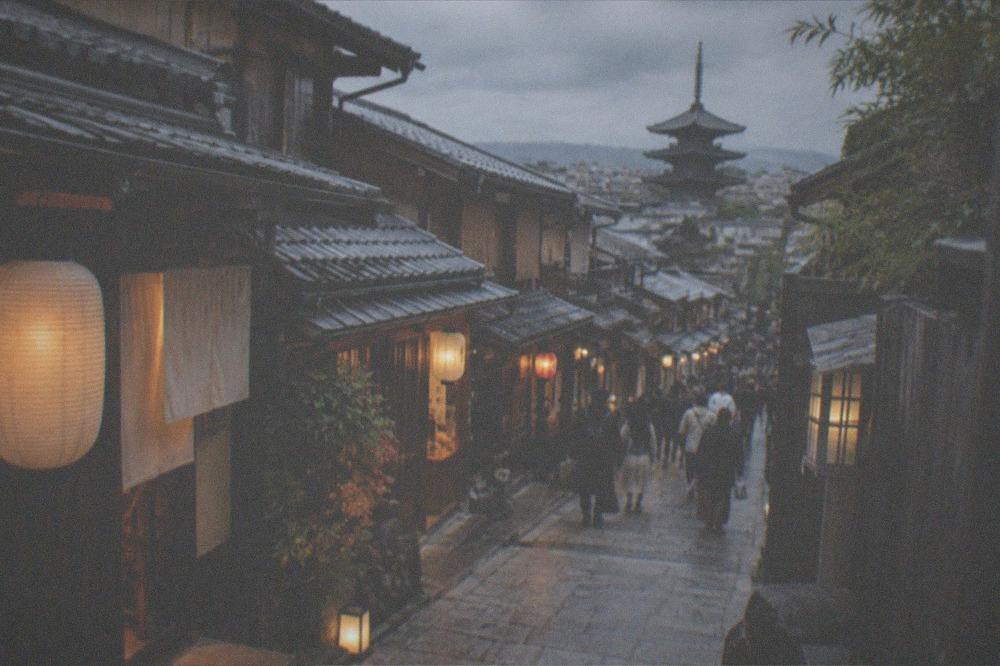
From the station, the classic first afternoon is east: the Kiyomizu side, the Sannenzaka and Ninenzaka lanes, and Gion as the light drops. The EX101 exists for precisely this route. If energy is high, the Fushimi Inari Taisha approach is a short JR hop from the station and costs nothing to enter, since the shrine publishes no admission fee anywhere on its own site, and the paths have no closing time.
For travellers who would rather buy one ticket and not think again, the private departure transfer is the bookable version of the same peace of mind, covering the Kansai International leg at the end of the stay rather than the arrival end.
What Is The Best Time Of Year To Arrive In Kyoto By Train?
July is Kyoto's wettest month, not June, at 223.6 mm against June's 199.7 mm in the JMA 1991-2020 normals, and August is the hottest, with a mean of 28.5 C and a mean daily maximum of 33.7 C. January is both the coldest month, mean 4.8 C, and the driest, at 53.3 mm, so the comfortable shoulder windows are late March to May and October to November.
Almost every competing guide gets the rain month wrong, because the assumption that June's rainy season peak means June is the wettest month does not hold at this station. The Japan Meteorological Agency's 1991-2020 normals for Kyoto, station 47759, put July at 223.6 mm to June's 199.7 mm. The annual normal is 1,522.9 mm spread across every month, which is why the rain question is a planning question, not a veto.
| Month | Rain mm | Mean C | Mean daily max C | Sunshine h |
|---|---|---|---|---|
| January | 53.3 | 4.8 | 9.1 | 123.5 |
| March | 106.2 | 8.8 | 14.1 | 155.4 |
| April | 117.0 | 14.4 | 20.1 | 177.3 |
| July | 223.6 | 27.3 | 32.0 | 142.7 |
| August | 153.8 | 28.5 | 33.7 | 182.7 |
| October | 143.2 | 18.4 | 23.4 | 156.0 |
| November | 73.9 | 12.5 | 17.3 | 140.7 |
The heat is the other honest point. Three of Kyoto's six hottest days on record fell in the summers of 2024, 2025 and 2026, and July and August 2025 both ranked among the five hottest calendar months ever measured at this station. Summer visits work, but they need early starts, shade and a slower tempo, not a midday temple circuit.
Winter is real and underrated. The station's record low is -11.9 C and its deepest snow on record 41 cm, so pack for cold, but the crowds thin, the temple gardens hold their shape under clear skies and the dry January means reliable sightseeing weather. The phenology markers from the JMA Kyoto observatory give the planning anchors: the 1991-2020 normal for cherry flowering is 26 March with full bloom on 4 April, and in 2026 flowering came on 23 March with full bloom on 30 March, both ahead of normal. The maple red-leaf normal is 5 December, later than the mid-November peak most guides claim, because the observatory's specimen tree is the official marker rather than the Arashiyama crowd calendar.
What Should You Do With Your First Day In Kyoto?
Spend the first day east of the station: the Kiyomizu side and the Sannenzaka and Ninenzaka lanes in the afternoon, Gion as the light drops, and dinner in Pontocho or downtown Kawaramachi. The free entries on that route are the walking lanes and Gion itself, while Kiyomizu-dera charges admission, and the verified temple fees below tell you exactly which numbers to budget.
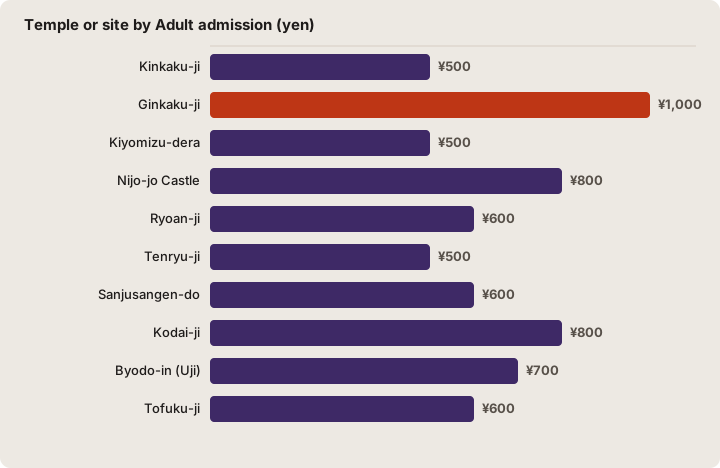
The fee picture changed in 2026, and this is where copied-from-old-guide numbers do real damage. Ginkaku-ji doubled its adult admission from 500 to 1,000 yen effective 1 April 2026, its first change in 32 years, and Tofuku-ji revises its fees on 1 November 2026, with the Hojo garden rising from 500 to 600 yen and a new 1,000 yen combined ticket appearing. Any guide still listing Ginkaku-ji at 500 yen is a year out of date.
| Temple or site | Adult admission | Notes |
|---|---|---|
| Kinkaku-ji | 500 yen | School age 300 yen; hours 9:00 to 17:00 |
| Ginkaku-ji | 1,000 yen | From 1 April 2026, doubled from 500; child 500 |
| Kiyomizu-dera | 500 yen | Single source; the temple does not print the fee on its own site |
| Nijo-jo Castle | 800 yen | 1,300 yen with the Ninomaru-goten Palace |
| Ryoan-ji | 600 yen | Hours 8:00 to 17:00 in summer |
| Tenryu-ji | 500 yen | Garden only; buildings plus 300 yen, Hatto ceiling 500 yen separately |
| Sanjusangen-do | 600 yen | 1,001 Kannon statues, stated by the temple itself |
| Kodai-ji | 800 yen | 1,200 yen combined with Entoku-in |
| Byodo-in (Uji) | 700 yen | Phoenix Hall interior plus 300 yen |
| Tofuku-ji | 600 yen | Hojo garden 500 to 600 yen from 1 Nov 2026; combined ticket 1,000 yen new |
The genuinely free list is just as verified: Fushimi Inari Taisha, which publishes no fee anywhere on its site; the Kyoto Imperial Palace, which states it is open to all visitors with no advance application; Shugakuin Imperial Villa and the Sento Imperial Palace, free but guided and restricted to visitors 18 and over; Nishiki Market; the Arashiyama bamboo path; and simply walking Gion, Pontocho and the Philosopher's Path. A first day built on the free walking routes plus one or two paid temples lands in the 1,000 to 2,000 yen range per person for entries, before food.
For dinner, the choice is between the best restaurants in Kyoto for a planned splurge and the Kyoto ramen guide for the realistic first-night bowl. If the day has been long, a kaiseki dinner is the ceremonial option, with the honest caveat that at one famous house by Nanzen-ji, Hyotei, the kaiseki course itself starts above 30,000 yen while the same kitchen's annex serves from about 5,400 to 7,300 yen: those are that restaurant's own published prices, not a city-wide norm.
Should You Book A Guided Tour For The First Day Or Explore Alone?
Explore alone if your first day is short and you want one or two specific sites; book a guided tour if you have a single full day and want the major temples covered without planning the bus and subway legs yourself. The stronger full-day option is a bus tour of the headline sites, and a Nijo-jo Castle guided tour with admission included is the efficient half-day pick for the castle alone.
The honest trade-off is time against depth. Kyoto's headline sites are spread across a wide east-west axis, and the transit legs between Kinkaku-ji in the north-west, the Arashiyama district further west and the Kiyomizu side in the east eat real hours out of a first day. A guided bus tour compresses that routing problem into a single booking. Independent travel wins when the day is half-length, when the weather is poor, or when one specific site, a tea ceremony for instance, is the actual reason for the trip.
The castle is the clearest case for a guide. Nijo-jo Castle is where the 15th shogun, Tokugawa Yoshinobu, summoned senior vassals from 40 domains on 13 October 1867 and proclaimed the end of Tokugawa rule the next day, with the Emperor accepting the return of authority on 15 October, and the Ninomaru-goten Palace where it happened is a building whose detail rewards explanation. Admission is 800 yen, or 1,300 yen with the palace, and a guided tour with admission included removes both the queue and the guesswork.
For the second day and beyond, the deeper options open up: a tea ceremony booked into a quiet hour, the monkey park climb at Arashiyama, or a day trip to Uji or Koyasan. The itinerary pages help sequence them once the first day is settled.
Common Questions About The Tokyo To Kyoto Bullet Train
How Long Does The Nozomi Take From Tokyo To Kyoto And What Does It Cost?
The Nozomi is the fastest of the three Tokaido Shinkansen services on the route, with the fewest stops. This guide does not print its journey time or fare, because the operator's own live timetable and fare table are the only sources that stay correct through fare revisions, and both vary by season, day and seat class.
Which is faster, the Nozomi or the Hikari?
The Nozomi is faster and runs more frequently. The Hikari makes more stops and takes longer, but it is the service that some rail pass products cover when the Nozomi is excluded, so the pass rules decide the choice as much as the clock does.
Does Kyoto have its own airport?
No. Kyoto has no airport of its own. Arrivals come through Kansai International or Itami, and the default rail link from Kansai International is the JR West HARUKA, whose visitor one-way ticket is 2,200 yen adult and 1,100 child, taking about 80 minutes.
Is the Kyoto bus one-day pass still sold?
No. Bus-only pass sales ended in September 2023 and the last day of use was 31 March 2024. The current product is the Subway and Bus One-Day Pass at 1,100 yen adult and 550 yen child, which also covers the EX100 and EX101 tourist express buses.
What is the wettest month in Kyoto?
July, not June. The JMA 1991-2020 normals for Kyoto give July 223.6 mm against June's 199.7 mm, a fact most guides get backwards.
When did Ginkaku-ji raise its admission fee?
From 1 April 2026, adult admission doubled from 500 to 1,000 yen, the first change in 32 years, with the child fee rising from 300 to 500 yen. Any guide still quoting 500 yen is out of date.
Before the final word, one last look at the three bookable options that cover the most common first-day shapes: a private airport transfer for the departure leg, the castle tour for a half-day, and the full-day bus circuit for the headline sites.
For travellers who want the headline circuit handled end to end, the full-day bus tour is the one to check first, since it covers the spread-out majors that cost the most time to self-plan.
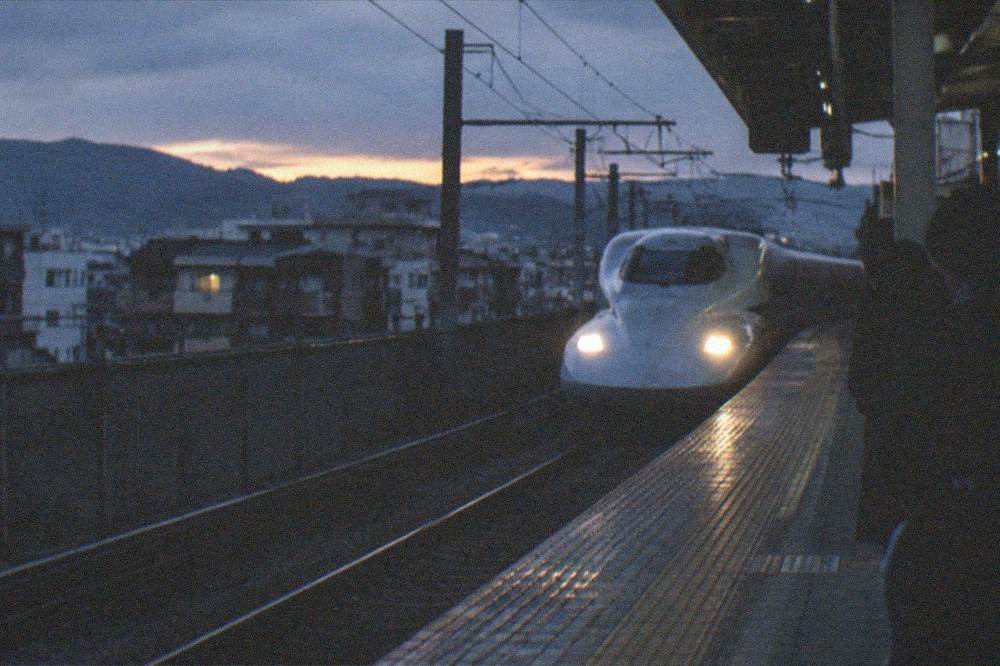
The ride from Tokyo is the easy part: one seat, frequent departures, and a station at the end of it that is itself one of the city's sights. The decisions that shape the trip are the ones after the doors open, and with the verified fares, the current pass, the 2026 temple fees and the climate normals in hand, those decisions are now a matter of choosing rather than guessing. Pick the service that matches your pass rules, buy the 1,100 yen day pass if the first day is a circuit, and let the Nozomi's timetable, wherever it stands at your date of travel, take care of the rest.