What Is The Prettiest Part Of Kyoto?
Higashiyama's preserved lanes around Kiyomizu-dera are widely held to be the prettiest part of Kyoto, with Arashiyama and the Fushimi Inari mountain as the rivals. Here is how the areas compare.
What Is The Prettiest Part Of Kyoto?
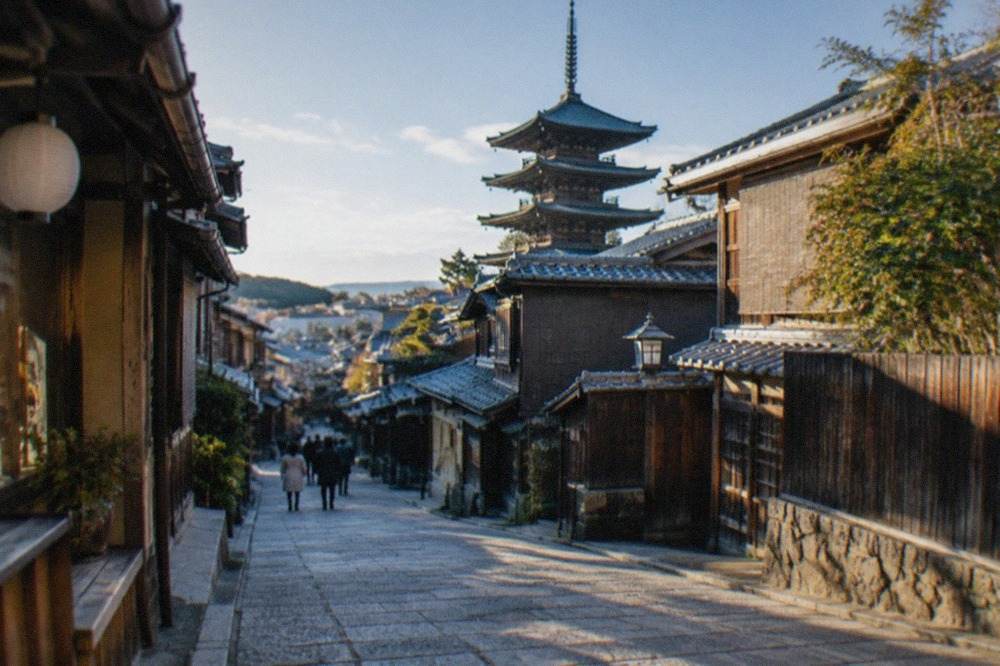
The prettiest part of Kyoto is the preserved Higashiyama district on the hillside below Kiyomizu-dera, specifically the stone-paved slopes of Ninenzaka and Sannenzaka and the lanes running down toward Yasaka Shrine. It is the one large area of the city where the streetscape itself, wooden machiya fronts, tiled roofs and narrow stone steps, survives as a continuous whole rather than as isolated buildings. Arashiyama's bamboo grove and the Fushimi Inari mountain are the two rivals, and both beat Higashiyama in specific hours, but neither offers a whole walkable neighbourhood of this character.
That answer comes with a caveat the city's own numbers make necessary. The city's 2025 tourism survey, released 12 June 2026, counted a record 62.79 million visitors, up from 56.06 million in 2024, and 46.20 million of them were day visitors concentrated in exactly the places this article is about to name. Beauty in Kyoto is partly a scheduling problem. The prettiest part of the city at 7 a.m. and the prettiest part at 11 a.m. are different places, and the sections below treat that as a real variable rather than an afterthought.
Why Is Higashiyama The Prettiest Part Of Kyoto?
Higashiyama wins because it is a continuous preserved district rather than a single monument: the slopes of Ninenzaka and Sannenzaka run downhill from Kiyomizu-dera through roughly a kilometre of machiya shopfronts, tea houses and temples to Yasaka Shrine and the Maruyama Park area. Kiyomizu-dera itself charges 500 yen admission, opens at 6:00, and its wooden stage looks out over the whole city. No other Kyoto area keeps this much period streetscape in one walk.
The reason is historical. When much of modern Kyoto was rebuilt in concrete, the temple districts on the eastern hillside were covered by preservation rules that limited what could be built on the slopes below Kiyomizu-dera. The result is that Ninenzaka and Sannenzaka, the two lanes descending from the temple, still read as an Edo-period townscape. The buildings are mostly shopfronts now, selling pickles, ceramics and matcha sweets, but the structure of the streets, the stone steps, the narrow frontages, the rooflines, is intact.
The walk itself is short. From Kiyomizu-dera's gate down Sannenzaka, along Ninenzaka, and past the Hokan-ji pagoda that anchors every photograph of the district, to Yasaka Shrine takes about twenty minutes without stops. With stops it fills a morning, and the side lanes off the main slopes, quieter and mostly residential, are where the district's character holds best after the tour groups arrive.
Timing matters more here than anywhere else in the city. The temple opens at 6:00, and the first two hours of daylight on the slopes belong almost entirely to photographers and a handful of locals. By mid-morning the same lanes carry a share of those 46.20 million day visitors, and the city's tourism association has responded with dispersal campaigns promoting early and late visits. The advice is not folklore; it is the city's own stated policy.
| Stop on the Higashiyama slope | What it is | Admission |
|---|---|---|
| Kiyomizu-dera | Temple with the famous wooden stage; opens 6:00 | 500 yen |
| Sannenzaka and Ninenzaka | Preserved stone-paved lanes with machiya shopfronts | Free |
| Hokan-ji (Yasaka Pagoda) | Five-storey pagoda, the district's visual anchor | Free to view from outside |
| Kodai-ji | Zen temple with a designed garden; night illuminations in season | 800 yen |
| Yasaka Shrine and Maruyama Park | Shrine gate, park, gateway to Gion | Free |
For a first visit, this is the strongest single recommendation in the city, and the Higashiyama guide covers how it connects to the geisha district next door. If you want the fuller picture of what the city offers beyond this one hillside, the things to do in Kyoto overview maps the rest.
Is Arashiyama The Prettiest Place In Kyoto?
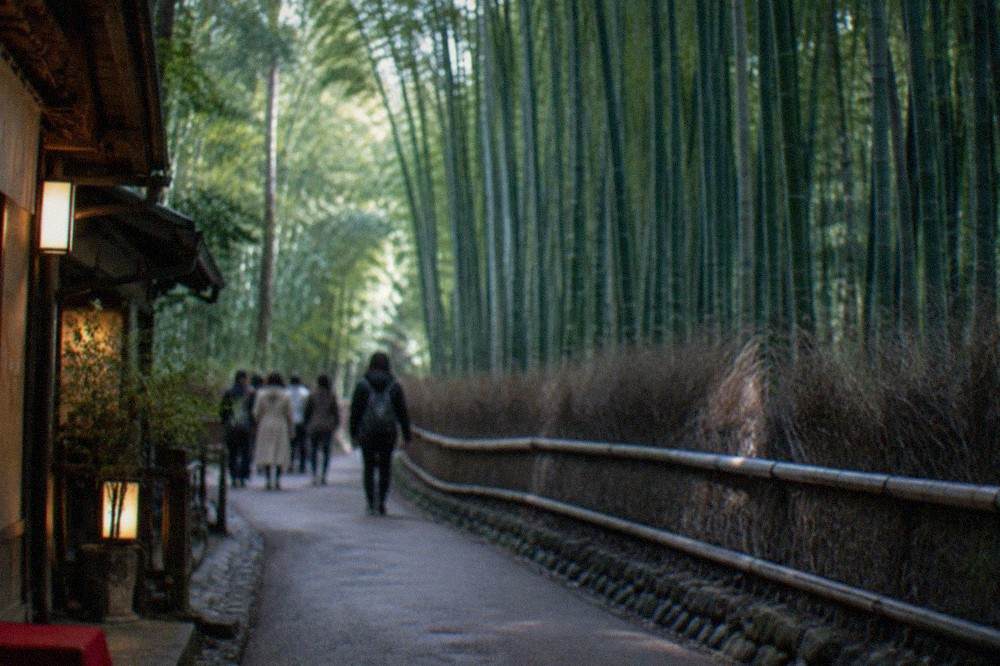
Arashiyama is the prettiest part of Kyoto in the early morning and in autumn, when its bamboo grove, the Katsura River and the mountain backdrop combine into the widest single view in the city. The grove itself is a free public path with 24-hour access. The trade-off is distance: Arashiyama sits on the western edge of Kyoto, a short train ride from the centre, and the grove fills with visitors by mid-morning.
The bamboo grove is the headline, and it deserves it. The path between Tenryu-ji's grounds and the Okochi Sanso area runs through a stand of tall moso bamboo that filters light into something close to green shade. The grove is free, has no gate and no enforced one-way system on the primary sources, and is at its best before 8 a.m. and after 4 p.m. in the warmer months.
But Arashiyama is bigger than the grove, and the parts most visitors skip are the parts that make the case. Tenryu-ji, the Zen temple whose garden was designed in the 14th century to borrow the mountain backdrop, charges 500 yen for the garden and 300 yen more for the buildings. The garden fee is one of the better spends in Kyoto, because the view across the pond to the forested hillside is the composition the whole district is famous for.
The Iwatayama Monkey Park sits on the hill above the north bank, an adult ticket at 800 yen cash only, and the twenty-minute climb is rewarded with a viewing terrace over the whole river valley. The Sagano Romantic Train, 880 yen one way for an adult, runs roughly hourly through the river gorge north of the district, and the Hozugawa Kudari boat ride, 6,000 yen for an adult, comes down the same gorge over about two hours.
In late autumn the balance tips. The JMA Kyoto observatory's normal for maple red leaves is 5 December, and the 2025 observation was 10 December, both far later than the mid-November dates most guides print. The district's own foliage, from the riverbank maples to the Tenryu-ji garden, is what draws the November crowds, and the Weathernews 2026 outlook put the Arashiyama peak around 24 November. If your trip falls in the last week of November, Arashiyama makes the strongest claim to being the prettiest part of Kyoto.
What Is The Prettiest Street In Kyoto?
The prettiest street in Kyoto is Ninenzaka, the lower of the two preserved slopes below Kiyomizu-dera, with Sannenzaka immediately above it. Together they form the only continuous Edo-period commercial streetscape of this scale left in the city. The strongest rivals are the Shirakawa canal lane in Gion's Shinbashi district and the Philosopher's Path, a canal-side stone walk that is a street only in the loosest sense.
Ninenzaka's case rests on texture. The lane is stone-paved, gently curved, and lined with two-storey wooden buildings whose upper floors still carry the lattice windows of the old city. The Hokan-ji pagoda rises directly above it, so the view up the slope carries both the streetscape and the tallest wooden structure in the district in one frame. It is the single most photographed street in Kyoto, which is both the argument for it and the argument against visiting it at noon.
Shinbashi in Gion is the quieter alternative. The willow-lined Shirakawa canal, the stone bridges and the ochre tea houses along it are the surviving core of the entertainment district, and in the evening, when the lanterns are lit and the tea houses are working, it is arguably the most atmospheric single street in the city. The trade-off is conduct: the tourism association's guidelines prohibit touching or photographing geiko and maiko without permission, and signs on the private alleys off Hanamikoji threaten a 10,000 yen penalty for unauthorised entry or photography. Stay on the public canal lane and the problem does not arise.
The Philosopher's Path, a two-kilometre stone walk along a shaded canal from Ginkaku-ji south toward Nanzen-ji, is the third candidate. It is at its best in early April: the JMA 2026 cherry flowering date for Kyoto was 23 March, with full bloom on 30 March, against 1991-2020 normals of 26 March and 4 April, and the canal's cherry trees make it the prettiest walk in the city for roughly ten days a year. At Ginkaku-ji's end, note the fee: the Silver Pavilion doubled its admission to 1,000 yen from 1 April 2026, the first change in 32 years, so it now costs twice Kinkaku-ji's 500 yen.
| Candidate street | District | Best time | Catch |
|---|---|---|---|
| Ninenzaka and Sannenzaka | Higashiyama | 6:00 to 8:00 | Heavily visited from mid-morning |
| Shirakawa canal lane, Shinbashi | Gion | Evening, lanterns lit | Strict conduct rules on geiko and maiko |
| Philosopher's Path | Eastern hills | Early April, cherry bloom | Plain outside the bloom window |
| Pontocho alley | Kawaramachi | Evening | Dining lane, not a period streetscape |
If the question is which of these to trade a morning for, the honest answer is that Ninenzaka and the Philosopher's Path serve different trips: the first is the essential first visit, the second is the return visit. The most beautiful street in Kyoto answer page takes that comparison further.
Is Fushimi Inari Worth The Climb For The Views?
Fushimi Inari is the prettiest part of Kyoto for anyone who values a whole mountain over a streetscape: the shrine is free, the paths have no closing time, and the torii tunnels climb through forest to viewpoints over the southern city. The shrine dates its founding to 711, when, in its own account, Irogu no Hatanokimi enshrined the deity on Inariyama on an imperial order from Empress Genmei. It is the head shrine of about 30,000 Inari shrines nationwide.
The famous image is the Senbon Torii, the dense tunnel of vermilion gates packed close together on the lower slopes. The shrine's own FAQ says there are about 10,000 torii of all sizes across the whole mountain, a figure that belongs to the entire precinct and not to the tunnel alone. The tunnel section takes twenty minutes at most, and the crowds in it are the densest in the city, which is the price of it being free, open and famous. More of these guides are collected on Kyoto Travel Guide.
The upper mountain is the part most visitors never see. Above the Yotsutsuji junction, where the four trails converge at a viewpoint over Kyoto, the stream of visitors thins sharply and the paths run through quiet forest with small shrines, stone foxes and moss. The full circuit of the mountain takes about two to three hours on foot, and the shrine gives Inariyama's height as 233 m. In the early morning the lower tunnels and the upper forest are both quiet, and the shrine links to the city's crowd-comfort forecast from its own front page.
A guided option exists for exactly this reason: the Fushimi Inari Hidden Hiking Tour, a three-hour walk rated 5 from 1,931 reviews, from $73 per person, which takes the quieter trails above the main tunnels. It has its own tour page with the full route description, and Check availability if the date matters.
When Is Kyoto At Its Most Beautiful?
Kyoto is at its most beautiful in two windows: the cherry bloom of late March to early April, and the maple season of late November to early December. The JMA 2026 dates were flowering on 23 March and full bloom on 30 March, both ahead of the 1991-2020 normals of 26 March and 4 April. The maple normal is 5 December, later than almost every guide claims, and the 2025 observation was 10 December.
The cherry window is the more famous and the more fragile. Full bloom lasts roughly a week, rain and wind shorten it, and the city's 62.79 million annual visitors include a very large share who arrive in that week. The Philosopher's Path, Maruyama Park's weeping cherry and the Kamo River banks are the classic cherry settings, and the early-morning rule applies twice over: the light is better and the lanes are passable.
The maple window is longer and, on the evidence of the official dates, later than planned around. The JMA normal of 5 December is the observatory's specimen tree, not the Arashiyama peak, so treat it as the official marker rather than the best week; the commercial forecasts for 2026 put the Arashiyama peak around 24 November and the city-wide red-leaves date at 11 December. Kodai-ji runs its autumn night illumination from 23 October to 13 December 2026, and Kiyomizu-dera's autumn night viewing runs 21 to 30 November with hours to 21:30.
Between those windows, the honest ranking changes by season. Summer is Kyoto's wettest and most humid quarter: the JMA 1991-2020 normals give July 223.6 mm of rain, more than June's 199.7 mm, and August a mean daily maximum of 33.7 C. Winter, by contrast, is the city's quietest and in many eyes its most photogenic season: January is both the coldest month, a mean of 4.8 C, and the driest, 53.3 mm, and the temples carry a stillness the busy months never show.
| Season | Official marker | What it does to the ranking |
|---|---|---|
| Late March to early April | Cherry full bloom, JMA normal 4 April | Philosopher's Path and riverbanks lead |
| Late November to early December | Maple normal 5 December; Arashiyama forecast 24 Nov 2026 | Arashiyama and Tofuku-ji lead |
| Winter, December to February | Driest, coldest month January | Temples and zen gardens at their quietest |
| Summer, June to August | Wettest month July, 223.6 mm | Early mornings only; mountain trails gain value |
What Is The Prettiest Part Of Kyoto?
The prettiest part of Kyoto, on the balance of streetscape, setting and access, is the preserved Higashiyama slope from Kiyomizu-dera down Ninenzaka and Sannenzaka to Yasaka Shrine. Arashiyama wins on the widest single view and in late November, the Fushimi Inari mountain wins for anyone willing to climb, and the Philosopher's Path wins for ten days in early April, but the Higashiyama slope holds its character in every season and at every hour of daylight.
That is the answer this site stands behind for a first visit. For a second or third trip the ranking reshuffles: the most beautiful village in Kyoto question points at the rural edge of the prefecture, and the what Kyoto is known for answer frames the whole set of expectations. Wherever you land, book the first hour of daylight for whichever pretty part you choose, because in a city drawing 62.79 million visitors a year, the hour is the only thing that is scarce.
Common Questions About The Prettiest Part Of Kyoto
What Is The Prettiest Part Of Kyoto?
The preserved Higashiyama slope below Kiyomizu-dera, the lanes of Ninenzaka and Sannenzaka running down to Yasaka Shrine, is the prettiest part of Kyoto as a whole walkable district. Arashiyama and the Fushimi Inari mountain are the strongest rivals, each better in specific hours and seasons.
Is Arashiyama or Higashiyama prettier?
Arashiyama has the wider view: bamboo, river and mountains together. Higashiyama has the better streetscape and is central. In late November Arashiyama wins on foliage; the rest of the year Higashiyama wins on consistency.
What is the prettiest street in Kyoto?
Ninenzaka, with Sannenzaka above it, is the prettiest street in Kyoto, the only continuous Edo-period commercial streetscape of its scale in the city. The Shirakawa canal lane in Gion and the Philosopher's Path are the main alternatives.
When is Kyoto most beautiful?
In the cherry bloom of late March to early April, when the JMA 2026 full-bloom date was 30 March, and in the maple season from late November into early December, with the official red-leaves normal at 5 December.
Is Fushimi Inari pretty beyond the torii tunnels?
Yes. Above the crowded lower tunnels the paths climb through quiet forest to viewpoints over the city, and the full mountain circuit takes two to three hours. Admission is free and the paths have no closing time.