What Is Kyoto Known For?
Kyoto is known for its temples, shrines, geisha districts, kaiseki dining and summer festivals. Here is what the verified numbers say about Japan's ancient capital.
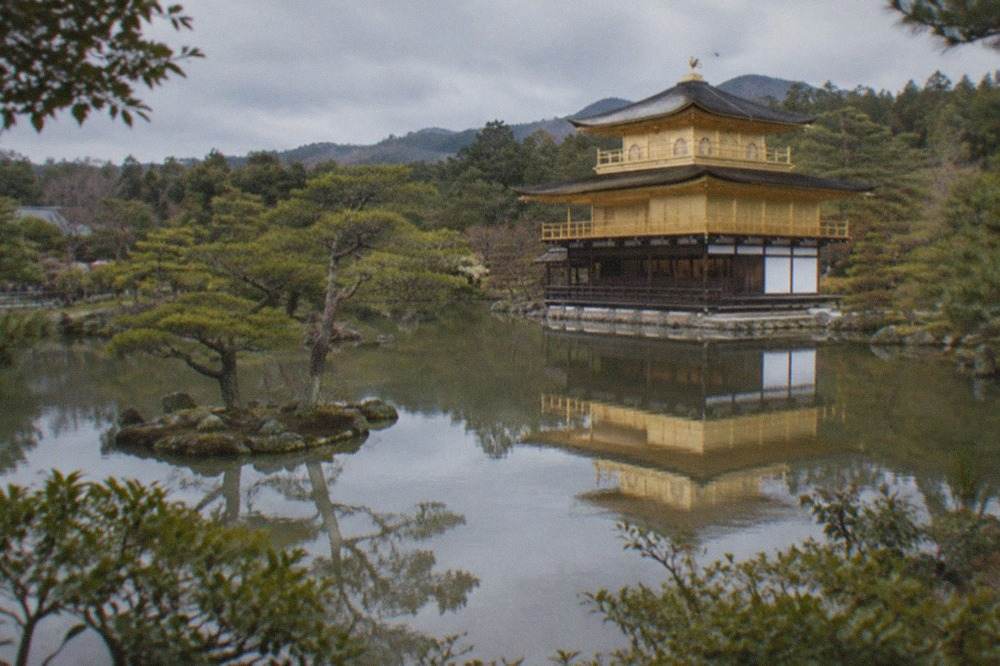
Kyoto is known for being Japan's ancient capital turned living museum: a city of 1,600-era temples, geisha districts, Zen gardens and kaiseki dining, all packed into a basin surrounded by forested mountains. The city's own 2025 tourism survey, released in June 2026, counted a record 62.79 million visitors, of whom 12.68 million came from abroad, and 2.0474 trillion yen in tourism spending. Those are the headline numbers behind the pull. The substance behind them is what this page breaks down: which temples, which foods, which festivals, and which seasonal moments people actually come for.
What Is Kyoto Known For?
Kyoto is known for three things above all: its density of historic temples and shrines, including Kinkaku-ji, Kiyomizu-dera and Fushimi Inari Taisha; its preserved traditional districts such as Gion, where geiko and maiko still work; and its food culture, from kaiseki course dining to matcha and Nishiki Market. Layered over those are the great festivals, Gion Matsuri above all, and the cherry and maple seasons that draw crowds in spring and autumn.
Each of those threads deserves its own unpacking, because "temples" covers everything from a 500 yen stroll around a gold pavilion to a free mountain hike under ten thousand torii gates. The same goes for food: a bowl of ramen and a 30,000 yen kaiseki course are both Kyoto, just different rooms of the same house. The sections below take them one at a time, with the fees, dates and figures the venues and the city themselves publish.
If you are still deciding whether the city merits the trip at all, the companion piece is Kyoto worth visiting works through that question directly, and the site's main things to do in Kyoto page maps the full sight list.
Why Is Kyoto Known As Japan's Ancient Capital?
Kyoto is known as Japan's ancient capital because it was the seat of the Imperial Court for over a millennium, and the transfer of power away from it was proclaimed at Nijo-jo Castle in 1867, when the 15th shogun, Tokugawa Yoshinobu, announced the return of authority to the Emperor. The city's temples, palaces and district layouts still reflect that imperial era, and 17 of its monuments are UNESCO World Heritage listed.
The 1867 sequence is worth knowing in full, because the castle's own history page tells it precisely. On 13 October 1867, Yoshinobu summoned senior vassals from 40 domains to the Ohiroma of Ninomaru-goten Palace and asked their opinions. On the 14th he announced his intention to return political authority to the Imperial Court, and the Emperor accepted on the 15th. Edo Castle was handed over without bloodshed the following spring, and the Meiji period began. You can stand in the palace where that happened: Nijo-jo Castle charges 1,300 yen for admission including the Ninomaru-goten Palace, with entry from 8:45 to 16:00.
The imperial thread continues into the present day. The Kyoto Imperial Palace, the Kyoto Gosho, is now open to all visitors with no advance application, and the Katsura and Shugakuin Imperial Villas remain reachable by guided tour, Katsura at 1,000 yen for visitors 18 and over. The deepest historical roots in the city belong to Fushimi Inari Taisha, which dates its founding to 711, when, in the shrine's own account, Irogu no Hatanokimi enshrined the deity Inari Okami on Inariyama on an imperial order from Empress Genmei. The shrine itself hedges the story with "is said to be", which is honest, and it counts about 30,000 Inari shrines nationwide under its head authority.
What Temples and Shrines Is Kyoto Known For?
Kyoto is known for Kinkaku-ji, the Golden Pavilion, Kiyomizu-dera with its wooden stage, the 1,001 Kannon statues of Sanjusangen-do, the Zen rock garden of Ryoan-ji, and the ten thousand torii gates of Fushimi Inari Taisha. Admission at the major temples runs 500 to 1,000 yen, and two of them changed their fees in 2026, so older guides now quote wrong numbers.
The fee changes are the detail most guides miss. Ginkaku-ji, the Silver Pavilion, doubled its adult admission from 500 to 1,000 yen effective 1 April 2026, its first revision in 32 years, and Tofuku-ji revises its Hojo garden fee from 500 to 600 yen on 1 November 2026, with a new 1,000 yen combined ticket. Kinkaku-ji, by contrast, still charges the 500 yen it set on 1 April 2023. What that means practically: a fee copied from a 2024 or 2025 guide is wrong for at least one temple in the set below.
| Temple or shrine | Adult admission | Hours |
|---|---|---|
| Kinkaku-ji (Rokuon-ji) | 500 yen | 9:00-17:00 |
| Ginkaku-ji (Jisho-ji) | 1,000 yen from 1 Apr 2026 | 8:30-17:00 (Mar-Nov), 9:00-16:30 (Dec-Feb) |
| Kiyomizu-dera | 500 yen | Opens 6:00 daily, closing varies by season |
| Sanjusangen-do (Rengeo-in) | 600 yen | 8:30-17:00 (Apr-Nov), 9:00-16:00 (Nov-Mar) |
| Ryoan-ji | 600 yen | 8:00-17:00 (Mar-Nov), 8:30-16:30 (Dec-Feb) |
| Tenryu-ji garden | 500 yen, plus 300 yen for buildings | 8:30-17:00 |
| Nijo-jo Castle | 800 yen, 1,300 yen with Ninomaru Palace | Admission 8:45-16:00 |
| Fushimi Inari Taisha | Free | Paths have no closing time |
Sanjusangen-do holds a fact that stops most visitors cold: 1,001 Kannon statues standing in a single hall, a count the temple itself states. Fushimi Inari is the other end of the scale, free, open around the clock, and its FAQ describes "about 10,000 torii of all sizes" across the whole mountain rather than the tunnel alone. For the deeper story on the stage temple, why Kiyomizu-dera is so famous covers the engineering and the pilgrimage history.
A morning guided circuit is the efficient way to cover the headline temples if your time is short, and a guided hike through Kurama and Kibune suits the days you would rather trade pavilions for cedar forest.
What Food Is Kyoto Known For?
Kyoto is known for kaiseki course dining, matcha and its sweets, tofu and shojin-ryori temple cuisine, and the 130-odd stalls of Nishiki Market. At Hyotei, one of the city's most famous kaiseki houses, the course itself starts from 31,625 yen at lunch, while the same kitchen's annex serves rice porridge and bento from about 5,400 to 7,300 yen.
That split is the honest answer to what kaiseki costs, and it comes from Hyotei's own published menu, tax and service included. The main building's kaiseki runs from 31,625 yen at lunch and 37,950 yen at dinner, with reservations taken from two people. The annex beside it serves asa-gayu, morning rice porridge, at 5,445 yen and a shokado bento at 7,260 yen. Those are Hyotei's prices for its own rooms and dates, not a Kyoto norm, but they show how wide the door is: the same kitchen feeds both budgets. The wider set of guides lives on Kyoto Travel Guide.
Below that tier sits the rest of the food identity. Kyoto's signature dish, the subject of its own page on what Kyoto's signature dish is, is tied to the city's water and its temple kitchens. Nishiki Market keeps the street level: shops set their own hours, roughly 9 or 10:00 to 17 or 18:00, and the market association prints no unified opening time, so treat any single quoted hour as approximate. The market's own rule asks visitors not to eat while walking, but to eat at the stall where they bought.
What Festivals Is Kyoto Known For?
Kyoto is known for Gion Matsuri, the month-long July festival of Yasaka Shrine with its Yamaboko Junko processions on 17 and 24 July; Aoi Matsuri on 15 May; Jidai Matsuri on 22 October; and Gozan no Okuribi, the bonfire lighting of five mountains on 16 August. Together they anchor the city's calendar and its summer crowds.
Gion Matsuri runs the whole of July, from Kippu-iri on the 1st to Nagoshi-sai on the 31st, with the shrine's mikoshi leaving Yasaka on the evening of the 17th and returning late on the 24th. The two parade days are the draw. Aoi Matsuri, the Kamo festival of 15 May, is the processional one, and Jidai Matsuri on 22 October is the costume chronicle, with the departure at 9:00 from the Kyoto Gosho to Heian Shrine. Gozan no Okuribi lights five mountains in sequence on 16 August, and entering the hills is prohibited that day.
| Festival | Date | What it is |
|---|---|---|
| Aoi Matsuri | 15 May (postponed to 16 May in rain) | Imperial-style procession between the Kamo shrines |
| Gion Matsuri | 1-31 July | Month-long festival; float parades on 17 and 24 July |
| Gozan no Okuribi | 16 August | Bonfires lit on five mountains around the city |
| Jidai Matsuri | 22 October | Costume procession of 2,000 years of Kyoto history |
None of these are bookable products, and this site does not pretend otherwise: they are public events you attend, not tours you buy. What you can book is position and time, which is why the July and October dates matter for planning a trip around them.
What Seasons Is Kyoto Known For?
Kyoto is known for cherry blossom in late March and early April, and for maple foliage from late November into December. The official JMA markers put the 1991-2020 normal full bloom at 4 April and the normal red-leaf date at 5 December, and in 2026 cherries flowered on 23 March and reached full bloom on 30 March, earlier than the norm.
The maple date is the surprise, because almost every guide claims a mid-November peak. The Japan Meteorological Agency's observatory tree in Kyoto turns on 5 December by the 1991-2020 normal, and it turned on 10 December in 2025. The commercial forecasts for Arashiyama-style viewing run earlier, around late November, so the honest framing is this: the official marker is early December, the tourist-district colour runs ahead of it, and the two describe different trees. The city's climate has its own signature too, and it is not the one people expect.
August is the hottest month at a mean of 28.5 C and a mean daily high of 33.7 C; January is both the coldest at a mean of 4.8 C and the driest at 53.3 mm. If you are choosing between seasons, the climate table in the site's weather guide carries the full monthly breakdown, and the rainy-season reality of a July or August visit is worth reading before you commit.
Is Kyoto Known For Geisha and Gion?
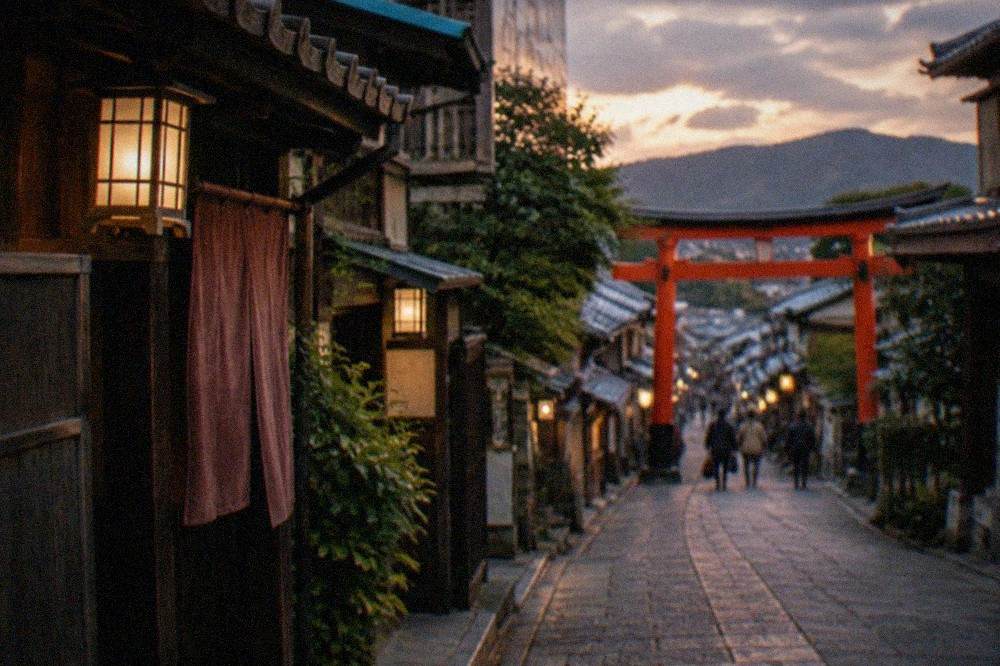
Kyoto is known for Gion, its most famous of five geisha districts, where geiko and maiko still entertain clients in licensed teahouses. The district is walkable and photogenic, but the rules are strict: the city's tourism association asks visitors not to touch, chase or photograph geiko and maiko without permission, and signs on Gion's private alleys threaten a 10,000 yen penalty for unauthorized photography or entry.
That penalty is district-council signage on the private lanes off Hanamikoji, not a municipal fine, and the distinction matters both legally and practically. The main Hanamikoji road remains public and open to photography. The broader etiquette, published by the Kyoto City Tourism Association, is simple: treat the working professionals you might glimpse as exactly that, working professionals. The district itself, its lanes, machiya facades and evening lantern light, rewards an unhurried walk with or without a sighting, and the question of whether Gion is worth visiting gets a fuller treatment on its own page.
A guided evening walk is the way most visitors get context they would otherwise miss, since the teahouse world is closed to outsiders by design. The guides who work the district every night can explain what is actually happening behind the lattice windows, which is more than the facades will tell you on their own.
Common Questions About What Kyoto Is Known For
What Is Kyoto Known For?
Kyoto is known for its temples and shrines, including Kinkaku-ji, Kiyomizu-dera and Fushimi Inari Taisha; the geisha district of Gion; kaiseki dining and matcha; the Gion Matsuri festival; and its cherry blossom and maple foliage seasons. The city drew a record 62.79 million visitors in 2025.
What Is the Most Famous Thing in Kyoto?
Kinkaku-ji, the Golden Pavilion, is the single most famous sight, charging 500 yen admission and open 9:00 to 17:00. Fushimi Inari Taisha, free and with no closing time on its paths, is the most visited and the most photographed, with about 10,000 torii gates across the mountain.
What Food Is Kyoto Most Famous For?
Kaiseki course dining is Kyoto's flagship cuisine, with the famous house Hyotei serving kaiseki from 31,625 yen at lunch while its annex serves porridge and bento from about 5,400 to 7,300 yen. Matcha and its sweets, tofu cuisine and Nishiki Market's 130-odd stalls round out the food identity.
Is Kyoto Known More for Temples or Shrines?
Both, in different registers. The temples, Kinkaku-ji, Kiyomizu-dera, Ryoan-ji among them, charge admission of 500 to 1,000 yen and hold the World Heritage weight. The shrines, Fushimi Inari Taisha and Yasaka Shrine above all, are free, host the great festivals, and stay open around the clock.
When Is the Best Time to See What Kyoto Is Known For?
Late March to early April for cherry blossom, with the 1991-2020 normal full bloom at 4 April; late November into December for maple colour, with the official red-leaf marker at 5 December; and July for Gion Matsuri, accepting that July is also the wettest month at 223.6 mm of rain.
Kyoto's reputation rests on a simple fact: it kept what other Japanese cities rebuilt or lost. The temples still charge their modest fees, the districts still work, the festivals still run on their ancient dates, and the mountains still frame all of it. Plan around the verified numbers above, check anything time-sensitive with the venue, and the city delivers what it is known for.