What Is So Special About Nara Japan?
Nara Japan is special for its free-roaming sacred deer, the Great Buddha of Todai-ji, and a compact park city that is an easy day trip from Kyoto. Here is what makes it different.
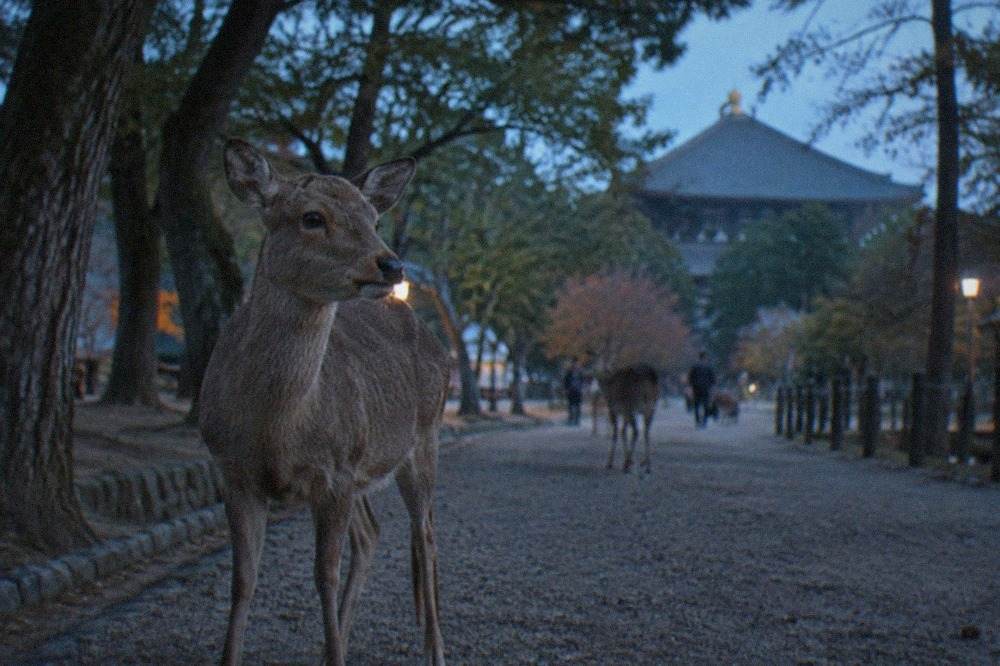
Nara was the capital of Japan before Kyoto existed in that role, and the city has spent the twelve centuries since turning itself into a park with a temple problem. The 2026 deer census counted 1,687 deer living in and around Nara Park, up 222 on the year before, and the count is done by hand over two July mornings between 05:30 and 08:00. Todai-ji's Great Buddha Hall charges 800 yen to enter and holds one of the largest bronze Buddhas ever cast in Japan. The whole thing sits about 45 minutes from Kyoto by rapid train, which is why most people see it as a day trip rather than a base. This site is a Kyoto guide first, so the facts below are the ones a Kyoto traveller actually needs: what Nara is, what the deer are about, what it costs, and how to get there and back.
Why Was Nara Japan's First Fixed Capital?
Nara, then called Heijo-kyo, became Japan's first permanent capital in 710 and held that role until the court moved north to the Kyoto basin at the end of the eighth century, so almost everything the city is famous for, the Great Buddha, the shrine avenues and the park itself, descends from those imperial years. The court had previously moved with each new emperor, and Nara was the first attempt at a Chinese-style grid capital built to last. The experiment ended when the government relocated north, but the temples stayed, grew rich, and never left. That is why a mid-size city 45 minutes from Kyoto holds several of the oldest wooden buildings on earth rather than one famous castle and a lot of modern blocks.
The practical consequence for a visitor is density. Nara Park, Kasuga Taisha's lantern avenues, Todai-ji, Kofuku-ji and the Nara National Museum sit inside one walkable green belt, and the deer wander through all of it. You do not plan a Nara day the way you plan a Kyoto day, moving between districts by bus or subway. You park yourself near the park and walk.
If you want the fuller comparison, including which city deserves more of your limited days, read our Kyoto versus Nara guide, and the Nara day trip from Kyoto page has the station-by-station detail.
What Is So Special About Nara Japan?
Three things set Nara apart: the deer, treated as messengers of the gods and protected by law, roam free through the city centre; Todai-ji's Daibutsuden, the Great Buddha Hall, was the largest wooden building in the world when it was rebuilt in the eighteenth century; and the whole ensemble sits in one compact park you can cross on foot in under an hour. No other city in Japan combines free-roaming sacred animals with eighth-century imperial architecture at this scale, and no other major destination puts all of it outside a train station this close together.
Start with the deer, because they are the reason most people go. The animals are sika deer, they are counted annually, and the 2026 census found 411 stags, 990 does and 286 fawns across the park and its fringes. Feeding them is a managed ritual rather than a free-for-all: visitors buy crackers from licensed sellers in the park, the deer bow for them, and the same deer that beg politely in the morning will nose into any bag that smells like food. The city's own guidance is to hold onto your paper, maps and snacks, because a deer will eat all three.
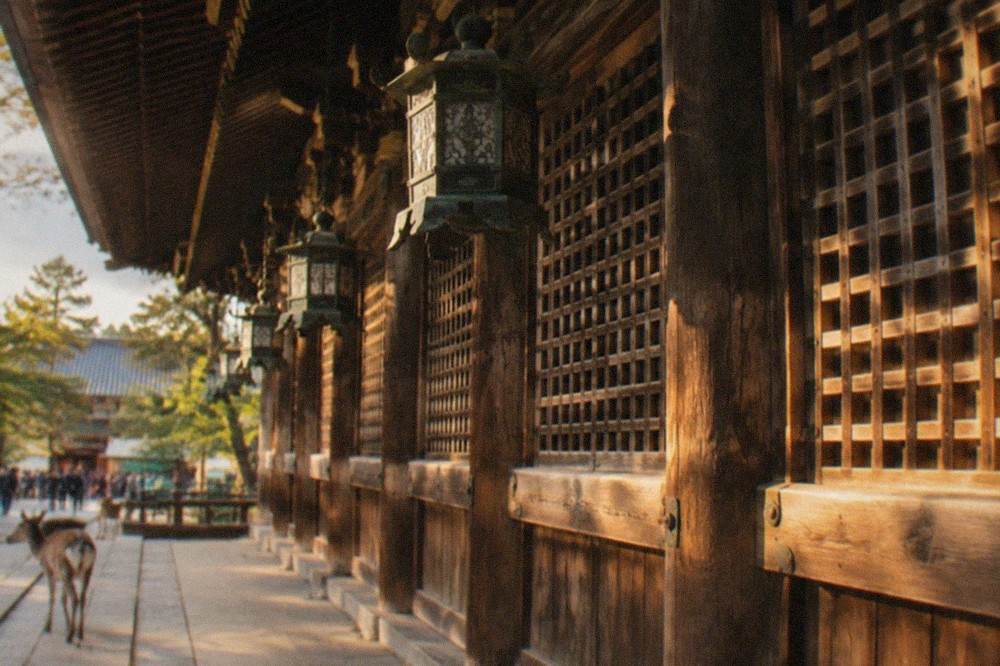
Then the temples. Todai-ji is the headliner and the Daibutsuden admission is 800 yen for adults and university students and 400 yen for elementary school children, with the hall open 7:30 to 17:30 from April to October and 8:00 to 17:00 from November to March, every day of the week. Kasuga Taisha's forest setting and Kofuku-ji's five-story pagoda complete the picture, and all three sit within the same park perimeter as the deer.
How Do You Get From Kyoto To Nara?
The JR Miyakoji Rapid runs Kyoto to Nara in about 45 minutes and costs about 720 yen one way, while the Kintetsu line costs about 760 yen with a faster limited express option for an extra 520 yen, so the two railways split the difference between price and speed and both fares should be treated as approximate rather than official. Trains run frequently through the day from two different Kyoto stations, JR Nara Station on the north side of the park and Kintetsu Nara Station one block closer to it, and neither requires a reservation on the rapid or express services.
| Route | Operator | Time | Fare | Note |
|---|---|---|---|---|
| Kyoto to Nara | JR Miyakoji Rapid | about 45 min | about 720 yen | arrives JR Nara Station, 15 min walk to the park |
| Kyoto to Nara | Kintetsu express | about 35-40 min | about 760 yen | arrives Kintetsu Nara Station, closest to the park |
| Kyoto to Nara | Kintetsu limited express | about 35 min | about 1,280 yen total | reserved seat surcharge of about 520 yen on top |
The honest framing on those fares: they come from secondary fare guides rather than a single operator page, so treat them as planning figures and check the machine at the station. The structure of the choice does not change either way. Kintetsu gets you closer to the park and faster if you pay for the limited express; JR is the simpler choice if you are staying near Kyoto Station's main concourse or holding a rail pass.
Coming back, the same two lines run into the evening, so a Nara day can start after breakfast and still have you in Kyoto for dinner. If you would rather not run the trains at all, guided day tours from Kyoto or Osaka cover Nara's morning hours with a guide and skip the timetable homework entirely.
What Does A Nara Day Trip Cost?
A Nara day trip is one of the cheapest full days out of Kyoto: about 1,500 yen return on the train, 800 yen into the Daibutsuden, and the park and deer themselves cost nothing, so a realistic budget day lands at a few thousand yen per person before lunch and souvenirs. The park is public land with no gate and no fee, the deer are free to watch and the licensed cracker sellers charge whatever the market bears for a bundle, which is a price this site does not print because it is not in the verified record.
The comparison with a Kyoto day is the point worth making. Inside Kyoto itself, the temples charge one by one, and the big names have been revising their fees: Ginkaku-ji doubled to 1,000 yen in April 2026 and Tofuku-ji revises its own tickets from 1 November 2026. Nara's headline temple is 800 yen and the rest of the park is free, so the day out is genuinely cheaper than a heavy Kyoto sightseeing day, transport included. The wider set of guides lives on Kyoto Travel Guide.
When Is The Best Time Of Day To See The Deer?
The deer census is run between 05:30 and 08:00 on two July mornings because that is when the animals are calmest and most countable, which tells you the pattern: early morning is when the park is quiet, the deer are feeding and unhurried, and the tour groups have not yet arrived in force. By late morning the animals gather around the cracker sellers and become pushier, and by mid-afternoon the paths around Todai-ji are at their busiest.
The seasonal angle matters less than the hourly one. Nara Park is green year-round and the deer do not hibernate or migrate, so a winter morning gives you the same animals with a fraction of the crowd, and the Kyoto weather guide covers the seasons on the Kyoto side of the trip. What changes with the seasons is the foliage, the lantern festival period at Kasuga Taisha, and how hot the gravel paths get in July and August, when Kyoto's own mean daily maximum sits at 32.0 C in the JMA 1991-2020 normals and Nara's basin runs similar.
One caution worth repeating: the deer are wild animals, not pets. The census also records that 140 deer died in fiscal 2025, 36 of them in road accidents, which is the city's own argument for driving slowly on the park roads and for keeping food out of sight when you are not deliberately feeding. The fuller story of the controversy around the herd, the culling debate and the protected status is in what the Nara deer controversy is about.
Is Nara Worth A Full Day Or Just A Half?
Nara rewards a full day but most first-time visitors spend about four to five hours in the park itself, arriving mid-morning, seeing the Daibutsuden, Kasuga Taisha's approach and the deer, and leaving by late afternoon, which is exactly the shape of the guided morning tours that run from Kyoto. The park's sights are close together but they are not one sight, and the difference between a rushed half-day and a comfortable full one is whether you add the Nara National Museum, the hill paths behind Kasuga Taisha, or a proper lunch stop.
The food is its own reason to slow down. Nara's regional cooking leans on kakinoha-zushi, sushi pressed in persimmon leaves, and on mochi pounded in front of you at the shops near Nakatanidou, and the what to eat in Nara page covers the local dishes worth ordering rather than the generic tourist menu. None of it needs a reservation and most of it is within ten minutes' walk of either station.
The other honest answer is that Nara works as one item in a bigger Kansai plan. The northern Kyoto day tours that cover Amanohashidate and the Miyama thatched villages run ten hours from Kyoto or Osaka, and Nara sits on the same rail spine south. If your trip is short, four days in Kyoto budgets a day for it, and the day trips from Kyoto guide ranks the alternatives, from Osaka to Himeji, against it.
Common Questions About Nara
What Is So Special About Nara Japan?
Nara combines sacred free-roaming deer, the Great Buddha hall at Todai-ji, and the remains of Japan's first fixed capital, all inside one walkable park 45 minutes from Kyoto. The 2026 census counted 1,687 deer in the park area, and Todai-ji's Daibutsuden charges 800 yen to enter. No other Japanese city puts eighth-century imperial buildings and protected wild animals in the same public space.
Are The Deer In Nara Park Dangerous?
They are wild sika deer, habituated to people and food. They bow for crackers and generally behave gently, but they will nose into bags and maps, and the city advises holding onto paper and food. The census records 36 road-accident deer deaths in fiscal 2025, so the bigger risk runs the other way, from traffic to deer.
How Much Time Do You Need In Nara?
Most visitors spend four to five hours in the park, which covers Todai-ji, the deer, Kasuga Taisha's approach and lunch. A full day adds the Nara National Museum and the hill paths behind the shrine. The train from Kyoto is about 45 minutes each way, so even a half-day returns you to Kyoto for dinner.
Is Nara Or Kyoto Better For A First Visit?
Kyoto, comfortably, for a first trip: it has ten times the sights and the depth to fill four or five days. Nara is the strongest single day trip out of Kyoto, cheaper than a heavy Kyoto sightseeing day, with the park free and Todai-ji at 800 yen. The two are complements, not rivals.
Do You Need A Tour To Visit Nara From Kyoto?
No. The trains are simple, about 720 yen on the JR rapid or about 760 yen on Kintetsu, and the park is a 15-minute walk from the station. A guided tour earns its price when you want the history explained, a fixed schedule, or a combined itinerary such as Nara plus other Kansai sights in one day.
Nara's specialness is not one thing. It is the capital that stepped aside, the temple hall that out-built everything around it, and a herd of 1,687 counted deer that a city has decided to share its centre with, all reachable for about the price of a Kyoto lunch. Plan the morning, keep your maps folded, and the rest of the day takes care of itself.