How Do Four Days In Kyoto Add Nara Or Uji Without Rushing The City?
Four days is enough for Kyoto's east side, its north side, Arashiyama and one day trip, if the plan respects the real closing times and 2026 fee changes most guides still get wrong.
Short answer
Spend days one to three inside Kyoto itself, east, north and west, then give day four entirely to Nara or Uji. The city's temples stop admitting visitors between 16:00 and 17:00, so the sequencing matters more than the pace.
How Do Four Days In Kyoto Add Nara Or Uji Without Rushing The City?
Kyoto recorded 62.79 million visitors in 2025, a new record according to the city's own survey released in June 2026, and the number keeps climbing. The practical consequence for a four-day visit is simple: the sequencing of your days matters more than your walking pace. Temples here stop admitting visitors between 16:00 and 17:00 depending on the site and the season, two of them changed their fees in 2026, and the bus-only one-day pass that half the internet still recommends no longer exists. This itinerary is built on the fees, hours and fares this site has verified on the venues' own pages, and it gives Nara or Uji the whole of day four rather than a squeezed half-day.
What Does A Four-Day Kyoto Itinerary Actually Cover?
Four days splits cleanly into east Kyoto, north Kyoto, Arashiyama in the west, and one day trip to Nara or Uji, in that order. The order exists because the east side's sights cluster on foot, the north side depends on buses with long gaps, Arashiyama deserves a slow morning, and the day trip needs the flexibility of a day you have not already half-filled. Every day below ends before the 16:00 to 17:00 admission cutoffs, which is where most improvised plans fail.
The framework also respects a number worth stating plainly: this site's activity categories run to twelve kinds, from temple walks to cooking classes, and transfers are transport, deliberately outside that count. A four-day plan cannot touch all twelve. It can, however, cover the four that carry Kyoto's reputation: the temple east, the garden north, the river west, and the shrine mountain that never closes.
Day one walks Higashiyama. Day two buses the north. Day three takes the JR line to Arashiyama. Day four takes a train to Nara or Uji and comes back for a final evening. If you are weighing whether four is even the right number, the answer depends on pace: how many days in Kyoto is enough is a question with a real answer, and four is the minimum that fits a day trip without cutting the city.
| Day | Area | Anchor sights | Last admission to watch |
|---|---|---|---|
| 1 | Higashiyama and Gion | Kiyomizu-dera, Ninenzaka, Yasaka Shrine | Kiyomizu-dera closes 18:00 most of the year |
| 2 | North Kyoto | Kinkaku-ji, Ryoan-ji, Nijo-jo Castle | Nijo-jo stops admitting at 16:00 |
| 3 | Arashiyama | Bamboo grove, Tenryu-ji, monkey park | Monkey park last entry around 15:30 |
| 4 | Nara or Uji | Todai-ji, or Byodo-in and matcha | Todai-ji to 17:30 April to October |
For a fuller catalogue of what the city holds, the things to do in Kyoto page is the site's master list, and the shorter three days in Kyoto plan drops the day trip if your calendar is tighter.
Day 1 In Kyoto: Kiyomizu-dera, Ninenzaka And Gion After Dark?
Start at Kiyomizu-dera, which opens at 6:00 according to the temple's own FAQ, walk down through Ninenzaka and Sannenzaka to Yasaka Shrine, then cross into Gion for the evening. The temple charges 500 yen, the shrine is free, and the walk between them is entirely downhill, which is why this direction and not the reverse. Gion is genuinely a night district: its geiko and maiko work in the evenings, so saving it for last is not a stylistic choice.
Kiyomizu-dera's hours are the reason it opens the day. A 6:00 start means the famous stage over the Otowa waterfall is at its quietest before 8:00, and the temple's own access page publishes the seasonal schedule, including the spring and autumn night viewings that run to 21:30. The 500 yen admission is consistent across the temple's materials and current reporting, though the temple itself does not print the figure on its English pages.
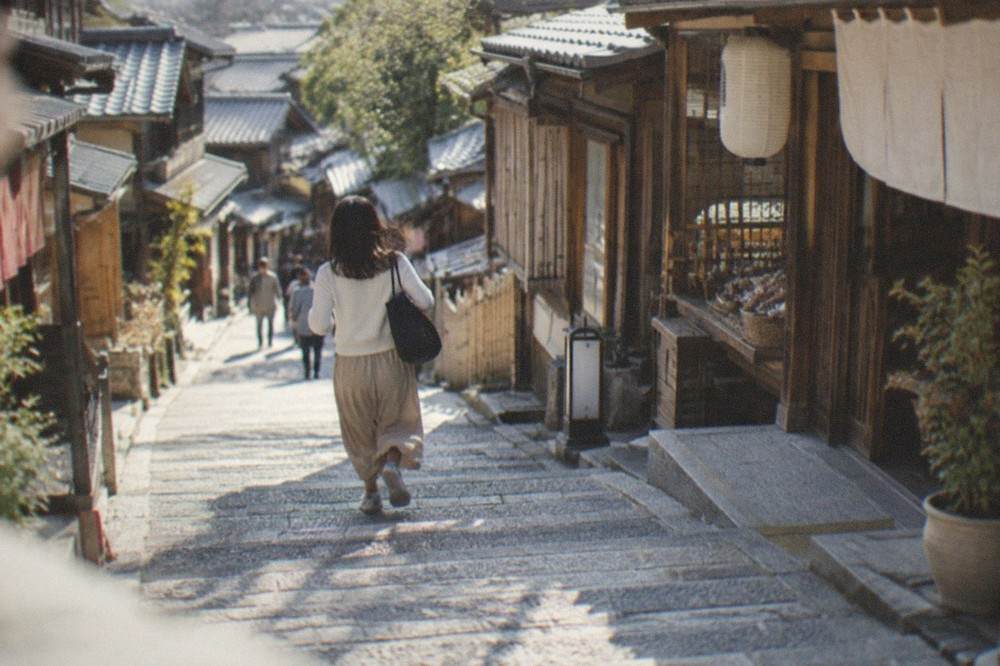
The descent through Ninenzaka and Sannenzaka, two preserved slope streets, needs no ticket and no plan beyond patience. They are steep, crowded from mid-morning, and lined with the shops that make what to buy in Kyoto an easy question to answer. Maruyama Park behind Yasaka Shrine is the natural lunch stop.
The evening belongs to Gion, with two rules the city's tourism association states directly: do not touch, chase or photograph geiko and maiko without permission, and do not enter or photograph private property where prohibited. Signs on the private alleys off Hanamikoji threaten a 10,000 yen penalty, and those signs are district-council signage, not a city police fine, but the instruction they carry is unambiguous. The main Hanamikoji road remains open to photography.
If the evening walk wants a guide, the Gion options are among the cheapest bookable experiences in the city, and a geisha-district walk costs less than a temple ticket and a coffee. For dinner, the izakaya lanes around Pontocho and Kawaramachi sit ten minutes north of Gion on foot.
Day 2 In Kyoto: Kinkaku-ji, Ryoan-ji And Nijo-jo Castle?
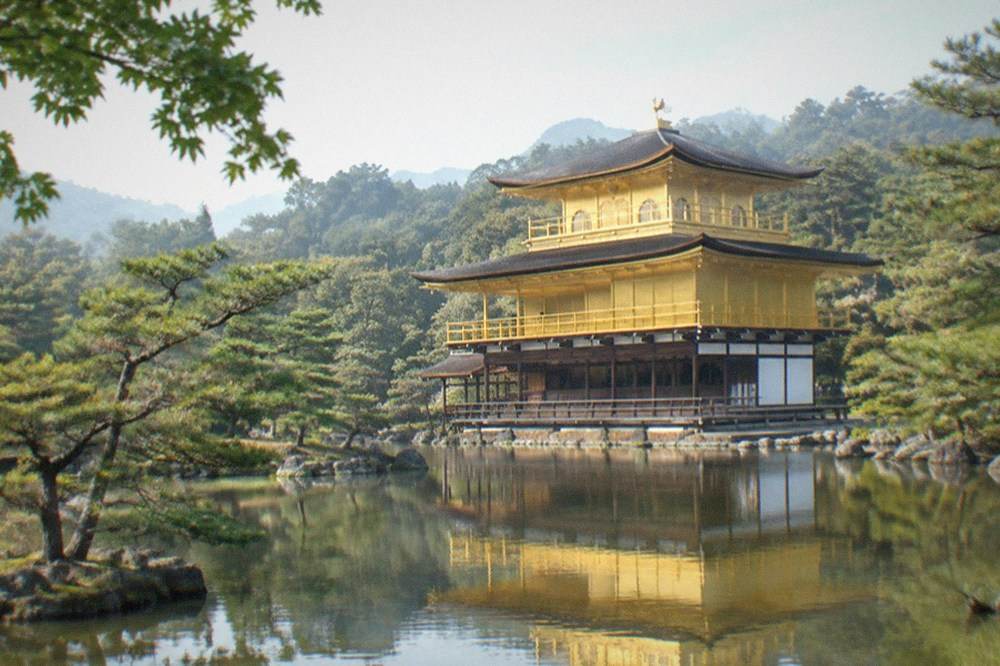
Take the bus north to Kinkaku-ji first, pair it with Ryoan-ji's rock garden, then spend the afternoon at Nijo-jo Castle, whose last admission is 16:00. Kinkaku-ji charges 500 yen and Ryoan-ji 600, both verified on the temples' own pages, and Nijo-jo charges 800 yen for the grounds or 1,300 with the Ninomaru-goten Palace included. The castle is the one with a hard afternoon cutoff, so it goes last only if you arrive by 15:00.
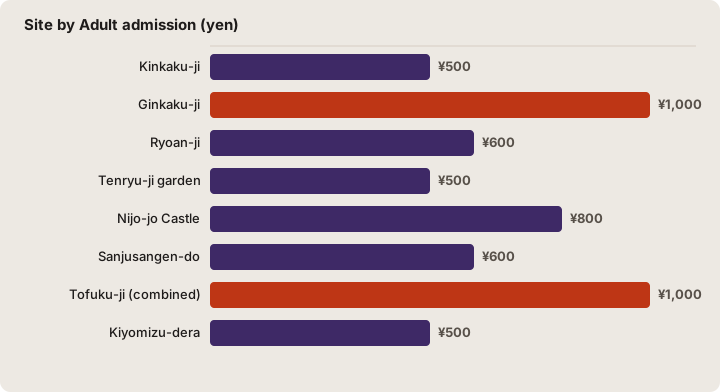
The north side is where Kyoto's fee changes bite hardest, so the numbers deserve their own table. Ginkaku-ji, the Silver Pavilion on the east side of town, doubled its adult admission from 500 to 1,000 yen on 1 April 2026, the temple's first rise in 32 years. Tofuku-ji revises its fees on 1 November 2026, with a new 1,000 yen combined ticket. Any guide quoting 2024 prices is wrong on at least one of these.
| Site | Adult admission | Verified change |
|---|---|---|
| Kinkaku-ji | 500 yen | Set 1 April 2023, unchanged since |
| Ginkaku-ji | 1,000 yen | Doubled from 500 on 1 April 2026 |
| Ryoan-ji | 600 yen | None announced |
| Tenryu-ji garden | 500 yen, plus 300 for buildings | None announced |
| Nijo-jo Castle | 800 yen, 1,300 with palace | None announced |
| Sanjusangen-do | 600 yen | None announced |
| Tofuku-ji (combined) | 1,000 yen from 1 Nov 2026 | New combined ticket |
| Kiyomizu-dera | 500 yen | Last revised around 2024 |
Kinkaku-ji opens at 9:00 and closes at 17:00 year-round, per the Shokoku-ji head temple's own access page. Ryoan-ji, twenty minutes' walk away, opens at 8:00 from March to November. The bus between them and onward to the castle is the flat 230 yen city fare, and the transport section below covers the pass question properly.
Nijo-jo Castle is the historical anchor of the day. The castle's own history page records that in 1867 the 15th shogun, Tokugawa Yoshinobu, summoned senior vassals from 40 domains to the Ohiroma of the Ninomaru-goten Palace on 13 October, announced the return of his authority to the Imperial Court on the 14th, and the Emperor accepted on the 15th. The Meiji period begins there, in that room, which is why the palace interior is worth the extra 500 yen.
The castle's Honmaru Palace reopened in September 2024 after a long restoration and requires a separate 1,000 yen ticket and an advance reservation, so decide in advance whether the Ninomaru alone is enough. The castle closes 29 to 31 December and the Ninomaru-goten closes every Tuesday in January, July, August and December.
If buses between the north-side sights sound like the part of the day you would rather not manage, a one-day bus tour that strings Fushimi Inari, Kinkaku-ji and the bamboo grove together is a legitimate alternative to day two, though it converts a slow garden afternoon into a whistle-stop circuit. The stronger plan for a first visit keeps the north side self-guided and saves the bus tour logic for the day trip.
Day 3 In Kyoto: Arashiyama, The Bamboo Grove And The River?
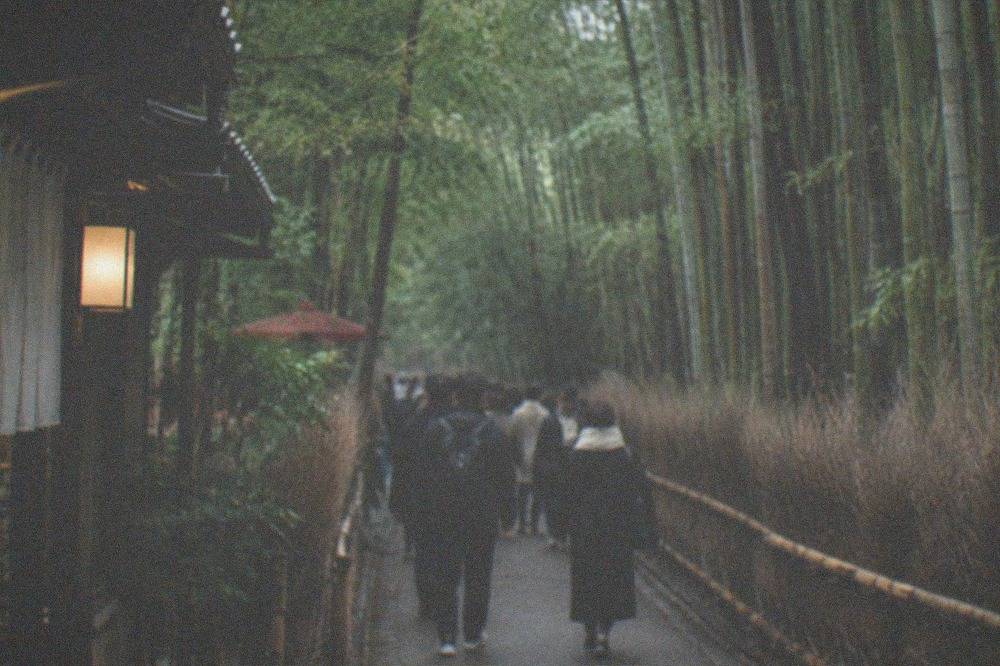
Take the JR Sagano line to Arashiyama, walk the bamboo grove early, then Tenryu-ji's garden, then decide between the monkey park and the river. The grove is a free public path with no closing time, Tenryu-ji charges 500 yen for the garden and stops admitting at 16:50, and Iwatayama Monkey Park charges 800 yen cash and stops entry around 15:30. The whole district is walkable from Saga-Arashiyama station.
The bamboo grove deserves the early start it always gets told to take, though this site will not promise a quiet hour by a margin nobody can verify. What is verifiable: it is a free public path with round-the-clock access, and no enforced one-way system appears on any primary source. The grove runs north from Tenryu-ji's gate, so the natural line is grove first, then garden, then the Togetsukyo bridge and the river.
Tenryu-ji is one of Kyoto's UNESCO gardens and its own visit page sets the fees plainly: 500 yen for the garden alone, plus 300 yen to enter the buildings, with a separate 500 yen for the Cloud Dragon hall. The garden opens 8:30 and last admission is 16:50.
The monkey park is a real hike up, roughly twenty minutes of slope, and the park's own site is blunt about the conditions: 800 yen for 16 and over, 400 yen for ages 4 to 15, cash only, open 9:00 to 16:00 with the summit closing at 16:30, and it closes early if the weather turns or the monkeys head up the hill. Closed 1 January. Families should also note that the Sagano Romantic Train charges 880 yen adult and 440 yen child one way, per the operator's own ticket page.
The river option is the Hozugawa Kudari, the two-hour boat run down from the mountains, and the operator's own ticket page prices it at 6,000 yen adult and 4,500 yen child. It runs on its regular timetable from 10 March to 13 December. It is a destination in itself, and pairing it with the bamboo grove in one day is the one place day three can overload, so choose the boat or the monkeys, not both.
For the full district treatment, including where the Sagano train fits, the Arashiyama bamboo grove page carries the detail this itinerary cannot.
Day 4 From Kyoto: Nara Or Uji, And Which Train?
Take Nara if you want the great Buddha hall and the deer park, Uji if you want matcha and a quieter river town, and give the whole day to either. Kyoto to Nara is about 45 minutes on the JR Miyakoji Rapid at roughly 720 yen one way, or about 35 minutes on a Kintetsu limited express at 760 yen plus a 520 yen surcharge, fares that rest on secondary sources and should be checked on the day. Uji is 240 yen on the JR Nara line.
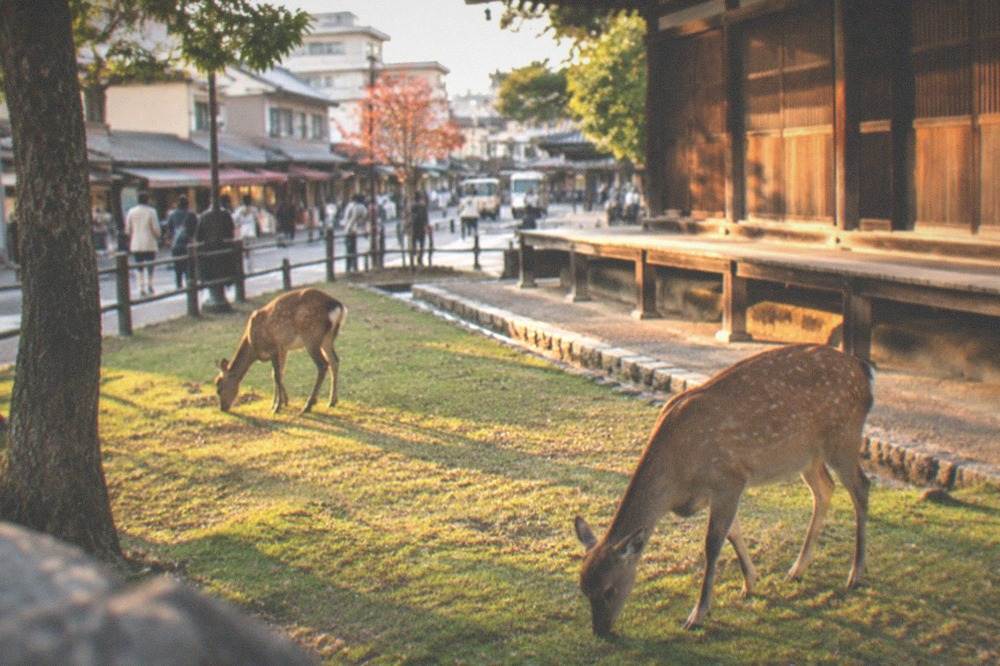
The honest framing for Nara: it is not a Kyoto suburb. It was Japan's capital before Kyoto was, its park holds a 2026 census of 1,687 deer, counted on 15 and 16 July by the local protection body, up 222 on the previous year, and Todai-ji's Daibutsuden charges 800 yen for adults, open 7:30 to 17:30 from April to October and 8:00 to 17:00 November to March, daily. The deer are wild, they bow for crackers, and the etiquette questions around them are real enough that this site keeps a separate page on the Nara deer controversy.
Uji is the calmer choice. Byodo-in, the temple on the 10 yen coin, charges 700 yen for garden and museum, with the Phoenix Hall interior at 300 yen more, tours running 9:30 to 16:10 in slots of 50 people, tickets from 9:10 first come first served. The town is the heart of Japanese matcha, and the distinction between ordinary matcha and Uji matcha has its own answer page. The Uji day trip guide covers the tea houses and the river walk.
| Nara | Uji | |
|---|---|---|
| Train from Kyoto | JR Miyakoji Rapid, about 45 min | JR Nara line |
| Fare, one way | about 720 yen JR, hedged | 240 yen |
| Anchor sight | Todai-ji Daibutsuden, 800 yen | Byodo-in, 700 yen plus 300 |
| Character | Imperial-era capital, deer park | Matcha town, riverside |
| Best for | First-time visitors | A slower fourth day |
The one phrase this site will not use here is worth a note: day-trip tour language around Nara belongs to a sibling site, so this page describes the trip on its own terms. If a guided morning appeals, the related tour below covers Nara's park and great Buddha hall with a licensed guide and returns you to Kyoto with the afternoon intact, which is exactly the shape a fourth day wants.
The deeper comparison, including where to eat in Nara, sits on the Nara day trip page and the Kyoto versus Nara guide.
How Much Does Four Days In Kyoto Cost?
Budget roughly 3,000 to 4,500 yen per person in temple and attraction admissions across the four days, 1,100 yen per day for the Subway and Bus One-Day Pass if you use it daily, and add the day trip's train fare of 240 to about 1,280 yen each way. A splurge dinner at one of Kyoto's famous kaiseki houses starts above 30,000 yen, while the same kitchen's annex serves from about 5,400 yen. Accommodation tax adds 200 to 10,000 yen per night.
The admission arithmetic assumes the itinerary above: Kiyomizu-dera 500, Kinkaku-ji 500, Ryoan-ji 600, Tenryu-ji 500 plus 300, Nijo-jo 1,300 with the palace, and the day trip's anchor sight. That lands near the low end of the range. Add Ginkaku-ji at its new 1,000 yen rate and the total climbs.
| Expense | Figure | Basis |
|---|---|---|
| Temple admissions, 4 days | about 3,000 to 4,500 yen | Fees verified on venue pages |
| Subway and Bus One-Day Pass | 1,100 yen adult, 550 child | City transport bureau |
| City bus single fare | 230 yen flat | City transport bureau |
| Subway single fare | 220 to 360 yen by zone | City transport bureau |
| EX100 tourist express bus | 500 yen per ride | City transport bureau |
| Nara by rail, each way | about 720 yen JR, hedged | Secondary sources, hedged |
| Uji by rail, each way | 240 yen | JR fare |
| Accommodation tax | 200 to 10,000 yen per person per night | City ordinance, from 1 March 2026 |
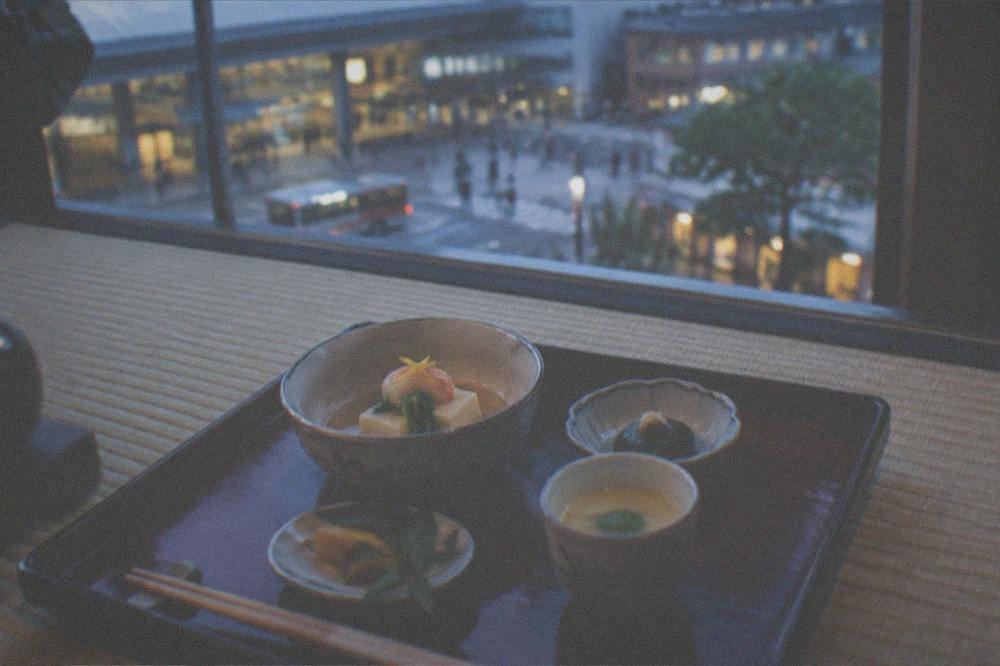
The kaiseki question deserves honesty because it is where budgets die. Hyotei, by Nanzen-ji, prints its own prices on its own site, tax and service included: kaiseki from 31,625 yen at lunch and from 37,950 at dinner in the main building, while the same house's annex serves asa-gayu at 5,445 yen and a Shokado bento at 7,260 yen. Those are Hyotei's prices, not a Kyoto average, and no city-wide figure exists that this site could honestly print. The lesson is the split, not the number: the same kitchen serves both ends of the scale.
The accommodation tax changed on 1 March 2026 and most competing guides still quote the old tiers. A room under 6,000 yen carries 200 yen per person per night, 6,000 to under 20,000 carries 400, 20,000 to under 50,000 now carries 1,000, 50,000 to under 100,000 carries 4,000, and 100,000 and up carries 10,000. The tax is charged on the room-only rate excluding meals.
When Should You Take This Four-Day Kyoto Itinerary?
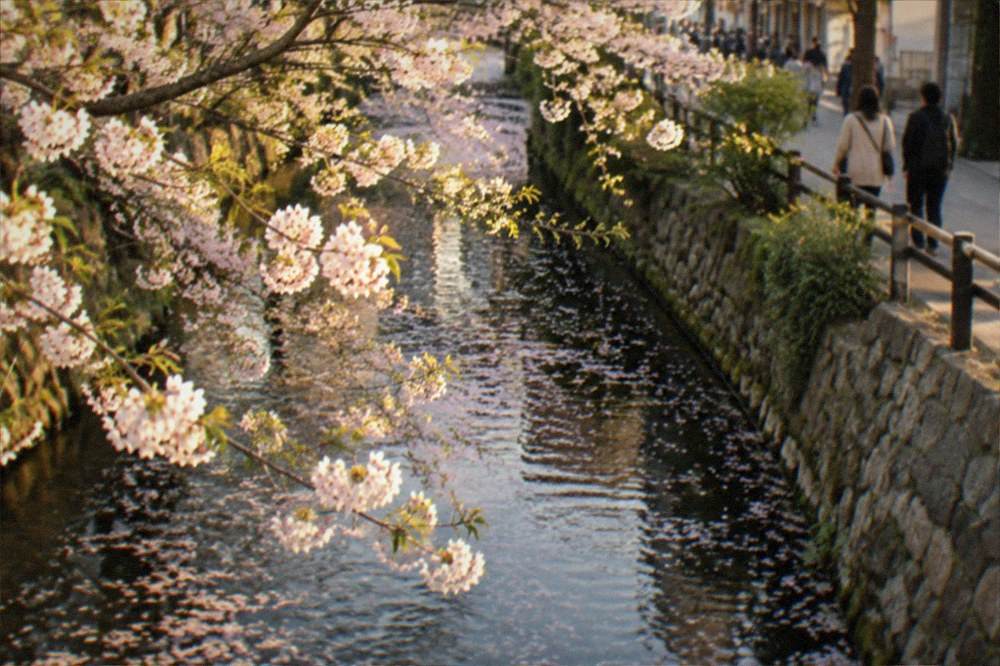
Take it in late March to early April for cherry blossoms or late November to early December for maples, but plan around the verified normals, not the folklore. The JMA 1991-2020 normals put cherry full bloom at 4 April and maple red leaves at 5 December at the Kyoto observatory, and in 2026 cherries flowered on 23 March and reached full bloom on 30 March, both ahead of normal. July, not June, is Kyoto's wettest month at 223.6 mm.
The phenology numbers come from the Japan Meteorological Agency's Kyoto observatory, which has tracked the same specimen trees for over a century. The maple normal of 5 December is later than every mid-November-peak guide claims, with the caveat that the observatory's specimen is not the Arashiyama hillside; private foliage forecasts for Arashiyama in 2026 point to late November. The cherry table below is the honest version of the timing question.
| Event | 2026 actual | 1991-2020 normal | 2025 actual |
|---|---|---|---|
| Cherry flowering | 23 March | 26 March | 27 March |
| Cherry full bloom | 30 March | 4 April | 5 April |
| Maple red leaves | pending | 5 December | 10 December |
| Ginkgo yellow | pending | 24 November | 25 November |
Summer needs its own warning, and the record table is the reason. Three of Kyoto's six hottest days on record fell in the summers of 2024, 2025 and 2026, with 2026 contributing 39.7 C on 23 July, and July and August 2025 both rank among the five hottest months ever measured here. The JMA normals put July's rainfall at 223.6 mm against June's 199.7 mm, so the rainy-season instinct to fear June misses the wetter month. August is the hottest at a 28.5 C mean and a 33.7 C mean daily high.
How Do You Get Around Kyoto In Four Days?
Use the subway for north-south and east-west spine trips, the flat-fare 230 yen city bus for the north side's temple cluster, and buy the 1,100 yen Subway and Bus One-Day Pass only on days with three or more rides. The EX100 and EX101 tourist express buses run 500 yen a ride from Kyoto Station to the Kiyomizu side and Ginkaku-ji, and the city's transport bureau accepts the one-day pass on them. The old bus-only pass is gone, ended 31 March 2024.
The bus-versus-subway question has a real answer for this itinerary. Day one is almost entirely on foot. Day two is a bus day: Kinkaku-ji, Ryoan-ji and Nijo-jo sit on routes that the subway does not reach, and the flat 230 yen fare applies regardless of distance. Day three is JR to Saga-Arashiyama and walking. Day four is a regional train. That makes the one-day pass marginal except on day two, which is the honest advice: buy it per day, not per trip.
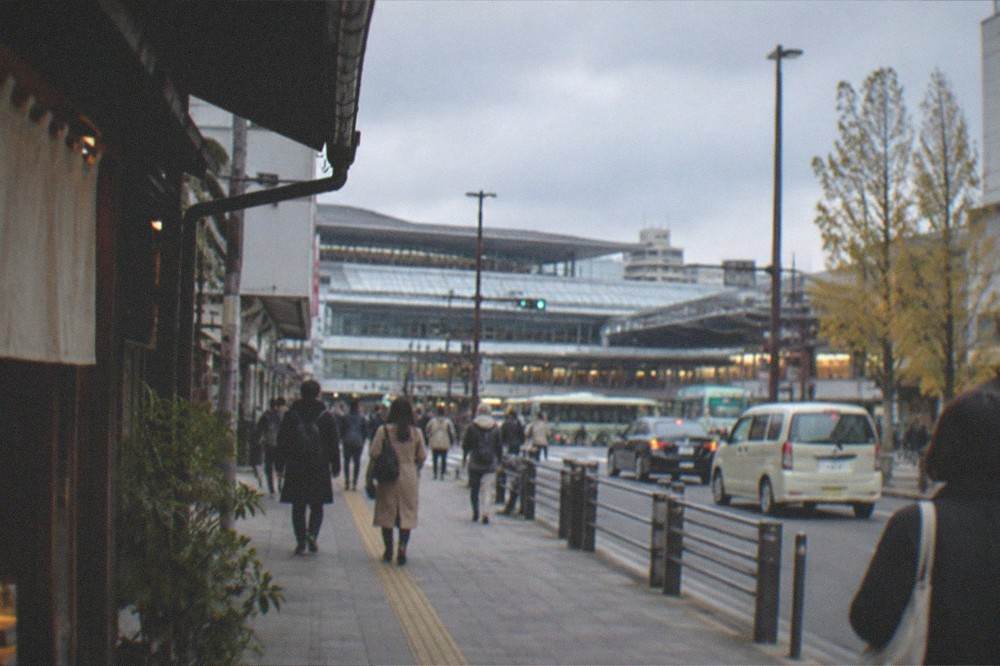
The city's overtourism measures matter to a four-day plan. The transport bureau runs the EX100 and EX101 expresses precisely to pull visitors off the crowded ordinary routes, the tourism association promotes hands-free luggage delivery from station counters, and drivers may refuse large suitcases on packed buses. The Kyoto buses guide carries the route detail for day two.
Common Questions About Four Days In Kyoto
Is four days in Kyoto too many?
No. The city's 2025 survey counted 62.79 million visitors and satisfaction above 90 percent, and four days is the minimum that fits the east side, the north side, Arashiyama and one day trip without cutting anything. Five days adds a second day trip or a slower pace.
Should day four be Nara or Uji?
Nara for the great Buddha hall, the 800 yen Daibutsuden admission and the park's 1,687 deer; Uji for matcha, Byodo-in at 700 yen plus 300 for the Phoenix Hall, and a calmer river town. First-time visitors get more from Nara; repeat visitors usually prefer Uji.
Can you do Fushimi Inari on a four-day itinerary?
Yes, and the shrine's own FAQ confirms admission is free and the paths have no closing time, so it slots into any morning, including day one before Kiyomizu-dera or day four before the train. The shrine dates its founding to 711, when the deity was enshrined on Inariyama, and about 10,000 torii of all sizes stand across the mountain.
What is the biggest planning mistake with four days?
Ignoring the admission cutoffs. Nijo-jo stops admitting at 16:00, Ginkaku-ji closes at 16:30 in winter, Sanjusangen-do closes at 16:00 from 16 November, and Nanzen-ji at 16:30 in winter. A plan that arrives at 16:30 in January simply does not get in.
Is the Kyoto one-day transport pass worth it?
The Subway and Bus One-Day Pass costs 1,100 yen against a 230 yen flat bus fare and 220 to 360 yen subway fares, so it pays off from about four bus rides. On this itinerary only day two reliably clears that bar, and the pass is also accepted on the EX100 and EX101 tourist expresses.
How Do Four Days In Kyoto Add Nara Or Uji Without Rushing The City?
By giving the day trip the whole of day four. Three full days cover east, north and west Kyoto at the pace the closing times allow, and the fourth day's train to Nara or Uji takes under an hour each way, so nothing in the city itself gets compressed into half-days.
Four days, sequenced east, north, west and out, with every fee and cutoff above taken from the venue's own pages, will hold together even in the record crowds the city's own survey now measures. If the plan leaves you wanting a fifth day, the five days in Kyoto extension adds a second day trip, and Kyoto Travel Guide holds the rest of the site's itinerary family, from two days in Kyoto to the Kyoto and Osaka combination.