Which Kyoto Souvenirs Are Real Local Crafts: Kiyomizu-yaki, Nishijin Silk, Kyo-Sensu Fans?
Kyoto's souvenir shelves mix genuine local craft with imports, and the difference is not always visible at a glance. Here is what the real traditions are, where to find them, and how to tell them apart.
Short answer
The genuine Kyoto crafts are Kiyomizu-yaki pottery from the kilns around Kiyomizu-dera, Nishijin woven silk textiles from the district of the same name, and kyo-sensu folding fans made in the city. Each has a recognisable maker tradition and a shopping street attached to it, and each has cheap imitations sitting next to it on the shelf.
Which Kyoto Souvenirs Are Real Local Crafts: Kiyomizu-yaki, Nishijin Silk, Kyo-Sensu Fans?
Kyoto has been a workshop city for more than a thousand years, and its souvenir economy still runs on that inheritance. The shelves around Kiyomizu-dera and through Higashiyama hold two kinds of goods side by side: objects made in the city by people carrying a named tradition, and mass-produced imports priced to look like the real thing. Telling them apart is not snobbery. It is the difference between paying for craft and paying for freight.
The city's own numbers explain why the shelves are so crowded. Kyoto's 2025 tourism survey, released by the city in June 2026, recorded 62.79 million visitors in a single year, a record, and 2.0474 trillion yen in tourism spending. That is an enormous market for keepsakes, and it rewards shops that can move volume. The buyer's job is to find the minority of stalls where the object in your hand was made a few streets away.
What To Buy In Kyoto Beyond The Tourist Shelves?
The souvenirs with a genuine local tradition behind them are Kiyomizu-yaki pottery, Nishijin woven silk, kyo-sensu folding fans, incense from long-established Kyoto houses, green tea and matcha from Uji just south of the city, and yatsuhashi sweet rice snacks. Each of these names a craft or a product with a documented history in Kyoto or its immediate region, and each can still be bought from makers or specialist shops rather than generic stalls.
That list is shorter than a souvenir district makes it feel. Everything else on a typical shelf, the plastic geisha dolls, the printed phone cases, the mass-market magnets, is inventory that could be in any tourist city on earth. The crafts above are different because the name itself carries information: it tells you where the thing was made, roughly how, and sometimes who by.
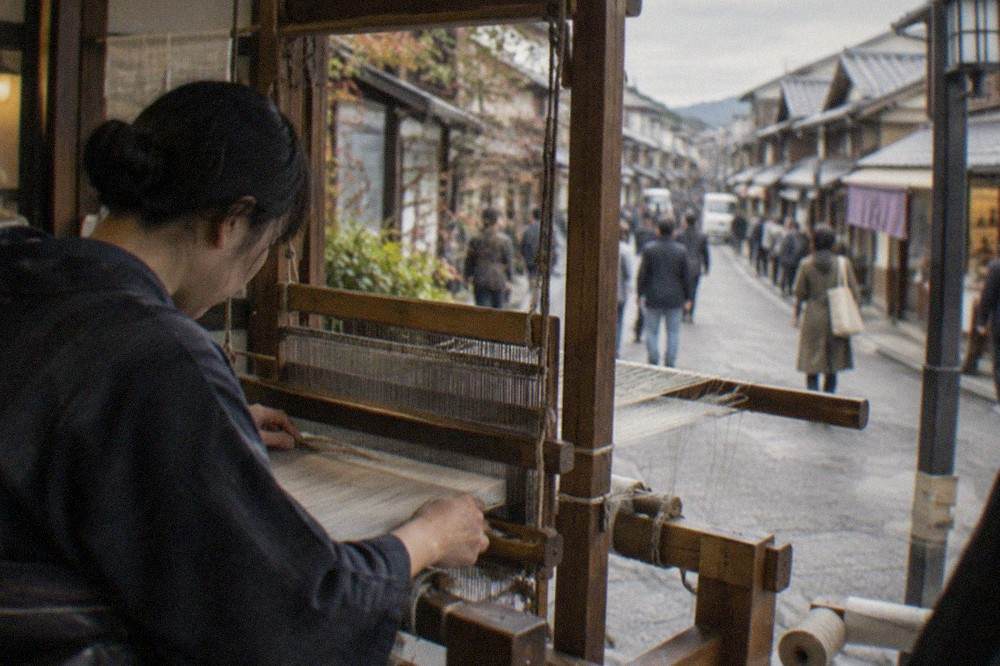
A useful way to sort the shelf is by how the object was made. Pottery is thrown or moulded and fired. Nishijin textiles are woven, thread by thread, on looms in a district that still houses workshops. A folding fan is built from bamboo ribs and washi paper assembled by hand. Tea is grown and ground. None of these can be faked cheaply at full quality, which is exactly why the imitations exist.
| Souvenir | What it is | Local tradition | Best place to buy |
|---|---|---|---|
| Kiyomizu-yaki | Pottery and porcelain, tea bowls to plates | Kilns around Gojo-zaka and Kiyomizu | Gojo-zaka slope, Kiyomizu-dera approach |
| Nishijin silk | Woven obi, scarves, ties, table runners | Nishijin weaving district | Nishijin Textile Center, workshops in the district |
| Kyo-sensu | Folding fans, paper and bamboo | Kyoto fan makers, downtown workshops | Specialist fan shops near Shijo and Teramachi |
| Uji matcha and gyokuro | Stone-milled green tea | Uji, the growing region south of Kyoto | Tea shops in Uji or specialist tea merchants |
| Yatsuhashi | Cinnamon rice-flour sweet, raw or baked | Kyoto confectioners | Any Kyoto confectionery counter, boxed for travel |
| Kyoto incense | Traditional incense from old houses | Kyoto incense makers, some centuries old | Incense specialty shops downtown |
The table is a starting map, not a ranking. A buyer who loves ceramics should spend the afternoon on the Gojo-zaka slope; a buyer who sews or wears silk should head to Nishijin first. The rest of this guide takes each tradition in turn.
Which Kyoto Souvenirs Are Real Local Crafts: Kiyomizu-yaki, Nishijin Silk, Kyo-Sensu Fans?
Kiyomizu-yaki is pottery produced in the kiln cluster around Kiyomizu-dera since the seventeenth century, Nishijin is silk fabric woven on looms in the district of the same name, and kyo-sensu are folding fans whose ribs, paper and assembly come from Kyoto workshops. All three are real, named traditions with living practitioners. None of the three names guarantees that the specific object in your hand was made here, because imitation goods sit on the same streets, so the label and the shop matter as much as the category.
Start with what the names actually claim. Kiyomizu-yaki, sometimes written Kiyomizu ware, is not one factory's brand but a tradition associated with the potters who set up near the temple to serve pilgrims. Nishijin refers to the weaving district in northwestern Kyoto that survived the Onin War and rebuilt itself around looms; Nishijin-ori is the fabric, and an obi woven there can take a skilled weaver weeks. Kyo-sensu is the Kyoto folding fan, an assembly of bamboo spine, washi paper and often painted decoration, used in dance, tea ceremony and daily life.
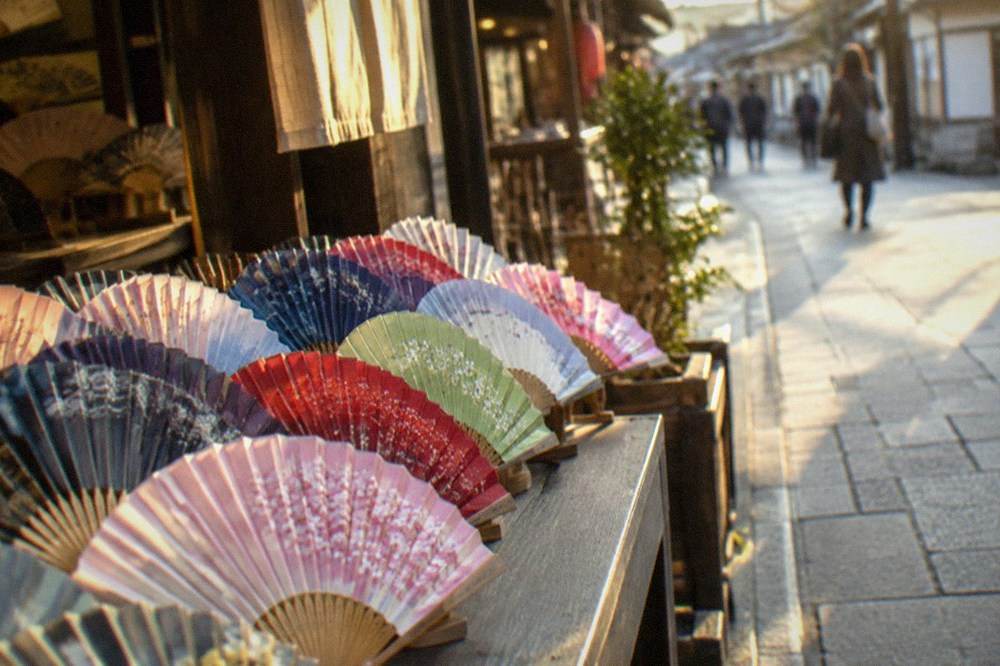
The three crafts also differ in how much skill a buyer needs. Pottery shows itself: glaze depth, weight, the ring of a fired body, the feel of an unglazed foot. Woven silk shows in the density of the pattern and the way the fabric catches light from different angles, and a reputable shop will let you turn an obi over to see the reverse. A folding fan shows in the open-and-close action, clean rib alignment, and paper that does not crease at the fold line on first use.
One honest caveat belongs here. Craft traditions are alive, which means makers experiment, and a workshop in Kyoto may legitimately produce both a hand-woven scarf and a machine-assisted line at a lower price. Price alone does not prove origin, and origin alone does not prove handwork. Ask the shop two questions: where was this made, and who made it. A shop that can answer both is selling the right thing.
Where To Buy Kyoto Crafts Without Paying The Temple-Gate Markup?
The cheapest honest places to buy Kyoto crafts are the workshop shops away from the temple gates: the Gojo-zaka slope below Kiyomizu-dera for pottery, the Nishijin Textile Center and district workshops for silk, and the specialist fan and tea shops on and around Teramachi street downtown. Prices climb as you approach the gates themselves, because rent and footfall climb with you, so walking ten minutes downhill or toward the river usually saves money on the identical object.
Geography does the discounting. The lanes immediately around the most famous sights carry the highest rents and the most casual buyers in the city, and the city's 2025 survey recorded 62.79 million visitors, so those lanes never want for custom. Shops a few streets out compete on price and knowledge instead, and they are where Kyoto residents themselves shop for gifts.
The same logic applies to experiences as to objects. The samurai session listed below runs about 1 hour 45 minutes in small groups, is rated 5 from 1,470 reviews and starts from $118 per person, and it is the kind of purchase where the shopkeeper and the maker are the same people: the instructor demonstrating the sword is the craft you take home.
The other honest saving is to make the souvenir yourself. Kyoto runs small-group craft workshops where you leave with the object you produced, and a pair of chopsticks you shaped, lacquered and engraved yourself in a Gion workshop is a souvenir no shelf can sell you. The Gion chopsticks making class with engraving option starts from $6 per person and runs about an hour, rated 4.9 from 4,252 reviews, and it sits beside a guide to kimono rental in Kyoto if the day is shaping into a dress-up-and-craft afternoon.
| Shopping area | Known for | Nearest landmark | Notes for buyers |
|---|---|---|---|
| Gojo-zaka slope | Kiyomizu-yaki pottery shops and kilns | Kiyomizu-dera, downhill | Best pottery selection, walkable from the temple |
| Nishijin district | Woven silk, obi, textiles | Northwest of the city center | Workshop visits and the Textile Center |
| Teramachi street | Fans, incense, tea, stationery | Downtown, off Shijo | Covered arcade, good in rain |
| Nishiki Market | Food souvenirs, knives, kitchenware | Downtown, parallel to Shijo | Eat at the stall, not while walking |
| Higashiyama lanes | Mixed craft and gift shops | Kiyomizu-dera approach | Highest footfall, highest markups |
| Kyoto Station area | Last-minute boxed gifts | Kyoto Station | Convenient, less selection, check labels |
For food shopping specifically, Kyoto's food guide covers the specialties in depth, and the must-buy question answered here gives the short list. Nishiki Market deserves one rule repeated: its own association discourages eating while walking, so food bought there is eaten at the stall or a designated spot. The market's shops keep individual hours, roughly 9 or 10:00 to 17 or 18:00, and no unified schedule exists, so go midday rather than banking on a late visit.
Is Kiyomizu-yaki Pottery Worth Buying In Kyoto?
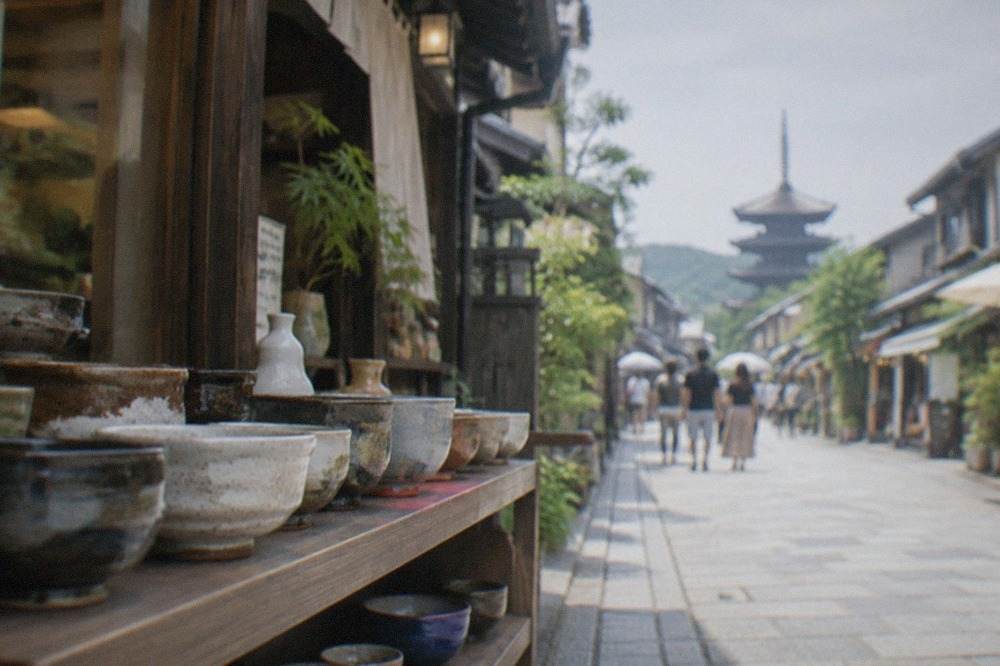
Kiyomizu-yaki is worth buying if you want functional pottery with a real local lineage, because the kilns around the Gojo-zaka slope have served the temple's visitors for centuries and the shops there still sell directly from working potters. A tea bowl, a small plate or a sake cup is the classic purchase: small enough to carry, useful every day, and hard to mistake for airport inventory. The honest limit is fragility, so plan packing before buying, not after.
The tradition is genuinely local. Potters clustered on the slopes below Kiyomizu-dera to be near the pilgrimage traffic, and the name Kiyomizu-yaki has described the output of that cluster for hundreds of years. The styles within it vary widely, from rustic tea-ceremony wares with deliberate irregularity to bright glazed pieces aimed at visitors. None of that variety is a problem; it is what a living tradition looks like.
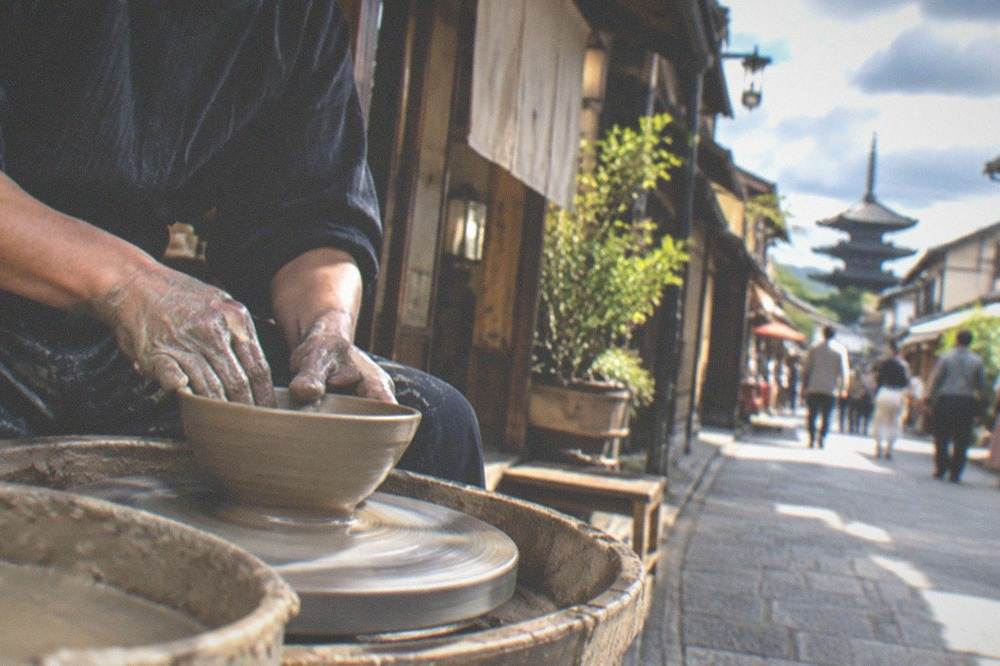
What to check when buying: turn the piece over and look at the unglazed foot, where the clay body and firing show honestly; run a finger inside the rim for chips; ask whether it is dishwasher-safe if that matters to you; and ask the shop to wrap for travel, which Kyoto pottery shops do as a matter of course. A genuine shop will also tell you the kiln or maker, and many pieces carry a stamped mark on the base.
Packing is the part travelers get wrong. A single bowl wrapped in newspaper survives a carry-on; six bowls in a checked bag often do not. Buy on the last full day if the itinerary allows, keep the pieces in hand luggage, and use clothing as the outer layer. For how the temple itself fits a day, the one-day Kyoto itinerary sequences Higashiyama sensibly, and the question of why Kiyomizu-dera is so famous explains why the slope below it became a pottery district in the first place.
What Does Nishijin Silk Actually Look Like In A Shop?
Nishijin silk in a shop takes the form of obi belts, scarves, neckties, table runners and small woven accessories, characterised by dense pre-patterned weaving rather than printed decoration, and the district's Textile Center sells and demonstrates it with working looms on site. The fabric's defining trait is that the pattern is built into the weave itself, visible on both sides, which is why a genuine piece costs what it costs and why a printed imitation gives itself away at the edges and the reverse.
The district sits in the northwest of the city and is one of the places where Kyoto's craft economy is still visibly a neighbourhood economy: looms in converted houses, small workshops, wholesalers. The Nishijin area guide covers how to spend half a day there, including the Textile Center, where weaving demonstrations run and the shop sells pieces across a wide price range.
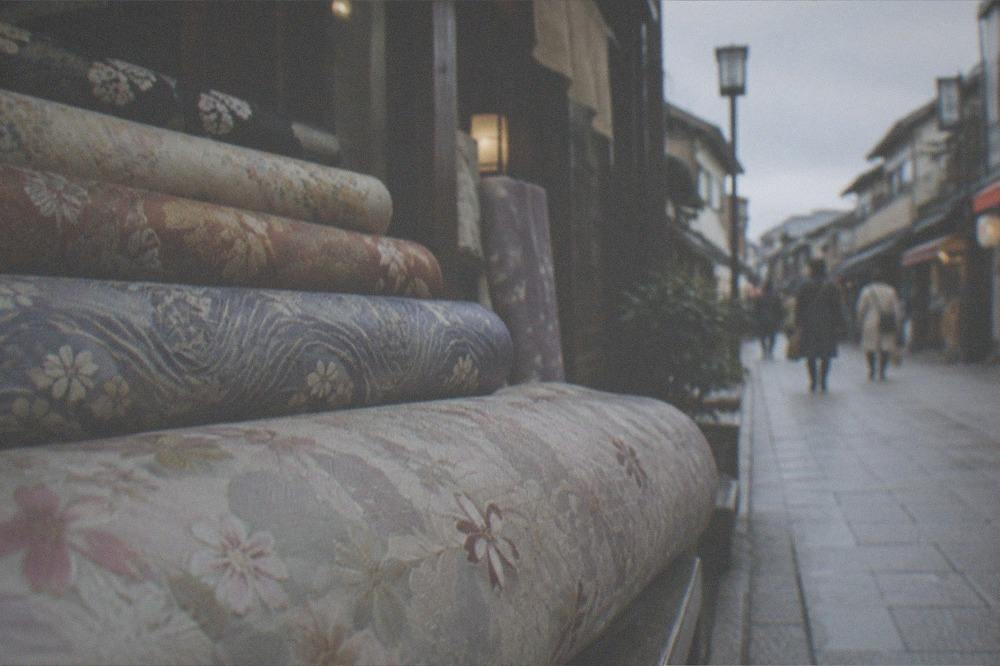
For most visitors the practical purchases are the small ones. A woven necktie or a scarf is a manageable, giftable size of a tradition whose full expression, a formal obi, is neither cheap nor easy to wear at home. Table runners and place mats translate the weaving into objects a household actually uses. The test is the reverse of the fabric: woven Nishijin pattern shows on both faces, printed cloth shows a clean back.
One more honest note: Nishijin weaving includes both fully hand-woven pieces and machine-loomed production from the same district, at very different prices, and both can be legitimately sold as Nishijin-ori. Ask which you are holding, and expect the price to answer before the shopkeeper does.
What Food Souvenirs From Kyoto Survive The Trip Home?
The food souvenirs that travel best from Kyoto are baked yatsuhashi, boxed Uji matcha and loose leaf tea, and incense, while raw or fresh items including nama-yatsuhashi and fresh confectionery have short shelf lives measured in days and belong to the trip itself rather than the suitcase. Tea and baked sweets are the safe exports; anything refrigerated, soft or freshly made should be eaten in Kyoto.
Yatsuhashi, the thin cinnamon-flavoured sweet made from rice flour, sugar and cinnamon, comes in two forms. The baked version is crisp and keeps for weeks boxed; nama-yatsuhashi, the soft raw version, keeps a few days and is the one locals argue about. Both are sold everywhere in the city, including Kyoto Station, and the boxed baked form is the standard gift for colleagues back home.
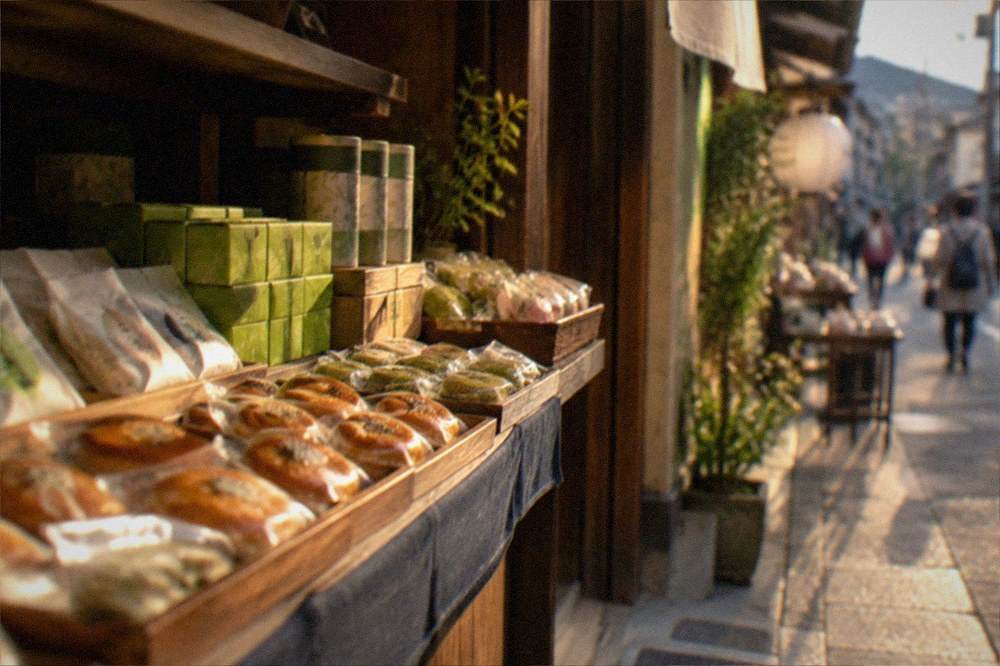
Tea is the other export champion. Uji, just south of the city, is one of Japan's historic tea-growing regions, and the difference between matcha and Uji matcha is worth knowing before buying: Uji matcha is stone-milled leaf from that specific region, and the matcha guide covers grades, uses and where the specialist tea merchants are. Stone-milled matcha in a sealed tin travels perfectly and is the souvenir that keeps giving for months.
| Food souvenir | Form | Keeps | Travel verdict |
|---|---|---|---|
| Baked yatsuhashi | Crisp sweet wafers, boxed | Weeks | Excellent gift, packs flat |
| Nama-yatsuhashi | Soft raw sweet | A few days, refrigerated | Eat in Kyoto |
| Uji matcha | Stone-milled powder, sealed tin | Months | Best food export |
| Loose leaf gyokuro and sencha | Sealed bags | Months | Light and giftable |
| Kyoto pickles | Vacuum packs vary | Check the label | Some need refrigeration |
| Fresh confectionery | Daily-made wagashi | One to two days | Eat the same day |
Two practical rules finish the food section. Check customs rules for meat, plant and dairy products before packing food home, because restrictions differ by destination and apply to packaged goods too. And for anything bought at Nishiki Market, remember the market's own guidance: eat at the stall, not while walking.
How To Spot A Fake Kyoto Souvenir On The Shelf?
The reliable signs of a genuine Kyoto craft are a named maker or kiln, a shop that can say where and how the object was made, materials consistent with the tradition such as bamboo-ribbed fans and woven-pattern silk, and a price that reflects labour rather than freight. The warning signs are vague origin labels, identical items stacked in bulk, prices far below what handwork could support, and packaging that says Kyoto in large letters while the maker's mark is absent or foreign.
This is not paranoia; it is arithmetic. With 62.79 million visitors in 2025 and tourism spending above two trillion yen, the incentive to stock cheap imports near famous gates is enormous, and nothing about a shop's location filters for honesty. The filter has to be the object and the conversation.
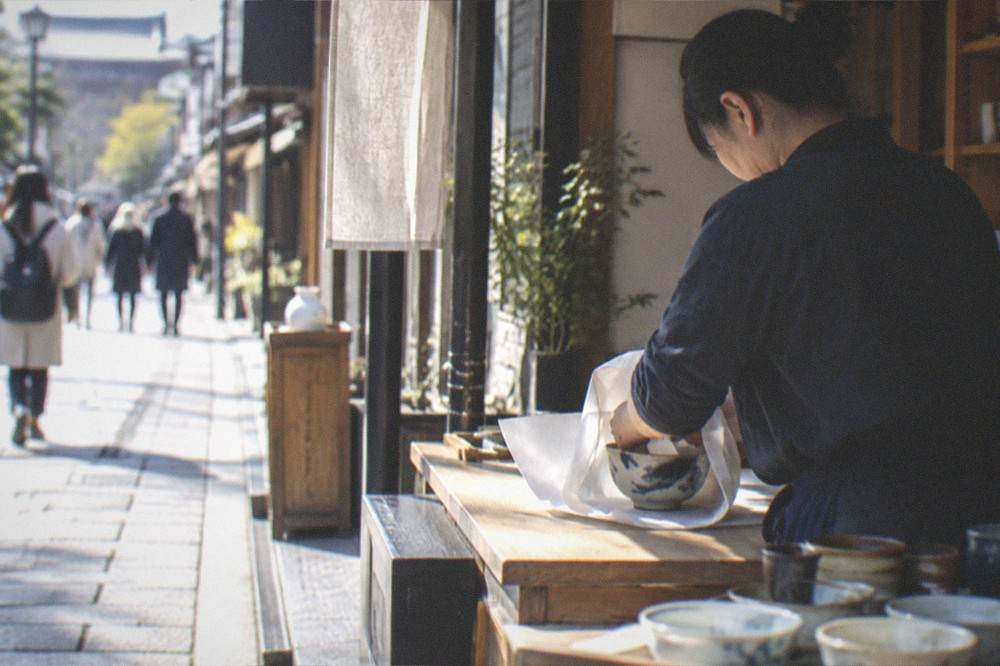
Practical checks, in the order they take: pick the object up, because weight and finish announce quality fast; look for a maker's mark or stamp, standard on Kiyomizu-yaki and on fans from established houses; examine the reverse or underside, where weaving and glaze tell the truth; and ask the two questions, where was this made and who made it. A shop that answers with a district, a kiln or a family name is almost always selling the real thing. A shop that answers with a shrug is answering.
There is one category where the authenticity question answers itself: objects you make in the room. A workshop run in the city by local instructors cannot be an import, and the Gion chopsticks class is the cheapest example on this site's roster, an hour of shaping and engraving that ends with a usable pair in your bag and a story no shelf can match.
The final test is the one only you can apply: buy the object you will still use in a year. A five-yen charm and a thousand-yen bowl both carry Kyoto home; the bowl carries it into your morning. For what else the city holds beyond shopping, the things to do in Kyoto page is the full index, and the first-time visitor itinerary places the craft districts in a sensible order.
Between the shelves and the workshops, most visitors end up with a mix: one ceramic piece, one tin of tea, one box of baked sweets, and one afternoon spent learning a craft rather than shopping for one. That mix is the honest version of what to buy in Kyoto, and it is the shopping plan this Kyoto Travel Guide stands behind for a first visit.
If the day includes dressing the part before the shopping, kimono rental pairs naturally with a craft morning: rent in the early afternoon, wander Higashiyama's lanes in it, and return it before the shops close.
Common Questions About Kyoto Souvenirs
Which Kyoto souvenirs are real local crafts: Kiyomizu-yaki, Nishijin silk, kyo-sensu fans?
All three are genuine Kyoto traditions. Kiyomizu-yaki is pottery from the kiln cluster around Kiyomizu-dera, Nishijin is woven silk from the district of that name, and kyo-sensu are folding fans assembled in Kyoto workshops from bamboo and washi paper. Buy them from specialist shops or workshops and ask where and by whom each piece was made.
What is the best souvenir to buy in Kyoto?
A tea bowl or small ceramic piece of Kiyomizu-yaki is the classic choice: local, useful and portable. Uji matcha in a sealed tin is the best food export, and baked yatsuhashi boxes are the standard gift. A hand-made object from a workshop, such as chopsticks you finished yourself, carries the strongest story home.
Are souvenirs cheaper away from the temple gates in Kyoto?
Generally yes. Rent and footfall are highest immediately around the famous sights, so the lanes around Kiyomizu-dera carry the biggest markups. The Gojo-zaka slope, the Nishijin district and Teramachi street downtown offer the same categories at better prices with more knowledgeable shops.
Can I take Kyoto food souvenirs on a plane?
Baked yatsuhashi, sealed tins of matcha and loose leaf tea travel well and keep for weeks or months. Fresh nama-yatsuhashi and daily-made confectionery last only days and are best eaten in Kyoto. Check your destination's customs rules for any food item before packing it.
How do I know if Nishijin silk is genuine?
Nishijin-ori is woven, not printed, so the pattern shows on both faces of the fabric and the edges are clean. Ask whether the piece is hand-woven or machine-loomed, since both are sold as Nishijin at very different prices, and buy from the Textile Center or a workshop in the district.
Is Kiyomizu-yaki pottery fragile to bring home?
It survives with planning. Buy on your last full day if possible, keep pieces in hand luggage wrapped by the shop, and use clothing as the outer layer. A single well-wrapped bowl is a low-risk purchase; a stack of six in a checked bag is not.