Where Do You Drink Real Uji Matcha In Kyoto: Tsujiri, Nakamura Tokichi, Ippodo?
Kyoto drinks its matcha seriously, and three names carry most of the city's reputation: Tsujiri, Nakamura Tokichi and Ippodo. All three trace their tea to Uji, the growing region just south of the city, and each serves it in a different way, from parfaits to a formal bowl in a tatami room.
Short answer
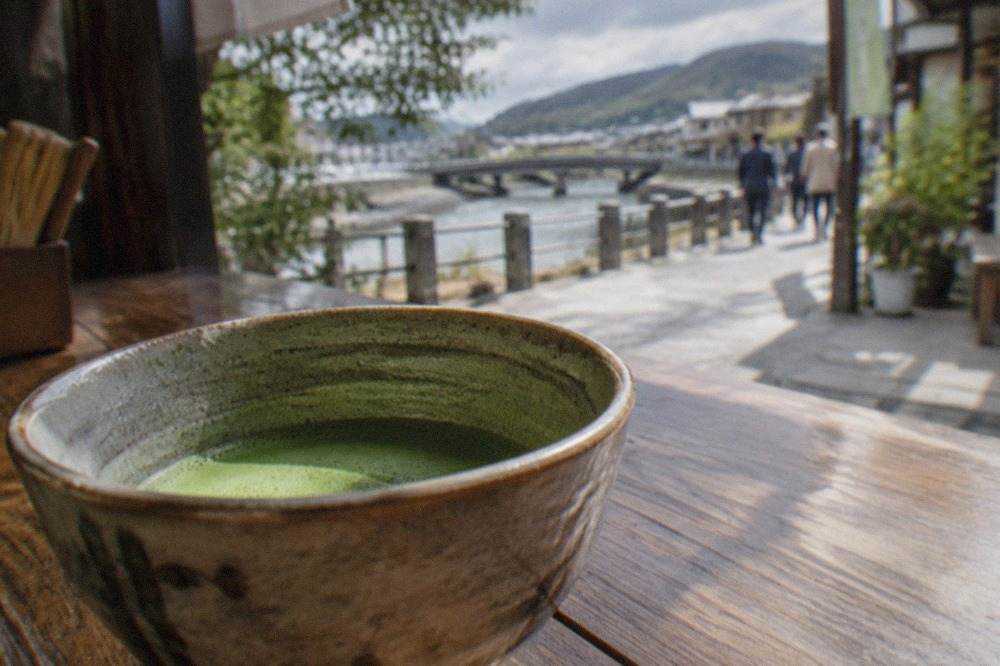
Tsujiri is the dessert house, famous for matcha parfaits and soft serve, with its flagship on the edge of Gion. Nakamura Tokichi, a Uji tea merchant with a Kyoto Station branch, serves matcha and sweets beside its working shop. Ippodo, founded as a Kyoto tea house, is the place to drink a properly whisked bowl and buy leaf tea to take home.
Kyoto drinks its matcha seriously, and three names carry most of the city's reputation: Tsujiri, Nakamura Tokichi and Ippodo. All three trace their tea to Uji, the growing region just south of the city where the leaves are shade-grown, steamed, dried and stone-ground into the powder that defines the flavour. Each house serves it differently, from towering parfaits to a quiet bowl whisked in a tatami room, and the differences between them are the whole point of choosing. This guide, from the editorial desk at Kyoto Travel Guide, lays out what each one does best, what a matcha day in Kyoto and Uji realistically costs, and how the verified numbers, transport fares, temple admissions and seasonal markers, fit together.
What Makes Uji Matcha Different From Regular Matcha?
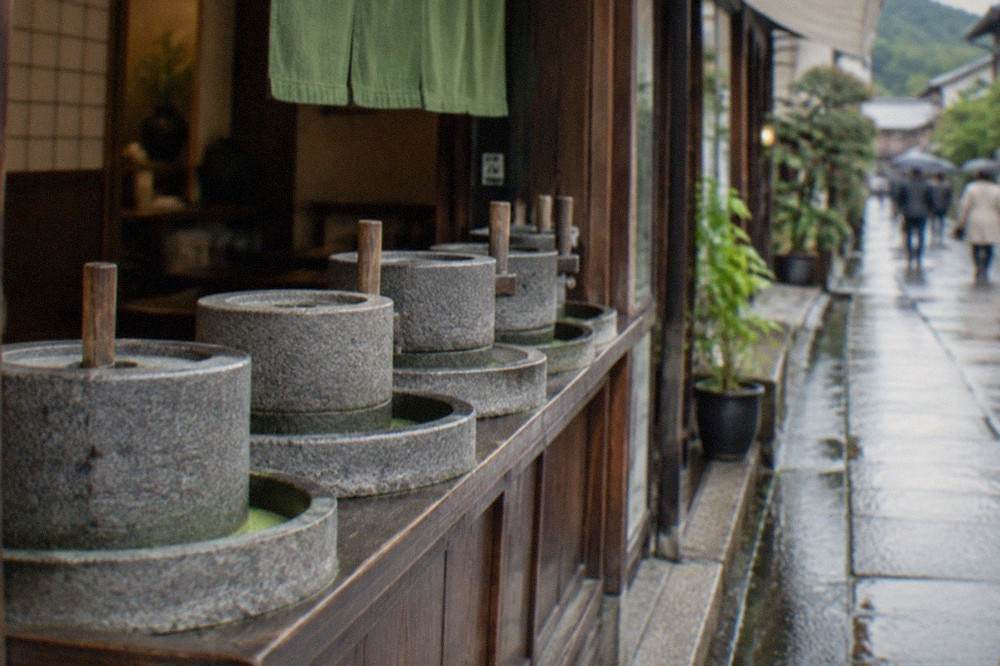
Uji matcha is matcha grown and processed in and around Uji, the tea district south of Kyoto, where shade cultivation, steaming and stone-grinding have been concentrated for centuries, and the regional name is a statement of origin rather than a different drink. The leaf is the same tea plant, but the Uji method, tencha leaf shade-grown before harvest, then dried and ground slowly, is what the name refers to, and Kyoto's famous houses all build their menus on it.
The practical distinction matters when you order. A menu that says Uji matcha is telling you where the leaf came from; a menu that just says matcha is not. The fuller explanation of the naming, and why Uji carries the prestige it does, is in our dedicated piece on the difference between matcha and Uji matcha.
What you taste in the bowl is mostly two things: the grade of the powder and the water. Ceremonial-grade matcha is ground from younger, shade-grown leaf and is meant to be drunk plain, whisked with hot water and nothing else. Culinary-grade powder is stronger and more bitter by design, because it is about to meet milk, sugar and ice. Kyoto's dessert culture runs on the second kind, and there is no shame in that order, but a bowl of the first kind, taken sitting down, is the reference point everything else is measured against.
Where Do You Drink Real Uji Matcha In Kyoto: Tsujiri, Nakamura Tokichi, Ippodo?
Tsujiri is the dessert destination, a Gion-rooted house whose parfaits, soft serve and macarons draw queues on the Shijo side of town. Nakamura Tokichi is a Uji tea merchant with a Kyoto Station branch, serving whisked matcha and tea sweets next to its retail counter. Ippodo is Kyoto's tea institution, a Kawaramachi shop with a tatami Kaboku tearoom where a bowl is prepared in front of you and leaf tea is sold by weight beside it.
The honest framing is that all three serve real Uji-sourced matcha, and the choice is about the experience you want, not authenticity. Here is how they differ.
| House | Setting | Best for | The order to make |
|---|---|---|---|
| Tsujiri | Dessert cafe, Gion area and branches | Matcha as dessert culture | The matcha parfait, or soft serve if the queue is long |
| Nakamura Tokichi | Tea merchant's shop, Uji main store and Kyoto Station | Matcha beside a working tea business | A bowl of matcha with a seasonal sweet, then leaf tea to take home |
| Ippodo | Historic tea shop with a sit-down tearoom | Matcha as tea, prepared properly | The bowl of matcha in the Kaboku tearoom, then browse the tins |
None of the three publishes its menu prices on a page this site has verified, so treat any specific figure you read elsewhere, including in older guides, as unconfirmed until you see the menu in the shop. What is verifiable is the shape of the experience, and that shape is consistent: Tsujiri for the spectacle, Nakamura Tokichi for the merchant context, Ippodo for the bowl itself.
A word on timing. These are three of the most-visited tea counters in a city that recorded 62.79 million visitors in 2025, according to the city's own tourism survey released in June 2026, and the queues reflect it. Mid-morning and mid-afternoon on a weekday are the calm windows; late morning on a weekend is not.
If you want the matcha story told alongside the rest of Kyoto's food culture, a guided walk through Nishiki Market covers tea, sweets and savoury stalls in one morning, and it pairs naturally with this itinerary. See the Nishiki Market brunch walking tour for the current details, or Check availability if the date is already fixed.
How Much Does Matcha Cost In Kyoto?
A bowl or dessert at the famous houses is priced on each shop's own menu, and this site does not print unverified figures. What is verified is the spending around the matcha: the JR fare to Uji is 240 yen one way, Byodo-in charges 700 yen adult admission plus 300 yen for the Phoenix Hall, and a guided tea ceremony in Kyoto starts from 8.05 US dollars per person on the operator's live listing.
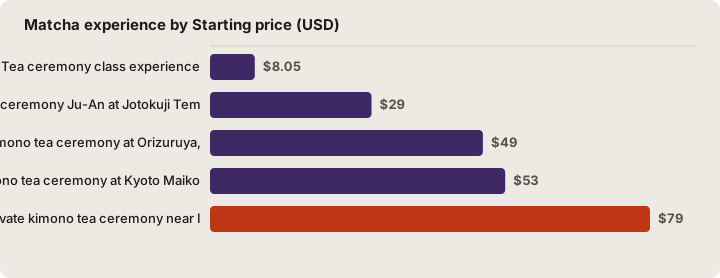
That last figure deserves context, because the range is wide and the floor is low. A short tea ceremony class experience is listed from 8.05 dollars, the Ju-An ceremony at Jotokuji Temple from 29 dollars, and a full kimono-and-ceremony combination at Maikoya in Nishiki from 53 dollars. Those are starting prices, and the final figure depends on your date and the option you choose.
| Matcha experience | Starting price | Length | Traveller rating |
|---|---|---|---|
| Tea ceremony class experience | from $8.05 per person | about 1 hour | 4.3 from 592 reviews |
| Tea ceremony Ju-An at Jotokuji Temple | from $29 per person | 1 hour 10 minutes | 4.9 from 3,758 reviews |
| Kimono tea ceremony at Orizuruya, Gion | from $49 per person | 1 hour 30 minutes | 4.9 from 1,871 reviews |
| Kimono tea ceremony at Kyoto Maikoya, Nishiki | from $53 per person | 1 hour 30 minutes | 4.9 from 1,114 reviews |
| Private kimono tea ceremony near Imamiya Jinjya Shrine | from $79 per person | 1 hour 30 minutes | 5 from 440 reviews |
For the shops themselves, budget the way you would for a cafe rather than a temple: a dessert sitting is a modest spend, a ceremonial bowl with a seasonal sweet a little more, and takeaway tins of leaf tea scale with grade and weight. The prices are on the menu and on the tin, and that is where they should stay until you read them yourself.
Is A Day Trip To Uji Worth It For Matcha?
Yes, if matcha is the reason you are in Kyoto at all, because Uji is where the leaf is grown and the tea merchants work, it is 240 yen and about 20 minutes away on the JR Nara Line, and the town pairs its tea houses with Byodo-in, whose garden and museum admission is 700 yen for adults with the Phoenix Hall interior at 300 yen more. The Keihan line also runs there in about 31 minutes for 360 to 420 yen depending on the service.
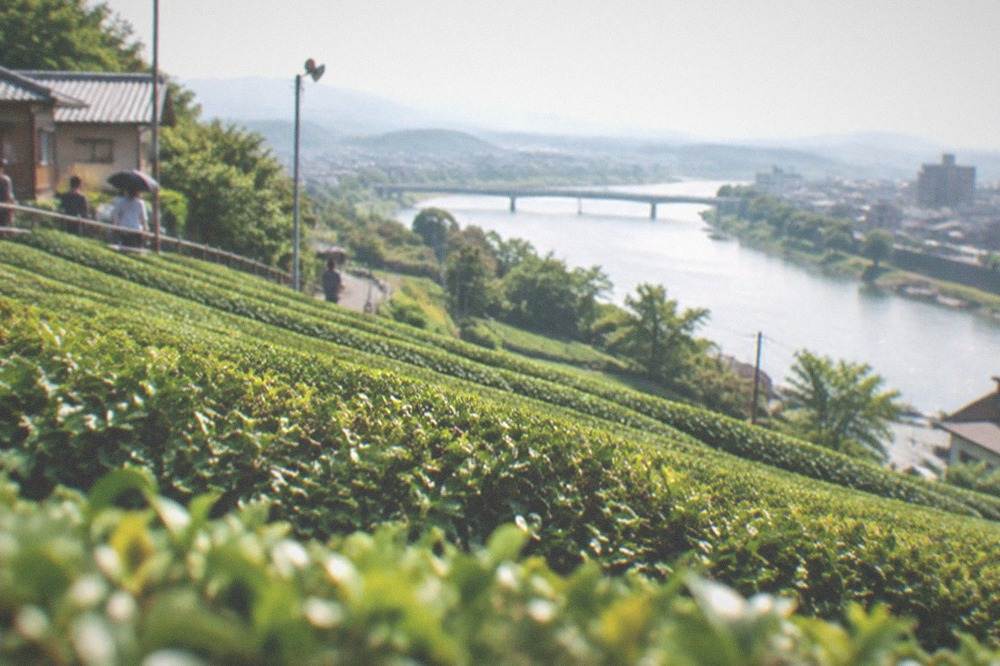
Uji is the answer to the question the Kyoto shops raise. When you drink matcha at Ippodo or Nakamura Tokichi in the city, you are drinking Uji leaf served in Kyoto; when you cross to Uji itself, you are in the growing district, with merchant houses, tea fields on the hillsides and the river that anchored the industry. Nakamura Tokichi's main store is here, in a converted merchant building by the river, and it is a different experience from the station branch: slower, bigger, with the shop's own history in the walls.
| Route to Uji | Fare one way | Time | Notes |
|---|---|---|---|
| JR Nara Line, Kyoto to Uji | 240 yen | short local hop | the simple option from Kyoto Station |
| Keihan line to Uji | 360 to 420 yen | about 31 minutes | serves the eastern side of the city |
| Byodo-in admission, adult | 700 yen | garden and Hoshokan museum | junior high and high school 400, elementary 300 |
| Byodo-in Phoenix Hall interior | plus 300 yen | tours 9:30 to 16:10 | 50 people per slot, tickets from 9:10, first come first served |
One planning note on the Phoenix Hall: a capacity change is announced from 16 October 2026, and the new number has not been published in a form this site could verify, so arrive early for a slot rather than counting on a specific capacity. The hall interior is the reason Byodo-in is on the ten-yen coin, and the 300 yen supplement is one of the better spends in the region. Our full Byodo-in guide covers the visit in detail, and the broader Uji day trip page builds the rest of the day around the tea.
What Are The Best Matcha Desserts In Kyoto?
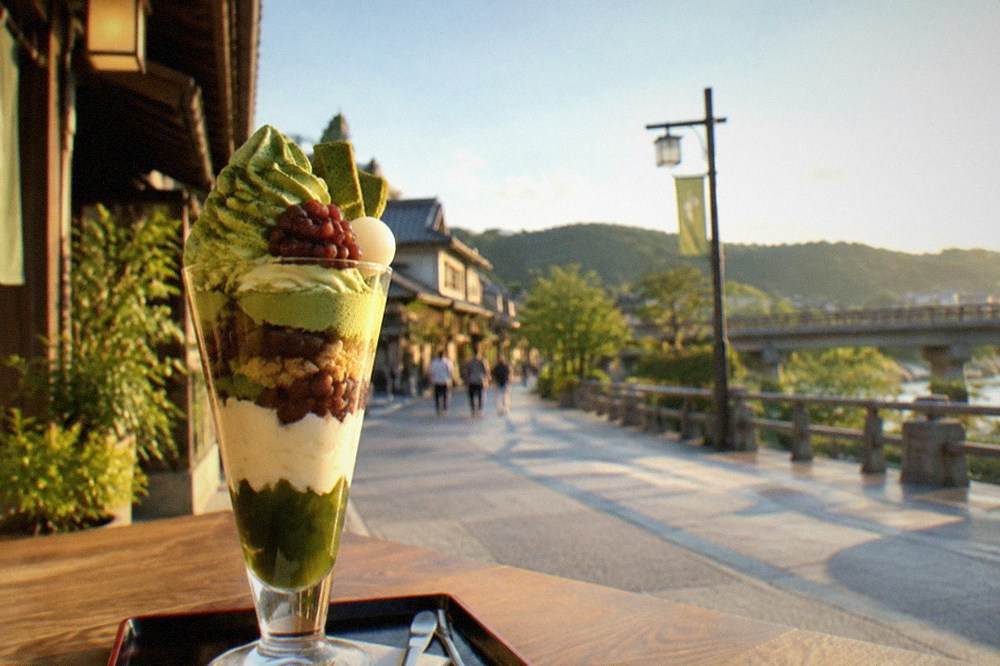
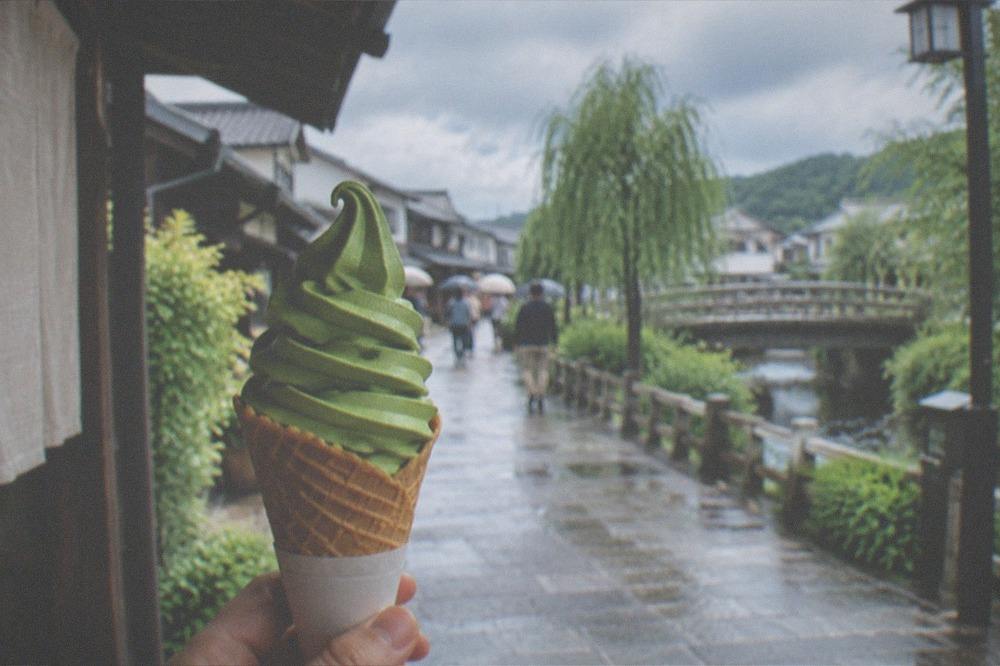
The matcha parfait is the signature Kyoto dessert order, a layered glass of matcha cream, red bean, jelly and often a scoop of soft serve, and Tsujiri built its modern reputation on it. Around it sit matcha soft serve in a cone, matcha warabimochi dusted in powder, matcha basque cheesecake, and the matcha latte, which is the everyday order that carries the flavour into an ordinary afternoon.
The dessert tier is where Kyoto's matcha culture is most playful, and it is also the tier where the grade of tea matters least, because sugar and dairy carry the flavour. That is not a criticism. A matcha parfait after a morning of temples is a Kyoto ritual in its own right, and the city's cafes treat it accordingly.
Warabimochi deserves its own sentence: the jelly-like cubes rolled in matcha powder dissolve on the tongue in a way nothing else on the menu does, and shops that make it fresh serve it within minutes. Pair the dessert trail with the wider Kyoto food guide if you are building a full eating day, and the Kyoto souvenirs guide if the tins of tea are meant to travel home with you.
When Is The Best Time To Visit Kyoto For Matcha?
There is no bad matcha season, but the two windows that combine tea with Kyoto at its best are late March into early April, when the JMA records put cherry flowering at 23 March and full bloom at 30 March in 2026 against a 1991 to 2020 normal of 26 March and 4 April, and late November into early December, when the maple red-leaf marker falls on 5 December as a normal and 10 December in 2025, later than most guides claim.
The Japan Meteorological Agency's Kyoto observatory publishes these phenology dates, and they are the honest baseline for timing a visit. The maple figure deserves emphasis: the widely repeated mid-November peak for Kyoto foliage is about the mountains and the famous viewing spots, while the observatory's own specimen tree, the official marker, turns around 5 December in a normal year. Both are true at once, and the gap between them is the difference between crowd season and quiet season.
| Seasonal marker | 2026 or latest | 1991 to 2020 normal | 2025 |
|---|---|---|---|
| Cherry flowering | 23 March | 26 March | 27 March |
| Cherry full bloom | 30 March | 4 April | 5 April |
| Ginkgo yellow leaves | not yet recorded this year | 24 November | 25 November |
| Maple red leaves | not yet recorded this year | 5 December | 10 December |
Weather-wise, the JMA 1991 to 2020 normals for Kyoto put July as the wettest month at 223.6 mm against June's 199.7 mm, a reversal of what most visitors assume, and August as the hottest with a mean daily maximum of 33.7 C. A matcha afternoon in a tatami room is one of the better answers to either month, and the full breakdown is in the Kyoto weather guide.
Should You Book A Matcha Tea Ceremony In Kyoto?
A tea ceremony is worth booking if you want the matcha bowl in its full context, prepared and served according to the ritual rather than ordered at a counter, and in Kyoto the options run from a 29 dollar ceremony at Jotokuji Temple, rated 4.9 from 3,758 reviews, to a 53 dollar kimono-and-ceremony session at Maikoya in Nishiki, so the decision is depth versus convenience rather than price.
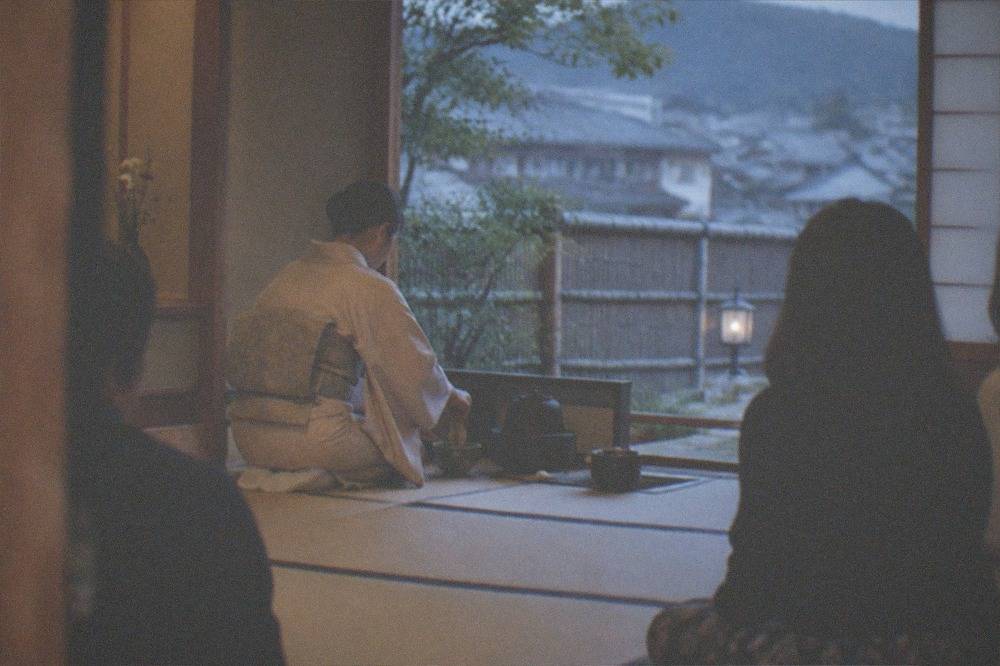
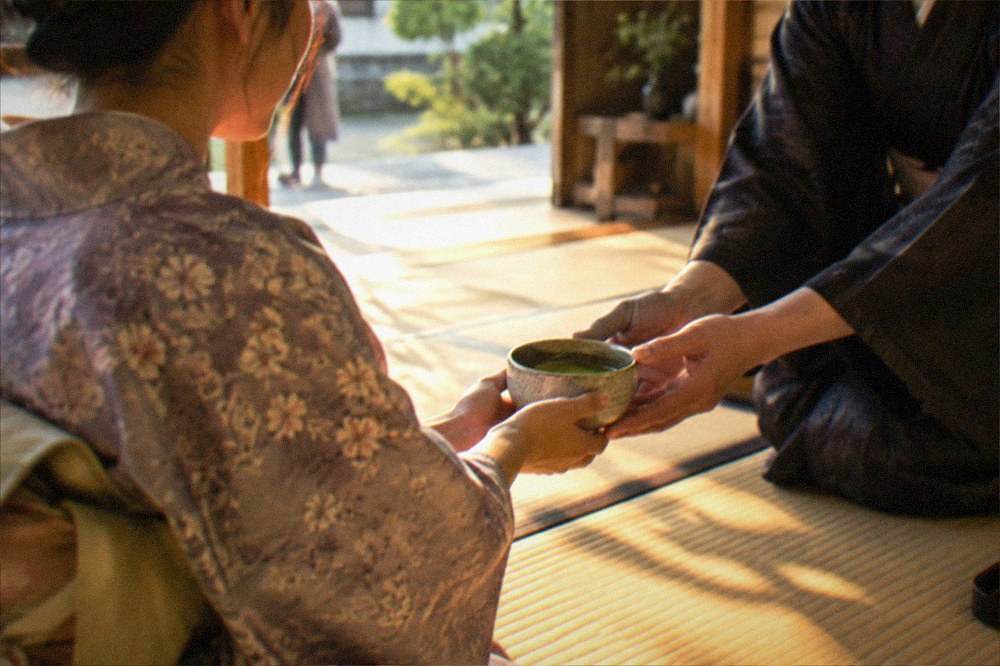
The distinction between drinking matcha and attending a ceremony is the difference between a product and a practice. At a counter you receive a bowl; in a ceremony you watch it being prepared, learn why the bowl is turned, why the sweet comes first, and what the whisking sound in a quiet room is doing. Kyoto is one of the few cities where a visitor can step into that practice for the length of a single sitting, and the temples and tea houses that host these sessions take the format seriously.
For a first visit, the shorter formats are the better use of the fee, because they teach the vocabulary without demanding an afternoon. The Kyoto tea ceremony guide compares the formats in full. If you want the ceremony woven into a day of eating, the small-group washoku bento cooking class covers the kitchen side of the same culture.
Can You Walk A Matcha Itinerary In One Day?
Yes, a one-day matcha itinerary works on foot and two short train rides: start at Ippodo's Kawaramachi tearoom in the morning, walk the Shijo stretch to Tsujiri for a mid-morning parfait, take the JR Nara Line to Uji for 240 yen after lunch, and finish at Nakamura Tokichi's main store and Byodo-in, whose combined admissions are 1,000 yen for an adult including the Phoenix Hall, before returning on the Keihan line for 360 to 420 yen.
The shape of the day matters more than the order. Kyoto's matcha geography splits cleanly: the city holds the drinking houses, and Uji holds the growing district and the merchant stores, connected by a train ride short enough that neither half feels like a sacrifice. Starting in the city means the shops are open and the queues are short; finishing in Uji means the tea fields and the river get the afternoon light, which is the better light for both.
If one day of matcha is part of a longer stay, the four days in Kyoto itinerary and the five days in Kyoto itinerary slot a Uji morning into a full framework, and the master things to do in Kyoto page carries the rest of the city. For a shorter trip, the matcha day stands alone perfectly well, and it is one of the few Kyoto days that improves in bad weather, since the best bowls are served indoors.
Common Questions About Matcha In Kyoto
Where do you drink real Uji matcha in Kyoto: Tsujiri, Nakamura Tokichi, Ippodo?
All three serve Uji-sourced matcha. Tsujiri is the dessert house with its flagship on the Shijo side of Gion, Nakamura Tokichi is a Uji tea merchant with a Kyoto Station branch, and Ippodo is the Kawaramachi tea institution with a sit-down tearoom. The choice is about the experience: parfait, merchant shop or properly whisked bowl.
Is matcha in Kyoto expensive?
A dessert or a bowl at the famous houses is priced on each shop's own menu, and this site does not print unverified figures. The verified spending around the matcha is modest: 240 yen each way to Uji on the JR Nara Line, 700 yen adult admission at Byodo-in plus 300 yen for the Phoenix Hall, and guided tea ceremonies starting from 8.05 US dollars on the operator's live listing.
Is Uji worth visiting just for matcha?
Yes, if matcha is a reason for your trip. Uji is the growing district behind Kyoto's tea culture, it is a short and cheap train ride from the city, and the town combines merchant tea houses with Byodo-in, one of the region's most celebrated temples.
What is the difference between matcha and Uji matcha?
Uji matcha is matcha from the Uji growing district south of Kyoto; the name marks origin and the traditional processing method concentrated there, not a different drink. The full explanation is in our dedicated guide to the difference between matcha and Uji matcha.
When is the best month for matcha in Kyoto?
Any month works, since the best matcha is served indoors. The JMA records put cherry full bloom at 30 March in 2026 against a normal of 4 April, and the maple red-leaf marker at 5 December in a normal year, so late March into early April and late November into early December are the two windows that pair tea with the city at its best.
Do you need to book a tea ceremony in Kyoto in advance?
The popular formats sell out, especially the kimono-included sessions and the temple ceremonies, so booking ahead is the safer plan. Starting prices range from 8.05 US dollars for a class experience to 79 dollars for a private session near Imamiya Jinjya Shrine, all on the operators' live listings.
The three houses, the Uji day trip behind them and a ceremony to anchor the whole subject: that is matcha in Kyoto, and it is one of the few themes in the city that rewards going deeper rather than wider, one bowl at a time.