Kyoto Weather By Month
The JMA 1991-2020 normals for Kyoto's own weather station overturn most of what competing guides say about this city: July, not June, is the wettest month, August is hotter and sunnier than anywhere else on the calendar, and winter brings genuine cold and measurable snow.
Short answer
August is Kyoto's hottest month, with a mean of 28.5 C, a mean daily maximum of 33.7 C and 182.7 hours of sunshine, the sunniest month of the year. The heat feels heavier than the numbers because the city sits in a basin: mountains on three sides trap warm, humid air and slow overnight cooling. July is wetter than June, 223.6 mm against 199.7 mm, and January is both the coldest and driest month.
Kyoto's climate has a shape most visitors do not expect, and the official record is the only honest way to describe it. The JMA 1991-2020 normals for the Kyoto station, block number 47759, show a city with four genuine seasons, a summer hotter than Tokyo's own averages suggest for the latitude, and a winter cold enough for a record low of -11.9 C set in January 1891. The annual rainfall normal is 1,522.9 mm, and it does not fall evenly: July alone carries 223.6 mm of it, more than any other month. This guide walks through the year month by month, using only the station's own published figures, and answers the questions planners actually ask, from August heat to cherry blossom timing to what a "rainy season" that peaks in July really means for an itinerary.
How Hot Does Kyoto Get In August And Why Is The Basin So Humid?
August is Kyoto's hottest month, with a mean temperature of 28.5 C, a mean daily maximum of 33.7 C and a mean daily minimum of 24.7 C, plus 182.7 hours of sunshine, the highest of any month. The heat feels more intense than those numbers read because the city sits in a basin surrounded by mountains on three sides, which traps warm air, slows overnight cooling and holds humidity close to the streets.
The geography explains the sensation. Kyoto occupies a shallow bowl with the Higashiyama range to the east and north and mountains to the west; the only real opening runs south toward Osaka. On a summer afternoon the air over the city heats, rises and has nowhere efficient to go, so it sits. Overnight, cold air drainage that would flush a plain instead lets the basin re-radiate the day's stored heat from stone, tile and asphalt, which is why the mean daily minimum stays near 25 C. Humidity compounds it: August follows the wettest month of the year, so the ground and air carry heavy moisture into the hottest weeks.
The station's own record table shows this is not a new pattern but a sharpening one. Three of the six hottest daily maximum temperatures ever measured at this station fell in the summers of 2024, 2025 and 2026, at 39.4 C, 39.7 C and 39.8 C respectively, with the 39.8 C reading set on 23 July 2026 now the highest on record. July and August 2025 both rank among the five hottest calendar months ever measured here, at means of 30.3 C and 30.3 C against the all-time high of 30.5 C from August 2020. A 2024 or 2025 guide telling you summer heat is "occasionally uncomfortable" is describing a climate the record has already left behind.
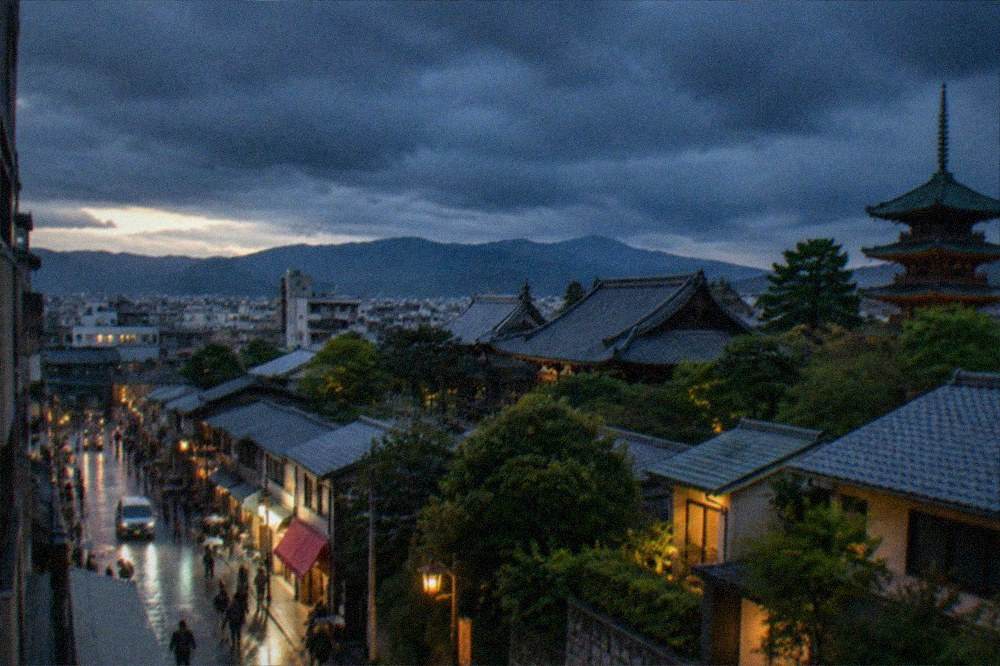
Practical planning follows from the physics. The morning is the usable part of an August day: the temple's own schedule at Kiyomizu-dera opens the gates at 6:00, and the shrine's paths at Fushimi Inari Taisha have no closing time at all, so the hours before 9:00 are the ones worth committing to outdoor sights. Midday belongs to anything indoors, from the Kyoto Railway Museum, open 10:00 to 17:00, to a long lunch. Evening recovers, which is one reason the food and izakaya scene downtown runs so late, and one reason a guided crawl works so well here in summer.
What Is The Wettest Month In Kyoto?
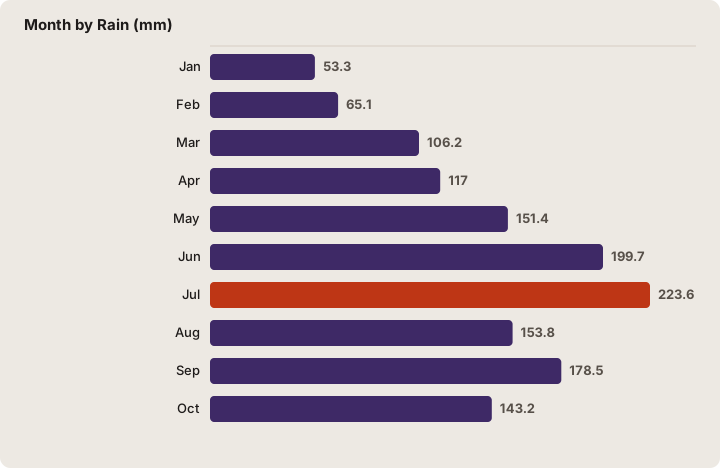
July is Kyoto's wettest month, not June: the JMA 1991-2020 normals give July 223.6 mm of rain against June's 199.7 mm, a gap most competing guides get backwards. August drops to 153.8 mm, September carries 178.5 mm, and the driest month is January at 53.3 mm, less than a quarter of July's total.
The reversal matters because almost every English-language guide copies the "rainy season is June" framing from Tokyo-oriented content and stops there. In Kyoto the East Asian rainy season, the tsuyu, typically begins in early June and its heaviest precipitation lands in July, when warm, moist air from the south meets the mountains ringing the basin. The station normals capture the result: June averages 199.7 mm, but July averages 223.6 mm, and July's mean temperature of 27.3 C is nearly as high as August's. The wettest calendar month ever recorded at this station was July 1903, at 626.9 mm, and the wettest single day was 13 August 1959, at 288.6 mm.
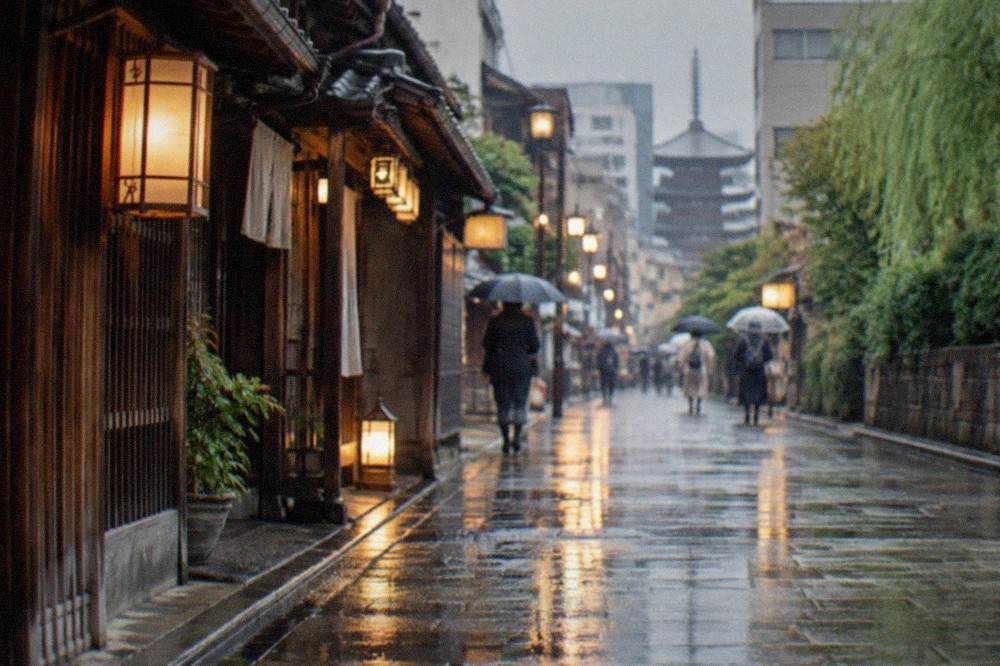
July rain in Kyoto is also not the all-day drizzle of a European winter. It tends to arrive in heavy afternoon and evening downpours, with long humid clear spells between them, and the 142.7 hours of July sunshine are only modestly below May's 182.4. The planning consequence is a packing one, an umbrella and a light towel, rather than a scheduling one. The city's tourism association runs a live crowd-comfort forecast built on smartphone location data, weather and time of day, which is genuinely useful for picking the dry window in a wet week.
Kyoto Weather By Month: The Full Climate Table
The JMA 1991-2020 normals for station 47759 give Kyoto a mean annual temperature of 16.2 C and 1,522.9 mm of rain spread very unevenly across the year, from 53.3 mm in January to 223.6 mm in July. August is the hottest and sunniest month, January the coldest and driest, and February the dullest at 122.2 hours of sunshine.
Here is the full monthly picture, straight from the Agency's published table for the Kyoto station. Every figure below is a 30-year normal, which makes it a planning baseline rather than a forecast for any one year.
| Month | Rain (mm) | Mean (C) | Mean daily max (C) | Mean daily min (C) | Sunshine (h) |
|---|---|---|---|---|---|
| Jan | 53.3 | 4.8 | 9.1 | 1.5 | 123.5 |
| Feb | 65.1 | 5.4 | 10.0 | 1.6 | 122.2 |
| Mar | 106.2 | 8.8 | 14.1 | 4.3 | 155.4 |
| Apr | 117.0 | 14.4 | 20.1 | 9.2 | 177.3 |
| May | 151.4 | 19.5 | 25.1 | 14.5 | 182.4 |
| Jun | 199.7 | 23.3 | 28.1 | 19.2 | 133.1 |
| Jul | 223.6 | 27.3 | 32.0 | 23.6 | 142.7 |
| Aug | 153.8 | 28.5 | 33.7 | 24.7 | 182.7 |
| Sep | 178.5 | 24.4 | 29.2 | 20.7 | 142.7 |
| Oct | 143.2 | 18.4 | 23.4 | 14.4 | 156.0 |
| Nov | 73.9 | 12.5 | 17.3 | 8.4 | 140.7 |
| Dec | 57.3 | 7.2 | 11.6 | 3.5 | 134.4 |
Reading the table as a planner: the shoulder months of April, May, October and November combine mild means with the least rain relative to daylight, which is why they are also the most crowded. June and September are the connoisseur's compromise, warm, green and noticeably quieter, provided you accept the rain column. Winter, December through February, is cold but genuinely dry, with the three driest months of the year falling inside it, and it is the season where the city's indoor culture, museums, temples with heated halls and long lunches, carries the day.
The extremes behind these averages are worth knowing too, because they define the worst case you are packing against.
| Station record (series from 1880) | Value | Date |
|---|---|---|
| Highest daily maximum | 39.8 C | 23 July 2026 |
| Second highest daily maximum | 39.8 C | 19 July 2018 |
| Lowest daily minimum | -11.9 C | 16 January 1891 |
| Hottest calendar month (mean) | 30.5 C | August 2020 |
| Wettest calendar month | 626.9 mm | July 1903 |
| Wettest single day | 288.6 mm | 13 August 1959 |
| Wettest / driest year | 2,150.6 mm (1921) / 880.5 mm (1994) | |
| Deepest snow | 41 cm | 26 January 1954 |
Does It Snow In Kyoto In Winter?
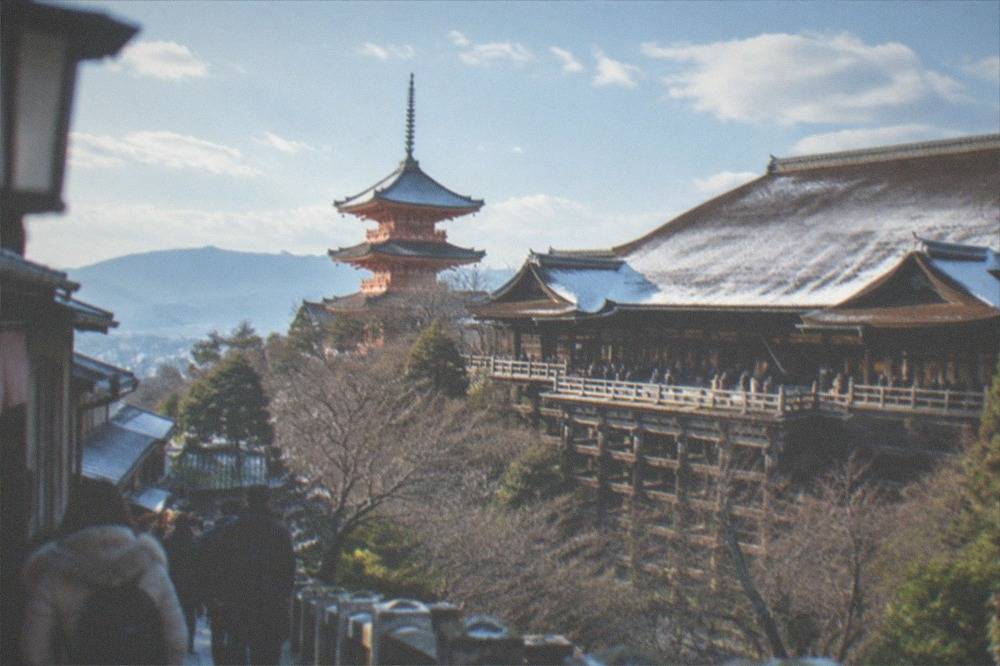
Yes, Kyoto has a real winter, and the station record proves it: the lowest temperature ever measured is -11.9 C from January 1891, the deepest snow on record is 41 cm from January 1954, and the January normals sit at a mean of 4.8 C with a mean daily minimum of 1.5 C. Any guide describing Kyoto's winter as mild or snowless is contradicted by the city's own weather station.
The normals put the three winter months at means of 4.8, 5.4 and 7.2 C for January, February and December, with mean daily maxima of 9.1, 10.0 and 11.6 C. That is cold by any visitor's standard, and the basin geography that traps summer heat works in reverse: cold air drains off the surrounding mountains and pools in the city, so clear winter nights in Kyoto regularly fall below the numbers a coastal city at the same latitude would see. Snowfall in a given year is usually light and brief rather than persistent, a few centimetres that melt within days, but the 41 cm record shows what the basin can do when a real Siberian outbreak arrives. More of these guides are collected on Kyoto Travel Guide.
Winter is also the driest and least crowded season, which makes it the value play of the Kyoto year. The 53.3 mm January normal is less than a quarter of July's, and the city's 2025 survey recorded 46.20 million day visitors against 16.59 million overnight guests, meaning the crowds thin far more than the hotels do in the cold months. Temple admission fees do not drop, but queues do, and Kinkaku-ji's 9:00 to 17:00 hours run year-round. The winter city guide covers the hot half of the year, so pair it with the seasonal pages on hot springs around the city for the cold half: nothing ends a 4 C Kyoto day better.
When Is Cherry Blossom And Autumn Foliage Season In Kyoto?
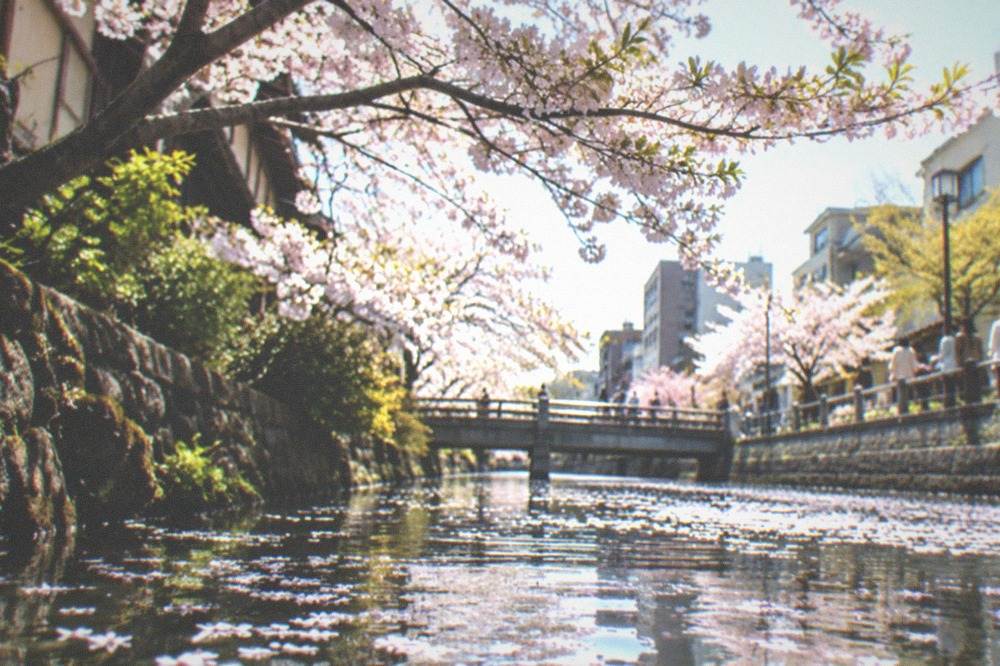
The JMA's own Kyoto observatory gives cherry flowering normals of 26 March and full bloom of 4 April, with 2026's flowering on 23 March and full bloom on 30 March, both early. The maple red-leaf normal is 5 December, with 2025 observed on 10 December, far later than the mid-November peak most guides promise, while ginkgo yellow normally arrives around 24 November.
The phenology record is where planning guides most often mislead, because they blend the tourist "peak" with the botanical date. The Agency's specimen trees at the Kyoto observatory turned red on 10 December in 2025, against a 1991-2020 normal of 5 December, and the earliest on record is 10 November 1976 with the latest 20 December 2024. The famous valley views at Arashiyama and Tofuku-ji's bridge do colour earlier than the observatory marker, so the honest framing is this: book late November for the famous momiji views, but the official season runs well into December, and the late weeks are quieter and still beautiful.
| Event | 2026 observed | 1991-2020 normal | 2025 observed | Record range |
|---|---|---|---|---|
| Cherry flowering | 23 March | 26 March | 27 March | 16 Mar (2021) to 9 Apr (1984) |
| Cherry full bloom | 30 March | 4 April | 5 April | 24 Mar (2023) to 17 Apr (1965) |
| Ginkgo yellow | not yet | 24 November | 25 November | 7 Nov (1976) to 7 Dec (1982) |
| Maple red leaves | not yet | 5 December | 10 December | 10 Nov (1976) to 20 Dec (2024) |
| Plum flowering | 22 February | 22 February | 11 March | 27 Jan (1979) to 15 Mar (1963) |
Cherry planning is the sharper problem, because the bloom window is roughly ten days from flowering to full bloom and the crowds are ferocious. The city's 2025 survey counted a record 62.79 million visitors, and a large share of them compress into the first week of April. The blossom season pages on the major sites explain the viewing culture in depth; the weather point is simply that the normal full-bloom date of 4 April has been landing three to six days early in the last two years, so late March bookings now carry the better odds.
When Is The Best Time To Visit Kyoto For Fewer Crowds?
The best crowd-to-weather trade in Kyoto is late October to mid-November or early December for autumn, and late February into early March for plum and pre-blossom quiet, while June and late September offer warm-weather value if you accept the rain normals of 199.7 mm and 178.5 mm. Avoid the third week of July and all of August if heat is a concern, and the first week of April and the foliage weekends if crowds are.
The reasoning comes from combining the two data sets this site holds. The city's 2025 tourism survey, released 12 June 2026, reports 62.79 million visitors, 12.68 million of them foreign, with tourism spending of 2.0474 trillion yen, all records, and satisfaction above 90 percent for both Japanese and foreign visitors. Those numbers concentrate in two waves: the cherry window of late March to early April, and the foliage window of mid-November. The weather normals say both waves sit in months that are otherwise excellent, April at a 14.4 C mean and November at 12.5 C, which is exactly why they are crowded.
| Period | Mean temp | Rain | Crowd level | Trade-off |
|---|---|---|---|---|
| Late Mar to early Apr | 14.4 C | 117.0 mm | Highest | Blossom at its best, book far ahead |
| May | 19.5 C | 151.4 mm | High | Golden Week crowds in early May |
| June | 23.3 C | 199.7 mm | Moderate | Green season, humid, cheaper rooms |
| July | 27.3 C | 223.6 mm | Moderate | Gion Matsuri all month, extreme heat risk |
| August | 28.5 C | 153.8 mm | Moderate-high | Hottest, Obon travel surge mid-month |
| Late Sep | 24.4 C | 178.5 mm | Moderate | Typhoon tail risk, quiet temples |
| October | 18.4 C | 143.2 mm | High | Foliage begins, best all-round month |
| Mid-Nov to early Dec | 12.5 C | 73.9 mm | Highest | Foliom peak, cold nights |
| Jan to early Mar | 4.8 to 5.4 C | 53.3 to 106.2 mm | Low | Cold, dry, snow possible |
The genuinely quiet warm month is June, before the school holidays and with the rainy season keeping day-trippers away, and the quiet cold month is January, when the northern mountain villages sit under snow and the city's temples are near empty. Both reward a flexible traveller. If your dates are fixed to a school holiday, the summer in the city guide covers the honest ways to handle August, from 6:00 temple openings to evening river dining.
What Should You Pack For Kyoto's Summer Heat?
Pack for a basin summer: lightweight, breathable clothing, a hat and a compact umbrella for July's 223.6 mm of rain, a towel for the humidity, and shoes built for long walks on hot pavement, because August's mean daily maximum of 33.7 C combines with a mean daily minimum of 24.7 C to give almost no natural cooling at night.
The packing logic follows the normals rather than the forecast. July is both the wettest and one of the hottest months, so rain gear and heat gear overlap: an umbrella does double duty as sun shade, and anything you wear must dry fast after an afternoon downpour. August is hotter but drier, 153.8 mm, and its 182.7 sunshine hours mean exposed temple grounds like the Arashiyama district offer little shade between 11:00 and 15:00. The city's own mitigation advice is to shift activities to mornings and evenings, which the temple opening hours make easy.
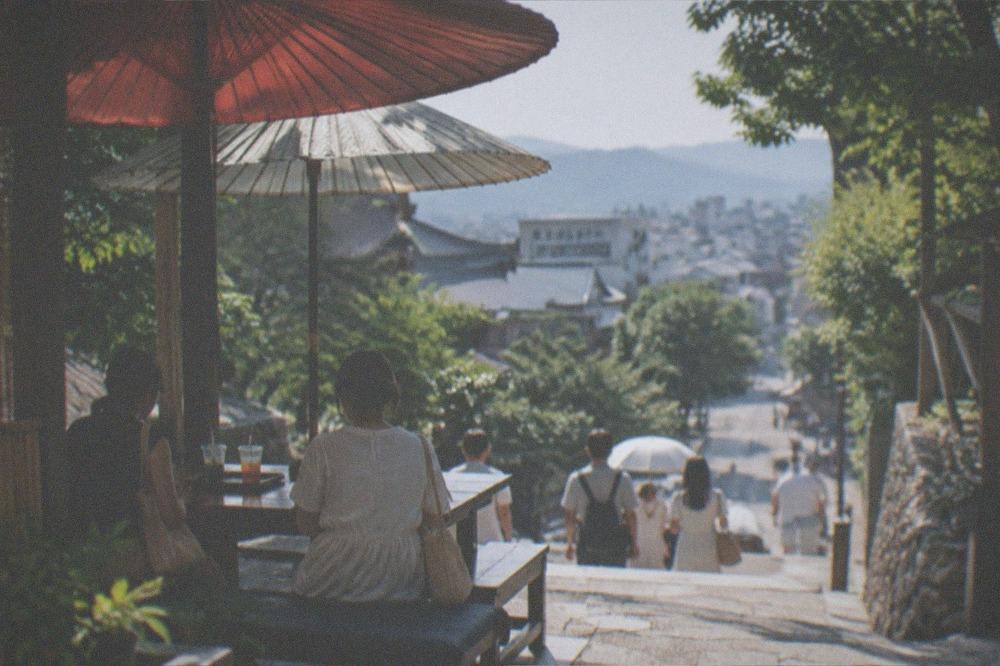
Two Kyoto-specific notes. First, summer is the season of yukata, and a rented kimono or yukata is genuinely practical here, lighter than it looks and culturally at home at evening festivals; the rental shops around the Gion and Higashiyama neighbourhoods dress you in under an hour. Second, the heat changes what you should attempt: the shrine mountain at Fushimi Inari is a real climb, and the city's own crowd-comfort forecast shows even the paths thin out by mid-afternoon in August, which tells you when locals judge it too hot.
How Does Typhoon Season Affect A Kyoto Trip?
Typhoon season in Japan runs roughly from July to October, and Kyoto's normals reflect it in September's 178.5 mm of rain and the all-time wettest day record of 288.6 mm set on 13 August 1959, but the basin's inland position means direct hits are rare and most typhoons arrive as a day of heavy rain and wind rather than a trip-ending event.
Kyoto sits far enough from the Pacific coast that typhoons typically weaken before reaching it, having crossed the mountains of the Kii Peninsula or the Shikoku ranges. The practical pattern is a one-day disruption: trains pause, outdoor sites close for the afternoon, and the following morning is often brilliantly clear. The September rain normal of 178.5 mm spread across the month is mostly typhoon remnants and autumn fronts rather than continuous rain, and the month's 142.7 sunshine hours confirm the breaks between systems.
The planning response is structural, not cancellational. Keep one flexible day in any September itinerary, book attractions rather than leaving everything to walk-up, and hold the indoor options in reserve: the station-area museums, the International Manga Museum, and long meals. The city's hands-free tourism scheme, with station counters and luggage delivery promoted citywide, is also worth using in typhoon season, since dragging a suitcase through horizontal rain is the one genuinely miserable Kyoto experience.
Which Day Trips Work In Each Kyoto Season?
The mountains around Kyoto invert the city's climate, so summer day trips run upward to the cooler valleys of Kurama, Kibune and Ohara, where elevation cuts the heat, while winter trips run to the snow-covered thatched village at Miyama, and spring and autumn belong to Uji and the riverside temples, each pairing a season with a landscape built for it.
The elevation logic is the part most guides miss. Kyoto city sits in the basin at its hottest, but the mountains to the north rise quickly, and the Kibune valley, about an hour from the central station, runs noticeably cooler in July and August, which is exactly why its riverside dining platforms open in summer. The Ohara valley and the Takao area work the same way, temple complexes in wooded ravines where the afternoon temperature falls as you climb. In winter the same direction puts you in real snow country, and Miyama's thatched-roof village is at its most photogenic under a white covering against a 4.8 C city mean.
| Season | City conditions | Best-matched day trip | Why it fits |
|---|---|---|---|
| Spring (Mar to May) | 8.8 to 19.5 C means | Uji | Tea fields, river walks, mild temperatures |
| Early summer (Jun) | 23.3 C, 199.7 mm | Takao | Shaded gorge, quieter than the blossom cities |
| High summer (Jul to Aug) | 27.3 to 28.5 C, extreme heat risk | Kurama, Kibune, Ohara | Elevation cooling, riverside dining |
| Autumn (Oct to Nov) | 18.4 to 12.5 C | Uji and Arashiyama's outskirts | Foliage along the river |
| Winter (Dec to Feb) | 4.8 to 7.2 C, snow possible | Miyama | Snow on thatched roofs, few visitors |
Uji deserves its own note for summer sceptics: the Byodo-in and tea district sit at similar temperatures to the city, but the matcha culture there is an indoor, shaded, cold-dessert culture, and the green tea guide explains why summer is paradoxically good matcha weather. Whatever the season, the basics of arriving and getting around matter more than the forecast, because Kyoto's transport handles rain better than most visitors expect.
Common Questions About Kyoto Weather
How hot does Kyoto get in August?
August is Kyoto's hottest month, with a mean of 28.5 C, a mean daily maximum of 33.7 C and a mean daily minimum of 24.7 C. The all-time record daily maximum is 39.8 C, set on 23 July 2026, and three of the six hottest days on record at the station fell in the summers of 2024, 2025 and 2026.
Why is Kyoto so humid in summer?
The city sits in a basin surrounded by mountains on three sides, which traps warm, moist air and slows overnight cooling. August follows July, the wettest month of the year at 223.6 mm, so the ground and air carry heavy moisture into the hottest weeks.
What is the wettest month in Kyoto?
July, at 223.6 mm in the JMA 1991-2020 normals, ahead of June at 199.7 mm. Most guides get this backwards. The wettest calendar month ever recorded at the station was July 1903 at 626.9 mm.
Does it snow in Kyoto?
Yes. The station's record low is -11.9 C, its deepest snow 41 cm, and January's mean daily minimum is 1.5 C. Snowfall in a typical year is light and melts within days, but Kyoto has a real winter, not a mild one.
When is cherry blossom season in Kyoto?
The JMA normals give flowering on 26 March and full bloom on 4 April. In 2026 the observatory recorded flowering on 23 March and full bloom on 30 March, continuing a run of early blooms, so late March now carries the better odds.
Is September a good month to visit Kyoto?
Yes, with a caveat. The mean is a pleasant 24.4 C and crowds are moderate, but September carries 178.5 mm of rain in the normals, much of it typhoon remnants. Keep one flexible day in the itinerary and the month rewards you.
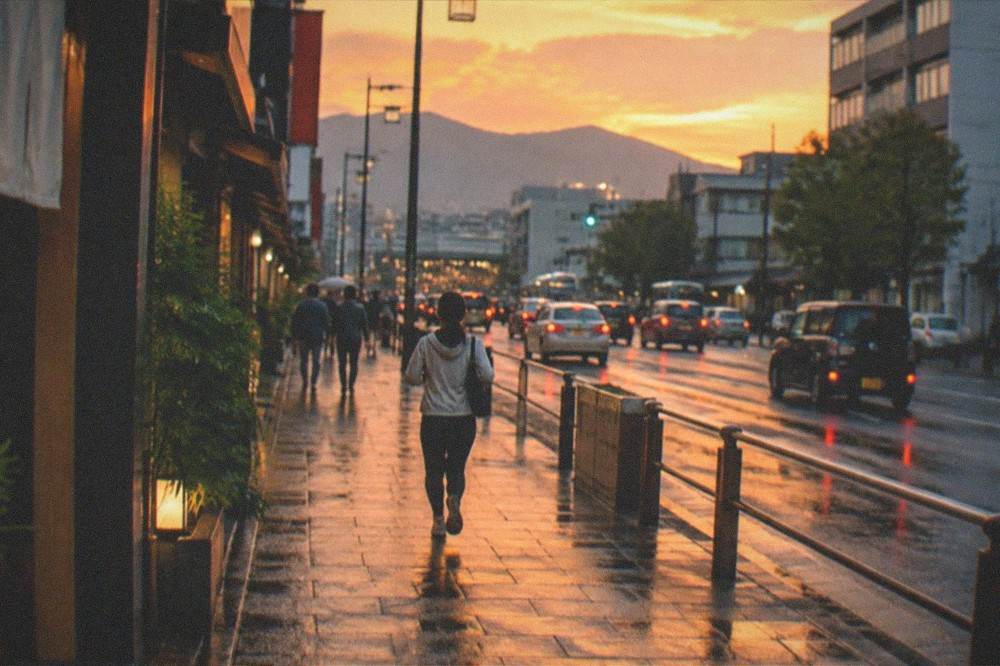
Kyoto's weather rewards travellers who read the normals instead of the clichés: a July that is wetter than June, an August that is genuinely hot and needs morning-shifted planning, a winter that is cold, dry and quiet, and a foliage season that runs into December while the crowds leave in November. Plan around the basin's rhythms and every month on the calendar becomes workable, which is the real conclusion of a station record that reaches back to 1880.