Day Trip From Kyoto To Takao
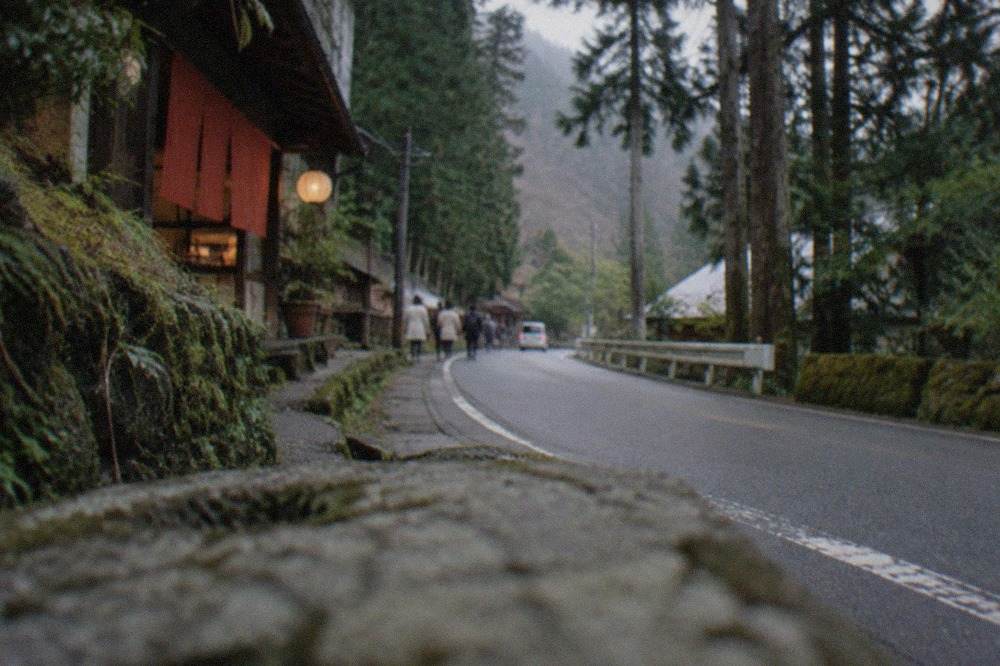
Takao is the wooded valley Kyoto residents retreat to when the city gets loud, a bus ride northwest of Kyoto Station and home to three temple complexes spread along a forested mountain road.
Short answer
Take the JR bus from Kyoto Station toward the Takao valley, allow a full day for the three temples and the riverside path between them, and go in late autumn or early summer for the best walking conditions.
Takao sits in the mountains northwest of Kyoto, a narrow valley where three temples sit along a single road beside a mountain stream. It is one of the few corners of the Kyoto region that gets quieter, not busier, when the city fills up, because most visitors never leave the flatlands. The city's own 2025 tourism survey counted 62.79 million visitors, a record, and the crowds they generate are concentrated in a handful of blocks around Kyoto Travel Guide's most-covered sights. Takao is the answer to that problem: same prefecture, same bus network, a fraction of the people.
The valley's three temples, Jingo-ji, Saimyo-ji and Kozan-ji, are connected by a walking route that follows the Kiyotaki river through cedar forest. Kozan-ji holds one of the most famous animal scroll paintings in Japanese art history. Jingo-ji sits high on the mountainside and requires a real climb of stone steps to reach it, which is precisely why the view from the top stays uncrowded. This guide covers the bus, the walking route, the seasons, and how Takao stacks up against Kyoto's other day trips.
How Do You Get To Takao From Kyoto By JR Bus?
The JR bus to Takao departs from Kyoto Station and runs directly into the valley, stopping at all three temples along the way, with no transfers needed from central Kyoto. Check the operator's timetable for the current schedule and fare before you travel, because mountain bus services run less frequently than city routes and the last return buses leave earlier than you expect. A Japan Rail Pass does not cover this bus unless JR itself operates it, which is why you confirm the operator first.
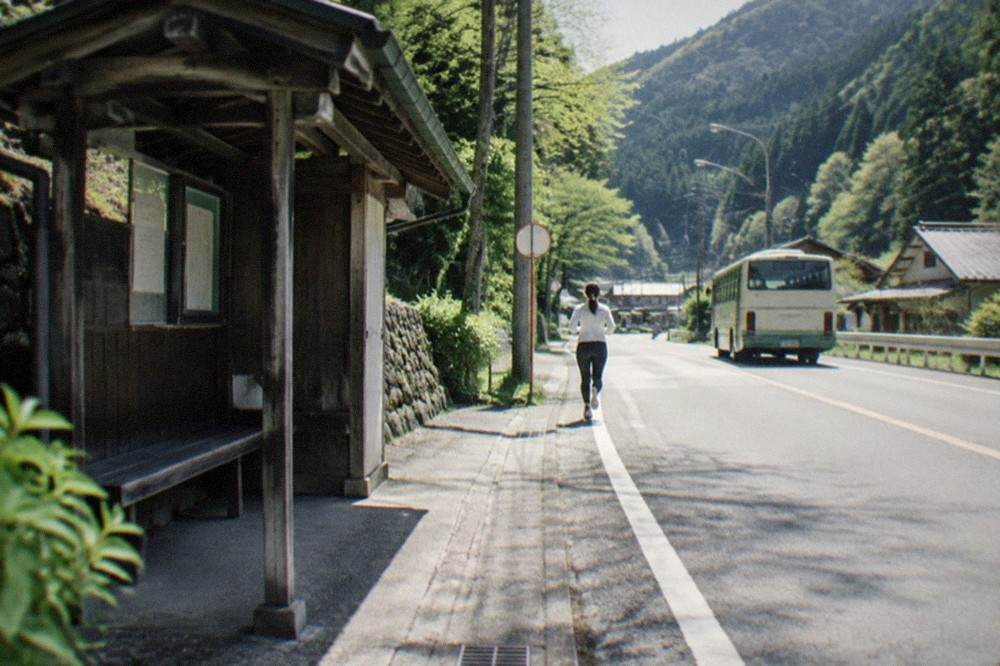
The practical point most guides miss is that Takao is a destination where the bus is genuinely the best option, not just the cheapest one. The valley road is narrow, parking is minimal, and the walk between temples is the whole point of going. Arriving by bus also means you walk the route downhill-biased if you plan it right: get off at the far end, work your way back toward Kyoto. The bus serves the valley linearly, so study the stop order before boarding.
Getting to the departure point matters too. If you are staying downtown, the City Bus flat fare is 230 yen for adults and 120 yen for children aged 6 to 11, and the subway runs 220 to 360 yen by zone. The Subway and Bus One-Day Pass at 1,100 yen, 550 for a child, covers unlimited rides on both networks for a day, and the bus-only one-day pass no longer exists: its sales ended in September 2023 and the last day of use was 31 March 2024, so ignore any guide that still recommends it. The Kyoto bus and subway pass guide breaks down when the 1,100 yen pass pays for itself.
| Transport in Kyoto | Adult fare | Child fare | Notes |
|---|---|---|---|
| City Bus flat fare | 230 yen | 120 yen | ages 6 to 11 child rate |
| Subway by zone 1 to 5 | 220 to 360 yen | 110 to 180 yen | five zones |
| Subway and Bus One-Day Pass | 1,100 yen | 550 yen | covers both networks for one day |
| Subway One-Day Pass | 800 yen | 400 yen | subway only |
| EX100 / EX101 tourist express | 500 yen | 250 yen | cash or IC card |
| ICOCA card | 2,000 yen | includes 500 yen deposit | refundable deposit |
One more planning layer: if you are arriving in Kyoto the same week, the JR West HARUKA One-way Ticket for foreign visitors costs 2,200 yen from Kansai International Airport to Kyoto, 1,100 yen for a child, and the journey takes about 80 minutes. The Kansai Airport to Kyoto guide covers that transfer in full. From Itami, the Hankyu Kanko limousine bus is 1,500 yen adult and 750 yen child, about 50 to 55 minutes from Kyoto Station's Hachijo exit, with contactless card payment since 1 March 2026.
If a self-guided mountain day sounds like more logistics than you want on day one of a trip, a guided tour does the planning for you, and the contrast between a guided city day and a self-directed valley day is worth understanding before you book anything.
What Can You See In Takao: The Three Temples?
The Takao valley holds three temples in sequence along one mountain road: Jingo-ji on the high ground above a long stone stairway, Saimyo-ji beside the river with its thatched main gate, and Kozan-ji, the mountain temple whose hand-painted animal scrolls are among the most reproduced images in Japanese art. All three are walking distance from each other, and the route between them is a riverside path through cedar forest.
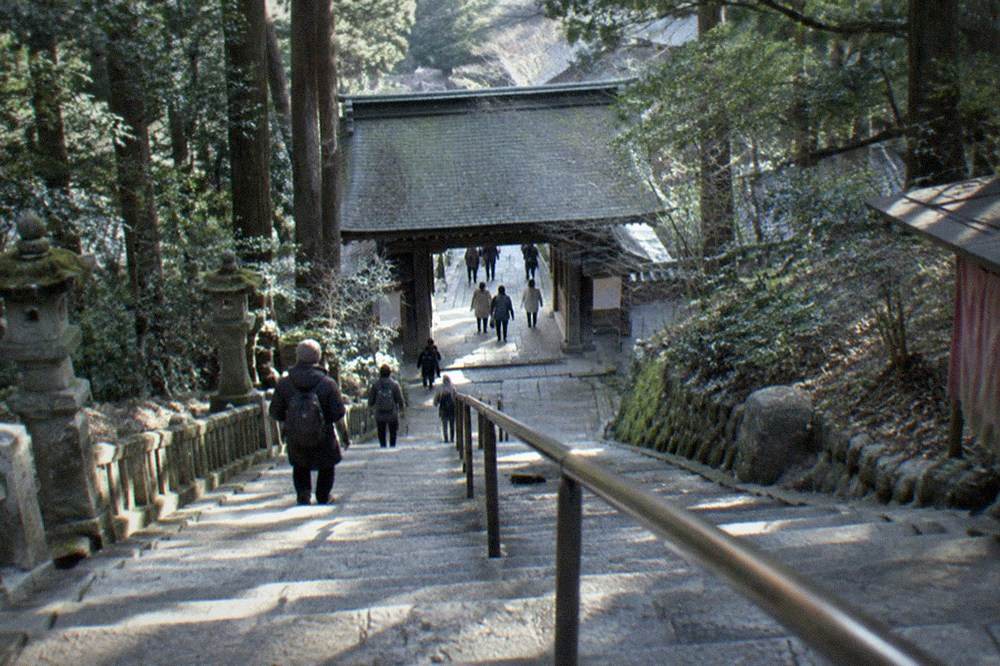
Start at the top of the valley and work down. Jingo-ji is the most demanding of the three and rewards the climb with the valley's widest views. The temple is associated with Kukai, the founder of the Shingon school, and its mountain setting has changed little in centuries of portraits. Give it the first hours of the day, both for the light through the trees and for the simple fact that the stairway is easier going up before lunch than after it.
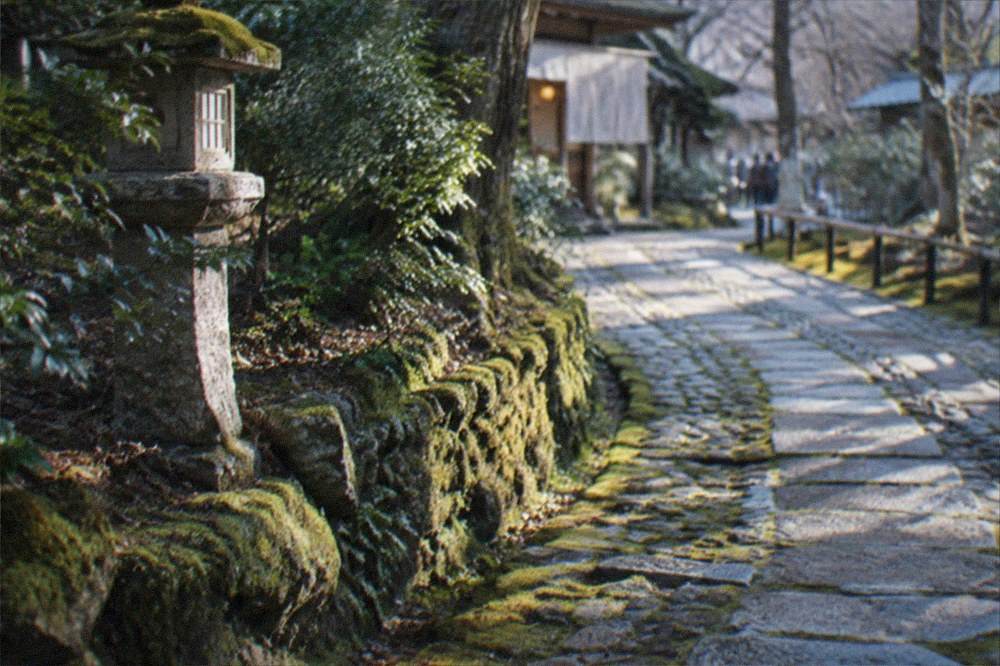
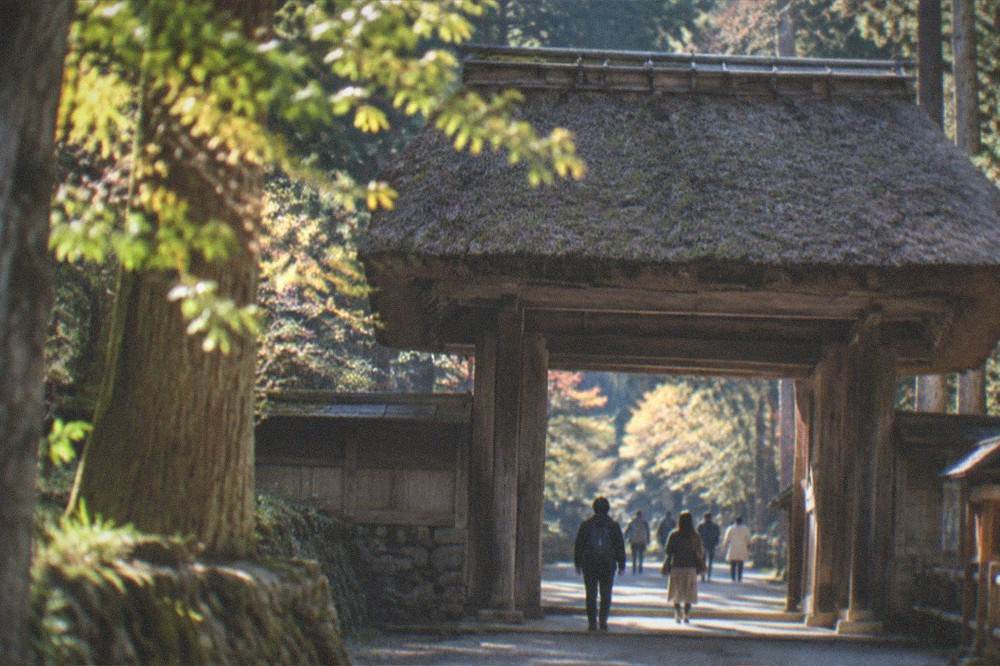
Saimyo-ji sits lower, beside the Kiyotaki river, and its thatched gate is one of the quietest photo subjects in the Kyoto region. Kozan-ji, the third temple, is where the famous Choju-giga scrolls were painted, the frolicking animals caricatures that manga historians trace their lineage back to. The original scrolls are held in museums in Tokyo and Kyoto rather than at the temple itself, so go for the mountain garden and the moss, not for the artwork on the wall. Temples in Kyoto charge admission as a rule, and fees copied from older guides go stale: Ginkaku-ji doubled its admission to 1,000 yen from April 2026, and Tofuku-ji revises its fees from 1 November 2026. Treat any temple fee you read anywhere, including here, as something to confirm on the venue's own page before you budget the day.
The walk between the temples is a destination in itself. The road narrows to a single lane, the river runs beside it, and in most seasons you will pass more herons than tour groups. Wear real shoes: the path is paved but steep in sections, and the stone stairway at Jingo-ji is unforgiving in rain. The Kyoto weather guide explains the month-by-month pattern, and the numbers matter here more than in the flat city, because mountain valleys run cooler in spring and autumn and darker under summer canopy.
For travellers who prefer structure over self-direction, a comparison of the guided options helps set expectations for what a tour can and cannot cover in a valley like this one.
When Is The Best Time Of Year To Visit Takao?
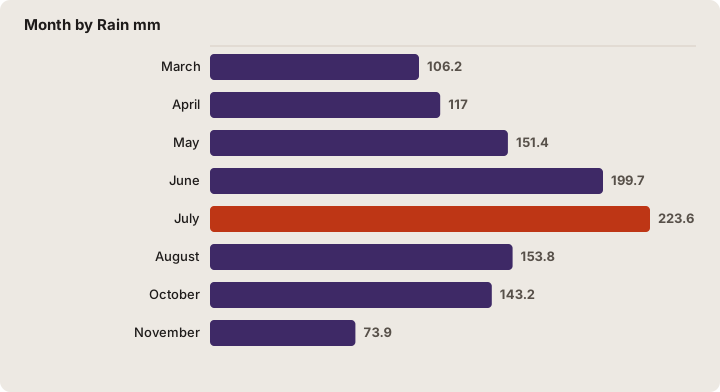
Late autumn is the strongest season for Takao, with the JMA's Kyoto observatory recording maple red leaves at a normal date of 5 December and the valley's maples typically peaking from mid to late November, while early summer offers green forest, flowing river water and thin crowds before the July heat arrives. Avoid midsummer afternoons, when Kyoto's mean daily maximum reaches 32.0 C in July and 33.7 C in August.
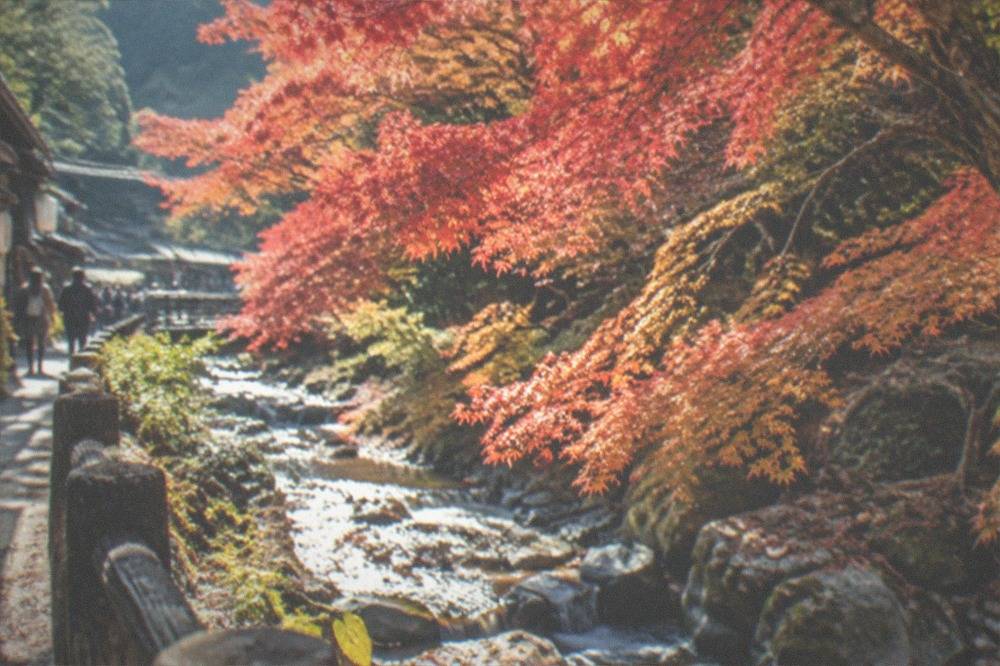
The phenology record deserves more attention than most guides give it. The JMA's 1991-2020 normals put Kyoto's maple red-leaf date at 5 December, and in 2025 the observatory's specimen tree turned on 10 December. Those dates are the official marker for the city, and the mountain valleys run on their own clock: Takao's maples generally turn ahead of the city marker because of elevation. The practical read is that the last two weeks of November are the sweet spot, with the first week of December as a fallback in a warm year. The Kyoto autumn leaves guide covers the citywide picture.
| Month | Rain mm | Mean C | Mean daily max C | Sunshine h | Takao verdict |
|---|---|---|---|---|---|
| March | 106.2 | 8.8 | 14.1 | 155.4 | bare trees, quiet paths |
| April | 117.0 | 14.4 | 20.1 | 177.3 | fresh green, mild walking |
| May | 151.4 | 19.5 | 25.1 | 182.4 | best early-summer walking |
| June | 199.7 | 23.3 | 28.1 | 133.1 | humid, rain likely |
| July | 223.6 | 27.3 | 32.0 | 142.7 | wettest month, skip |
| August | 153.8 | 28.5 | 33.7 | 182.7 | hot, heavy canopy shade |
| October | 143.2 | 18.4 | 23.4 | 156.0 | cool, clear, thin crowds |
| November | 73.9 | 12.5 | 17.3 | 140.7 | foliage season, go |
Two climate facts from the JMA 1991-2020 normals are worth internalising for any Kyoto planning. July, not June, is Kyoto's wettest month, 223.6 mm against 199.7 mm, which runs against the "rainy season ends in July" instinct most visitors arrive with. And three of Kyoto's six hottest days on record fell in the summers of 2024, 2025 and 2026, so recent heat is not an anomaly but a pattern. A shaded mountain valley is more forgiving than an exposed temple courtyard in August, but the stone stairway at Jingo-ji in peak summer heat is still a workout. If summer is your only window, go early in the morning and be off the mountain by early afternoon.
Spring works too, differently. April and May bring the year's most reliable walking weather, 20.1 C and 25.1 C mean daily maximums respectively, and the valley's fresh green is a genuine season in Japan even if it gets none of the cherry blossom's press. The trade-off is river flow: spring melt keeps the Kiyotaki lively where summer shrinks it.
How Long Does A Takao Day Trip Take?
Plan a full day, roughly seven to eight hours door to door, with about four to five hours of that spent on the ground in the valley: one to two hours at Jingo-ji including the stairway, an hour each at Saimyo-ji and Kozan-ji, and an hour of riverside walking between them. The bus ride each way adds the rest, and mountain service frequency means your return time is set by the timetable rather than by when you feel like leaving.
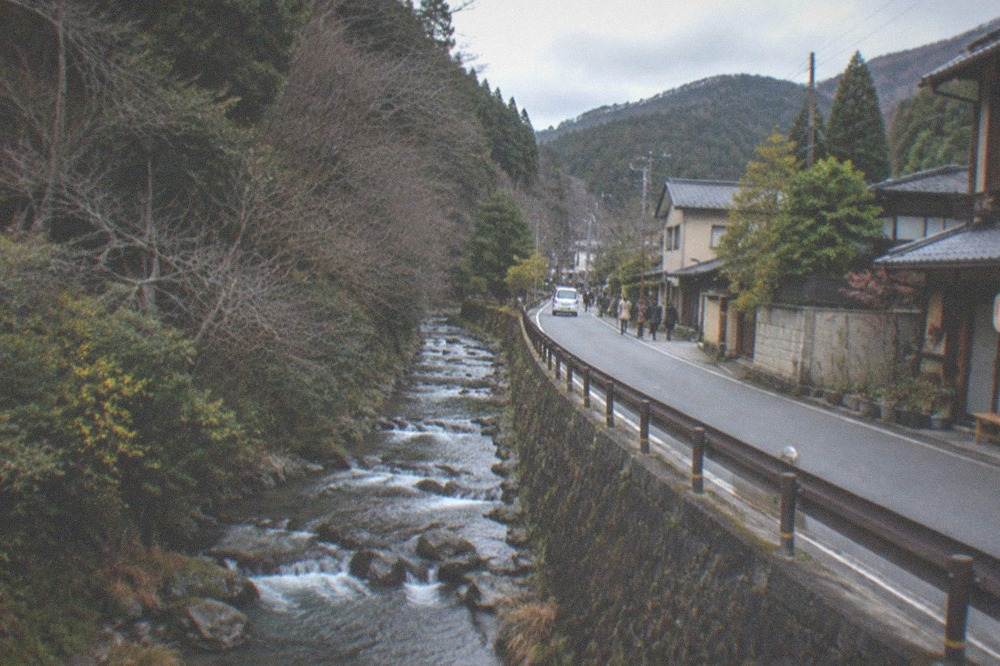
The mistake to avoid is treating Takao as a half-day add-on. It is not far from Kyoto, but the valley rewards the opposite of a rushed visit: the pace of the place is the product. If you only have half a day, pick one temple, Jingo-ji for the view or Kozan-ji for the garden, and skip the through-walk.
A sample shape for the day: leave Kyoto Station mid-morning after the commuter crush, reach the top of the valley before noon, lunch near Jingo-ji or carry a bento, walk down through the three temples through the afternoon, and catch a late-afternoon bus back. That puts you in central Kyoto by early evening with time for dinner downtown.
Pack light and pack right. The city actively encourages hands-free tourism, with station counters, delivery services and lockers to reduce bus congestion, and a day pack is far better suited to temple stairways than a rolling suitcase.
What Should You Eat In Takao?
Takao is a soba destination: the valley's cold mountain water and its history as a retreat for Kyoto's tea masters made buckwheat noodles the local specialty, and the small restaurants along the river road serve them with mountain vegetable tempura and yuba. Arrive before noon or after 13:30 in foliage season, because the restaurants are small, unbookable in most cases, and everyone in the valley eats at the same hour.
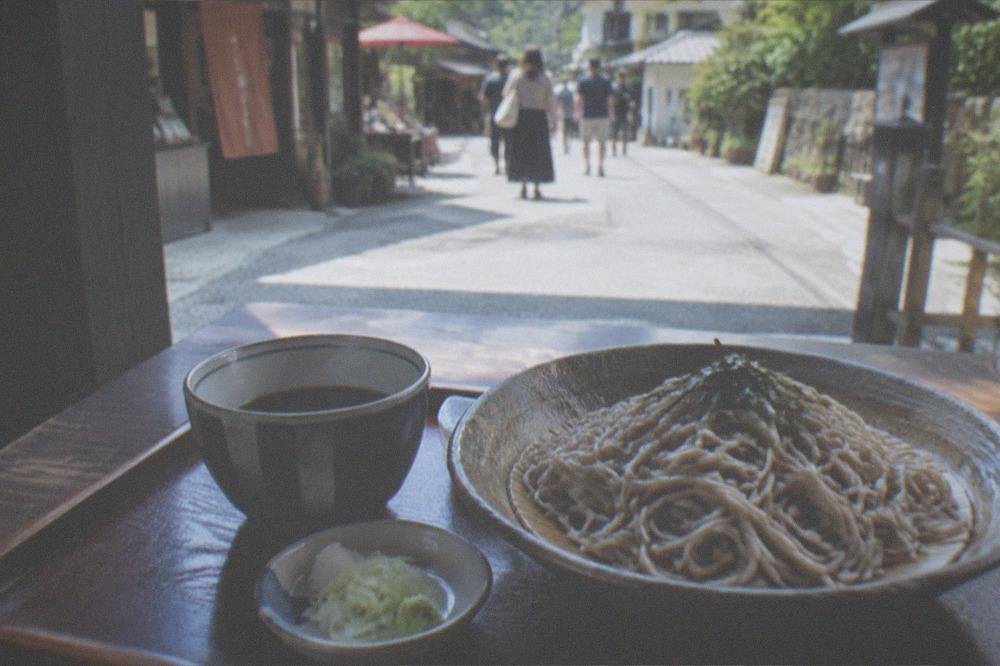
The honest framing for any food advice here: the valley's restaurants are individually owned and their prices are not published in a central place, so treat any figure you see in a guide, including the shape of a menu, as something to confirm on the day. What is safe to say is the pattern. Mountain valleys around Kyoto specialise in what the terrain produces: soba, tofu, river fish and pickled mountain vegetables, and Takao follows it. The Kyoto food guide covers the city's broader cuisine.
If you would rather eat well in the city after a day of walking, the options widen considerably. Kaiseki sits at the top of Kyoto's dining ladder, and at Hyotei, one of the most famous houses, the restaurant's own site prints kaiseki from 31,625 yen at lunch and 37,950 yen at dinner, tax and service included, while the same house's annex serves a morning rice porridge at 5,445 yen and a bento at 7,260 yen. Those are Hyotei's own prices, not a Kyoto norm, but the spread illustrates the range available after a day in the hills. The kaiseki guide covers the form properly.
| Eating option in and around Takao | Typical setting | Best for | Booking |
|---|---|---|---|
| Valley soba restaurant | small rooms beside the river road | the local specialty | walk-in, arrive off-peak |
| Temple area teahouse | benches near the temple grounds | matcha and a sweet between temples | walk-in |
| Carried bento | any riverside spot | controlling your own schedule | buy in Kyoto before boarding |
| Dinner back in Kyoto | downtown Kawaramachi or Gion | a full meal after the walk | reserve ahead |
How Does Takao Compare With Kyoto's Other Day Trips?
Takao is Kyoto's quietest major day trip, trading the scale of Arashiyama or Nara for a forested valley with three temples and almost no crowds, and it suits travellers who want walking and stillness rather than landmarks. Nara has the deer and the Great Buddha, Kurama and Kibune have the hot spring and the river dining, Ohara has the garden village, and Takao has the art history and the empty path. Pick by temperament, not by ranking.
The closest comparison is Kurama and Kibune, the valley immediately north of Takao. Kurama offers a genuine mountain hike between two villages and a hot spring bath at the end, Kibune offers riverside dining platforms in summer, and the two valleys share the same forested mountain range. The difference is tone: Kurama-Kibune is an activity day, Takao is a contemplative one. A guided hike covering the Kurama side runs from $210 per person and is rated 5 from 82 reviews, which tells you the demand is real but the crowd level stays manageable.
Ohara is the other near neighbour, a farming village with temple gardens and a similar bus-in, walk-around rhythm. Nara is the heavyweight alternative, with the 2026 deer census counting 1,687 animals in Nara Park and the Todai-ji Daibutsuden charging 800 yen adult admission, and it draws the crowds those numbers imply. For the full menu, the day trips from Kyoto guide ranks every option from the city.
| Kyoto day trip | Character | Effort level | Crowd level | Best season |
|---|---|---|---|---|
| Takao | forest temples, art history | moderate, stairways | low | late November |
| Kurama and Kibune | mountain hike, hot spring | high | moderate | summer and autumn |
| Ohara | garden village | low | low | spring and autumn |
| Nara | deer, Great Buddha | low | high | spring and autumn |
| Uji | tea, Byodo-in | low | moderate | spring |
| Lake Biwa | open water, cycling | low to moderate | low | summer |
A note on combining trips: Takao and Kurama sit in the same mountain range but are not a sensible same-day pairing, because the connecting routes are slow and the bus frequencies do not cooperate. Pair Takao with a light city afternoon instead, or with nothing at all. Uji to the south, where the JR Nara Line costs 240 yen from Kyoto, works far better as a second half-day if you start early.
What Should You Know Before You Go To Takao?
Bring cash, wear walking shoes, check the bus timetable before you leave, and expect temple admission fees that you confirm on the day rather than assume from an old guide. There are few convenience stores in the valley, mobile coverage is patchy in the deeper forest sections, and the last buses back to Kyoto run earlier than city services, so note your return departure time the moment you arrive.
Etiquette matters more in a valley this small. The temples are working religious institutions, not photo backdrops, and the Kyoto etiquette guide covers the general rules: quiet voices on temple grounds, no photographing monks or rites without permission, and shoes off where indicated. Kamigamo Shrine in the city requires advance permission for photographing rites and for any drone flight, and the same spirit applies everywhere in the region's religious sites.
Money-wise, a Takao day is cheap by Kyoto standards. The city-side transport costs are fixed and known, the bus fare to the valley is modest, and the only variable is lunch. Travellers budgeting the whole trip should read the Kyoto trip cost guide, which also covers the accommodation tax change that took effect on 1 March 2026: the top tier rose from 1,000 to 10,000 yen per person per night on rooms of 100,000 yen and up, and most guides written before that date still quote the old tiers.
One final practical note for anyone extending beyond Kyoto: the JR West Kansai Area Pass costs 2,800 yen for one day and covers regional JR lines, useful if your itinerary continues toward Osaka or Kobe. It is not what gets you to Takao, but it belongs in the same planning conversation as the Osaka to Kyoto guide if the valley day sits inside a wider Kansai route.
For travellers who decide a guided day suits them better than a self-directed valley walk, these are the strongest options running out of Kyoto right now.
Common Questions About A Takao Day Trip From Kyoto
How Do You Get To Takao From Kyoto By JR Bus?
The JR bus to Takao departs from Kyoto Station and runs directly into the valley, stopping near all three temples. Mountain services run less frequently than city buses, so check the operator's current timetable and fare before you travel, and note the departure time of the last return bus when you arrive.
Is Takao worth visiting compared with Arashiyama?
For most travellers, yes, if you have already seen Arashiyama or want to avoid its crowds. Takao offers a similar forest-and-temple experience at a fraction of the visitor density, with more walking and fewer landmarks. First-time visitors with only one or two days in Kyoto should generally see the headline sights first.
How difficult is the walking in Takao?
Moderate. The route between the three temples follows a paved mountain road and riverside path, but Jingo-ji sits above a long stone stairway that demands steady legs and real shoes. Total walking time for the full valley route is roughly four to five hours with stops.
When do the autumn colours peak in Takao?
The valley's maples typically peak from mid to late November, ahead of the city marker. The JMA's 1991-2020 normal for Kyoto's maple red leaves is 5 December, and mountain valleys turn earlier because of elevation. The first week of December is the fallback in a warm year.
Can you visit Takao and Kurama on the same day?
It is possible but not recommended. The two valleys sit in the same mountain range, but the connecting routes are slow and the bus frequencies do not line up well. Choose one valley per day and give it the time it deserves.
Do you need to book anything in advance for Takao?
No bookings are needed for the temples or the valley restaurants in most cases. What you should do in advance is check the bus timetable, since service frequency, not availability, is the constraint that shapes the day.
A Takao day is the version of Kyoto that residents keep for themselves: forest, stone stairways, a river you can hear the whole walk, and temples where the loudest sound is the wind in the cedars. Check the bus times, pack light, and give the valley the full day it repays.