Byodo-in Temple in Uji: The Phoenix Hall On The Ten Yen Coin
Byodo-in in Uji is one of the few buildings every Japanese person carries in a pocket: the Phoenix Hall is the design on the ten-yen coin. This guide covers the verified fees, the interior tour rules, and how to reach Uji from Kyoto.
Short answer
Byodo-in charges 700 yen for garden and museum, plus 300 yen for the Phoenix Hall interior tour, which runs 9:30 to 16:10 at 50 people per slot with tickets sold from 9:10, first come first served. Uji is about 240 yen and under 30 minutes from Kyoto by JR.
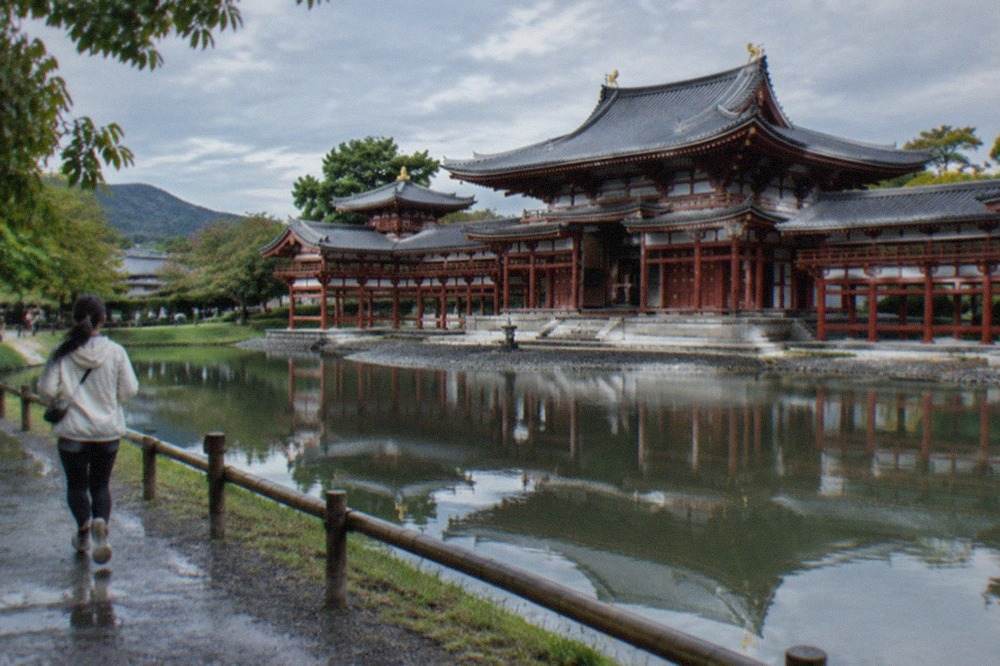
Byodo-in is the rare temple that most of Japan handles every day without noticing. The Phoenix Hall, the building that gives this World Heritage site its silhouette, is the design stamped on the ten-yen coin, so the answer to why it appears there starts with what the building is: a surviving piece of Heian aristocratic architecture, mirrored in its pond, flanked by the wing-like corridors that gave it its name. The temple sits in Uji, a small city between Kyoto and Nara that is better known for green tea than for crowds, and it is close enough to Kyoto Station that it works as a half-day trip or as one stop on a longer southern loop.
This guide from Kyoto Travel Guide covers the parts of a visit that actually decide how the day goes: the verified admission fees, the interior tour of the Phoenix Hall and how its ticketing works, the trains from Kyoto, and what else in Uji is worth the walk. Every figure below comes from the temple's own pages or from the operators that run the transport, and where a number could not be verified it says so plainly.
Why Is Byodo-in's Phoenix Hall On The Ten Yen Coin?
The Phoenix Hall appears on the ten-yen coin because it is one of the most recognisable buildings in Japan, a Heian-era hall set on an island in a pond, and the coin design uses its front elevation with the two wing corridors spreading either side. The building's formal role helps too: it is the centrepiece of a UNESCO World Heritage site and the subject of one of the country's most reproduced temple photographs, which makes it a natural choice for a national coin.
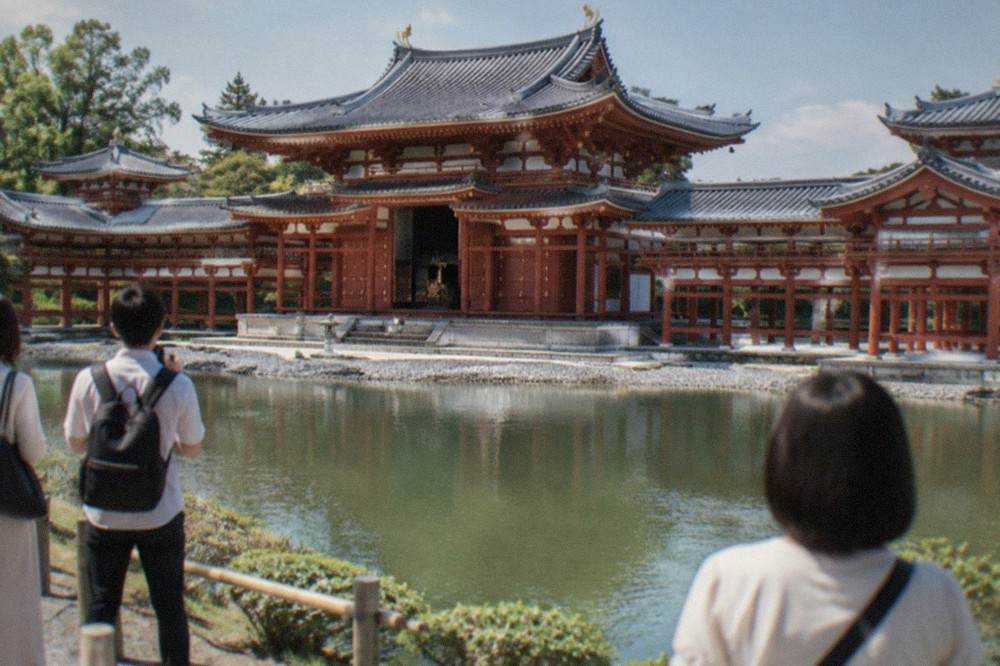
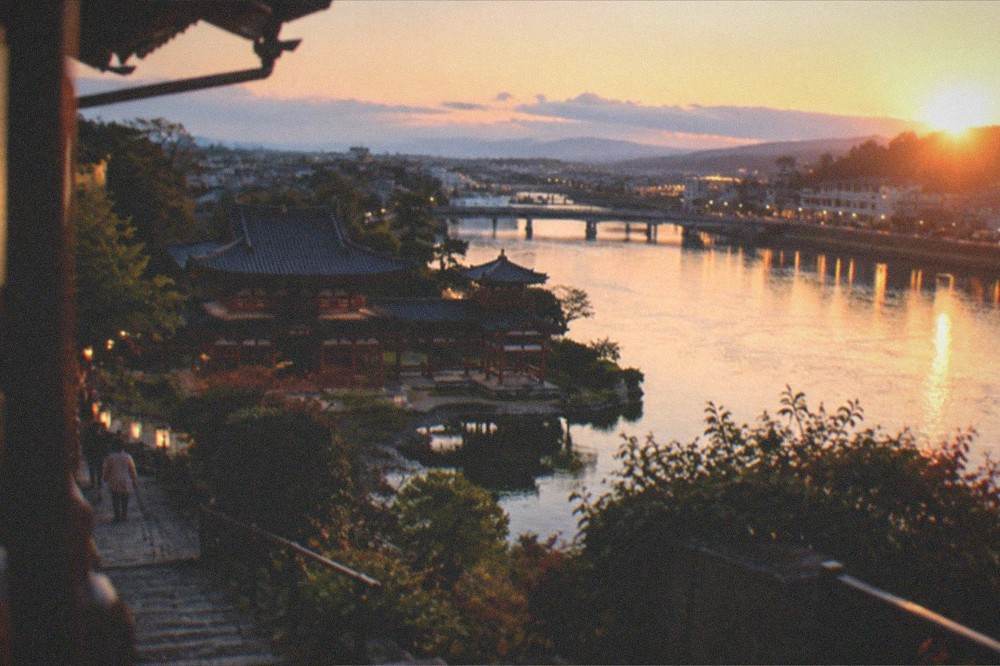
The coin connection is worth a few sentences because it changes how you look at the building. Most visitors arrive at the pond edge, raise a camera, and realise they have framed the exact view they have carried in change for years. The temple leans into this: the front-on view across the pond is the composition, and the hall was designed to be seen from that bank, with the water standing in for the sea of the Pure Land paradise it was built to evoke. The two bronze phoenixes on the roof ridge, which give the hall its English name, are the detail most people miss until they look for them.
The hall's fame is also a matter of survival. Very little secular Heian architecture escaped fire and rebuilding over the following centuries, so a hall of this age, substantially intact and still in its original pond setting, carries a weight that later temple buildings elsewhere in Kyoto cannot claim. The temple's own guide pages present it in exactly those terms, as a survivor rather than a reconstruction.
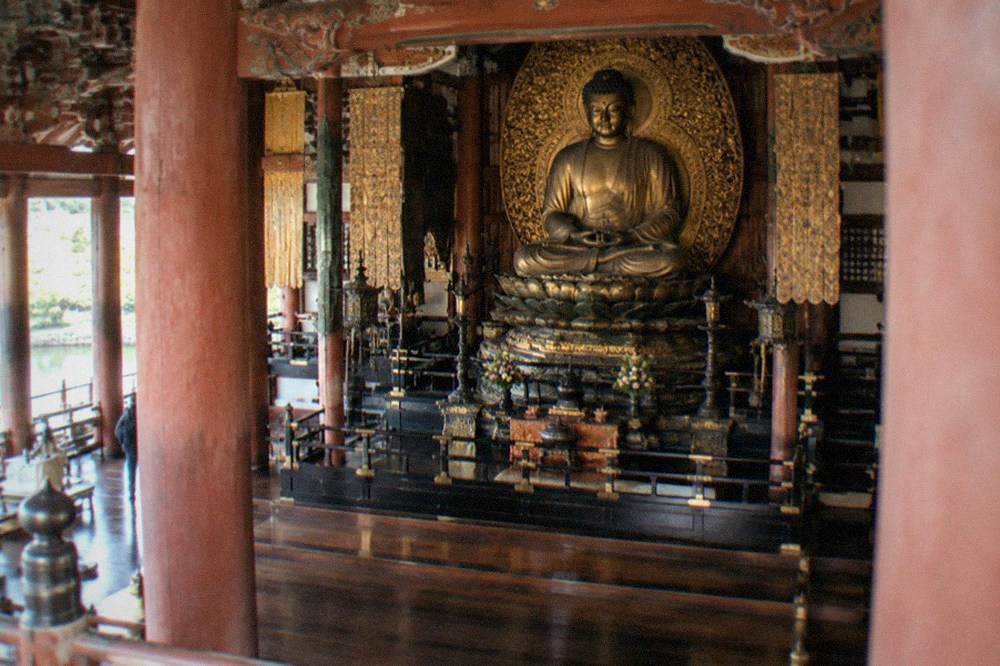
That survival is also why the interior tour matters. The hall can be appreciated from the bank for the price of the garden ticket, but the interior, with its seated Amida Buddha and the surrounding statuary, is a separate, timed visit, and the mechanics of that tour are where most planning mistakes happen. The next two sections cover the numbers and the ticketing in detail.
What Are Byodo-in's Admission Fees and Opening Hours?
Byodo-in charges 700 yen for adults, 400 for junior high and high school students and 300 for elementary children, covering the garden and the Hoshokan museum, with a 300 yen addition for the Phoenix Hall interior tour. The garden is open 8:45 to 17:30 with reception ending 17:15, and the museum runs 9:00 to 17:00 with last entry at 16:45. Group rates of 600, 300 and 200 yen apply for parties booked in advance.
The temple's fee notice sets those figures. Unlike several Kyoto temples, Byodo-in has not announced a fee change for 2026, which matters because two of the city's other major sites did: Ginkaku-ji doubled its adult fee to 1,000 yen from 1 April 2026, and Tofuku-ji revises its charges on 1 November 2026. If you are building a multi-temple budget from an older guide, check each fee individually rather than assuming a uniform 500 yen.
| Ticket | Adult | Junior high / high school | Elementary |
|---|---|---|---|
| Garden + Hoshokan museum | 700 yen | 400 yen | 300 yen |
| Group rate (booked) | 600 yen | 300 yen | 200 yen |
| Phoenix Hall interior tour (added on) | 300 yen | 300 yen | 300 yen |
| Combined garden, museum and interior | 1,000 yen | 700 yen | 600 yen |
Hours are seasonal only in the loosest sense: the temple keeps the same daily schedule year-round, which makes it more predictable than sites like Kiyomizu-dera, whose closing time moves with the calendar and with night-viewing events. The one thing that does change is the interior tour schedule, which is shorter than the garden hours and stops accepting visitors well before the garden closes.
| Facility | Hours | Last entry |
|---|---|---|
| Garden | 8:45-17:30 | 17:15 |
| Hoshokan museum | 9:00-17:00 | 16:45 |
| Phoenix Hall interior tours | 9:30-16:10 | Tickets from 9:10, first come first served |
One change is on the calendar: the temple has announced that the Phoenix Hall tour's per-slot capacity changes from 16 October 2026. The new number was not published on the page we read, so we will not print one; if you are visiting after mid-October 2026, treat the tour capacity as subject to change and arrive early regardless. The 50-people-per-slot figure below is the current, verified number until that date.
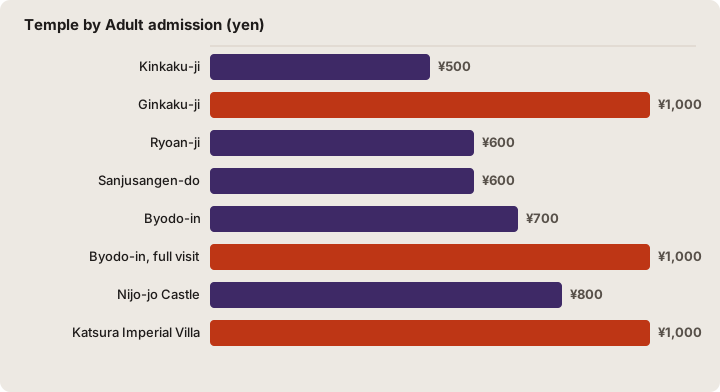
For context on how Byodo-in's pricing sits against the rest of the region, the temple is mid-priced. It costs more than Kinkaku-ji's 500 yen but well under the Ginkaku-ji's new 1,000 yen, and unlike Nijo-jo Castle, where the 800 yen base ticket rises to 1,300 with the Ninomaru-goten Palace, Byodo-in's add-on is a flat 300 yen with no compounding tiers.
If a day in Uji is part of a longer first visit, our guide to Kyoto's major temples puts Byodo-in in the context of the city's bigger temple circuit, and our overview of things to do in Kyoto covers how a southern day trip fits a four or five day itinerary.
How Does The Phoenix Hall Interior Tour Work?
The Phoenix Hall interior tour runs from 9:30 to 16:10, admitting 50 people per slot, with tickets sold from 9:10 on a first come first served basis. The 300 yen ticket is bought on top of the garden admission, and because slots are capped and unreserved, the practical rule is to arrive at or shortly after 9:10 if you want an interior visit, since later slots can fill on busy days.
The first come first served system is the part to plan around. There is no online reservation for the interior tour, unlike the Katsura Imperial Villa, which takes advance applications, or the Nijo-jo Castle Honmaru Palace, which also requires advance booking. You turn up, you queue, you take the next available slot. In practice this rewards morning visits twice over: the pond light is better before noon, and the tour queue is shorter.
| Interior tour detail | Rule |
|---|---|
| Tour times | 9:30-16:10 |
| People per slot | 50 (capacity change announced from 16 October 2026, new number unpublished) |
| Ticket sales | From 9:10, same day only |
| Allocation | First come first served |
| Price | 300 yen, added to garden admission |
The tour itself is short, a timed circuit of the hall's interior rather than a lecture, but it is the only way to see the seated Amida Buddha and the interior statuary at close range. Photography rules inside the hall are posted at the entrance; follow the signage rather than assumptions, as interior rules at Japanese temples are strictly enforced and vary by site.
The capacity change from 16 October 2026 deserves a plain sentence: we do not know whether the new number is larger or smaller, only that a change was announced. If your visit falls after that date and the interior matters to you, the safe play is unchanged, arrive for the 9:10 ticket window.
How Do You Get From Kyoto To Byodo-in in Uji?
Uji is reached from Kyoto by JR Nara Line for 240 yen one way, or by Keihan line in about 31 minutes for 360 to 420 yen depending on the service. Byodo-in is then a roughly 10 minute walk from either Uji station. The JR fare makes it one of the cheapest day trips out of Kyoto, and both lines run frequently enough that a spontaneous half-day visit works without any planning beyond a glance at the timetable.
The choice between JR and Keihan comes down to where you are staying. JR Uji station is on the Kyoto Station side of the river, and the walk to Byodo-in passes through Uji's main street; Keihan Uji station sits closer to the river and the bridge, which drops you nearer the scenic core. If you are coming from Kyoto Station itself, the JR Nara Line is the direct option, and the 240 yen fare was verified on the operator's fare tables.
| Route | Fare | Time | Notes |
|---|---|---|---|
| Kyoto to Uji, JR Nara Line | 240 yen | ~20 minutes | Direct from Kyoto Station |
| Kyoto to Uji, Keihan line | 360-420 yen | ~31 minutes | Varies by service; riverside arrival |
| Uji station to Byodo-in | free | ~10 minute walk | Signposted through the main street |
Because Uji sits on the Kyoto to Nara corridor, the standard move is to pair Byodo-in with Nara or with Fushimi Inari, both of which are on the same southbound lines. Our day trips from Kyoto guide lays out the combinations, and the dedicated Uji day trip page covers the town in more depth than this temple-focused article can.
One transport note that catches people out: the JR West Kansai Area Pass covers this corridor, but we cannot verify its current sales status, so do not build a trip around a named regional pass without checking the operator's own page first. The plain single fares above are cheap enough that most visitors do not need a pass for Uji at all.
A tea ceremony is the natural companion to a Uji day, since the town is Japan's most famous matcha growing area and the ceremony is the traditional end point of the tea the region grows. The Maikoya kimono tea ceremony in Kyoto runs 90 minutes and is rated 4.9 from 1,114 reviews, from $53 per person, and doing it in Kyoto before or after the Uji trip keeps the day's tea theme intact. Check availability if that combination appeals.
What Else Should You See in Uji On The Same Day?
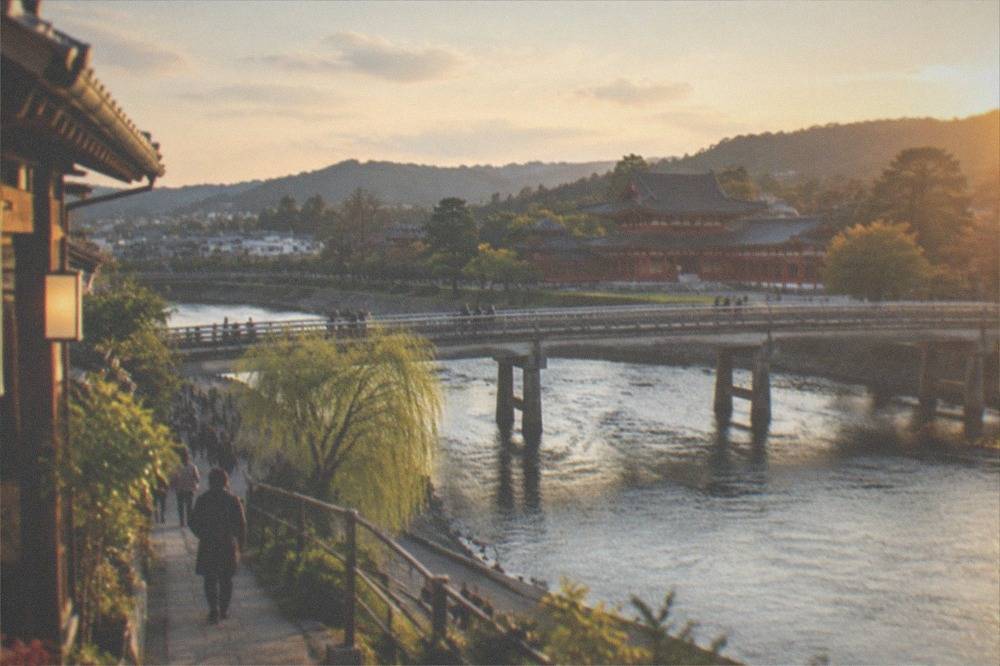
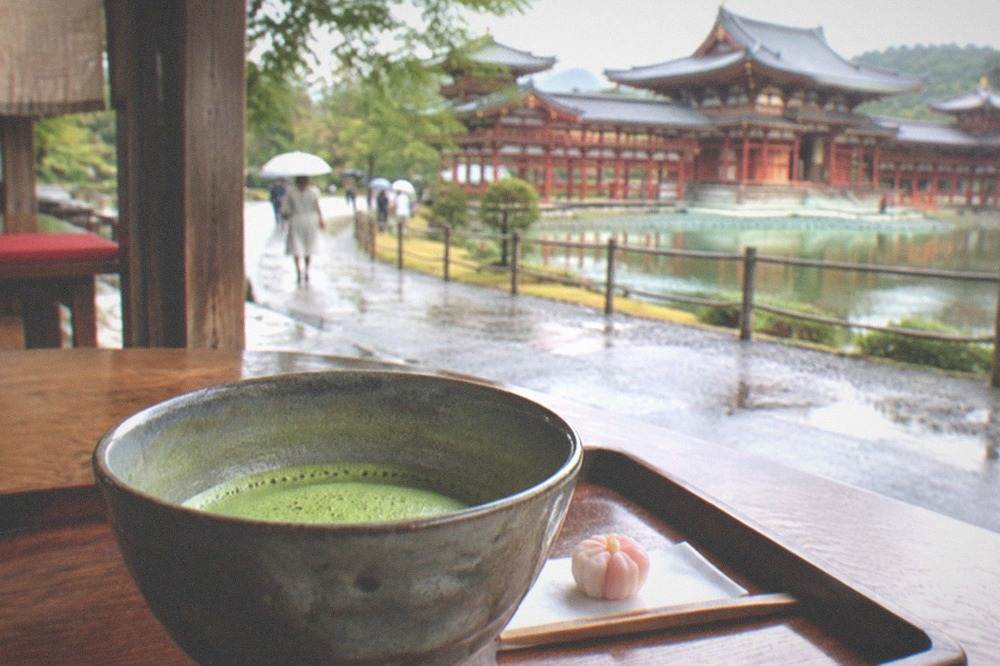
Uji's core sights sit within a short riverside walk of Byodo-in: the Uji bridge, the riverside promenade, the tea shops along the main street, and the historic tea houses that serve matcha in the traditional style. The town is compact enough that a half day covers Byodo-in plus the tea district comfortably, and the matcha served here is the genuine article from the local fields, which our matcha guide covers in detail.
The town's identity is tea, and that is not a tourist abstraction: Uji is the historic heart of Japanese green tea cultivation, and the shops along the approach to Byodo-in sell the local product in every form from plain leaf to soft-serve. Eating while walking is discouraged in the covered shopping streets; stalls and shops generally ask you to eat at the spot, a norm worth respecting in a small residential town.
| Uji stop | What it is | Time needed |
|---|---|---|
| Byodo-in Phoenix Hall | The temple on the ten-yen coin | 1-2 hours with interior tour |
| Uji bridge and riverside | Historic bridge and promenade | 30 minutes |
| Main street tea shops | Uji matcha, sweets and tastings | 1 hour |
| Matcha experience | Whisking your own bowl in a tea house | 45-60 minutes |
For the matcha side of the town, our guide to matcha in Kyoto explains what distinguishes Uji leaf and where to taste it, and the question of what Kyoto's signature dish is has a tea-adjacent answer worth reading before a food-focused day.
If you are extending south, Nara is the obvious continuation: the JR Miyakoji Rapid covers Kyoto to Nara in about 45 minutes for 720 yen, and the Kintetsu limited express does it in about 35 minutes for 1,280 yen total. A Kyoto, Uji, Nara loop in one long day is doable but rushed; two separate days is the calmer plan.
When Is The Best Time To Visit Byodo-in?
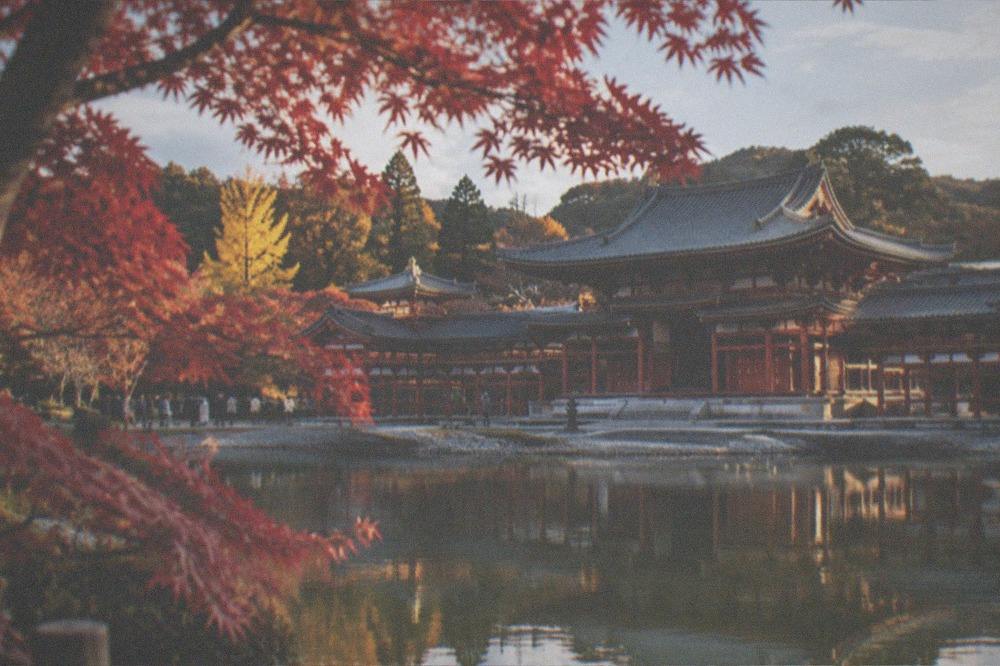
The best time to visit Byodo-in is early morning year-round, because the interior tour tickets are first come first served from 9:10 and the pond light is at its best before midday. Seasonally, late November brings the autumn colour that Uji's maples are known for, and the JMA's official marker for Kyoto maple red leaves is 5 December on the 1991 to 2020 normals, later than most guides claim, so late November into early December is the realistic foliage window.
That phenology point is worth unpacking because it contradicts the standard advice. The Japan Meteorological Agency's Kyoto observatory records the kaede maple turning red at 5 December on the 1991 to 2020 normals, with 2025's observed date at 10 December. That is the observatory's specimen tree, not Uji's peak, but it shows how late the official marker runs compared with the mid-November framing most travel content repeats. For the 2026 season, the published forecasts put Arashiyama-area foliage around late November.
| Season | What to expect at Byodo-in |
|---|---|
| Late March to early April | Cherry blossom along the Uji river; JMA 2026 full bloom in Kyoto was 30 March |
| May | Fresh green, light crowds, Aoi Matsuri in Kyoto on the 15th |
| July to August | Hot and humid; July is Kyoto's wettest month at 223.6 mm on JMA normals |
| Late November to early December | Maple foliage, the strongest scenic season |
| December to February | Quiet, cold, open views across the pond |
The summer caveat is real. The JMA 1991 to 2020 normals show July as Kyoto's wettest month at 223.6 mm, ahead of June at 199.7 mm, and August as the hottest with a mean daily maximum of 33.7 C. Three of Kyoto's six hottest days on record fell in the summers of 2024, 2025 and 2026. A summer visit to Uji is best structured around the morning hours and an indoor tea house in the afternoon.
Crowding follows the city-wide pattern. Kyoto recorded a record 62.79 million visitors in 2025, according to the city's own June 2026 survey release, and the day-visitor count rose faster than overnight stays. Uji absorbs a share of that, but it remains markedly quieter than the Arashiyama or Gion cores, which is a fair part of its appeal.
How Does Byodo-in Compare With Kyoto's Other Temple Fees?
Byodo-in's 700 yen adult fee sits in the middle of Kyoto's verified temple price range: cheaper than Ginkaku-ji's new 1,000 yen, equal to Ryoan-ji's 600 yen plus a little, and more than Kinkaku-ji's 500 yen. With the 300 yen interior tour added, the full Byodo-in visit costs 1,000 yen, the same as Ginkaku-ji's new base fee and less than Nijo-jo Castle's 1,300 yen combined ticket.
The comparison table below uses only verified figures from each venue's own notice. Note the two 2026 changes: Ginkaku-ji's doubling in April and Tofuku-ji's November revision. Any guide quoting 500 yen for Ginkaku-ji is out of date, and any guide quoting Tofuku-ji's old Hojo price is wrong from 1 November 2026.
| Temple | Adult admission | Notes |
|---|---|---|
| Kinkaku-ji | 500 yen | Set 1 April 2023; no 2026 change |
| Ginkaku-ji | 1,000 yen | Doubled from 500 on 1 April 2026 |
| Ryoan-ji | 600 yen | Hours shorten in winter |
| Sanjusangen-do | 600 yen | Open every day |
| Byodo-in | 700 yen | Garden and museum; 300 yen interior tour added |
| Byodo-in, full visit | 1,000 yen | Garden, museum and Phoenix Hall |
| Nijo-jo Castle | 800 yen | 1,300 yen with Ninomaru-goten Palace |
| Katsura Imperial Villa | 1,000 yen | 18 and over; guided only; free for 12 to 17 |
The value question is a matter of what you are buying. Byodo-in's fee covers one building and one garden, viewed in an hour or two, but that building is the one on the coin, and the museum is genuinely good rather than an afterthought. Kinkaku-ji at 500 yen remains the best pure fee-to-icon ratio in the city, and our Kinkaku-ji guide covers it in full.
For temple-heavy itineraries, the pairing that works best with Uji is Nanzen-ji, whose Hojo garden and Sanmon gate are ticketed separately at 600 yen each, and whose neighborhood holds Hyotei, the famous kaiseki house that prints its own prices: kaiseki from 31,625 yen at lunch, with the annex serving asa-gayu at 5,445 yen. Those are Hyotei's own figures, not a city average, and they are the honest answer to what a top Kyoto kaiseki meal costs.
Should You Visit Byodo-in Or The Bigger Kyoto Temples First?
For a first visit to the region of three days or fewer, the bigger Kyoto sites come first: Kinkaku-ji, Fushimi Inari and the Higashiyama walk are the core experiences, and Byodo-in is a strong fourth-day or half-day addition. For a longer stay, or for anyone whose interest is Heian architecture, tea culture or photography, Uji justifies a full half day on its own, and the Phoenix Hall interior is unlike anything in central Kyoto.
The honest framing is about density versus distinction. Central Kyoto packs more icons per hour than anywhere in Japan, and a visitor with two days should not spend half of one in Uji. But the calculus flips for a second or third visit, or for travellers who have already seen the golden pavilion and the torii tunnels, because Uji offers something the city core cannot: a single great building in a quiet riverside town, reachable for 240 yen.
For a walk that covers several of the city's major temples in one morning, the Philosopher's Path route from Nanzen-ji northward is the classic, and our one day in Kyoto and three days in Kyoto itineraries slot Uji into longer stays.
The other honest point is the interior tour's value. If you visit Byodo-in and skip the 300 yen interior, you have seen the coin view and the garden, which is a legitimate short stop. If you take the interior, the visit doubles in length and the building stops being a backdrop and becomes the point. Arrive for the 9:10 ticket window either way, and the decision makes itself on the day.
A guided option that pairs well with a southern Kyoto day is the Fushimi Inari hidden hiking tour, rated 5 from 1,931 reviews and from $73 per person for three hours, which covers the shrine's quieter back trails before or after a Uji visit on the same JR corridor.
Between the temple mornings and the train rides back, the gaps in a Uji day are where a short Kyoto experience slots in best: a tea ceremony near the market, a two-hour walk through Gion, or a second hike if the legs are willing. The three options above cover that spread, and the next one is the strongest evening pick of the set.
For the evening back in Kyoto, the Gion geisha district walking tour, rated 4.8 from 4,599 reviews and from $23 per person, is a low-cost way to close out a day that started with Heian architecture in Uji.
Common Questions About Byodo-in Temple
Why Is Byodo-in's Phoenix Hall On The Ten Yen Coin?
The Phoenix Hall appears on the ten-yen coin because it is one of Japan's most recognisable surviving buildings: a Heian-era hall set on an island in its pond, with wing corridors that give it a symmetrical, mirror-backed silhouette. The coin reproduces its front elevation across the water, the same view visitors get from the garden bank.
How much does Byodo-in cost?
Admission is 700 yen for adults, 400 for junior high and high school students and 300 for elementary children, covering the garden and the Hoshokan museum. The Phoenix Hall interior tour adds 300 yen, bringing a full adult visit to 1,000 yen.
Can you go inside the Phoenix Hall?
Yes, on a timed interior tour running 9:30 to 16:10, admitting 50 people per slot. Tickets are sold from 9:10 on a first come first served basis and cannot be reserved online. A capacity change takes effect from 16 October 2026, with the new number not yet published.
How do I get to Byodo-in from Kyoto?
Take the JR Nara Line from Kyoto Station to Uji for 240 yen one way, or the Keihan line in about 31 minutes for 360 to 420 yen. Byodo-in is roughly a 10 minute walk from either station.
How long does a Byodo-in visit take?
About an hour for the garden and the coin view, or up to two hours with the Hoshokan museum and the Phoenix Hall interior tour. Most visitors combine it with the Uji riverside and tea shops for a half day.
When is Byodo-in's autumn foliage season?
Uji's maples colour from late November into early December. The JMA's official Kyoto marker for maple red leaves is 5 December on the 1991 to 2020 normals, later than the mid-November peak most guides claim, so plan foliage visits for the back half of November.
Byodo-in rewards the traveller who treats it as a destination rather than a checkbox: one building, one pond, one coin, and a short train ride south of the city that most of the 62.79 million annual visitors never take.