Kinkaku-ji Golden Pavilion: Admission, Opening Hours And Visitor Guide
The Golden Pavilion charges 500 yen and keeps the same hours every day of the year, which makes it one of the simplest temples in Kyoto to plan for and one of the hardest to photograph without a crowd.
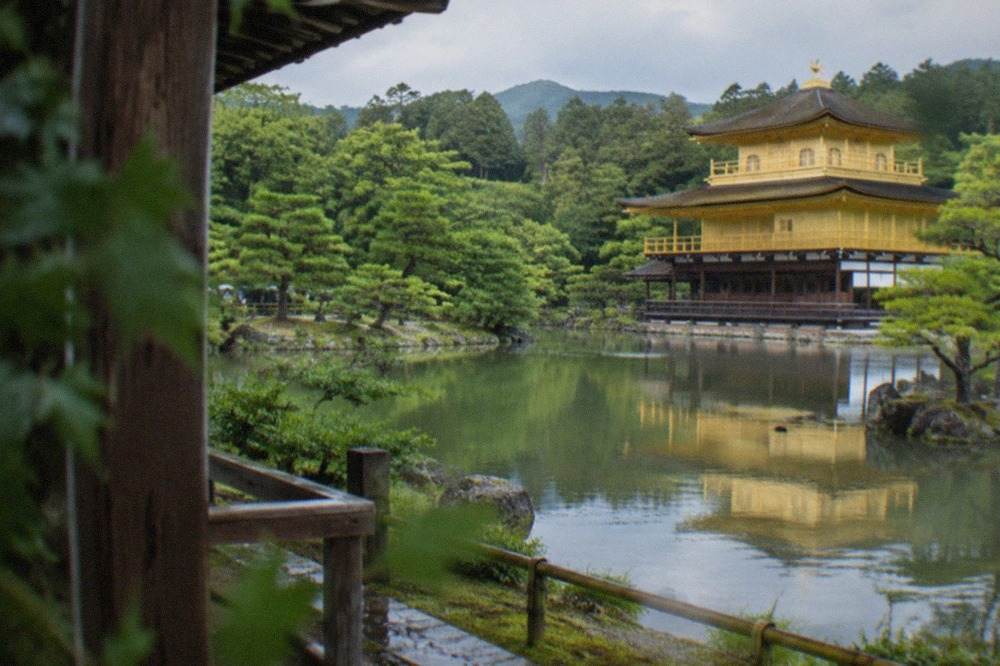
Short answer
Kinkaku-ji admission is 500 yen for general visitors and 300 yen for primary and middle school students, and the temple opens 9:00 to 17:00 year-round. The fee was last revised on 1 April 2023, and no change has been posted since.
The Golden Pavilion stands over its pond in northwest Kyoto, its top two floors covered in gold leaf, and it draws a share of the record 62.79 million visitors the city counted in its 2025 tourism survey. Formally named Rokuon-ji, and belonging to the Shokoku-ji family of Zen temples, it is one of the few major sights in the city whose price and hours never move: 500 yen, 9:00 to 17:00, every day of the year. That stability is unusual in a city where Ginkaku-ji doubled its fee in April 2026 and Tofuku-ji revises its own on 1 November, and it makes this one of the easiest temples to plan around. This guide sets out the verified numbers, the transport, and the honest answer to when the pavilion is worth the queue.
What Does Kinkaku-ji Admission Cost And What Are The Opening Hours?
Kinkaku-ji charges 500 yen for general admission and 300 yen for primary and middle school students, and it opens 9:00 to 17:00 every day of the year. The temple's own notice dates the current fee to 1 April 2023, when it rose from 400 yen, and its news list has posted no change since. Hours may shift for special exhibitions, the temple states, but no such dates are announced.
Those two numbers are the whole pricing story, and they are worth stating plainly because so much stale copy circulates about Kyoto temple fees. The Shokoku-ji head temple's site, which publishes the fee and access details for Kinkaku-ji, prints 500 yen general and 300 yen for primary and middle school students, with hours of 9:00 to 17:00. A fee notice dated January 2023 sets the rise from 400 yen effective that April. Nothing has been added to the news list since March 2023, so any guide quoting 400 yen is a year or more out of date.
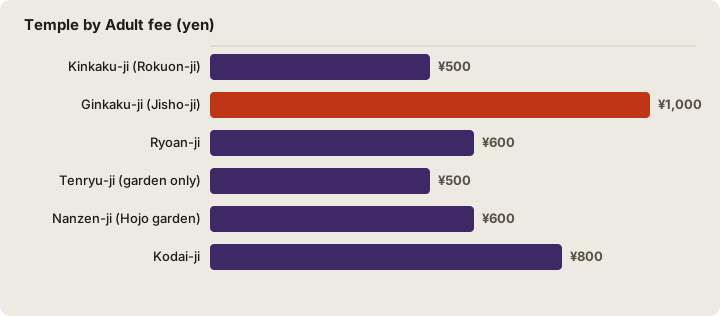
Contrast that with its sibling on the east of the city. Ginkaku-ji, the Silver Pavilion, doubled its adult fee from 500 to 1,000 yen on 1 April 2026, its first change in 32 years. Kinkaku-ji at 500 yen is now half the price of its eastern counterpart, and for a first visit it is the better use of the fee: the pavilion itself, the pond reflection and the garden circuit are the whole show, and they are all included in the single ticket.
| Temple | Adult fee | Child / student fee | Last change |
|---|---|---|---|
| Kinkaku-ji (Rokuon-ji) | 500 yen | 300 yen (primary and middle school) | 1 April 2023, from 400 |
| Ginkaku-ji (Jisho-ji) | 1,000 yen | 500 yen (elementary and junior high) | 1 April 2026, doubled from 500 |
| Ryoan-ji | 600 yen | 300 yen (elementary and junior high) | current posted rates |
| Tenryu-ji (garden only) | 500 yen | 300 yen (elementary and junior high) | current posted rates |
| Nanzen-ji (Hojo garden) | 600 yen | 400 yen (elementary and junior high) | current posted rates |
| Kodai-ji | 800 yen | free with an adult (elementary and under) | current posted rates |
The comparison matters for anyone building a temple day. Two adults visiting Kinkaku-ji and Ryoan-ji, which sit about 20 minutes apart on foot through a residential district, pay 1,100 yen each in temple fees for the pair. Add Ginkaku-ji on the far side of the city and the total climbs past 2,000 yen per person before lunch.
How Do You Get To Kinkaku-ji From Kyoto Station?
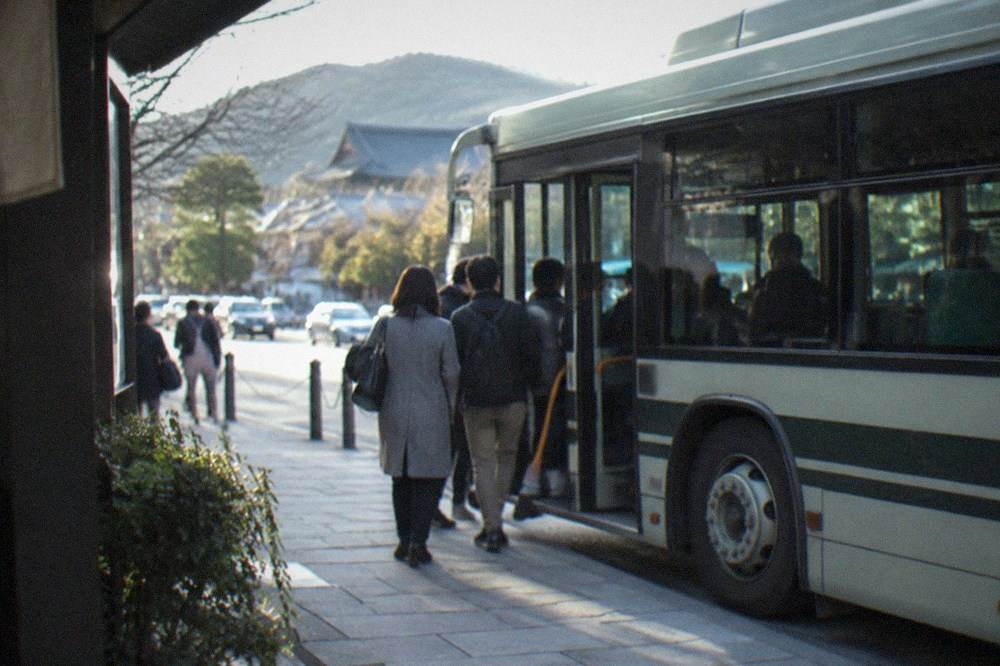
There is no subway station at Kinkaku-ji, so the trip from Kyoto Station is by direct bus, about 40 minutes, or by a combination of the Karasuma subway line and a short bus or taxi hop. The city bus flat fare is 230 yen for adults and 120 yen for children aged 6 to 11, and the Subway and Bus One-Day Pass at 1,100 yen covers both legs if you are making other trips that day.
The bus is the classic route and the one most first-time visitors take, which is also its weakness: the corridor north from Kyoto Station toward the Golden Pavilion is one of the most crowded tourist routes in the city, and the city's transport bureau has spent 2025 and 2026 adding express services and park-and-ride capacity precisely because of it. The bureau's own guidance asks visitors with large or bulky luggage to keep bags minimal or use the subway, and drivers may refuse suitcases on crowded buses. The hands-free luggage delivery counters promoted citywide exist for exactly this reason.
The practical alternative is the subway-plus-bus combination: the Karasuma line from Kyoto Station to Kitaoji, then a connecting bus north, or a taxi for the last short leg. A taxi from Kyoto Station costs more, naturally, but the fare is metered and the ride is direct. For a day that pairs the Golden Pavilion with Ryoan-ji and Nijo-jo Castle, the one-day pass at 1,100 yen adult and 550 yen child usually pays for itself by the third ride.
| Option from Kyoto Station | Adult fare | Approximate time | Notes |
|---|---|---|---|
| Direct city bus | 230 yen | about 40 minutes | flat fare, IC card accepted |
| Subway to Kitaoji + bus north | 220-260 + 230 yen | about 35-45 minutes | Karasuma line, then connecting bus |
| Taxi | metered | about 25-30 minutes | comfortable with luggage or a group |
| Subway and Bus One-Day Pass | 1,100 yen | same routes | child pass 550 yen, pays off by third ride |
One warning carried over from older guides: the bus-only one-day pass no longer exists. Sales ended in September 2023 and the last day of use was 31 March 2024, with the transport bureau noting that 90% of its buyers were non-residents and that the pass concentrated tourists on the buses. The product today is the Subway and Bus One-Day Pass, which is the one to buy.
If you would rather not work out the bus map at all, a guided day tour is the low-friction option. The Perfect 1-Day Bus Tour covers the Golden Pavilion alongside the city's other headline sights in 8 to 9 hours, from $102 per person, rated 4.9 across 17,054 traveller reviews.
When Is The Best Time Of Day To Visit The Golden Pavilion?
The first hour after the 9:00 opening is the quietest window, and the last hour before 17:00 closing gives the warmest light on the gold leaf. Midday is the busiest period, and the pond viewing area is a narrow circuit where crowds compress, so the temple is at its most pleasant either early or in the final hour, with the morning the safer choice for photographers wanting the pavilion clearly reflected.
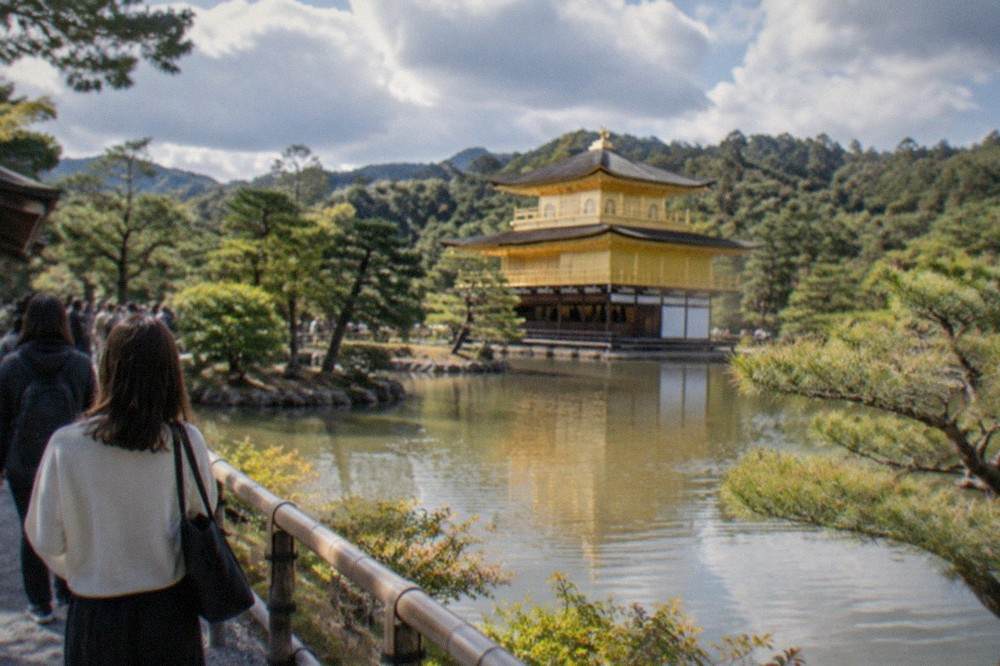
The pavilion faces its pond, and the classic photograph is taken from the near shore looking back at the reflection. Because the garden route is a one-way circuit past that viewpoint, the crowd thins or thickens depending entirely on how many tour groups are moving through. The city's own tourism association publishes a crowd comfort forecast, updated continuously from smartphone location data, weather and time of day, and it covers the Kinkaku-ji area; checking it the evening before is the single most useful thing a visitor can do.
Weather matters more here than at most temples, because the photograph is the point. The JMA 1991-2020 normals for Kyoto station show the sunniest months are August at 182.7 hours and May at 182.4, while February is the dullest at 122.2 hours. Rain is the real variable: July is the wettest month at 223.6 mm, ahead of June at 199.7 mm, a fact that surprises visitors who assume the rainy season peaks in June. A wet morning does not close the temple, but it flattens the reflection.
| Month | Mean rain mm | Mean daily max C | Sunshine hours |
|---|---|---|---|
| January | 53.3 | 9.1 | 123.5 |
| April | 117.0 | 20.1 | 177.3 |
| July | 223.6 | 32.0 | 142.7 |
| August | 153.8 | 33.7 | 182.7 |
| October | 143.2 | 23.4 | 156.0 |
| November | 73.9 | 17.3 | 140.7 |
Summer visitors should also know the heat picture. Three of Kyoto's six hottest days on record fell in the summers of 2024, 2025 and 2026, and July and August 2025 both ranked among the five hottest months ever measured at the station. An early start at the Golden Pavilion, before the mean daily maximum climbs past 32 C, is not just about crowds in July and August, it is about standing in shade.
What Do You Actually See Inside Kinkaku-ji?
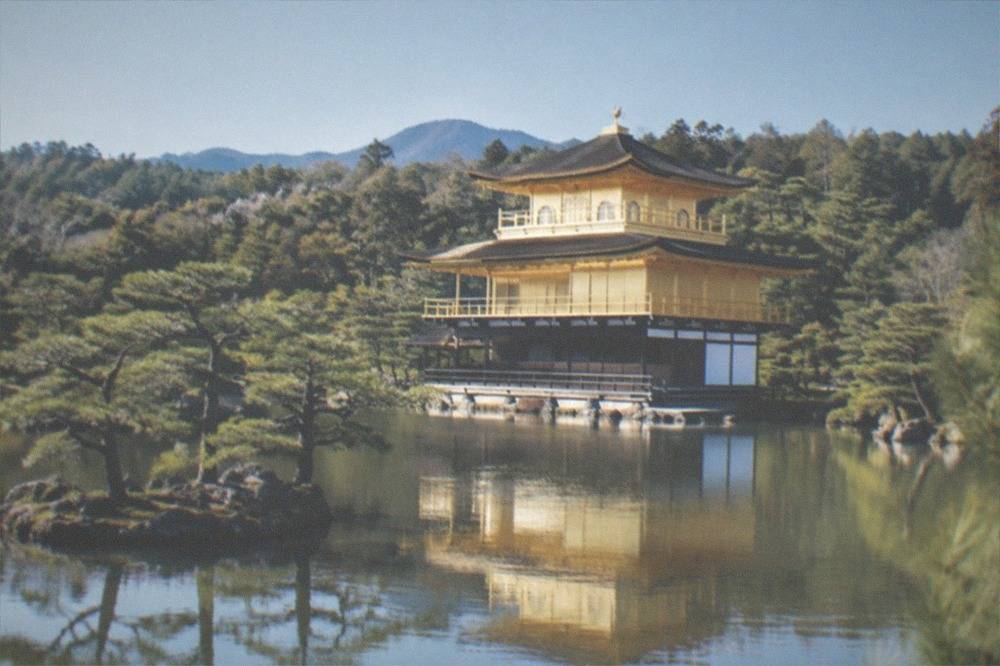
The visit is a garden circuit, not a building tour: the pavilion itself is viewed from outside only, and the route leads around the pond, past the reflection viewpoint, up through the grounds past small shrines and tea houses, and out through the exit gate. Most visitors spend 45 minutes to an hour, longer in peak season when the circuit slows. There is no interior access to the pavilion at any price.
This is the single most common misconception about the temple. The 500 yen ticket buys the garden walk, and the pavilion is a reliquary hall seen from its banks. The three storeys are designed to be read from outside, each floor in a different historical architectural style under the gold leaf of the upper two, and the building's role in the Shokoku-ji Zen complex is as a shariden, a reliquary. The temple's own materials frame the visit around the garden and the view, not the interior.
The circuit has a rhythm worth knowing in advance. The pond viewpoint comes first and is where everyone stops; the path then climbs past the Anmintaku pond and the stone pagoda, past the Sekkaku no Ido well, and descends past the tea house before the exit. The Fudo-do hall sits off the path near the end. Nothing on the route requires a decision, which is why the walk compresses when busy: there are no side rooms to absorb people.
For visitors who want more than an exterior circuit, the honest answer is that the Golden Pavilion is a short experience by design. Pairing it is the solution, and the natural pair is Ryoan-ji, the Zen rock garden temple 20 minutes away on foot, whose 600 yen adult fee buys a seated contemplation that balances the Golden Pavilion's spectacle. The Arashiyama Walk, Monkeys & Garden tour takes the same principle to the city's western district, from $50 per person, rated 5 across 1,781 reviews.
How Long Should You Spend At Kinkaku-ji And What Should You Pair It With?
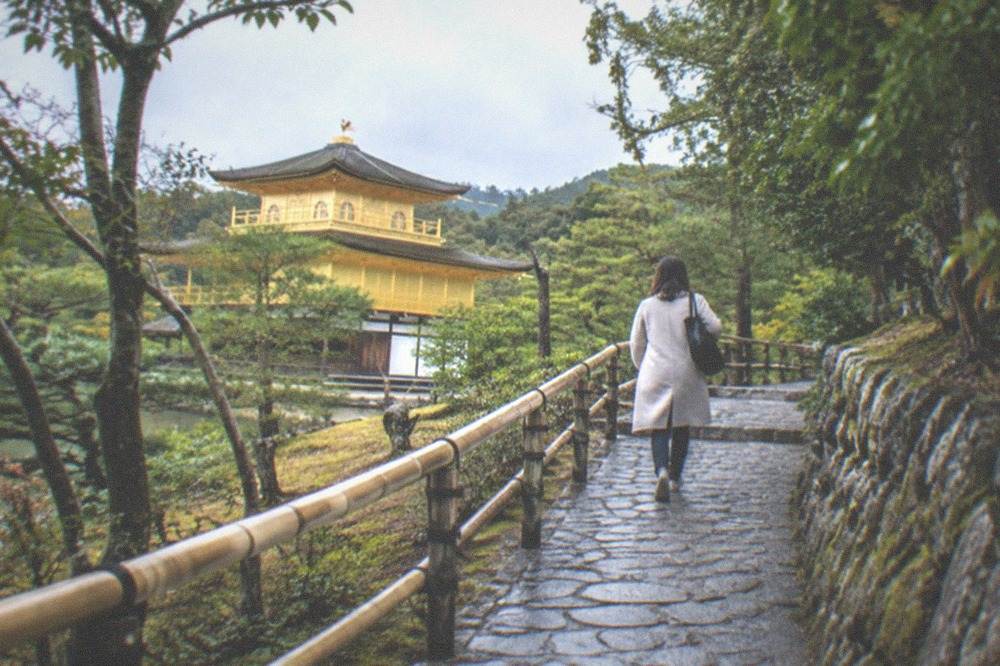
Plan 45 minutes to an hour for the Golden Pavilion itself, and half a day for the natural circuit that includes Ryoan-ji, 20 minutes away on foot, and Ninna-ji or the Nishijin district beyond it. The northwest cluster works as a morning: Kinkaku-ji at opening, Ryoan-ji by mid-morning, and a bus or short walk onward, keeping the total temple spend at 1,100 yen per adult for the pair.
The northwest of Kyoto holds a denser set of sights than most visitors realize, and the Golden Pavilion is its anchor. Ryoan-ji's rock garden is the essential contrast, quiet where Kinkaku-ji is golden. Ninna-ji, further west, completes a full northwest morning for those with energy. The whole circuit is walkable with comfortable shoes, or covered by the same 230 yen bus fare between stops.
The other pairing direction is cultural rather than architectural. The area around the Golden Pavilion is short on food, and most visitors eat back toward the center, which makes a morning temple circuit followed by an afternoon in the city the standard shape of the day. A tea ceremony is the natural afternoon complement to a Zen temple morning, and the Maikoya Kimono Tea Ceremony in the Nishiki district runs 90 minutes from $53 per person, rated 4.9 across 1,114 reviews, with the ceremony conducted in kimono. The Tea Ceremony at Jotokuji Temple is the lower-priced alternative at $29, rated 4.9 from 3,758 reviews.
| Pairing | Walk or ride | Added adult fee | Best combined as |
|---|---|---|---|
| Ryoan-ji rock garden | 20 minutes on foot | 600 yen | morning circuit |
| Ninna-ji | short bus ride | current posted rates | extended northwest morning |
| Nijo-jo Castle | bus or taxi east | 800 yen, or 1,300 with Ninomaru-goten | full-day history route |
| Kiyomizu-dera | bus across the city | 500 yen (single source figure) | east-west full day |
One note on the last row: Kiyomizu-dera's 500 yen fee is single source, the temple does not print it on its own site, so treat that figure as reported rather than official. The Kiyomizu-dera page covers what is verified about the eastern temple, including its 6:00 opening, the earliest of any major temple in the city.
Is Kinkaku-ji Accessible For Wheelchairs And Strollers?
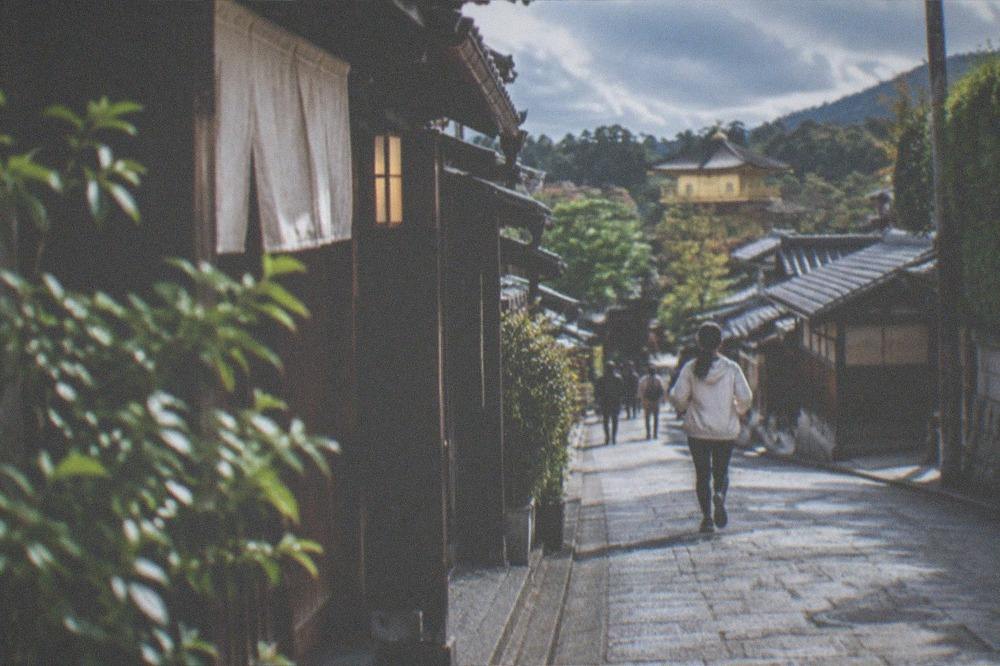
The garden circuit at Kinkaku-ji is largely paved and the main pond viewpoint is reachable without stairs, though the upper garden paths include steps and uneven sections, and the temple does not publish a detailed accessibility map. Visitors using wheelchairs can reach the primary reflection viewpoint; the full circuit has sections that are not step-free, so budget time and expect to double back on the lower path.
The honest position is that Kyoto's temple gardens were not built for wheels, and the Golden Pavilion is mid-range among them: better than the mountain paths of Kurama and Kibune, worse than the flat approach at Nijo-jo Castle, where the Ninomaru-goten Palace route is designed for visitors moving through in numbers. The city's wider accessibility infrastructure, the low-floor buses on major routes and the subway's elevators, gets you to the temple gate; the garden itself is the variable.
Strollers are a common middle case. The lower circuit around the pond is manageable with a compact stroller in the first hour, and difficult at midday when the path is full. Families with small children often do better at the pavilion than at, say, the Fushimi Inari paths, because the route is short and the exit is close to the entrance.
What Should You Not Do At Kinkaku-ji And Around Kyoto's Temples?
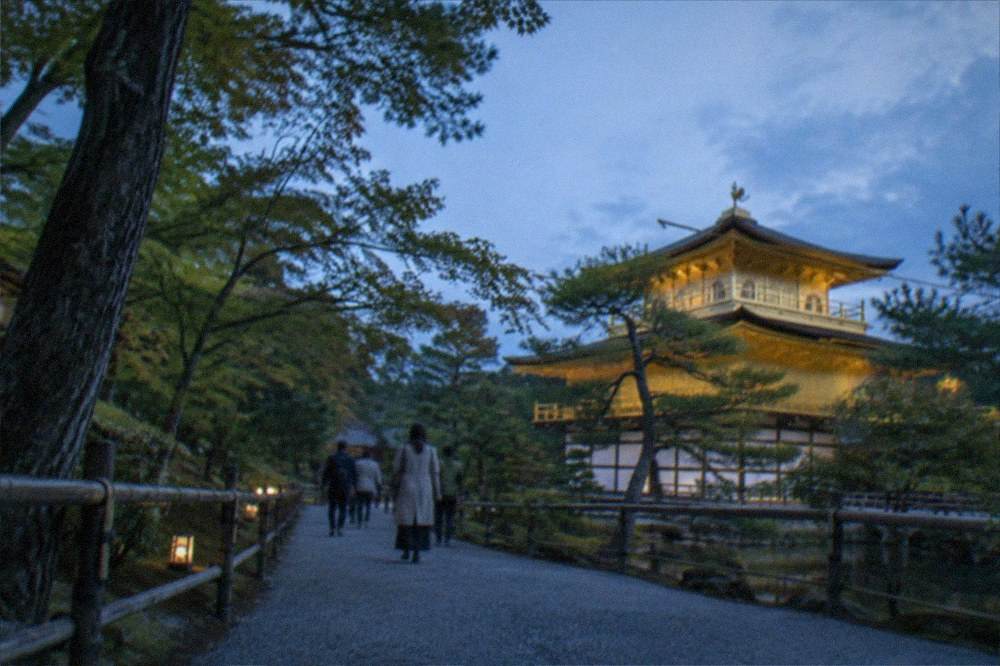
Do not plan drone photography, do not eat while walking the garden circuit, and do not attempt to photograph geiko or maiko if your day continues into Gion, where the city's tourism association asks visitors not to touch, chase or photograph them without permission. At the temple itself, follow the one-way circuit and keep off the pond banks. The Gion private alleys carry signs threatening a 10,000 yen penalty for unauthorized photography or entry.
The Gion rules deserve the emphasis because they catch visitors who combine a temple day with an evening walk. The city's tourism association publishes four guidelines, and the private alleys off Hanamikoji are posted by the local district council, not by the police: the accurate description is council signage, not a city fine. The main Hanamikoji road remains open to photography.
Back at the temples, the practical etiquette is short. Pay the fee in cash or IC card as posted, walk the circuit in the marked direction, and keep food for the areas outside the gates. Photography is welcome in the garden; the restrictions that exist at some Kyoto venues, drone flight and photography of rites at Kamigamo Shrine, for example, are posted where they apply. The Magical Gion Night Walk covers the geisha district with a guide who knows the boundaries, from $22 per person, rated 4.9 across 4,616 reviews.
How Does Kinkaku-ji Fit Into A First Kyoto Itinerary?
For a first visit of three days or fewer, the Golden Pavilion belongs on the morning of day one or day two, paired with Ryoan-ji and followed by an afternoon at Nijo-jo Castle or in central Kyoto. It is one of the four sights, with Kiyomizu-dera, Fushimi Inari and the Arashiyama bamboo grove, that define a first Kyoto trip, and the city's 2025 survey of 62.79 million visitors means those four compress badly at midday in every season.
The standard first-timer split is geographic: the east side, Kiyomizu-dera and Gion, on one day; the northwest, Kinkaku-ji and Ryoan-ji, on another; Arashiyama on the third, with Fushimi Inari early on whichever morning you can wake for it, since its paths have no closing time and the shrine publishes no opening hour for them. The Golden Pavilion's fixed 9:00 opening makes it the one headline sight you cannot beat the crowds to, which is an argument for doing Fushimi Inari at dawn and the pavilion at 9:00 sharp on the same day.
For the full picture of what the city holds, the things to do in Kyoto page is the site's master list, and this Kyoto Travel Guide homepage collects every guide, from Tenryu-ji and Nanzen-ji to Kodai-ji and the Yasaka Shrine, each with the same verified fee and hour treatment.
| Day | Morning | Afternoon | Temple fees per adult |
|---|---|---|---|
| Day 1 | Fushimi Inari at dawn, free | Kinkaku-ji at 9:00, then Ryoan-ji | 1,100 yen |
| Day 2 | Kiyomizu-dera, then the Higashiyama slopes | Gion and the river | 500 yen (single source) |
| Day 3 | Arashiyama bamboo grove, Tenryu-ji | Monkey Park or central Kyoto | 500 yen garden |
Common Questions About Kinkaku-ji
What Does Kinkaku-ji Admission Cost And What Are The Opening Hours?
Admission is 500 yen for general visitors and 300 yen for primary and middle school students. The temple opens 9:00 and closes 17:00, every day of the year, though the temple notes hours may change for special exhibitions. The current fee dates from 1 April 2023.
Can You Go Inside The Golden Pavilion?
No. The pavilion is a reliquary hall viewed from outside only, at any ticket price. The 500 yen admission buys the garden circuit around the pond and through the grounds, which takes most visitors 45 minutes to an hour.
What Is The Best Time Of Day To Visit Kinkaku-ji?
The first hour after the 9:00 opening is the quietest, and the last hour before closing gives the warmest light on the gold leaf. Midday is the busiest. The city's tourism association publishes a live crowd comfort forecast that covers the Kinkaku-ji area and is worth checking the evening before.
How Do You Get To Kinkaku-ji From Kyoto Station?
By direct city bus, about 40 minutes at the 230 yen flat fare, or by the Karasuma subway line to Kitaoji with a short bus or taxi hop north. The Subway and Bus One-Day Pass at 1,100 yen covers both legs if you are making other trips.
Is Kinkaku-ji Or Ginkaku-ji Better To Visit?
They are different experiences at different prices. Kinkaku-ji at 500 yen is a spectacle, a gold-leafed pavilion over a pond on a fixed circuit. Ginkaku-ji now charges 1,000 yen after doubling its fee on 1 April 2026, and offers a longer garden walk and the Philosopher's Path at its gate. Many visitors do both; the Golden Pavilion is the stronger single sight for a first trip.
How Much Time Do You Need At Kinkaku-ji?
Plan 45 minutes to an hour for the circuit itself, and half a day if you pair it with Ryoan-ji, 20 minutes away on foot, which is the natural combination and brings the two-temple fee to 1,100 yen per adult.
The Golden Pavilion rewards simple planning more than any other headline sight in the city: one fixed fee, one fixed schedule, one circuit. Arrive at 9:00, walk the pond counter-clockwise with everyone else, and be at Ryoan-ji before the tour groups catch up, and the northwest morning is one of the most satisfying blocks of temple time Kyoto offers.