Kodai-ji Temple: Tickets, Hours And The Night Illumination
Kodai-ji sits on the hillside between Kiyomizu-dera and Maruyama Park, and it is one of the few Kyoto temples where the daytime garden and the seasonal night illumination are genuinely different experiences. The fee structure is simple once it is laid out, and the autumn light-up is one of the longest-running in the city.
Short answer
Kodai-ji charges 800 yen for adults, 400 for junior high and high school students, and elementary age and under enter free with an adult. A combined ticket covering Kodai-ji and the neighbouring Entoku-in sub-temple costs 1,200 yen. The temple is open 9:00 to 17:30 with reception to 17:00, and the seasonal night illumination runs 17:00 to 22:00, with reception to 21:30.
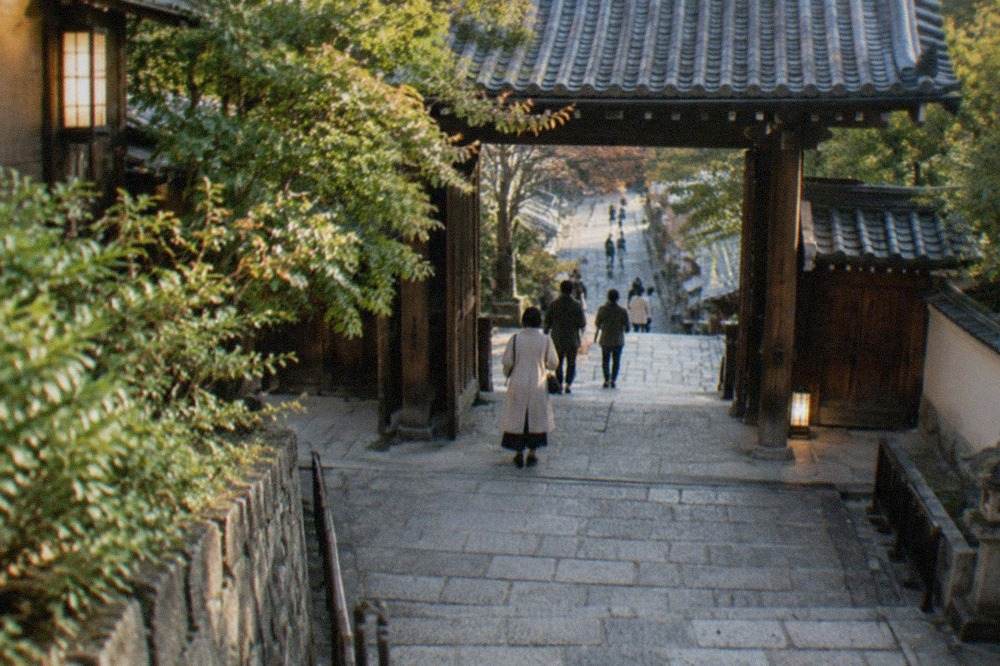
Kodai-ji sits on the slope between Kiyomizu-dera and Maruyama Park, in the part of Higashiyama where the lanes narrow, the stone paving starts and the maples grow thick along the retaining walls. The temple's own fee notice sets adult admission at 800 yen, junior high and high school students at 400, and elementary age and under free with an adult, with a 1,200 yen combined ticket that also covers the neighbouring Entoku-in. Its hours run 9:00 to 17:30 with reception to 17:00, and during the seasonal light-ups the grounds stay open until 22:00.
That is the short version. The longer version involves why this particular temple earns its fee, when the illumination actually runs, and how 800 yen sits against the rest of Kyoto's temple price list, which changed twice in 2026 and catches out guides written a year earlier. This page at Kyoto Travel Guide lays all of it out with the figures the temple and the city actually publish.
What Does Kodai-ji Cost And Is The Night Illumination A Separate Ticket?
Kodai-ji's admission is 800 yen for adults, 400 for junior high and high school students, free for elementary age and under with an adult, and a 1,200 yen combined ticket adds the neighbouring Entoku-in. The temple's hours are 9:00 to 17:30, reception to 17:00, and the seasonal night illumination runs 17:00 to 22:00 with reception to 21:30, the 2026 autumn season set for 23 October to 13 December.
The daytime ticket and the evening light-up are run as separate operations, which is the practical answer to the second half of the question. The temple's own pages publish the illumination dates each season and the 17:00 to 22:00 window, and the current arrangement for light-up ticketing is set out there, because it is a seasonal programme rather than a standing part of the daily admission. What is fixed and printable is the structure: 800 yen in the daytime, the 1,200 yen combined ticket with Entoku-in, and an evening season that begins once the daytime reception closes at 17:00.
The combined ticket deserves a word. Entoku-in is a sub-temple with its own gardens a short walk from Kodai-ji's main grounds, and the 1,200 yen combined price saves 400 yen against buying the two separately at the standard rates. If you are walking Higashiyama for a half day anyway, it is one of the better-value pairings in the district, because both sites sit inside the same visit and neither takes more than an hour to see properly.
The fee table in full, exactly as the temple's own notice prints it:
| Ticket | Price | Notes |
|---|---|---|
| Adult | 800 yen | Standard daytime admission |
| Junior high and high school | 400 yen | |
| Elementary and under | Free | With an accompanying adult |
| Group (30 or more) | 700 yen | Per person |
| Combined Kodai-ji + Entoku-in | 1,200 yen | Covers both sites |
| Night illumination | Seasonal | 17:00-22:00, reception to 21:30 |
One caution that applies to every temple fee on this site: Kyoto's admissions moved twice in 2026. Ginkaku-ji doubled to 1,000 yen from 1 April 2026, and Tofuku-ji revises its whole price card on 1 November 2026. A fee list copied from a 2024 or 2025 guide is wrong for at least two temples, so treat any Kodai-ji figure you read elsewhere with the date it was written in mind.
Where Is Kodai-ji And How Do You Get There?
Kodai-ji stands in the Higashiyama district, on the hillside between Kiyomizu-dera and Maruyama Park, reached on foot from the Kiyomizu side in a few minutes along the preserved lanes. The nearest rail access is Kyoto Station to Kiyomizu-dera Gojo Station on the Keihan line, followed by the uphill walk. A city bus costs a flat 230 yen per adult ride, and the Subway and Bus One-Day Pass is 1,100 yen if you are hopping between districts all day.
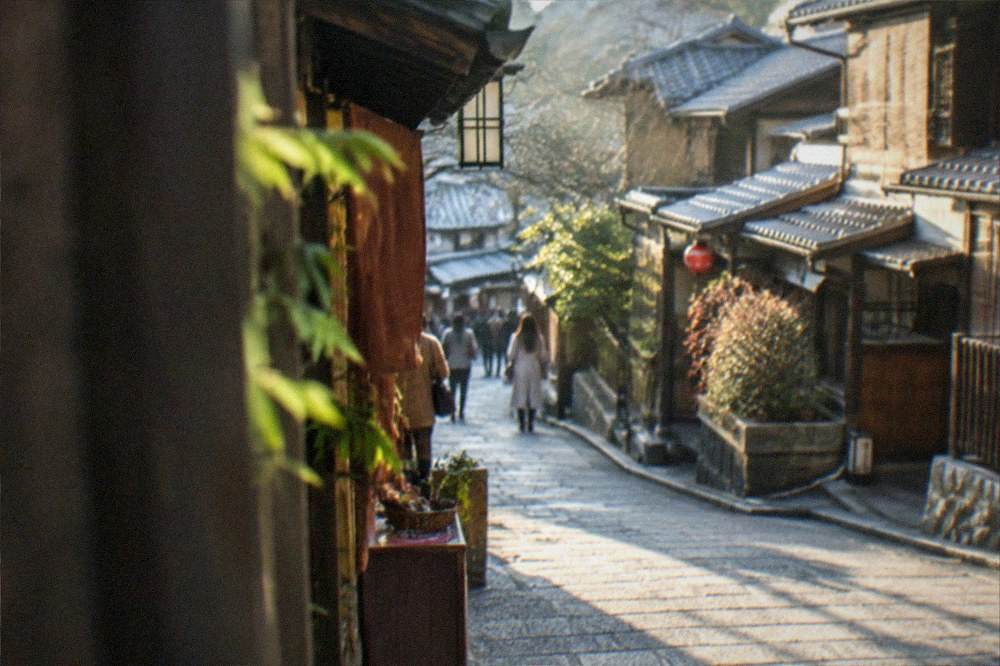
The walk is the point. The approach runs through Ninenzaka and Sannenzaka, the preserved sloping lanes that carry most of Higashiyama's foot traffic, and the temple entrance sits just off the Kodai-ji slope that climbs from those lanes toward the hill. Coming from Kiyomizu-dera, you follow the flow of visitors downhill and then branch left; coming from Maruyama Park and the Yasaka Shrine side, you climb the slope from the north. Either way, the last stretch is stone paving, and it gets slippery in rain.
For transport, the flat fares are simple. A city bus ride is 230 yen for adults and 120 yen for children aged 6 to 11, and subway fares run from 220 to 360 yen by zone. The one-day product that matters is the Subway and Bus One-Day Pass at 1,100 yen for adults and 550 yen for children. The old bus-only one-day pass no longer exists: sales ended in September 2023 and the last day of use was 31 March 2024, so any guide still recommending it is out of date.
| Option | Adult fare | Notes |
|---|---|---|
| City bus, one ride | 230 yen | Flat fare, child 120 yen |
| Subway, by zone | 220-360 yen | Child half fare |
| Subway and Bus One-Day Pass | 1,100 yen | Child 550 yen |
| Tourist express bus EX100/EX101 | 500 yen | Kyoto Station to the Kiyomizu side |
The EX100 and EX101 tourist express buses are worth knowing about in this district specifically, because they run from Kyoto Station to the Gojo-zaka stop on the Kiyomizu side with fewer stops than the regular routes, at 500 yen a ride for adults. From Gojo-zaka, Kodai-ji is the same uphill walk through the lanes. The city introduced these expresses to thin the crush on the ordinary buses, and they are covered by the one-day pass.
What Are Kodai-ji's Opening Hours And When Does The Night Illumination Run?
Kodai-ji opens at 9:00 and closes at 17:30, with the reception desk stopping at 17:00, every day. The night illumination is a seasonal programme running 17:00 to 22:00 with reception to 21:30, and the 2026 autumn season runs from 23 October to 13 December 2026. The temple also holds a shorter spring light-up, with dates published on its own site each year.
The evening window matters for planning. Reception stops an hour before the grounds close in the daytime, and half an hour before the illumination ends at night, so the last useful arrival for the light-up is 21:30. The autumn season is long, nearly eight weeks, which makes Kodai-ji one of the most reliable late-evening options in Kyoto in November and early December, a period when most temples have already shut their gates at 17:00 or earlier.
The timing lines up with the foliage rather than the calendar most guides assume. The JMA Kyoto observatory, which has tracked the city's specimen trees for over a century, puts the 1991 to 2020 normal for kaede maple red leaves at 5 December, and the 2025 observation came on 10 December. The private foliage forecasts for 2026 point to late November in the Arashiyama area. The JMA date is the official marker for one specimen tree, not a promise about Kodai-ji's maples, but it explains why the temple's light-up runs into the second week of December: the colour in Kyoto genuinely peaks later than the mid-November peak most itineraries claim.
| Season | Hours | Reception ends |
|---|---|---|
| Daytime, year-round | 9:00-17:30 | 17:00 |
| Night illumination | 17:00-22:00 | 21:30 |
| 2026 autumn light-up | 23 October to 13 December 2026 |
If you are building an evening around the light-up, the surrounding district stays lively after dark in a way few other parts of Kyoto do. The lanes between Kodai-ji and Gion hold lantern-lit restaurants and small shops, and the Kyoto at night itinerary on this site sequences the district for exactly this kind of evening.
What Makes Kodai-ji's Gardens Worth The Admission?
Kodai-ji's grounds hold two contrasting garden styles, a raked-gravel courtyard garden in front of the main hall and a moss-and-maple hillside garden that climbs behind it, plus a teahouse and a bamboo grove on the upper path. At 800 yen it sits in the middle of Kyoto's temple price band, below Ginkaku-ji's new 1,000 yen and above Kinkaku-ji's 500, and the evening illumination transforms the same gardens into a completely different sight.
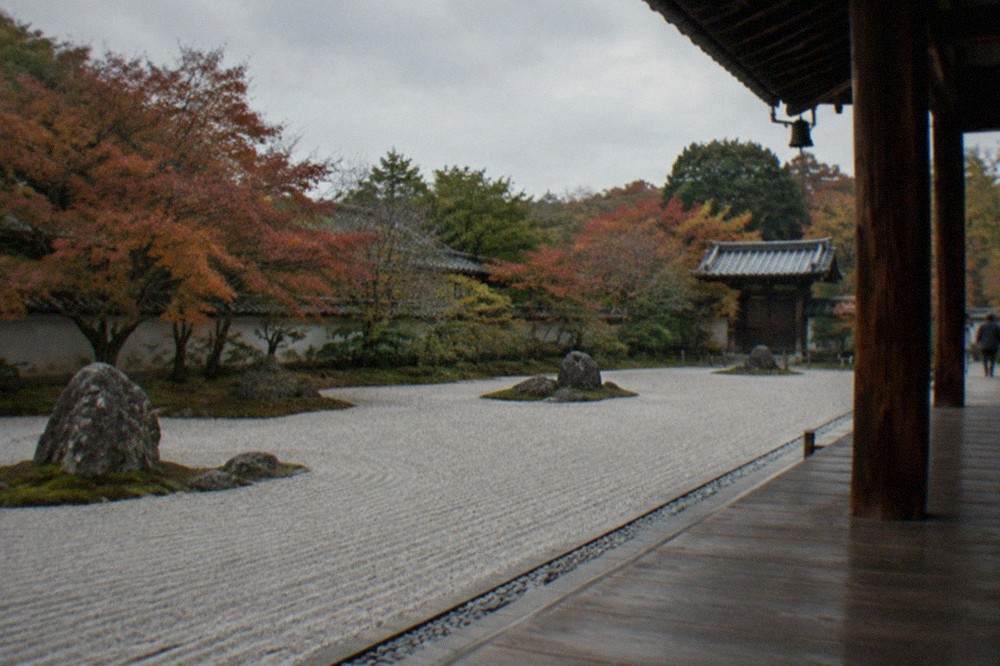
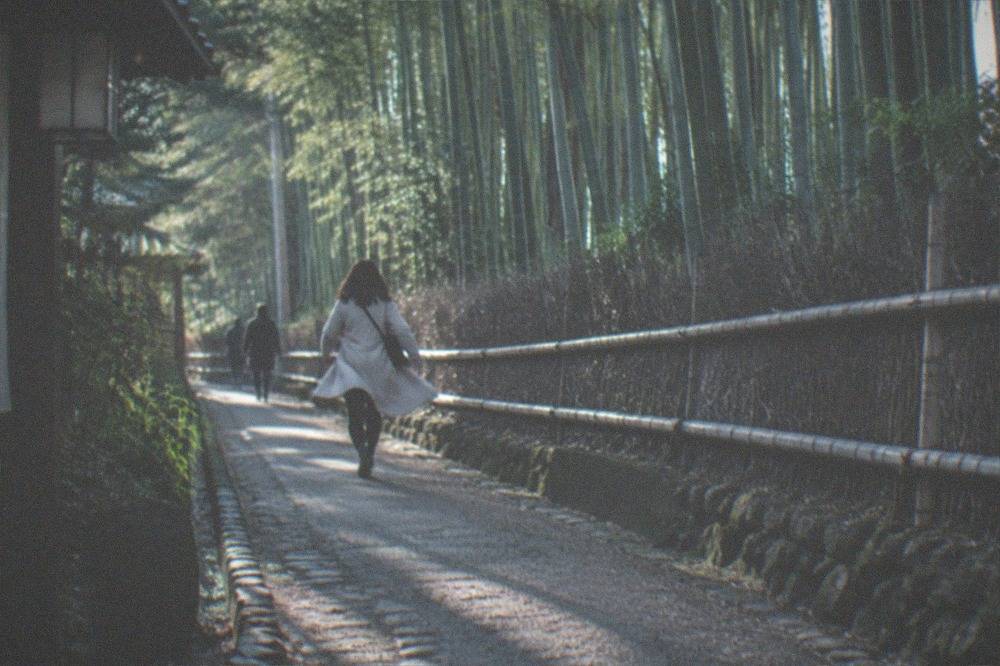
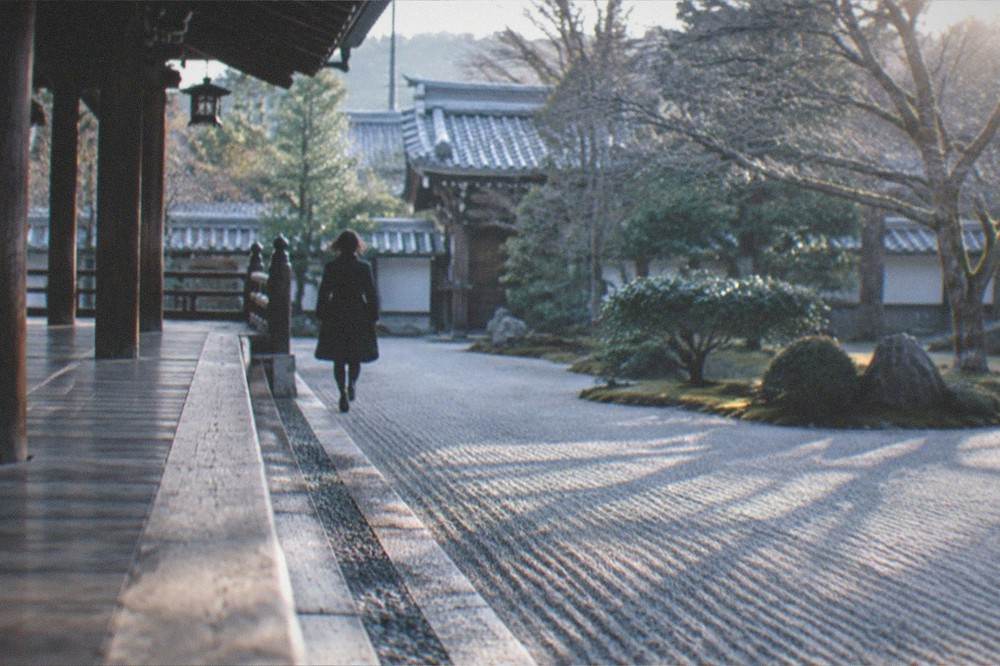
The two-garden structure is what separates it from the single-garden temples around it. The raked gravel in the front court is the dry-landscape style, meant to be read from the veranda rather than walked. The hillside garden behind is the opposite: a steep, mossed slope threaded with paths, where the maples grow tall against the retaining walls and the bamboo grove on the upper level rattles in any wind. In daylight you get both in one circuit of maybe forty minutes.
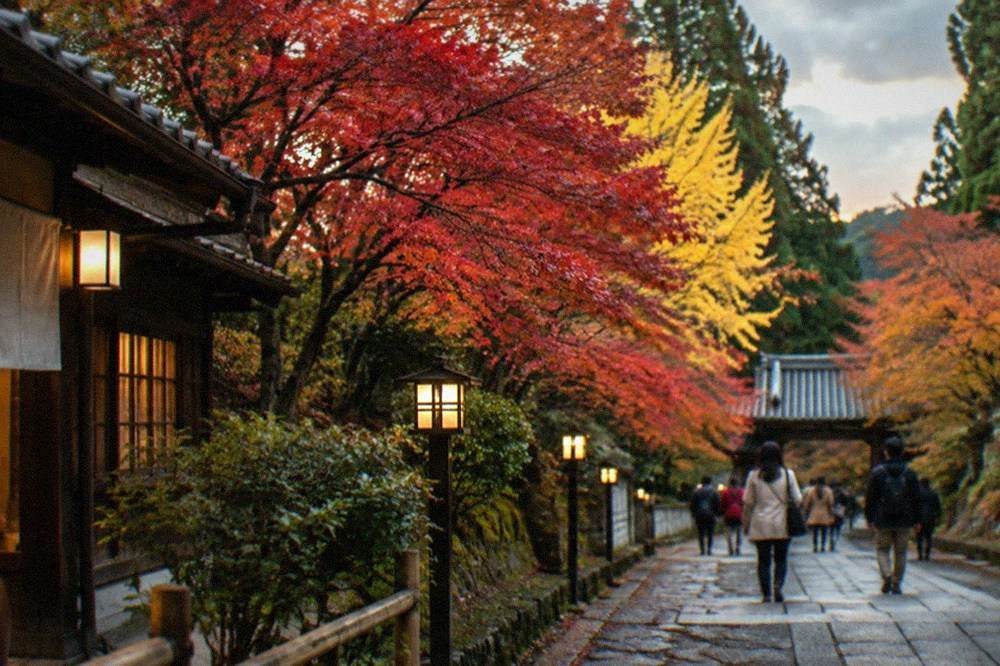
The illumination changes the calculus. Lit from below and between the branches, the maples read as layered colour against the dark, and the gravel court becomes a stage of shadow. This is the standard argument for paying twice if you want both versions, and it is why the temple runs the light-up as its own operation. The same ticket logic applies at the other Higashiyama illumination temples, most famously Eikan-do, which runs its own autumn light-up in the same weeks and is the district's other big evening draw.
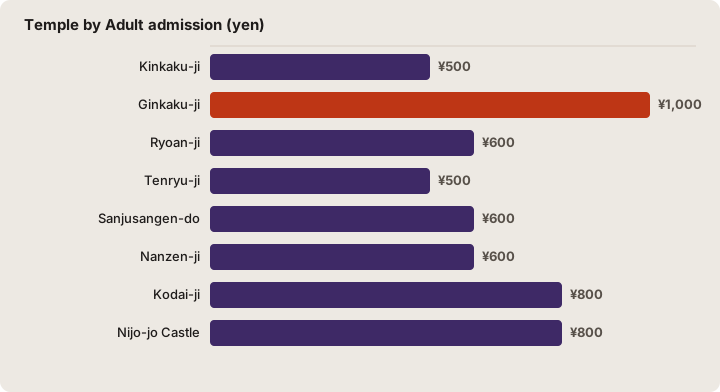
For context on what 800 yen buys elsewhere in the city, the current verified fee card:
| Temple | Adult admission | Notes |
|---|---|---|
| Kinkaku-ji | 500 yen | 9:00-17:00 |
| Ginkaku-ji | 1,000 yen | Doubled from 500 on 1 April 2026 |
| Ryoan-ji | 600 yen | |
| Tenryu-ji | 500 yen garden | Buildings plus 300, Hatto 500 separately |
| Sanjusangen-do | 600 yen | |
| Nanzen-ji | 600 yen | Hojo garden; Sanmon 600 separately |
| Kodai-ji | 800 yen | 1,200 combined with Entoku-in |
| Nijo-jo Castle | 800 yen | 1,300 with Ninomaru-goten Palace |
When Is The Best Time Of Year To Visit Kodai-ji?
The strongest window is late November into early December, when the maple colour peaks in Higashiyama and the autumn illumination runs from 23 October to 13 December 2026. The JMA 1991 to 2020 normal for Kyoto's maple red leaves is 5 December, with the 2025 observation on 10 December, so early December is genuinely in season, not past it. Spring brings a second, shorter light-up for the cherry blossom, whose 2026 full bloom came on 30 March against a 4 April normal.
The phenology record is worth trusting over folklore here. Kyoto's cherry full bloom has landed on or before 30 March in three of the recent years on the JMA record, with the 1991 to 2020 normal at 4 April, and the spring light-ups at Kodai-ji and its neighbours are timed to that window. The maples run later than most visitors expect, and the temple's December-closing illumination season is built around that reality.
Crowds follow the colour. The city's own 2025 tourism survey, released in June 2026, recorded a record 62.79 million visitors to Kyoto, with 12.68 million of them foreign, and Higashiyama in late November is where that pressure concentrates. Two practical counters: arrive at the 9:00 opening for the daytime garden, or come after 19:30 for the illumination, when the tour groups have thinned and the reception line moves fast. The city's Tourism Comfort Forecast, run by the Kyoto City Tourism Association, publishes a five-level crowd prediction for major spots by date and time slot, and it is the tool to check the night before.
| Season | JMA marker | Normal (1991-2020) | Recent observation |
|---|---|---|---|
| Cherry flowering | 23 March 2026 | 26 March | 2025: 27 March |
| Cherry full bloom | 30 March 2026 | 4 April | 2025: 5 April |
| Maple red leaves | Not yet in 2026 | 5 December | 2025: 10 December |
| Ginkgo yellow | Not yet in 2026 | 24 November | 2025: 25 November |
How Does Kodai-ji Compare With Kyoto's Other Temple Fees?
At 800 yen, Kodai-ji sits in the upper middle of Kyoto's verified temple price band: above Kinkaku-ji at 500, Ryoan-ji at 600, Tenryu-ji's garden at 500 and Sanjusangen-do at 600, level with Nijo-jo Castle's 800, and below Ginkaku-ji's 1,000 yen, which doubled in April 2026. Its 1,200 yen combined ticket with Entoku-in is the only two-site pairing at that price point in Higashiyama.
The 2026 changes are the reason to recheck anything you read earlier. Ginkaku-ji's doubling to 1,000 yen for adults, its first rise in 32 years, reset the top of the band. Tofuku-ji revises on 1 November 2026, with the Hojo garden going from 500 to 600 yen, a new 1,000 yen combined ticket, and the Tsutenkyo bridge rising to 1,000 yen during the foliage period. Nothing about Kodai-ji's own card changed, which makes it a stable reference point in a moving market.
A budgeting frame for a full day of temple-hopping in this district: Kiyomizu-dera's 500 yen figure is single source, the temple does not print it on its own site, so treat it as reported rather than official. A Higashiyama circuit of Kiyomizu-dera, Kodai-ji and the combined Entoku-in ticket, plus a walk through the free lanes between them, comes to roughly 2,000 yen in admissions for an adult. Add the 1,100 yen one-day transport pass and the day's fixed cost is transparent before you spend anything on food.
The comparison that matters most for value is not price but what the fee includes. Kinkaku-ji is a single view of a single building; Ryoan-ji is one courtyard; Kodai-ji is a circuit of two gardens, a teahouse and a bamboo grove. On minutes-per-yen, the mid-priced temples with layered grounds generally beat the famous single-sight ones.
What Else Is Within Walking Distance Of Kodai-ji?
Kodai-ji sits inside the densest cluster of walkable sights in Kyoto: Kiyomizu-dera is minutes uphill through the Ninenzaka and Sannenzaka lanes, Maruyama Park and Yasaka Shrine are adjacent to the north, and the lanes continue down to Gion and the Kamo River. Entoku-in is inside the combined ticket, and Ryoan-ji, Tenryu-ji and the Arashiyama side are a bus or train ride away rather than a walk.
The immediate circuit is the one most first-time visitors walk without planning to. You arrive at Kiyomizu-dera early, come down through the preserved lanes, take Kodai-ji and Entoku-in on the slope, then continue north through Maruyama Park to Yasaka Shrine and into Gion. The whole chain is pedestrian, mostly on stone paving, and it is the reason the Higashiyama district absorbs so much of the city's record visitor volume.
For a second day or a different direction, Kiyomizu-dera deserves its own morning, Nanzen-ji and the Philosopher's Path sit on the northern side of the district, and the big overview of everything worth booking time for is on the things to do in Kyoto page. If you are staying in the district, the Kyoto ryokan guide covers the traditional inns within walking distance of the Kodai-ji slope.
Can You Visit Kodai-ji Without The Crowds?
Yes, with timing. The temple opens at 9:00 sharp and the first half hour is the quietest the daytime grounds get, because most Higashiyama visitors start at Kiyomizu-dera and arrive on the slope from mid-morning. For the illumination, arriving after 19:30, when reception runs to 21:30, avoids the early-evening peak, and weekday nights in the first week of the season are lighter than any night in November.
The crowd physics of this district are predictable because the geography funnels everyone the same way. Visitors land at Kyoto Station, ride to the Kiyomizu side, walk downhill through the lanes, and reach Kodai-ji between late morning and mid-afternoon. Going against that flow, starting at Maruyama Park or Yasaka Shrine and working south, puts you at Kodai-ji's gate when the crowd is still arriving from the other end.
The city's own dispersal measures are worth using rather than just knowing about. The Tourism Comfort Forecast gives a five-level crowd prediction by spot and time slot, the EX100 and EX101 expresses thin the bus crush on the Kyoto Station to Kiyomizu corridor, and the hands-free luggage delivery network lets you walk the lanes without a suitcase. All three are free to check, and the first one takes thirty seconds the night before a visit.
Common Questions About Kodai-ji Temple
What Does Kodai-ji Cost And Is The Night Illumination A Separate Ticket?
Daytime admission is 800 yen for adults, 400 for junior high and high school students, free for elementary age and under with an adult, and 1,200 yen combined with Entoku-in. The night illumination runs 17:00 to 22:00 with reception to 21:30 as a seasonal programme, with the 2026 autumn season from 23 October to 13 December, and the temple's own site sets out the current light-up ticketing each season.
What are Kodai-ji's opening hours?
The temple opens 9:00 and closes 17:30, with the reception desk stopping at 17:00. During illumination seasons the grounds stay open to 22:00 with reception to 21:30.
Is the Entoku-in combined ticket worth it?
At 1,200 yen against the two sites bought separately at standard rates, the combined ticket saves money and adds a second garden and sub-temple inside the same visit. Both sites sit within a short walk of each other on the same slope.
When do Kodai-ji's maples actually turn colour?
The JMA 1991 to 2020 normal for Kyoto's maple red leaves is 5 December, and the 2025 observation was 10 December. The temple's autumn illumination, running to 13 December in 2026, is timed to that late window, so early December is still in season.
How do I get to Kodai-ji from Kyoto Station?
Take a city bus toward the Kiyomizu side at a flat 230 yen per adult ride, or the Keihan line to Kiyomizu-dera Gojo Station followed by the uphill walk. The EX100 and EX101 tourist expresses run from Kyoto Station to the Gojo-zaka stop at 500 yen with fewer stops, and the Subway and Bus One-Day Pass at 1,100 yen covers the day's rides.
Kodai-ji rewards two visits more than almost any temple in the city: once in morning light for the gardens as they were designed to be read, and once in the illumination season for the same slopes lit from below. With the fee card above, the late maple normal and the crowd tools the city publishes, both visits are easy to plan down to the hour.