Things To Do In Kyoto At Night: Temples, Lanterns And Riverbanks After Dark
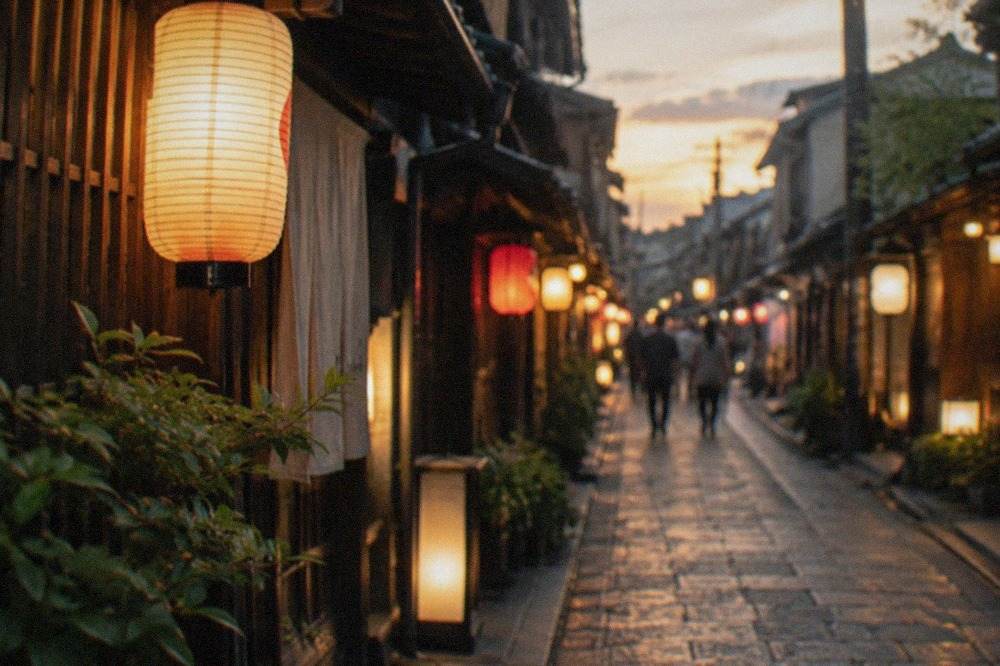
Kyoto changes character after sunset. A handful of temples stay lit into the evening, the riverside lanes fill with lantern light, and the summer calendar adds bonfires and processions that only exist after dark.
Short answer
Kiyomizu-dera runs seasonal night viewing until 21:30, Kodai-ji lights its gardens from 17:00 to 22:00, and Gozan no Okuribi fires five mountainsides on 16 August. Most other temples close between 16:30 and 17:30, so the evening plan rests on illuminations, shrine paths with no closing time, and the river districts.
Kyoto closes earlier than most visitors expect. Kinkaku-ji shuts at 17:00, Nijo-jo Castle stops admitting at 16:00, and Sanjusangen-do pulls its reception in at 16:00 from mid-November. But the city does not go dark. A small, seasonal set of temples keeps its gates open into the evening, the Fushimi Inari paths have no closing time at all, and the lanes between Gion and the Kamo River hold their light well past midnight. This page lays out what is genuinely open after sunset, what each of it costs, and how to sequence an evening without inventing walking times this site cannot verify.
The honest headline is that night access in Kyoto is seasonal, not permanent. Kiyomizu-dera's late hours exist only in three windows a year. Kodai-ji lights up on a schedule tied to spring, summer and autumn campaigns. Everything else on this page, the shrine paths, the riverbanks, the bar districts, the observation deck, runs year-round. Planning around that split is the difference between an evening that works and one that ends at a closed gate.
Which Kyoto Temples Open At Night: Kiyomizu-dera, Kodai-ji, Eikan-do Illuminations?
Three temples carry Kyoto's evening illumination calendar: Kiyomizu-dera runs night viewing to 21:30 in three seasonal windows, Kodai-ji lights its gardens from 17:00 to 22:00 with reception closing at 21:30, and Eikan-do holds its famous maple illumination each autumn on dates the temple announces itself. Admission at Kodai-ji is 800 yen, or 1,200 combined with Entoku-in. Kiyomizu-dera's 500 yen figure is single source, so treat it as reported rather than official.
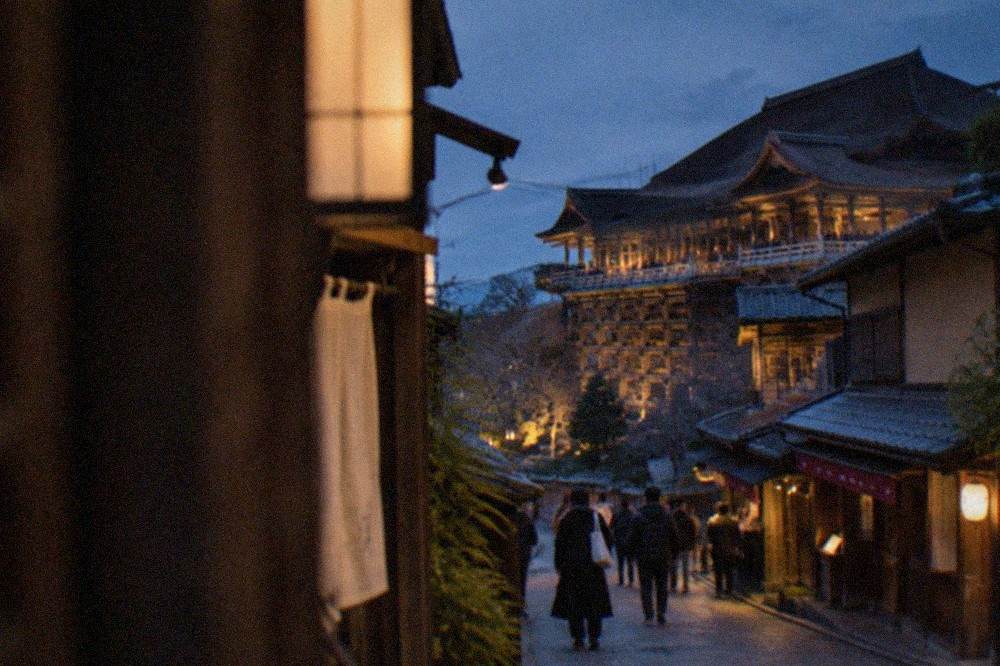
Kiyomizu-dera's late openings are the anchor. The temple's own access schedule lists 6:00 to 21:30 openings for the spring night viewing from 27 March to 5 April, the summer evenings of 14 to 16 August, and the autumn night viewing from 21 to 30 November, with last entry at 21:00 in each window. Outside those dates it closes at 18:00, or 18:30 through July and most of August. The schedule changes yearly, so the temple's own page is the only safe source for the exact dates of a given season.
Kodai-ji is the reliable one. Its standard hours run 9:00 to 17:30 with reception to 17:00, and its night illumination runs 17:00 to 22:00 with reception until 21:30. The 2026 autumn night viewing runs from 23 October to 13 December. The temple sits above the Higashiyama lanes, which makes it the natural pairing with an evening walk down Ninenzaka and Sannenzaka toward Yasaka Shrine.
Eikan-do is the third name in the question, and this site prints no fee or hours for it because none were verified on the temple's own pages. Its maple illumination is a real and famous event, held across the autumn colour period with extended evening entry, but the dates, hours and admission are set in the temple's annual notice. Check the temple's own announcement for the year you travel rather than a figure copied from a general guide.
| Temple | Evening access | Hours | Admission |
|---|---|---|---|
| Kiyomizu-dera | Seasonal night viewing only | 6:00-21:30, last entry 21:00, in three windows | 500 yen, single source |
| Kodai-ji | Night illumination | 17:00-22:00, reception to 21:30 | 800 yen, 1,200 with Entoku-in |
| Eikan-do | Autumn maple illumination | Set in the temple's annual notice | Not verified, check the temple |
| Fushimi Inari Taisha | Paths, not buildings | No closing time on the paths | Free |
The one trap to avoid is assuming "open at night" means every night. A reader who arrives in Kyoto in, say, early October will find Kodai-ji lit and Kiyomizu-dera shut at 18:00. The windows above are the whole story, and the autumn leaves itinerary lines up with the largest of them.
What Can You Do In Kyoto At Night For Free?
The Fushimi Inari paths have no closing time and cost nothing, the Gion and Pontocho lanes are free to walk, the Philosopher's Path is a public canal-side walk, and the Arashiyama bamboo path is a free public route with 24-hour access. The Kyoto Imperial Palace is open to all with no advance application, though its hours are unverified. None of these carries an admission fee.
Fushimi Inari after dark is the single best free evening in the city, with a caveat. The shrine itself publishes desk and prayer hours only; it sets no closing time for the mountain paths, and the shrine's own FAQ confirms there is no admission fee anywhere on the site. The lower gates and the Senbon Torii tunnel stay walkable at night, and the shrine links to the Kyoto Tourism Comfort forecast and its own approach cameras for crowd levels. The caveat is lighting: the paths are dim above the main tunnels, and the shrine's account of the mountain gives Inariyama as 233 m, a real climb in the dark. Stay on the lit lower sections unless you are prepared.
Gion costs nothing to walk and is at its best in the evening, but the rules are strict and worth knowing before you go. The Kyoto City Tourism Association's guidelines say do not touch, chase or photograph geiko and maiko without permission, and do not enter private property or photograph it where prohibited. On the private alleys off Hanamikoji, signage from the Gion South Side district council threatens a 10,000 yen penalty for unauthorised photography or entry. That is council signage on private roads, not a city police fine, but it is enforced by the landowners all the same. The main Hanamikoji road remains public and photographable.
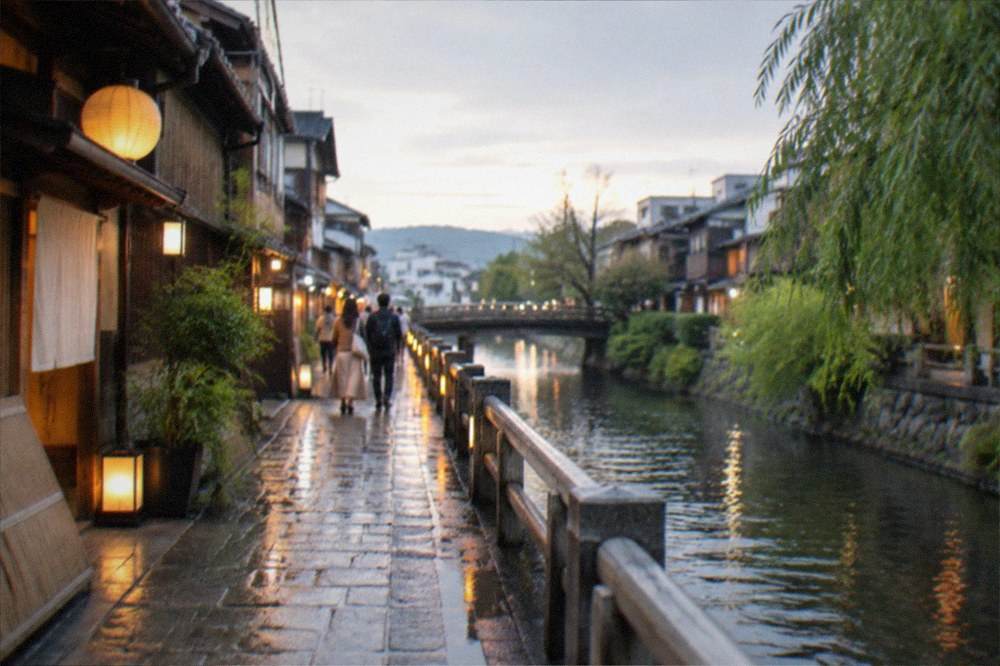
Pontocho and the Kamo River banks need no ticket and no plan beyond comfortable shoes. The alley is one of the city's oldest surviving geisha districts, and the riverbank terraces fill from spring through autumn. Further east, the Philosopher's Path is a public canal walk that costs nothing, though the shops along it close with the rest of the city. For a fuller rundown of no-cost options, the free things to do page covers the whole city.
When Does Gozan no Okuribi Light The Mountains?
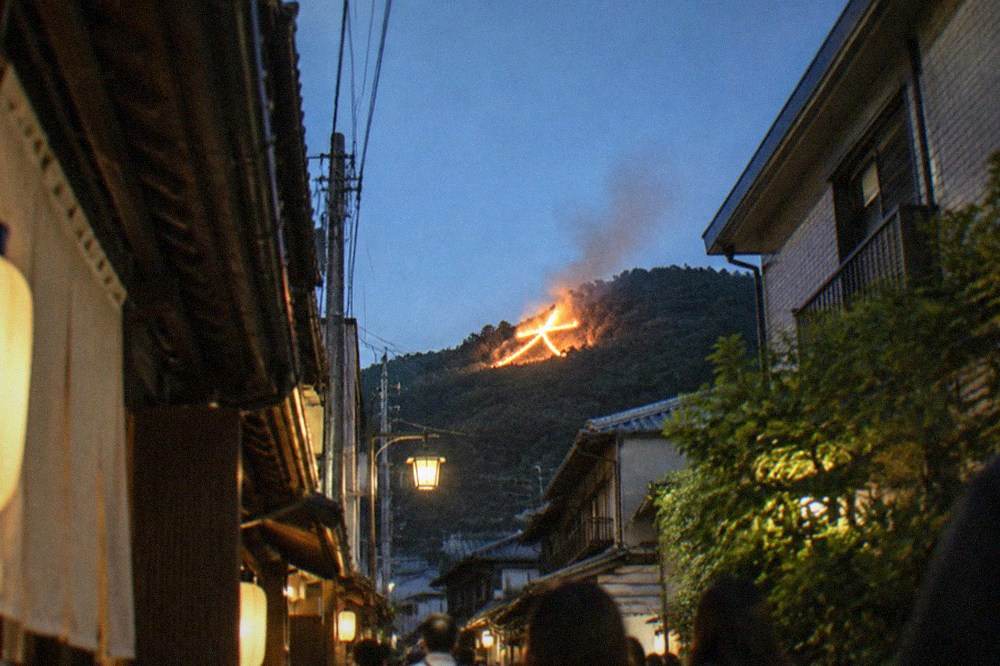
Gozan no Okuribi fires on 16 August every year, when five mountainsides around Kyoto are lit one after another with giant bonfire characters, and entering the hills is prohibited that day. The event is free to watch from the city. The time of the first lighting is reported as 20:00 but is not printed on the official page, so treat it as approximate and claim a viewing spot well before then.
The bonfires are the climax of the Obon season, sending off the spirits of the dead. The city's tourism association confirms the date, the five mountains and the one-after-another lighting, plus the prohibition on entering the hills on the night itself. What it does not print is a start time, and this site will not invent one. Reports consistently give 20:00 for the first fire, so plan to be in position by early evening.
Practical notes matter here. The good vantage points along the Kamo River and around Yasaka Shrine fill hours ahead, and the city's 2025 tourism survey recorded 62.79 million visitors across the year, with August among the heaviest months for day-trip pressure. The event is not a product this site sells and no ticket exists; it is a public spectacle, and the only cost is time and positioning. The festival context sits with the rest of the Kyoto festivals calendar.
Is Gion Worth Visiting At Night?
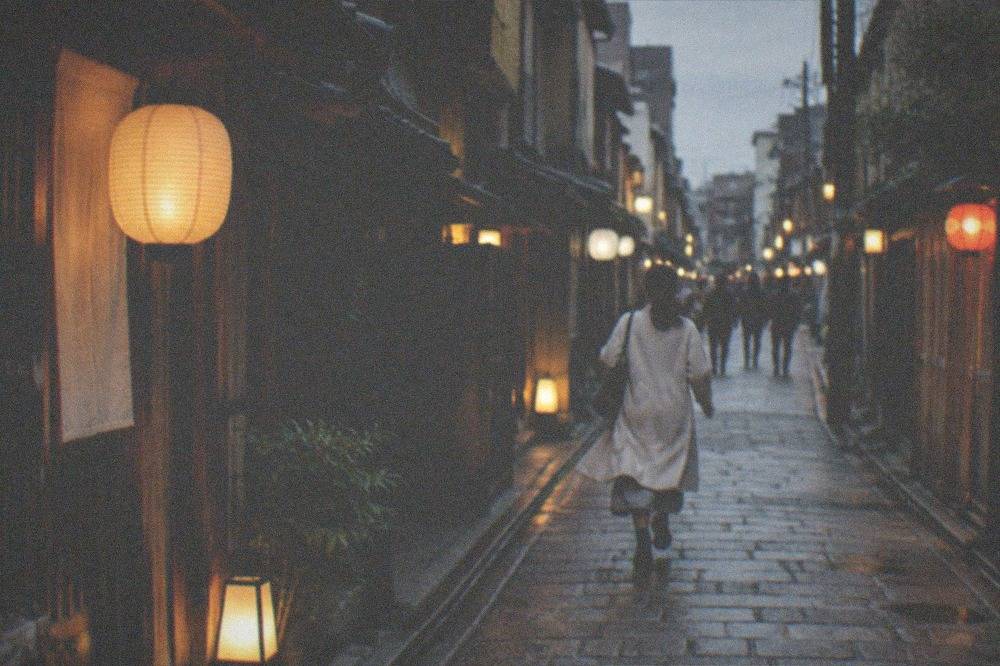
Gion is at its best after dark, when the lantern-lit Hanamikoji street and the Shirakawa canal section are fully lit and geiko and maiko move between engagements, but the district's conduct rules are strict and the private alleys are closed to photography on penalty signage. The walk itself is free, and the evening hours between 18:00 and 21:00 are when the district is genuinely alive.
The evening is when the district earns its reputation. Teahouses open their doors, the wooden machiya facades catch the lantern light, and the Shirakawa canal section near Shijo Avenue is the most photographed stretch after sunset. The rules from the previous section apply with full force: no touching or chasing the geiko and maiko, no photographs without permission, and no entry into the private alleys where the council signage stands. The Gion page carries the full background on the district and its history.
For travellers who want the district explained rather than just walked, a guided evening walk is the strongest format. The Gion Magical Night Walking Tour, rated 4.9 from 4,616 reviews over 1 hour 40 minutes, and the Gion Geisha District Hidden Gems Walking Tour, rated 4.8 from 4,599 reviews over 2 hours, both run in the evening window and both cover the etiquette along the way. There is also a free, tip-based option: the Gion Legacy of Geishas free walking tour on GuruWalk, rated 4.89 from 1,047 reviews over 2 hours, led by a local guru who works for tips. That one carries no fixed price at all.
Where Should You Eat And Drink In Kyoto At Night?
Pontocho Alley and the Kawaramachi downtown strip hold most of Kyoto's evening dining, with izakaya crawls from around 37 dollars, a food-focused night tour from 121 dollars rated 5 from 630 reviews, and standing bars and yakitori joints open late into the night. Nishiki Market is a daytime venue: its shops keep their own hours, roughly 9 or 10:00 to 17 or 18:00, and there are no unified market hours.
The geography is simple. Pontocho runs along the Kamo River's west bank, Kiyamachi and Kawaramachi sit a few blocks west of it, and together they hold the bulk of the city's bars and late kitchens. The izakaya crawl format suits the area well: the Kawaramachi Local Bar and Izakaya Crawl Tour runs 3 hours from 37 dollars and is rated 4.9 from 1,042 reviews. The Kyoto Foodie Night Tour, 3 hours 30 minutes from 121 dollars, rated 5 from 630 reviews, covers a wider stretch of the evening food scene. Other pages covering the same trip are gathered on Kyoto Travel Guide.
Nishiki Market is the thing visitors get wrong. It is a covered daytime market, and the association that runs it prints no unified hours because each shop keeps its own, roughly 9 or 10:00 to 17 or 18:00. The market's own guidance also discourages eating while walking, asking visitors to eat at the stall or a designated area. For the market itself, the morning Nishiki Market brunch walking tour, 3 hours from 74 dollars with 7 tastings plus brunch, rated 4.9 from 1,497 reviews, is the daytime counterpart.
Can You Climb Fushimi Inari At Night?
Yes, in the sense that the shrine sets no closing time for the mountain paths and charges no admission, but the upper trails are dimly lit and the full circuit is a genuine mountain walk, with Inariyama given as 233 m. The torii tunnels near the base are lit and busy late into the evening, while the summit sections are quiet and dark. The shrine's own FAQ is the source for both the free entry and the roughly 10,000 torii across the whole mountain.
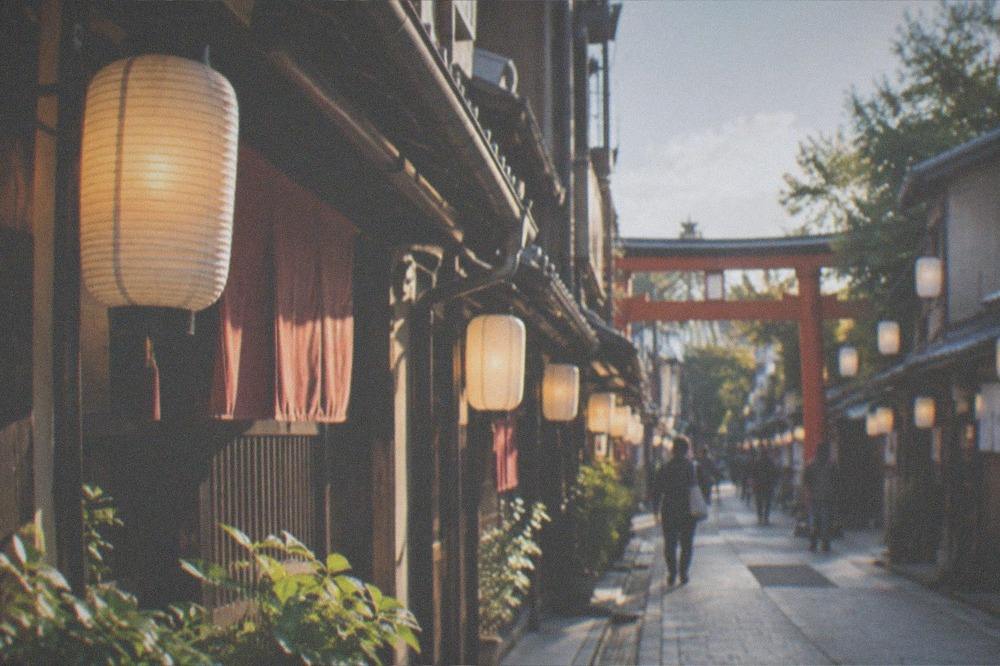
This is the most common night question about Kyoto and the answer needs honesty on both sides. The shrine publishes no opening hours for the paths because it sets none; the paths have no closing time. The base of the mountain, the Romon gate and the first Senbon Torii tunnels are lit and see steady traffic well past midnight. Above the Yotsutsuji junction, where the trail splits toward the peaks, the lighting thins and the crowds vanish. The shrine's FAQ describes about 10,000 torii of all sizes across the whole mountain, never 10,000 in the tunnel alone, a distinction most guides miss.
For the history that makes the climb worth it even in daylight: the shrine dates its founding to 711, when, by the shrine's own account, Irogu no Hatanokimi enshrined the deities on Inariyama on an imperial order from Empress Genmei. The shrine itself hedges with "is said to be", and the year marks the enshrinement, not a building. Fushimi Inari is the head shrine of a network the shrine says numbers about 30,000 Inari shrines nationwide. The Fushimi Inari page carries the full account, and the Fushimi Inari Hidden Hiking Tour, 3 hours from 73 dollars and rated 5 from 1,931 reviews, covers the quieter trails with a guide.
| Evening option | Cost | Hours | Notes |
|---|---|---|---|
| Fushimi Inari paths | Free | No closing time | Dim above the main tunnels |
| Gion and Pontocho walk | Free | Always open | Conduct rules apply |
| Kodai-ji illumination | 800 yen | 17:00-22:00 | Reception to 21:30 |
| Kiyomizu-dera night viewing | 500 yen, single source | To 21:30 in windows | Last entry 21:00 |
| Nidec Kyoto Tower deck | 900 yen adult | 10:00-21:00 | Last admission 20:30 |
What Does A Perfect Evening In Kyoto Look Like?
A workable evening sequence is Kodai-ji's illumination from 17:00, the walk down through Ninenzaka and Sannenzaka to Yasaka Shrine's lantern-lit grounds, dinner in Pontocho or Kawaramachi, and either the Kamo River banks or the lit lower paths of Fushimi Inari to finish. In the three Kiyomizu-dera night-viewing windows, the temple to 21:30 replaces or precedes the Kodai-ji stop.
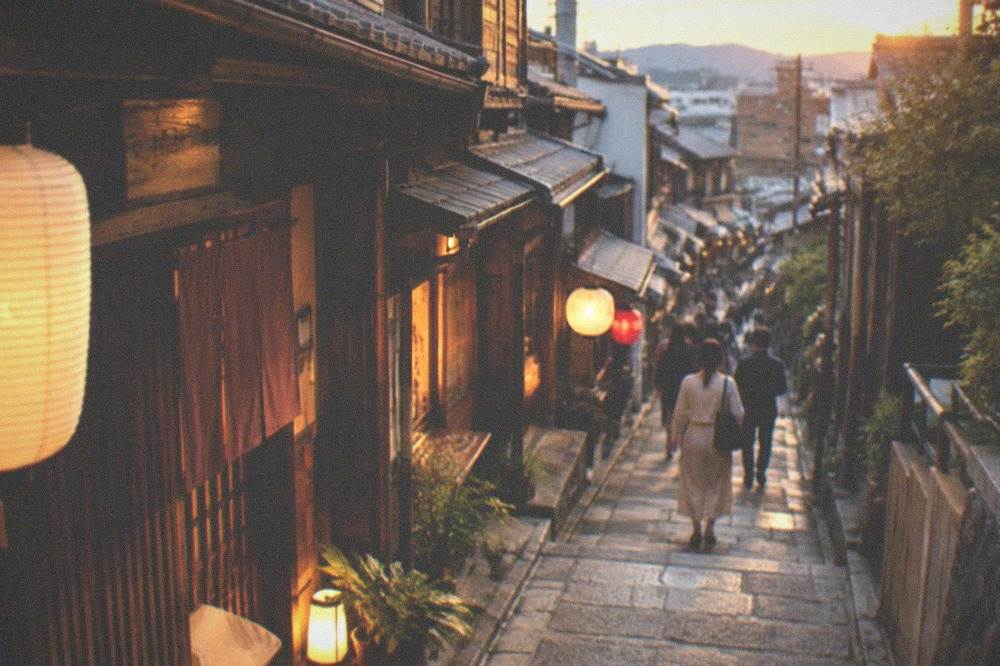
The order matters because of the closing times. Kodai-ji's illumination reception ends at 21:30, but its standard daytime reception ends at 17:00, so arriving at the illumination start avoids the overlap crush. The lanes below it, Ninenzaka and Sannenzaka, are a public stone-paved slope best seen as the shop lights come on. Yasaka Shrine's grounds stay lit through the evening and the great lantern hall is the district's landmark after dark.
From there the evening forks. West takes you over Shijo Bridge into Pontocho and the Kawaramachi bar strip. South-east takes you toward Kiyomizu-dera in its night windows, or onward to the Keihan line for Fushimi Inari. In July the whole plan bends around Gion Matsuri, which runs the full month from Kippu-iri on 1 July to Nagoshi-sai on 31 July, with the Yamaboko Junko parades on 17 and 24 July and the mikoshi leaving Yasaka Shrine on the evening of the 17th. The floats and the street closures reshape every evening route in the centre that month.
How Late Is Kyoto Actually Open?
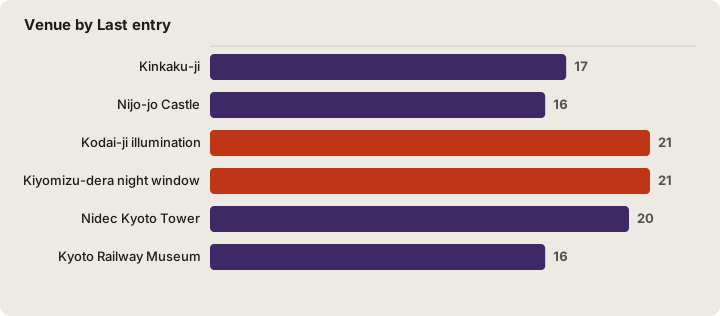
Kiyomizu-dera's night windows run to 21:30, Kodai-ji's illumination reception to 21:30, Nidec Kyoto Tower's deck to 21:00 with last admission at 20:30, and the Fushimi Inari paths have no closing time at all. Most temples close between 16:30 and 17:30: Kinkaku-ji at 17:00, Nanzen-ji at 16:30 in winter, and Nijo-jo Castle stops admitting at 16:00. Bars and izakaya in Kawaramachi run well past midnight.
The closing-time table is the unglamorous core of any Kyoto plan, and it is where most itineraries quietly fail. A plan that has a reader reaching Nijo-jo Castle at 16:30 in January is wrong, because the castle stops admitting at 16:00 and closes at 17:00. Sanjusangen-do, open every day, still pulls its reception in at 16:00 from 16 November. The temples guide carries the full fee and hours grid; the summary below is the evening-relevant slice.
| Venue | Last entry | Closes |
|---|---|---|
| Kinkaku-ji | Before 17:00 | 17:00 |
| Nijo-jo Castle | 16:00 | 17:00 |
| Kodai-ji illumination | 21:30 | 22:00 |
| Kiyomizu-dera night window | 21:00 | 21:30 |
| Nidec Kyoto Tower | 20:30 | 21:00 |
| Kyoto Railway Museum | 16:30 | 17:00, closed Wednesdays |
Two more evening facts worth carrying. The city's accommodation tax changed on 1 March 2026: the top tier went from 1,000 to 10,000 yen per person per night on rooms of 100,000 yen and up, with the 20,000 to 50,000 yen tier doubling from 500 to 1,000. And July, not June, is Kyoto's wettest month at 223.6 mm against 199.7 mm in the JMA 1991-2020 normals, so a July evening plan should carry a real rain option.
The river option deserves its own word before the closing section, because it is the one evening activity that pairs a daytime ticket with a night finish. The Hozugawa Kudari boat ride runs about two hours down the Hozugawa gorge from Kameoka to Arashiyama, adult 6,000 yen and child 4,500 on the operator's own ticket page, on a regular timetable from 10 March to 13 December. The last departures land you in Arashiyama as the lanterns come on along the river, and the Togetsukyo bridge and the riverside lanes stay walkable after the boats stop. It is the strongest way to convert a daytime trip into an evening arrival.
What Should First-Time Visitors Know About Kyoto After Dark?
First-time visitors should anchor the evening on the Higashiyama illumination season or the year-round free options, keep temple visits to the daylight hours unless a night window applies, and use the Subway and Bus One-Day Pass at 1,100 yen, since the bus-only pass no longer exists. The city's tourist express buses EX100 and EX101 run 500 yen a ride between Kyoto Station and the Kiyomizu and Gion side.
The transport point is practical. The EX100 runs Kyoto Station to Gojo-zaka for Kiyomizu-dera, then Gion, Okazaki and Ginkaku-ji; the EX101 runs direct to the Kiyomizu side, with morning frequencies of every 7 to 8 minutes on operating days. Both cost 500 yen for adults. The flat city bus fare is 230 yen and the subway runs 220 to 360 yen by zone, so the 1,100 yen combined pass pays off on any day with four or more rides. The first-time visitors page builds the full arrival plan around it.
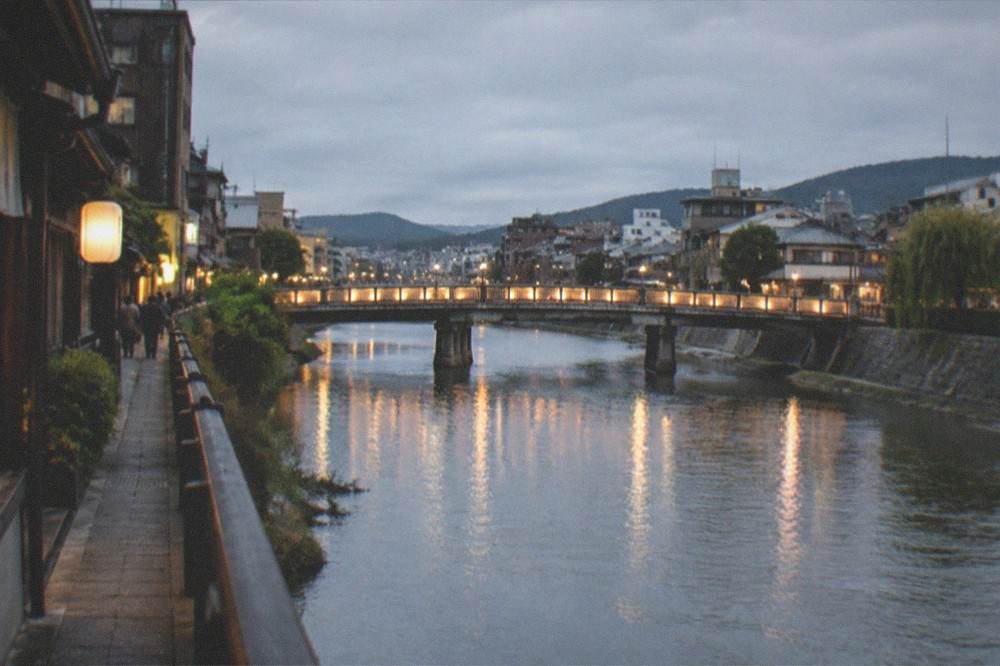
Beyond transport, the evening is where Kyoto rewards slowing down. The daytime circuit, whether a self-guided day or the Perfect 1-Day Bus Tour from 102 dollars, rated 4.9 from 17,054 reviews over 8 to 9 hours, will have filled the morning and afternoon with gates that shut by 17:00. The evening is for the lanes, the river, the illuminations in their windows, and the mountain paths that never close. That split, busy gates by day and open ground by night, is the shape of a day in Kyoto that actually works.
Common Questions About Kyoto At Night
Which Kyoto temples open at night: Kiyomizu-dera, Kodai-ji, Eikan-do illuminations?
Kiyomizu-dera opens to 21:30 in three seasonal windows, Kodai-ji lights its gardens from 17:00 to 22:00 with reception to 21:30, and Eikan-do runs its autumn maple illumination on dates the temple announces each year. Kodai-ji charges 800 yen, or 1,200 combined with Entoku-in.
Is Fushimi Inari open at night?
The shrine sets no closing time for the mountain paths and charges no admission. The lower torii tunnels are lit and busy late, while the upper trails are dark and quiet, so plan accordingly.
Can you photograph geisha in Gion at night?
The city's guidelines say no touching, chasing or photographing geiko and maiko without permission, and no entering or photographing private property where prohibited. Signs on the private alleys off Hanamikoji threaten a 10,000 yen penalty.
What time do Kyoto temples close?
Most close between 16:30 and 17:30. Kinkaku-ji closes at 17:00, Nijo-jo Castle stops admitting at 16:00, and Nanzen-ji closes at 16:30 in winter. Only the seasonal illuminations and the shrine paths run later.
Is Kyoto safe to walk around at night?
The central districts of Gion, Pontocho and Kawaramachi are busy and well-lit through the evening. The usual city-centre precautions apply, and the dim upper paths of Fushimi Inari are the one commonly walked area where darkness itself is the main hazard.