Is Yasaka Shrine Open 24 Hours And Free To Enter?
Yasaka Shrine sits at the heart of Gion, charges no admission, and anchors Kyoto's biggest festival every July. Here is what the shrine's own pages and the city's verified records say about hours, fees, rules and the best time to go.
Short answer
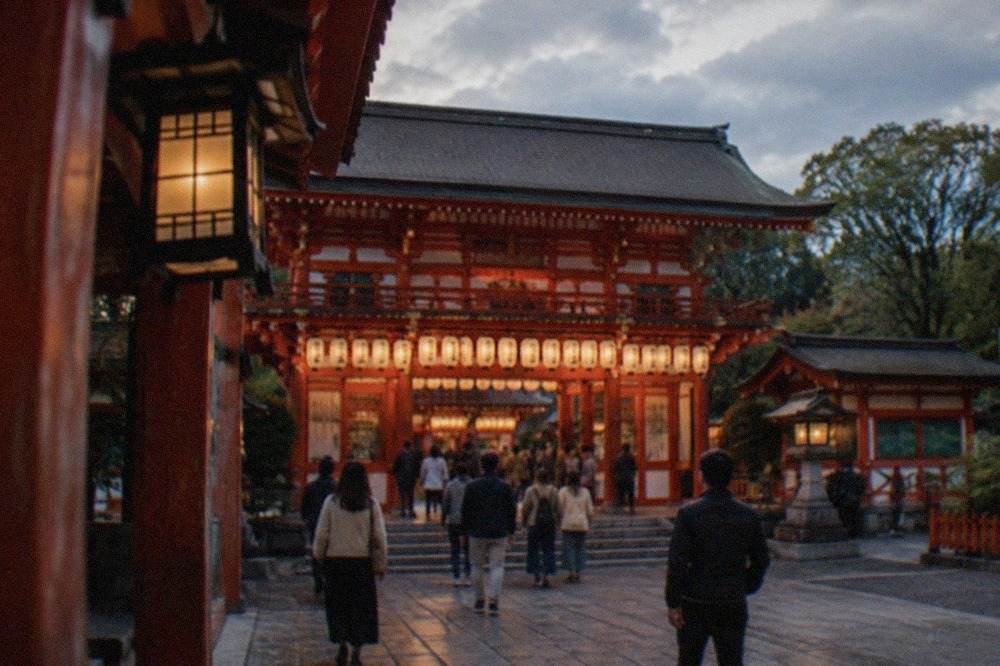
Yasaka Shrine charges no admission and publishes no closing time for its grounds, so visits at dawn and late evening are normal. It sits in Gion beside Maruyama Park, and its biggest event is Gion Matsuri, which runs the whole of July with the grand processions on the 17th and 24th.
Yasaka Shrine stands at the eastern edge of Kyoto's downtown, where the Shijo-dori shopping streets run out of shops and into Gion. It is one of the few major sights in the city that asks nothing of your wallet, and unlike the temples that ring it in Higashiyama, it has no ticket gate, no admission window and no closing bell that this site could find published anywhere. The shrine's own festival calendar, the city's tourism guidelines and the Japan Meteorological Agency's records together tell you everything you need to plan a visit: when the grounds are quiet, when they are a sea of festival crowds, and how to behave around the geiko and maiko who work the streets around it.
This page is the Kyoto Travel Guide attraction guide to Yasaka Shrine, and it answers the questions visitors actually ask before they go: the hours and fee question first, then what to see, the festival, transport, the conduct rules in Gion, and what else nearby is free. Every figure here comes from the shrine, the city or the weather agency, and where a number could not be verified, this page says so instead of guessing.
Is Yasaka Shrine Open 24 Hours And Free To Enter?
Yes on the fee, and effectively yes on the hours. Yasaka Shrine charges no admission and publishes no closing time for its grounds on any page this site verified, so the precinct functions as an open space rather than a ticketed attraction. The worship halls face the street with no gate, and visits at dawn or late evening are normal practice. The shrine's own pages list festival dates and rite times, not opening hours, so there is no official schedule to contradict.
That answer needs one honest caveat. Kyoto's temples are businesses in a sense shrines are not: they charge admission, post hours, and close their gates. Shrines generally do not. The one shrine whose hours this site could verify precisely, Fushimi Inari Taisha, publishes only desk and prayer times and sets no closing time for its mountain paths, and Yasaka Shrine follows the same pattern of publishing rites rather than hours. So the practical answer for planning is: treat the grounds as open, and treat any notice board at the gate as the final word on the day you visit.
The fee question is simpler. Among the major shrines and temples this site has verified across Kyoto, the split is consistent. Fushimi Inari Taisha charges nothing and states no fee anywhere on its site. The Kyoto Imperial Palace states it is open to all visitors with no advance application. Meanwhile Kinkaku-ji charges 500 yen, Kodai-ji charges 800, and Ginkaku-ji doubled its fee to 1,000 yen from 1 April 2026. Yasaka Shrine belongs firmly in the free column, which matters if you are building a budget day in Kyoto around it.
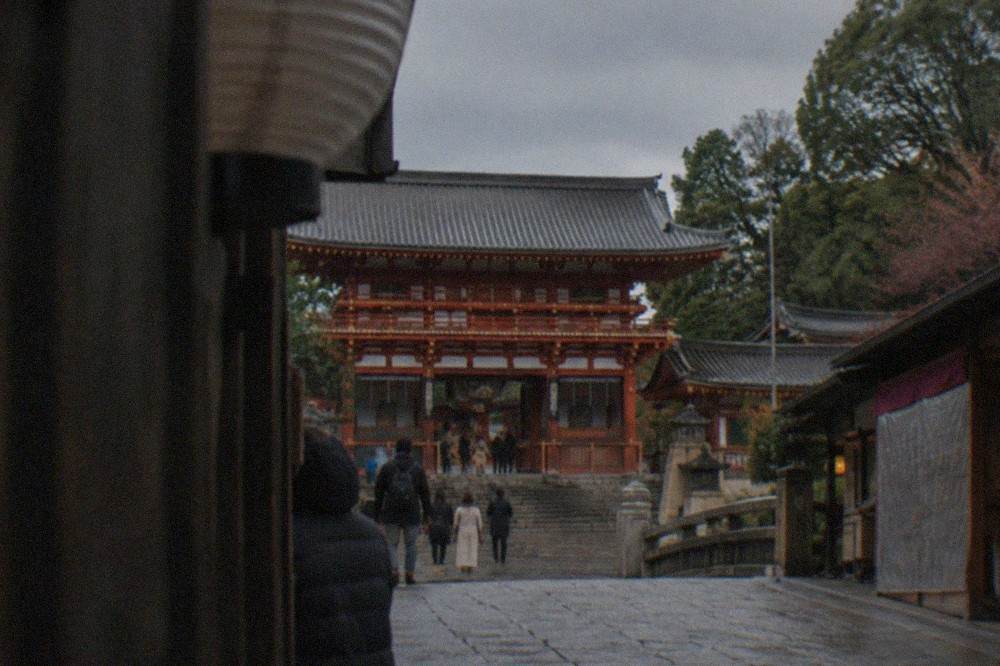
One more planning point: free and always reachable does not mean always quiet. The city's 2025 tourism survey, released in June 2026, recorded 62.79 million visitors to Kyoto in a single year, a record, and a large share of them walk down Shijo-dori and through the shrine grounds because it sits directly on that axis. The quiet hours at Yasaka Shrine are early morning, before the shops open, and the hour after the lanterns come on but before the evening crowds arrive from dinner.
What Is There To See At Yasaka Shrine In Kyoto?
The shrine precinct packs a main hall, a dance stage hung with lanterns, several subsidiary shrines and the Maruyama Park trees into a compact walk of twenty to thirty minutes, and the surrounding Gion lanes extend it into a half day. The dance stage in front of the main hall is the visual centrepiece, and the weeping cherry tree in Maruyama Park behind the shrine is one of the most photographed trees in the city in late March and early April.
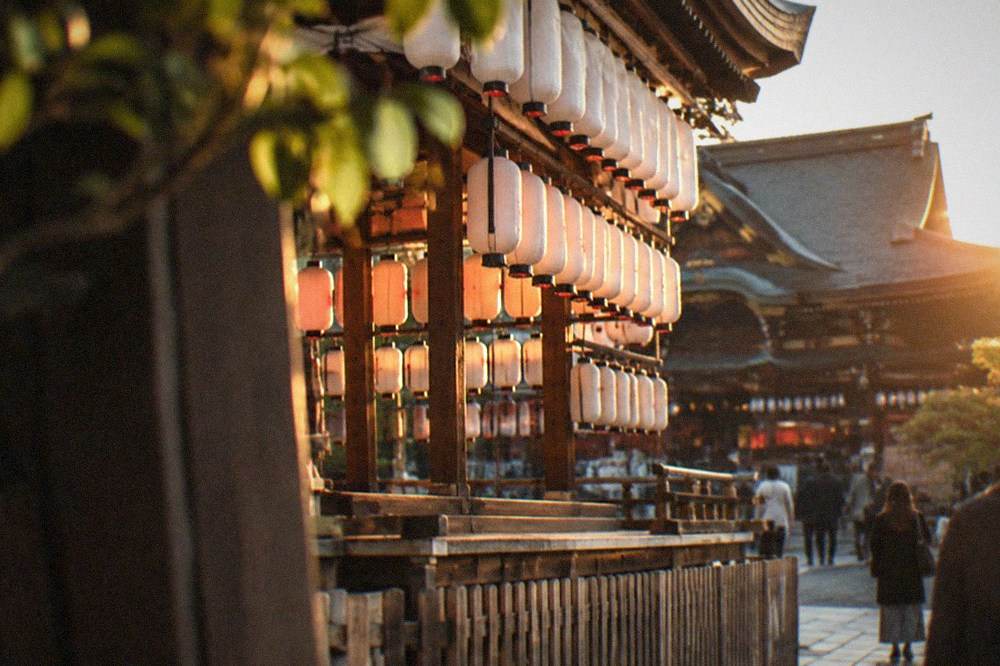
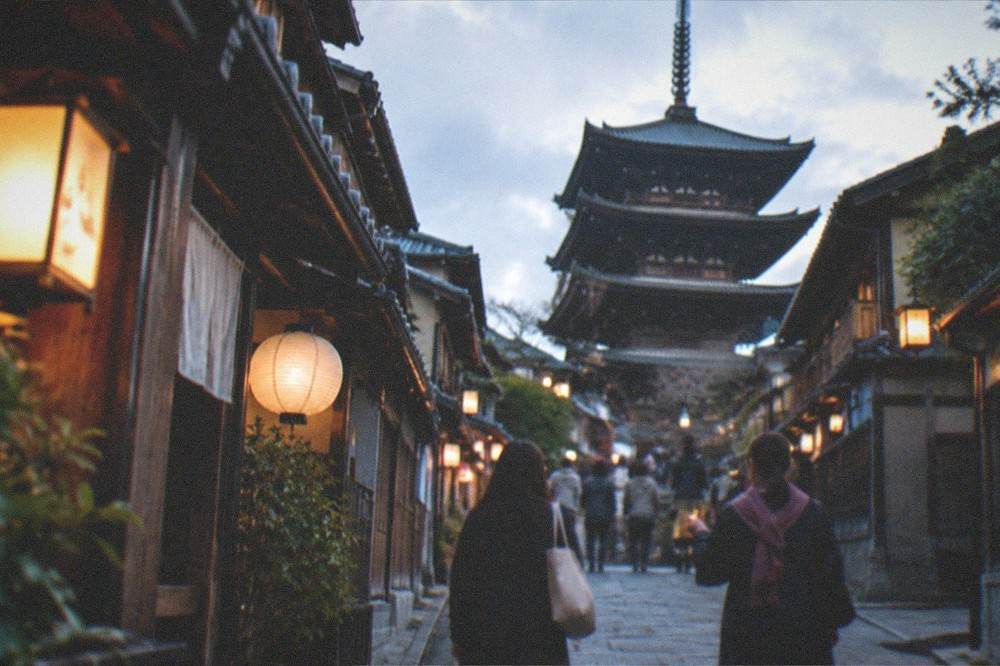
The approach matters here. Most visitors arrive from the west, walking the length of Shijo-dori from the Karasuma shopping district, and the first thing that appears is the two-storey gate with its hung lanterns. The main hall beyond it faces the street directly, which is the structural reason there is no ticket line: you walk in the way you would walk into a public square. The dance stage, built out over the water in front of the hall, carries rows of lanterns that are lit in the evenings and give the precinct its best-known photograph.
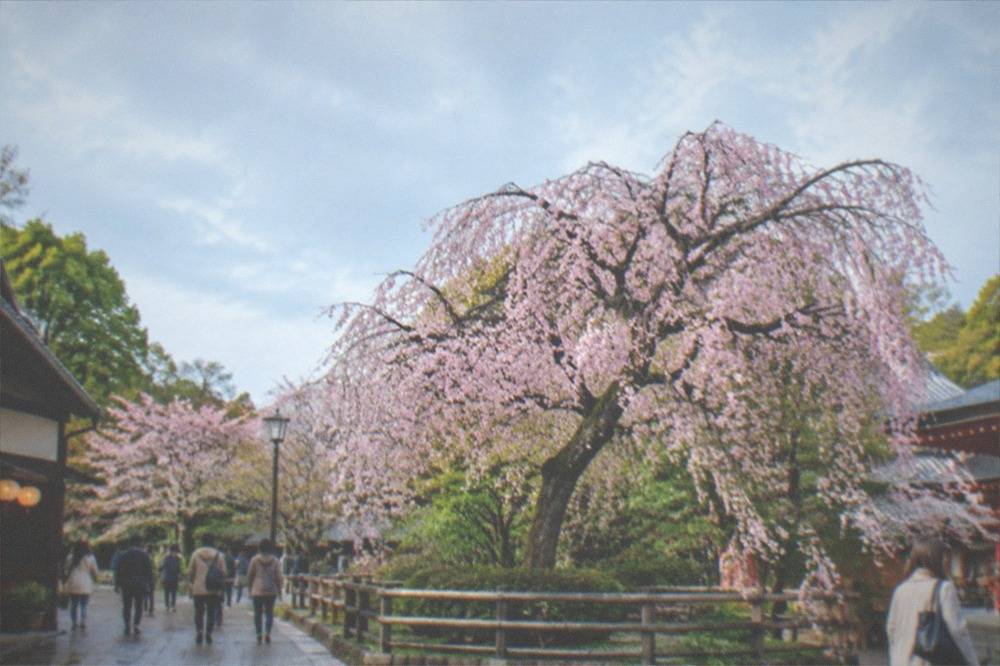
Behind and beside the shrine, the ground rises into Maruyama Park, Kyoto's best-known public park and its classic hanami spot. The park's famous weeping cherry is the marker for the cherry season: the JMA observatory recorded full bloom in Kyoto on 30 March in 2026 against a 1991-2020 normal of 4 April, so the last week of March into the first days of April is the window, and the park fills with picnickers through it. If you are timing a whole trip around this, the site's cherry blossom itinerary covers the full circuit.
From the shrine it is a short walk east into the Higashiyama lanes, north to the Shinbashi geisha street, or south along Hanamikoji, Gion's main preserved street. This is the real reason the shrine works as a sight: it is the hinge between downtown Kyoto and the old eastern hills, and you can walk from a department store to a stone-paved Edo-period lane in fifteen minutes without transport.
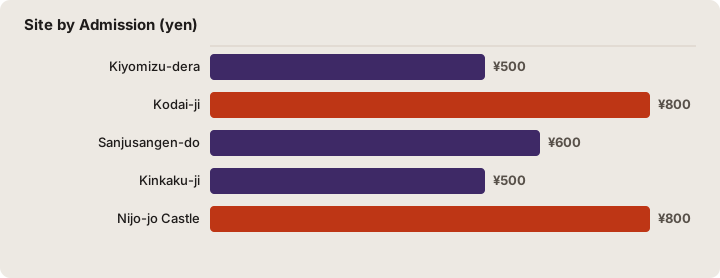
The nearby sights that do charge are worth knowing so you can budget the walk. The table below covers the Higashiyama cluster within reach of the shrine on foot or one bus ride.
| Site | Walking time from Yasaka Shrine | Admission | Notes |
|---|---|---|---|
| Kiyomizu-dera | 20 min uphill | 500 yen | Figure is single source; the temple does not print it on its own site |
| Kodai-ji | 15 min | 800 yen | 1,200 yen combined with Entoku-in |
| Sanjusangen-do | 15 min south | 600 yen | 1,001 Kannon statues, stated by the temple itself |
| Kinkaku-ji | bus or taxi | 500 yen | 9:00-17:00, far side of the city |
| Nijo-jo Castle | subway plus walk | 800 yen | 1,300 yen with Ninomaru-goten Palace |
If you would rather have a local guide structure the walk, there are good options. The free, tip-based walking tour of Kyoto runs three hours through the downtown-Gion axis and is listed on GuruWalk, led by a local guru who works for tips rather than a fixed fee. For a paid evening alternative, the Gion Magical Night Walking Tour covers the shrine and the geisha lanes after dark.
When Is Gion Matsuri At Yasaka Shrine?
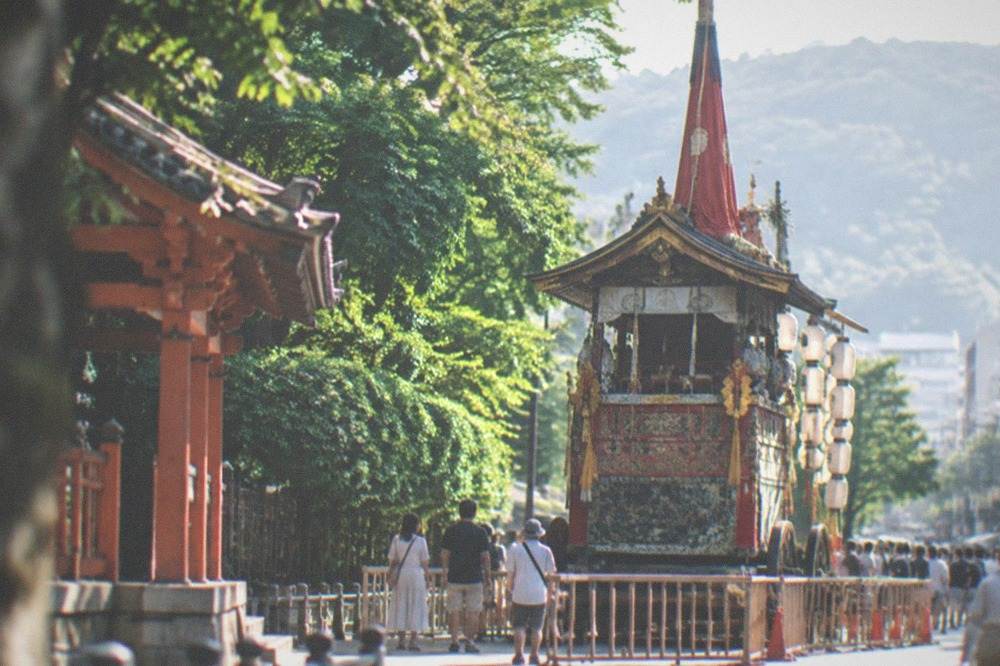
Gion Matsuri runs the whole month of July every year, from the opening rite on 1 July to the closing rite on 31 July, and the shrine sits at its centre: the festival's mikoshi leave Yasaka Shrine on the evening of 17 July and return late on 24 July. The two grand float processions, the Yamaboko Junko, parade on 17 July and 24 July, each starting in the morning.
The shrine's own festival calendar is the source for all of this, and it is worth taking the calendar seriously because the festival is not one day but a month. The floats are hauled through central Kyoto on the 17th and the 24th, and between those dates the neighbourhoods around Shijo-dori hold their float-viewing evenings. The shrine itself is the festival's spiritual anchor: the mikoshi, the portable shrines carrying the deities, process out of Yasaka Shrine on the evening of the 17th and return at the end of the 24th, and those two evenings are among the most crowded the precinct sees all year.
Planning around the festival means planning around July weather. The JMA 1991-2020 normals for Kyoto show July as the city's wetest month, 223.6 mm of rain against June's 199.7 mm, a fact that surprises visitors who assume the rainy season peaks in June. July is also hot, with a mean daily maximum of 32.0 C, and August hotter still at 33.7 C. Three of Kyoto's six hottest days on record fell in the summers of 2024, 2025 and 2026, so festival-going is a heat-management exercise: morning processions, shade in the middle hours, and the shrine's tree-lined edges in the evening.
If July does not fit your dates, the shrine hosts rites through the year and the grounds change character with the seasons rather than closing for any of them. The Aoi Matsuri procession on 15 May passes along the Kamo River edge west of the shrine, and the Jidai Matsuri on 22 October brings a costumed parade out of the old imperial palace toward the eastern hills.
How Do You Get To Yasaka Shrine In Kyoto?
The shrine is a five to ten minute walk from Gion-Shijo Station on the Keihan line or Kawaramachi on the Hankyu line, directly at the end of Shijo-dori, and no transport at all if you are staying downtown. From Kyoto Station, the JR Nara Line to Tofukuji then one stop on the Keihan line, or a direct city bus along Shijo-dori, both work. The nearest subway stations are a fifteen minute walk away, so the trains to use are the private railways.
The geography explains the transport. Kyoto's two subway lines run north-south and east-west through the middle of the grid, but Shijo-dori's shrine end sits between the Karasuma and Tozai lines, so the Keihan and Hankyu suburban railways, which stop right on the river, are the practical choice. Buses run the length of Shijo-dori constantly, at a flat 230 yen per adult ride, and the city's tourist express buses EX100 and EX101 connect Kyoto Station to the Gion and Kiyomizu side at 500 yen a ride, with the EX101 running every 7 to 8 minutes in the morning on its operating days.
| Option | Fare | Notes |
|---|---|---|
| City bus, flat fare | 230 yen adult, 120 yen child | Cash or IC card |
| Tourist express EX100 / EX101 | 500 yen adult, 250 yen child | Kyoto Station to Gion and Kiyomizu, fewer stops |
| Subway, zones 1 to 5 | 220 to 360 yen adult | Nearest stations are a 15 min walk from the shrine |
| Subway and Bus One-Day Pass | 1,100 yen adult, 550 yen child | The current combined pass; the bus-only pass no longer exists |
| ICOCA card | 2,000 yen including a 500 yen deposit | Works on buses, railways and the subway |
One warning that the city transport bureau makes itself: large luggage may be refused on crowded buses, and the bureau actively pushes hands-free tourism, with station counters and delivery services across the city. If you are arriving or leaving with a suitcase, send it ahead from a station counter rather than dragging a bag onto the Shijo-dori bus, and keep the day's walking to a shoulder bag.
If you are coming from the sights on the other side of the city, a day tour that ends in Gion in the late afternoon is an efficient way to land at the shrine at lantern-lighting time. The Fushimi Inari, Kinkakuji and bamboo grove bus tour runs 8.5 to 9 hours and finishes back in central Kyoto, which pairs naturally with an evening walk through the shrine grounds.
What Are The Rules For Photography And Geisha Around Gion?
The rules that matter are on the city tourism association's own guideline page: do not touch, chase or photograph geiko and maiko without permission, and do not enter or photograph private property where it is prohibited. On the private alleys off Hanamikoji, signs posted by the Gion South Side district council threaten a 10,000 yen penalty for unauthorised photography or entry. Photography on the public Hanamikoji road itself remains allowed.
That distinction, public street versus private alley, is the whole game in Gion, and missing it is how visitors end up in disputes. The geiko and maiko of the district are working professionals moving between engagements in the evenings, and the association's four guidelines exist because years of chasing and blocking behaviour made the lanes hostile to residents. The 10,000 yen penalty is signage posted by the district council on its private roads, not a city police fine, and this page phrases it that way deliberately because that is what the sources support.
| Rule | Where it applies | Source |
|---|---|---|
| No touching, chasing or photographing geiko and maiko without permission | All of Gion | City tourism association guidelines |
| No entering or photographing private property | Private alleys and residences | Same guidelines |
| 10,000 yen penalty for unauthorised photography or entry | Private alleys off Hanamikoji | District council signage |
| Photography permitted | Public Hanamikoji road, shrine grounds | General access |
The shrine grounds themselves are the safe zone for evening photography: the lantern-hung dance stage is a public view, and the gate from Shijo-dori is one of the city's reliable night shots. The site's guide to geisha in Kyoto explains the districts and the etiquette in depth, and the Kyoto at night itinerary builds an evening around the shrine and the river.
A guided walk earns its keep here, because a local guide knows which lanes are private and where the evening walks actually happen. The Gion Magical Night Walking Tour, 1 hour 40 minutes, is built exactly around this: shrine, lanterns and the geisha districts with someone who can keep you on the right side of the signage. The Gion Geisha District and Hidden Gems Walking Tour covers the same ground over two daytime hours.
What Else Is Free Near Yasaka Shrine In Kyoto?
Within walking distance of Yasaka Shrine, the free list includes the Gion lanes themselves, the Pontocho alley along the Kamo River, the Philosopher's Path to the north and the whole Higashiyama street grid of Ninenzaka and Sannenzaka. The shrines of the city charge nothing: this site verified no admission at Fushimi Inari Taisha, at the Kyoto Imperial Palace and at Shugakuin Imperial Villa. The temples are where the fees are, and two of them changed their prices in 2026.
That free-versus-paid split is the most useful budgeting fact in Kyoto, and it is worth a table because the numbers move. Ginkaku-ji doubled its admission to 1,000 yen from 1 April 2026, its first change in 32 years, and Tofuku-ji revises its fees on 1 November 2026 with a new 1,000 yen combined ticket. Any guide quoting 500 yen for Ginkaku-ji is a year out of date.
| Site | Admission | 2026 change |
|---|---|---|
| Yasaka Shrine | Free | None |
| Fushimi Inari Taisha | Free | None |
| Kyoto Imperial Palace | Free, no application | None |
| Shugakuin Imperial Villa | Free, guided, 18 and over only | None |
| Kinkaku-ji | 500 yen | None announced |
| Ginkaku-ji | 1,000 yen | Doubled from 500 on 1 April 2026 |
| Kodai-ji | 800 yen | None announced |
| Tofuku-ji, Hojo garden | 600 yen from 1 Nov 2026 | Was 500 |
The walk east from the shrine through Higashiyama is the best free stretch of all: Sannenzaka and Ninenzaka's sloping lanes up to Kiyomizu-dera cost nothing until you reach the temple's own gate, and the views over the city from the upper lanes are free throughout. The site's guide to free things to do in Kyoto extends the list citywide, and the Nishiki Market walk, a straight shot west down Shijo-dori, is free to enter though its food is not.
When Is The Best Time Of Year To Visit Yasaka Shrine?
Late March to early April for the Maruyama Park cherry tree, mid-July for Gion Matsuri if you want the festival at full scale, and the quiet months of late autumn and winter if you do not. The JMA normals put cherry full bloom at 4 April and maple red leaves at 5 December, and 2026 ran ahead of both, with full bloom on 30 March. December and January are the driest and least crowded months, with 57.3 mm and 53.3 mm of rain respectively.
The seasonal trade-offs are real. Cherry season brings the crowds and the highest hotel rates; the accommodation tax tiers changed on 1 March 2026, with the top tier rising from 1,000 to 10,000 yen per person per night on rooms of 100,000 yen and up, so peak-season splurges now carry a real surcharge. Summer brings the festival and the heat together: July's mean daily maximum is 32.0 C and the festival crowds add body heat to air temperature. Autumn is the foliage season, with the JMA's official maple marker on 5 December, later than the mid-November peak most guides claim, because the observatory's date is its own specimen tree rather than the Arashiyama bamboo grove district's display.
| Season | Mean temp | Rain | What it means at the shrine |
|---|---|---|---|
| Late Mar to early Apr | 14.4 C (April mean) | 117.0 mm (April) | Weeping cherry in bloom, biggest crowds of the year |
| July | 27.3 C | 223.6 mm | Gion Matsuri, wettest and hottest crowded month |
| August | 28.5 C | 153.8 mm | Evening visits, Gozan no Okuribi on 16 August |
| November | 12.5 C | 73.9 mm | Foliage in Higashiyama, dry and clear |
| December to January | 4.8 to 7.2 C | 53.3 to 57.3 mm | Quietest, lanterns at their most atmospheric |
For a first visit, the strongest combination is an evening: the shrine after dark, lanterns lit, then the walk north to Shinbashi or down to the river. The Heian Shrine and the museum district around Okazaki make a good pairing on a separate day, reached through the eastern half of the same grid.
Should You Take A Guided Walking Tour Of Gion And Yasaka Shrine?
A guided walk is worth it for the Gion lanes specifically, because the private-alley rules and the geisha districts are hard to read on your own, and the free option costs nothing but a tip. The free GuruWalk-listed walking tour of Kyoto runs three hours through the downtown and Gion axis, led by a local guru working on tips. Paid geisha district walks run from about 20 to 30 dollars for two hours, and evening timing is the strongest reason to book one.
The honest case against a guide is that the shrine itself needs none: it is free, ungated and self-explanatory, and this page plus a map covers it. The case for one is everything around it. Gion's etiquette rules, the private alleys, the distinction between a teahouse and a restaurant, and the small chance of seeing a geiko moving between engagements in the early evening are all things a local guide materially improves, and the evening walks are timed to that window.
For visitors with one day only, the trade-off changes: a full-day bus tour that covers Fushimi Inari, Kinkaku-ji and the bamboo grove, then an evening walk through the shrine on your own, packs more of the city into a single day than any amount of self-navigation. The sequencing question, shrine at dawn versus shrine at lantern-lighting, is answered by the crowds: the lanterns win every time.
Whichever way you structure it, the free GuruWalk-listed walk remains the lowest-commitment introduction to the district, and its guru sets the pace and the route on the day. Book it for your first morning if you want the geography explained before you explore on your own, or for an evening if you want the lanterns included.
Common Questions About Yasaka Shrine
Is Yasaka Shrine Open 24 Hours And Free To Enter?
The shrine charges no admission and publishes no closing time for its grounds on any page this site verified, so the precinct functions as an open space. Treat the grounds as open at any hour, and treat any notice at the gate on the day as the final word.
How much time do you need at Yasaka Shrine?
The shrine precinct itself takes 20 to 30 minutes at a walk, plus whatever you spend in Maruyama Park and the Gion lanes around it. Most visitors combine it with Higashiyama and spend a half day on the whole eastern walk.
When is the best time of day to visit Yasaka Shrine?
Early morning before the shops open, or the first hour after the lanterns are lit in the evening. Midday brings the Shijo-dori shopping crowds straight through the grounds.
Can you see geisha at Yasaka Shrine?
The shrine grounds are not a geisha viewing spot, but the Gion districts around it are where geiko and maiko work. The city's guidelines prohibit touching, chasing or photographing them without permission, and private alleys off Hanamikoji carry signage threatening a 10,000 yen penalty.
Is Yasaka Shrine the same as Gion Shrine?
The shrine sits in the Gion district and gives the July festival its context, and many sources use the two names interchangeably. The shrine's own English pages use Yasaka Shrine, and this site follows that.
What is near Yasaka Shrine?
Maruyama Park directly behind it, the Higashiyama lanes of Ninenzaka and Sannenzaka to the east, Kiyomizu-dera beyond them, the Kamo River and Pontocho to the west, and the geisha districts north and south of Shijo-dori.
Yasaka Shrine rewards the visitor who treats it as a place rather than a checkpoint: free to enter, open at whatever hour you arrive, and positioned exactly where Kyoto's downtown, its old entertainment district and its temple hills meet. Walk it at lantern-lighting time, keep to the public streets in Gion, and the shrine will be the simplest and cheapest thing you do in the city.