Kyoto Cherry Blossom Itinerary
A three-day sakura plan for Kyoto built on JMA observatory dates, verified temple fees and real transit fares, with a dawn circuit of the Philosopher's Path, Maruyama Park and Heian Shrine.
Short answer
Plan Kyoto cherry blossom days around the JMA full-bloom normal of 4 April, start each day at dawn on the free open paths, and budget for the temples that charge: Kiyomizu-dera's neighborhood walks cost nothing while Ginkaku-ji now takes 1,000 yen. Three days covers Higashiyama, Arashiyama and the northern mountains.
Kyoto's cherry blossom season is short, crowded and expensive to get wrong. The city's own 2025 tourism survey counted a record 62.79 million visitors in a single year, and a large share of them arrive inside the same two-week window when the JMA Kyoto observatory records full bloom. A plan that treats the bloom week like any other week, arriving at Kiyomizu-dera at eleven in the morning, will be a plan spent standing in lines.
This itinerary is built the other way round, and it is the backbone of the Kyoto Travel Guide approach to the city. The paid, gated temples are visited when they open. The free, open paths, the Philosopher's Path, Maruyama Park, the canals and riverbanks, carry the dawn hours when tour buses have not yet arrived. Everything below stands on figures this site verified on the venues' own pages: the JMA 1991-2020 normals for bloom dates, the 2026 fee schedule at each temple, and the city's published transit fares. Where a number could not be verified, there is no number.
When Do Cherry Blossoms Actually Open In Kyoto?
The JMA 1991-2020 normals put cherry flowering at 26 March and full bloom at 4 April in Kyoto, and those are averages, not promises. In 2026 flowering came on 23 March with full bloom on 30 March; in 2025 it was 27 March and 5 April. The recorded range runs from 16 March 2021 at the earliest to 9 April 1984 at the latest for flowering, so any plan pinned to one fixed week is a gamble.
The dates come from the Japan Meteorological Agency's Kyoto observatory, which tracks a specimen tree the way it tracks rainfall. That is the official marker, and it is the only bloom dataset worth planning on. Commercial foliage forecasts exist for autumn, but for cherry the observatory record is the reference the whole country uses.
What the normals mean in practice: the last week of March and the first week of April are the statistical center, and booking accommodation inside that window is the highest-cost, lowest-availability week of Kyoto's year. The week either side gives you falling petals, which the Japanese call hanachirusato and which many photographers prefer to full bloom anyway. Petals on the Kamo River in the morning are not a consolation prize.
| JMA Kyoto marker | Normal (1991-2020) | 2026 | 2025 | Earliest on record | Latest on record |
|---|---|---|---|---|---|
| Cherry flowering | 26 March | 23 March | 27 March | 16 March 2021 | 9 April 1984 |
| Cherry full bloom | 4 April | 30 March | 5 April | 24 March 2023 | 17 April 1965 |
| Plum flowering | 22 February | 22 February | 11 March | 27 January 1979 | 15 March 1963 |
The plum row is there for a reason. Plum flowering sits a full month before cherry, and late February visitors who miss sakura entirely can still find blossom in Kyoto, just on different trees and with far thinner crowds. The cherry blossom season guide covers the bloom in depth.
Which Kyoto Cherry Blossom Spots Go At Dawn: Philosopher's Path, Maruyama Park, Heian Shrine?
All three work at dawn, and all three are free to walk: the Philosopher's Path is a public canal-side walk, Maruyama Park is an open public park, and Heian Shrine's approach and giant torii are public ground. The differences are light and layout: the Path runs along water, the Park is a bowl of food stalls and one famous weeping cherry, and Heian Shrine's paid garden, 600 yen at the gate, opens at 8:30 in season, so the free dawn hour there belongs to the torii and the grounds outside.
Dawn is not a poetic flourish here, it is arithmetic. The city's crowd problem is concentrated in the middle of the day, and the Kyoto Tourism Comfort Forecast, run by the city tourism association from smartphone location data, consistently rates the famous spots most comfortable in the early morning slots. None of the three dawn spots charges anything to walk before the ticket counters open.
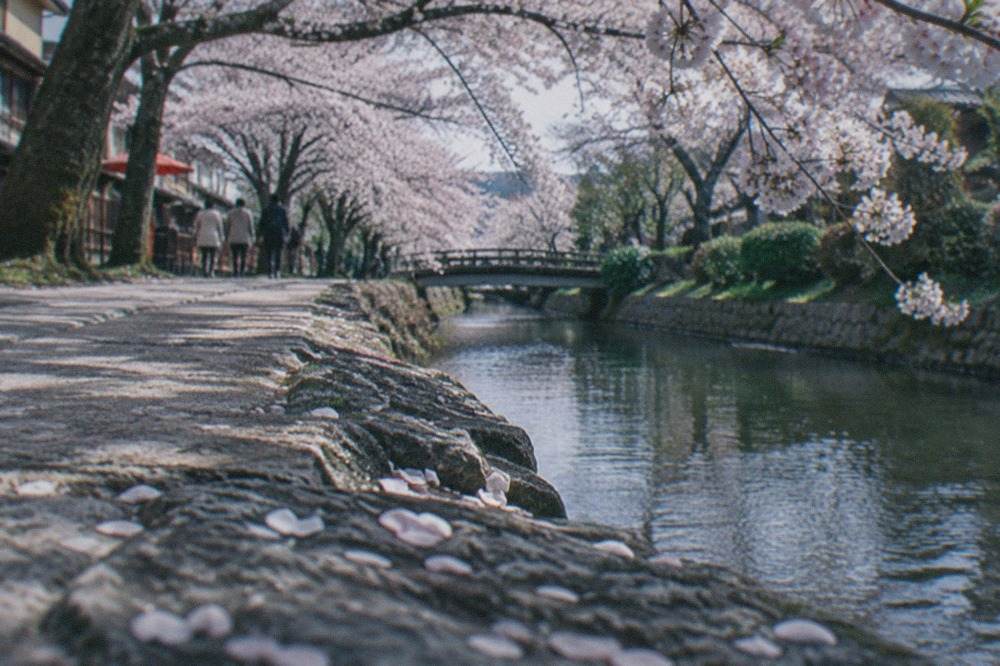
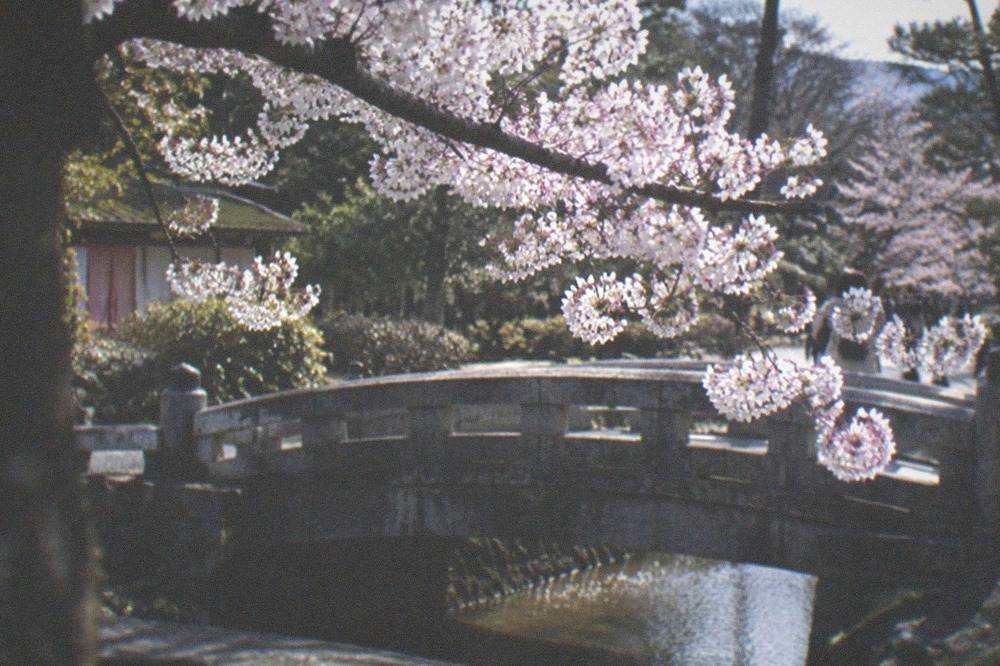
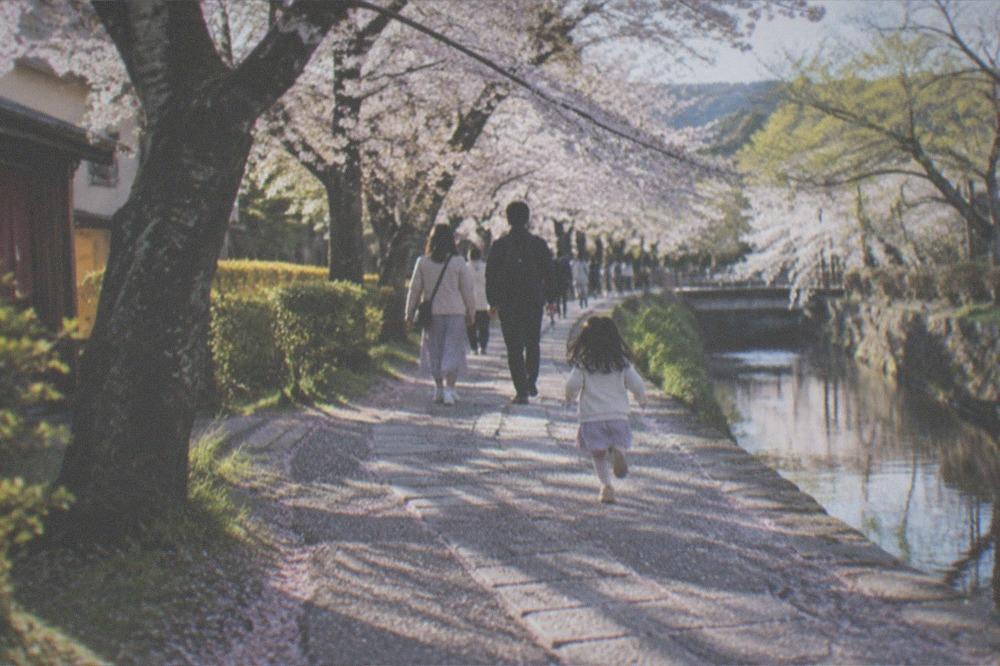
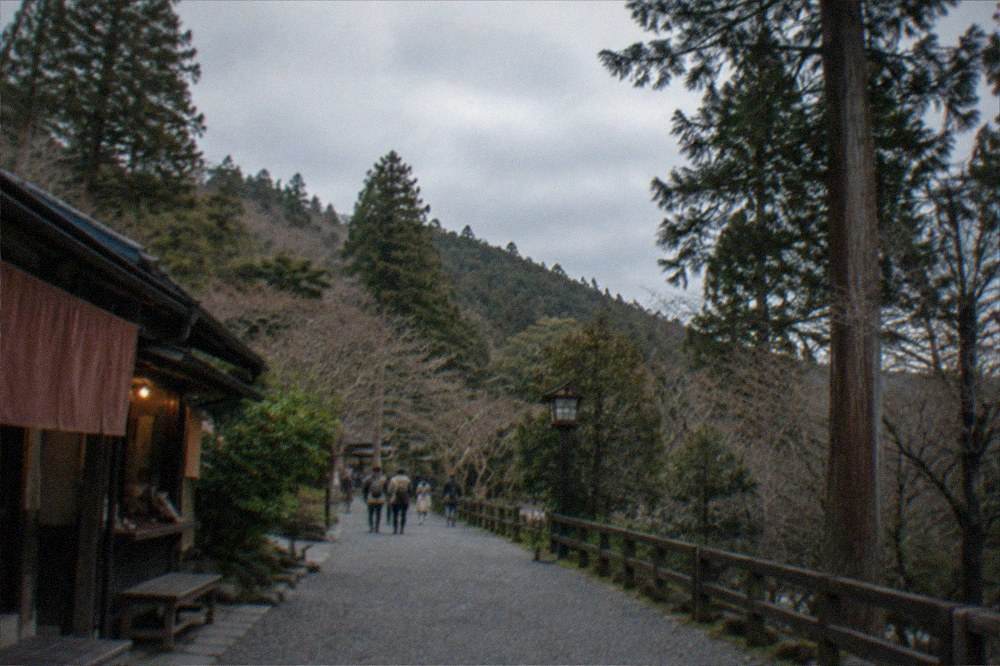
The Philosopher's Path is the strongest single dawn walk in sakura season. A stone path follows a narrow canal under a near-continuous canopy of somei-yoshino trees, running roughly between Ginkaku-ji at the south end and Nanzen-ji's neighborhood at the other. Because it is a public path with no gate, no hours and no fee, the only constraint is daylight. Walk it from the Ginkaku-ji end and the low morning sun comes over the Higashiyama ridge behind you, lighting the canal surface while the trees are still in shadow.
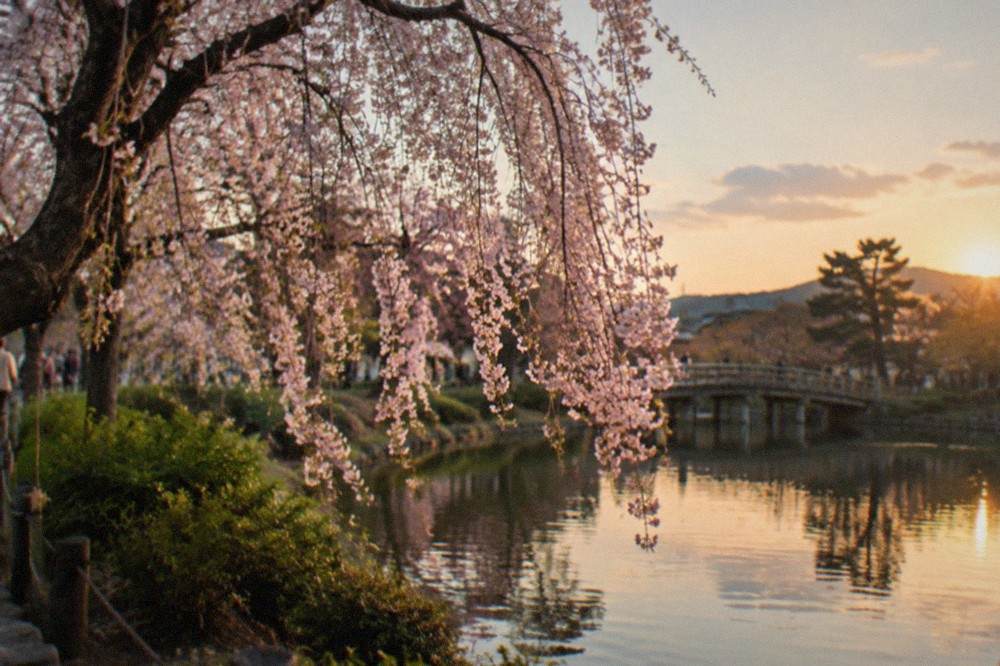
Maruyama Park is a different animal. It is Kyoto's best-known hanami park, and in season it fills with blue tarpaulins and food stalls from morning to night. The park's centerpiece is a huge weeping cherry, the shidarezakura, lit in the evening. At dawn the stalls are shuttered and the tarps mostly empty, which is the only time the park reads as a garden rather than a festival site. It sits directly behind Yasaka Shrine, which is also free to enter, so a dawn circuit can take in both in under an hour before moving on.
Heian Shrine is the third leg, and the one with a gate. The approach, with its enormous vermillion torii, is public and free at any hour. The shrine's stroll garden inside charges admission, 600 yen, and opens at 8:30 in season. The garden's weeping cherries are among the best in the city, so the play is: dawn at the free Path, mid-morning at Maruyama, then Heian Shrine's garden when the gate opens. The shrine's own pages carry no restoration notices for 2026-2027, so no closure is announced.
A guided walk does the interpretation work the free paths do not. The Gion and Higashiyama free walking tours on GuruWalk, including the Gion and Higashiyama walk rated 4.86 from 557 reviews, cover the district's history at a tip-based price, with the guru named on the GuruWalk listing. For the dawn circuit itself, a paid option with a fixed schedule is the stronger fit.
How Do You Structure Three Sakura Days In Kyoto?
Split the city by geography, not by temple ranking: Day One walks Higashiyama from Kiyomizu-dera at its 6:00 opening down through the lanes to the dawn circuit, Day Two takes the JR line west to Arashiyama's bamboo grove, monkey park and Tenryu-ji garden, and Day Three escapes the bloom crowds entirely on the Kurama to Kibune mountain trail in the north. Each day pairs one paid gated temple with free open paths and parks.
The logic is that sakura Kyoto has two crowd regimes. The famous free spots are crushed at midday and empty at dawn. The famous paid temples are crushed at midday and merely busy at opening. So every day below front-loads a dawn or opening-hour visit, then spends the crowded middle hours on transit, food or a district walk where density is the point.
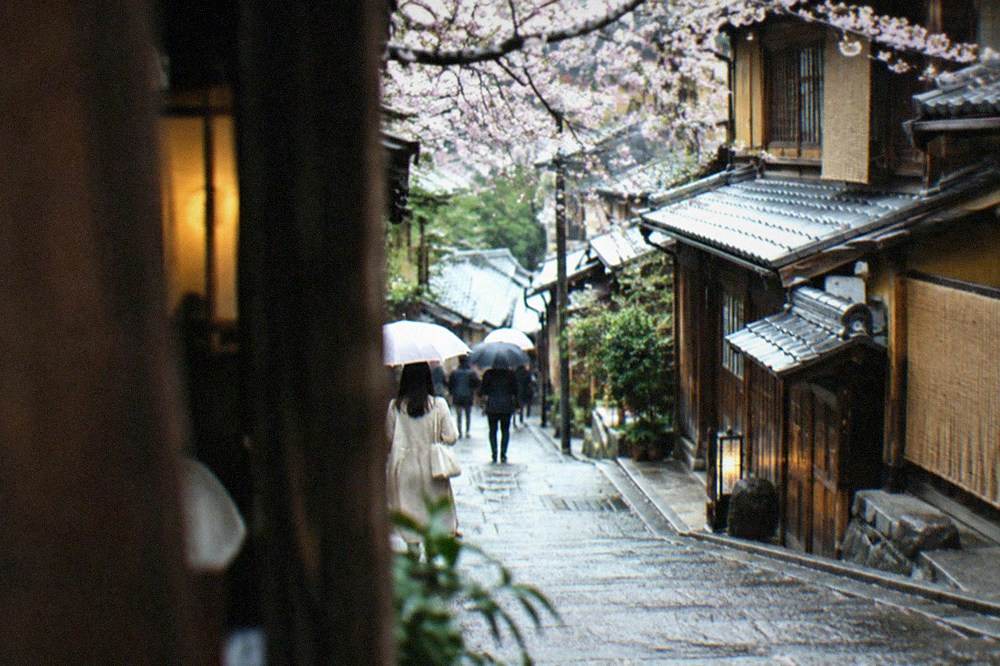
Day One, Higashiyama and the dawn circuit, in sequence:
- Kiyomizu-dera at its 6:00 opening. The temple opens at 6:00 daily, verified on its own FAQ page, and its closing time moves with the season; in the 27 March to 5 April window it stays open to 21:30 for spring night viewing, with last entry at 21:00. Admission is 500 yen, a figure the temple does not print on its own site, so treat it as widely reported rather than official.
- Walk down through Ninenzaka and Sannenzaka, the preserved sloped lanes, while the shops are still shuttered.
- Kodai-ji opens at 9:00, admission 800 yen, or 1,200 combined with Entoku-in. Its autumn illumination runs late in the year; in spring it is a quiet garden with cherry.
- Maruyama Park and Yasaka Shrine, free, then Gion's Hanamikoji, also free to walk. Respect the district's rules: the city tourism association's guidelines prohibit touching, chasing or photographing geiko and maiko without permission, and signs on the private alleys off Hanamikoji threaten a 10,000 yen penalty for unauthorized entry or photography. Those are council signs on private roads, not a city police fine, but they are enforced by the community either way.
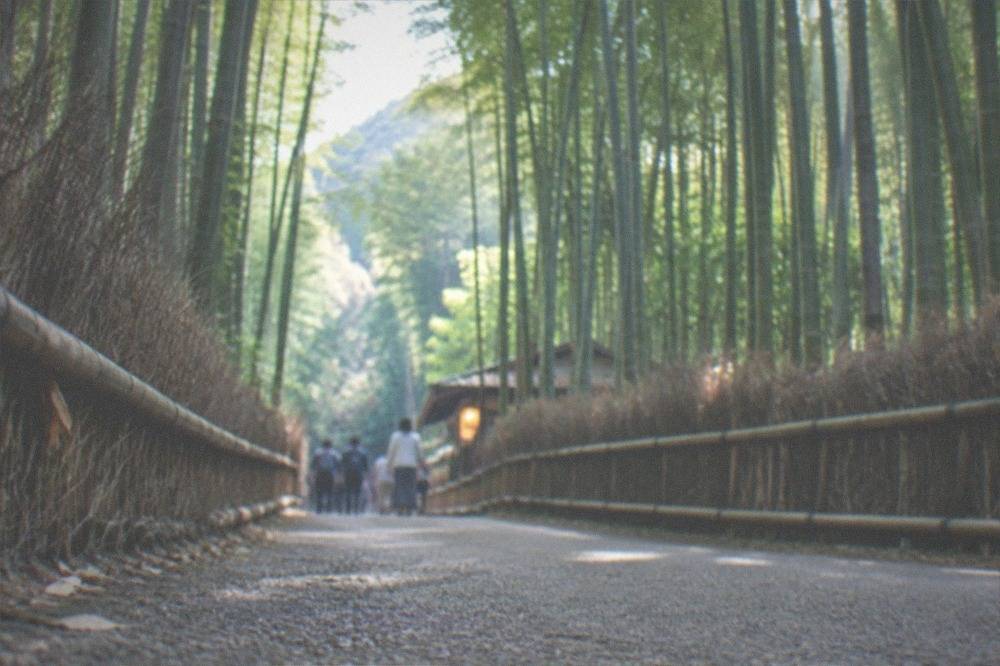
Day Two, Arashiyama, runs on the JR Sagano line from Kyoto Station, and the Arashiyama guide covers the district. The bamboo grove path is free and public. Iwatayama Monkey Park charges 800 yen for 16 and over, 400 yen for ages 4 to 15, cash only, 9:00 to 16:00. Tenryu-ji's garden is 500 yen with buildings at plus 300. The Sagano Romantic Train is 880 yen one way for an adult, 440 yen for a child, per the operator's own ticket page.
Day Three leaves the bloom belt for the northern mountains, on the Eizan line to Kurama. This is the day for anyone whose Kyoto trip overlaps the bloom but whose patience does not. The Kurama and Kibune guide covers the trail, and the Kifune Shrine guide the shrine at the far end.
| Day | Dawn (free) | Morning (paid) | Afternoon | Evening |
|---|---|---|---|---|
| One | Kiyomizu-dera from 6:00 | Kodai-ji 800 yen | Maruyama Park, Yasaka Shrine, Gion walk | Gion or Pontocho, both free to walk |
| Two | Bamboo grove path | Monkey Park 800 yen, Tenryu-ji garden 500 yen | Sagano Romantic Train 880 yen one way | Kamo River banks, free |
| Three | Travel north on the Eizan line | Kurama to Kibune trail | Kifune Shrine, return south | Nidec Kyoto Tower deck, 900 yen, open to 21:00 |
For travelers with less time, the one day in Kyoto itinerary compresses the highlights into a single loop built around the same dawn logic.
What Does Each Day Cost In Temple Fees And Food?
The admission arithmetic is simple and verified on each venue's own page: Day One carries the 500 yen Kiyomizu-dera fee plus Kodai-ji's 800, Day Two adds the monkey park's 800, Tenryu-ji's 500 garden fee and the Sagano train's 880 one way, and Day Three is mostly transit plus a shrine donation. A kaiseki splurge at one famous Nanzen-ji house starts above 30,000 yen at dinner on the restaurant's own posted menu.
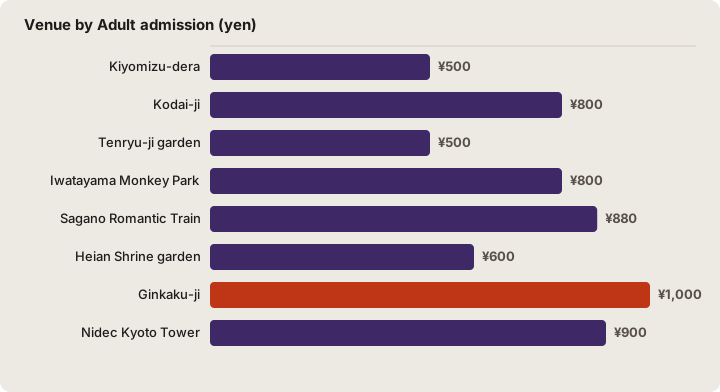
Note the 2026 changes before copying any fee from an older guide: Ginkaku-ji doubled to 1,000 yen for adults from 1 April 2026, and Tofuku-ji revises its fees on 1 November 2026, so figures copied from 2024 or 2025 guides are wrong at both.
| Venue | Adult admission | Notes |
|---|---|---|
| Kiyomizu-dera | 500 yen | Single source: the temple does not print the fee |
| Kodai-ji | 800 yen | 1,200 yen combined with Entoku-in |
| Tenryu-ji garden | 500 yen | Buildings plus 300 yen, Hatto ceiling 500 separately |
| Iwatayama Monkey Park | 800 yen | Cash only, ages 4-15 pay 400 |
| Sagano Romantic Train | 880 yen one way | Child 440 yen |
| Heian Shrine garden | 600 yen | Approach and torii free |
| Ginkaku-ji | 1,000 yen | Doubled from 500 on 1 April 2026 |
| Nidec Kyoto Tower | 900 yen | Deck 10:00-21:00, last entry 20:30 |
Food is where the budget swings. The Nishiki Market guide covers the cheap end; note the market's own rule that eating while walking is discouraged and each shop keeps its own hours, roughly 9 or 10:00 to 17 or 18:00, with no unified schedule. At the top end, Hyotei by Nanzen-ji prints kaiseki from 31,625 yen at lunch and 37,950 at dinner on its own site, while the same house's annex serves porridge and bento from about 5,400 to 7,300 yen. Those are Hyotei's prices, not a Kyoto norm, but they frame the question honestly: a splurge night is a five-figure-yen decision. The kaiseki guide goes deeper.
For a rainy or rest afternoon, the Samurai Ninja Museum's basic ticket at 23 dollars from the operator's live listing is a covered option, rated 4.6 from 729 reviews.
Accommodation is the other swing factor, and the choice of district matters as much as the rate. One cost is easy to miss: Kyoto's accommodation tax changed on 1 March 2026, and the top tier went from 1,000 to 10,000 yen per person per night on rooms of 100,000 yen and up.
| Room rate per night | Tax per person per night | Before 1 March 2026 |
|---|---|---|
| Under 6,000 yen | 200 yen | 200 yen |
| 6,000 to under 20,000 yen | 400 yen | 400 yen |
| 20,000 to under 50,000 yen | 1,000 yen | 500 yen |
| 50,000 to under 100,000 yen | 4,000 yen | 1,000 yen |
| 100,000 yen and up | 10,000 yen | 1,000 yen |
How Do You Get Between The Sakura Spots?
The city bus flat fare is 230 yen for an adult and the subway runs 220 to 360 yen by zone, but the product to buy is the Subway and Bus One-Day Pass at 1,100 yen, because the old bus-only pass was abolished: sales ended in September 2023 and the last day of use was 31 March 2024. The tourist express buses EX100 and EX101 charge 500 yen a ride and link Kyoto Station to the Kiyomizu side, Gion, Okazaki and Ginkaku-ji with fewer stops.
That last route matters for this itinerary: EX100 runs exactly the corridor Day One walks, Kyoto Station to Gojo-zaka for Kiyomizu, then Gion, then the Okazaki museum district near Heian Shrine, then Ginkaku-ji. It runs primarily on weekends and holidays with some peak-period service, and it accepts IC cards and the one-day pass. The city transport bureau's own pages carry the fares and routes.
| Option | Adult fare | Notes |
|---|---|---|
| City bus, flat | 230 yen | Child (6-11) 120 yen |
| Subway, zones 1-5 | 220-360 yen | Child 110-180 yen |
| Subway and Bus One-Day Pass | 1,100 yen | Child 550 yen |
| EX100 / EX101 tourist express | 500 yen | Child 250 yen |
| ICOCA card | 2,000 yen with 500 yen deposit | Rechargeable IC card |
For anyone who would rather not think about passes at all, the rechargeable ICOCA card, sold at 2,000 yen including a 500 yen deposit, is the simplest answer. For Arashiyama, the JR Sagano line from Kyoto Station is the direct route; for Day Three, the Eizan railway from Demachiyanagi runs to Kurama.
What If You Have Kids Or Bad Weather In Bloom Season?
For families, swap Day Three's mountain hike for the Kyoto Railway Museum at 1,500 yen for adults, closed Wednesdays, or the Kyoto Aquarium, and build the days around the child fares: the bus takes 120 yen for ages 6 to 11 and the one-day pass 550. For rain, the temples mostly stay open, Nijo-jo Castle stops admitting at 16:00 and closes 17:00, and the covered Nishiki Market arcade plus the museums absorb a wet afternoon.
Sakura season weather is genuinely volatile, and the climate record says so. The JMA 1991-2020 normals show March averaging 106.2 mm of rain and April 117.0 mm in Kyoto, and the wettest day on record dumped 288.6 mm in August 1959. Spring rain is usually lighter than that, but a wet day in bloom week is close to a coin flip on any given date.
Two weather notes specific to this itinerary. First, the monkey park closes early if the monkeys go back up the hill or in bad weather, per its own site, so treat Day Two's morning there as conditional. Second, Iwatayama is a real uphill walk; the Kyoto accessibility guide covers step-free alternatives if the climb is a problem, and the Kyoto with kids itinerary reworks the whole city for families.
Should You Book A Guided Tour During The Bloom?
Yes, for the mountain day and the interpretation-heavy walks, because bloom week is the one period when Kyoto's best guides sell out and the free open paths give you trees but not context. The Kurama and Kibune guided hike at 80 dollars from the operator's live listing, rated 4.9 from 63 reviews, handles the trail's navigation and shrine lore, and the Arashiyama walking tour at 50 dollars, rated 5 from 1,781 reviews, bundles the bamboo grove, the monkey park and a temple garden into one guided morning.
The free GuruWalk options deserve their own note because they are genuinely free, tip-based, and the platform and the individual guru must be named to be honest about what they are: the Kyoto Free Walking Tour, rated 4.93 from 1,128 reviews over three hours, and the Gion Legacy of Geishas walk, rated 4.89 from 1,047 reviews. Those are GuruWalk listings with named gurus, not this site's products, and no price belongs in that sentence because the tip is yours to set.
The paid tours this site carries split cleanly by day. For the Arashiyama day, the walking tour covering bamboo, monkeys, temple and garden is the strongest fit, and its own page carries the details.
For the northern day, the guided hike from Kurama to Kibune is the related pick for this itinerary, and it earns the slot: the trail is the one part of this plan where going alone means missing most of what you are walking through.
If your dates drift out of cherry season entirely, the same three-day skeleton still works: the autumn leaves itinerary re-runs it for foliage, and the JMA maple normal of 5 December, the observatory's own specimen tree, runs far later than most guides claim. The best time to visit Kyoto guide covers the whole calendar.
Common Questions About Kyoto Cherry Blossom Itineraries
Which Kyoto cherry blossom spots go at dawn: Philosopher's Path, Maruyama Park, Heian Shrine?
All three, and all three are free to walk before any ticket counter opens. The Philosopher's Path is a public canal-side path with no gate or hours, Maruyama Park is an open public park whose stalls are shuttered at dawn, and Heian Shrine's approach and torii are public ground, with the paid garden inside opening at 8:30 in season at 600 yen.
How many days do you need for cherry blossom season in Kyoto?
Three days covers the dawn circuit, Arashiyama and the northern mountains without rushing. Two days can compress Higashiyama and Arashiyama, but the bloom crowds make one-spot-per-morning pacing the realistic limit in peak week.
Is the Philosopher's Path free?
Yes. It is a public stone path along a canal with no gate, no hours and no fee. The temples at either end, Ginkaku-ji and Nanzen-ji's sub-temples, do charge: Ginkaku-ji is 1,000 yen for adults from 1 April 2026.
When is Kyoto cherry blossom full bloom?
The JMA 1991-2020 normal for full bloom is 4 April. In 2026 full bloom came on 30 March, in 2025 on 5 April. The recorded range runs from 24 March 2023 to 17 April 1965, so treat the normal as a center, not a promise.
What does the Sakura season cost per day in Kyoto?
Day One's admissions are the 500 yen Kiyomizu-dera fee plus Kodai-ji's 800 yen; Day Two adds the monkey park's 800 yen, Tenryu-ji's 500 yen garden fee and the Sagano train's 880 yen one way. Add 230 yen per bus ride or a 1,100 yen one-day pass, plus food, plus the accommodation tax of 200 to 10,000 yen per person per night depending on room rate under the tiers in force since 1 March 2026.
Can you see cherry blossoms in Kyoto in late February?
Not cherry, but plum. The JMA normal for plum flowering is 22 February, a month ahead of cherry, and plum blossom in late February comes with far thinner crowds. Cherry flowering's earliest recorded date is 16 March 2021.
The last practical note is the one that decides the whole trip. Bloom week in Kyoto is the city at its most beautiful and its most crowded, and the difference between a good trip and a miserable one is almost entirely the clock: free paths at dawn, gated temples at opening, and the crowded middle of the day spent eating or on a train rather than standing in a queue. The trees will do their part on a date nobody can promise. Your part is being under them early.