What Time Should You Arrive At The Arashiyama Bamboo Grove To Beat The Crowds?
The bamboo path in Arashiyama is free, always open and walked by millions. Here is what the verified numbers say about when to go, what it costs and how to plan the day around it.
Short answer
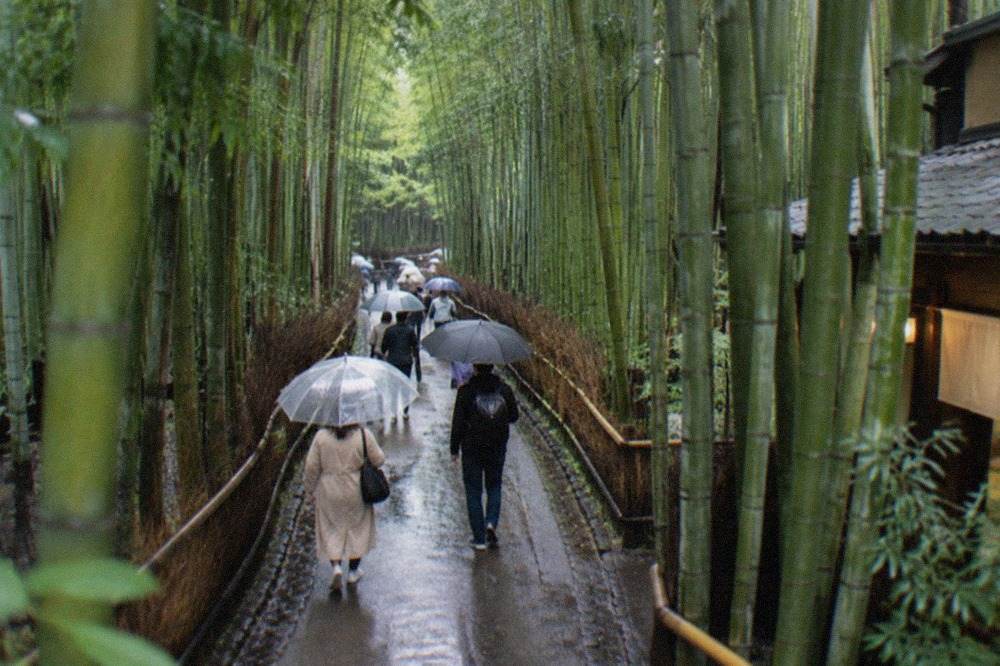
Arrive at the bamboo grove as early as your day allows, ideally before mid-morning. The path itself is free and has no closing time, and Kyoto's own 2025 tourism survey counted a record 62.79 million visitors citywide, 46.20 million of them day visitors, so the later you arrive the more people you share the path with.
The Arashiyama Bamboo Grove is a free public path on the western edge of Kyoto, open around the clock, with no ticket gate and no closing time. What it does have is people. The city's 2025 tourism survey, released by Kyoto City on 12 June 2026, counted a record 62.79 million visitors across the year, and 46.20 million of those were day visitors, the exact segment that floods Arashiyama between late morning and mid-afternoon. This page answers the timing question with verified numbers rather than folklore: what the operators charge, what the Japan Meteorological Agency's climate tables say about each season, and what the crowd picture actually looks like at different points of the day.
What Time Should You Arrive At The Arashiyama Bamboo Grove To Beat The Crowds?
The honest answer is that no source publishes an official best hour, so the reliable rule is as early as your day allows, ideally before 9:00. The path is free and has no closing time, and the city's 2025 survey counted 46.20 million day visitors against 16.59 million overnight guests, which means most of the people on the path are same-day arrivals who reach Arashiyama from late morning onward. Early morning is the one window where the numbers work in your favour.
The reason this cannot be answered with a precise hour is that nobody measures arrivals at the grove itself. What is measured is the citywide picture, and it is stark: 62.79 million visitors in 2025, up from 56.06 million in 2024, with tourism spending of 2.0474 trillion yen. Arashiyama absorbs a large share of that flow because it combines a free attraction, a World Heritage temple and two paid rides within a fifteen-minute walk of each other.
The practical logic is simple. Day visitors travelling from Kyoto Station or Osaka typically arrive in Arashiyama between 10:00 and 15:00. Tour groups, which follow the same pattern, add to the midday peak. Before 9:00, the path is mostly walked by overnight guests staying in the district and a handful of early risers. After 16:00 the flow thins again, though in summer the light fades late and the mosquitoes arrive with the shade.
The city's own crowd tool is worth knowing about. The Kyoto Tourism Comfort Forecast, run by the Kyoto City Tourism Association, publishes a five-level crowd comfort estimate for spots and time slots using smartphone location data, weather and machine learning. Fushimi Inari Taisha links to it from its own homepage, and it is the closest thing to a live crowd gauge for Arashiyama that any official body publishes. Checking it the evening before, then arriving before the level it predicts for late morning, is the most evidence-based timing method available.
For a fuller treatment of the district beyond the grove, see the Arashiyama area guide, and for citywide context, the guide to Kyoto crowds unpacks the 2025 survey in detail.
How Do You Get To The Arashiyama Bamboo Grove?
Arashiyama sits on the JR Sagano line from Kyoto Station to Saga-Arashiyama Station, about a 10-minute walk from the grove, with the Randen tram and city buses also serving the district. A single City Bus ride is a flat 230 yen for adults and 120 yen for children aged 6 to 11, and the Subway and Bus One-Day Pass, the current combined product at 1,100 yen adult and 550 yen child, covers unlimited subway and bus travel for a day.
The JR line is the fastest option from Kyoto Station and drops you at Saga-Arashiyama, from which the walk to the grove entrance passes through the district's restaurant rows. The Randen tram terminates at Arashiyama station right by Togetsukyo bridge, which trades speed for scenery. City buses reach the district too, but they are the mode the city is actively trying to relieve: the transport bureau ended sales of the bus-only one-day pass at the end of September 2023 precisely because it concentrated tourists on buses, with the last day of use on 31 March 2024.
The replacement product is the Subway and Bus One-Day Pass at 1,100 yen, which blends subway and bus use. If you are staying near a subway station and plan several hops in one day, it usually pays for itself by the third ride. The tourist express buses EX100 and EX101, which run from Kyoto Station toward the Kiyomizu and Gion side, cost 500 yen adult and 250 child, and accept IC cards; the ICOCA card itself costs 2,000 yen including a 500 yen deposit.
| Option | Adult fare | Child fare | Notes |
|---|---|---|---|
| City Bus, single ride | 230 yen | 120 yen (6-11) | Flat fare, city-published |
| Subway, by zone | 220-360 yen | 110-180 yen | Five fare zones |
| Subway and Bus One-Day Pass | 1,100 yen | 550 yen | Combined product; bus-only pass abolished 2024 |
| EX100 / EX101 tourist express | 500 yen | 250 yen | Cash or IC; runs to the Kiyomizu side |
| ICOCA card | 2,000 yen incl. 500 yen deposit | same | Refundable deposit |
One planning note that matters for the timing question: buses into Arashiyama crawl at midday, and the city's overtourism measures since 2025 have added tourist express services and park-and-ride precisely because of this. Arriving by train before 9:00 avoids both the crowd peak and the traffic that comes with it.
If you would rather leave the navigation to someone else, two of the strongest options for this district are bookable here. The 1-day bus tour covering Fushimi Inari, Kinkakuji and the bamboo grove bundles the grove with the city's other headline sites, while the early-morning option below is built around exactly the before-the-crowds logic this page recommends.
What Does It Cost To Visit The Arashiyama Bamboo Grove And The Sites Around It?
The bamboo grove itself costs nothing: it is a free public path with no gate and no closing time. Around it, the paid attractions are Tenryu-ji at 500 yen for the garden plus 300 yen more for the buildings, Iwatayama Monkey Park at 800 yen for ages 16 and over and 400 yen for ages 4 to 15, and the Sagano Romantic Train at 880 yen adult and 440 child one way, with the Hozugawa Kudari river boat at 6,000 yen adult and 4,500 yen child.
Those are operator-published prices, each read from the venue's own site. Tenryu-ji, the World Heritage temple whose grounds sit at the south end of the grove, tickets its garden, buildings and Hatto ceiling separately, so a full visit adds up. The monkey park is cash only, and its own notice says it closes early when the monkeys head back up the hill or the weather turns.
| Attraction | Adult | Child | Source basis |
|---|---|---|---|
| Bamboo grove path | Free | Free | Public path, no closing time |
| Tenryu-ji garden | 500 yen | 300 yen (elementary/junior high) | Temple's own visit page |
| Tenryu-ji buildings | +300 yen on garden | +300 yen | Same |
| Iwatayama Monkey Park | 800 yen (16+) | 400 yen (4-15), cash only | Park's own site |
| Sagano Romantic Train, one way | 880 yen (12+) | 440 yen (6-12) | Operator's ticket page |
| Hozugawa Kudari boat | 6,000 yen | 4,500 yen (infant-elementary) | Operator's tickets page |
Two warnings about stale numbers you may have read elsewhere. The widely repeated figure of about 4,100 yen for the Hozugawa river boat is out of date; the operator's own tickets page sets 6,000 yen adult and 4,500 yen child, with a scheduled shared boat of 24 seats and charters at 144,000 or 162,000 yen. And the Sagano train's roughly March-to-December season with most Wednesdays closed is a pattern reported in guides but not confirmed on the operator's own timetable, so check the Sagano Scenic Railway site before committing to a Wednesday.
A day in Arashiyama can be done cheaply or expensively, and the spread is wide. The free path plus a 500-yen garden is a half-day under 1,000 yen. Add the monkey park, the train and the boat and the three adult tickets alone come to 7,680 yen before lunch. Deciding in advance which of the three paid rides actually matters to you is the single biggest cost lever in the district.
How Long Does The Bamboo Grove Walk Take?
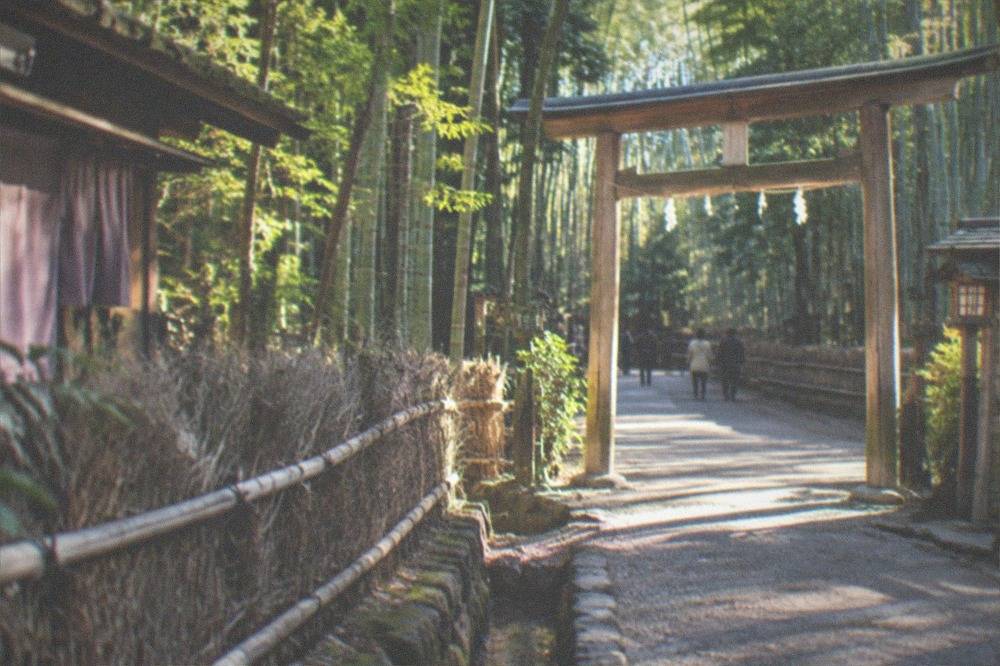
The Nonomiya-to-Okochi section of the bamboo path takes most walkers roughly 20 to 30 minutes at a steady pace, but a realistic visit runs 45 minutes to an hour once you account for photos, the crowd flow and the stops at Nonomiya Shrine and the Okochi Sanso gate area. The path is a public right of way, so there is no time limit, no ticket and no one-way system confirmed on any primary source.
The grove runs between the Nonomiya Shrine area near Tenryu-ji's north gate and the road up toward the Sagano train's Torokko stations. Because it is a free public path with 24-hour access, the experience scales directly with how many people are on it: at dawn it is a quiet walk under green light, at 13:00 it is a slow-moving column. The answer page on how long the bamboo grove walk takes covers the pacing question in detail.
What the walk connects matters for planning. At the Tenryu-ji end you have the temple garden and the district's restaurant rows. At the top end you have the Sagano Romantic Train and, a short walk on, the river and the Hozugawa Kudari landing. The monkey park sits on the south side of the river, a 10-minute walk from Togetsukyo bridge followed by the climb. A loop that takes in the grove, the monkey park and one ride is a comfortable half-day; adding the boat makes it a full one.
For first-time visitors working out how Arashiyama fits a whole Kyoto plan, the first-time visitor itinerary and the half-day itinerary guide both show where the district belongs in a day.
What Is The Best Time Of Year To Visit Arashiyama?
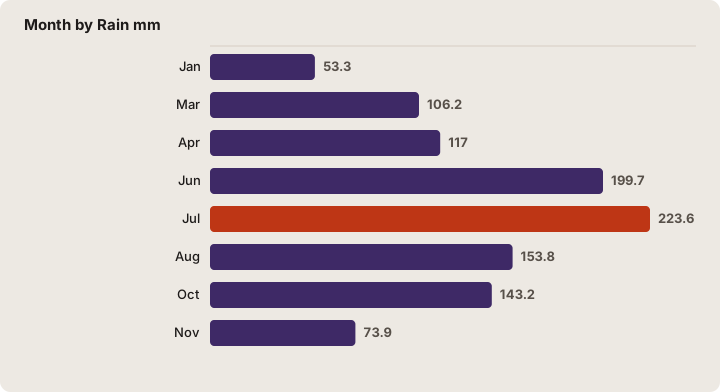
By the Japan Meteorological Agency's 1991-2020 normals for Kyoto station 47759, the most comfortable months for walking the grove are April at a 14.4 C mean and October at 18.4 C, while July is both the wettest month at 223.6 mm and, at a 27.3 C mean with 32.0 C mean daily highs, one of the hottest. January is the coldest and driest month, at a 4.8 C mean with only 53.3 mm of rain.
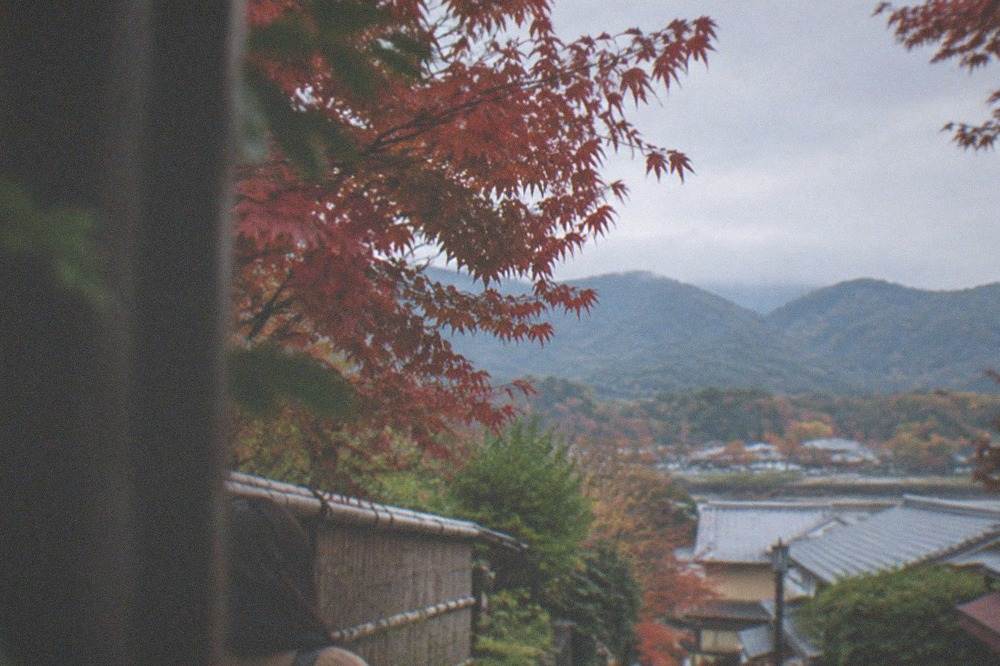
The seasonal trade-offs are real. Cherry blossom in Arashiyama follows the JMA's Kyoto observatory record: flowering on 23 March 2026 against a 26 March normal, full bloom on 30 March against a 4 April normal. The maple season runs late, later than most guides claim: the JMA's normal for red leaves on its Kyoto specimen tree is 5 December, and the 2026 forecasts from Weathernews and tenki.jp put the Arashiyama-area peak around late November to mid-December. The autumn leaves guide and the cherry blossom guide carry the full picture.
| Month | Rain mm | Mean C | Mean daily max C | Sunshine h |
|---|---|---|---|---|
| Jan | 53.3 | 4.8 | 9.1 | 123.5 |
| Mar | 106.2 | 8.8 | 14.1 | 155.4 |
| Apr | 117.0 | 14.4 | 20.1 | 177.3 |
| Jun | 199.7 | 23.3 | 28.1 | 133.1 |
| Jul | 223.6 | 27.3 | 32.0 | 142.7 |
| Aug | 153.8 | 28.5 | 33.7 | 182.7 |
| Oct | 143.2 | 18.4 | 23.4 | 156.0 |
| Nov | 73.9 | 12.5 | 17.3 | 140.7 |
Two facts from the JMA record that most guides get wrong. Kyoto's wettest month is July, not June: 223.6 mm against 199.7 mm. And the heat is not a rounding error: three of Kyoto's six hottest days on record, from a series running since 1880, fell in the summers of 2024, 2025 and 2026, with 39.7 C recorded on 23 July 2026. An early start in summer is not just about crowds; it is about walking a shaded path before the mean daily maximum passes 32 C. The Kyoto weather guide and the best time to visit guide expand on this.
What Can You Do Around The Bamboo Grove In Arashiyama?
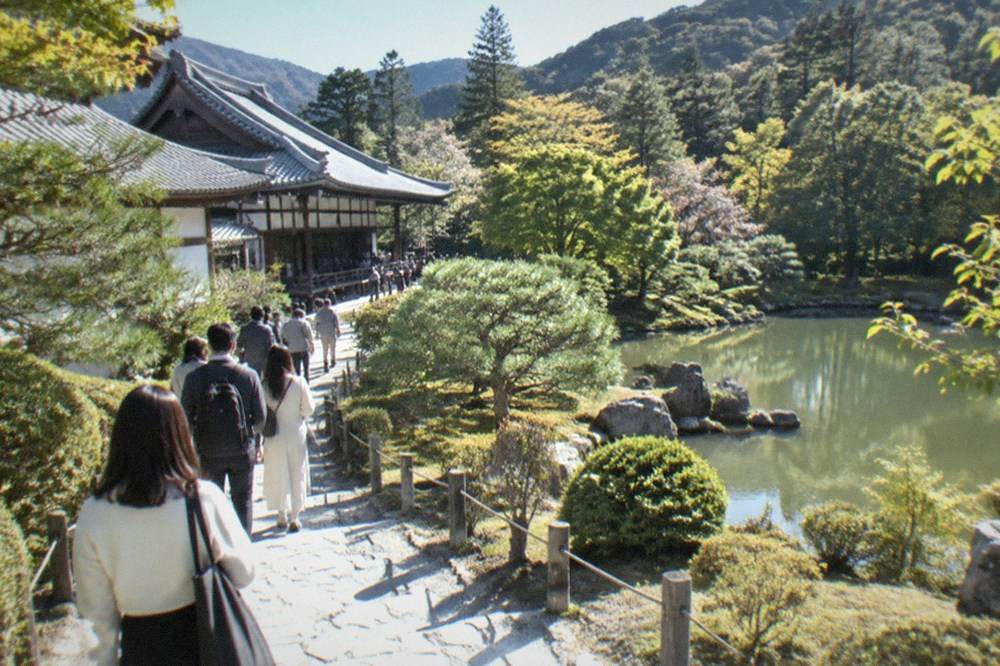
Within a fifteen-minute walk of the grove you have Tenryu-ji's World Heritage garden, Iwatayama Monkey Park with its free-roaming troop, the Sagano Romantic Train along the Hozu gorge, the Hozugawa Kudari river boat, Togetsukyo bridge and the district's restaurant rows along the Katsura river. The monkey park is open 9:00 to 16:00, the train runs roughly hourly in season, and the boat takes about two hours.
The monkey park deserves its stop. The park's own site sets 800 yen for ages 16 and over and 400 yen for 4 to 15, cash only, with hours 9:00 to 16:00 and the summit open until 16:30. It closes early if the weather turns or the monkeys retreat up the hill, and it shuts on 1 January. The climb is a genuine hill walk, not a stroll, so it pairs better with a morning start than with tired afternoon legs. The monkey park page has the details.
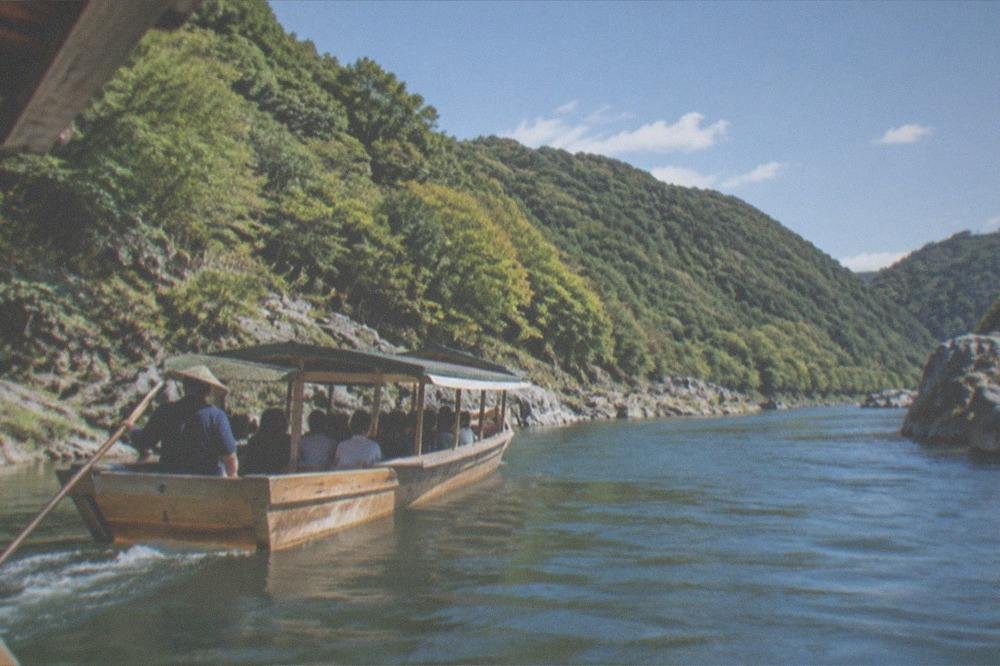
The two river experiences are complementary rather than competing. The Sagano Romantic Train runs along the gorge at 880 yen one way, adult 12 and over, child 6 to 12, with toddlers free when accompanied, and the operator's own ticket page confirms the fares. The Hozugawa Kudari boat drifts the same valley by water: 6,000 yen adult, 4,500 child, about two hours, regular timetable 10 March to 13 December 2026, and running. The Hozugawa river boat page covers the practicalities, including the March 2023 accident history and the fact that the operator publishes no resume date.
For food, the district runs from riverside noodle shops to formal temple-adjacent dining. The tofu and shojin ryori guide explains the Buddhist vegetarian tradition that Arashiyama's temple restaurants carry, and the wider city holds plenty of other eating areas worth exploring alongside it.
What Rules And Etiquette Apply On The Bamboo Path?
The bamboo path is a free public right of way with no confirmed one-way system, no enforced crowd rules and no closing time, so the rules that actually bind are the ones you bring with you: stay on the path, do not touch or carve the bamboo, and keep photography to the walking areas rather than blocking the flow. In the wider district, the monkey park forbids staring at or feeding the monkeys outside the rest house, and Gion-style conduct rules apply citywide.
The absence of formal rules is itself the fact worth knowing. Research found no enforced one-way system or specific crowd measures confirmed on primary sources for the grove, which means the path's flow is self-organizing and, at peak, slow. That is the strongest practical argument for the early arrival this page recommends: the crowd management at the grove is you, choosing your hour.
Around the district, the binding rules are the operators'. The monkey park's own notices govern behaviour with the troop. On the river and the train, the operators' terms apply. And if your day continues into Gion in the evening, the Kyoto City Tourism Association's four conduct guidelines apply citywide: do not touch, chase or photograph geiko and maiko without permission, and do not enter or photograph private property where prohibited. Signs on Gion's private alleys threaten a 10,000 yen penalty for unauthorized entry or photography; those are district-council signs, not a city ordinance.
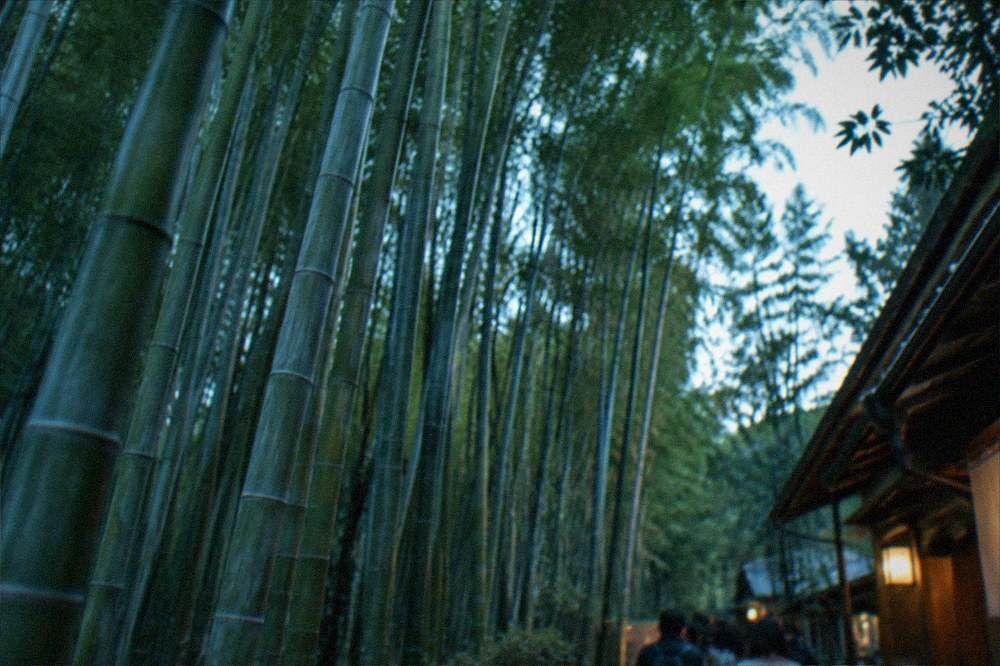
Photography on the path has its own logic. The light is best early, when low sun filters through the stalks from the east, and the grove ranks among the city's better frames for exactly that reason. Tripods and long poses at peak hours are the fastest way to earn the collective irritation of the column behind you.
Should You Take A Guided Tour Of Arashiyama?
A guided tour is worth it if you want the early start handled for you or you want Arashiyama bundled with the city's other headline sites in one day; it is not worth it if your only goal is the bamboo path itself, which is free, self-guiding and needs no ticket. The strongest guided options here run from a 97-dollar one-day bus tour covering Fushimi Inari, Kinkaku-ji and the grove to a 39-dollar walking tour of the bamboo, temples and river area.
The economics are straightforward. A self-guided Arashiyama half-day costs a train fare plus whatever paid attractions you choose, so under 2,000 yen if you only walk and see the garden. A guided day tour costs roughly 40 to 100 US dollars per person but removes the navigation, the timing decisions and, in the case of early-morning departures, the crowd problem this entire page is about. The one-day bus tour at 4.8 from 5,317 reviews is the established option for first-time visitors fitting Arashiyama into a single Kyoto day.
For travelers who want the district explained rather than just delivered, the Arashiyama walking tour with monkeys and temple garden at 5 from 1,781 reviews covers the grove, the monkey park and Tenryu-ji in five hours. And for the timing question specifically, the early-morning tour with an English-speaking guide, 4.9 from 1,998 reviews, is built around the before-the-crowds logic.
The Sagano Romantic Train ticket is also bookable in advance through this site, which matters in high season: the operator opened reservations for the late-March 2026 period at midnight on its official site, and spring and autumn departures sell out first. The Sagano train guide explains the booking mechanics.
If you are planning the whole Kyoto trip rather than one district, the things to do overview and the two-day itinerary place Arashiyama in a full plan, and this Kyoto Travel Guide hub carries the rest of the district and transport pages.
Common Questions About The Arashiyama Bamboo Grove
What Time Should You Arrive At The Arashiyama Bamboo Grove To Beat The Crowds?
Arrive as early as your day allows, ideally before 9:00. No official body publishes a best hour, but the city's 2025 survey counted 46.20 million day visitors against 16.59 million overnight guests, and the day-visitor wave reaches Arashiyama from late morning. The path is free and has no closing time, so an early start costs you nothing but sleep.
Is The Arashiyama Bamboo Grove Free?
Yes. The bamboo path is a free public right of way with no gate, no ticket and no closing time. The paid attractions around it are separate: Tenryu-ji's garden at 500 yen, the monkey park at 800 yen for ages 16 and over, the Sagano Romantic Train at 880 yen one way and the Hozugawa Kudari boat at 6,000 yen adult.
How Long Does The Bamboo Grove Walk Take?
Roughly 20 to 30 minutes at a steady pace for the main section, with a realistic visit of 45 minutes to an hour including photos and the crowd flow. There is no time limit and no confirmed one-way system, so at peak hours the walk simply slows.
When Is The Best Season For The Arashiyama Bamboo Grove?
The bamboo is green year-round, so the season matters mainly for comfort and the surrounding scenery. April and October are the mildest walking months by JMA normals. Cherry bloom ran 23 March to 30 March full bloom in 2026, and the maple peak runs later than most guides claim: the JMA normal for red leaves is 5 December, with 2026 forecasts centring on late November to mid-December.
Can You Visit The Bamboo Grove At Night?
Yes, in the sense that the path is a public right of way with no closing time and no gate. Whether you should is another matter: the path is unlit, and the district's restaurants and transport thin out in the evening. The formerly large-scale Hanatoro illumination events are no longer running in their old form, so do not plan around them.
Is The Bamboo Grove Wheelchair And Stroller Friendly?
The main path is a wide, mostly level gravel and paved route, which most wheelchair users and strollers can manage. The complications are the crowd density at peak hours and the surrounding attractions: the monkey park involves a genuine hill climb, and the Hozugawa boat requires boarding steps. Arriving early helps here too.
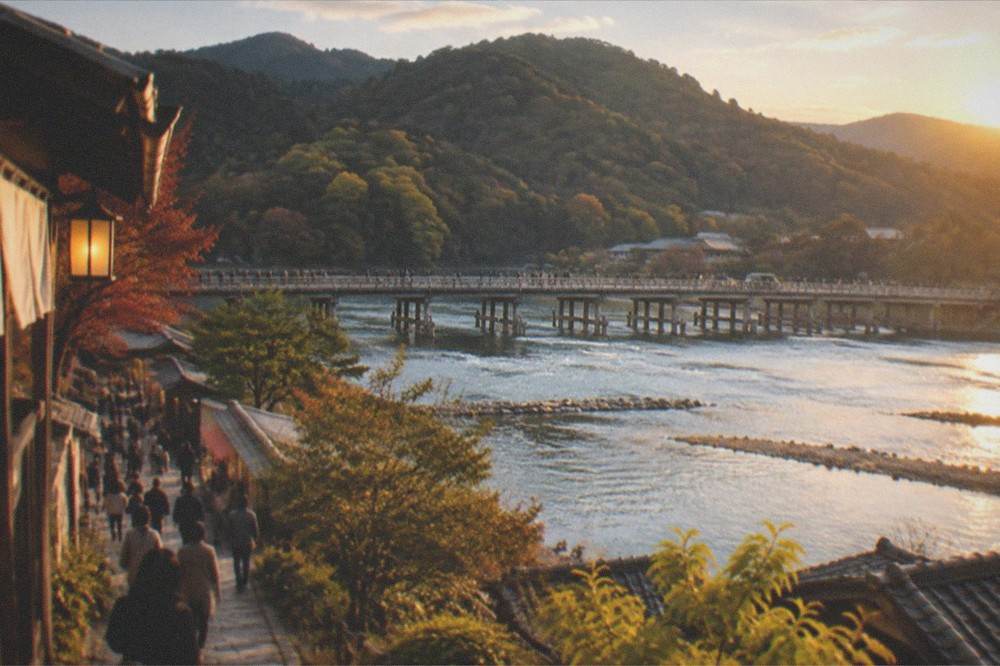
The short version of everything above: the grove costs nothing, closes never, and gets crowded in exact proportion to how late you arrive. Train in before 9:00, decide in advance which of the three paid rides around it you actually want, and let the JMA's climate table pick your month. Do that, and Arashiyama delivers the quiet green corridor the photographs promise, even in a year when the city as a whole counted 62.79 million visitors.