Yudofu And Shojin Ryori In Kyoto
Yudofu is Kyoto's temple-town tofu dish, cubes of tofu simmered in kombu broth, and it grew up around Nanzen-ji and Arashiyama because that is where Zen temple cuisine had its kitchens.
Short answer
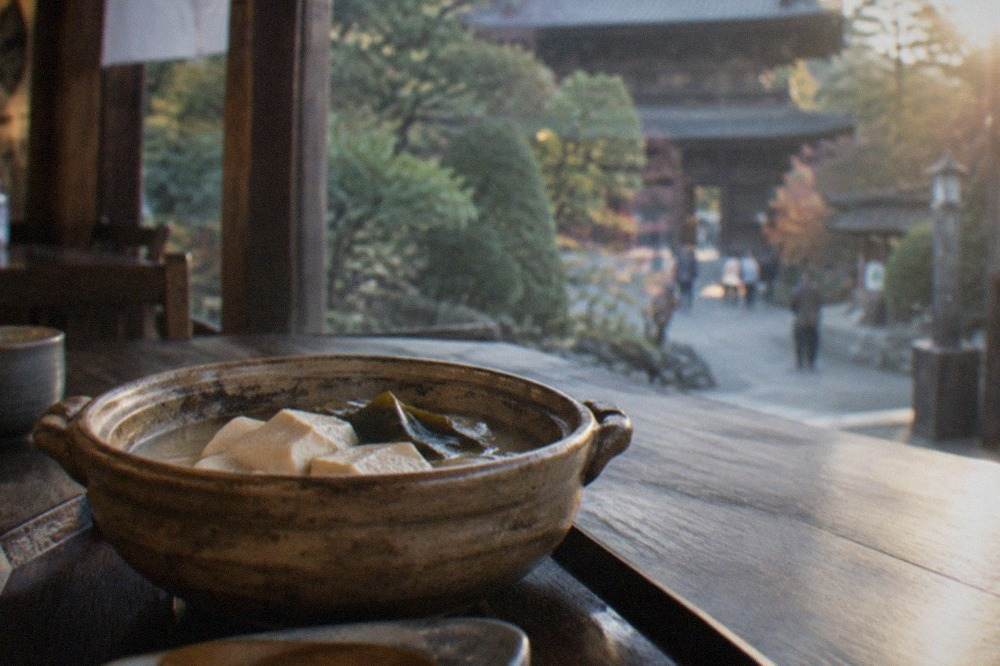
Yudofu is tofu gently simmered in a kombu dashi, dipped in ponzu with scallion, and it is a speciality of the Nanzen-ji and Arashiyama temple districts because it comes from shojin ryori, the vegetarian cooking of Zen Buddhist temples that dominated those areas for centuries.
Kyoto's most quietly famous dish is a pot of hot water. Yudofu, literally "simmered tofu", is cubes of firm tofu cooked tableside in a kombu stock, lifted out with chopsticks and dipped in a citrus ponzu with a pinch of scallion. It is winter food, temple food, and it is tied to two neighbourhoods above all: the Nanzen-ji temple district at the foot of the Higashiyama hills, and Arashiyama on the western edge of the city. This guide explains what yudofu is, where the shojin ryori tradition behind it comes from, what a tofu-centred meal realistically costs in Kyoto, and how to fold one into a day of temples.
What Is Yudofu And Why Is It A Nanzen-ji And Arashiyama Speciality?
Yudofu is firm tofu simmered slowly in a light kombu dashi and eaten with ponzu and scallion, and it is a speciality of Nanzen-ji and Arashiyama because both districts grew around large Zen temple complexes whose shojin ryori kitchens needed protein-rich, meat-free food through cold winters. The dish is the everyday face of temple cuisine, cheap in ingredients and expensive only in care.
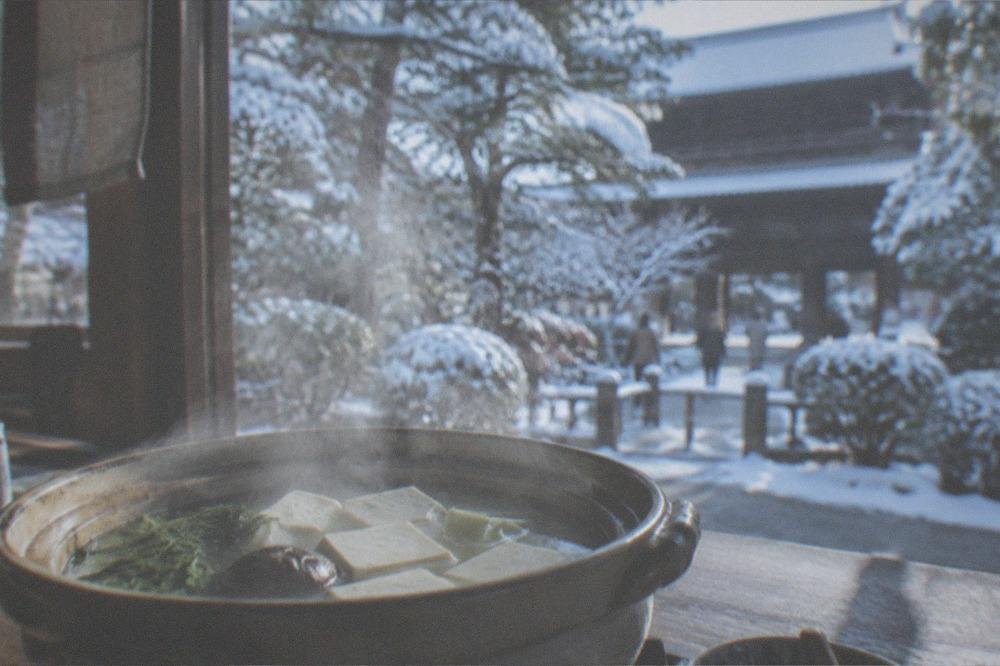
The mechanics are simple enough to describe in one breath, which is exactly why the execution matters so much. A strip of dried kombu sits at the bottom of a donabe clay pot, the water is kept just below a boil, and the tofu warms through without ever toughening. The tofu itself is the star, so Kyoto's tofu makers, working with the city's famously soft groundwater, built a reputation for a delicate texture that survives the pot.
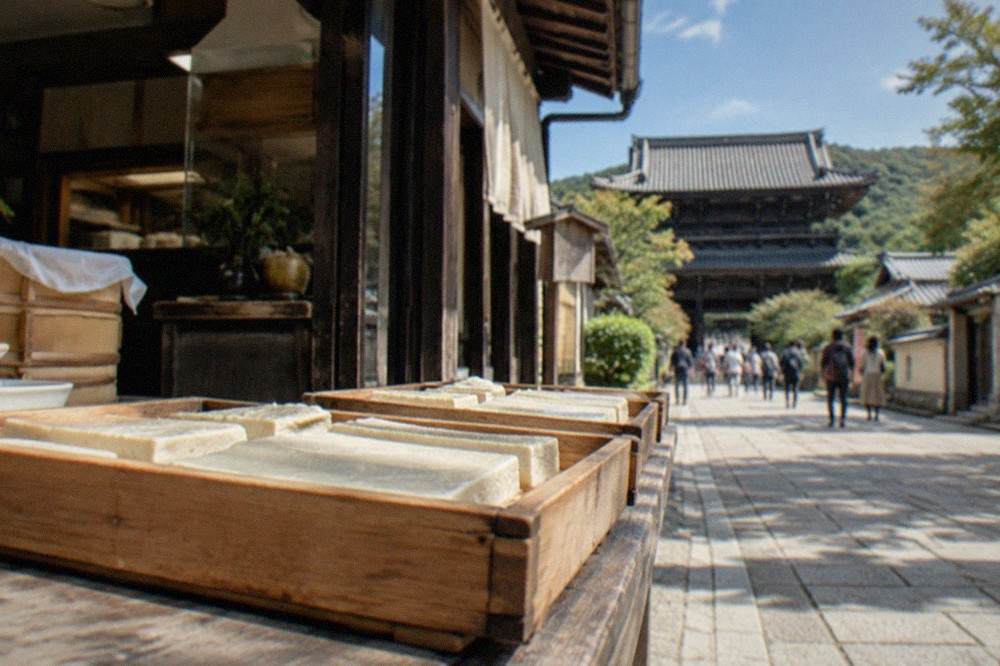
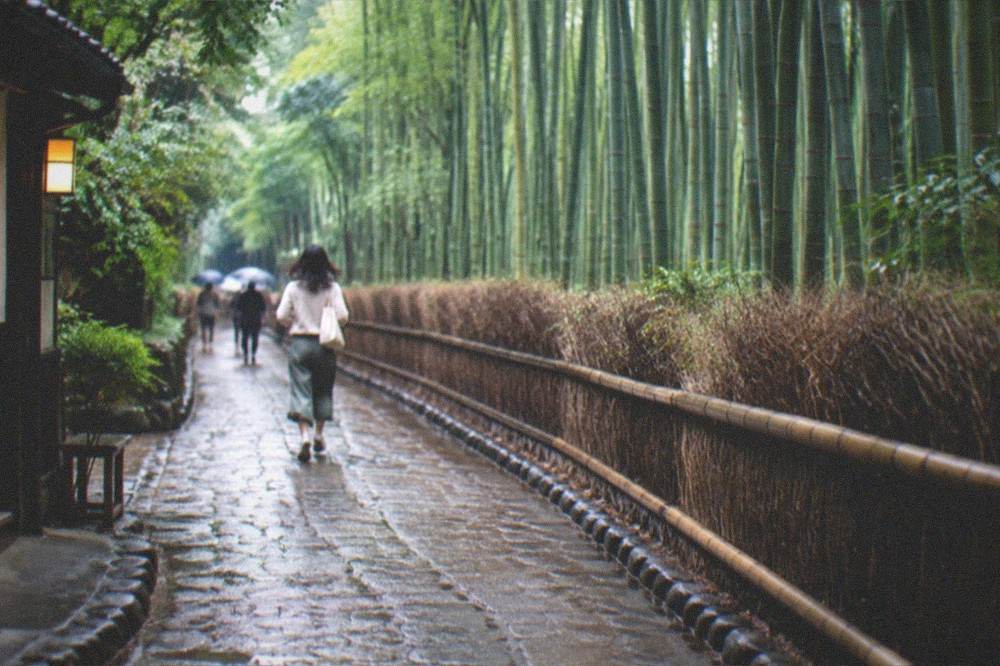
Why those two districts specifically? Nanzen-ji was one of the highest-ranked Zen temples in Japan, and the lanes around it filled with sub-temples, monastic kitchens and, later, restaurants serving temple-style food to pilgrims. Arashiyama, with Tenryu-ji at its centre, followed the same pattern on the western side of the city. When tourism replaced pilgrimage, the tofu restaurants stayed. Today the walk from Nanzen-ji's gate toward the Philosopher's Path still passes tofu restaurants whose names have been attached to the district for generations, and the streets around the Arashiyama bamboo grove do the same.
What Is Shojin Ryori, The Temple Cuisine Behind Yudofu?
Shojin ryori is the vegetarian cooking of Japanese Buddhism, built on Buddhist precepts that forbid killing, so it uses no meat, no fish and, in strict temples, no strong-rooted vegetables such as onion or garlic. Yudofu, along with goma-dofu and kaiseki-style vegetable courses, is one of its signature preparations, and soybeans in the form of tofu are its main protein.
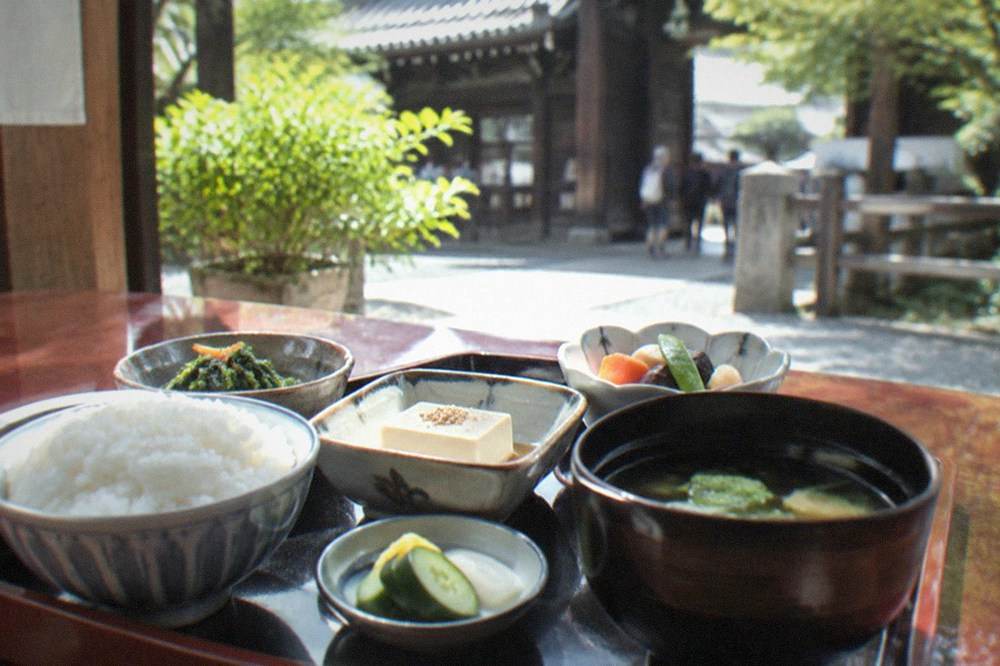
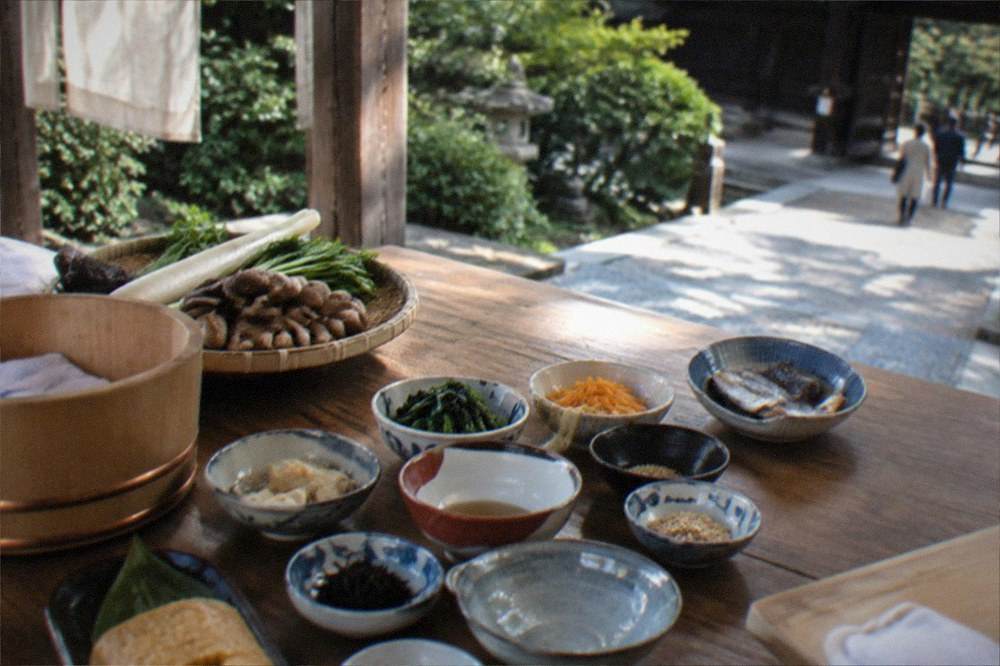
The word shojin carries a sense of devoted effort, and the cuisine treats effort as part of the meal. A full shojin ryori service arrives as many small dishes: simmered vegetables, sesame tofu, pickles, miso soup, rice, and something fried or grilled, each seasoned so the ingredient tastes more like itself, not less. Nothing in the traditional rules is about deprivation. It is a complete cooking system that happened to be vegetarian centuries before that word existed in Kyoto.
Two practical points matter for a visitor. First, shojin ryori is not automatically vegan in the modern sense: some preparations use katsuobushi (bonito flakes) in the dashi, so anyone with strict dietary requirements should ask when booking rather than assume. Second, the boundary between temple food and regular Kyoto cooking is porous. Kaiseki, the elaborate multi-course meal, descends in part from the tea ceremony's lighter meals, which themselves borrowed from temple kitchens, so a yudofu lunch and a high kaiseki dinner share more ancestry than their price tags suggest.
The distinction is easiest to see in price. At Hyotei, the long-established restaurant by Nanzen-ji, the house's own site prints kaiseki from 31,625 yen at lunch and from 37,950 yen at dinner in the main building, while the same kitchen's annex serves asa-gayu rice porridge at 5,445 yen and a Shokado bento at 7,260 yen, tax and service included. Those are Hyotei's own published prices, not a city average, but they show the honest spread: temple-descended cooking can be a special-occasion spend or a modest lunch, depending on which door you enter.
If a self-guided temple-and-tofu day sounds like too much planning, a guided food walk moves the same ground with a local making the decisions, and the options below cover both ends of the budget.
Where To Eat Yudofu Near Nanzen-ji In Kyoto?
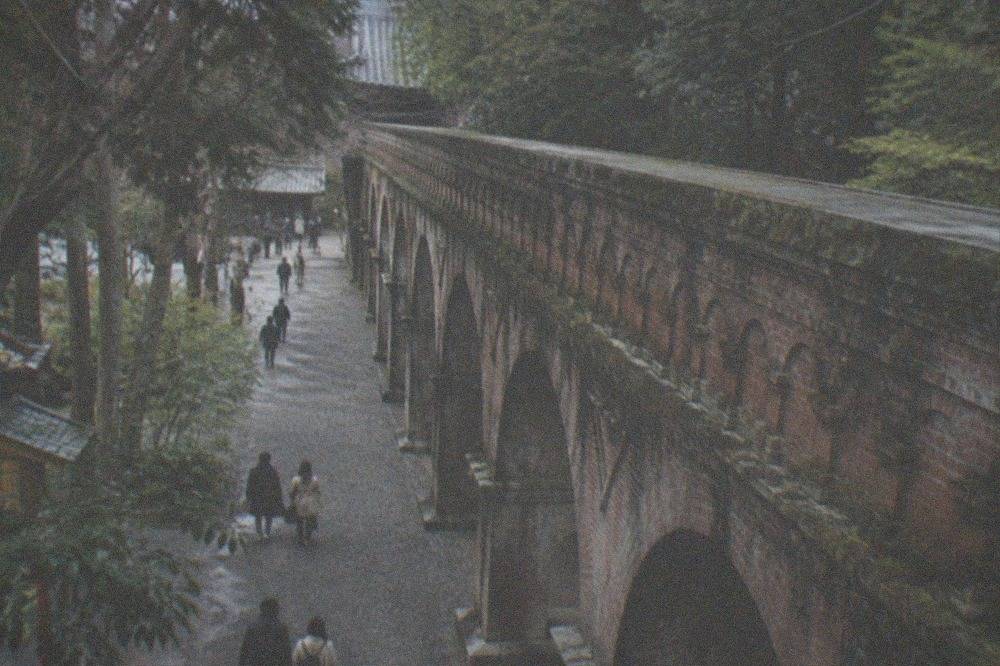
The Nanzen-ji district is Kyoto's densest cluster of yudofu restaurants, sitting on the lanes between the temple's Sanmon gate, the brick aqueduct in its grounds and the start of the Philosopher's Path, and most houses serve a fixed yudofu course at lunch rather than a la carte, so arrive expecting a set meal and a slow pace rather than a quick bowl.
The geography does half the work. Nanzen-ji's own grounds hold the Hojo garden, ticketed at 600 yen, and the Sanmon gate, also 600 yen separately, with hours of 8:40 to 17:00 in season and 8:40 to 16:30 in winter, and no general visits from 28 to 31 December. A yudofu lunch slots naturally between the two. The temple's famous brick aqueduct is in the grounds, and the path up the valley from it leads toward Okazaki and the museums on one side and the Philosopher's Path on the other, so the district rewards a half-day rather than a photo stop.
What to expect from the meal itself: a yudofu course in this district typically opens with small appetiser dishes, sesame tofu, seasonal vegetables and a miso soup, then the donabe arrives with the kombu and tofu, and rice and pickles close it. The pace is deliberately slow, the pot takes twenty minutes to do its work, and most restaurants expect you to be seated for an hour or more. That is the point. A temple-district tofu lunch is a rest stop built into the itinerary, not a refuelling stop beside it.
One planning note on cost, stated honestly: this site prints restaurant prices only when the restaurant's own page carries them, and most yudofu houses near Nanzen-ji do not publish their menus online in English. Treat a yudofu set lunch as a mid-range commitment, check the menu board at the door, and if you want a printed figure before you travel, Hyotei's annex prices, 5,445 yen for asa-gayu and 7,260 yen for the Shokado bento, give a real, sourced sense of what a respected Nanzen-ji-area kitchen charges for its simpler service.
A cooking class is the other way in. Learning to build a washoku meal, tofu included, from a small-group teacher, costs from $61 per person for a two-and-a-half-hour class rated 4.9 from 461 reviews, and it converts a meal into a skill you take home.
Where To Eat Yudofu In Arashiyama?
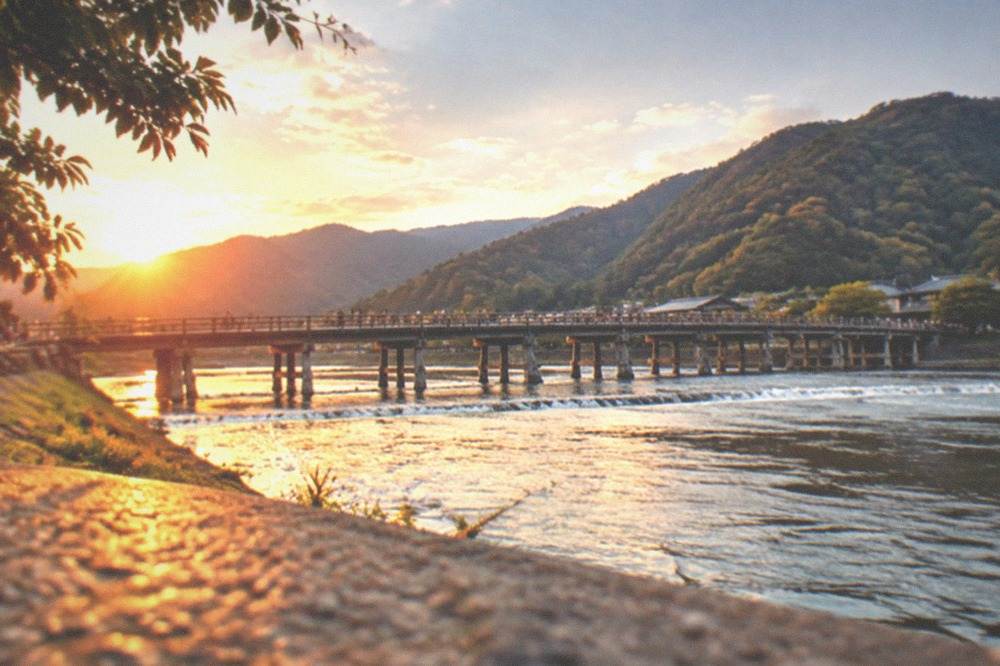
Arashiyama's yudofu restaurants cluster on the streets between Tenryu-ji's grounds and the Togetsukyo bridge, serving the same temple cuisine tradition to visitors walking the bamboo grove and the riverside, and the district pairs a tofu lunch with garden, river and monkey-park sightseeing more naturally than anywhere else in Kyoto.
The pattern is the same as Nanzen-ji's, transplanted west. Tenryu-ji, the great Zen temple of Arashiyama, sits at the head of the bamboo grove, and its restaurant rows grew up serving temple-adjacent food to travellers who came by river. The temple's garden admission is 500 yen for high school age and up, with the buildings at 300 yen more and the Cloud Dragon Hatto ceiling at 500 yen separately, hours 8:30 to 17:00 with last admission at 16:50. A yudofu lunch between the garden and the grove is the classic Arashiyama sequence, and it is a sequence that works year-round, with the riverside turning fierce with colour in late November and soft with blossom in spring.
Build the day around food timing rather than sight timing. Arashiyama's crowds thin sharply after lunch, and the bamboo grove is a free public path, so an early garden, a late-morning tofu course, and a quieter afternoon walk is a better order than the reverse. Families should note that Iwatayama Monkey Park up the hill charges 800 yen for 16 and over and 400 for ages 4 to 15, cash only, and closes at 16:00, so the monkeys come before the tofu, not after.
The river gives the district its other rhythm. The Hozugawa Kudari boats land at Arashiyama after roughly two hours downstream from Kameoka, at 6,000 yen adult and 4,500 child from infant to elementary age, on a regular timetable running from 10 March to 13 December 2026, and the operator's site confirms it is running. Arriving by boat and eating by the bridge is Arashiyama at its most complete.
What Does Yudofu And Shojin Ryori Cost In Kyoto?
There is no honest single price for tofu cuisine in Kyoto, because restaurants publish almost nothing and this site prints only published figures. The one fully sourced price set is Hyotei's: kaiseki from 31,625 yen at lunch and 37,950 at dinner in the main building, and 5,445 to 7,260 yen in its annex, tax and service included, which frames the honest range from a simple annex lunch to a full course above 30,000 yen.
That framing is the answer most guides dodge. The "30,000 yen kaiseki bill" question is real, and the real answer is that at one of the city's most famous houses the kaiseki course itself opens above that figure, while the same kitchen's annex serves a full meal under 8,000 yen. Which of those two experiences you want is a decision, not a trap. More of these guides are collected on Kyoto Travel Guide.
For yudofu specifically, the honest planning advice is a range, not a number: tofu set lunches in the temple districts are generally mid-priced relative to Kyoto restaurants, cheaper than kaiseki and dearer than noodle shops, and the menu board at the door is the reliable source. Book ahead for the famous houses in autumn and during the New Year holidays, and note that most close in the afternoon gap between lunch and dinner service.
Here is the one published price set this site carries, in full, so the comparison is transparent:
| Item at Hyotei (by Nanzen-ji) | Price, tax and service included | Service |
|---|---|---|
| Kaiseki, lunch, main building | from 31,625 yen | 12:00-15:00, last order 13:00 |
| Kaiseki, dinner, main building | from 37,950 yen | 17:00-21:30, last order 19:00 |
| Asa-gayu porridge, annex | 5,445 yen | 8:00-11:00, 16 March to 30 November |
| Uzura-gayu porridge, annex | 5,445 yen | 1 December to 15 March |
| Shokado bento, annex | 7,260 yen | 12:00-14:00 |
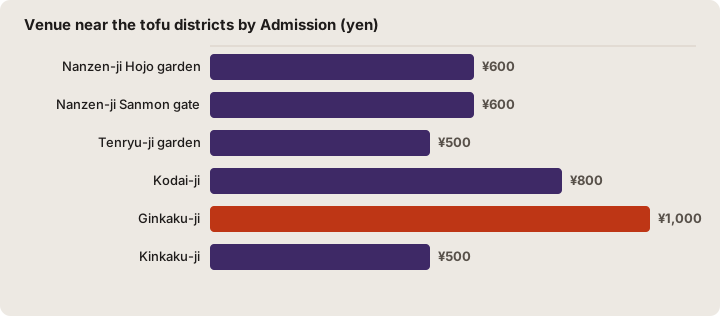
Those are Hyotei's prices for Hyotei's rooms and dates, printed on Hyotei's own site. They are not a Kyoto average, and no other restaurant's figure should be inferred from them. For everything else in the temple-food day, here is what the venues themselves charge:
| Venue near the tofu districts | Admission | Notes |
|---|---|---|
| Nanzen-ji Hojo garden | 600 yen | Hours 8:40-17:00, 8:40-16:30 winter |
| Nanzen-ji Sanmon gate | 600 yen | Ticketed separately from the garden |
| Tenryu-ji garden | 500 yen | Buildings plus 300, Hatto ceiling 500 more |
| Kodai-ji | 800 yen | 1,200 yen combined with Entoku-in |
| Ginkaku-ji | 1,000 yen adult | Doubled from 500 on 1 April 2026 |
| Kinkaku-ji | 500 yen | 9:00-17:00 year-round |
| Philosopher's Path | free | Public canal-side walk |
| Arashiyama bamboo path | free | Public path, no gate |
When Is Yudofu Season In Kyoto?
Yudofu is served year-round in Kyoto's temple districts, but it is a cold-months dish at heart, and the strongest season runs from late autumn through winter, when November's foliage crowds and January and February's quiet, cold days make a simmering pot the most sensible object in the city.
The climate data backs the instinct. The JMA 1991-2020 normals for Kyoto station show December averaging a mean of 7.2 C and January 4.8 C, with January the driest month of the year at 53.3 mm, so midwinter is cold, dry and made for walking between temples before sitting down to something hot. November averages 12.5 C and pairs the chill with the foliage season, which is why the tofu restaurants around Nanzen-ji and Arashiyama are at their busiest then.
| Month | Mean C | Rain mm | Why it matters for a tofu lunch |
|---|---|---|---|
| November | 12.5 | 73.9 | Foliage season, busiest tables, book ahead |
| December | 7.2 | 57.3 | Cold and quiet, full winter menus |
| January | 4.8 | 53.3 | Coldest and driest month, easiest tables |
| February | 5.4 | 65.1 | Still cold, plum season begins |
| March | 8.8 | 106.2 | Cherry buds, shoulder season |
| July | 27.3 | 223.6 | Wettest month, hot, lighter chilled tofu instead |
One correction worth carrying, because most guides get it wrong: July, not June, is Kyoto's wettest month, at 223.6 mm against June's 199.7 mm in the JMA 1991-2020 normals. Summer visitors are not left out, though. Kyoto has a parallel tradition of chilled tofu, hiyayakko, and the same restaurants that simmer in winter serve it cold in August, whose mean of 28.5 C makes the case for it without any further argument.
Can You Learn To Cook Shojin Ryori Yourself In Kyoto?
Yes, and a cooking class is often the better buy for visitors who want to understand temple food rather than only eat it. A small-group washoku bento class runs from $61 per person for two and a half hours, rated 4.9 from 461 reviews, and a ramen-making class from $130, so hands-on food experiences in Kyoto sit at accessible prices with strong review records.
The class route has one advantage a restaurant cannot match: you see the dashi built from nothing. Kombu in cold water, the heat held just under a simmer, the moment the tofu goes in, these are the whole technique of yudofu, and a teacher shows them in minutes. The washoku bento class covers the broader meal structure, rice, soup, pickles and main dishes, which is the frame shojin ryori also uses.
For visitors building a food-focused trip rather than a single meal, the wider scene is worth a browse: the Kyoto food guide covers the city's cooking traditions beyond tofu, and the vegetarian Kyoto guide handles the practical question of eating meat-free in a cuisine that hides fish stock in surprising places. Anyone keeping strictly vegan should read that one before booking any temple-restaurant meal.
How Do You Fit Yudofu Into A Kyoto Temple Day?
The natural sequence is a morning temple, a yudofu set lunch in the same district, and an afternoon walk, because the tofu houses sit exactly on the two great temple-walking corridors: Nanzen-ji to the Philosopher's Path and Ginkaku-ji in the east, and Tenryu-ji to the bamboo grove and river in Arashiyama, and each corridor fills a full day at walking pace.
The eastern day: start at Nanzen-ji when its gates open at 8:40, see the garden and the aqueduct, then take a yudofu lunch in the lanes by the gate. Walk north from the temple into the Philosopher's Path, which is free, and finish at Ginkaku-ji, the Silver Pavilion, whose admission is now 1,000 yen for adults after the fee doubled on 1 April 2026, with hours 8:30 to 17:00 in season. That fee change matters for anyone using an older guide: a 2024 or 2025 page will print 500 yen, and it is wrong now.
The western day: take the JR line to Saga-Arashiyama, do Tenryu-ji's garden when it opens at 8:30, walk the bamboo grove before it thickens with people, then eat yudofu near the bridge before the river and the monkey park in the afternoon. If the budget allows, the Hozugawa boat ride down into the district makes the arrival part of the day, and the Sagano Romantic Train, at 880 yen one-way adult and 440 child, runs the same valley on rails.
For evening, the calculus changes. Tofu houses close early, so a yudofu day ends with a different kind of eating, and downtown Kawaramachi is where the city goes after dark. A guided izakaya crawl, from $37 per person and rated 4.9 from 1,042 reviews, walks that ground with a local choosing the bars, which matters in a district where the best doors are unmarked.
Budget travellers should note that the temple admissions on both days add up: a full eastern day with Ginkaku-ji, Nanzen-ji's two tickets and Kodai-ji runs past 3,000 yen in gate fees alone before food, so the Kyoto on a budget guide is worth a read before committing to every stop. The free items on both routes, the Philosopher's Path, the bamboo grove and the riverside, are also the best of them.
Before the practical questions, here is the current state of play for planning a temple-food trip, in the site's own voice:
If a full food-and-temples plan sounds better than piecing it together, these are the experiences that pair best with a tofu-focused Kyoto day.
Of the three, the river crossing is the one that changes the shape of the day most. The Hozugawa boats land you inside Arashiyama with the walk already behind you, and the riverside tofu houses sit a few minutes from the landing, so a morning on the water and a pot at lunch is the fullest version of the western day.
Common Questions About Yudofu And Shojin Ryori In Kyoto
What Is Yudofu And Why Is It A Nanzen-ji And Arashiyama Speciality?
Yudofu is tofu simmered in kombu dashi and eaten with ponzu, and it is a speciality of Nanzen-ji and Arashiyama because both districts grew around major Zen temple complexes whose shojin ryori kitchens needed substantial meat-free food in cold months, and the restaurants that later served pilgrims kept the tradition alive for visitors.
Is yudofu vegetarian or vegan?
Yudofu is vegetarian in origin, coming from Buddhist temple cuisine that uses no meat or fish. It is not automatically vegan, because some restaurants make the dashi with bonito flakes. Ask when booking if you need a strictly vegan pot, and read the vegetarian Kyoto guide on this site before assuming.
What is the difference between yudofu and shojin ryori?
Yudofu is one dish, tofu simmered in kombu broth. Shojin ryori is the whole vegetarian cooking system of Japanese Buddhist temples, a multi-course meal of which yudofu is a common component. Every yudofu restaurant serves shojin-derived food, but a full shojin ryori meal is a longer, broader experience.
How much does a yudofu meal cost in Kyoto?
Most yudofu restaurants do not publish prices online, so check the menu board at the door. The one fully sourced comparison point is Hyotei by Nanzen-ji, whose own site prints its annex dishes at 5,445 to 7,260 yen and its main-building kaiseki from 31,625 yen at lunch, tax and service included. Those are Hyotei's prices, not a city average.
When is the best time of year to eat yudofu in Kyoto?
November through February. November brings foliage crowds and full winter menus, while January, averaging a mean of 4.8 C and only 53.3 mm of rain in the JMA 1991-2020 normals, is the coldest, driest and quietest month for a slow simmered lunch. In summer the same kitchens serve chilled tofu instead.
Do you need to book a yudofu restaurant in Kyoto?
In the peak weeks, yes: late November foliage season, the New Year holidays and cherry-blossom weekends fill the famous houses in both Nanzen-ji and Arashiyama, and the city's 2025 survey counted a record 62.79 million visitors. In midwinter on a weekday, walking in at lunch is usually possible.
The pot, the ponzu and the temple gate are all Kyoto needs to make a meal out of hot water, and the two districts that perfected it are still the best places to sit down and let it simmer.