What Is In Arashiyama Beyond The Bamboo Grove?
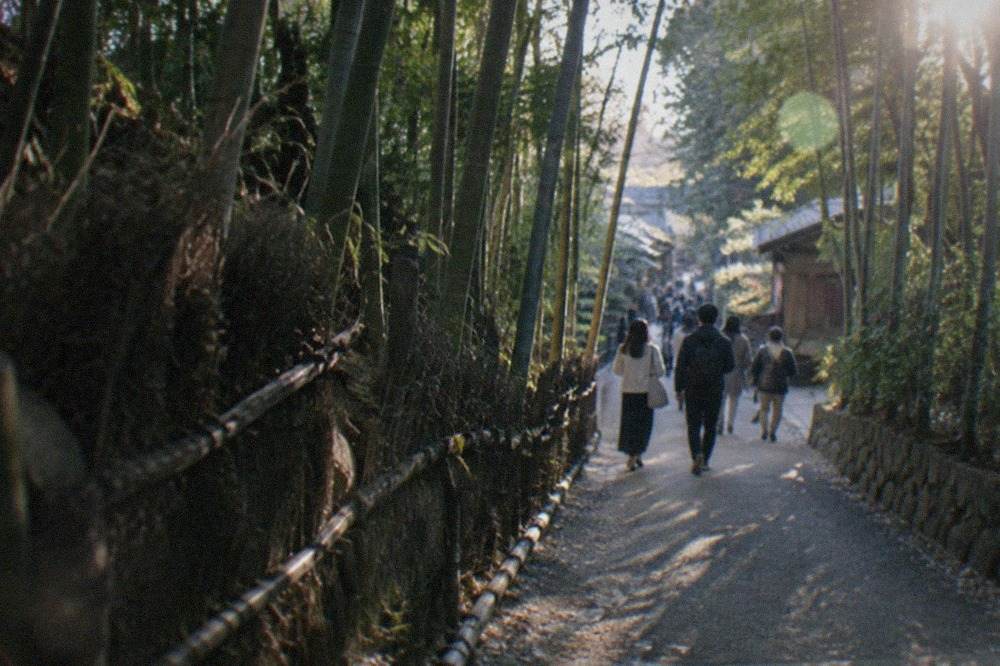
The bamboo grove takes twenty minutes to walk and most visitors give the district nothing else, which is how Arashiyama's train, river, temples and monkey mountain stay quieter than they have any right to be.
Short answer
Beyond the grove, Arashiyama holds the Sagano Romantic Train at 880 yen one way, the Hozugawa Kudari river boats at 6,000 yen adult, Tenryu-ji's separately ticketed garden and buildings, Iwatayama Monkey Park at 800 yen, Togetsukyo bridge and a full eating street along the Katsura riverbank.
Most visitors treat Arashiyama as a photo stop. The bamboo grove is free, it is open around the clock, and the walk through it takes roughly twenty minutes at a normal pace, so the arithmetic of a rushed itinerary always seems to work. Then the crowds arrive. Kyoto recorded 62.79 million visitors in 2025, a record, according to the city's own June 2026 survey release, and a large share of them compress into this one river valley on the city's western edge.
The district deserves the opposite treatment. Arashiyama is a full day's worth of river, rail, temples and mountain forest, and the parts beyond the grove are where the valley actually breathes. This page, part of the Kyoto Travel Guide collection, lays out everything on the west bank and the hills above it, with prices taken from each operator's and temple's own published pages.
What Is In Arashiyama Beyond The Bamboo Grove?
Arashiyama holds the Sagano Romantic Train at 880 yen one way for adults, the Hozugawa Kudari river boats at 6,000 yen, Tenryu-ji with its garden at 500 yen and buildings ticketed separately, Iwatayama Monkey Park at 800 yen, Togetsukyo bridge, the Katsura riverbank and a full eating street, plus the temple lanes of Saga Toriimoto and Adashino beyond the grove's north exit. The bamboo path itself is free and has no closing time, which is exactly why it absorbs the crowds while the rest of the valley spreads them out.
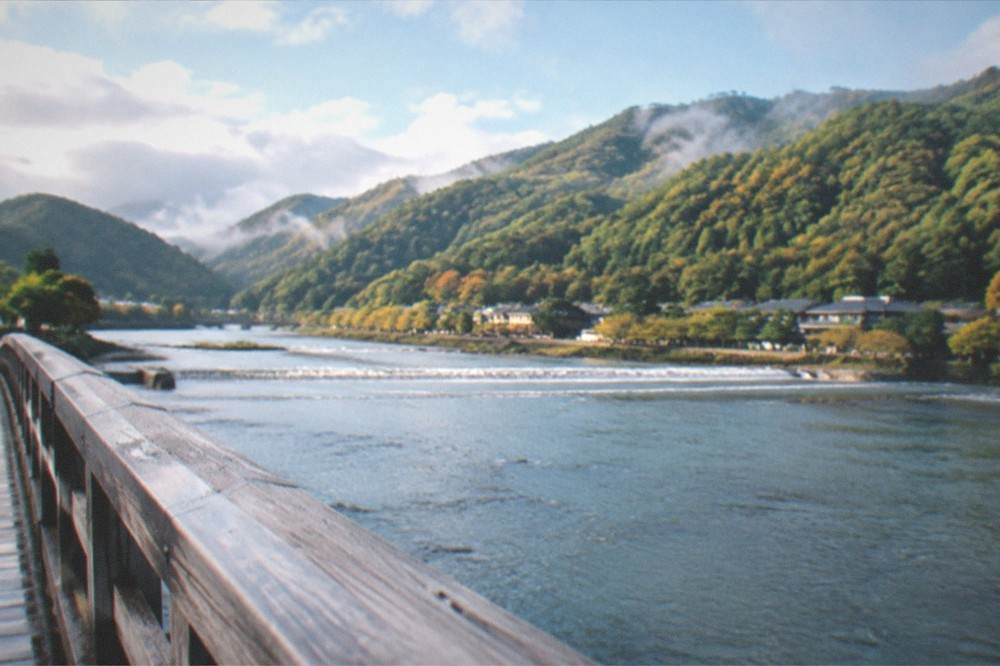
The geography explains the layout. The bamboo grove sits at the district's north-east corner, a ten-minute walk from the Randen tram terminal at Arashiyama. Everything else fans out from there: Tenryu-ji and the eating streets run south toward Togetsukyo bridge, the monkey park climbs the hill directly opposite the bridge's south end, and the Sagano train and Hozugawa boat docks sit upstream along the Katsura river to the north-west. A visitor who walks the grove, exits north, and turns back has seen perhaps a fifth of the district.
The order matters less than the spread. The grove is best before 8:00 or after 16:00, and the middle of the day belongs to the river, the train and the temples, all of which handle crowds better. For how long the grove itself takes, the Arashiyama bamboo grove walking guide breaks down the route and timing, and the shorter question of how long it takes to walk the Arashiyama bamboo grove has its own answer page.
How Much Time Do You Need In Arashiyama?
A half day covers the grove, Tenryu-ji's garden and Togetsukyo bridge at a walk. A full day is what the district actually rewards, because the Sagano train, the Hozugawa Kudari boat ride, the monkey park and a proper lunch each take one to two hours, and together they fill six to eight hours without padding. Visitors who arrive at 10:00 and leave at 13:00 see the grove at its worst and nothing else.
The half-day version works for travelers on a tight circuit, pairing the west bank with one central Kyoto sight in the afternoon. The full-day version pairs naturally with the evening return along the Randen tram through residential Kyoto. First-time visitors balancing Arashiyama against Fushimi Inari and the Golden Pavilion often solve it with a two days in Kyoto itinerary, which sequences the west-bank day properly.
Timing within the day matters more than the season. The grove's crowd peak runs roughly from 9:30 to 15:00, and the city's own crowd-dispersal campaigns, published on the Kyoto City Tourism Association pages, push exactly this point: spread visits across time, not just across locations. The Kyoto crowds guide covers the whole toolkit, including the Tourism Comfort forecast the association runs from smartphone location data.
What Does The Sagano Romantic Train Cost And When Does It Run?
The Sagano Romantic Train charges 880 yen one way for an adult, defined as 12 and over, and 440 yen for a child aged 6 to 12, with toddlers free when accompanied, all confirmed on the operator Sagano Scenic Railway's own ticket page. The train runs roughly hourly along the Hozugawa gorge between Torokko Arashiyama and Torokko Kameyama, a seven-kilometre stretch of track built on the old freight line, and groups pay 800 and 400 yen.
The operator's own schedule gives departures from Torokko Arashiyama starting around 9:02 and running to mid-afternoon, with the season running roughly March to December and no service in the depths of winter. One caveat the honesty rules require: the train's closed-day pattern, including the commonly repeated "most Wednesdays" claim, is not printed on the operator's timetable, so treat any closed-day figure as unconfirmed and check the operator's news page before planning around a Wednesday. The train was running on its normal schedule as of mid-September 2026.
The ride itself is short, about 25 minutes end to end, and the smart pattern is to combine it with the boat. The classic circuit takes the train up the gorge to Torokko Kameyama, walks the short riverside path to the Hozugawa Kudari landing, and floats back down to Arashiyama on the boat. Done in that order, the two rides form a loop with no backtracking, and the gorge scenery is different from each direction.
| Sagano Romantic Train | Fare |
|---|---|
| Adult, one way (12 and over) | 880 yen |
| Child, one way (6 to 12) | 440 yen |
| Toddler | Free when accompanied |
| Group adult / child | 800 / 400 yen |
| Student group adult / child | 710 / 360 yen |
Tickets can be bought on the day at the station, but the operator's own site notes that reservations for the late-March peak opened online at midnight and sold on a first-come basis, which tells you what cherry-blossom season demand looks like. Outside the spring and autumn peaks, walk-up tickets are usually available outside the busiest departures.
For travelers who would rather not manage train, boat and bus tickets in Japanese, the Sagano train ticket can also be secured in advance as a standalone product, and the comparison band below sets it beside the two most-booked day tours that pass through the district.
The Sagano Romantic Train guide covers the stations, the gorge and the booking mechanics in full. It is worth reading before committing to a specific departure, because the seat choices and the direction of travel change what you see.
What Does Tenryu-ji And The Temple Circuit Offer?
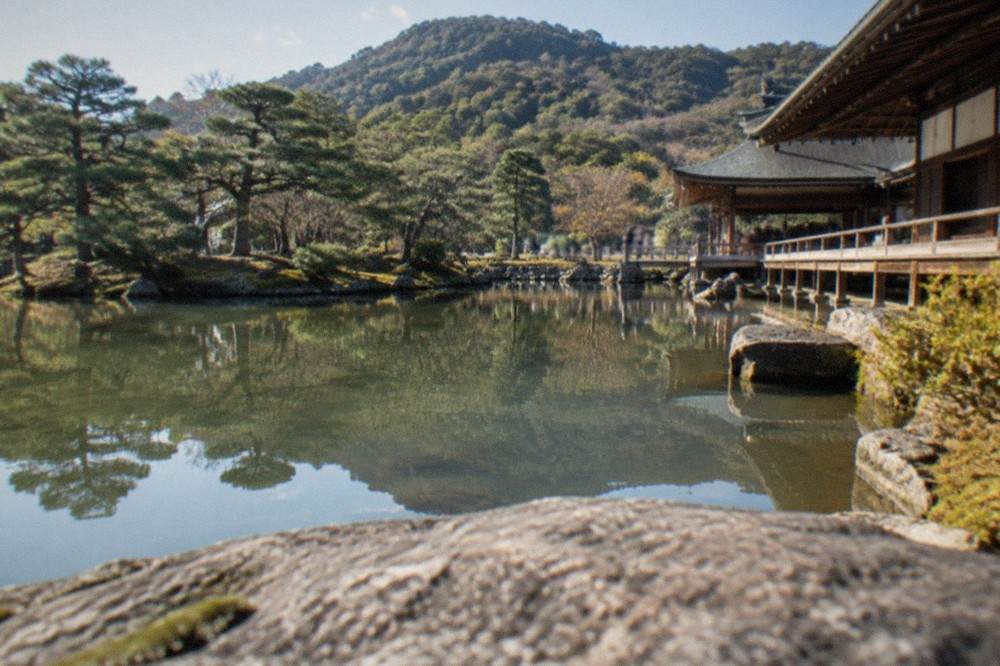
Tenryu-ji, the UNESCO-listed Zen temple at the grove's southern edge, charges 500 yen for the garden alone for visitors high-school age and up, with 300 yen added for the Hojo and other buildings and a separate 500 yen for the Hatto's Cloud Dragon ceiling, per the temple's own visit page. The garden is the reason to come: its borrowed scenery pulls the Arashiyama hills into the composition, a design unchanged since the 14th century.
The separate ticketing trips people up. Three fees, three choices, and the buildings fee is the one worth taking, because the Hojo veranda is where the garden reads best. The Hatto ceiling, a large painted dragon, has limited viewing and its own hours, and the temple's own notice closes it on 28 to 30 October 2026 and 2 January 2027.
| Tenryu-ji ticket | Price | Notes |
|---|---|---|
| Garden only, high school and up | 500 yen | Elementary and junior high 300 yen |
| Garden plus buildings | 800 yen | 300 yen added to the garden fee |
| Hatto Cloud Dragon ceiling | 500 yen | Separate; closed 28-30 Oct 2026, 2 Jan 2027 |
| Hours | 8:30-17:00 | Last admission 16:50 |
Beyond Tenryu-ji, the district's temple circuit continues north and west. The bamboo path's north exit drops into Saga Toriimoto, a preserved street of thatched and tiled houses that most grove crowds never reach because they turn back at the grove's midpoint. Further along, Adashino Nenbutsu-ji sits among the district's quieter lanes. Neither charges the kind of fee that needs budgeting, and both reward the twenty extra minutes of walking.
The valley's temple density also connects to Kyoto's wider circuit. Travelers working through the city's Zen garden canon will find Tenryu-ji holds its place alongside Ryoan-ji and Ginkaku-ji, and the district's cluster pairs well with the gardens of the north-east on a multi-day plan.
Is Iwatayama Monkey Park Worth The Climb?
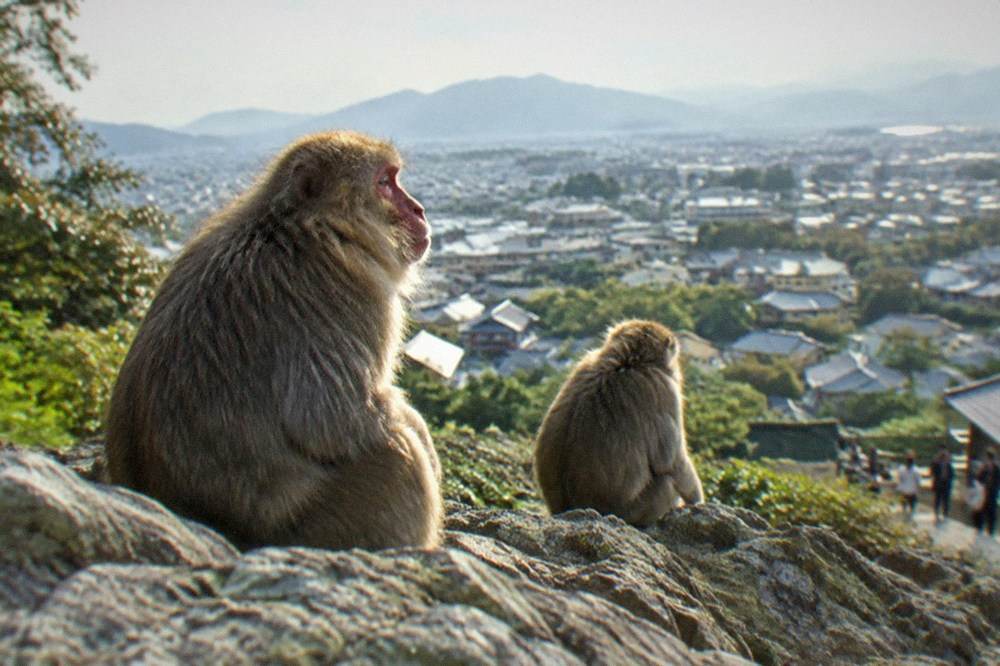
Iwatayama Monkey Park charges 800 yen for visitors 16 and over and 400 yen for ages 4 to 15, cash only, per the park's own site, and it is open 9:00 to 16:00 with the summit area until 16:30, last entry about 30 minutes before closing. The climb to the summit takes roughly 20 minutes up a steep forest path, and about 120 wild Japanese macaques live at the top with views over the whole Kyoto basin.
The honest caveat: this is a hike, not a zoo. The path is uneven, steep in stretches, and the park's own notice says it closes early when the monkeys head back up the hill or the weather turns. Closed 1 January, and irregular closures happen. Visitors with limited mobility or small children should weigh the path honestly, and the full Iwatayama Monkey Park guide covers the climb, the feeding rules and the viewing in detail.
The park sits directly opposite Togetsukyo bridge's south end, which makes it the easiest thing in Arashiyama to add on impulse. The bridge itself is the district's geographic anchor, and the riverbank below it is where the boat passengers land and the eating streets begin.
What Is The Hozugawa Kudari River Boat Ride?
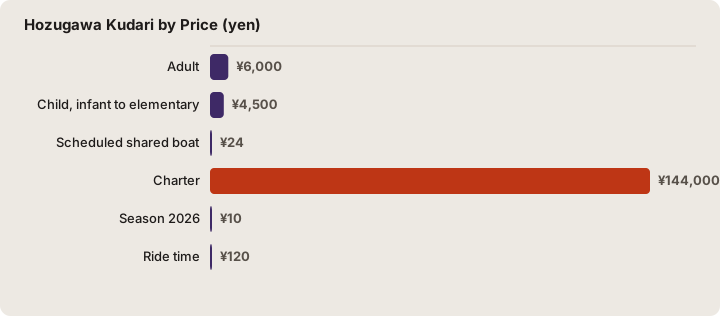
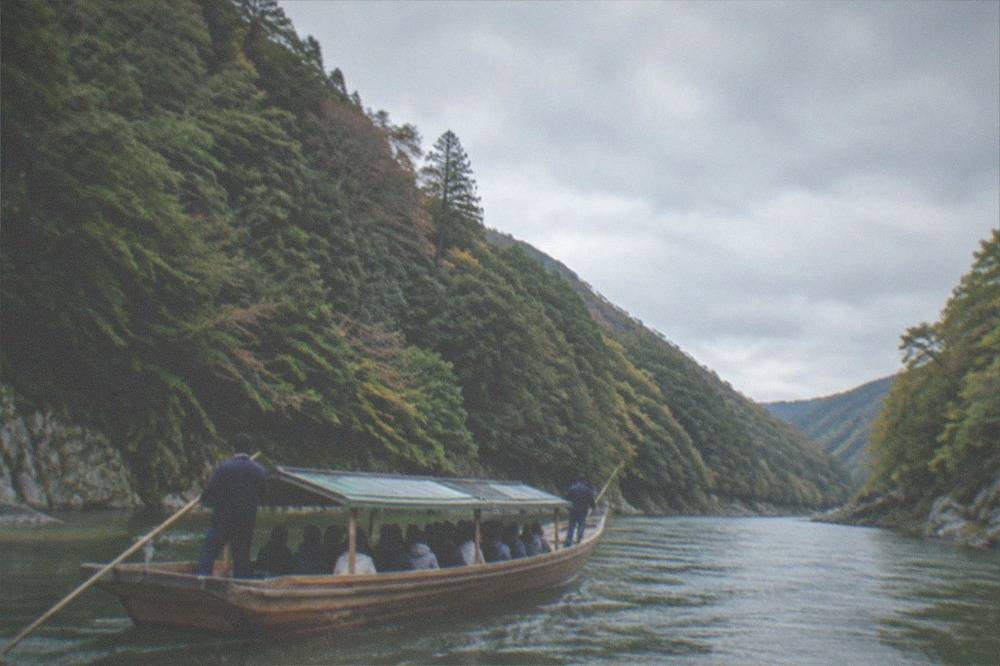
The Hozugawa Kudari charges 6,000 yen per adult and 4,500 yen per child from infant to elementary age for a roughly two-hour boat ride down the Hozu gorge from Kameoka to Arashiyama, on scheduled shared boats of 24 seats, per the operator's own tickets page. The widely repeated figure of around 4,100 yen is stale, from before the operator repriced, and should be ignored. Charter boats run 144,000 or 162,000 yen.
The ride covers 16 kilometres of gorge with rapids, cliff walls and seasonal colour, poled and rowed by boatmen in the traditional style. The regular timetable runs 10 March to 13 December 2026, with a reduced winter schedule either side, and the operator's site confirmed normal operation as of mid-September 2026. There is a heavier note in the history: a fatal capsizing in March 2023, after which service later resumed. The operator's site does not print the resume date, and neither will this page, but the current status is confirmed running.
| Hozugawa Kudari | Price |
|---|---|
| Adult | 6,000 yen |
| Child, infant to elementary | 4,500 yen |
| Scheduled shared boat | 24 seats |
| Charter | 144,000 or 162,000 yen |
| Season 2026 | Regular timetable 10 Mar to 13 Dec |
| Ride time | About 2 hours |
The practical pattern combines the boat with the Sagano train: train up the gorge, boat down. The reverse also works, but the boat lands you directly at Togetsukyo bridge, which is the better finish. The Hozugawa river boat guide covers the landing points, the gorge geography and what the ride actually involves.
A guided walking tour is the other way to cover the district's spread without doing the logistics yourself, and the tour above bundles the grove, the monkey park and a temple garden into one five-hour circuit with a guide. For travelers who prefer company to a timetable, it removes every decision this page has just walked you through.
Where Do You Eat In Arashiyama?
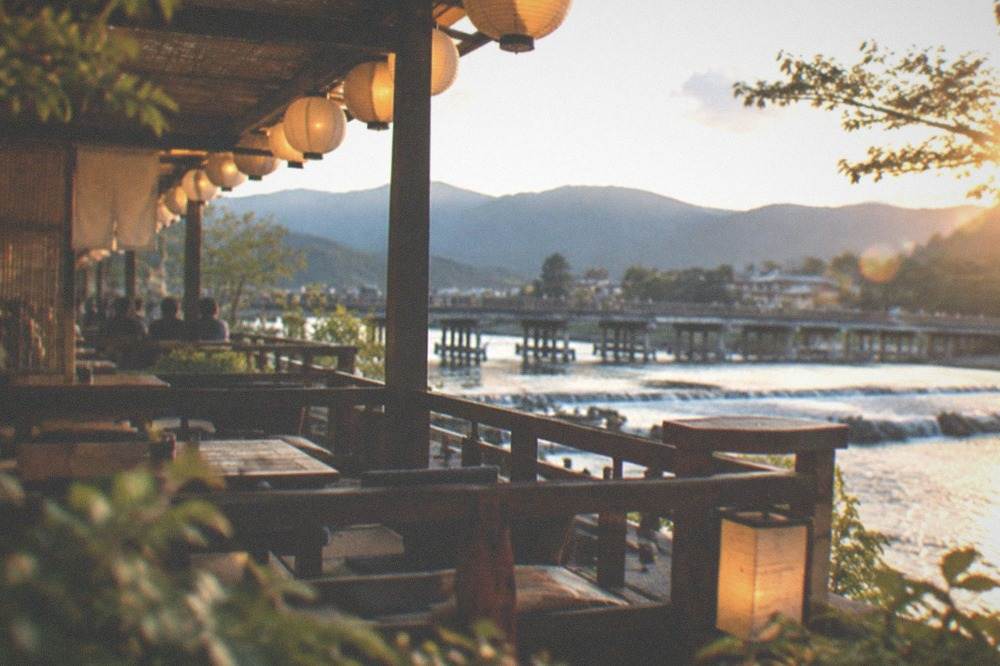
Arashiyama's eating runs from the riverside noodle and tofu houses near Togetsukyo bridge to the street-food stretch along the main road toward the Randen terminal, with yudofu, the district's signature hot tofu dish, as the local speciality and the Katsura riverbank as the setting. The district is one of Kyoto's two historic homes of tofu cuisine, and the temple traditions explain why.
The honest planning note is that Arashiyama's restaurants fill at lunch peak, roughly 11:30 to 13:30, exactly when the grove is at its worst. Eating early or late frees the middle hours for the river and the hills. The street-food stretch, with its sesame dumplings, croquettes and grilled items, is a genuine alternative to a sit-down lunch, though Nishiki Market's rule against eating while walking, printed on the official market site, is a Kyoto-wide etiquette point worth carrying to Arashiyama too: buy at the stall, eat at the stall.
For dinner, the calculus changes. Most visitors leave Arashiyama by late afternoon, and the district quiets dramatically after the last tour buses. The trade-off is that some riverside houses close early too, so a dinner plan here needs checking against opening hours rather than assuming city-centre rhythms. The alternative is to tram back toward downtown, where the Kyoto restaurants guide takes over.
How Do You Get To Arashiyama?
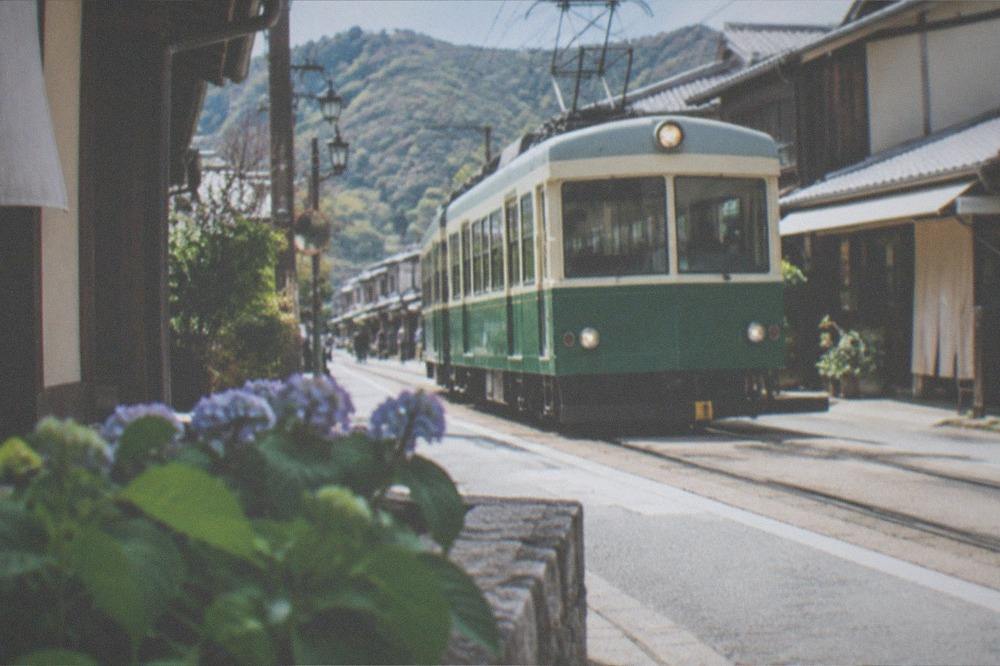
Arashiyama is reached by the JR Sagano Line from Kyoto Station to Saga-Arashiyama in about 15 minutes, by the Randen tram from Shijo-Omiya or Katsura to the Arashiyama terminal, or by city bus, with the flat bus fare at 230 yen and the Subway and Bus One-Day Pass at 1,100 yen, per the city transport bureau's own fare pages. The JR line is fastest from the station; the tram is slower but drops you closer to the district's heart.
The bus-only one-day pass no longer exists, a point the transport bureau confirmed when it ended sales in September 2023 and use in March 2024, citing the concentration of tourists on buses. The product now is the Subway and Bus One-Day Pass at 1,100 yen, child 550 yen. The bureau has also added the EX100 and EX101 tourist express buses on the eastern sightseeing corridors, though Arashiyama sits on the regular network rather than those routes.
| Route to Arashiyama | Fare | Time |
|---|---|---|
| JR Sagano Line, Kyoto Station to Saga-Arashiyama | About 240 yen | About 15 min |
| Randen tram, Shijo-Omiya to Arashiyama | About 220-250 yen | About 25 min |
| City bus, flat fare | 230 yen adult, 120 yen child | Depends on traffic |
| Subway and Bus One-Day Pass | 1,100 yen adult, 550 yen child | Unlimited, subway and bus |
The tram deserves the nod for the return journey at least. It runs through ordinary residential Kyoto at street level, which after a day of world-heritage crowds is its own kind of relief, and it connects toward the central hotel zone covered in the best hotels in Kyoto guide. Travelers basing themselves in the east of the city should budget the extra transfer time honestly.
When Is The Best Season To Visit Arashiyama?
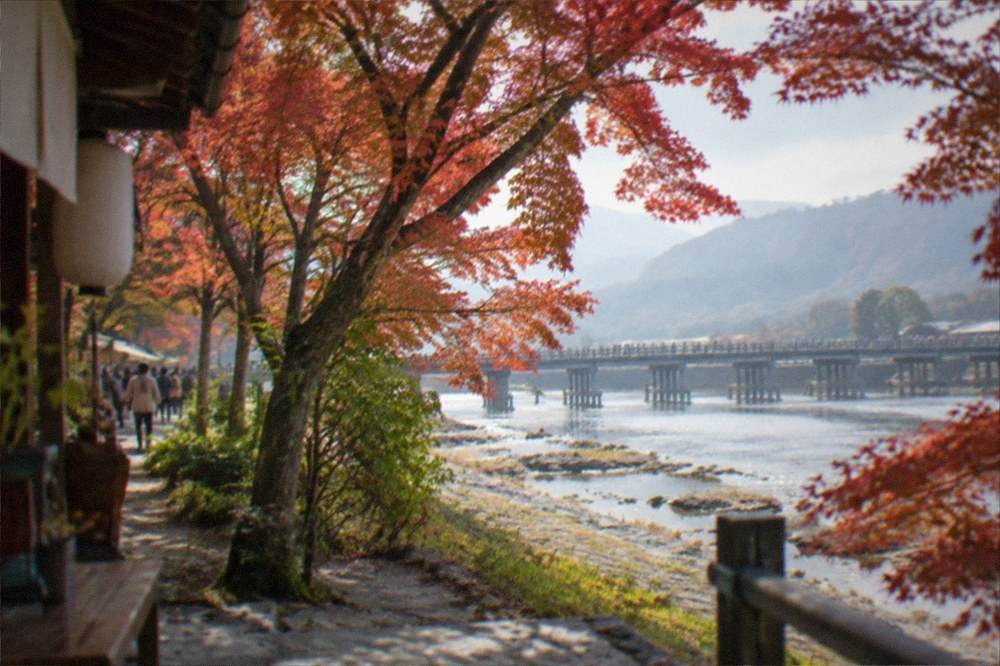
Arashiyama's peak seasons are cherry blossom, with the JMA 1991-2020 normals putting Kyoto's full bloom at 4 April and the actual 2026 full bloom on 30 March, and autumn foliage, with the JMA maple normal at 5 December but the Arashiyama-specific 2026 foliage forecast from Weathernews pointing to around 24 November. The gap between those two autumn dates is the single most useful planning fact on this page.
The JMA maple date is the observatory's specimen tree in central Kyoto, not the valley's peak, so the Weathernews Arashiyama forecast of around 24 November 2026 is the better guide for this district specifically. Either way, the "mid-November peak" repeated in most guides undersells how late Kyoto's colour runs. The Kyoto autumn leaves itinerary guide builds plans around the real dates.
| Season marker | Normal (1991-2020) | 2026 actual or forecast |
|---|---|---|
| Cherry flowering | 26 March | 23 March (observed) |
| Cherry full bloom | 4 April | 30 March (observed) |
| Maple red leaves | 5 December | Around 24 Nov in Arashiyama (Weathernews forecast) |
| Ginkgo yellow | 24 November | Not yet observed |
Rain matters more here than in central Kyoto, because the district's core activities, the grove walk, the monkey climb and the river, are all outdoors. The JMA 1991-2020 normals show July as Kyoto's wettest month at 223.6 mm, ahead of June's 199.7 mm, a fact most guides get backwards. Winter is the quiet trade: cold, with a mean January temperature of 4.8 C, but the gorge and the grove in bare season have a spareness that the peak months lose. The best time to visit Kyoto guide and the Kyoto weather guide carry the full monthly tables.
What Does A Full Arashiyama Day Look Like?
A full day runs the grove before 8:00, Tenryu-ji's garden and buildings from 8:30, the Sagano train up the gorge mid-morning, the Hozugawa boat back down before lunch, the monkey park climb in the afternoon and the riverside eating streets before the tram home, roughly six to eight hours with the train, boat, temple and monkey park admissions stacked on top of each other. Add the itemized fares from the tables above and the full circuit costs what those four figures sum to, before food.
The sequence is deliberately front-loaded. The grove at 7:30 is a different place from the grove at 10:30, and the same walk costs nothing but an early alarm. Tenryu-ji opens at 8:30, which bridges the gap to the train's morning departures perfectly. The boat lands you at Togetsukyo for a late lunch, and the monkey park's 16:00 last entry sets the day's back boundary.
The budget-conscious version keeps the same shape for a fraction of the cost: the free grove, the free Togetsukyo and riverbank, Tenryu-ji's garden at 500 yen and the monkey park at 800 yen, skipping the train and boat. The free things to do in Kyoto guide stretches that logic across the whole city.
The one-day bus tours above are the other route through the district: they cover the bamboo grove alongside Fushimi Inari and Kinkaku-ji in a single loop, which trades Arashiyama's depth for the city's breadth. For many first-time visitors that trade is the right one, and the district will still be here on a return trip.
Common Questions About Arashiyama
What Is In Arashiyama Beyond The Bamboo Grove?
The Sagano Romantic Train, the Hozugawa Kudari river boats, Tenryu-ji, Iwatayama Monkey Park, Togetsukyo bridge, the Saga Toriimoto preserved street and the riverside eating streets. The grove is one corner of a district that fills a full day.
How much does a day in Arashiyama cost?
Count the itemized fares: 880 yen for the Sagano train one way, 6,000 yen for the Hozugawa boat, 800 yen for Tenryu-ji's garden and buildings, and 800 yen for the monkey park. A budget version skipping the train and boat pays only the two temple and park admissions.
Is the bamboo grove free?
Yes. The bamboo path is a free public path with no closing time and no gate, which is why it carries the district's heaviest crowds between mid-morning and mid-afternoon.
Can you do the Sagano train and the Hozugawa boat on the same day?
Yes, and they pair naturally. Take the train up the gorge to Torokko Kameyama, walk the short riverside path to the boat landing, and float back down to Arashiyama. The two rides form a loop with no backtracking.
Is Iwatayama Monkey Park difficult?
The climb is a steep forest path of roughly 20 minutes, uneven underfoot, and the park closes early in bad weather or when the monkeys retreat up the hill. It is cash only, 800 yen for 16 and over.
When do the autumn leaves peak in Arashiyama?
The 2026 district-level forecast points to around 24 November, later than the mid-November peak most guides claim. The JMA's central-Kyoto maple normal is 5 December, so late November is the safer bet for colour in the valley.
Arashiyama rewards the traveler who gives it the whole day and punishes the one who gives it an hour. The grove is free and takes twenty minutes; the train, the gorge, the temples and the monkey hill are what the district is actually for, and every price on this page comes from the operator or temple's own published pages. Plan the early start, take the loop up the gorge and down the river, and the west bank delivers a day that central Kyoto cannot match for variety.