Which Kyoto Autumn Temples Go First: Tofuku-ji, Eikan-do, Kiyomizu-dera?
The order matters more than the list. Tofuku-ji revises its fees on 1 November, Kiyomizu-dera runs night viewing into December, and the JMA maple normal is 5 December, far later than most guides claim.
Short answer
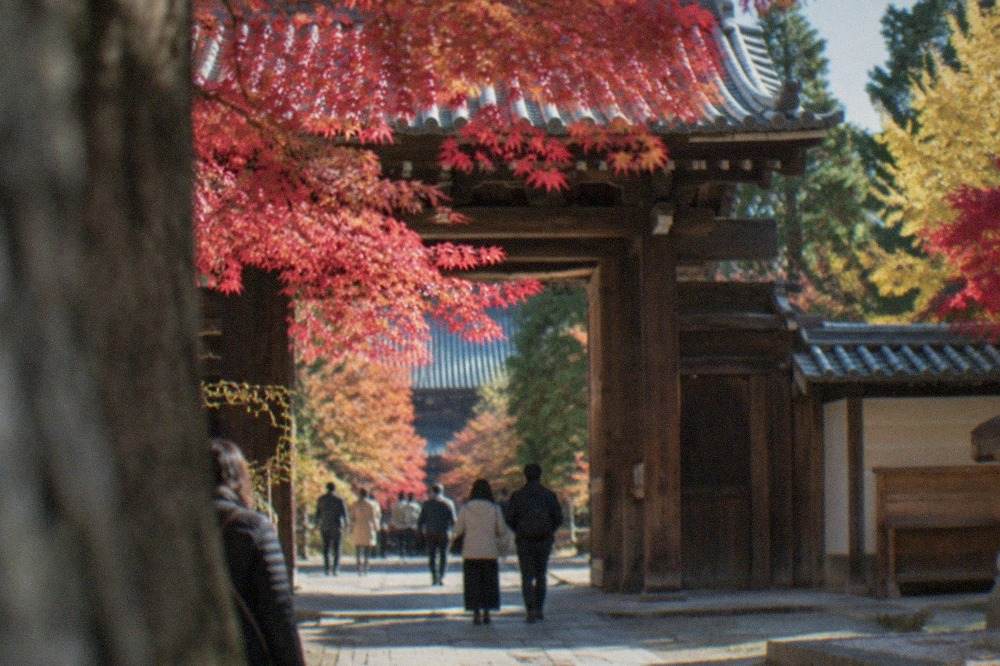
See Tofuku-ji first thing in the morning during foliage season, Eikan-do at midday or for its illumination, and Kiyomizu-dera either at opening at 6:00 or during its 21 to 30 November night viewing. The JMA normal for maple red leaves is 5 December, so late November to early December is the honest window.
Kyoto's maple season has a scheduling problem that almost every itinerary ignores: the official colour marker is far later than the internet believes. The JMA Kyoto observatory's 1991-2020 normal for kaede momiji red leaves is 5 December, and its normal for ginkgo yellow is 24 November, yet most guides still promise a mid-November peak. That gap between the official marker and the popular claim is the single most useful planning fact on this page. The second is that Tofuku-ji, the temple most famous for its maple valley, revises its admission fees on 1 November 2026, mid-season, so any fee copied from an older guide is already wrong.
This itinerary from Kyoto Travel Guide sequences the three temples in the question, Tofuku-ji, Eikan-do and Kiyomizu-dera, then builds outward into Arashiyama, Higashiyama and the northern zen temples, using only fees, hours and dates the fact base has verified. Where a number was never confirmed, the plan says so rather than inventing it.
Which Kyoto Autumn Temples Go First: Tofuku-ji, Eikan-do, Kiyomizu-dera?
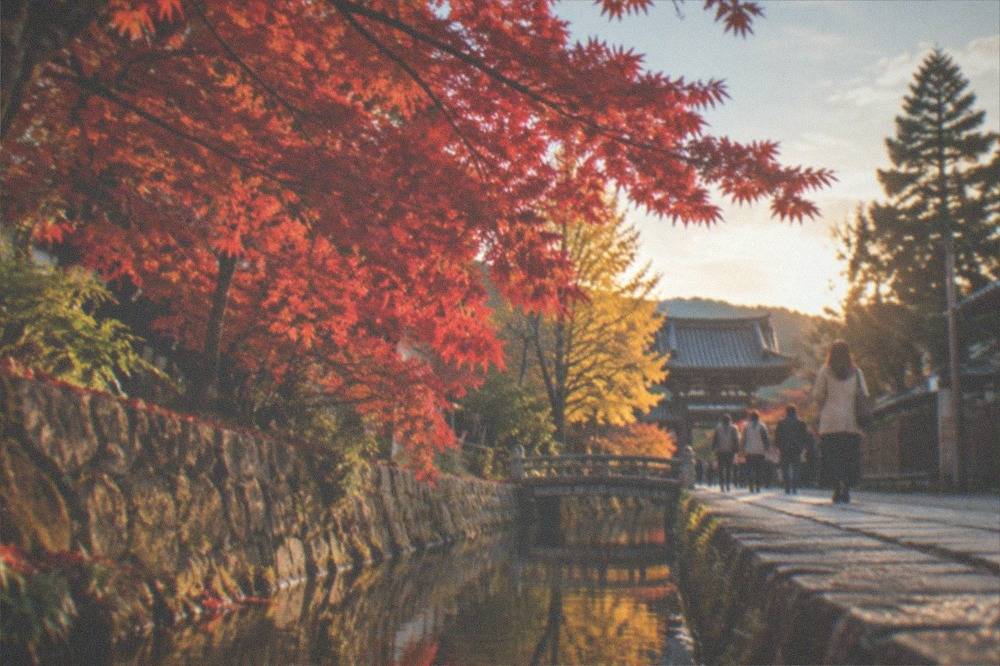
Go to Tofuku-ji first in the morning, Eikan-do at midday or for its evening illumination, and Kiyomizu-dera either at its 6:00 opening or during its 21 to 30 November night viewing. Tofuku-ji's Tsutenkyo bridge is the city's signature maple view and its foliage-period ticket rises to 1,000 yen from 1 November 2026, so it deserves the early slot before the bridge walkway fills. Kiyomizu-dera opens at 6:00 daily and closes by season, which makes it the natural bookend.
The logic is about closing windows and crowd physics, not preference. Tofuku-ji's Tsutenkyo bridge is a raised walkway through a maple valley: it is a one-directional flow at the best of times, and in peak foliage it moves at walking-pace shuffle. The temple's own notice sets the foliage-period fee at 1,000 yen for adults against 600 yen outside it, and the combined ticket introduced on 1 November 2026 is 1,000 yen for both the bridge circuit and the Hojo garden. Arriving early does not promise emptiness, and no honest guide should claim a specific crowd margin, but the bridge is simply more walkable before mid-morning.
Eikan-do sits between the other two geographically and thematically. It is the temple most visited for its maples alone, and its evening illumination is a separate event with its own queue. Kiyomizu-dera is the flexible one: the temple's FAQ confirms a 6:00 opening every day, and its published 2026 schedule runs night viewing from 21 to 30 November, 6:00 to 21:30 with last entry at 21:00. That makes it the only one of the three you can legitimately visit after dinner.
A guided day tour is worth considering for the first day of an autumn trip, when you are still calibrating. The Kiyomizu-Dera and Fushimi Inari day tour pairs the two most crowded free-and-cheap sights in the east of the city and removes the transit decisions between them, and the one-day bus tour covering Fushimi Inari, Kinkaku-ji and the bamboo grove does the same for the cross-city pairings that eat the most time in autumn.
When Do Kyoto's Maple Leaves Actually Turn?
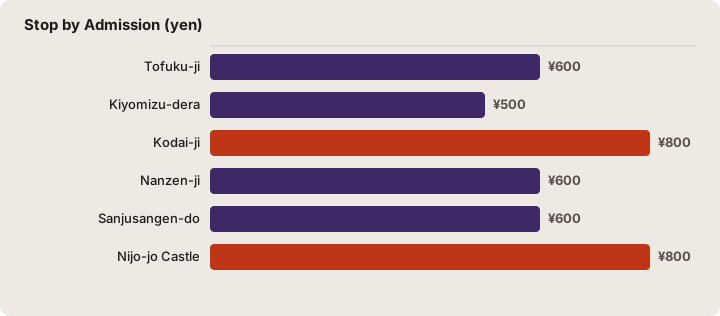
The JMA Kyoto observatory's 1991-2020 normal for maple red leaves is 5 December, and for ginkgo yellow leaves it is 24 November, both later than the mid-November peak most guides claim. In 2025 the observatory's maple specimen turned on 10 December. The 2026 forecasts put Arashiyama foliage around 24 November and the broader Kyoto red-leaf peak around 11 December.
The JMA date is the observatory's own specimen tree turning, not the Arashiyama peak, and that distinction matters. The official marker tells you when the season is complete; the best viewing in the mountain temple valleys typically runs one to two weeks ahead of it, because exposed hillside maples turn before the sheltered lowland specimen. The honest framing is that late November into the first week of December is the strongest window, with the caveat that a normal is a thirty-year average, never a promise.
| Marker | 2026 actual or forecast | 2025 actual | 1991-2020 normal |
|---|---|---|---|
| Maple red leaves (JMA observatory) | forecast around 11 December | 10 December | 5 December |
| Arashiyama foliage (Weathernews) | around 24 November | not stated | not stated |
| Ginkgo yellow leaves | not yet observed at writing | 25 November | 24 November |
| Earliest maple on record | 10 November 1976 | ||
| Latest maple on record | 20 December 2024 |
What this means for the itinerary is simple: if you can only travel in mid-November, you will catch early colour, ginkgo gold and the illuminations, but not peak maple. If you can travel the last week of November, you get the strongest overlap. Early December is not a consolation prize, it is statistically the safest bet for red maples, and the city is quieter once the main tourist wave has gone home.
What Does Each Temple on the Autumn Route Charge?
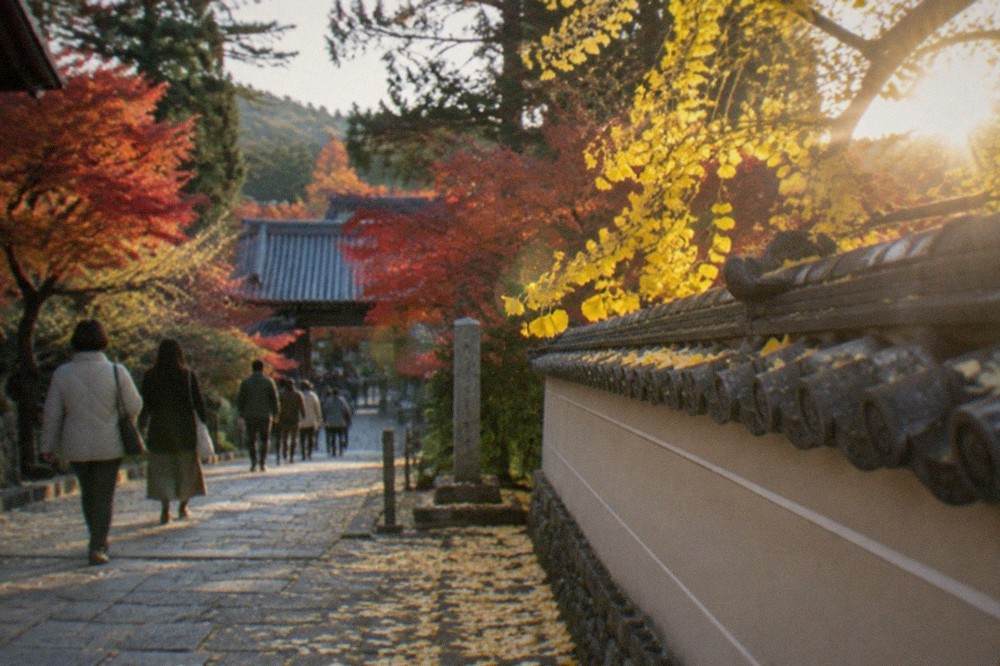
Tofuku-ji's Tsutenkyo bridge and Kaisando circuit costs 600 yen for adults, rising to 1,000 yen during the foliage period under the revision effective 1 November 2026, with a new 1,000 yen combined ticket for bridge plus Hojo garden. Kiyomizu-dera charges 500 yen, though the temple does not print the figure itself. Eikan-do's fee is not in this site's verified fact base, so check the temple's own notice before you go.
The Tofuku-ji revision is the one that catches people out. The temple's own notice, linked from its site, sets out the change with unusual clarity:
| Tofuku-ji area | Until 31 October 2026 | From 1 November 2026 | Foliage period (from 1 Nov rule) |
|---|---|---|---|
| Tsutenkyo bridge and Kaisando | 600 / 300 yen | 600 / 300 yen | 1,000 / 300 yen |
| Hojo garden (Honbo) | 500 / 300 yen | 600 / 300 yen | 600 / 300 yen |
| Combined ticket (both) | none | 1,000 / 500 yen | 1,000 / 500 yen |
For the rest of the autumn circuit, the verified figures are stable. Kodai-ji charges 800 yen for adults, or 1,200 yen combined with Entoku-in, and its 2026 autumn night viewing runs 23 October to 13 December. Nanzen-ji tickets its Hojo garden and Sanmon gate separately at 600 yen each. Kiyomizu-dera's 500 yen figure is single source: the temple does not print it, so treat it as widely reported rather than official, and budget for it possibly moving.
How Do You Order A Full Day Around Closing Windows?
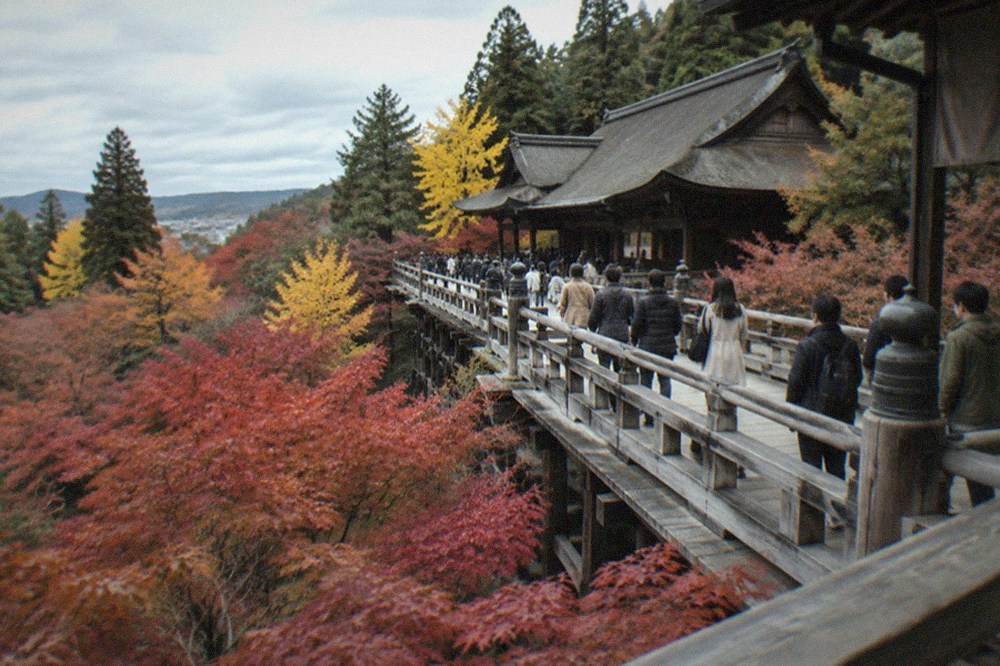
Order the day backwards from the earliest closing time, not forwards from your hotel. In autumn the binding constraints are Nanzen-ji's 16:30 winter reception cutoff, Sanjusangen-do's 16:00 reception from 16 November, and Nijo-jo Castle's 16:00 admission stop. A plan that has you arriving at any of those after 16:00 in late November is simply wrong.
The autumn itinerary below is built on the verified hours, and it puts the flexible sights last. Kiyomizu-dera's 6:00 opening and its late-November night viewing make it the natural evening anchor. Kodai-ji runs 9:00 to 17:30 with reception to 17:00, then reopens for illumination from 17:00 to 22:00, so it bridges the dinner gap. The bamboo path in Arashiyama is a free public route with no gate, and the Philosopher's Path is a public canal walk, so both absorb overflow time that temples with desks cannot.
| Stop | Verified hours in autumn | Admission | Evening option |
|---|---|---|---|
| Tofuku-ji | daylight visit; check the temple's notice | 600 yen, 1,000 in foliage period | none |
| Eikan-do | check the temple's own notice | not verified here | illumination event |
| Kiyomizu-dera | opens 6:00 daily; 6:00-21:30 on 21-30 Nov 2026 | 500 yen, single source | night viewing to 21:30 |
| Kodai-ji | 9:00-17:30, reception to 17:00 | 800 yen | illumination 17:00-22:00, 23 Oct to 13 Dec 2026 |
| Nanzen-ji | 8:40-17:00 to 30 Nov, 8:40-16:30 from 1 Dec | 600 yen per area | none |
| Sanjusangen-do | 9:00-16:00 from 16 Nov | 600 yen | none |
| Nijo-jo Castle | admission 8:45-16:00, closes 17:00 | 800 yen | none |
A workable day in the east of the city, using only verified timings: Kiyomizu-dera at or shortly after 6:00, when the stage and the Otowa waterfall are at their calmest, then the walk down through Ninenzaka and Sannenzaka while the shops open. Kodai-ji mid-morning, then the Philosopher's Path north toward Nanzen-ji, arriving well before its reception cutoff. Eikan-do sits on this same axis, between Nanzen-ji and the path. If the date falls in the illumination window, return to Kodai-ji or continue to Kiyomizu-dera's night viewing after dinner.
For the west and north of the city, the one-day-in-Kyoto itinerary covers the sequencing logic in more detail, and the general Kyoto itinerary handles the non-autumn version. The autumn adjustment is mostly about swapping one or two garden stops for maple valleys and adding an illumination to each evening.
What Is The Best Base For A Kyoto Autumn Trip?
Stay on the Karasuma or Kawaramachi axis, or at Kyoto Station, because the autumn itinerary runs east to Tofukuji and Keihan lines, west to Arashiyama, and north to the zen temples, and no single district wins all three. The subway adult fare runs 220 to 360 yen by zone, and the Subway and Bus One-Day Pass at 1,100 yen pays off once you make three or more fare-zone trips in a day.
The transit arithmetic matters more in autumn because everyone is moving at once. The city bus flat fare is 230 yen for adults, and the buses along Higashiyama's eastern edge are the ones that jam first in foliage season. The tourist express buses EX100 and EX101 exist precisely for this: EX100 runs Kyoto Station to Gojo-zaka, Gion, Okazaki and Ginkaku-ji, at 500 yen a ride, covered by the one-day pass. The EX101 runs Kyoto Station direct to the Kiyomizu side. Both are weekend-and-peak services, so check the city transport page for the day you travel.
For the deeper planning questions, the where to stay in Kyoto guide covers the districts in full, and the Kyoto crowds guide explains the city's own comfort forecast tool, which the shrine at Fushimi Inari links to from its own site. Using the comfort forecast on the morning of each autumn day is the closest thing to a legal crowd cheat code the city offers.
How Does Arashiyama Fit Into An Autumn Itinerary?
Arashiyama belongs on its own day, sequenced as bamboo grove first, then Tenryu-ji's garden at 500 yen from its 8:30 opening, then the Iwatayama Monkey Park at 800 yen, with the Hozugawa Kudari boat as the afternoon anchor at 6,000 yen adult. The Sagano Romantic Train runs 880 yen one way for adults, and its season runs roughly March to December.
The reason Arashiyama gets a full day is the geometry. The district sits at the end of the JR Sagano line and the Keifuku Randen tram, and everything in it is walkable but spread along the river. Tenryu-ji's garden opens at 8:30 with last admission at 16:50, and its Hatto ceiling viewing is a separate 500 yen ticket, closed 28 to 30 October 2026 and 2 January 2027. The monkey park is a real uphill walk, 800 yen for 16 and over in cash, open 9:00 to 16:00 with the summit until 16:30, and it closes early if the monkeys head back up the hill.
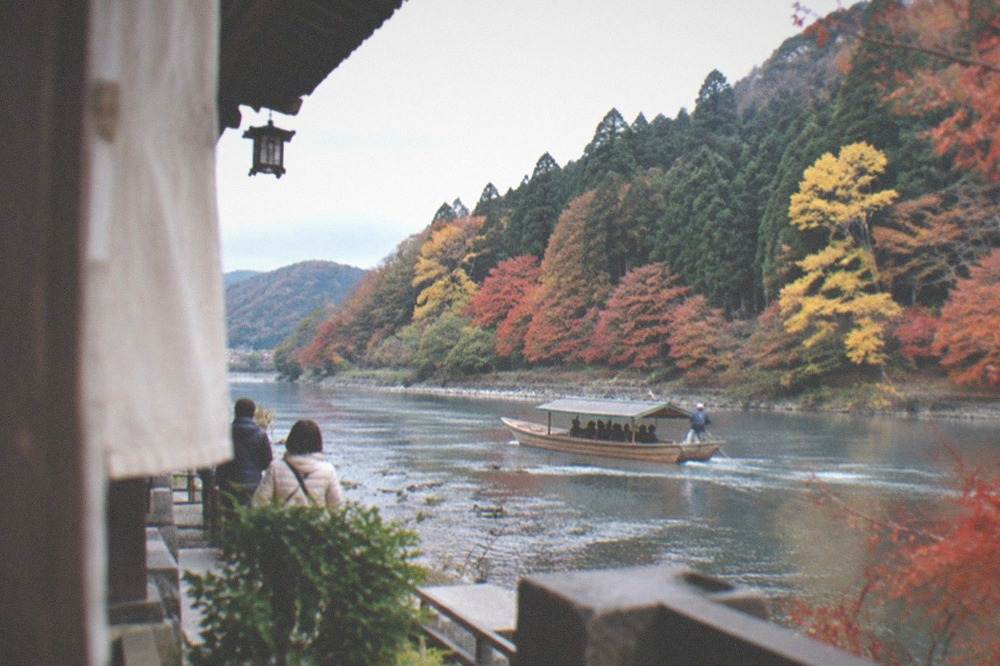
The Hozugawa Kudari boat ride is the autumn centrepiece for many visitors: the operator's own ticket page sets 6,000 yen adult and 4,500 yen child, about two hours downriver, with the regular timetable running 10 March to 13 December 2026. The Arashiyama bamboo grove guide covers the district in full, and the Sagano Romantic Train guide handles the train's ticketing, including the fact that this site does not print a closed-day pattern for it because the operator's timetable is the only authority.
| Arashiyama stop | Verified figure | Note |
|---|---|---|
| Bamboo grove path | free | public path, no gate |
| Tenryu-ji garden | 500 yen adult | buildings plus 300, Hatto 500 separate |
| Iwatayama Monkey Park | 800 yen adult, cash | 9:00-16:00, summit to 16:30 |
| Hozugawa Kudari | 6,000 yen adult | about 2 hours, to 13 Dec 2026 |
| Sagano Romantic Train | 880 yen one way | child 440 |
What About Night Illuminations And Kyoto After Dark?
Kodai-ji's autumn illumination runs 23 October to 13 December 2026, 17:00 to 22:00 with reception to 21:30, and Kiyomizu-dera's night viewing runs 21 to 30 November 2026, 6:00 to 21:30 with last entry at 21:00. Those two dates are the backbone of an autumn evening plan, and everything else after dark is either a public walk or a bar.
The illuminations are the part of the autumn season that the mid-November-peak guides undersell. Because the JMA maple normal is 5 December, the illuminations in late November and early December often catch better colour than the daytime crowds of mid-November, and the temples light their maples artificially, which extends the effective season past the natural one. The Kyoto at night itinerary covers the full evening circuit, including Pontocho and the Kawaramachi bar streets.
For dinner, the honest kaiseki answer is on Hyotei's own site: at one of the city's most famous kaiseki houses, by Nanzen-ji, the course opens from 31,625 yen at lunch and 37,950 at dinner in the main building, while the same kitchen's annex serves asa-gayu at 5,445 yen and a Shokado bento at 7,260 yen, tax and service included, with bookings from two people. Those are Hyotei's prices for its own rooms and seasons, not a city average, but they frame the real decision: the annex of a top house costs less than a quarter of the main course.
What Weather Should You Plan Around In Late November?
The JMA 1991-2020 normals for station 47759 put November at a 12.5 C mean with a 17.3 C mean daily maximum and 73.9 mm of rain, and December at a 7.2 C mean with an 11.6 C maximum and 57.3 mm. Late autumn is dry by Kyoto standards, but the evenings drop toward the December mean daily minimum of 3.5 C, so the illuminations are genuinely cold.
| Month | Rain mm | Mean C | Mean daily max C | Mean daily min C | Sunshine h |
|---|---|---|---|---|---|
| October | 143.2 | 18.4 | 23.4 | 14.4 | 156.0 |
| November | 73.9 | 12.5 | 17.3 | 8.4 | 140.7 |
| December | 57.3 | 7.2 | 11.6 | 3.5 | 134.4 |
The station's record low is -11.9 C and its deepest snow 41 cm, so Kyoto has a real winter and late-autumn nights are not mild. Layer for the illuminations. The Kyoto weather guide carries the full monthly table, and the rainy day itinerary is the fallback if a front arrives, which in November it does, just less often than in summer.
Should You Book Anything Ahead For A Kyoto Autumn Trip?
Book three things ahead: accommodation, because the city drew a record 62.79 million visitors in 2025 per the city's own June 2026 survey release, any guided tour you actually want, and the Katsura Imperial Villa tour if you intend to see it, since it requires an advance application. Temples themselves need no booking, with the single exception of Nijo-jo Castle's Honmaru Palace, which takes a separate 1,000 yen ticket and an advance reservation.
The 2025 survey numbers explain the autumn squeeze: 62.79 million visitors, 16.59 million overnight guests, and 2.0474 trillion yen in tourism spending, all records. Late November concentrates a large share of that into about ten days. The practical consequences are that mid-range rooms near the eastern temples sell out first, and that the free sights, Fushimi Inari's paths chief among them, are the ones that feel the pressure, since no ticket caps their numbers.
For the imperial properties, the Imperial Household Agency's pages state the terms directly: the Kyoto Imperial Palace is open to all visitors with no advance application, Katsura Imperial Villa is guided-only at 1,000 yen for those 18 and over with advance application or same-day numbered tickets, and Shugakuin is free, guided, and 18-and-over only. The Kyoto first-time visitors itinerary folds these into a broader plan.
If a guided day is the right fit, the three options above cover the main autumn pairings: the eastern temple axis with Kiyomizu-dera and Fushimi Inari, the cross-city bus circuit that reaches Kinkaku-ji and the bamboo grove in one move, and the Arashiyama walk with the Sagano train and a matcha stop. Each one solves a different sequencing problem this itinerary has described, and each leaves the evenings free for the illuminations.
Common Questions About The Kyoto Autumn Leaves Itinerary
Which Kyoto Autumn Temples Go First: Tofuku-ji, Eikan-do, Kiyomizu-dera?
Start at Tofuku-ji in the early morning during foliage season, both for the Tsutenkyo bridge walkway and because its foliage-period ticket at 1,000 yen from 1 November 2026 buys the city's signature maple valley view. Eikan-do fits midday or its evening illumination. Kiyomizu-dera works at its 6:00 opening or during its 21 to 30 November night viewing.
When do Kyoto's maple leaves actually peak?
The JMA Kyoto observatory's 1991-2020 normal for maple red leaves is 5 December, and in 2025 its specimen turned on 10 December. The best viewing in the temple valleys typically runs one to two weeks ahead of the official marker, so late November into early December is the honest window. A normal is a thirty-year average, never a promise.
How much does Tofuku-ji cost in autumn 2026?
From 1 November 2026 the Tsutenkyo bridge and Kaisando circuit costs 1,000 yen for adults during the foliage period, against 600 yen outside it, and the new combined ticket for bridge plus Hojo garden is 1,000 yen. The Hojo garden alone rises from 500 to 600 yen. The figures come from the temple's own fee notice.
Is Kiyomizu-dera open at night in autumn?
Yes, on specific dates. The temple's published 2026 schedule runs night viewing from 21 to 30 November, 6:00 to 21:30 with last entry at 21:00. Outside those dates it opens at 6:00 daily and closes by season.
Is mid-November too early for Kyoto autumn colour?
It is early for peak maple, though ginkgo gold and the illuminations are already running. The 2026 forecasts put Arashiyama foliage around 24 November and the broader red-leaf peak around 11 December. Mid-November visitors get early colour and bigger crowds; early-December visitors get statistically safer reds.
What should you book ahead for Kyoto in autumn?
Accommodation first, since the city recorded 62.79 million visitors in 2025. Any guided tour you want comes second. Third, the Katsura Imperial Villa, which requires an advance application for its guided tour at 1,000 yen. Temples need no booking except Nijo-jo Castle's Honmaru Palace, which takes a separate ticket and reservation.
The sequencing is the whole game in autumn: Tofuku-ji before the bridge fills, Eikan-do when the light is on the maples, Kiyomizu-dera at 6:00 or after dark, and the closing windows of Nanzen-ji, Sanjusangen-do and Nijo-jo Castle respected rather than argued with. Build the days backwards from the earliest cutoff, keep the free public paths as your overflow, and let the JMA normals, not a mid-November folk claim, set your dates.