How To Avoid Crowds In Kyoto
Kyoto drew a record 62.79 million visitors in 2025, but the crowds are not spread evenly across the city, the day or the calendar. Here is what the city's own survey and the venues' own pages say about where the pressure actually falls, and how to route around it.
Short answer
Kyoto's three most famous free sights, Fushimi Inari, Kiyomizu-dera's approach and the Arashiyama bamboo grove, carry the worst of a record 62.79 million annual visitors, but the pressure is concentrated between roughly 10:00 and 16:00. Early mornings, the city's own crowd-forecast tool and paid alternatives spread the load.
Kyoto recorded 62.79 million visitors in 2025, a record, against 56.06 million the year before. The city's own tourism survey, released on 12 June 2026, also counted 46.20 million day visitors against 16.59 million overnight guests, which is the single most important crowd fact in this guide: most of the pressure arrives in the middle of the day and leaves again by night. The crowds are real, but they are not evenly distributed across the calendar, the city or even the hours of a single morning. This guide uses the city's own survey figures, the venues' own fee and hours pages and the shrine's own FAQ to describe where the pressure actually falls and how to route around it, starting with the three places everyone asks about first.
How Bad Are Kyoto Crowds At Fushimi Inari, Kiyomizu-dera And The Bamboo Grove?
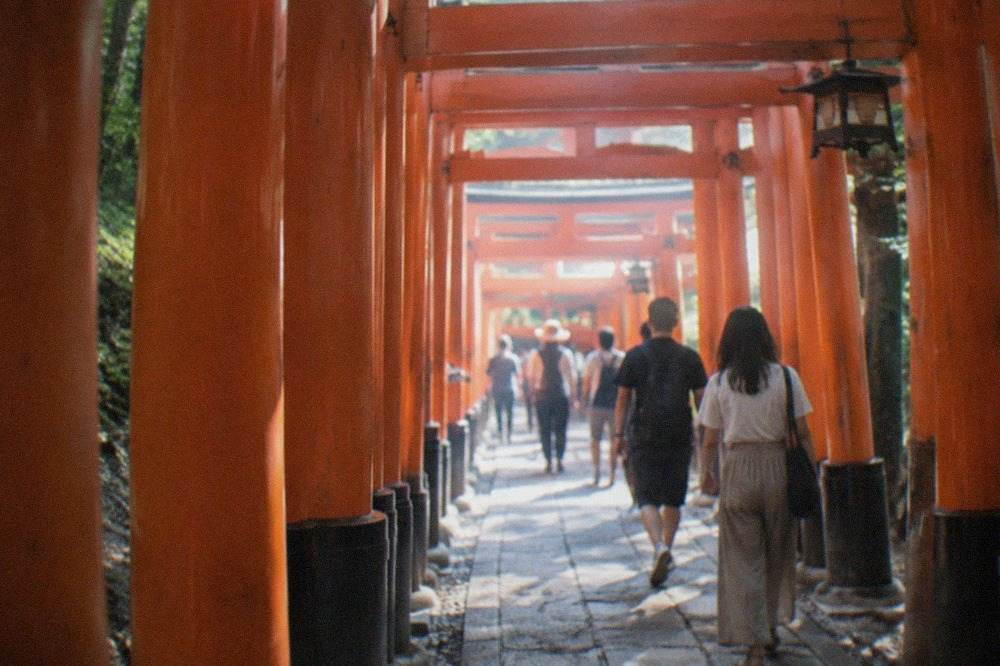
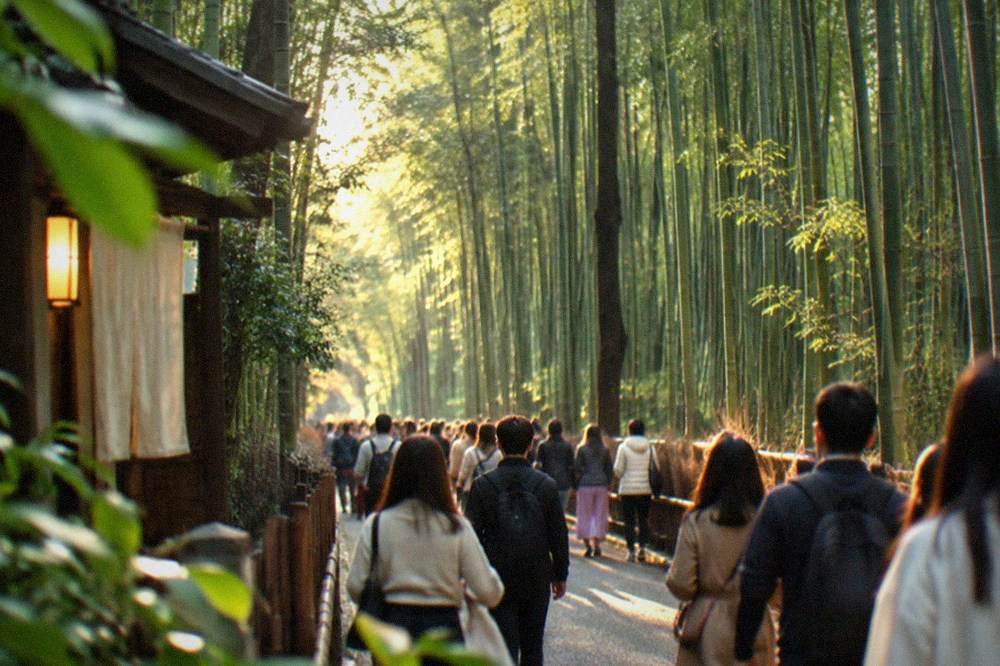
At these three sights the crowds are genuinely heavy, and the reason is structural: all three are free to enter, open early or with no closing time at all, and reachable without a ticket or a reservation. Fushimi Inari charges nothing and its paths have no closing time, the bamboo grove is a free public path, and Kiyomizu-dera opens at 6:00, so each absorbs a large share of the 46.20 million day visitors the city counted in 2025.
The pattern holds across all three. Free access plus famous imagery equals maximum footfall. Fushimi Inari Taisha publishes no admission fee anywhere on its site, and the shrine's FAQ describes about 10,000 torii of all sizes across the whole mountain, not 10,000 in the Senbon Torii tunnel as most competing guides claim. The bamboo path in Arashiyama is a free public walkway. Kiyomizu-dera does charge admission, 500 yen on the widely repeated figure, though the temple does not print that fee on its own site, so treat it as reported rather than official. The temple's FAQ confirms the 6:00 opening.
What that means in practice is that none of these three has a natural throttle. Temples that charge and close, like Kinkaku-ji at 9:00 to 17:00, spread their arrivals across a defined window. Free sights with long or unlimited hours concentrate everyone who arrives whenever they like, and the heaviest overlap lands late morning to mid afternoon. The mitigation is not to skip these places, it is to time them, and the sections below give the numbers to do it with.
When Is Kyoto Most Crowded?
Kyoto's crowd peaks follow the calendar in three waves: the cherry blossom window from late March to early April, the autumn foliage window from mid November to early December, and the Golden Week holiday cluster in early May. The city's 2025 survey shows the underlying pressure is now year-round, with 62.79 million visitors, 46.20 million of them day visitors, so the difference between peak and off-peak is one of degree rather than kind.
The phenology record gives the timing more precisely than any guide's guesswork. The Japan Meteorological Agency's Kyoto observatory recorded cherry flowering on 23 March 2026 and full bloom on 30 March, against 1991 to 2020 normals of 26 March and 4 April. In 2025 flowering came on 27 March and full bloom on 5 April. The blossom window is therefore roughly the last week of March into the first week of April, and it moves only days either side of that in most years.
| Marker | 2026 | 2025 | 1991-2020 normal |
|---|---|---|---|
| Cherry flowering | 23 March | 27 March | 26 March |
| Cherry full bloom | 30 March | 5 April | 4 April |
| Maple red leaves | not yet recorded | 10 December | 5 December |
| Ginkgo yellow leaves | not yet recorded | 25 November | 24 November |
Note the maple date carefully. The JMA figure of 5 December as the normal for red leaves on its Kyoto specimen is later than every "mid-November peak" claim in circulation, and the agency's date is the observatory's own tree turning, not the Arashiyama viewing peak. Commercial foliage forecasts for 2026 placed the Arashiyama colour around 24 November. The practical crowd window for autumn colour is therefore mid November into early December, and the free night illuminations, such as Kodai-ji's from 23 October to 13 December 2026, extend the evening traffic too.
Beyond the seasons, the festival calendar concentrates locals as well as visitors. Gion Matsuri runs the whole of July, with the Yamaboko Junko processions on 17 and 24 July and the Yoiyama nights on 14 to 16 and 21 to 23 July. Gozan no Okuribi on 16 August fills the riverbanks and the hillsides' viewpoints. If your dates are flexible, the quietest reliable stretch is late January into February: the driest month, only 53.3 mm of rain on the 1991 to 2020 normals, and well outside both foliage windows.
What Time Of Day Beats The Crowds In Kyoto?
The single most effective timing move in Kyoto is the early start: Fushimi Inari's paths have no closing time, Kiyomizu-dera opens at 6:00, and the bamboo grove is a free public path, so all three are walkable from dawn, while the tour-bus wave lands between roughly 10:00 and 16:00. The city's own dispersal campaigns promote exactly this morning-and-evening spread, and its Tourism Comfort Forecast publishes a five-level crowd estimate by spot and time slot.
The morning advantage is not folklore, it is arithmetic. With 46.20 million day visitors against 16.59 million overnight guests, the majority of people at any free sight at 11:00 arrived within the previous two or three hours. At 7:00 the same sight is being shared almost entirely with overnight guests and locals. Kiyomizu-dera's own FAQ sets the opening at 6:00 daily, with closing times that move by season, and its spring and autumn night viewing extends hours to 21:30 on specific dates, which opens a second quiet window after the day crowd thins.
The city has also built real tools for this. The Kyoto Tourism Comfort Forecast, run by the city's tourism association, estimates a five-level crowd comfort rating for spots, areas and time slots using location data, weather and machine learning. Fushimi Inari Taisha links to it from its own homepage alongside its approach cameras. Checking it the night before is the closest thing Kyoto has to a tide table.
| Sight | Access | Best crowd window |
|---|---|---|
| Fushimi Inari Taisha | Free, paths have no closing time | Before 8:00 or after 17:00 |
| Kiyomizu-dera | Opens 6:00, closing varies by season | 6:00 to 8:00, or night viewing dates |
| Arashiyama bamboo grove | Free public path | Before 8:30 or near dusk |
| Kinkaku-ji | 500 yen, 9:00-17:00 | At 9:00 opening |
| Nijo-jo Castle | 800 yen, admission 8:45-16:00 | At 8:45 opening |
| Kodai-ji | 800 yen, 9:00-17:30 | Morning, or illumination evenings |
One caution on the "open 24 hours" claim repeated about Fushimi Inari: the shrine publishes desk and prayer hours only and sets no closing time for the paths, so plan around "no closing time" rather than a stated opening hour. The mountain is dark and unlit after sunset, and the shrine's own guidance treats the upper trails as a daytime walk. Inariyama is 233 m, and the full circuit takes most walkers a couple of hours, so an early start also buys cooler air in summer, when August's mean daily maximum is 33.7 C on the JMA normals.
For travellers who cannot face a 6:00 alarm, the guided morning market exists in bookable form. The Kyoto Early Morning Tour with an English-speaking guide runs 5 to 6 hours from $82 and is rated 4.9 from 1,998 reviews, moving through the headline sights before the midday peak. Booking a morning slot is the one timing decision that changes the whole day.
The evening works too, differently. The night itinerary most first-timers follow trades the closed temples for Gion, Pontocho and the illuminated stretches of Higashiyama, where the crowd pressure is social rather than physical.
For travellers who would rather have the timing handled than plan it themselves, three products do that work directly: a sequenced bus day through the big three, a reserved seat on the one Arashiyama attraction whose capacity is fixed by the timetable, and a guided hike that takes Fushimi Inari's quieter back trails instead of the Senbon Torii tunnel.
How Do You Spread Crowds Across Kyoto's Districts?
Kyoto's crowds concentrate in a narrow east-west band, Higashiyama and Gion on one side, Arashiyama on the other, because the famous free sights sit there, so the fix is geographic: pair one headline sight per half-day with a quieter neighbouring district such as Fushimi, Ohara, the Kyoto Botanical Garden side of the north, or the sake district south of the station. The city's own dispersal campaigns promote exactly this spread by time, season and location.
The city's 2025 to 2026 overtourism measures, published on its own pages, are built on the same logic: tourist express buses to move people faster, area-specific dispersal around Fushimi Inari, morning and evening campaign promotion, and hands-free luggage delivery to keep suitcases off crowded buses. You can apply the same policy personally. If your morning is Fushimi Inari, your afternoon belongs in Fushimi's sake district a few stops down the Keihan line, not back up the Kiyomizu slopes.
The pairing table is the practical version:
| Crowded anchor | Quieter pair nearby |
|---|---|
| Fushimi Inari | Fushimi sake district, Tofuku-ji |
| Kiyomizu-dera and Higashiyama lanes | Nanzen-ji and the Philosopher's Path north end |
| Arashiyama bamboo grove | Iwatayama Monkey Park, Otagi Nenbutsu-ji, Hozugawa Kudari |
| Gion and Yasaka Shrine | Kyoto Imperial Palace grounds, free entry |
| Nijo-jo Castle | Nishijin weaving district |
Arashiyama rewards this more than anywhere. The bamboo path itself is short and everyone walks it, but the district holds the monkey park at 800 yen for 16 and over, the Hozugawa Kudari river boats at 6,000 yen adult for about two hours on the water, and the Sagano Romantic Train at 880 yen one way, all of which meter their own crowds through price and capacity. A structured Arashiyama walking tour covering bamboo, monkeys, temple and garden runs 5 hours from $50, rated 5 from 1,781 reviews, and sequences the district so the grove comes at the calm end rather than the peak.
For a first visit, resist the checklist instinct. The one-day Kyoto itinerary works precisely because it commits to a handful of sights in one geographic line, and the first-timers guide explains the district logic behind it. Attempting Fushimi Inari, Kiyomizu-dera and Arashiyama in one day is possible on paper and miserable in July, when the month's 223.6 mm of rain makes it also Kyoto's wettest, not June as widely claimed.
Do Paid Temples Feel Less Crowded Than The Free Sights?
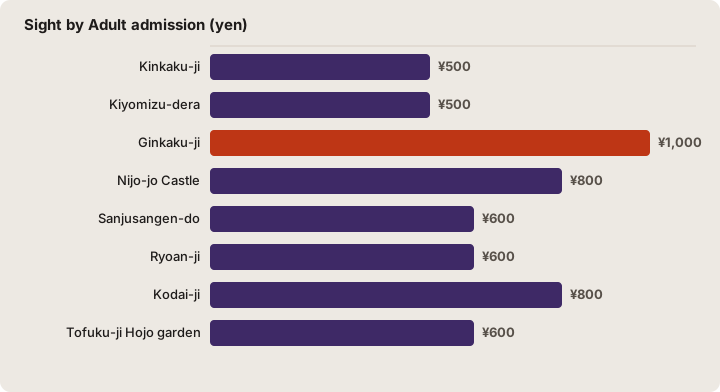
Yes, and the fee table explains why: every sight that charges admission meters its arrivals, while the free headline sights do not. Kinkaku-ji at 500 yen, Nijo-jo Castle at 800 yen, Sanjusangen-do at 600 yen and Ryoan-ji at 600 yen all have defined opening windows and turnstiles, so their crowd density stays bounded even in peak season, and the 2026 fee changes at Ginkaku-ji and Tofuku-ji make the paid tier noticeably more expensive than the free tier.
Ginkaku-ji doubled its admission on 1 April 2026, from 500 to 1,000 yen for adults, its first change in 32 years. Tofuku-ji revises on 1 November 2026, with the Hojo garden rising from 500 to 600 yen, a new 1,000 yen combined ticket, and the Tsutenkyo bridge at 1,000 yen during the foliage period. Any fee table copied from a 2024 or 2025 guide is now wrong for at least those two temples. The current figures, as each venue prints them:
| Sight | Adult admission | Notes |
|---|---|---|
| Fushimi Inari Taisha | Free | Shrine publishes no fee |
| Arashiyama bamboo path | Free | Public walkway |
| Kinkaku-ji | 500 yen | 9:00-17:00 |
| Kiyomizu-dera | 500 yen reported | Temple does not print the fee |
| Ginkaku-ji | 1,000 yen | Doubled 1 April 2026 |
| Nijo-jo Castle | 800 yen | 1,300 yen with Ninomaru-goten |
| Sanjusangen-do | 600 yen | 1,001 Kannon statues |
| Ryoan-ji | 600 yen | |
| Kodai-ji | 800 yen | 1,200 yen combined with Entoku-in |
| Tofuku-ji Hojo garden | 600 yen from 1 Nov 2026 | Was 500 |
The paid tier also buys you hours that work in your favour. Kinkaku-ji opens at 9:00, Nijo-jo Castle admission runs 8:45 to 16:00, and Sanjusangen-do opens at 8:30 from April to mid November. None of these can be walked at dawn, but none of them can be walked by 200 tour buses at once either, because the ticket window is the throttle. On a brutal peak day, the paid temples are the reliable fallback.
There is a trade in the other direction worth naming. The free sights are free for a reason that has nothing to do with crowd management: Fushimi Inari is a working shrine that has charged nothing since its deities were enshrined in 711, in the shrine's own account, and it sits at the head of a network of about 30,000 Inari shrines nationwide, in the shrine's words "said to be some thirty thousand". Skipping it to dodge crowds would be a mistake; timing it costs only an alarm clock.
What Is The City Doing About Overtourism In Kyoto?
The city's 2025 to 2026 measures target the buses and the peak hours specifically: tourist express buses EX100 and EX101 at 500 yen a ride, increased frequency on key routes, park-and-ride, hands-free luggage delivery, and dispersal campaigns promoting off-peak times, hidden districts and the morning and evening shoulders. None of it reduces visitor numbers, which hit a record 62.79 million in 2025, but it changes how those visitors move through the day.
The EX100 runs Kyoto Station to Gojo-zaka, Gion, Okazaki and Ginkaku-ji with fewer stops for speed, and the EX101 runs direct to the Kiyomizu side, running every 7 to 8 minutes in the morning on operating days. Both cost 500 yen adult, 250 yen child, and both accept the Subway and Bus One-Day Pass. That pass, at 1,100 yen adult and 550 yen child, is now the only one-day product, since the bus-only pass ended sales in September 2023 and use on 31 March 2024, a fact many older guides still get wrong.
The etiquette rules have tightened too, and they matter for crowd behaviour. The Kyoto City Tourism Association's guidelines ask visitors not to touch, chase or photograph geiko and maiko without permission and not to enter private property, and in Gion's private alleys off Hanamikoji, signage posted by the local district council threatens a 10,000 yen penalty for unauthorized photography or entry. That is council signage, not a city-administered fine, but the effect on a visitor is the same: stay on the main public road.
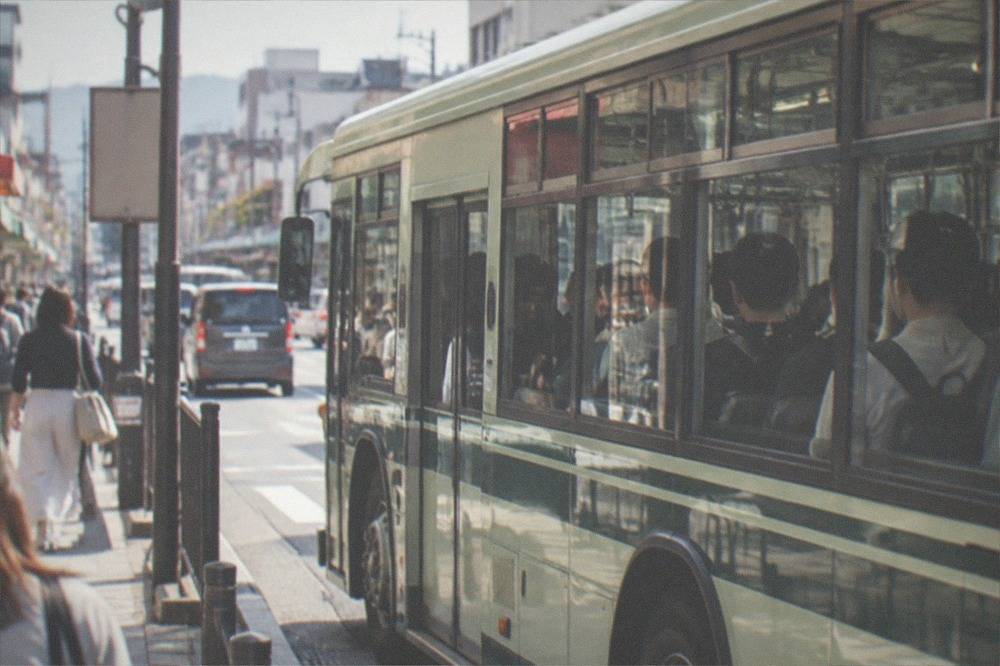
The transport arithmetic backs the subway over the bus. City buses cost a flat 230 yen per ride, subway fares run 220 to 360 yen by zone, and the one-day pass at 1,100 yen breaks even within about four rides. More to the point, the subway does not sit in Higashiyama's traffic with 46 million day visitors' worth of company. The Karasuma and Tozai lines solve most of this on their own.
Do Guided Tours Help You Avoid Kyoto Crowds?
A guided tour helps with crowds in one specific way: it fixes your timing and sequencing for you, and the good ones start before the wave. The trade is that you join a group, so you are adding a small crowd of your own, typically 8 to 40 people depending on the product, in exchange for arriving at Fushimi Inari or the bamboo grove at the hour when the site is otherwise near empty.
The strongest case is the full-day bus product that matches this page's three headline sights. The Fushimi Inari, Kinkaku-ji and bamboo grove one-day bus tour runs 8.5 to 9 hours from $97, rated 4.8 from 5,317 reviews, and its value on a crowd axis is sequencing: it hits the big free sights in an order that keeps you ahead of independent visitors who start at 10:00. For travellers with one day and no appetite for bus timetables, it converts the worst crowd exposure of a Kyoto trip into a managed one.
The specialist options work differently. The Fushimi Inari hidden hiking tour takes the mountain's quieter back trails rather than the Senbon Torii tunnel, 3 hours from $73, rated 5 from 1,931 reviews, and a private option exists. The Sagano Romantic Train ticket at 880 yen one way, bookable here from $5.65, is less a tour than a reserved seat on the one Arashiyama attraction whose capacity is fixed by the timetable, which is exactly why it sells out in foliage season.
Free walking tours sit at the other end of the price scale, and Kyoto has several strong ones listed on GuruWalk, the platform that hosts them. The Free Walking Tour Kyoto, 3 hours and rated 4.93 from 1,128 reviews, and the Gion Legacy of Geishas free walk, 2 hours rated 4.89 from 1,047 reviews, are tip-based, so the guides have every incentive to time their routes well. A free walk will not dodge crowds at the anchors, but it costs nothing to test whether guided pacing suits you before committing to a paid day.
What Are The Quietest Alternatives To The Big Three?
The quietest alternatives are the sights that charge, sit outside the east-west tourist band, or require a reservation: the Katsura Imperial Villa at 1,000 yen with advance application, Shugakuin Imperial Villa which is free but guided and admits only visitors 18 and over, the Kyoto Imperial Palace grounds which are open to all with no application, and northern districts like Kurama and Ohara that need a train ride most day visitors never take.
The Imperial Household Agency's own pages set the terms. Katsura runs a guided tour of about 60 minutes, 1,000 yen for visitors 18 and over, free for 12 to 17, with online advance application or same-day numbered tickets at the entrance. Shugakuin is free, guided, and strictly 18 and over, closed Mondays. The Kyoto Imperial Palace states it is open to all visitors with no advance application. All three sit off the standard day-visitor circuit, which is precisely the point.
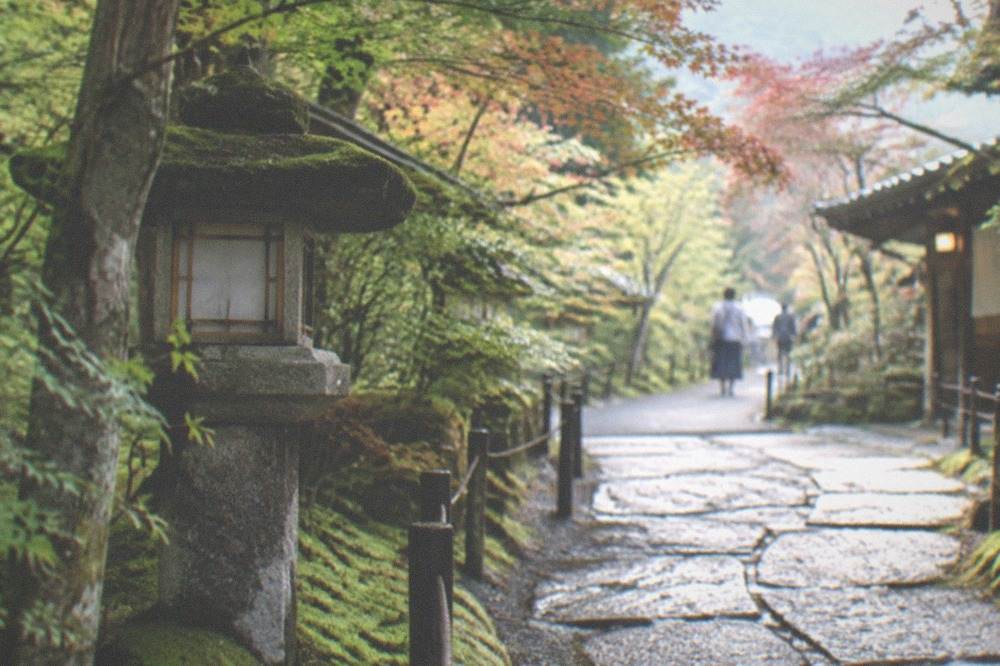
Further out, the options widen. Kurama and Kibune in the northern mountains, Ohara with its temple gardens, and Fushimi south of the station all sit within an hour of the centre and carry a fraction of the Higashiyama footfall. The free things to do in Kyoto guide lists more no-cost options that are not on every itinerary, and the budget guide covers the cheap-and-quiet overlap.
For photographers, the calculus differs slightly: the photo spots guide ranks frames by how empty they stay, and the Arashiyama bamboo grove guide maps the grove's exits so you can loop away from the flow rather than back into it.
How Do You Handle Crowds On Kyoto Transport And At Hotels?
On transport, the answer is the subway plus the one-day pass, and at hotels the answer is location: the 1 March 2026 accommodation tax change raised the top tier from 1,000 to 10,000 yen per person per night on rooms of 100,000 yen and up, while a 20,000 yen room now carries 1,000 yen, so staying outside the premium centre both dodges the crowd belt and softens the tax.
The 16.59 million overnight guests of 2025 cluster hardest in the station and Kawaramachi zones, which is why the centre feels fullest at both ends of the day. The tax now runs in five tiers, set by the room-only charge excluding meals and consumption tax:
| Room charge per night | Tax per person per night, from 1 March 2026 | Before |
|---|---|---|
| Under 6,000 yen | 200 yen | 200 yen |
| 6,000 to under 20,000 yen | 400 yen | 400 yen |
| 20,000 to under 50,000 yen | 1,000 yen | 500 yen |
| 50,000 to under 100,000 yen | 4,000 yen | 1,000 yen |
| 100,000 yen and up | 10,000 yen | 1,000 yen |
Most competing guides still quote the old tiers, so a booking quoted today may surprise you at check-in if the property has not updated its displayed totals. The city expects about 12.6 billion yen a year from the change, which tells you the direction of policy: Kyoto is monetising peak demand rather than capping it.
Practically, staying near a subway station one or two stops out of the centre puts you on the Karasuma or Tozai line for a fast start, which is the same early-morning strategy wearing a different hat. A location decision made once at booking then pays off every single morning of the trip.
Common Questions About Kyoto Crowds
How bad are Kyoto crowds at Fushimi Inari, Kiyomizu-dera and the bamboo grove?
Bad at peak hours and manageable outside them. All three are free or near-free with long access hours, so they absorb the largest share of the 46.20 million day visitors Kyoto counted in 2025. Before 8:00 or after 17:00, all three are dramatically quieter, and Fushimi Inari's paths have no closing time at all.
What is the busiest month in Kyoto?
April for cherry blossom, with the JMA recording full bloom on 30 March in 2026, and late November to early December for autumn foliage, with the 2026 Arashiyama colour forecast around 24 November. July is both crowded for Gion Matsuri and the wettest month, 223.6 mm on the 1991 to 2020 normals.
Is there an app or tool for Kyoto crowd levels?
Yes. The Kyoto Tourism Comfort Forecast, run by the city's tourism association, publishes a five-level crowd comfort estimate by spot, area and time slot, and Fushimi Inari Taisha links to it from its own homepage alongside its approach cameras.
Do you need to book anything in advance to avoid crowds?
Two things are worth booking: the Sagano Romantic Train, at 880 yen one way with fixed capacity, and the Katsura Imperial Villa tour at 1,000 yen, which requires advance application or same-day numbered tickets. The big three free sights take no bookings at all, which is exactly why timing matters more than tickets there.
Are Kyoto crowds worse than Tokyo or Osaka?
Different in kind. Kyoto's pressure is concentrated in a small historic core visited by 62.79 million people a year, against 16.59 million overnight stays, so the day-visitor ratio is unusually high. Tokyo spreads its crowds across a far larger city, and Osaka's historic core draws a different, smaller share of day-trippers.
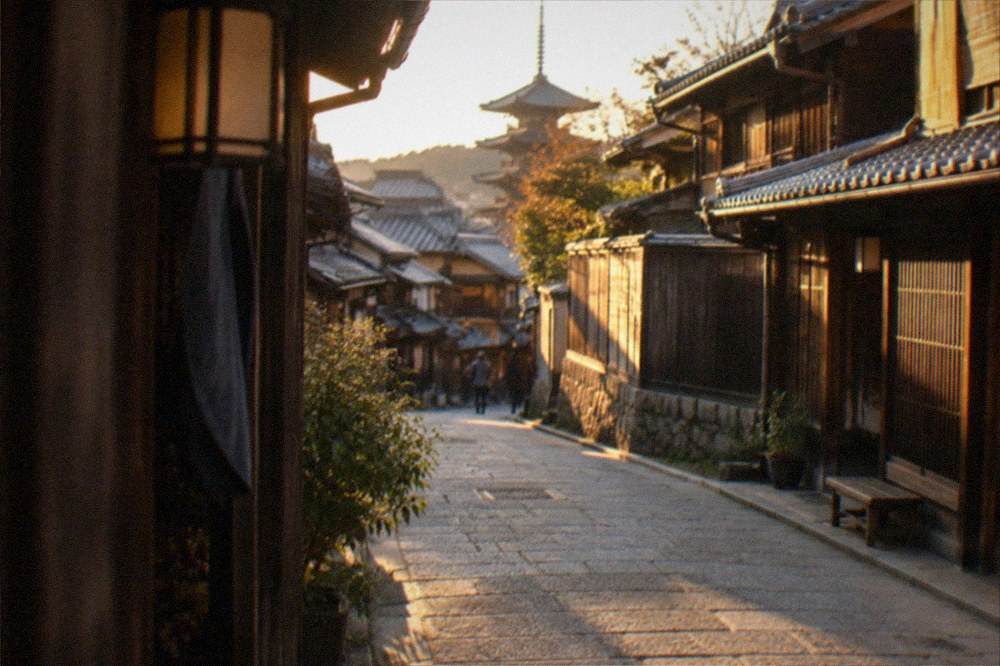
The Short Version On Kyoto Crowds
Kyoto's crowds are a timing problem before they are a volume problem: the city counted 62.79 million visitors in 2025, but 46.20 million of them were day visitors, so the famous sights empty out at both ends of the day and fill in the middle. Start at 6:00 or 7:00, pair one anchor per half-day with a quieter neighbouring district, use the subway and the 1,100 yen one-day pass, and check the city's Comfort Forecast the night before.
The free anchors, Fushimi Inari, the bamboo grove and Kiyomizu-dera's slopes, bear the worst of the pressure because nothing meters their arrivals. The paid temples, the imperial villas and the northern mountains hold the same beauty at a fraction of the density, and in a city that set a spending record of 2.0474 trillion yen in 2025, a little arithmetic buys a lot of quiet. Every itinerary on Kyoto Travel Guide is built on that arithmetic.