Free Things To Do In Kyoto
Kyoto's most famous shrine, its Imperial Palace, its bamboo grove and its geisha districts all cost nothing to enter. This guide separates the genuinely free from the temples that charge, with every fee verified on the venue's own pages.
Short answer
Yes, Fushimi Inari is completely free, including the full summit loop around Inariyama, and it is far from alone: the Kyoto Imperial Palace, Shugakuin Imperial Villa, the Arashiyama bamboo path, Nishiki Market, Gion, Pontocho and the Philosopher's Path all cost nothing. Most of Kyoto's famous temples, however, charge admission, and two of them changed their fees in 2026.
Kyoto recorded 62.79 million visitors in 2025, its highest total ever, according to the city's own tourism survey released in June 2026. Not all of those visitors arrived with a large sightseeing budget, and the good news is that the single most famous attraction in the city costs nothing at all. Fushimi Inari Taisha, the head shrine of the roughly 30,000 Inari shrines across Japan, charges no admission for its grounds, its torii tunnels or its full mountain loop, and the shrine publishes no fee anywhere on its site. The same is true of the Kyoto Imperial Palace, the Arashiyama bamboo path, Nishiki Market and the streets of Gion and Pontocho. What does charge is most of the temple roster, and two of those temples changed their fees in 2026, so a fee list copied from an older guide is now wrong in at least two places. This page separates the two groups, with every figure checked against the venue's own pages, and it pairs the free sights with a realistic budget for the transport and food around them. For the full paid-and-free picture in one place, start with things to do in Kyoto.
What Is Actually Free In Kyoto?
The genuinely free list is longer than most guides admit: Fushimi Inari Taisha with its full summit loop, the Kyoto Imperial Palace grounds and palace, the Shugakuin Imperial Villa and Sento Imperial Palace on free guided tours, the Arashiyama bamboo path, Nishiki Market, the walking streets of Gion, Pontocho and the Philosopher's Path, and the exterior of every temple and shrine in the city. The paid list is mostly temples, and two of them, Ginkaku-ji and Tofuku-ji, changed their fees in 2026.
The distinction matters more in Kyoto than in most cities because the free list contains the number one attraction, not the leftovers. The shrine publishes no fee for Fushimi Inari, the Imperial Household Agency states the Kyoto Imperial Palace is "open to all visitors, no advance application is necessary", and the bamboo grove in Arashiyama is a free public path. Meanwhile Kinkaku-ji charges 500 yen, Ginkaku-ji doubled to 1,000 yen in April 2026, and Nijo-jo Castle charges 800 yen, or 1,300 yen with the Ninomaru-goten Palace. A visitor who plans around the free list can spend two full days in Kyoto without an admission ticket, then pay selectively for the temples that matter most to them.
Here is the verified split, with every paid figure taken from the venue's own fee page:
| Site | Cost to enter | Source of the figure |
|---|---|---|
| Fushimi Inari Taisha | Free, no fee published anywhere | The shrine's own site |
| Kyoto Imperial Palace | Free, no application needed | Imperial Household Agency |
| Shugakuin Imperial Villa | Free, guided, ages 18 and over only | Imperial Household Agency |
| Sento Imperial Palace | Free, guided, ages 18 and over only | Imperial Household Agency |
| Arashiyama bamboo path | Free public path | Public right of way |
| Nishiki Market, Gion, Pontocho, Philosopher's Path | Free to walk | Public streets |
| Kinkaku-ji | 500 yen adult, 300 school | The temple's access page |
| Ginkaku-ji | 1,000 yen adult from 1 April 2026, was 500 | The temple's own notice |
| Ryoan-ji | 600 / 500 / 300 yen | The temple's site |
| Sanjusangen-do | 600 / 400 / 300 yen | The temple's visit page |
| Nijo-jo Castle | 800 yen, or 1,300 with Ninomaru-goten | The castle's fee page |
| Kodai-ji | 800 yen, 1,200 combined with Entoku-in | The temple's site |
One caution on that table: Kiyomizu-dera's 500 yen fee is widely quoted but the temple does not print it on its own site, so treat that figure as reported rather than official. Tofuku-ji revises its fees on 1 November 2026, with the Hojo garden rising from 500 to 600 yen and a new 1,000 yen combined ticket, so any Tofuku-ji figure you read from before that date is already out of date. If you are building a budget around the paid side of the city, our Kyoto on a budget guide works through the arithmetic of a full trip.
Is Fushimi Inari Really Free, Including The Summit Loop?
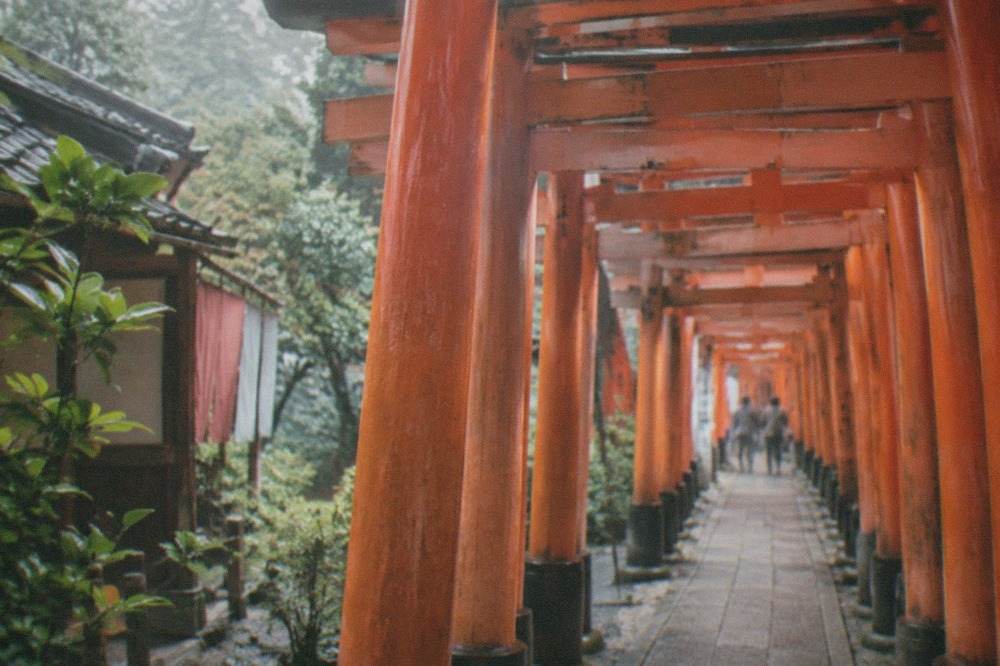
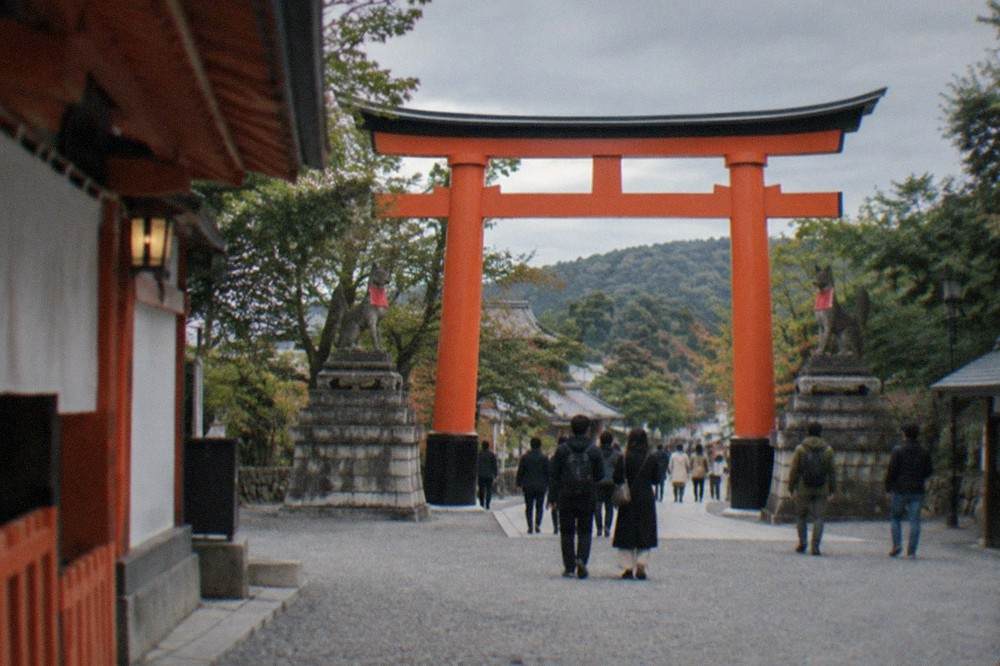
Yes, completely free. Fushimi Inari Taisha charges no admission for the shrine grounds, the Senbon Torii tunnels, the sub-shrines across the mountain or the full summit loop around Inariyama, and the shrine publishes no fee anywhere on its site. There is no ticket gate, no closing time on the paths, and no paid section. The only costs are the optional ones: food stalls, omamori charms and the train or bus fare to get there.
The shrine's own FAQ is unambiguous on this, and it is worth being precise about what the mountain holds, because almost every competing guide gets one detail wrong. The shrine counts "about 10,000 torii of all sizes" across the whole mountain, not 10,000 gates packed into the famous Senbon Torii tunnel. That tunnel is the photogenic section near the base, and the gates continue, in decreasing density, all the way around the loop. The shrine dates the enshrinement of Inari Okami on Inariyama to the first Day of the Horse of the second month of 711, when, in the shrine's own account, Irogu no Hatanokimi, an ancestor of the Hata clan, received an imperial order from Empress Genmei to enshrine three deities on three peaks. The shrine hedges this with "is said to be", so the honest phrasing is enshrined in 711, never built in 711. Nobody is buried on the mountain: the otsuka stones along the upper paths are worship stones bearing deity names, not graves, a point our who is buried at Fushimi Inari answer covers in full.
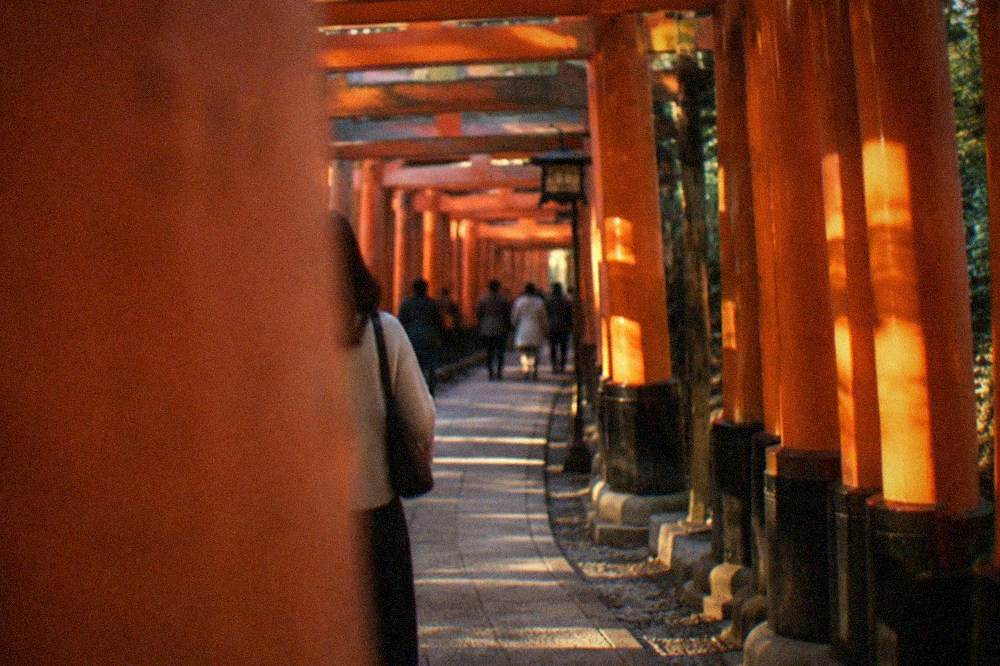
The loop itself is a real hike, not a stroll. Inariyama stands 233 m tall, and the full circuit past the Yotsutsuji intersection, the summit shrines and the southern descent takes most walkers between two and three hours, which our how long does it take to walk up Fushimi Inari answer breaks down by segment. Because the paths have no closing time, early morning and after dark are both legal and both dramatically quieter than midday. The shrine links to the Kyoto Tourism Comfort Forecast, a crowd-prediction tool the city runs using smartphone location data, and checking it the night before is the single best free planning move in Kyoto. For the shrine's deeper history, our Fushimi Inari Taisha page carries the full chronology, including Sei Shonagon's recorded climb around the year 1000.
If you would rather have a guide on the mountain itself, the Fushimi Inari Hidden Hike takes the quieter back routes above the tunnel, runs about 3 hours and starts from $73 per person, rated 5.0 from 1,931 reviews. The shrine is free, but the interpretation is not, and a guide who knows which sub-shrine is which turns the upper mountain from a walk into a story. Check availability
Which Kyoto Temples And Shrines Charge, And How Much?
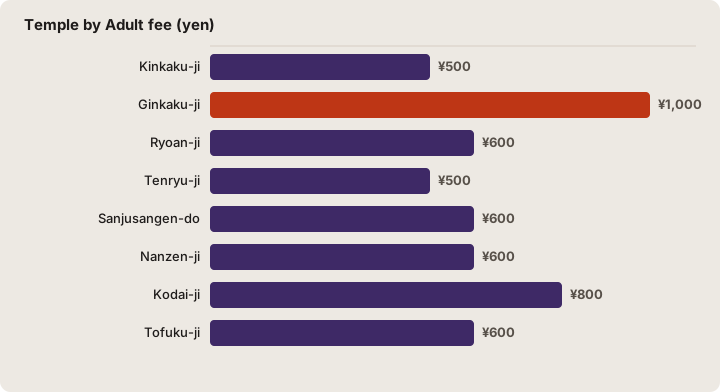
Every major Zen temple in Kyoto charges admission, and the 2026 figures are: Kinkaku-ji 500 yen, Ginkaku-ji 1,000 yen since April 2026, Ryoan-ji 600 yen, Tenryu-ji garden 500 yen plus 300 for the buildings, Sanjusangen-do 600 yen, Nanzen-ji Hojo garden and Sanmon gate 600 yen each, Kodai-ji 800 yen and Nijo-jo Castle 800 yen. The free exceptions among religious sites are Fushimi Inari Taisha and the shrines, including Yasaka Shrine.
Shrines in Kyoto are almost all free; temples almost all charge. That is the practical rule, and it holds across the city. Yasaka Shrine in Gion charges nothing, Heian Shrine's grounds are free (its garden charges), and Fushimi Inari is free from base to summit. On the temple side, the fees fund conservation, and two of them moved in 2026: Ginkaku-ji doubled from 500 to 1,000 yen for adults on 1 April 2026, its first change in 32 years, and Tofuku-ji revises on 1 November 2026 with a new combined ticket. A 2024 or 2025 guide is therefore wrong on both counts.
| Temple | Adult fee | Child / school fee | Notes from the venue |
|---|---|---|---|
| Kinkaku-ji | 500 yen | 300 yen primary and middle school | Hours 9:00 to 17:00 year-round |
| Ginkaku-ji | 1,000 yen | 500 yen | Doubled 1 April 2026, first change in 32 years |
| Ryoan-ji | 600 yen | 300 yen elementary and junior high | 8:00 to 17:00 March to November |
| Tenryu-ji | 500 yen garden | 300 yen | Buildings plus 300 yen, Hatto ceiling 500 yen separate |
| Sanjusangen-do | 600 yen | 300 yen elementary | Open daily, 1,001 Kannon statues |
| Nanzen-ji | 600 yen Hojo garden | 400 yen | Sanmon gate 600 yen, ticketed separately |
| Kodai-ji | 800 yen | 400 yen junior high and high | 1,200 yen combined with Entoku-in |
| Tofuku-ji | 600 yen Tsutenkyo | 300 yen | From 1 Nov 2026: Hojo 600, combined 1,000, foliage-period bridge 1,000 |
The efficient move is to pick two or three paid temples that genuinely matter to you and fill the rest of the day with the free list. For a first visit, the stronger combination is Kinkaku-ji at 500 yen, the cheapest of the famous pavilions, plus the free Fushimi Inari loop in the morning, plus a walk through Gion in the evening. Visitors who want the paid highlights handled end to end often take a one-day bus tour: the Fushimi Inari, Kinkakuji and Bamboo Grove 1-Day Bus Tour covers the city's three most-visited sights in 8.5 to 9 hours from $97 per person, rated 4.8 from 5,317 reviews, with the travel between them planned for you.
Are The Imperial Palace And Villas Free To Visit?
Yes, all four imperial properties in Kyoto are free, with conditions. The Kyoto Imperial Palace is open to all visitors with no advance application. The Sento Imperial Palace, the Katsura Imperial Villa and the Shugakuin Imperial Villa are free but guided, and the Sento Palace and Shugakuin admit ages 18 and over only, while Katsura charges nothing for ages 12 to 17 but 1,000 yen for adults 18 and over.
The Imperial Household Agency runs all four, and the palace is the easiest free sight in central Kyoto: no ticket, no reservation, no fee, as the agency's own page states. The villas are the better prizes for repeat visitors. Shugakuin's stroll garden, built for a retired emperor, is one of the largest in Japan, and the guided tour is free; Katsura's villa garden is widely considered the most influential garden in Japanese history, and its guided tour costs 1,000 yen for adults, free for 12 to 17. Both villas require an advance online application or a same-day numbered ticket at the entrance, first come first served with ID, and both close Mondays. The palace's own opening hours are not published in a form we could verify, so check the agency's site before you go.
| Property | Cost | Age limit | Booking |
|---|---|---|---|
| Kyoto Imperial Palace | Free | None | No application needed |
| Sento Imperial Palace | Free | 18 and over | Advance application or same-day ticket |
| Shugakuin Imperial Villa | Free | 18 and over | Advance application or same-day ticket |
| Katsura Imperial Villa | 1,000 yen adults, free 12 to 17 | Under 12 not admitted | Advance application or same-day ticket |
For orientation, our Kyoto Imperial Palace page covers access and what you actually see, and the surrounding park is free public space that makes a good picnic stop between sights.
Is The Arashiyama Bamboo Grove Free?
Yes, the Arashiyama bamboo grove is a free public path with no gate, no fee and no enforced one-way system confirmed on any primary source, and it can be walked at any hour. What costs money in Arashiyama are the attractions around it: Iwatayama Monkey Park at 800 yen, the Sagano Romantic Train at 880 yen one way, Tenryu-ji's garden at 500 yen and the Hozugawa Kudari boat at 6,000 yen for adults.
The grove itself is the free centrepiece, and the walk from the grove down to the Katsura river, across Togetsukyo bridge and back through the back lanes costs nothing and fills a good half day. The monkey park's 800 yen adult fee (400 yen for ages 4 to 15, cash only, per the park's own site) buys the hilltop troop of Japanese macaques and a view over the city. The Sagano Romantic Train, run by the Sagano Scenic Railway, is 880 yen one way for adults and 440 for children, and the Hozugawa Kudari river boat, running its regular timetable from 10 March to 13 December 2026, is 6,000 yen adult and 4,500 yen child, per the operator's own ticket page. Those are all optional add-ons around a free core. Other pages covering the same trip are gathered on Kyoto Travel Guide.
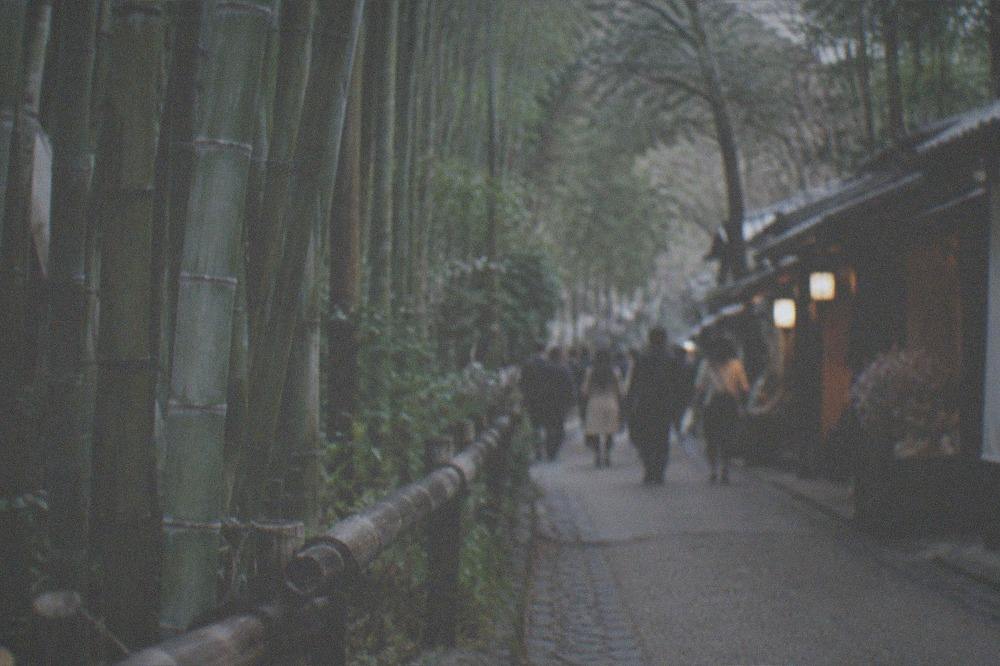
The practical free itinerary for Arashiyama is the grove first, before 8:00 if you can manage it, then the riverbank, then Tenryu-ji's outer wall and the lanes of Torokko and the temple district, all walkable without a ticket. Our Arashiyama bamboo grove guide has the full route, and the Kyoto crowds guide explains why the early start matters: the grove is one of the few places in Kyoto where a two-hour difference changes the experience completely.
What Free Walking Tours Run In Kyoto?
Several genuinely free, tip-based walking tours run in Kyoto, booked through GuruWalk, and the strongest is Free Walking Tour Kyoto, a 3-hour walk rated 4.93 from 1,128 reviews, alongside free Gion geisha walks, a free historic-centre walk and free hidden-gems routes. These are not this site's tours: they are independent local guides on the GuruWalk platform, paid by tip at the end, and no price is published because there isn't one.
The honesty requirement here is worth stating plainly. Free walking tours are free at the door and tip-based at the end, and the guides running them are locals working for whatever you decide the walk was worth. The Free Walking Tour Kyoto covers the downtown core and the eastern temple district in about 3 hours, and the Gion Legacy of Geishas free walk, also on GuruWalk, covers the geisha districts in 2 hours with a 4.89 rating from 1,047 reviews. The Kyoto Historic Center free walk and the Gion and Higashiyama free walk round out the set. Book through GuruWalk, tip the guru who led it, and treat the meeting point and time on the listing as the operative facts. For a paid alternative with a fixed price, the Gion Magical Night Walking Tour runs 1 hour 40 minutes from $22 per person, rated 4.9 from 4,616 reviews.
The free walks pair naturally with the free sights. A morning at Fushimi Inari, a free GuruWalk tour of the historic centre in the early afternoon, and an evening walk through Gion and Pontocho makes a full day in Kyoto whose only fixed costs are transport and food. That is not a budget compromise either; it is close to the ideal first day in the city, which is how our one day in Kyoto itinerary is built.
Is Gion Free To Walk, And What Are The Rules?
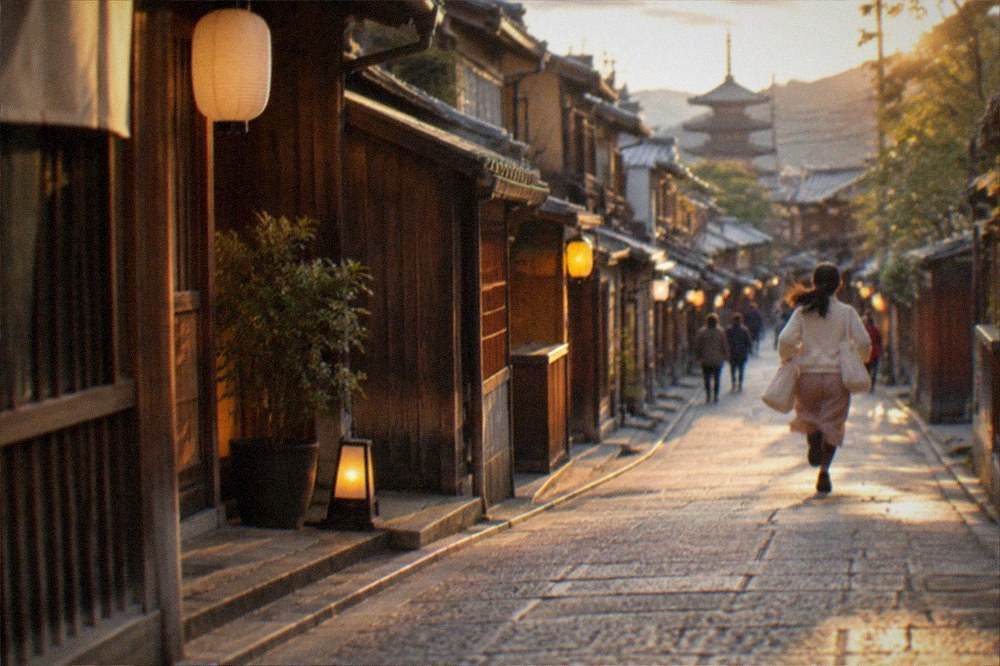
Yes, Gion is free to walk, including the main Hanamikoji street, and so are Pontocho, the Philosopher's Path and every other geisha and merchant district in Kyoto. The rules that apply are conduct rules, not entry fees: no touching, chasing or photographing geiko and maiko without permission, and no entering or photographing the private alleys off Hanamikoji, where signs posted by the local district council threaten a 10,000 yen penalty for unauthorized entry or photography.
Those two rules are the whole of it. The Kyoto City Tourism Association publishes the conduct guidelines, and the private-alley signage is posted by the Gion South Side district council on its own private roads, which is why the honest phrasing is council signage rather than a city fine. The main Hanamikoji road remains public and photographable. The free evening walk through Gion, down Hanamikoji, across Shijo bridge and into the lantern-lit lanes of Pontocho, is one of the best free experiences in Japan, and it needs nothing but comfortable shoes and the etiquette above. Our Gion area guide and Kyoto photo spots guide cover where you can point a camera and where you cannot.
How Much Does A Free Day In Kyoto Still Cost?
A day built entirely on free sights in Kyoto still costs money for transport and food: a single city bus ride is 230 yen, the subway runs 220 to 360 yen by zone, the Subway and Bus One-Day Pass is 1,100 yen, and a modest food budget runs about 2,000 to 4,000 yen per person for the day. The sights themselves, Fushimi Inari, the palace, the grove, Gion and a free walking tour, add up to exactly zero.
Transport is the unavoidable line. The flat city bus fare is 230 yen per ride, the subway is 220 to 360 yen depending on zone, and the Subway and Bus One-Day Pass at 1,100 yen pays for itself on the fourth ride. Note that the old bus-only one-day pass no longer exists; sales ended in September 2023 and its last day of use was 31 March 2024, so any guide still recommending it is years stale. The tourist express buses EX100 and EX101, running from Kyoto Station to the Kiyomizu and Ginkaku-ji side, cost 500 yen a ride and are covered by the one-day pass.
| Item | Cost | Notes |
|---|---|---|
| City bus, one ride | 230 yen adult, 120 child | Flat fare, city transport bureau |
| Subway, one ride | 220 to 360 yen | Five zones |
| Subway and Bus One-Day Pass | 1,100 yen adult, 550 child | Breaks even on the fourth ride |
| EX100 / EX101 tourist express | 500 yen adult | Covered by the one-day pass |
| Kaiseki lunch, Hyotei main building | from 31,625 yen | The famous-house ceiling, tax and service in |
| Same kitchen's annex, asa-gayu or bento | 5,445 to 7,260 yen | The honest budget alternative |
| Temple pair, Kinkaku-ji plus Ryoan-ji | 1,100 yen | If you add two paid temples |
The food line is the most flexible. At the top of the scale, Hyotei by Nanzen-ji, one of Kyoto's most famous kaiseki houses, prints its own lunch kaiseki from 31,625 yen on its own site, while the same restaurant's annex serves morning rice porridge from 5,445 yen and a shokado bento at 7,260 yen, tax and service included. Those are Hyotei's own published prices, not a Kyoto average, but they frame the choice honestly: the ceremonial version of Kyoto cuisine costs a month of temple fees, and the same kitchen's simpler service does not. Street food and market eating run far below both. Nishiki Market costs nothing to enter, and the market's own rule is to eat at the stall or a designated area rather than while walking, a rule worth following since the market association posts it.
What Does A Free-First Kyoto Itinerary Look Like?
A free-first Kyoto itinerary pairs one major free sight per day with the free walking districts: Fushimi Inari's loop and Gion on day one, the Imperial Palace, Nishiki Market and Pontocho on day two, and the Arashiyama bamboo grove with the Philosopher's Path on day three, adding at most one paid temple per day at 500 to 1,000 yen each. Total admission spend for three days: between zero and about 3,000 yen per person.
The structure works because the free sights are distributed across the city rather than clustered. Fushimi Inari sits on the JR Nara Line to the south, the palace and Nishiki sit centrally, Arashiyama sits far west, and the Philosopher's Path links the eastern temple district on foot. A visitor with three days can cover all of it with a one-day pass per day, each at 1,100 yen, and zero admission, or spend selectively where the fee buys something the free list cannot: Sanjusangen-do's 1,001 Kannon statues at 600 yen, verified by the temple itself, or Kinkaku-ji's gold pavilion at 500 yen. Our three days in Kyoto itinerary and half-day itinerary lay out the timings, and the Kyoto neighborhoods guide explains which districts reward wandering without a ticket.
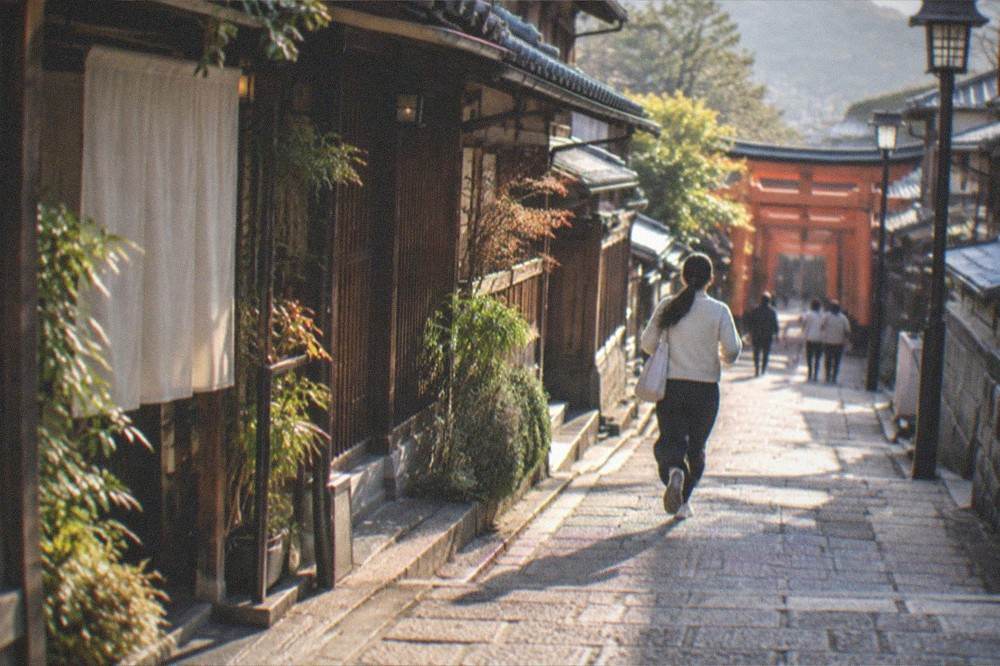
The last word on the free list is that it is not a consolation prize. Fushimi Inari is the most-visited shrine in a city of famous shrines, the head shrine of about 30,000 Inari shrines nationwide in the shrine's own words, and it costs nothing from the first torii to the summit. The Imperial Palace, the bamboo grove and the geisha districts are on the same list. Pay where a fee buys something you specifically want, walk the rest, and check the best hotels in Kyoto guide when the day is done.
Common Questions About Free Things To Do In Kyoto
Is Fushimi Inari Really Free, Including The Summit Loop?
Yes. Fushimi Inari Taisha charges no admission for the grounds, the torii tunnels, the sub-shrines or the full summit loop around Inariyama, and the shrine publishes no fee anywhere on its site. The paths have no closing time, so the only costs are transport to the shrine and anything you buy on the way.
Is Kiyomizu-dera Free?
No. Kiyomizu-dera charges admission, widely reported at 500 yen, though the temple does not print the figure on its own site, so treat it as reported rather than official. The approach streets, Ninenzaka and Sannenzaka, are free to walk and carry much of the atmosphere.
Are The Kyoto Imperial Palace And Villas Free?
The Kyoto Imperial Palace is free and open to all visitors with no advance application. The Sento Palace and Shugakuin Villa are free but guided and admit ages 18 and over only. Katsura Imperial Villa charges 1,000 yen for adults 18 and over and is free for ages 12 to 17.
Can You Walk The Arashiyama Bamboo Grove For Free?
Yes, the bamboo grove is a free public path with no gate or fee, open at any hour. The paid attractions around it are the monkey park at 800 yen, the Sagano Romantic Train at 880 yen one way and the Hozugawa river boat at 6,000 yen for adults.
Are Free Walking Tours In Kyoto Actually Free?
They are free to join and tip-based at the end. The walks listed on GuruWalk, including the 3-hour Free Walking Tour Kyoto and the free Gion geisha walks, are run by independent local guides paid by tip. There is no published price because there is no fixed charge.
Which Kyoto Temples Are Free To Enter?
Almost none of the famous Zen temples are free; they charge admission that funds conservation. The free religious sites are the shrines: Fushimi Inari Taisha, Yasaka Shrine and Heian Shrine's grounds. The free list otherwise consists of the imperial properties, the bamboo grove, Nishiki Market and the walking districts.