Best Photo Spots In Kyoto
Kyoto drew a record 62.79 million visitors in 2025, so the famous frames are shared frames. This guide covers where the torii empties out, when the temple gates open, and what the photography rules in Gion actually say.
Short answer
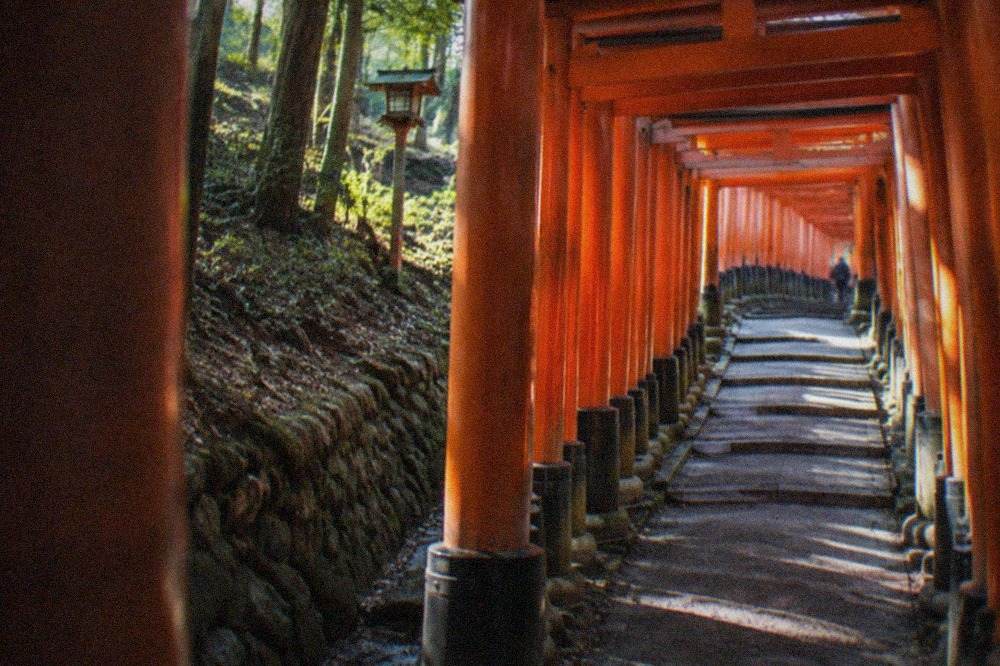
Photograph Fushimi Inari's torii early or on the upper loop past Yotsutsuji, where the crowds thin; the shrine is free and the paths have no closing time, so the only constraint is daylight and your legs.
Kyoto set a tourism record in 2025: the city's own survey, released 12 June 2026, counted 62.79 million visitors, up from 56.06 million the year before, with 46.20 million of them day visitors. Every photograph you have seen of an empty torii tunnel or a misty bamboo path was taken inside that crush, which means the craft of photographing Kyoto is mostly the craft of timing and side doors. This guide, from the Kyoto Travel Guide editorial desk, works through the city's most photogenic ground in that order: which sections of Fushimi Inari actually clear, when the temple gates open, where the light goes in Arashiyama, and what the district council signage in Gion permits. Fees and hours below come from the venues' own pages, read this session, so a 2024 guide's numbers will not match them.
Where Do You Photograph Fushimi Inari Without Crowds In The Torii?
The Senbon Torii splits into two parallel lanes shortly after the main shrine buildings, and the crowds bunch in the lower few hundred metres between the Romon gate and the split. The higher you climb past the Yotsutsuji intersection, the thinner the traffic becomes, and the shrine's own FAQ describes about 10,000 torii of all sizes spread across the whole mountain, not packed into one tunnel. Entry is free and the paths have no closing time, so the workable strategy is altitude plus hour.
The mechanics are simple. Almost every visitor photographs the first stretch, because it is the closest to the station side entrance and the easiest to reach. The two lanes of the Senbon Torii run side by side for a while, and one is usually noticeably emptier than the other, so if a tunnel is full of people, walk ten minutes further or switch lanes. The Yotsutsuji viewpoint, roughly the halfway point of the climb, is where Inariyama, 233 m, opens out over southern Kyoto, and above it the loop continues through quieter woods with smaller, older torii. The shrine's own crowd tool is worth checking before you go: its front page links to the Kyoto Tourism Comfort forecast and to live cameras on the approach, so you can see conditions rather than guess.
Timing matters more than route. The shrine publishes desk and prayer hours but sets no closing time for the paths, which is why serious photographers go before 7:00 or after sunset in summer. The shrine dates the enshrinement of Inari Okami on Inariyama to 711, on the first Day of the Horse of the second month, at the order of Empress Genmei and through Irogu no Hatanokimi of the Hata clan, and it is the head shrine of about 30,000 Inari shrines nationwide, in the shrine's own words "said to be some thirty thousand". None of that history changes your exposure settings, but it does explain why the mountain is a working place of worship with otsuka worship stones along the paths: those are not graves, and nobody is buried on the mountain.
| Section of the mountain | Crowd level through the day | Photographic character |
|---|---|---|
| Romon gate to the lane split | Heaviest, all day | Tall, dense vermilion tunnel, the classic frame |
| Senbon torii lanes, lower loop | Heavy until mid afternoon | Two parallel tunnels, one usually quieter |
| Yotsutsuji intersection | Busy at viewpoints | Panorama over southern Kyoto, 233 m summit ridge |
| Upper loop above Yotsutsuji | Thins sharply | Older, smaller torii, moss, forest light |
| Descending lanes on the far side | Often near empty | Soft backlight through the trees in late afternoon |
For a deeper look at the shrine itself, see the Fushimi Inari Taisha attraction guide, and for the walk itself, how long it takes to climb Fushimi Inari. If you would rather have someone else handle the pre-dawn logistics, the Fushimi Inari, Kinkakuji and Bamboo Grove 1-Day Bus Tour is built around exactly these three photogenic anchors, or Check availability.
When Does The Light Hit The Arashiyama Bamboo Grove?
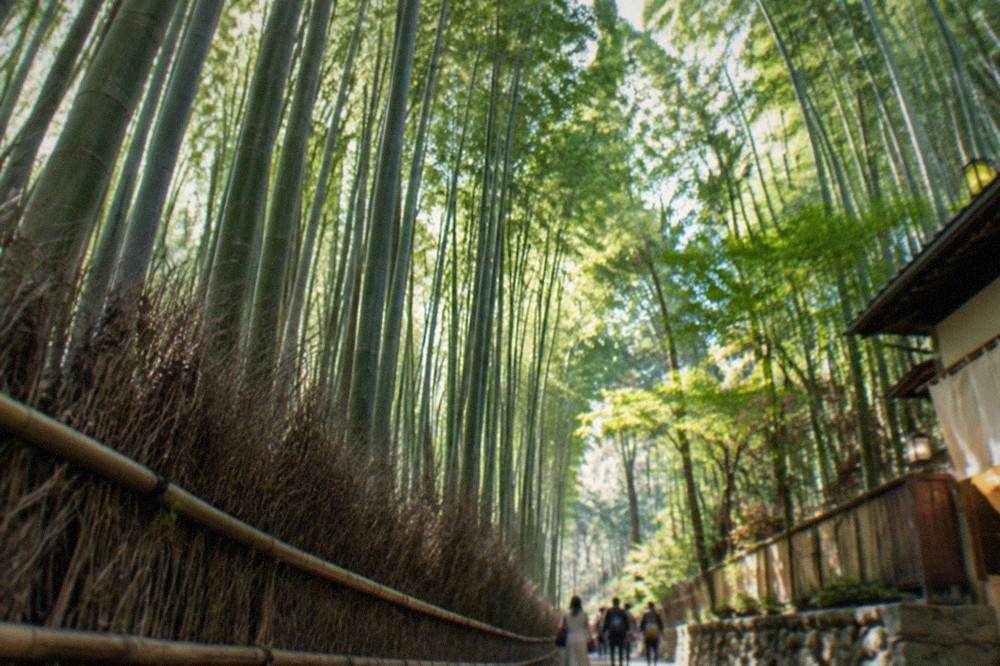
The grove is a free public path with 24-hour access, and the light that photographers want is the low morning sun slanting east to west through the stalks, which means roughly the first two hours after sunrise. By mid-morning the grove is flat-lit and crowded, and the city's 2025 survey counted 62.79 million visitors across Kyoto, a large share of whom pass through this one path. The Togetsukyo bridge and the riverbank hold the evening light instead.
No enforced one-way system or crowd rule is confirmed on the primary sources for the grove itself, so the practical constraint is purely the volume of people. The grove runs between Tenryu-ji's north gate and the Okochi Sanso side of the hill, and the most-photographed section is the first gentle rise from the Tenryu-ji end. Early morning gives you backlight and mist in the warmer months; late afternoon gives you warmer colour but more people. The monkey park above the grove opens at 9:00 and closes at 16:00, 800 yen for 16 and over and cash only, so a morning that starts in the bamboo can end on Iwatayama's terrace looking back down at the Katsura river.
The wider Arashiyama district rewards the same early start. The Sagano Romantic Train, 880 yen one way for an adult, runs roughly hourly from about 9:00, and its riverside stretch above the Hozu gorge is one of the most photographed short rail journeys in Japan. The Arashiyama bamboo grove guide covers the walking routes, and the Hozugawa river boat ride is the water-level version of the same scenery, 6,000 yen adult on the operator's own ticket page. Pair the two and you get the gorge from above and below.
| Arashiyama photo spot | Best light | Access and cost |
|---|---|---|
| Bamboo grove path | First two hours after sunrise | Free, 24-hour public path |
| Togetsukyo bridge | Late afternoon into sunset | Free, riverbank either side |
| Katsura river upstream of the bridge | Morning, low sun on the water | Free, riverside walk |
| Sagano Romantic Train riverside stretch | Mid morning to afternoon | 880 yen adult one way, 440 yen child |
| Iwatayama Monkey Park terrace | Mid morning, looking back at the city | 800 yen adult, 400 yen ages 4 to 15, cash only |
A guided walk strings these together without the navigation work. The Arashiyama Walking Tour: Bamboo, Monkeys, Temple and Garden runs five hours from about $50 and is rated 5.0 across 1,781 reviews.
Which Kyoto Temples Photograph Best At Opening Time?
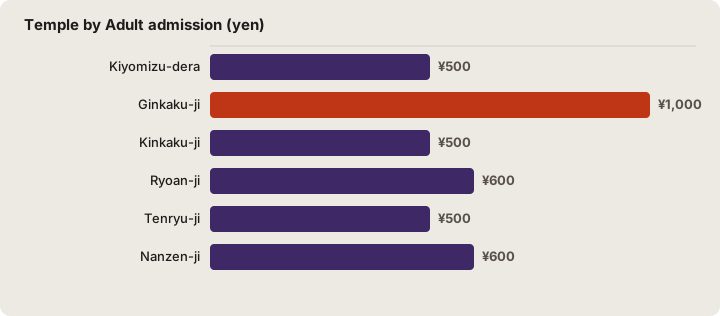
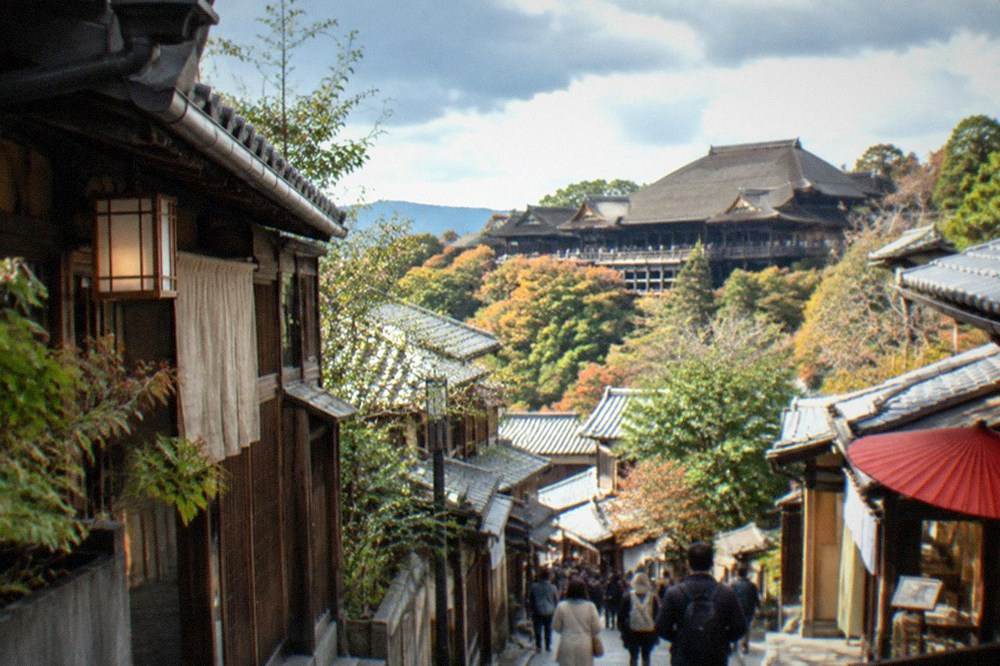
Kiyomizu-dera opens at 6:00 every day, the earliest of the major temples, and its wooden stage above the Higashiyama hillside is the strongest dawn photograph in the city. Kinkaku-ji opens at 9:00 and cannot be done early, so its trick is the reflection pond in the first hour after opening, and Ginkaku-ji opens at 8:30 in summer and 9:00 in winter. The fee gap has widened sharply: Ginkaku-ji doubled to 1,000 yen in April 2026 while Kinkaku-ji holds at 500.
The 6:00 opening at Kiyomizu-dera is verified on the temple's own FAQ page, and the closing time varies by season and event, with night viewings running to 21:30 on specific published dates in spring and autumn. The stage photograph works in two directions: from the stage itself looking over the city, or from below on the Otowa waterfall path looking back up at the wooden structure. Both are crowd-free before 8:00. The temple charges 500 yen for adults and high school students, a single-source figure the temple does not print on its English pages, so confirm at the gate.
Ginkaku-ji is the fee story of 2026. The temple's own notice, dated January 2026, raised the adult admission from 500 to 1,000 yen from 1 April 2026, the first change in 32 years, with children going from 300 to 500 yen. That makes the Silver Pavilion twice the price of Kinkaku-ji's 500 yen, unchanged since April 2023, and it changes the arithmetic of a photography day that includes both. The Philosopher's Path leading down from Ginkaku-ji is free and is at its best in early April, when the JMA's 1991 to 2020 normals put full bloom at 4 April; in 2026 the observatory recorded full bloom on 30 March, five days early.
| Temple | Opening time | Adult admission | Photographic note |
|---|---|---|---|
| Kiyomizu-dera | 6:00 daily | 500 yen | Wooden stage at dawn, city panorama |
| Ginkaku-ji | 8:30 Mar-Nov, 9:00 Dec-Feb | 1,000 yen from April 2026 | Moss garden, path down to the pavilion |
| Kinkaku-ji | 9:00 year-round | 500 yen | Reflection pond in the first hour |
| Ryoan-ji | 8:00 Mar-Nov, 8:30 Dec-Feb | 600 yen | Rock garden from the veranda, morning shadows |
| Tenryu-ji | 8:30 | Garden 500 yen | Borrowed scenery of Arashiyama behind the pond |
| Nanzen-ji | 8:40 | Hojo garden 600 yen | Brick aqueduct in the trees behind the complex |
The fee and hour details for every major temple are collected in the Kyoto temples guide, and the cherry-blossom timing question is covered in the Kyoto cherry blossom guide.
What Are The Rules On Photography In Gion?
The main Hanamikoji street is public and photography is allowed there, but the private alleys running off it carry signs, put up by the Gion South Side district council, threatening a 10,000 yen penalty for unauthorised photography or entry. The city-level guidance from the Kyoto City Tourism Association is about conduct rather than money: do not touch, chase or photograph geiko and maiko without permission. The distinction between the public street and the private alleys is the whole point.
This is the section where most guides go wrong, so it is worth being precise. The penalty signage is district-council signage on private roads, not a municipal fine and not a police matter, and writing it as "the city fines 10,000 yen" would misstate who is acting. The council's concern is that Gion is a residential and working entertainment district, not a film set. The practical version for a photographer: shoot the architecture and the lanterns on Hanamikoji itself, treat the alleys as off-limits, and never pursue a geiko or maiko for a picture. The city's guidance says plainly not to touch, chase or photograph them without permission, and no source suggests they will pose on request.
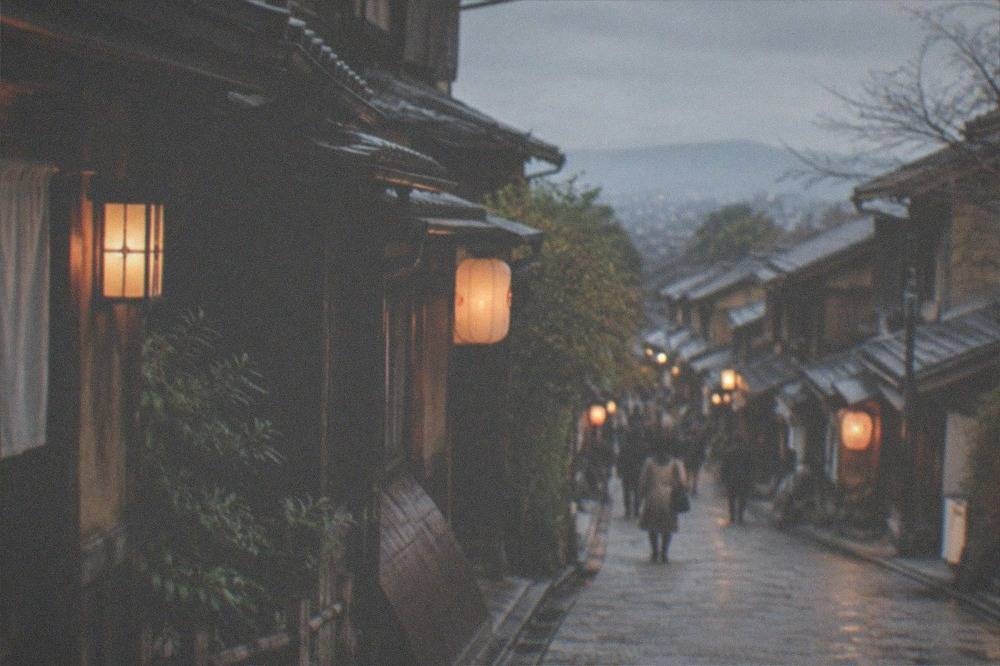
The evening side of Gion is still one of Kyoto's great photographic subjects, done legally. Shirakawa canal, a short walk north, has willows, tatami-fronted teahouses and stone bridges that hold lantern light after dusk without any access problem. The Gion guide maps the district street by street, and the question of why you cannot take pictures of geisha gets the fuller treatment on its own page. A guided evening walk keeps you on the right side of the signage: the Gion Magical Night Walking Tour runs about 1 hour 40 minutes from $22, rated 4.9 across 4,616 reviews.
Kamigamo Shrine adds a separate rule worth knowing: photography of its rites and any drone flight require advance permission, verified on the shrine's own site. Drone rules elsewhere in the city are restrictive and not covered by a single verified city page here, so assume no drone without explicit permission rather than the reverse.
Where Are The Best Free Photo Spots In Kyoto?
Fushimi Inari's whole mountain is free, the Philosopher's Path is free, the Kamo river banks are free, and the Shirakawa canal in Gion is free, which means most of Kyoto's best frames cost nothing. The paid layer is the temples, from 500 yen at Kinkaku-ji and Kiyomizu-dera up to 1,000 yen at Ginkaku-ji since April 2026, and the combined castle-and-palace ticket at Nijo-jo at 1,300 yen. A photography day can be built almost entirely on free ground.
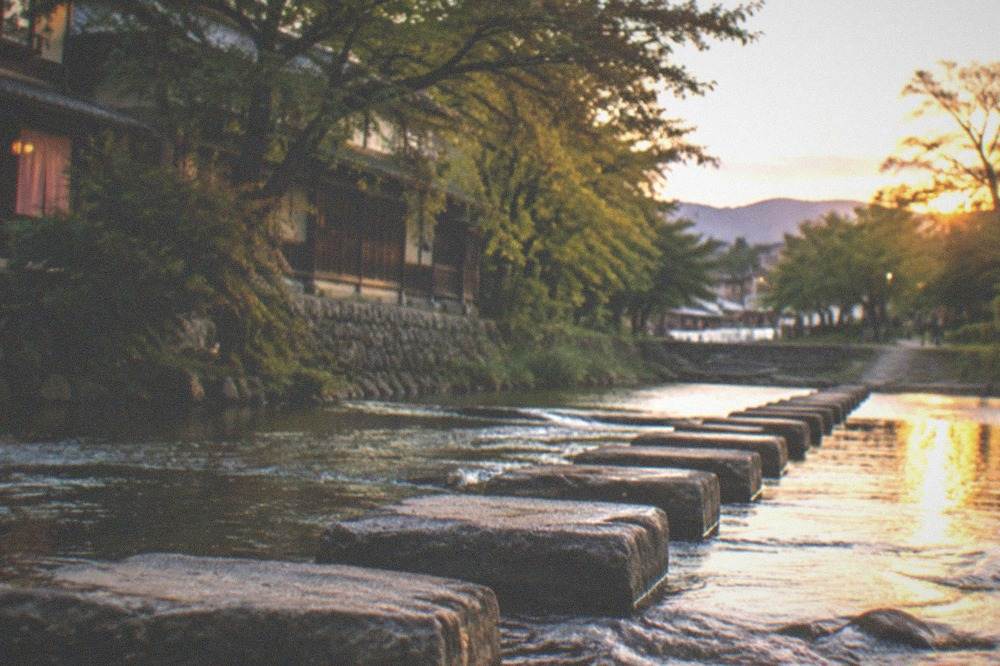
The free list is long enough to plan around. The Kamo river delta where the Takano and Kamo rivers meet, north of Demachiyanagi, is a classic evening frame with stepping stones and herons. Ninenzaka and Sannenzaka, the preserved sloping lanes below Kiyomizu-dera, are at their quietest before 8:00 and cost nothing to walk. The wider free-things and budget pages on this site build whole itineraries on the same principle, so a camera day does not have to be a fee day.
The Imperial properties are a special case. The Kyoto Imperial Palace is open to all visitors with no advance application, and the Katsura Imperial Villa's guided tour costs 1,000 yen for those 18 and over, while Shugakuin Imperial Villa's tour is free but restricted to those 18 and over, all verified on the Imperial Household Agency's English pages. Katsura's garden is one of the most photographed landscapes in the history of Japanese garden design, and access is by reservation or same-day numbered ticket, so it rewards planning rather than luck.
| Free photo ground | What it gives you | Best hour |
|---|---|---|
| Fushimi Inari mountain paths | Torii tunnels, forest, city views | Before 7:00 |
| Philosopher's Path | Canal, cherry trees, Ginkaku-ji approach | Early morning, April |
| Kamo river stepping stones | River delta, herons, dusk colour | Last hour of light |
| Ninenzaka and Sannenzaka | Preserved Edo-period lanes | Before 8:00 |
| Shirakawa canal, Gion | Willows, teahouses, lantern light | After dusk |
Which Kyoto Photo Spots Work In Rain?
July, not June, is Kyoto's wettest month, at 223.6 mm against June's 199.7 mm in the JMA 1991 to 2020 normals, and rain falls somewhere in every season, so a wet-day shot list is not optional. The covered Nishiki Market arcade, Sanjusangen-do's hall of 1,001 Kannon statues, and the rock garden at Ryoan-ji all photograph, or at least reward you, in rain, and wet stone improves the torii and the temple lanes once the rain eases.
The climate table is worth internalising, because it changes what you pack. The JMA normals for station 47759 give August as the hottest month at a 28.5 C mean and January the coldest and driest at 4.8 C and 53.3 mm, with the annual rainfall at 1,522.9 mm spread across every month. Three of Kyoto's six hottest days on record fell in the summers of 2024, 2025 and 2026, so summer shoots are heat management as much as light management. The full breakdown is in the Kyoto weather guide.
| Month | Rain mm | Mean C | Mean daily max C | Sunshine h |
|---|---|---|---|---|
| January | 53.3 | 4.8 | 9.1 | 123.5 |
| April | 117.0 | 14.4 | 20.1 | 177.3 |
| July | 223.6 | 27.3 | 32.0 | 142.7 |
| August | 153.8 | 28.5 | 33.7 | 182.7 |
| October | 143.2 | 18.4 | 23.4 | 156.0 |
| November | 73.9 | 12.5 | 17.3 | 140.7 |
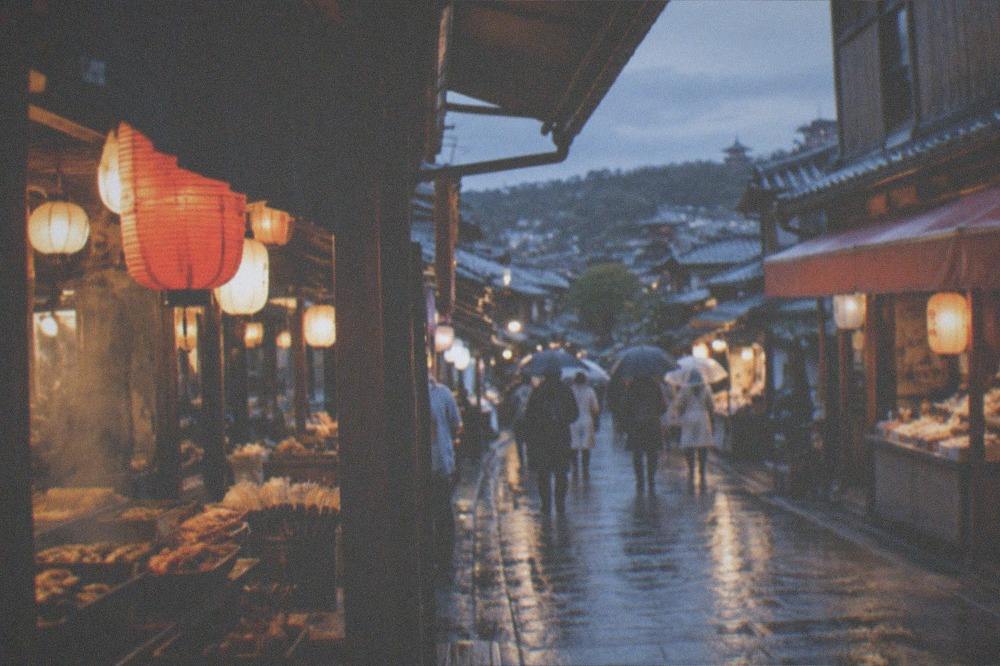
Indoor and covered subjects carry the wet days. Sanjusangen-do, formally Rengeo-in, holds 1,001 Kannon statues that the temple itself calls a forest of statues, at 600 yen general admission, and photography rules inside are the temple's to state, so check at the door rather than assume. Nishiki Market's shops keep their own hours, roughly 9 or 10:00 to 17 or 18:00 with no unified market-wide times, and the market discourages eating while walking, so a wet-day market shoot is about stalls and signage rather than street food portraits.
What Should A First Kyoto Photo Itinerary Look Like?
A workable first-day sequence is Kiyomizu-dera and the Sannenzaka lanes from 6:00, the Philosopher's Path and Ginkaku-ji from 8:30, and Fushimi Inari's torii from late afternoon into the evening, because the shrine's paths have no closing time and the lower tunnels empty after the day-trip coaches leave. Day two belongs to Arashiyama at sunrise and Gion's public streets after dusk. The bus and subway network holds this together at 230 yen a flat bus fare or a 1,100 yen one-day pass.
The transport arithmetic is verified on the city's own pages. The city bus flat fare is 230 yen for adults, the subway runs 220 to 360 yen by zone, and the Subway and Bus One-Day Pass costs 1,100 yen and pays for itself after about five rides. The old bus-only one-day pass no longer exists: sales ended in September 2023 and the last day of use was 31 March 2024, so any guide still recommending it is three years stale.
For a first visit with a camera, the honest advice is to buy the pass and let the light decide. The one day in Kyoto itinerary sequences the same geography for non-photographers, and things to do in Kyoto is the full index if the photography angle loosens into general sightseeing. A guided day tour solves the timing problem differently, by putting someone else in charge of the schedule: the Perfect 1-Day Bus Tour runs 8 to 9 hours from about $102, rated 4.9 across 17,054 reviews.
The hiking alternative reaches the emptiest ground of all. The Fushimi Inari Hidden Hiking Tour takes three hours on the quieter paths of the mountain from about $73, rated 5.0 across 1,931 reviews, with a private option.
What Season Gives Kyoto Its Best Photographs?
Cherry full bloom normally falls on 4 April and maple red leaves on 5 December in the JMA 1991 to 2020 normals, but 2026 ran early, with full bloom recorded on 30 March, and the maple marker in 2025 fell on 10 December. The JMA dates track one observatory specimen, not the Arashiyama peak, so treat them as the official marker rather than a best-week promise. Autumn colour forecasts for 2026 put Arashiyama foliage around late November.
The seasonal logic is straightforward. Spring gives blossom against dark temple timber, and the two weeks around the normals are the most crowded fortnight of the city's year, which is the trade. Autumn gives maple colour with more reliable weather and a longer tail, running from late November into December, which the JMA's own normals confirm is later than the mid-November peak most guides claim. Winter gives the rarest frames: snow on Kinkaku-ji happens a handful of mornings a decade, and January is both the coldest month at a 4.8 C mean and the driest at 53.3 mm, so the odds of clear cold air are at their best.
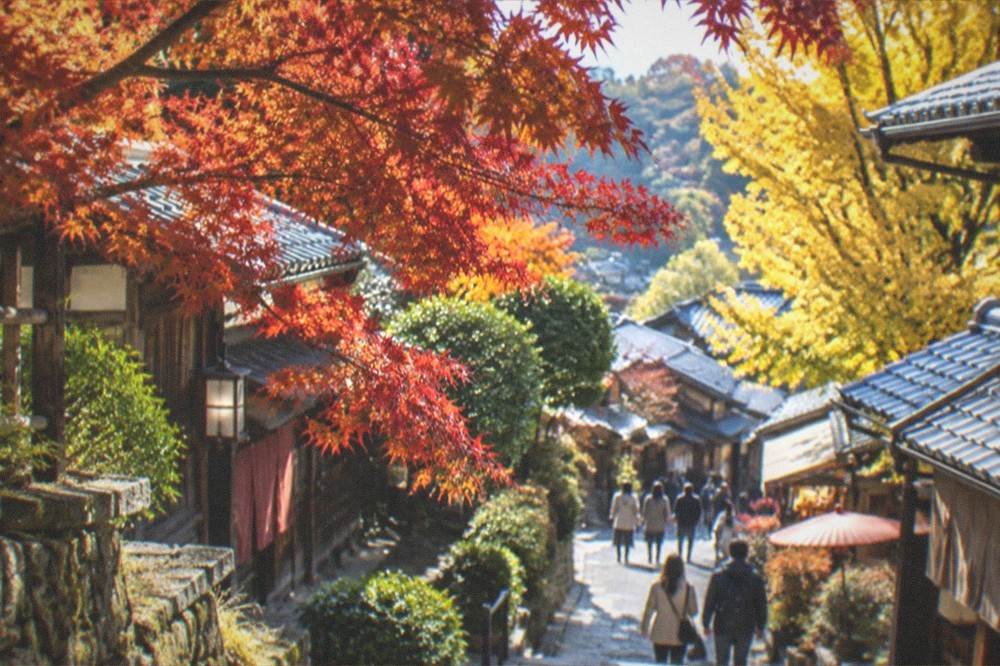
Festivals add dated frames that no amount of planning skill can move. Gion Matsuri runs the whole of July, with the Yamaboko Junko processions on 17 and 24 July; Aoi Matsuri falls on 15 May; Jidai Matsuri on 22 October; and Gozan no Okuribi lights five mountains on 16 August, with entry to the hills prohibited that day. These are public events, not bookable products, and the Kyoto festivals guide covers the calendar in full.
Common Questions About Kyoto Photo Spots
Where do you photograph Fushimi Inari without crowds in the torii?
Climb past the Yotsutsuji intersection to the upper loop, where the traffic thins sharply, or go before 7:00, since the paths have no closing time and entry is free. The two parallel Senbon Torii lanes often run at different densities, so switching lanes also works.
Is photography allowed in Gion?
Yes on the public Hanamikoji street. The private alleys off it carry signs from the Gion South Side district council threatening a 10,000 yen penalty for unauthorised photography or entry, and the city's tourism association asks visitors not to touch, chase or photograph geiko and maiko without permission.
What time does Kiyomizu-dera open for photos?
6:00 every day, verified on the temple's own FAQ page, with closing times that vary by season and special night viewings on published dates in spring and autumn.
Which Kyoto temples changed their admission fees in 2026?
Ginkaku-ji doubled its adult fee from 500 to 1,000 yen from 1 April 2026, the first change in 32 years, and Tofuku-ji revises its fees on 1 November 2026, with a new 1,000 yen combined ticket and a foliage-period surcharge on the Tsutenkyo bridge.
Do you need to pay to photograph the bamboo grove in Arashiyama?
No, the grove is a free public path with 24-hour access. The Sagano Romantic Train beside it costs 880 yen one way for an adult, and the Iwatayama Monkey Park above the grove charges 800 yen, cash only.
When is Kyoto's wettest month for photography planning?
July, at 223.6 mm in the JMA 1991 to 2020 normals, ahead of June's 199.7 mm. January is the driest at 53.3 mm and also the coldest, at a 4.8 C mean.
The through-line of every section here is that Kyoto's photographs are made by clock and calendar rather than by equipment. The shrine's torii are free and never close, the temples open between 6:00 and 9:00, and the record 62.79 million visitors the city counted in 2025 all sleep eventually. Go where the crowds have not arrived yet, respect the signage in Gion's private alleys, and the frames take care of themselves.