How Do You Book Sagano Romantic Train Tickets In Kyoto And Do They Sell Out?
The Sagano Romantic Train is a 7.3 kilometre sightseeing railway that runs along the Hozugawa gorge from Saga Torokko to Kameoka, and it is the one Arashiyama attraction where advance booking genuinely matters. Here is how the ticketing works, what it costs, and what to do when a date is full.
Short answer
Book online through the operator's own reservation site as soon as dates open, or buy a ticketed product through a reseller that guarantees a seat. The train sells out on weekends, holidays and foliage season; midweek mornings outside November are usually buy-on-the-day.
The Sagano Romantic Train is a 7.3 kilometre sightseeing railway that runs along the Hozugawa gorge from Saga Torokko station in Arashiyama to Kameoka, and it is the one attraction in this corner of Kyoto where advance booking genuinely matters. The operator's own ticket page sets a standard one-way fare of 880 yen for adults and 440 yen for children, and it opened reservations for the 29 March to 1 April 2026 period at midnight Japan time, which tells you something about demand: the moments that matter sell on a clock. This page covers how booking works, what a ticket costs, which seats and direction are worth requesting, when the line runs, and how to pair it with the Hozugawa Kudari boat ride that shares the same gorge. For the wider picture of the district, start with the Arashiyama bamboo grove guide and the things to do in Kyoto roundup.
What Is The Sagano Romantic Train?
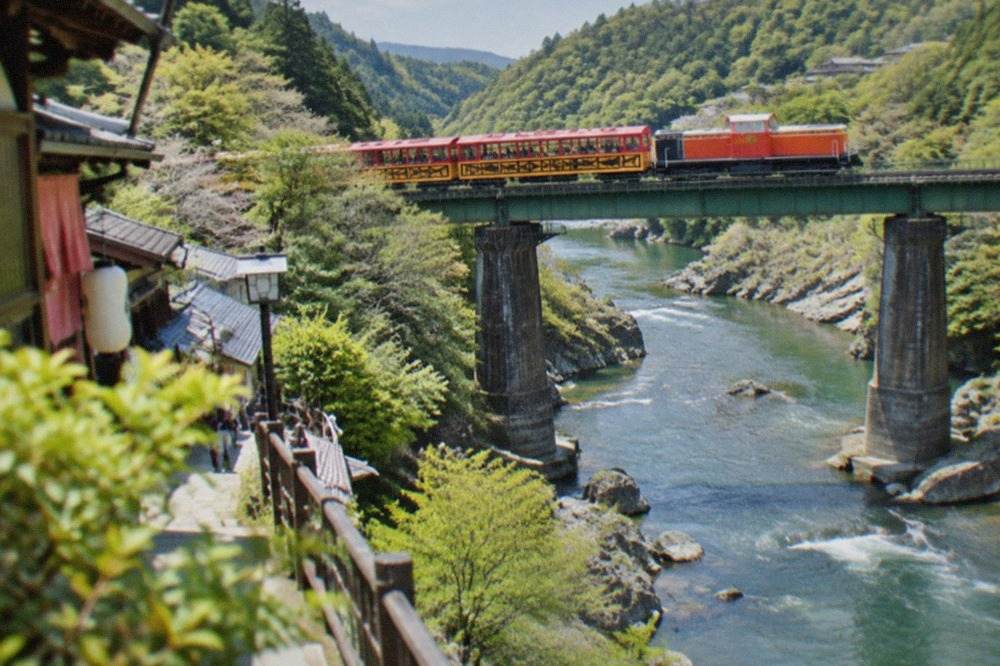
The Sagano Romantic Train, operated by the Sagano Scenic Railway, is a preserved sightseeing line running 7.3 kilometres along the Hozugawa gorge between Saga Torokko station in Arashiyama and Kameoka station, using vintage carriages on the old JR freight branch that once carried cargo before the gorge was dammed for tourism. The journey takes about 25 minutes each way and exists purely for the view: there is no faster way between the two points, the parallel JR line already does that job.
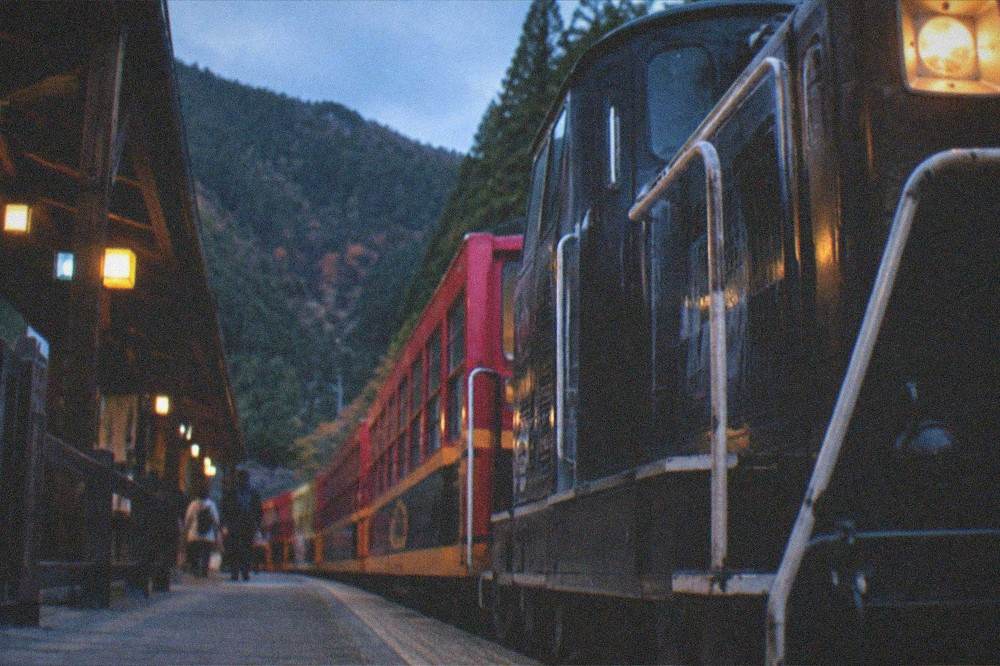
The line was built as part of the old San'in main line, and when JR West rerouted its tracks through a newer tunnel, the local railway that took over the abandoned river-level section decided to run open, retro-styled carriages on it instead of scrapping it. The result is one of the few railways in Japan whose entire reason to exist is scenery. Carriages are painted in bold solid colours, the windows are large, and one carriage, the Rich car, has bench seating facing outward rather than forward.
The route matters more than the rolling stock. The track clings to the north bank of the Hozugawa gorge while the JR Sagano line runs through tunnels on the other side, so for most of the 25 minutes the only things in view are the river, the rock walls and, in season, cherry blossoms, fresh green, or maple foliage. The operator's own site markets it as a moving observation deck, and that is a fair description. The gorge is also the reason the Hozugawa Kudari boat ride exists downstream; the two products share the same valley and are frequently sold together, which this page covers in full further down.
How Do You Book Sagano Romantic Train Tickets And Do They Sell Out?
Yes, the Sagano Romantic Train sells out, and the pattern is predictable: weekends, public holidays, the late March to early April cherry season and the November foliage window are the pressure points, while midweek mornings outside those windows can often be bought on the day. There are three booking routes: the operator's own online reservation system, same-day tickets at the station window, and pre-purchased ticket products sold through tour resellers that guarantee a seat before you leave home.
The operator's own reservation system is the cheapest route and the one that requires the most planning. Reservations for popular periods open on the operator's site at midnight Japan time, and the operator's own ticket page records that bookings for the 29 March to 1 April 2026 window opened at 00:00 JST, a detail that tells you the operator expects those dates to move fast. For an autumn trip, work backwards from the foliage forecasts rather than the calendar: the JMA observatory's official marker for maple red leaves in Kyoto is a normal date of 5 December, but the Arashiyama gorge peaks well before that, and private forecasters put the 2026 Arashiyama colour around 24 November.
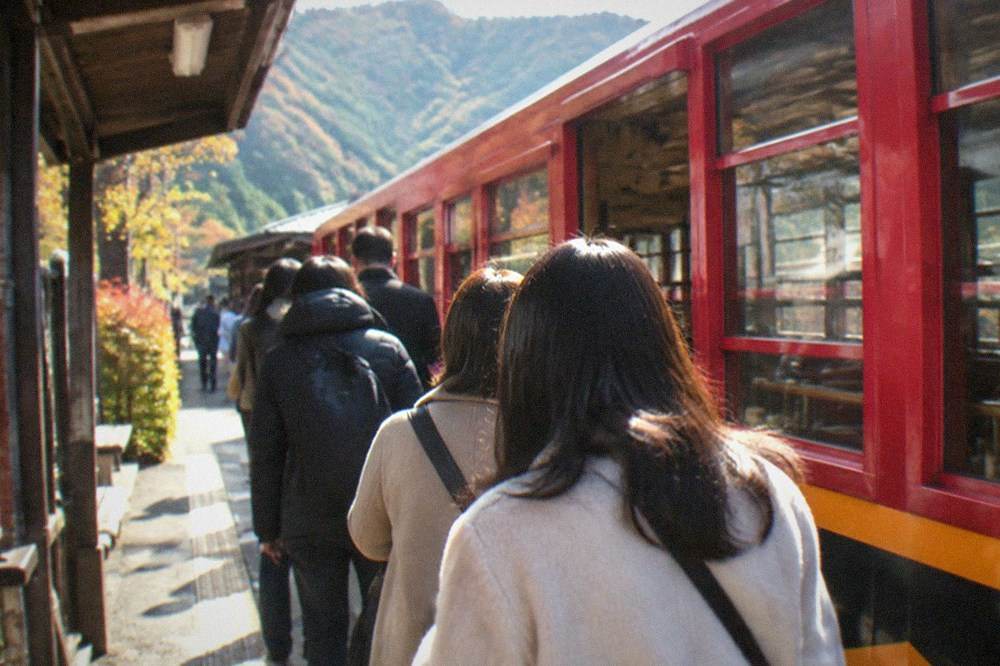
Same-day tickets at Saga Torokko or Kameoka station are the fallback. The trade-off is queueing: on a busy morning the line at the Arashiyama end forms before the first departure, and by mid-morning the popular departures for the return direction can be gone. If you are buying on the day, go early, accept a midday slot, or travel the Kameoka to Arashiyama direction, which is often the emptier one because most visitors start from the Arashiyama side.
The third route is a pre-purchased ticket product. A guaranteed ticket bought before you travel removes both the midnight reservation scramble and the station queue, which is why this site lists one as its related product for this page. It is worth being clear about what you are paying for: the rail fare itself is 880 yen, so a ticket product is a convenience purchase, buying certainty and a set travel date rather than a cheaper price.
A practical note on timing your whole day: the train is only one piece of Arashiyama, and the bamboo grove, Tenryu-ji and the monkey park all sit within a 20 minute walk of Saga Torokko station. Book a late-morning or early-afternoon departure, spend the morning on the grove side, and ride out when the crowds at the station are thinning rather than peaking.
How Much Do Sagano Romantic Train Tickets Cost?
A standard one-way ticket is 880 yen for adults and 440 yen for children, where adult means 12 and over and child means 6 to 12, with toddlers free when accompanied by a fare-paying adult. Groups of 30 or more pay 800 and 400 yen, and student groups pay 710 and 360. There is no round-trip discount on the standard fare; a return journey is simply two one-way tickets.
The operator's own ticket page prints all of those figures, and the age bands matter more than they look: a 12-year-old pays the adult fare, and a toddler riding on a lap rides free. The fare table below is the complete standard price list as the operator publishes it.
| Ticket type | Adult (12+) | Child (6-12) |
|---|---|---|
| Standard one-way | 880 yen | 440 yen |
| Group one-way (30+) | 800 yen | 400 yen |
| Student group one-way | 710 yen | 360 yen |
| Toddler (accompanied) | Free | Free |
Two things the fare table does not show. First, the train is not the only way out of the gorge: the JR Sagano line runs from Kameoka back toward Kyoto on the opposite bank, through tunnels, for a fraction of the sightseeing fare, so plenty of visitors ride the Sagano train one way and take JR back. Second, the combined day many people actually want is train out, boat back, and that combination is priced as two separate products because the train and the Hozugawa Kudari are run by different companies. The boat is 6,000 yen for adults and 4,500 yen for children from infant to elementary age, so the full train-and-boat loop is a real budget line, not a rounding error.
For travellers building the whole Arashiyama day from scratch, the costs add up across the district, not just on the train. The table below puts the main paid items side by side so the day can be budgeted honestly.
| Arashiyama item | Adult | Child | Notes |
|---|---|---|---|
| Sagano Romantic Train, one way | 880 yen | 440 yen | Child band is 6 to 12 |
| Hozugawa Kudari boat | 6,000 yen | 4,500 yen | About 2 hours, 24 seats per shared boat |
| Iwatayama Monkey Park | 800 yen | 400 yen | 16+ adult band, 4 to 15 child; cash only |
| Tenryu-ji garden | 500 yen | 300 yen | Buildings +300 yen, Hatto ceiling 500 yen separate |
| Bamboo grove path | Free | Free | Public path, no gate |
Which Seats And Direction Are Best On The Sagano Train?
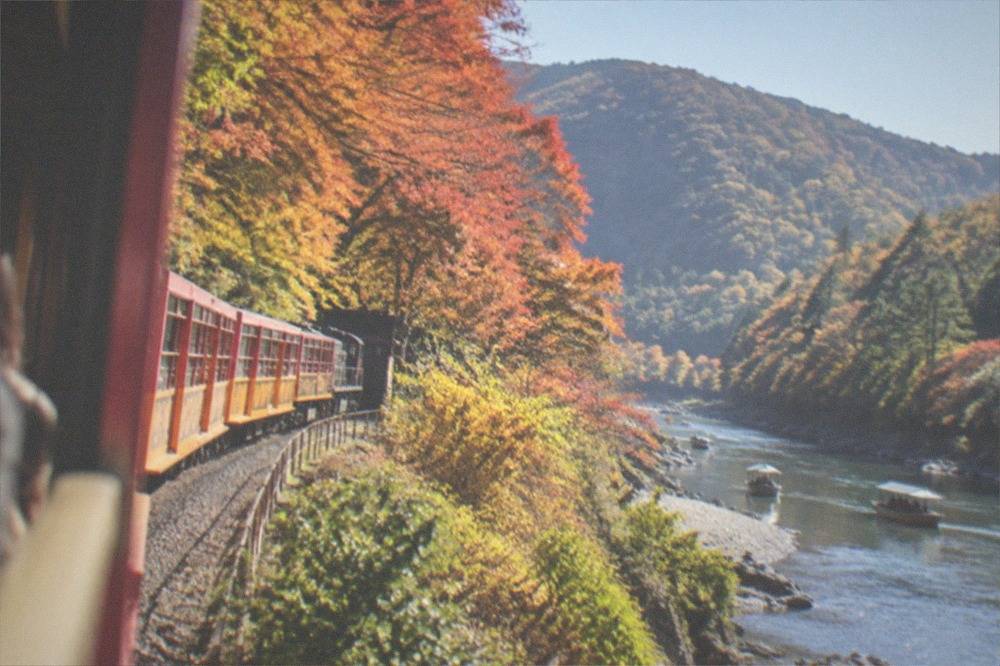
The seats to request are on the river side of the train, which is the right-hand side travelling from Saga Torokko to Kameoka and the left-hand side coming back, because the track runs on the north bank and the gorge views open on the water side. The fifth carriage, the open-sided Rich car, does not take seat reservations at all; it is standing or bench seating, sold cheaper, and it is the closest thing to an observation deck on wheels.
Direction matters less than people assume, because the best-known view, the Hozukyo bridge crossing where the train slows over the river, is visible from both directions. What actually differs is the light: a morning departure from Arashiyama rides with the sun behind you looking up the gorge, while an afternoon return from Kameoka looks back into low light over the water, which photographers tend to prefer in foliage season.
The Rich car deserves a plain explanation. It is deliberately unglamorous: open sides, wooden benches, no glass between you and the gorge, and a lower fare than the reserved carriages. In rain it is miserable and in August it is an oven, but in late November with the maples at full colour it is arguably the best seat on the line. Check the operator's timetable for whether it is running on your date, since the open car is the first thing withdrawn in bad weather.
One more seat fact worth knowing before you book: the standard carriages are not open-sided, and window seats are assigned, not first-come. If you are travelling as a group and want to sit together on a busy departure, a reservation is the only way to guarantee it, which is a quieter argument for booking ahead than the sell-out question itself.
When Does The Sagano Romantic Train Run?
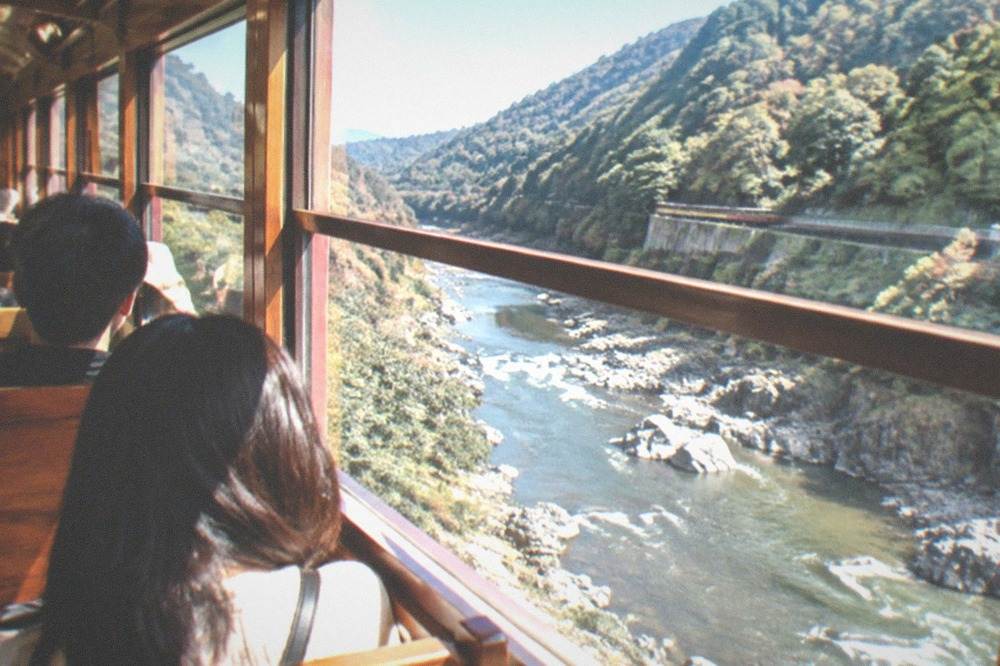
The Sagano Romantic Train operates roughly from March through December, with departures about hourly in each direction through the middle of the day, and it stops running entirely in the depths of winter. Closed days exist outside peak periods, but the exact pattern is published only on the operator's own timetable, so check the operator's current schedule page for your date rather than relying on a guide's summary, this one included.
That caution is deliberate. The operator's news page, not a summary, is the only place the running calendar is authoritative, and the pattern of maintenance closed days changes between seasons. What can be stated firmly is the seasonal logic: the line runs through cherry season in late March and early April, through the green season, and through foliage season in November, then pauses for winter when the gorge views are bare and the light is short. The rest of the planning pages sit on Kyoto Travel Guide.
Season-by-season, the experience differs more than the fare does. Cherry blossoms sit high on the gorge walls in early April, the fresh green of May is the locals' favourite window because the crowds are thinner, summer turns the river into the main attraction with the Hozugawa boats running the rapids below, and November is peak: the operator's own marketing is built around the maple colour, and it is the one month where a walk-up ticket on a weekend is close to hopeless.
| Season | Approximate window | What the gorge looks like | Booking pressure |
|---|---|---|---|
| Cherry | Late March to early April | Blossoms on the valley walls | Very high, book ahead |
| Fresh green | May to mid-June | Dense new leaf, river running full | Moderate |
| Summer | July to August | Deep green, boat traffic below | Moderate, weekends busy |
| Foliage | Mid to late November | Maple colour through the gorge | Extremely high, book well ahead |
| Winter | Late December to February | Line not running | Closed |
The foliage window deserves the most careful planning of the four. The JMA phenology record for Kyoto puts the observatory's normal date for maple red leaves at 5 December, with 2025 observed on 10 December, but the Arashiyama gorge colour runs earlier than the official marker, and the 2026 private forecasts put the district's peak around 24 November. Aim for the last week of November, book the train in advance, and treat any date either side of that as a colour lottery rather than a guarantee.
How Do You Combine The Train With The Hozugawa Kudari Boat?
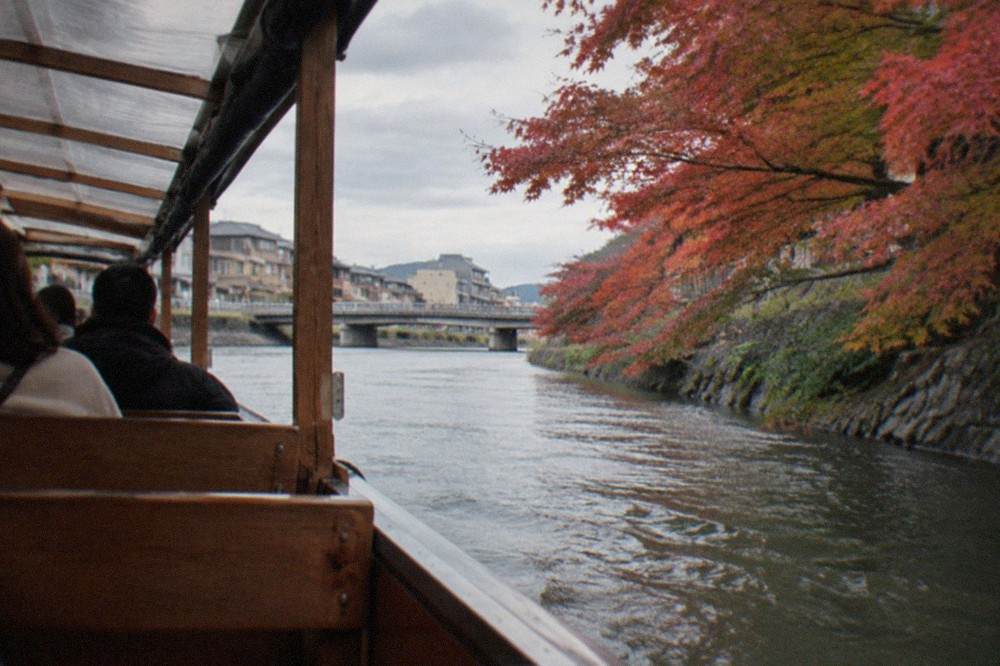
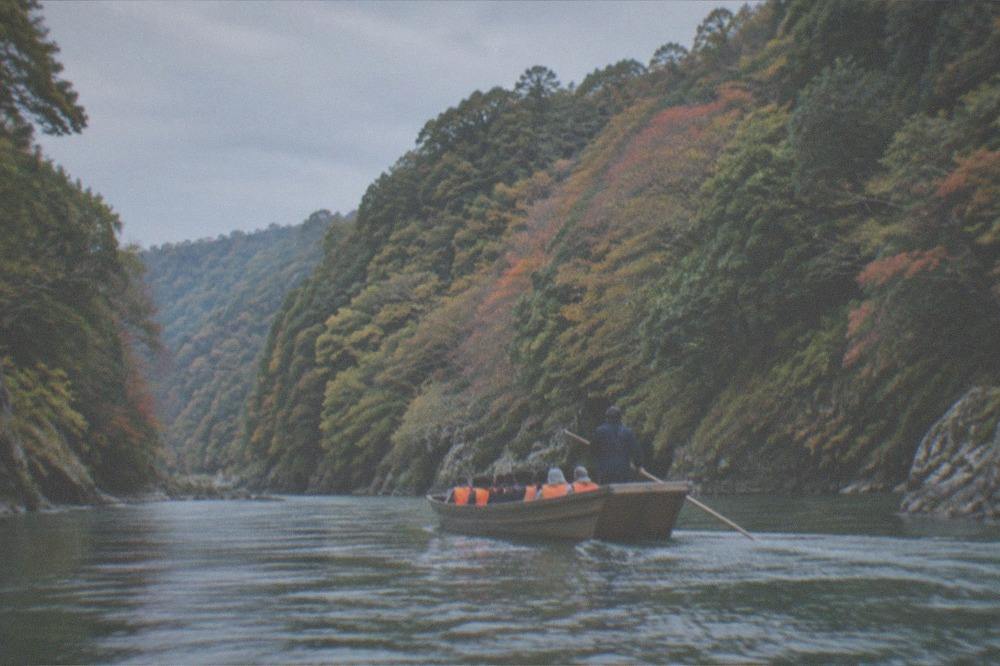
The classic loop is Sagano train outbound from Saga Torokko to Kameoka, then Hozugawa Kudari boat back down the river to Arashiyama, roughly a 25 minute rail ride followed by about two hours on the water, and the two are booked separately because they are different operators. The boat costs 6,000 yen adult and 4,500 yen child, scheduled shared boats carry 24 seats, and charters run 144,000 or 162,000 yen depending on the size.
The logistics are the part most guides skip. Kameoka station, where the train arrives, is a short walk or shuttle from the boat embarkation point further up the Hozugawa, and the boat lands back near Togetsukyo bridge in Arashiyama, which is a 10 minute walk from the bamboo grove. Doing the loop in that order, train first and boat second, means you descend the gorge by water with the current and finish in the middle of Arashiyama rather than at the far end of it.
The boat's own season and safety record deserve honest treatment. A fatal capsizing occurred on the river in March 2023, and service later resumed, though the operator's site does not publish the resume date; what it does publish is that the current regular timetable runs 10 March to 13 December 2026 and that the boats are operating. The fare of 6,000 yen adult is the figure on the operator's own ticket page, and it is notably higher than the roughly 4,100 yen figure still repeated in older guides, which is stale and should be ignored.
Whether the combination is worth the combined fare of a train ticket plus a boat ticket is a judgement call this page can make honestly: the train is the better pure view per minute, the boat is the better experience per hour, and the two together turn a two-hour Arashiyama visit into a full half day on and around the river. In November, the combination is one of the best foliage days available anywhere in Kyoto. In August, the boat's cooling spray earns its keep in a city whose August mean daily maximum is 33.7 C in the JMA 1991-2020 normals.
What Else Should You See Around The Sagano Train In Arashiyama?
Within a 20 minute walk of Saga Torokko station sit the Arashiyama bamboo grove, a free public path with no gate and no hours, Tenryu-ji with its separately ticketed garden, buildings and Hatto ceiling, and Iwatayama Monkey Park at 800 yen for visitors 16 and over and 400 yen for ages 4 to 15, open 9:00 to 16:00 with the summit open until 16:30.
The monkey park closes early in bad weather or when the monkeys head back up the hill, so treat the closing time as an upper bound.
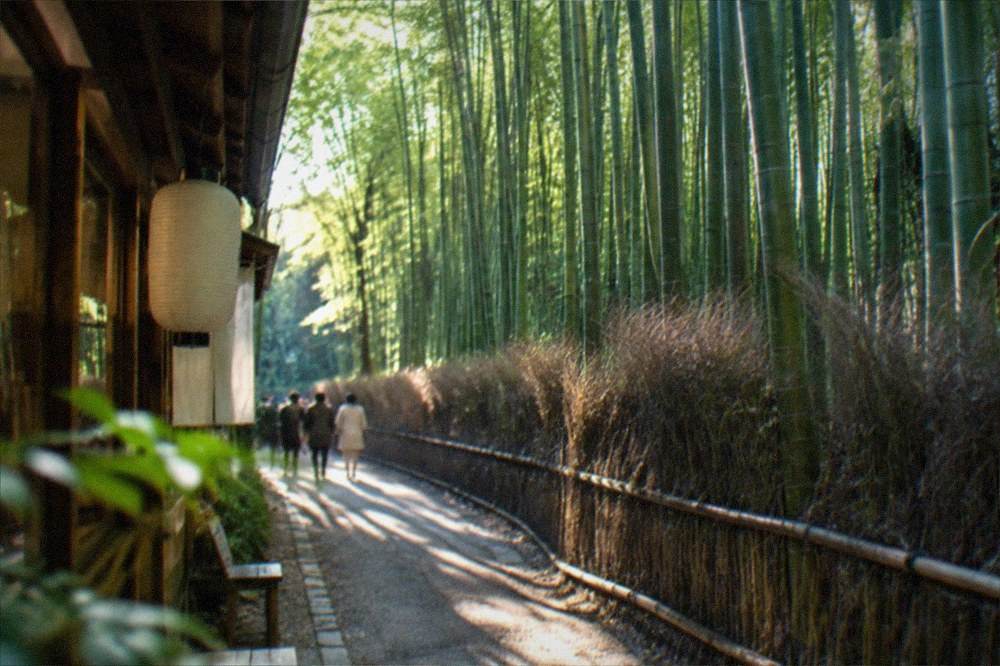
The bamboo grove is the reason most people are in Arashiyama in the first place, and it costs nothing: the path is public, open around the clock, and there is no enforced one-way system or crowd rule confirmed on any primary source. Go before 8:00 if you want it to yourself; the city's own crowd management work, which includes the Kyoto Tourism Comfort forecast that the shrine at Fushimi Inari also links to, exists precisely because the district fills up by mid-morning.
Tenryu-ji is the district's UNESCO site and its pricing is three-tiered: the garden alone is 500 yen for high school age and up and 300 yen for elementary and junior high, the Hojo and other buildings add 300 yen to the garden fee, and the Cloud Dragon ceiling in the Hatto is a separate 500 yen admission. The temple's own visit page sets hours of 8:30 to 17:00 with last admission at 16:50, and it lists specific Hatto closure days in late October 2026 and early January 2027, so check those against your date if the ceiling is on your list.
The monkey park is the one item families should read carefully before committing. It is a genuine hike, roughly 20 minutes uphill from the river, and the monkeys are wild, not fed on a schedule for show. Admission is cash only, 800 yen for 16 and over and 400 yen for ages 4 to 15, with ages 3 and under free. The view over Kyoto from the summit is the real product, and the operator's own page is blunt that early closure happens when weather turns or the troop wanders off.
For a fuller walk through the district with a guide, the Arashiyama walking tour covers the grove, the monkeys and Tenryu-ji in one five-hour loop, rated 5 from 1,781 reviews and from $50 per person, which pairs naturally with a pre-booked train ticket for the afternoon.
How Do You Get To Arashiyama And The Sagano Train?
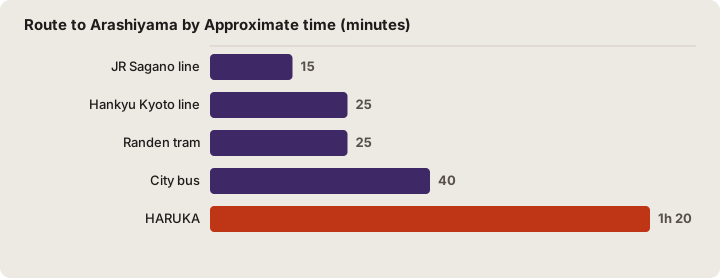
The fastest route from Kyoto Station is the JR Sagano line direct to Saga-Arashiyama, about 15 minutes, with Saga Torokko station a short walk from the JR exit; the alternative is the Hankyu line to Arashiyama on the south side of the river, or the Randen tram, which is slower but scenic. From Kansai International Airport, the JR West HARUKA One-way Ticket for foreign visitors costs 2,200 yen to Kyoto Station, 1,100 yen for a child, with the journey taking about 80 minutes.
Inside the city, the fare arithmetic is straightforward. The City Bus flat fare is 230 yen for adults and 120 yen for children aged 6 to 11, the subway runs 220 to 360 yen by zone, and the Subway and Bus One-Day Pass is 1,100 yen adult and 550 yen child. One warning that still catches travellers: the bus-only one-day pass no longer exists, its sales ended in September 2023 and its last day of use was 31 March 2024, so any guide recommending it is years out of date. The current product is the combined subway-and-bus pass.
| Route to Arashiyama | From | Approximate time | Notes |
|---|---|---|---|
| JR Sagano line | Kyoto Station | About 15 min | Direct to Saga-Arashiyama, walk to Saga Torokko |
| Hankyu Kyoto line | Kawaramachi / Karasuma | About 25 min with a transfer | Lands south of Togetsukyo bridge |
| Randen tram | Shijo-Omiya | About 25 min | Scenic, slow, terminates at Arashiyama |
| City bus | Central Kyoto | 40 min or more | 230 yen flat; traffic-dependent |
| HARUKA | Kansai Airport | About 80 min | 2,200 yen visitor one-way ticket to Kyoto Station |
For arrival logistics beyond the airport train, the HARUKA express guide covers the visitor ticket in detail, and the Kyoto buses guide explains the flat-fare system and the tourist express buses, the EX100 and EX101, which run 500 yen per adult ride in cash and also accept IC cards. An ICOCA card costs 2,000 yen including a 500 yen deposit and works on every local operator except the Randen tram's flat fare, which it also accepts on most lines.
If Arashiyama is one stop on a wider Kansai itinerary, the JR Pass for Kyoto guide covers what a national pass does and does not cover on this corridor, and the Osaka to Kyoto guide handles the approach from the south. Travellers combining the day with Nara or Kobe will find those day-trip pages more useful than doubling back through Kyoto Station.
Is The Sagano Romantic Train Worth It Compared With Just Taking JR?
For most first-time visitors, yes: the JR Sagano line runs through tunnels on the opposite bank and shows almost nothing of the gorge, while the Sagano train exists specifically to show it, so the 880 yen buys a view JR passengers never get. The honest exception is a tight budget or a crowded date: if the reserved carriages are sold out and the weather is poor, the JR line reaches Kameoka for a fraction of the price and the money is better spent elsewhere in the district.
The comparison is worth stating plainly because the two lines run parallel and are easily confused on a map. JR is transport; the Sagano train is an attraction. Nobody rides the Sagano train to get to Kameoka, because JR gets there faster, cheaper, and more frequently. What the 880 yen buys is 25 minutes at river level, on open track, through the one section of the gorge where the railway was never tunnelled. In cherry season and foliage season that difference is the entire point of the trip.
The budget framing matters for families in particular. A family of two adults and two children pays the equivalent of three adult fares one way on the train, since each child aged 6 to 12 pays 440 yen against the adult 880, and the full train-plus-boat loop costs that family several times the train fare alone once the 6,000 yen adult and 4,500 yen child boat tickets are added. Both are defensible spends, but they should be chosen knowingly. The stronger option for a first visit with limited time is the train one way and JR back, keeping the boat for a return trip or a summer visit when the river itself is the draw.
Whatever you choose, book the pressure dates early. The operator's midnight opening for spring reservations is the tell: when a railway opens sales at 00:00 Japan time for a four-day window, it is telling you those seats will not survive the morning. Plan around it, and Arashiyama rewards the planning more than almost anywhere else in Kyoto.
Common Questions About The Sagano Romantic Train
How Do You Book Sagano Romantic Train Tickets And Do They Sell Out?
Book through the operator's own online reservation system when dates open, buy at the station on the day, or purchase a guaranteed ticket product in advance. Yes, they sell out: weekends, public holidays, the late March to early April cherry window and November foliage season are the pressure points, while midweek mornings outside those windows are often available on the day.
How much is the Sagano Romantic Train?
A standard one-way ticket is 880 yen for adults 12 and over and 440 yen for children aged 6 to 12, with toddlers free when accompanied. Groups of 30 or more pay 800 and 400 yen, and student groups pay 710 and 360 yen. There is no round-trip discount; a return is two one-way tickets.
Which side of the Sagano train should you sit on?
The river side, which is the right-hand side travelling from Saga Torokko to Kameoka and the left-hand side returning. The track runs on the north bank of the gorge, so the water views open on that side. The open-sided Rich car has no assigned seats at all and is the best option in good foliage weather.
Can you ride the Sagano train in winter?
No. The line runs roughly March through December and stops for the winter, with no service in the depths of the cold months. Closed days also occur outside peak periods, and the exact calendar is published only on the operator's own timetable, so check it for your date.
Is the Sagano train or the Hozugawa boat better?
The train is the better view per minute and costs 880 yen one way; the boat is the better experience per hour, running about two hours down the river at 6,000 yen adult and 4,500 yen child. Many visitors do the train outbound to Kameoka and the boat back down to Arashiyama, booking each separately with its own operator.
How do you get to the Sagano Romantic Train from Kyoto Station?
Take the JR Sagano line from Kyoto Station to Saga-Arashiyama, about 15 minutes, then walk a few minutes to Saga Torokko station. The Hankyu line and the Randen tram are slower alternatives that land on the south side of the river.