Is The JR Pass Worth It For Kyoto
The nationwide JR Pass buys almost nothing inside Kyoto itself, because the city's temples, shrines and neighbourhoods sit on the subway and bus network, not on JR lines. This guide runs the actual verified fares, line by line, and shows which trips make a pass pay and which ones never will.
Short answer
For a Kyoto-only trip, no: the JR Pass does not pay, because JR lines touch only a handful of Kyoto stops while the subway and buses reach nearly everything. It starts to make sense only when you add long-distance day trips or a Tokyo or Hiroshima leg on top.
The JR Pass is sold on the promise of unlimited trains across Japan, and that promise is real. The problem is geography. Kyoto's famous sights, the temples of Higashiyama, the bamboo grove of Arashiyama, the lanes of Gion, sit almost entirely off the JR network, on the city's own subway lines, its flat-fare buses and the private railways that JR does not run. A pass that covers the country can still be the wrong tool for a week inside one city.
This page works the question from the fares up. Every figure here comes from the operator's own published price: the city's transport bureau for buses and subway, JR West for its airport and regional products, the temples for their admission. Where a number is not printed by its operator, it is not printed here either. The short version is that for Kyoto itself you will almost always do better with an IC card and, on heavy days, the Subway and Bus One-Day Pass, and the Kyoto bus and subway pass guide covers that product in detail.
Does The JR Pass Cover Anything Inside Kyoto Besides The Nara Line And Sagano Line?
Yes, but very little: inside the city the pass covers the JR Kyoto Line between Kyoto Station and Yamashina, the Nara Line toward the south, the Sagano Line to Arashiyama and Kameoka, and the Biwako Line's brief stretch through the north of the city. That is four commuter lines with useful but scattered stops. It does not cover the subway, the city buses, the Keihan and Hankyu railways along the Kamo River, the Randen tram to Arashiyama, or the Eizan line to Kurama.
The JR Nara Line is the one genuinely useful inner-city stretch, because Inari Station sits directly at the foot of Fushimi Inari Taisha, and the shrine charges no admission at all. The Sagano Line, properly the JR San-in Line, drops you at Saga-Arashiyama Station about a ten-minute walk from the bamboo grove, which is also free to walk. Those two stops are the pass's best work inside Kyoto.
| JR line in Kyoto | Key stops for visitors | What you reach |
|---|---|---|
| Nara Line | Inari, Tofukuji, Uji (beyond the city) | Fushimi Inari Taisha, Tofuku-ji, Uji |
| Sagano (San-in) Line | Saga-Arashiyama, Kameoka | Arashiyama bamboo grove, Tenryu-ji, Hozugawa Kudari departure point |
| JR Kyoto Line | Kyoto, Nijo, Yamashina | Nijo-jo Castle (a walk from Nijo Station), Lake Biwa side of Yamashina |
| Biwako Line | Kyoto, Kitaoji (bus transfer) | Northern Kyoto with a bus connection |
Notice what is missing. Kiyomizu-dera, Gion, the Philosopher's Path, Nanzen-ji, the Kyoto Imperial Palace and downtown Kawaramachi have no JR station within easy reach. The city's own transport bureau publishes the fares that get you there: 230 yen flat on the city bus, 220 to 360 yen by subway zone. None of that is JR.
The Sagano Line also connects to the Sagano Romantic Train, which is a separate operator entirely, the Sagano Scenic Railway, and is not covered by any JR Pass. The Sagano Romantic Train guide covers its own fare structure.
What Does The JR Pass Actually Get You In Kyoto?
In practical terms the pass gets you four things: the ride from Kansai Airport if you hold the nationwide pass, the Nara Line to Fushimi Inari and Uji, the Sagano Line to Arashiyama, and the Kyoto Line's short hops across the city. Everything else, the subway, the buses, the private railways, the tram, needs separate payment. A traveller who bases in Kyoto and walks or buses between sights may use JR two or three times in a week.
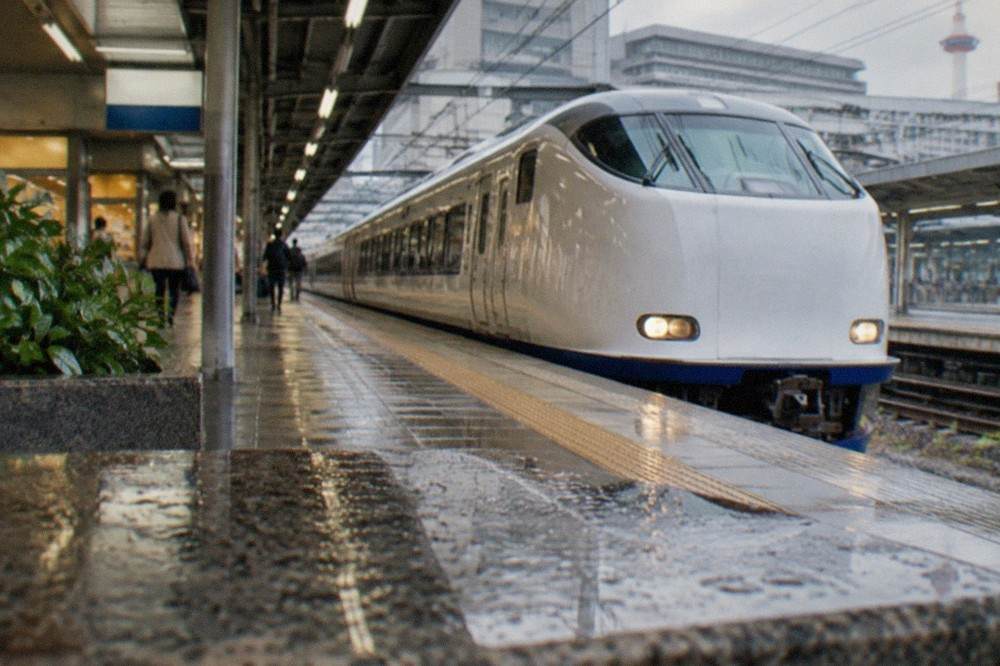
Start with the airport, because that is where the pass's value is most visible. The JR West HARUKA One-way Ticket for foreign visitors is 2,200 yen adult and 1,100 child from Kansai International to Kyoto, a figure JR West prints on its own product page, and the journey runs about 80 minutes. The regular fare of roughly 3,060 yen is not printed by JR West in a form this site could verify, so treat the visitor ticket as the planning number. If you arrive through Itami instead, the Hankyu Kanko limousine bus is 1,500 yen adult and 750 child, about 50 to 55 minutes from the Hachijo exit, with contactless card payment since 1 March 2026.
Inside the city, count the rides you will realistically take. Inari Station to Fushimi Inari is the single best-value JR stop in Kyoto, since the shrine is free and open at any hour, the paths having no closing time. Saga-Arashiyama to the bamboo grove is the second. Beyond those two, most itineraries drift off JR quickly, and the money moves to the city's own network.
| Trip inside Kyoto | On JR? | Cheapest verified alternative |
|---|---|---|
| Kyoto Station to Fushimi Inari | Yes, Nara Line to Inari | Same ride, a short local fare; shrine free |
| Kyoto Station to Arashiyama | Yes, Sagano Line to Saga-Arashiyama | Randen tram or Hankyu, separate fares |
| Downtown to Kiyomizu-dera | No | City bus 230 yen flat |
| Downtown to Nijo-jo Castle | Partly, Nijo Station is a walk away | Subway to Nijojo-mae, 220 to 360 yen |
| Gion to Nanzen-ji | No | City bus 230 yen flat |
| Kyoto Station to downtown | No | Subway Karasuma Line, 220 yen |
The pattern is blunt. JR serves the edges of the visitor's Kyoto, the southern gate at Inari and the western gate at Arashiyama, while the subway and buses serve the middle where most of the time is spent. A pass priced for cross-country travel is a heavy tool for two short rides a day.
How Much Does Local Transport In Kyoto Cost Without A Pass?
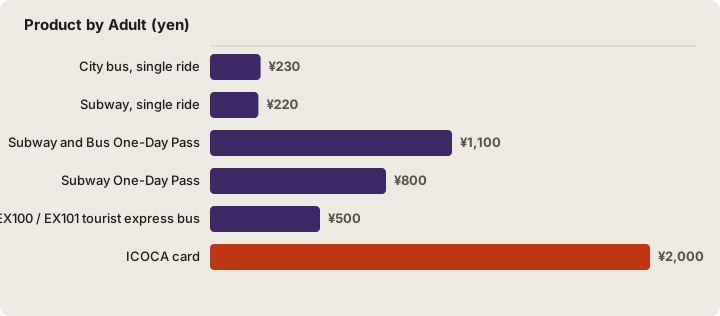
Without any pass, a day of Kyoto transport is cheap: the city bus is a flat 230 yen adult and 120 yen child, the subway is 220 to 360 yen by zone, and the ICOCA card costs 2,000 yen including a refundable 500 yen deposit. The Subway and Bus One-Day Pass at 1,100 yen adult and 550 child beats four bus rides, and it is the product the city actually sells to visitors now.
The bus-only one-day pass no longer exists. Sales ended at the end of September 2023 and the last day of use was 31 March 2024, and the transport bureau's own notice explains why: about 90 per cent of buyers were visitors, and the pass concentrated them on a handful of bus routes. Any guide still recommending a 700 yen bus pass is recommending a product you cannot buy. The replacement logic is simple, spread across subway and bus with the 1,100 yen combined pass, or pay as you go with IC.
| Product | Adult | Child | Notes |
|---|---|---|---|
| City bus, single ride | 230 yen | 120 yen | Flat fare, city transport bureau |
| Subway, single ride | 220 to 360 yen | 110 to 180 yen | Five zones |
| Subway and Bus One-Day Pass | 1,100 yen | 550 yen | The current visitor pass |
| Subway One-Day Pass | 800 yen | 400 yen | Subway only |
| EX100 / EX101 tourist express bus | 500 yen | 250 yen | Cash or IC, station to Kiyomizu and Gion |
| ICOCA card | 2,000 yen | 500 yen deposit included | Refundable |
The EX100 and EX101 express buses deserve a mention because they solve the one problem JR cannot, the drag from Kyoto Station up to Kiyomizu-dera and Gion. The city's transport bureau prices them at 500 yen adult and 250 child, they take IC cards, and the EX101 runs to the Kiyomizu side every 7 to 8 minutes in the morning on operating days. The ICOCA card guide covers the card itself.
Set that against the JR Pass's daily cost and the gap is obvious. Even a heavy local day of four bus rides plus a subway trip already matches the one-day pass price, which is exactly the arithmetic the pass is built for. The nationwide pass costs multiples of that per day, and it cannot buy a single one of those rides.
Is The JR Pass Worth It For A Kyoto-Only Trip?
No, and it is not close: a Kyoto-only itinerary spends its money on the 1,100 yen one-day pass and 230 yen bus rides, while the JR Pass cannot touch a single fare inside the city except two short commuter lines. The pass only begins to pay when Kyoto is one stop on a Tokyo, Hiroshima or Kyushu routing, where a single shinkansen leg can cost more than a week of Kyoto buses.
Run the arithmetic on a typical five-day Kyoto stay. Assume the airport transfer on the 2,200 yen HARUKA visitor ticket, two round trips to Fushimi Inari and one to Arashiyama on JR at local fares of a few hundred yen each, and the rest of the week on the one-day pass. The local total comes to the airport ticket plus a handful of one-day passes and short bus fares, all of it far below the nationwide pass price. The five days in Kyoto itinerary shows just how little JR a well-built plan actually uses.
| Scenario | Local transport cost, verified fares | JR Pass needed? |
|---|---|---|
| Kyoto only, 3 days | A few one-day passes at 1,100 yen plus bus fares | No |
| Kyoto only, 5 days | The 2,200 yen airport ticket plus several one-day passes | No |
| Kyoto plus Nara day trip | Add about 1,500 yen return | No, single-source fares are cheap |
| Kyoto plus Osaka day trips | Add roughly 1,000 yen per round trip | Rarely |
| Kyoto, Tokyo and Hiroshima in 7 days | Shinkansen legs dominate | This is where it pays |
The honest framing is that the JR Pass is a Japan pass, not a Kyoto pass. Kyoto's own numbers make the case: the city's 2025 tourism survey, released in June 2026, counted 62.79 million visitors, and the overwhelming majority of them moved around on the subway and bus network that JR does not run. The city has even built its crowd policy around that fact, with express buses, luggage delivery and time-shifting campaigns all aimed at the bus and subway, not at JR.
One more caution that matters here. A reported withdrawal of the JR West Kansai Area Pass appears on reseller pages but nowhere on JR West's own site, so this guide neither promises nor denies it and will not tell you to buy before a deadline. What JR West does print is the pass itself at 2,800 yen for one day, and that figure is the one to plan with.
Which Regional JR Passes Work For Kyoto Day Trips?
Two regional products beat the nationwide pass for Kyoto-based travel: the JR West Kansai Area Pass at 2,800 yen for one day, which covers the Nara, Osaka and Himeji corridors, and the Kansai Wide Area Pass at 12,000 yen for five days if you extend to Okayama or Kansai Airport shinkansen corridors. Both are printed by JR West on its own pass pages, and both only make sense with two or more paid day trips packed in.
The one-day Kansai Area Pass pays for itself on roughly two medium round trips. Kyoto to Nara on the JR Miyakoji Rapid is about 720 yen each way and about 45 minutes, fares that rest on secondary sources rather than an operator fare page, so treat them as planning figures. Kyoto to Osaka is cheaper still. Add Himeji or Kansai Airport into one day and the 2,800 yen pass clearly wins.
For the day trips themselves, the planning pages on this site carry the detail: Nara with its 1,687 deer counted in the July 2026 census, Kobe, Himeji Castle and the wider day trips from Kyoto roundup. If Osaka is your arrival city rather than a day trip, the Osaka to Kyoto guide prices that corridor separately.
| Regional JR West product | Price | Best Kyoto use |
|---|---|---|
| Kansai Area Pass, 1 day | 2,800 yen | Nara plus Osaka in one day |
| Kansai Wide Area Pass, 5 days | 12,000 yen | Kyoto base with Himeji, Okayama, Kansai Airport |
| HARUKA One-way Ticket (visitors) | 2,200 yen | Kansai Airport to Kyoto, single ride |
| Nationwide JR Pass | Check current listing | Tokyo, Hiroshima or Kyushu legs, not Kyoto itself |
The decision rule is mechanical. Add up your shinkansen and limited-express legs outside Kyoto. If they clear the pass price, buy the pass. If they do not, and a Kyoto-centred trip rarely does, buy the regional product or plain tickets and put the difference toward admission, where the money works harder: Ginkaku-ji alone now charges 1,000 yen for adults, double its old fee since April 2026.
How Do You Cover Nara, Arashiyama And Osaka Without Overspending?
Pay per ride: Nara is about 720 yen each way on the JR Miyakoji Rapid or 760 yen on Kintetsu plus a 520 yen limited-express charge, Arashiyama is a short local fare on the Sagano Line, and Osaka round trips run around 1,000 yen, so a day trip costs less than any pass unless you stack three of them into one day. The fares to Nara and Uji are single-source figures, so check the operator's fare table on the day.
Nara rewards the early start more than any pass. The morning tour from Kyoto, run with an English-speaking guide, is bookable here, and the Nara day trip guide covers the independent version, including the etiquette around the deer, whose 2026 census counted 1,687 animals, up 222 on the previous year. Todai-ji's Daibutsuden charges 800 yen for adults, and the temple's own information page sets its hours at 7:30 to 17:30 from April to October and 8:00 to 17:00 from November to March.
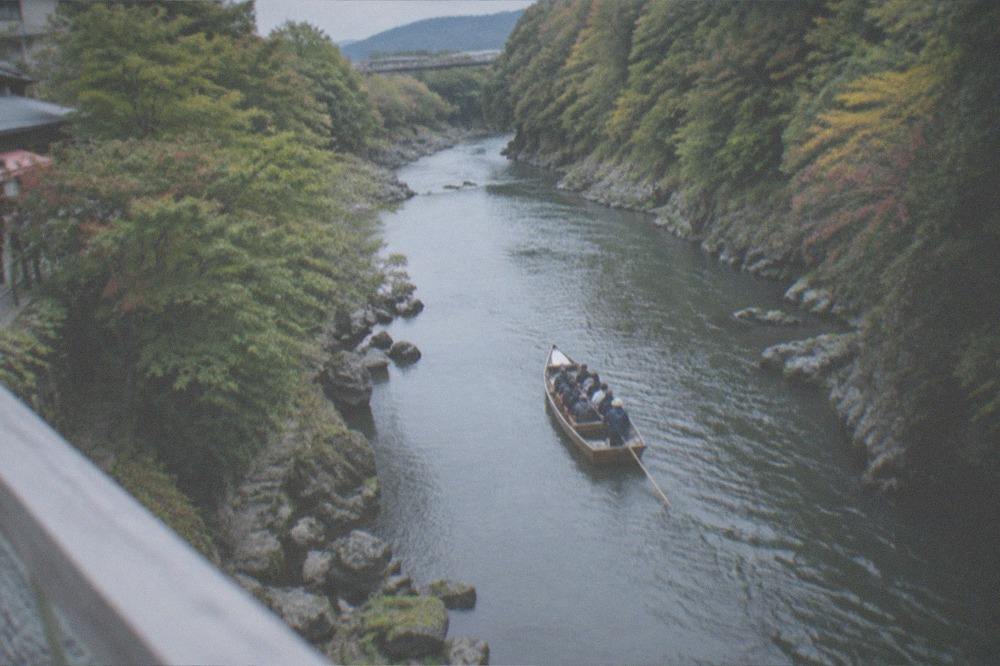
Arashiyama is where the JR Pass does its last useful work and then stops. The Sagano Line to Saga-Arashiyama is covered, but the Sagano Romantic Train that runs the Hozugawa valley is a different operator at 880 yen one way for adults and 440 for children, printed on the Sagano Scenic Railway's own ticket page, and no JR Pass touches it. The Hozugawa Kudari boat ride downstream is 6,000 yen adult and 4,500 child per the operator's current fare table, a figure that surprises anyone carrying a stale guide quoting about 4,100 yen.
Osaka, finally, is cheap enough that a pass is rarely worth the arithmetic. The corridor is short, the trains are frequent, and the money you save by skipping a pass buys a proper dinner. The is Nara closer to Kyoto or Osaka page answers the basing question if you are splitting a trip between the two cities.
What Should You Know Before You Ride Kyoto's Trains And Buses?
Three things: buses take exact flat fares of 230 yen and can refuse bulky luggage when crowded, the subway closes the gaps the buses leave, and the accommodation tax changed on 1 March 2026, so your hotel bill carries 1,000 yen per person per night on a 20,000 to 50,000 yen room where it used to carry 500. None of that is JR's business, and all of it affects a Kyoto budget more than any rail pass decision.
The luggage point is real policy, not folklore. The city discourages large bags on crowded buses and runs a hands-free delivery network, with station counters and locker services, precisely because 62.79 million visitors a year cannot all fit on the Karasuma Line at 9 a.m. Plan to send bags ahead on transfer days.
The tax point matters to the pass question in a quiet way. Kyoto is not a cheap city to sleep in, and the new five-tier accommodation tax, from 200 yen on a room under 6,000 yen up to 10,000 yen on a room at 100,000 yen or more, is charged per person per night on the room-only rate. A family that skips an unnecessary nationwide pass saves several thousand yen, which now covers the tax on two mid-range nights.
| Accommodation tax tier, room rate per night | Tax per person per night, from 1 March 2026 | Before |
|---|---|---|
| Under 6,000 yen | 200 yen | 200 yen |
| 6,000 to under 20,000 yen | 400 yen | 400 yen |
| 20,000 to under 50,000 yen | 1,000 yen | 500 yen |
| 50,000 to under 100,000 yen | 4,000 yen | 1,000 yen |
| 100,000 yen and up | 10,000 yen | 1,000 yen |
For the days themselves, the honest kit is an ICOCA card for everything, the 1,100 yen one-day pass on heavy days, and plain JR tickets for Inari and Arashiyama. That combination covers every verified fare in this guide for less than the cost of two days of a nationwide pass.
Common Questions About The JR Pass In Kyoto
Does The JR Pass Cover Anything Inside Kyoto Besides The Nara Line And Sagano Line?
Yes, but only the JR Kyoto Line across the city and the Biwako Line's northern stretch, neither of which serves the main sightseeing district. The Nara Line to Inari for Fushimi Inari Taisha and the Sagano Line to Saga-Arashiyama are the two genuinely useful stretches. The subway, city buses, Keihan, Hankyu, the Randen tram and the Eizan line are all outside the pass.
Does The JR Pass Cover The Sagano Romantic Train?
No. The Sagano Romantic Train is operated by the Sagano Scenic Railway, a separate company from JR West, and its 880 yen adult and 440 yen child one-way fares are paid separately. The JR Sagano Line does reach Saga-Arashiyama Station, which is a short walk from the bamboo grove and the connecting point for the sightseeing train.
Does The JR Pass Cover The Subway And Buses In Kyoto?
No. The Kyoto Municipal Subway and the city buses are run by the city's own transport bureau and are excluded from every JR Pass. The Subway and Bus One-Day Pass at 1,100 yen adult and 550 yen child is the local product that covers them, and the old bus-only pass was withdrawn, with sales ending in September 2023 and use ending 31 March 2024.
Is The Kansai Area Pass Better Than The Nationwide JR Pass For Kyoto?
For a Kyoto-based trip, usually yes. The JR West Kansai Area Pass is 2,800 yen for one day and covers the Nara, Osaka and Himeji corridors from Kyoto, so two stacked day trips clear its price. The nationwide pass only pays when you add long-distance shinkansen legs such as Tokyo or Hiroshima to the itinerary.
Does The JR Pass Cover The Train From Kansai Airport To Kyoto?
The nationwide JR Pass covers the HARUKA airport express. Travellers without it can buy JR West's HARUKA One-way Ticket for foreign visitors at 2,200 yen adult and 1,100 child to Kyoto, with the journey taking about 80 minutes. Arriving through Itami instead, the limousine bus is 1,500 yen adult and about 50 to 55 minutes to Kyoto Station.
What Is The Cheapest Way To Get Around Kyoto Without A Pass?
An ICOCA card, which costs 2,000 yen including a refundable 500 yen deposit, topped up as you go. City bus rides are a flat 230 yen, subway rides run 220 to 360 yen by zone, and the EX100 and EX101 express buses from Kyoto Station to the Kiyomizu side cost 500 yen. On heavy sightseeing days the 1,100 yen Subway and Bus One-Day Pass beats four or more rides.
The verdict, stated plainly: buy the JR Pass for the country, not for Kyoto. Inside the city the pass buys two short commuter rides a day at most, while the 1,100 yen one-day pass, the flat-fare buses and a charged IC card move you between every temple, shrine and neighbourhood that makes the trip worth taking. Save the pass money for the shinkansen legs where it actually works, and spend the difference on admission to the places the trains deliver you to.
For everything the pass cannot cover, the things to do in Kyoto roundup and the wider collection at Kyoto Travel Guide carry the sight-by-sight detail, fees included, so the money you save on rail passes lands where Kyoto rewards it.