How Do Five Days In Kyoto Cover The City Plus Nara, Uji And Osaka?
Five days is the first length at which Kyoto stops being a checklist and starts being a city, with room left over for Nara, Uji and Osaka.
Short answer
Spend days one to three inside Kyoto itself, Higashiyama, Arashiyama and the north, then use days four and five for Nara and a Uji-plus-Osaka split. Every fee, fare and closing time below comes from the venues and operators that publish them.
Kyoto drew a record 62.79 million visitors in 2025, according to the city's own tourism survey released in June 2026, and the practical consequence is simple: a short trip now spends too much of itself in queues. Five days is the first length that absorbs that reality. The city's 2025 survey counted 46.20 million day visitors against 16.59 million overnight guests, which means the famous sights are thickest in the middle of the day and calmer at the edges, and a five-day plan can use those edges deliberately.
This plan keeps days one to three inside the city, Higashiyama, Arashiyama and the north, then sends day four to Nara and splits day five between Uji and Osaka. The site's own activity categories run to twelve kinds, from temple walks to cooking classes, and transfers are transport rather than activities, so nothing here rounds that count up. Every fee, fare and closing time below is one the venue or operator publishes itself. For a shorter stay first, see three days in Kyoto or four days in Kyoto. The whole site is anchored at Kyoto Travel Guide.
What Should Day One In Kyoto Cover?
Day one belongs to Higashiyama, walking Kiyomizu-dera down through Ninenzaka and Sannenzaka to Yasaka Shrine and Gion, because it is the one district where every major sight sits on a single continuous slope. Kiyomizu-dera opens at 6:00, admission is 500 yen, and the temple's own schedule runs spring night viewing to 21:30 from 27 March to 5 April. Finish on Hanamikoji, where photography stays legal on the public road but is banned on the private alleys off it.
The temple's FAQ sets the 6:00 opening, and the fee of 500 yen for adults and high school students is the figure the temple's materials carry, though the temple does not print it on its English visit page. The walk down from the stage passes through the preserved slopes of Ninenzaka and Sannenzaka, and the temple rewards a slow descent rather than a rushed one.
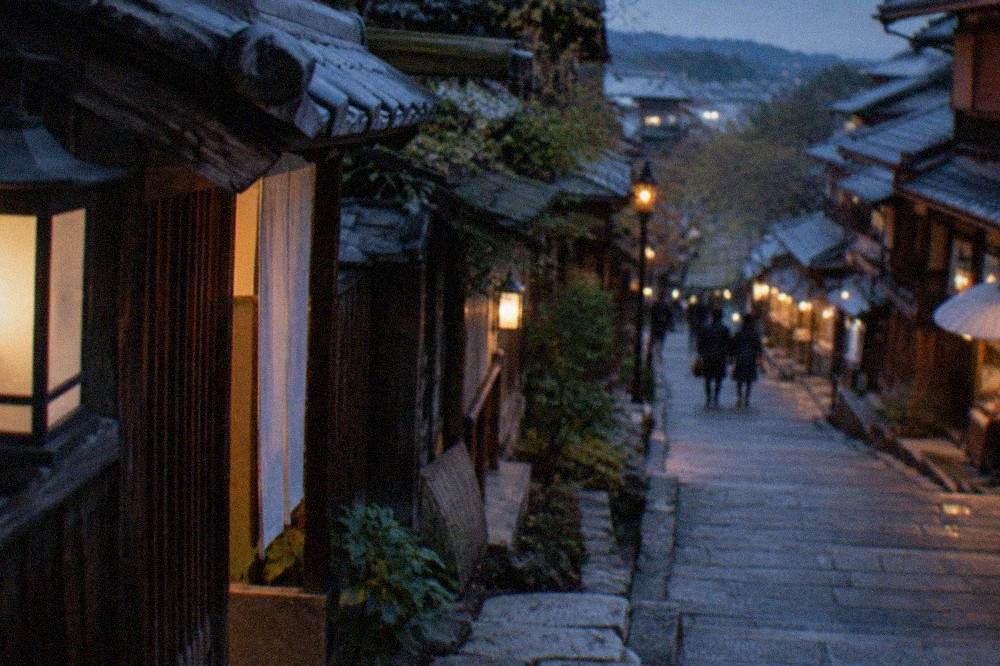
In the evening, Gion rewards care. The city's tourism association publishes four conduct rules: do not touch, chase or photograph geiko and maiko without permission, and do not enter or photograph private property where prohibited. Signs on the private alleys off Hanamikoji threaten a 10,000 yen penalty for unauthorized entry or photography, and those signs belong to the district council, not to the city as a fine. The Gion guide maps what is public and what is not.
How Should Day Two In Kyoto Run Through Arashiyama?
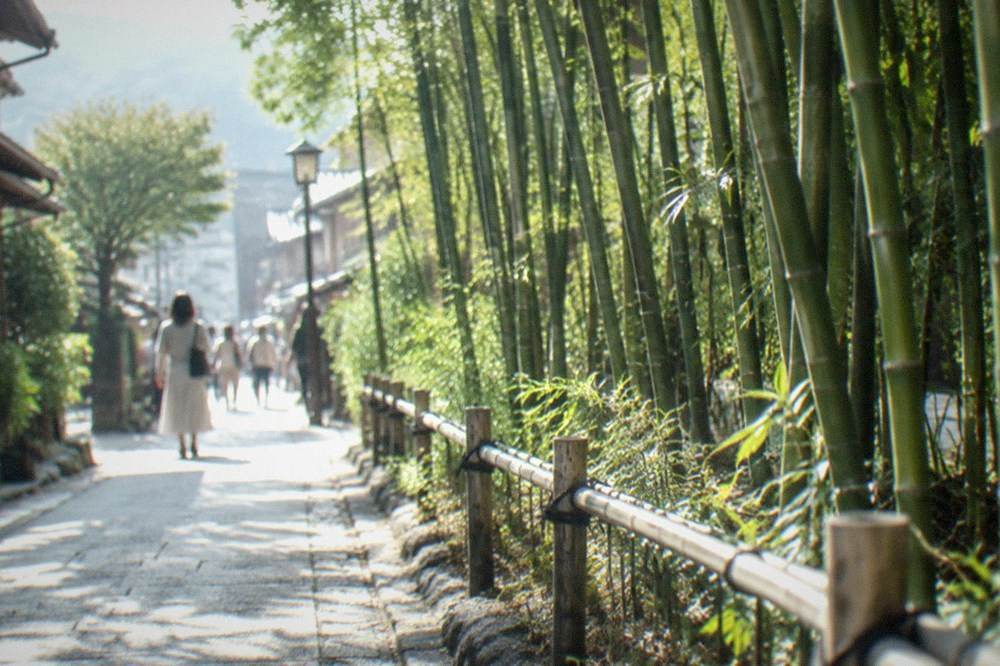
Day two goes west to Arashiyama, because the bamboo grove, Tenryu-ji, the Sagano Romantic Train and Iwatayama Monkey Park all sit within one walkable pocket on the same side of the river. Tenryu-ji's garden entry is 500 yen, the Sagano train is 880 yen one way for an adult, and the monkey park is 800 yen, cash only. The monkey park opens 9:00 and stops admitting around 30 minutes before its 16:00 close.
Tenryu-ji's own visit page sets the garden fee at 500 yen for high school and up, with the buildings at 300 yen more and the Cloud Dragon hall separate at 500 yen. The Sagano Scenic Railway, the operator of the Sagano Romantic Train, prices the standard one-way adult ticket at 880 yen and children at 440. The Arashiyama guide covers the grove itself and the train booking in one place.
The Hozugawa Kudari river boat finishes the day well. The operator's own ticket page sets the adult fare at 6,000 yen and children at 4,500, on a roughly two-hour run, with the regular timetable running from 10 March to 13 December 2026. A fatal capsizing in March 2023 suspended the service, and it is running normally now, though the operator's site does not print the resume date, so this plan does not state one.
If self-planning Arashiyama feels heavy, the Arashiyama walking tour with monkeys and temple garden bundles the district into five guided hours from 50 dollars, rated 5 from 1,781 reviews.
What Does Day Three Add In North Kyoto?
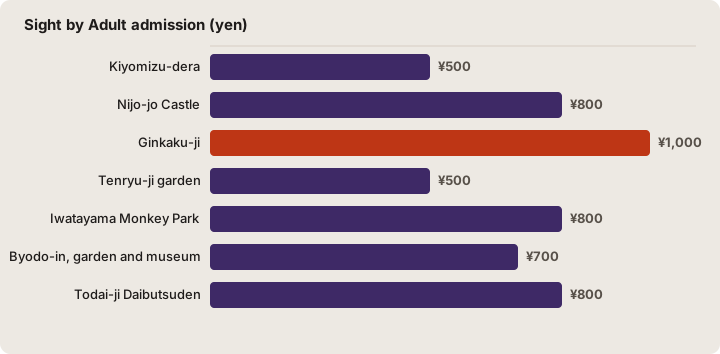
Day three takes the north, because that is where the imperial and shogunal Kyoto sits: Nijo-jo Castle, the Kyoto Imperial Palace grounds, then the Path of Philosophy to Ginkaku-ji. Castle admission is 800 yen, or 1,300 with the Ninomaru-goten Palace, and the castle stops admitting at 16:00 sharp. Ginkaku-ji now charges 1,000 yen, double its old fee since April 2026, and closes at 16:30 in winter.
Nijo-jo Castle's own fee page sets those prices, and its closure calendar matters: the castle closes 29 to 31 December, and the Ninomaru-goten Palace closes every Tuesday in January, July, August and December. The Honmaru-goten Palace reopened in September 2024 after restoration, at 1,000 yen on top of castle admission with an advance reservation. The Kyoto Imperial Palace is open to all with no application, per the Imperial Household Agency, though its hours were not readable this session, so check before going.
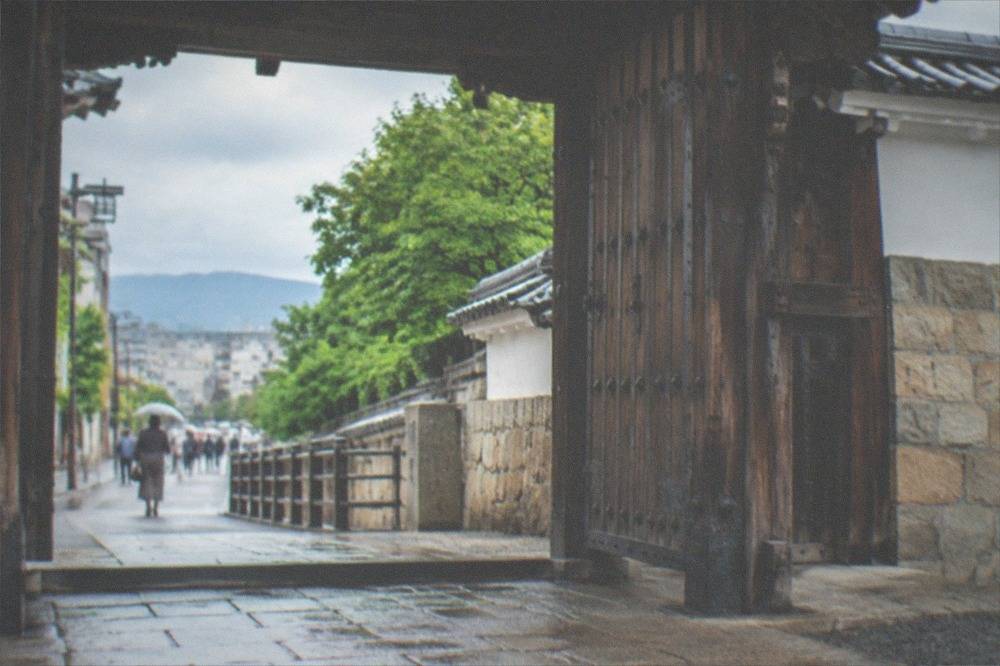
The 1867 story at Nijo-jo is worth the guided tour. The city's own history page records that the 15th shogun, Tokugawa Yoshinobu, summoned senior vassals from 40 domains to the Ohiroma of the Ninomaru-goten Palace on 13 October 1867, announced the return of authority on the 14th, and the Emperor accepted on the 15th. The Nijo Castle guide unpacks it, and the Nijo Castle World Heritage guided tour with admission covers it in 90 minutes from 41 dollars.
Afternoon along the Philosopher's Path ends at Ginkaku-ji, whose hours run 8:30 to 17:00 from March to November and 9:00 to 16:30 in winter. A January plan that arrives at 16:30 is simply wrong, so keep the silver pavilion before mid-afternoon in the cold months.
Is Nara The Right Day Four Trip From Kyoto?
Nara is the strongest single day trip from Kyoto, roughly 45 minutes away on the JR Miyakoji Rapid at about 720 yen one way, or 760 yen on Kintetsu plus 520 for a limited express seat. The 2026 census counted 1,687 deer in and around Nara Park, up 222 on 2025, and Todai-ji's Daibutsuden charges 800 yen for adults, open daily from 7:30 April to October and 8:00 November to March.
Those rail fares are single-source figures, so treat them as approximate and check the fare display on the day. The deer census was counted on 15 and 16 July 2026 by volunteers between 05:30 and 08:00, and the counting body records 411 stags, 990 does and 286 fawns, with 140 deaths in FY2025 of which 36 were road accidents. The Nara day trip guide covers the park in full.
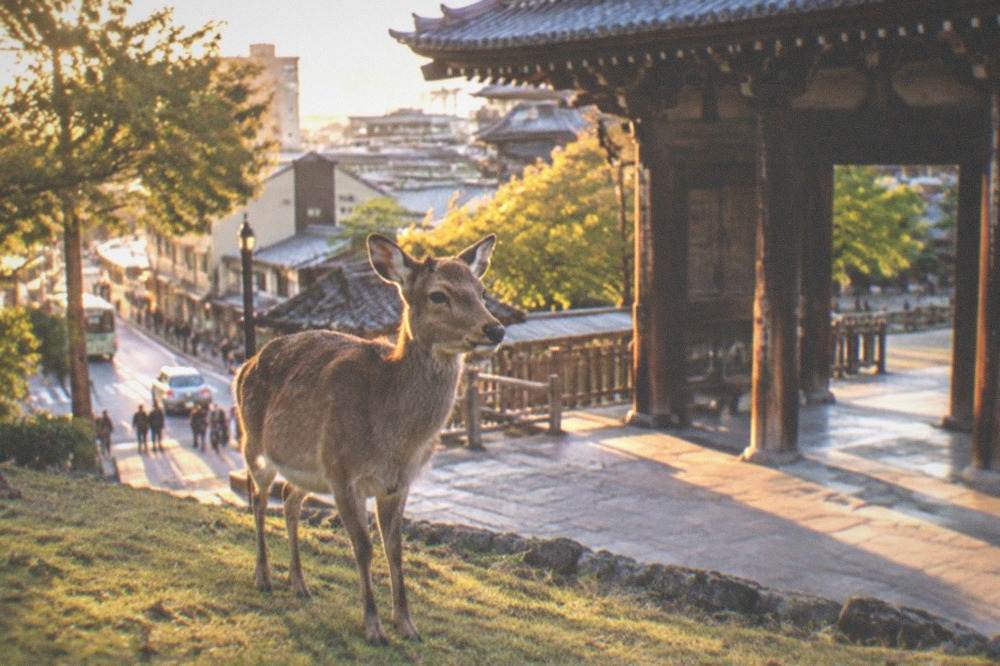
An early start helps, and the Nara early morning tour exists precisely for that, 4 hours 30 minutes from 62 dollars with an English guide, rated 4.9 from 1,131 reviews. Whether Nara beats Osaka for your fourth day is partly a geography question, and the answer depends on where your trip ends.
Why Does Day Five Split Between Uji And Osaka?
Day five works best halved, because Uji is only about 240 yen and a short JR Nara Line ride from Kyoto Station, and Osaka is close enough behind it that both fit before evening. Byodo-in in Uji charges 700 yen for garden and museum plus 300 for the Phoenix Hall interior, where tours run 9:30 to 16:10 at 50 people a slot, tickets from 9:10 first come first served. Osaka then takes under 30 minutes by train.
The Byodo-in fees come from the temple's own guide page. Phoenix Hall tours sell on a first-come basis from 9:10, so a morning arrival in Uji matters, and a capacity change from 16 October 2026 is announced on the temple's news page, though the new number was not readable, so no figure is printed here. The Uji guide covers the town, and the Byodo-in page covers the temple.
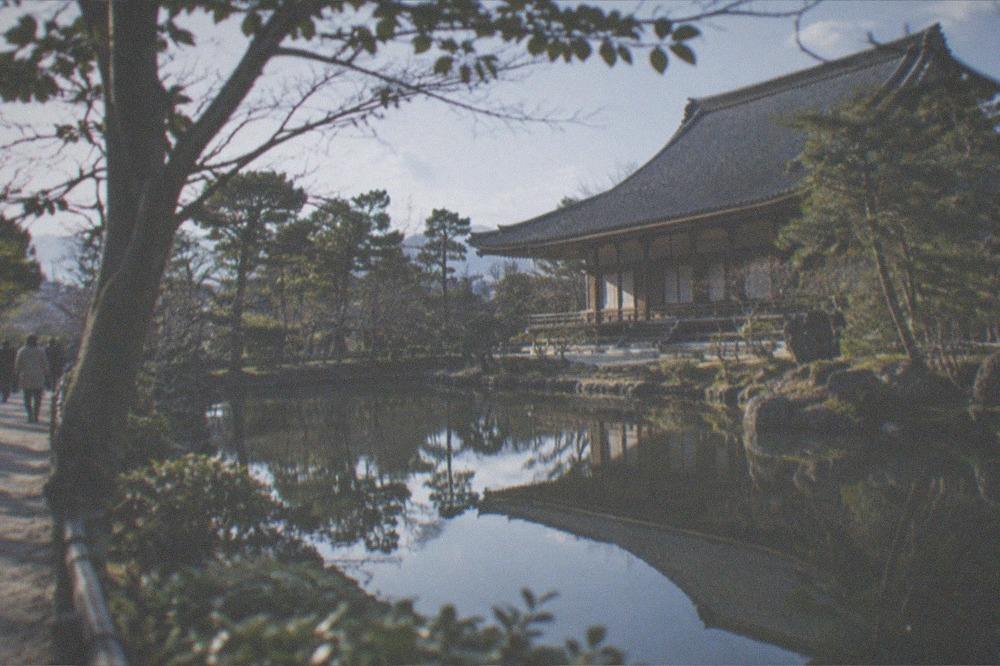
Uji is also the home of matcha, and the town's tea houses make a natural mid-morning stop before the train onward. In Osaka, Dotonbori and the castle fill an afternoon and evening comfortably, and the Kyoto versus Osaka comparison helps decide whether your last night should even be in Kyoto at all.
What Does Five Days In Kyoto Actually Cost?
Entry fees for the core sights on this plan total roughly 6,000 yen per adult before food, transport and lodging, with Kiyomizu-dera 500, Nijo-jo 1,300 with the palace, Ginkaku-ji 1,000, Tenryu-ji 500, the monkey park 800, Byodo-in 1,000 with the hall, and Todai-ji 800. A sit-down kaiseki splurge sits far above that: Hyotei's own site prints its course from 31,625 yen at lunch.
Those temple figures are each venue's own published price. The Hyotei numbers are Hyotei's alone, tax and service included, from its own front page: kaiseki from 31,625 yen at lunch and 37,950 at dinner in the main building, while the same house's annex serves asa-gayu at 5,445 yen and a Shokado bento at 7,260, with reservations taken from two people. That is the honest shape of the 30,000 yen question: at one of the most famous kaiseki houses in the city the course opens above 30,000 yen, while the same kitchen's annex is under 8,000.
| Sight | Adult admission | Hours that matter |
|---|---|---|
| Kiyomizu-dera | 500 yen | Opens 6:00; night viewing to 21:30 on set dates |
| Nijo-jo Castle | 800 yen, 1,300 with Ninomaru Palace | Last admission 16:00, closes 17:00 |
| Ginkaku-ji | 1,000 yen | 8:30-17:00 Mar-Nov; 9:00-16:30 winter |
| Tenryu-ji garden | 500 yen | 8:30-17:00, last entry 16:50 |
| Iwatayama Monkey Park | 800 yen, cash only | 9:00-16:00, last entry about 30 min before close |
| Byodo-in, garden and museum | 700 yen | 8:45-17:30, reception to 17:15 |
| Todai-ji Daibutsuden | 800 yen | 7:30-17:30 Apr-Oct; 8:00-17:00 Nov-Mar |
| Fushimi Inari Taisha | Free | Paths have no closing time |
Fushimi Inari appears in the table because it belongs on at least one early morning of any five-day plan, and it costs nothing: the shrine's own FAQ states there is no fee, and it publishes no closing time for the paths. The shrine dates its founding to 711, when, in its own account, Irogu no Hatanokimi enshrined the deity on Inariyama under an imperial order from Empress Genmei, and the shrine hedges even this with "is said to be".
How Do You Move Around Kyoto And Its Day Trips?
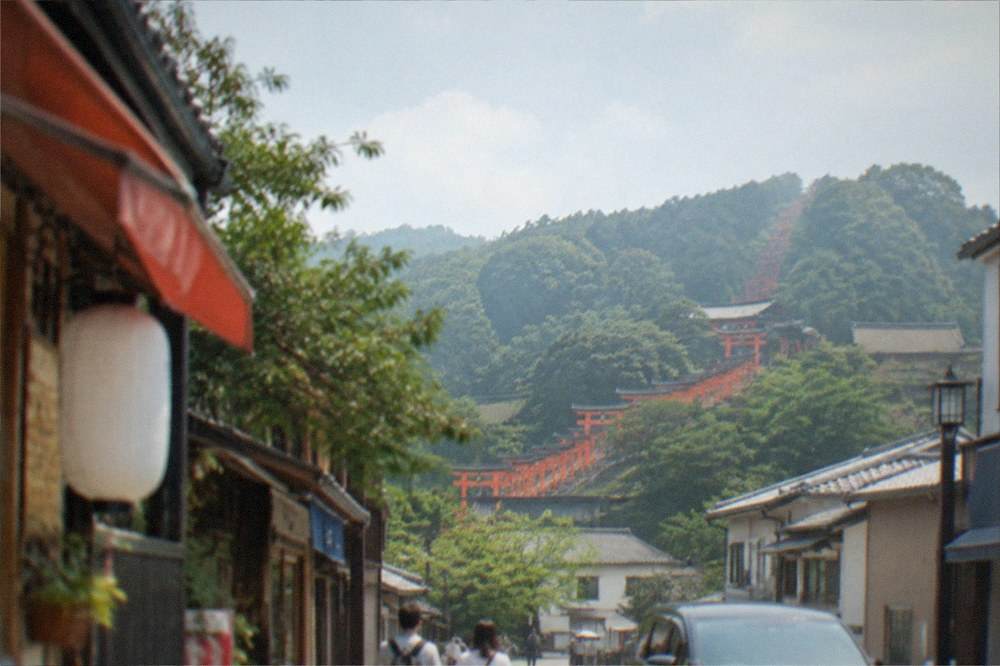
Inside Kyoto the City Bus flat fare is 230 yen, the subway runs 220 to 360 yen by zone, and the Subway and Bus One-Day Pass is 1,100 yen, the product that replaced the abolished bus-only pass. To Nara, the JR Miyakoji Rapid takes about 45 minutes at roughly 720 yen, to Uji the JR Nara Line is about 240 yen, and from Kansai Airport the JR West HARUKA One-way Ticket for foreign visitors is 2,200 yen to Kyoto.
The bus-only one-day pass is gone: sales ended at the end of September 2023 and the last day of use was 31 March 2024, a fact the transport bureau explains by noting that 90 percent of pass buyers were non-residents. The EX100 and EX101 tourist express buses run 500 yen per adult ride in cash, linking Kyoto Station to the Kiyomizu side, Gion and Ginkaku-ji with fewer stops. An ICOCA card costs 2,000 yen including a 500 yen deposit.
| Leg | Fare | Time | Source basis |
|---|---|---|---|
| Kansai Airport to Kyoto, HARUKA visitor ticket | 2,200 yen adult | About 80 minutes | JR West product page |
| Itami Airport to Kyoto Station, limousine bus | 1,500 yen adult | 50-55 minutes | Hankyu Kanko Bus |
| Kyoto City Bus, flat | 230 yen adult | Route dependent | City transport bureau |
| Subway, by zone | 220-360 yen | Line dependent | City transport bureau |
| Subway and Bus One-Day Pass | 1,100 yen | Unlimited, one day | City transport bureau |
| Kyoto to Nara, JR Miyakoji Rapid | About 720 yen | About 45 minutes | Single source, hedge |
| Kyoto to Uji, JR Nara Line | About 240 yen | Short hop | Single source, hedge |
| Kyoto to Osaka | Varies by line and operator | Under 30 minutes | Check fare display |
For the return leg of day five, the Osaka direction is covered by the same fare logic in reverse, and the day trips from Kyoto guide opens up the wider region if the trip extends.
What If You Have More Or Fewer Than Five Days?
Five days is the comfortable answer for Kyoto plus three neighbours, but it flexes both ways. Two and three days cover the core city only, Higashiyama, Arashiyama and the north, with every day trip dropped. Four days adds exactly one excursion, usually Nara. Beyond five, the wider region opens up, with Kurama and Kibune, Ohara, Koyasan and Amanohashidate each justifying a full day of their own.
The shorter plans have their own pages: two days in Kyoto, three days in Kyoto and four days in Kyoto. The master route lives on the Kyoto itinerary hub, and the question of how many days is enough has a direct answer. The full list of what the city holds is on things to do in Kyoto.
| Plan length | City coverage | Day trips included | Best fit |
|---|---|---|---|
| Two days | Higashiyama plus Arashiyama only | None | First taste, tight schedule |
| Three days | Higashiyama, Arashiyama, the north | None | Core city done properly |
| Four days | Core city plus buffer morning | One, usually Nara | First visit with one excursion |
| Five days | Core city, unhurried | Nara, plus Uji and Osaka split | The plan on this page |
| Beyond five | Core city plus region | Kurama, Ohara, Koyasan, Amanohashidate | Slow travel, repeat visitors |
Common Questions About Five Days In Kyoto
How Do Five Days In Kyoto Cover The City Plus Nara, Uji And Osaka?
Days one to three stay inside Kyoto, covering Higashiyama, Arashiyama and the north including Nijo-jo Castle and Ginkaku-ji. Day four goes to Nara on a roughly 45-minute train ride, and day five splits between Uji in the morning and Osaka in the afternoon and evening. This is the sequence that keeps every long transit on a day that already leaves the city.
Is Five Days In Kyoto Too Many?
No. The city's own 2025 survey recorded 62.79 million visitors, and the famous sights carry heavy midday crowds. Five days lets you visit Kiyomizu-dera and Fushimi Inari early in the morning, use midday for museums and food, and still leave room for Nara and Uji. Three days is workable but drops the day trips entirely.
Should Nara Or Osaka Come First?
Nara works better as the full-day trip, roughly 45 minutes away, because its park and Todai-ji reward unhurried time. Osaka works better as the final half-day and evening, because it is a night city and it sits on the return route toward Kansai Airport. The plan above orders them that way for that reason.
Do I Need A Rail Pass For Five Days In Kyoto?
Usually not. City transport runs on the 1,100 yen Subway and Bus One-Day Pass and 230 yen bus fares, and the day trips are cheap single tickets: about 720 yen to Nara and about 240 yen to Uji. The JR West Kansai Area Pass is 2,800 yen for one day and only pays off with heavier regional use, and its availability should be checked on JR West's own page rather than assumed.
What Is The Best Month For This Five-Day Plan?
Late March to early April for cherry blossom, or late November to early December for maple. The JMA 1991-2020 normals put full bloom at 4 April and maple red leaves at 5 December, and in 2026 full bloom arrived on 30 March. July and August are the hardest months: July is Kyoto's wettest month at 223.6 mm, and August is the hottest at a 28.5 C mean.
Can You Do Hiroshima As A Day Trip From Kyoto Instead?
Yes, as a long one. The Hiroshima and Miyajima bus tour from Kyoto or Osaka runs about 8 hours from 115 dollars, rated 4.7 from 1,239 reviews, and includes the shinkansen ticket back. It is a heavier day than Nara, so it suits a traveler who wants one intense excursion rather than a relaxed one.
Five days, run in this order, gives the city its mornings and the neighbours its afternoons, and every closing time in the plan is one the venue itself publishes, which is the only kind worth planning around.