What Time Does Nishiki Market Open And Which Day Is It Closed?
Nishiki Market publishes no unified opening hours, because the roughly 130 shops inside the arcade each keep their own schedule. The honest answer to the opening-time question is a pattern, not a number, and this page explains the pattern, the closed days, the eat-at-the-stall rule and what a visit costs.
Short answer
Nishiki Market has no unified hours. Each shop keeps its own, roughly 9 or 10:00 to 17 or 18:00, and many individual shops close on Wednesdays or Sundays. Go between 10:00 and 16:00 on a weekday for the most open stalls.
What Time Does Nishiki Market Open And Which Day Is It Closed?
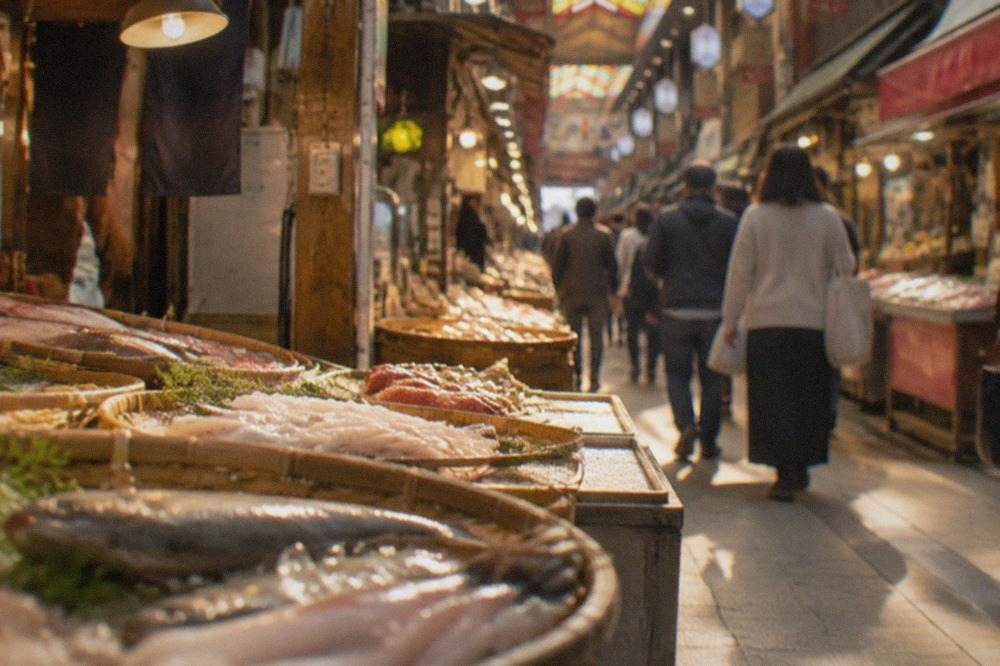
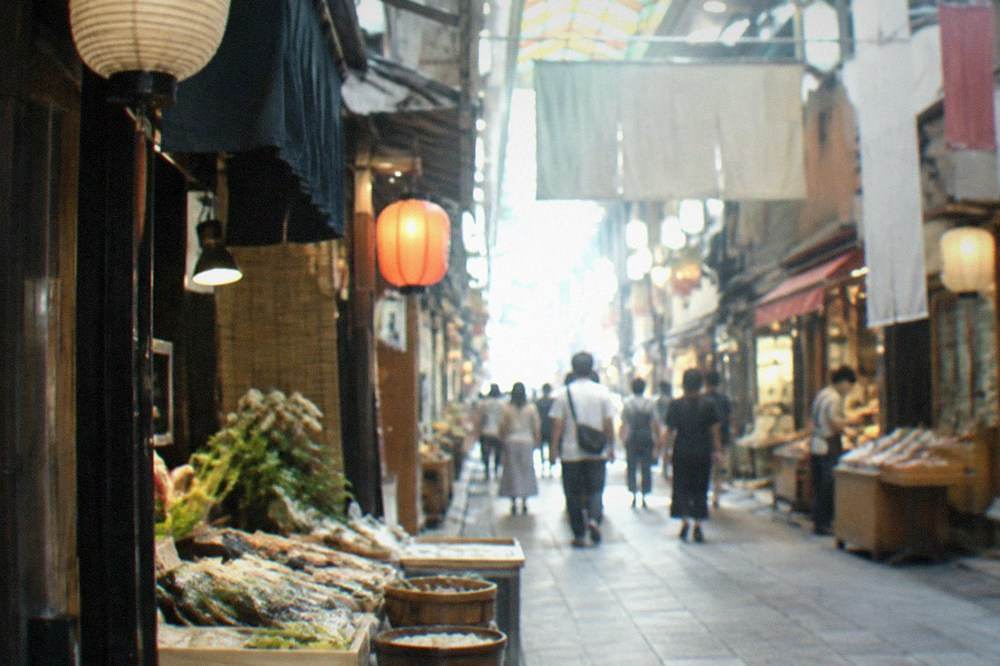
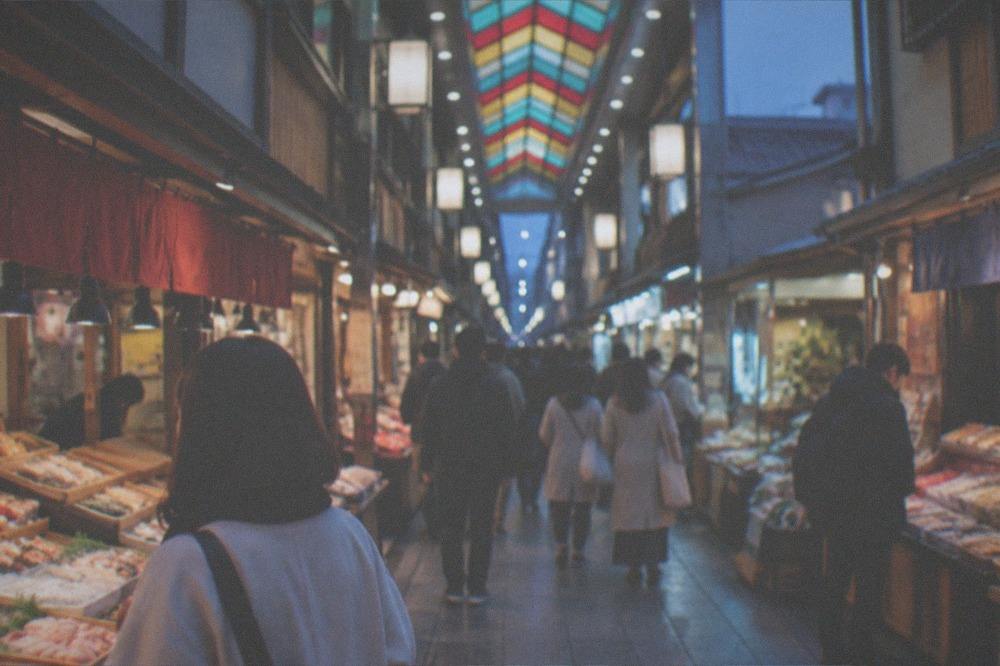
Nishiki Market is a covered arcade of roughly 130 shops running about 400 metres east from Teramachi Street, parallel to Shijo Street in central Kyoto. It is often called Kyoto's kitchen, and it has been trading in some form for centuries. The one thing it does not have is a front door with a posted opening time, because the market is not a single business. Each shop inside keeps its own hours, and the association that runs the market does not publish a unified schedule.
That single fact is the source of nearly every bad piece of Nishiki advice online. Guides print a confident opening hour that no shop actually observes, or a closing time that half the arcade ignores. This page works from what is verifiable: the market association's own site prints no unified hours, individual closures vary, and the practical pattern is roughly 9 or 10:00 in the morning to 17 or 18:00 in the evening. For everything else, Kyoto Travel Guide covers the rest of the city, and the market sits at the centre of the downtown Shijo area most visitors base themselves in.
What Time Does Nishiki Market Open And Which Day Is It Closed?
Nishiki Market has no unified opening hours because it is a collection of about 130 independent shops, each setting its own schedule. The practical pattern is roughly 9 or 10:00 in the morning to 17 or 18:00 in the evening. There is no single closed day for the whole market, but many individual shops close on Wednesdays or Sundays, so weekday middays have the most open stalls.
The market association's own site is the authority here, and it deliberately declines to print a schedule, because there is no schedule to print. A fishmonger opening at 9:00 sits next to a pickle shop opening at 10:00, and a knife maker may keep longer hours than both. The pattern above is what the arcade reliably delivers, not a promise from any operator.
The closed-day question has the same shape. The market as a whole never closes, but individual shops take their own rest days, and Wednesday is the most common choice, with Sunday second. If you arrive on a Wednesday morning you will still find most of the arcade open, but you will notice shutters down on a scattering of stalls. Saturday is the worst day for a different reason: the city's 2025 tourism survey recorded 62.79 million visitors across the year, and a share of them compress into this narrow arcade on weekends.
The timing sweet spot, for a first visit, is a weekday between 10:00 and 16:00. Before 10:00 some stalls are still setting up. After 17:00 the arcade empties stall by stall, and by 18:00 you are walking a corridor of shutters. The covered roof means rain changes nothing, which is one of the market's best features in Kyoto's rainy season, when July, not June, is statistically the wettest month with 223.6 mm against 199.7 mm in the JMA 1991-2020 normals.
Where Is Nishiki Market And How Do You Get There?
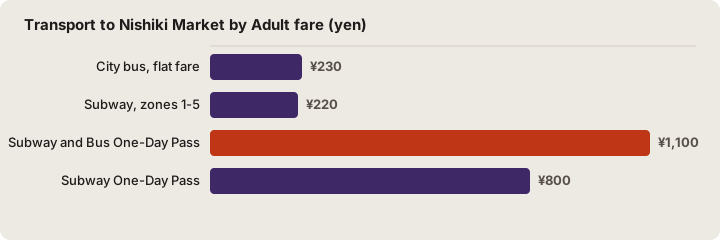
Nishiki Market runs parallel to Shijo Street in central Kyoto, entered from Teramachi Street in the east or Shinmachi Street in the west. The closest subway stations are Karasuma on the Karasuma Line and Shijo on the Hankyu Line, each about a five-minute walk. A city bus costs a flat 230 yen for adults, and the Subway and Bus One-Day Pass is 1,100 yen.
The arcade is impossible to miss once you are on Shijo Street: look for the covered entrance lanes on the north side between Karasuma and Kawaramachi. Karasuma subway station puts you at the eastern end, and Hankyu's Kyoto-Kawaramachi station at the western end near the Kamo River. Walking from Kyoto Station takes about 20 minutes along Shijo, or ten minutes on the subway to Shijo.
Fares are flat and cheap, which matters because the market is a short hop from almost anywhere central:
| Transport to Nishiki Market | Adult fare | Notes |
|---|---|---|
| City bus, flat fare | 230 yen | Child 6-11: 120 yen |
| Subway, zones 1-5 | 220-360 yen | Karasuma Line to Karasuma station |
| Subway and Bus One-Day Pass | 1,100 yen | Child 550 yen; bus-only pass no longer exists |
| Subway One-Day Pass | 800 yen | Child 400 yen |
One warning worth repeating: the old bus-only one-day pass was abolished, with sales ending in September 2023 and the last day of use 31 March 2024. The city transport bureau says 90 percent of its buyers were non-residents and the pass concentrated tourists on the buses. Any guide still recommending it is out of date. The current product is the combined Subway and Bus One-Day Pass at 1,100 yen, covered in detail in the bus and subway pass guide.
If you would rather have the arcade explained than navigate it cold, a guided brunch walk is the strongest format here, because the market rewards knowing which counter to stop at.
What Should You Eat At Nishiki Market?
The signature stalls are tamagoyaki on a stick, fresh sashimi and grilled scallops, tofu doughnuts, pickles in wooden barrels, soymilk doughnuts and skewered grilled foods, with green tea and matcha sweets throughout the arcade. Budget a few hundred yen to about 1,000 yen per item at most counters, and eat at the stall rather than while walking, which the market itself asks visitors to do.
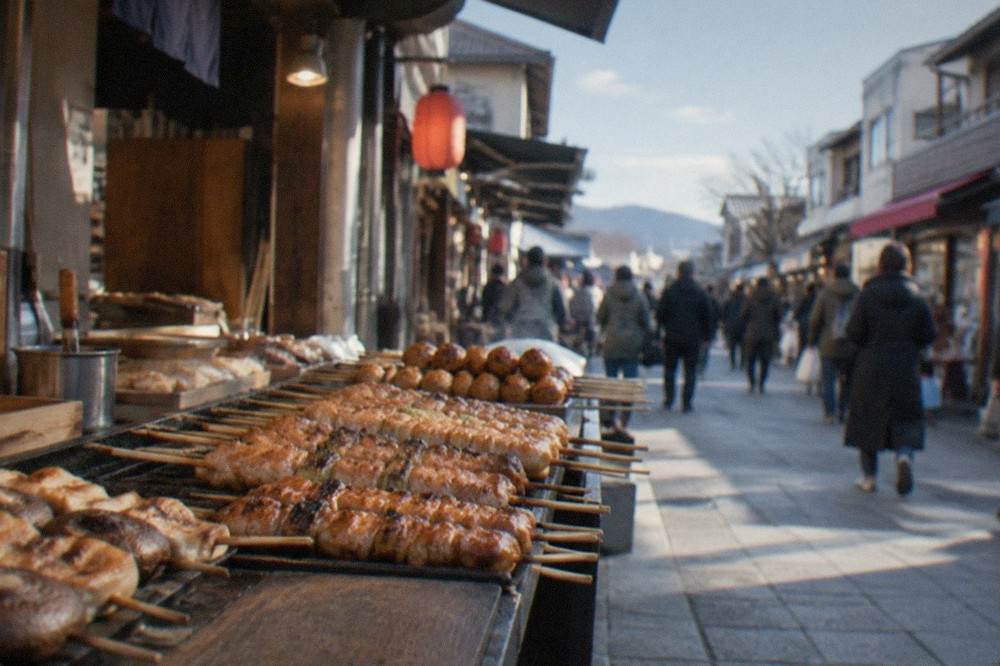
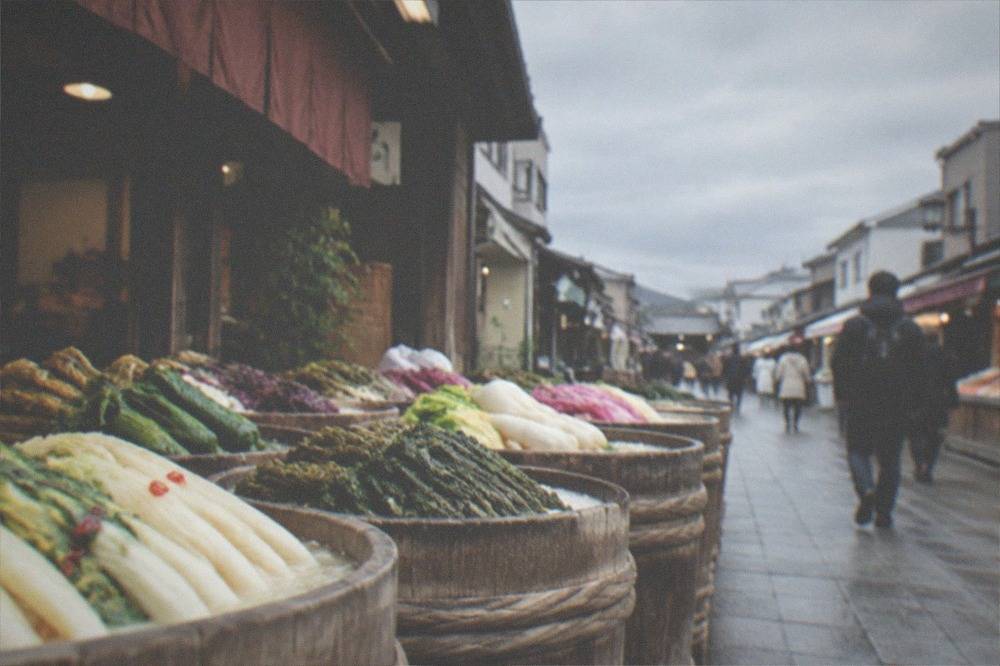
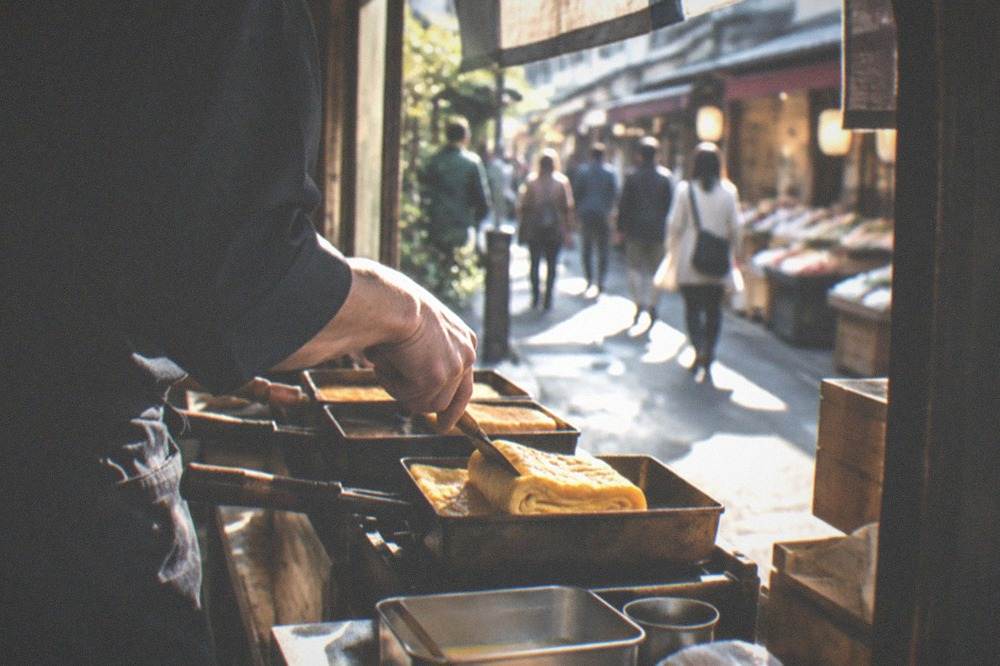
The tamagoyaki stall is the one with the queue, a rolled sweet omelette cooked in stacked rectangular pans and served on a stick for a few hundred yen. Sashimi and seafood stalls sell single portions of tuna, scallops and uni, some grilled on the spot. Pickle shops are the visual heart of the market, with wooden barrels of senmaizuke and shibazuke open at the counter, and most offer samples.
The eat-at-the-stall rule is real and worth taking seriously. The market discourages eating while walking, and stalls ask you to finish your food where you bought it. This is partly courtesy, partly practical: the arcade is narrow, busy, and full of people carrying hot skewers. There is no fine and no enforcement beyond signage and shopkeeper requests, but the request is the market's own, and following it keeps the arcade workable for everyone.
For matcha specifically, the market sits in a city where the distinction between ordinary matcha and Uji matcha matters enough to have its own explanation. Uji, the source of the most prized leaves, is also an easy day trip from Kyoto. If the street-food angle is what brought you here, the wider Kyoto street food guide extends the same hunt beyond the arcade.
The strongest way to eat the market, if you want the stalls decoded rather than discovered by trial, is a guided tasting walk. The brunch version pairs the arcade with a proper sit-down brunch at the end.
The Nishiki Market Brunch Walking Tour runs about 3 hours with seven tastings plus brunch, is rated 4.9 from 1,497 reviews, and starts from $74 per person. It is a food walk first and a market lesson second, and the morning departure matches the arcade's most open hours.
How Much Does A Nishiki Market Visit Cost?
The market itself costs nothing to enter, and there is no admission gate. A realistic grazing budget is 1,000 to 3,000 yen per person for a light tasting walk, or more if you sit for sashimi or buy pickles and tea to take home. Getting there adds 230 yen by bus or 220 to 360 yen by subway, and a knife or cookware purchase can run from a few thousand yen into the tens of thousands.
Entry is free, always. The arcade is a public shopping street with a roof over it. What you spend is entirely a function of appetite and shopping intent, and the range is wide because the stalls range from hundred-yen skewers to serious cutlery shops selling hand-forged knives from Kyoto and Sakai.
A few cost anchors that are honest, because they come from specific published prices rather than a guess:
| Spend at Nishiki | Typical range | Notes |
|---|---|---|
| Tamagoyaki or skewer snack | a few hundred yen | per stick, eaten at the stall |
| Sashimi or grilled scallop portion | about 500-1,500 yen | varies by item and shop |
| Guided brunch walk with tastings | from $74 per person | 3 hours, seven tastings |
| Kitchen knife from a cutlery shop | thousands of yen upward | engraving often available |
One cost visitors often forget to budget is the accommodation tax, which changed on 1 March 2026. The top tier went from 1,000 to 10,000 yen per person per night on rooms of 100,000 yen and up, and the 20,000 to 50,000 yen tier doubled from 500 to 1,000 yen. The full tier table and what it applies to is covered in the site's accommodation tax guide.
If the market visit is part of a first day in the city, pairing it with the classic sights in one loop is the standard play, and the one day in Kyoto itinerary places Nishiki in the late morning slot, after the temples and before the evening in Gion.
What Are The Rules At Nishiki Market?
The market's own rules are simple: eat at the stall rather than while walking, do not photograph shop interiors or staff without asking, and do not block the narrow lane with luggage or large bags. There is no fine for eating while walking, but the request comes from the market association itself, and weekday middays are the calmest time to follow it comfortably.
The eat-at-the-stall request is the one that surprises visitors, and it deserves the framing above rather than a scare story. The arcade is a working shopping street, not a food court. Shopkeepers ask that you finish each purchase where you bought it, both to keep the lane clear and because the market's residential neighbours have lived with rising tourist traffic for years.
Photography etiquette follows the same logic. Stalls generally tolerate photos of food displays, but ask before photographing a shopkeeper's face or the interior of a small shop, and never use a flash across a fish counter. The market is in central Kyoto, where conduct rules elsewhere in the city have hardened: in Gion, the tourism association's own guidelines prohibit touching, chasing or photographing geiko and maiko without permission, and signs on private alleys off Hanamikoji threaten a 10,000 yen penalty posted by the district council. Nishiki is not Gion, but the underlying courtesy is the same.
Luggage is a real constraint. City buses may refuse large or bulky luggage on crowded services, and the market lane is narrow enough that a rolling suitcase is an obstacle for everyone behind you. The city promotes hands-free tourism with station counters and delivery services, and using one before a market visit is the single easiest improvement to the day.
What Else Is Near Nishiki Market?
Within a ten-minute walk of Nishiki Market are the Teramachi and Shinmachi shopping arcades, and the Kamo River banks to the east. Yasaka Shrine and the Gion district sit about fifteen minutes on foot, the Daitoku-ji temple complex is a short ride north, and the Kyoto International Manga Museum is under a kilometre to the north.
The market's eastern end spills into Teramachi Street, a covered arcade of bookshops and craft stores that rewards a slow walk north. Continuing east across the Kamo River takes you into Gion within twenty minutes, and the district's conduct rules, described above, matter more there than anywhere else in the city.
For families, the arcade pairs well with the Kyoto Railway Museum, open 10:00-17:00 with last entry at 16:30 and closed Wednesdays, and the Kyoto International Manga Museum, both a short bus or subway hop away. Nidec Kyoto Tower, south of the river by Kyoto Station, keeps its observation deck open 10:00-21:00 with last admission at 20:30, which makes it a natural end-of-day stop after the market closes its stalls. Daitoku-ji, the great Zen complex in the north of the city, is worth the ride for visitors with a spare half day.
Verified hours for the closest sights, so you can sequence a day around the market's own pattern:
| Sight near Nishiki Market | Verified hours | Admission |
|---|---|---|
| Nidec Kyoto Tower observation deck | 10:00-21:00, last entry 20:30 | adult 900 yen |
| Kyoto Railway Museum | 10:00-17:00, last entry 16:30, closed Wednesdays | general 1,500 yen |
| Kiyomizu-dera | opens 6:00 daily, closing varies by season | 500 yen |
| Nijo-jo Castle | admission 8:45-16:00, castle closes 17:00 | 800 yen general |
A full day that starts at Kiyomizu-dera at opening, walks down through the Higashiyama lanes, and reaches Nishiki by late morning is the classic route, and it works precisely because the market's best hours are midday hours.
Is A Nishiki Market Food Tour Worth It?
For a first visit, a guided food tour is the stronger choice, because the arcade's best stalls are not signed in English and the eat-at-the-stall rule is easier to follow with a guide handling each stop. The Nishiki Market Brunch Walking Tour costs from $74 per person, runs 3 hours with seven tastings plus brunch, and is rated 4.9 from 1,497 reviews. Independent grazing is cheaper and entirely possible.
The honest case for the tour is information, not access. Everything in the arcade is open to anyone, and there is no door a guide opens for you. What a guide adds is selection: which tamagoyaki counter, which pickle shop will let you taste before buying, which sashimi stall is worth the queue on a given morning. The market's own survey context matters too, with 62.79 million visitors in 2025, and the arcade absorbs a share of them daily.
| Nishiki-area tour | From | Rating | Length |
|---|---|---|---|
| Nishiki Market Brunch Walking Tour, 7 tastings | $74 | 4.9 from 1,497 reviews | 3 hours |
| Kimono Tea Ceremony at Kyoto Maikoya, NISHIKI | $53 | 4.9 from 1,114 reviews | 1 hour 30 minutes |
| Kyoto: Fushimi Inari, Kinkakuji, Bamboo Grove 1-Day Bus Tour | $97 | 4.8 from 5,317 reviews | 8.5 to 9 hours |
The Maikoya tea ceremony sits in the Nishiki area itself, which makes it the easiest possible pairing: walk the market, then sit for a kimono tea ceremony an hour and a half later, all within a few blocks. It is rated 4.9 from 1,114 reviews and starts from $53 per person.
For visitors combining the market with the heavyweight sights in a single day, the one-day bus tour that strings Fushimi Inari, Kinkaku-ji and the Arashiyama bamboo grove together is the efficient spine, and the market can fill the gap between hotel check-in and dinner.
When Is The Best Time Of Year To Visit Nishiki Market?
The market is fully covered and unheated, so it works in every season, but the best months are late autumn and winter for crowd comfort, with November and February the calmest. July and August are the most congested and the least comfortable, with July averaging 223.6 mm of rain and August a mean daily maximum of 33.7 C in the JMA 1991-2020 normals.
Because the arcade has a roof, rain is a non-issue, which turns the rainy season from a problem into an advantage: June and July afternoons that empty the Arashiyama bamboo grove of fair-weather tourists leave the market busy but functioning. The trade-off is heat. The arcade can be stuffy in August, and three of Kyoto's six hottest days on record fell in the summers of 2024, 2025 and 2026.
Seasonal food shifts with the calendar. Spring brings bamboo shoots and the first sansai greens, summer adds hamo and ayu, autumn is matsutake and chestnut season, and winter is the pickle shops' showcase, with senmaizuke at its best. The best time to visit Kyoto guide carries the full month-by-month breakdown, including the cherry and maple marker dates from the Japan Meteorological Agency.
How Does Nishiki Market Fit Into A Kyoto Trip?
Most first-time visitors slot Nishiki into a late-morning block between eastern temple walks and an evening in Gion or Pontocho, and that sequence still works well. The market needs one to two hours for grazing, longer with shopping, and it sits on the direct walking line between the Higashiyama sights and the downtown dining strip. Pair it with Teramachi, then cross the river for the evening.
The market's central position is its greatest asset. A morning at Yasaka Shrine or the Higashiyama lanes, a midday at Nishiki, and an evening in Pontocho Alley is a full and walkable day that touches three of the city's distinct registers: shrine, market, and dining lane. The site's three-day Kyoto itinerary uses exactly this spine on its first day.
For trips longer than a weekend, the market makes a reliable anchor for the downtown day, while the Arashiyama and northern temple days take the others. Visitors with a full week can add the farther day trips from Kyoto, with Nara the most common pairing and a kimono rental guide worth reading if the market day doubles as a dress-up afternoon.
For visitors who want the market plus the major sights without managing the logistics, the one-day bus tour remains the most reviewed option of its kind, rated 4.8 from 5,317 reviews and starting from $97 per person.
Common Questions About Nishiki Market
What Time Does Nishiki Market Open And Which Day Is It Closed?
Nishiki Market has no unified opening hours or closing day. Each of the roughly 130 shops keeps its own schedule, roughly 9 or 10:00 to 17 or 18:00, and many individual shops close on Wednesdays or Sundays. Weekday middays have the most stalls open.
Is Nishiki Market free to enter?
Yes, entry is free. The arcade is a public covered shopping street with no gate or admission charge, and you pay only for what you buy at the stalls.
Can you eat while walking in Nishiki Market?
The market discourages eating while walking and asks visitors to finish food at the stall where it was bought. There is no fine; it is a courtesy request from the market association, and following it keeps the narrow lane clear.
How long does a Nishiki Market visit take?
Plan on one to two hours for grazing, longer if you are shopping for knives, pickles or tea. A guided tasting walk runs about 3 hours including brunch.
What is the closest station to Nishiki Market?
Karasuma subway station on the Karasuma Line is about a five-minute walk from the eastern end, and Hankyu Kyoto-Kawaramachi serves the western end. A city bus costs a flat 230 yen for adults.
Is Nishiki Market worth visiting with kids?
Yes, with two cautions: the lane is narrow and crowded at peak times, and the eat-at-the-stall rule is easier for children to follow with short snack stops rather than full meals. The Kyoto Railway Museum, closed Wednesdays, is a short ride away and pairs well.
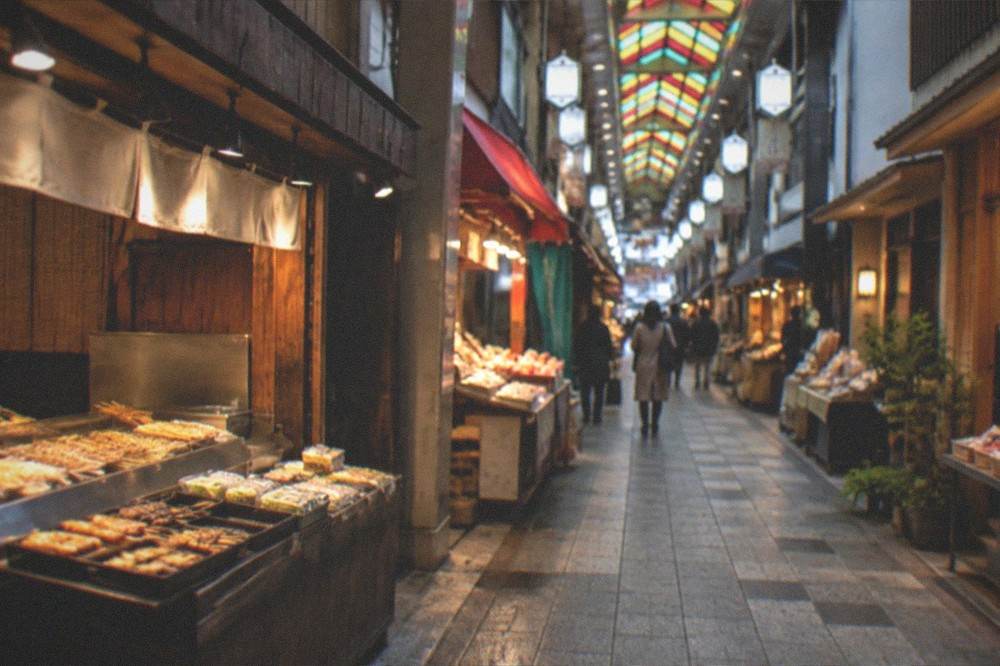
The short version of everything above: go on a weekday, arrive around 10:00, eat at the stalls, and leave before the shutters start coming down around 17:00. The market has no schedule of its own, only the sum of about 130 individual ones, and that is exactly why it still feels like a working street rather than an attraction.