What Do You Eat At Nishiki Market In Kyoto: Tako Tamago, Yuba, Dashimaki, Pickles?
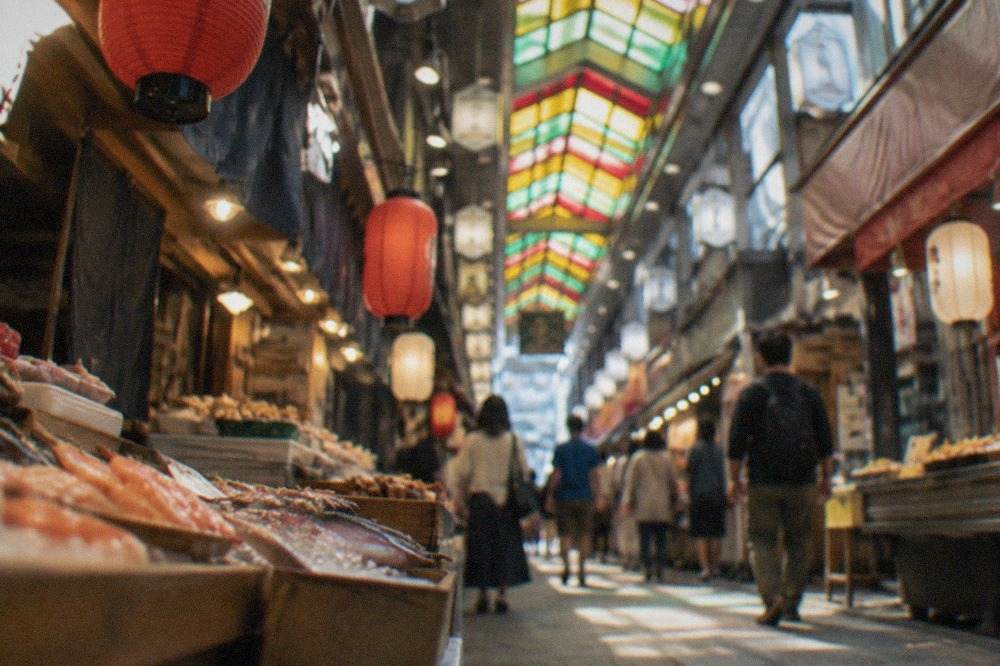
Nishiki Market is the spine of Kyoto street food, and the four things to eat there are tako tamago, yuba, dashimaki and the pickle stalls. Beyond the market, the city grazes on tamagoyaki, senbei, soy milk doughnuts and yatsuhashi.
Short answer
Eat tako tamago (baby octopus with a quail egg), yuba in hot or cold form, dashimaki rolled omelette, and pickles from the barrel stalls at Nishiki Market. Stalls ask you to eat at the stall rather than while walking. Shops keep their own hours, roughly 9 or 10:00 to 17 or 18:00.
Kyoto is a temple city that eats well between shrines. The city's own 2025 tourism survey, released on 12 June 2026, counted a record 62.79 million visitors in 2025, up from 56.06 million the year before, and a great many of them ate standing up. The centre of that grazing is Nishiki Market, a covered lane the association's own site describes shop by shop, where each stall keeps its own hours, roughly 9 or 10:00 to 17 or 18:00, and where stalls ask you to eat at the stall rather than while walking. This page answers the four-food question people actually search, then widens to the rest of the city, the honest costs, and the etiquette that keeps the shopkeepers friendly. The full picture of the city's food scene sits in Kyoto food and dining, and the market itself is covered in depth at Nishiki Market.
What Do You Eat At Nishiki Market: Tako Tamago, Yuba, Dashimaki, Pickles?
The four foods that define a Nishiki Market walk are tako tamago, a candied baby octopus with a quail egg tucked in its head; yuba, the delicate skin that forms on heated soy milk; dashimaki, a sweet rolled omelette bound with dashi stock; and the pickle stalls, where vegetables from the surrounding farms sit in barrels of brine and miso. All four are sold by weight or by piece, and every stall asks you to finish at the counter rather than carry food down the lane.
Tako tamago is the market's most photographed single bite: a small octopus, simmered in a sweet soy glaze, with a tiny quail egg placed where the head was. It looks like a novelty and eats like a sweet-savoury snack. The stalls that sell it display them in ranks, warm, and you buy them one at a time.
Yuba is Kyoto's most underexplained food. Heat soy milk and a skin forms on the surface, the way skin forms on cooling milk; lift it off and you have yuba. In the market it appears fresh and folded, dried in sheets, or served warm in a light broth. It tastes of soy and very little else, which is the point. Kyoto's position as the historic home of temple cooking, shojin ryori, is why yuba exists here in such density, and the vegetarian side of that tradition is covered in vegetarian Kyoto.
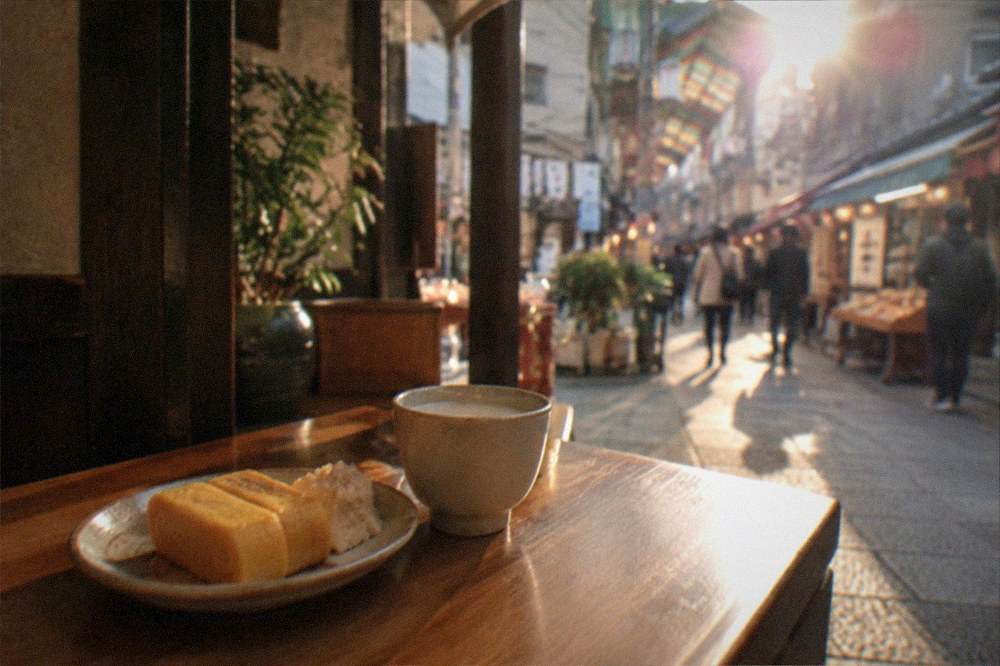
Dashimaki tamago is the city's rolled omelette. Unlike the Tokyo version, which is sweeter and firmer, the Kyoto roll folds in dashi, so it is softer, wetter, and collapses on the tongue. Stalls cook it in rectangular pans in the window and cut it into thick slabs. Eaten warm, minutes out of the pan, it is one of the best two hundred yen or so you can spend in the city, though the exact price is each stall's own.
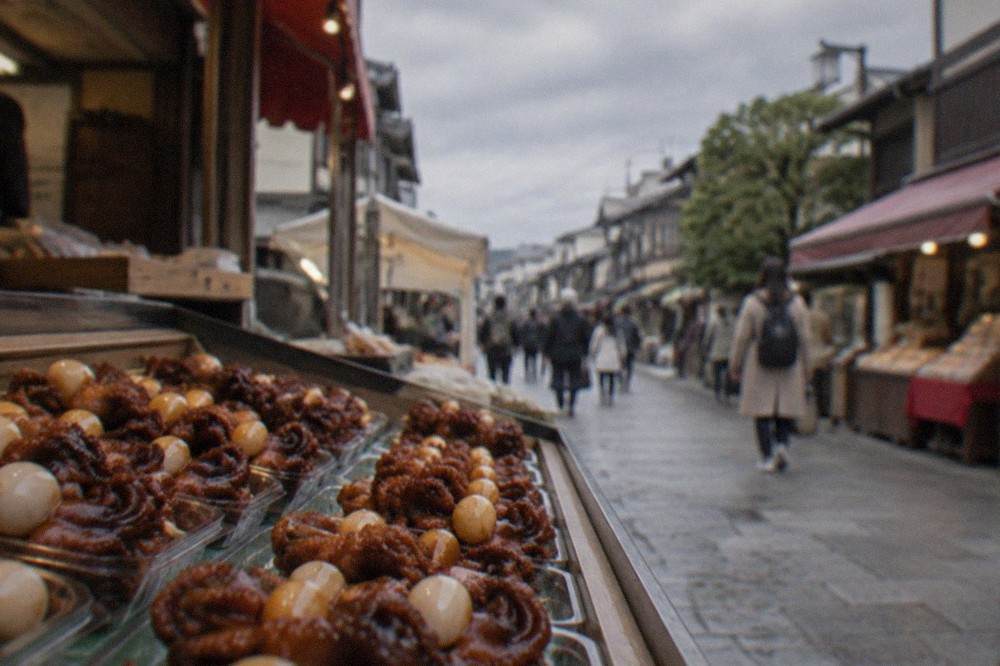
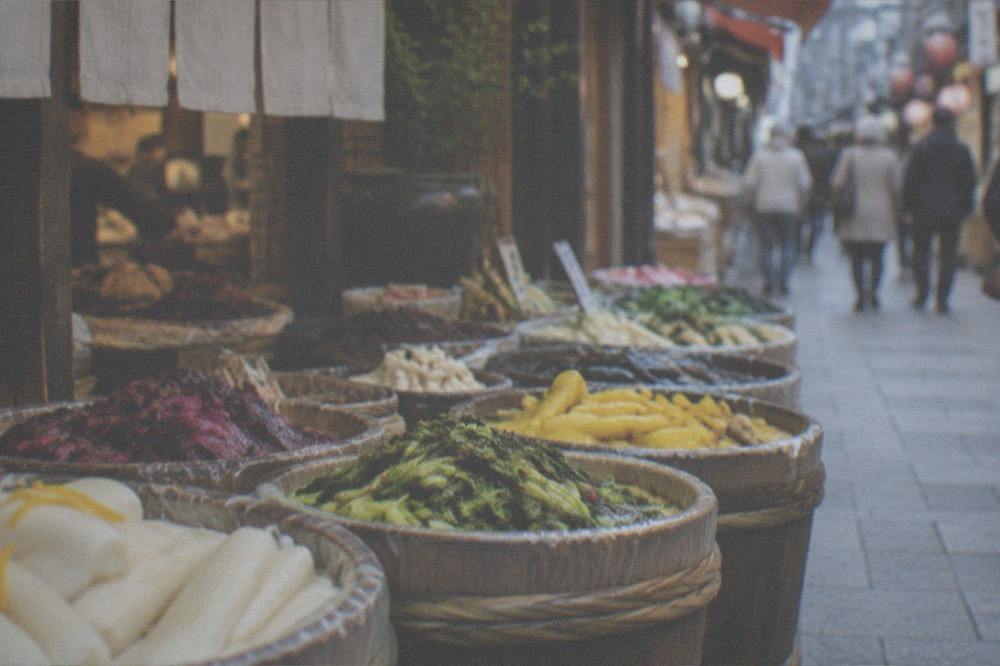
The pickle stalls, senkyo, are where the market shows its age. Kyoto sits in a basin ringed by farmland, and pickling was how the city's kitchens kept that harvest through humid summers. Stalls stack wooden barrels of suguki, senmaizuke and shibazuke, all local traditions, and offer tasting picks. This is the one category where a purchase is genuinely better than a sample: a small container travels well and is the standard Kyoto gift brought back to an office.
Here is the four-food summary in one place:
| Food | What it is | How it is sold | Best eaten |
|---|---|---|---|
| Tako tamago | Candied baby octopus with a quail egg | Individually, warm | At the stall, immediately |
| Yuba | Skin lifted from heated soy milk | Fresh, dried, or in broth | Fresh, folded, on the spot |
| Dashimaki | Dashi-bound rolled omelette | By the slab, cut to order | Warm from the pan |
| Pickles | Vegetables in brine, miso or rice bran | By weight from barrels | Tasting pick, then a container to go |
The market's own association site is the honest source on what is sold where, and it prints no unified hours, because none exist. If a guide tells you the market opens at ten, that is one shop's schedule, not the market's.
Where Else In Kyoto Can You Find Street Food Beyond Nishiki Market?
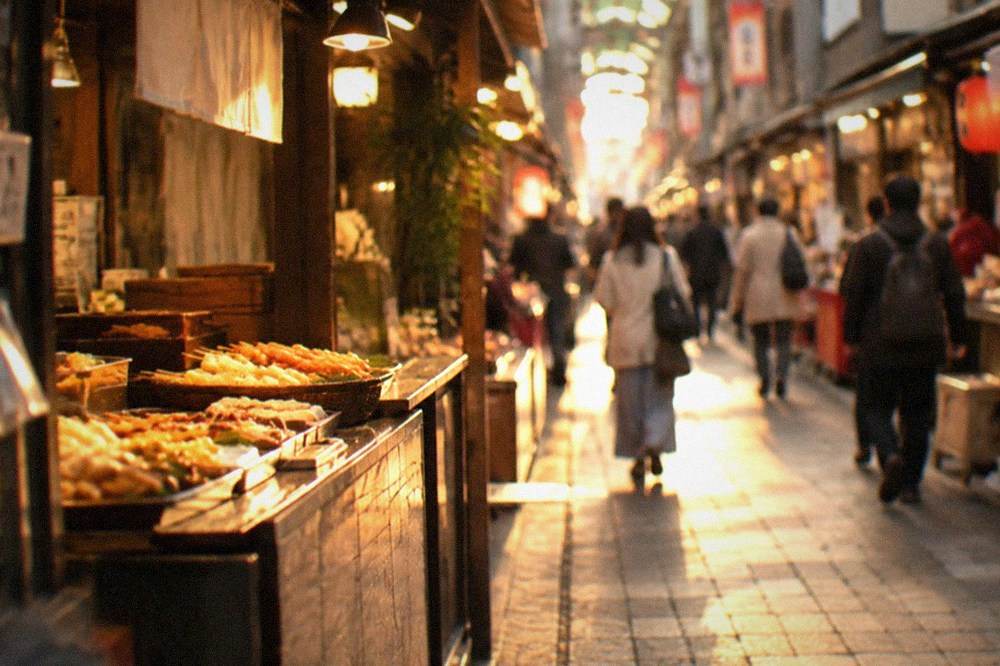
Nishiki is the headline but not the whole story: the streets around it, Teramachi and Shin Kyogoku, carry crepe stands and senbei shops; the approach lanes to Kiyomizu-dera sell yatsuhashi and soy milk doughnuts; Arashiyama's riverside rows offer sesame dumplings; and the evening izakaya lanes off Kawaramachi and Pontocho are where the city eats standing after dark. Each has its own character and its own hours, set shop by shop.
Teramachi, the covered arcade running parallel to Nishiki, is where the market spills over. The two together form the downtown food district, and the arcade's mix runs from incense shops to stationery to small food counters. The arcade's character is covered in Teramachi Street, and the question of which lane is the city's most famous food street is answered at the most famous food street in Kyoto.
The hills of Higashiyama are the second circuit. The slopes leading up to Kiyomizu-dera, the Ninenzaka and Sannenzaka lanes, sell yatsuhashi, the city's signature sweet: a soft mochi wrapper around red bean, usually flavoured with cinnamon or matcha. Raw yatsuhashi, nama yatsuhashi, is soft and eaten fresh; the baked version is a crisp cracker that keeps for weeks and is the classic souvenir. Soy milk doughnuts, small and warm and dusted in sugar, are another slope staple.
Evening moves the action east and south. The lanes around Gion and the Pontocho alley fill with izakaya whose fronts open onto the street, and the smells shift from sugar to charcoal and soy. For where residents themselves eat rather than visitors, see where locals eat in Kyoto.
The honest framing for all of this is scale. The city's 2025 survey counted 46.20 million day visitors against 16.59 million overnight guests, and the food streets absorb a large share of both. The lanes do not empty, and no source in the city's own materials promises a quiet hour.
How Much Does Street Food Cost In Kyoto Compared To A Restaurant Meal?
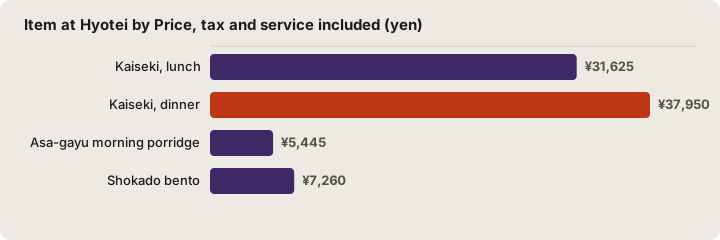
Street food in Kyoto is sold by the piece and the price is each stall's own, so no honest citywide figure exists, but the gap at the top of the market is documented on one restaurant's own page: Hyotei, by Nanzen-ji, prints kaiseki from 31,625 yen at lunch and from 37,950 yen at dinner, while the same house's annex serves asa-gayu at 5,445 yen and a Shokado bento at 7,260 yen, tax and service included. A market graze sits far below all of it.
That Hyotei spread is the single most useful price fact in Kyoto food writing, because it comes from the restaurant's own site and shows both ends of one kitchen. The main building's kaiseki opens above 30,000 yen per person, with reservations taken from two people, lunch service 12:00 to 15:00 and dinner 17:00 to 21:30. The annex, the same house's more casual room, serves morning rice porridge at 5,445 yen and a bento at 7,260 yen. Those are Hyotei's prices for those rooms and dates, not a Kyoto average, and they should never be generalised into what kaiseki costs citywide.
| Item at Hyotei | Price, tax and service included | Where served |
|---|---|---|
| Kaiseki, lunch | from 31,625 yen | Main building, 12:00-15:00 |
| Kaiseki, dinner | from 37,950 yen | Main building, 17:00-21:30 |
| Asa-gayu morning porridge | 5,445 yen | Annex, 16 Mar-30 Nov, 8:00-11:00 |
| Shokado bento | 7,260 yen | Annex, 12:00-14:00 |
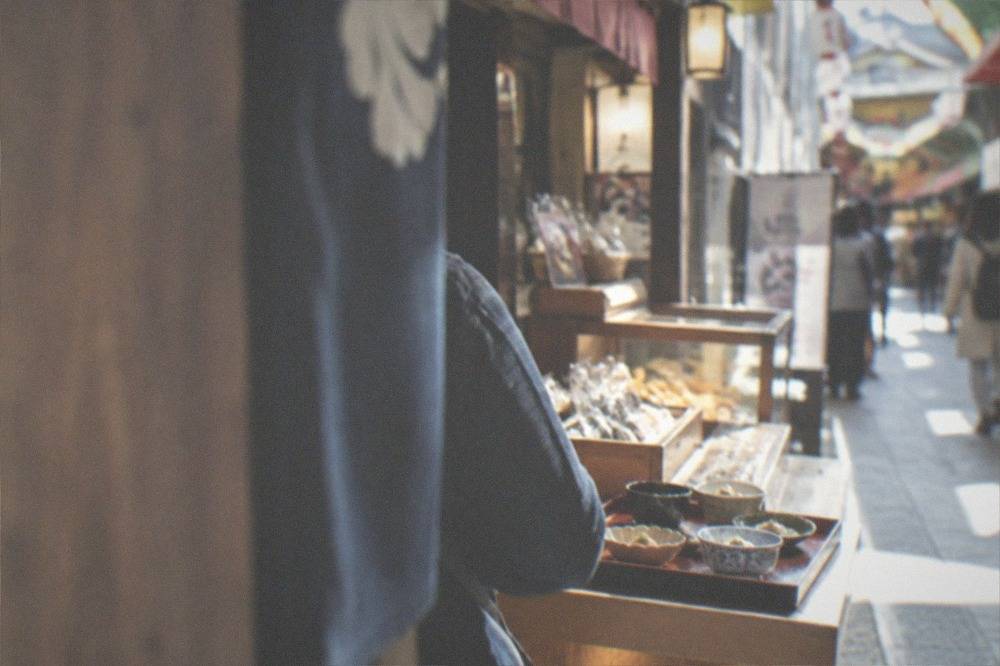
Below that tier, the market works on pocket money. A piece of tako tamago, a slab of dashimaki, a cup of yuba, a tasting pick at a pickle barrel: each is a small transaction, each priced by the stall, and a walk down the lane grazing as you go costs a fraction of the cheapest restaurant meal in the same district. The honest planning advice is to carry cash in small notes. Some market stalls take cards, some do not, and no unified policy exists any more than unified hours do.
The middle tier is where most visitors actually eat: standing bars, noodle counters, and the izakaya lanes at night. Those prices are set by each house and this site does not print a figure it has not read on the operator's own page. For the sit-down side of the city, start with the best restaurants in Kyoto.
What Are The Rules For Eating At Nishiki Market?
The rule that matters is that stalls ask you to eat at the stall, not while walking down the lane. The market association's own site is the source for this, and it exists because the lane is narrow, crowded and working. Beyond that, each shop keeps its own hours, roughly 9 or 10:00 to 17 or 18:00, with individual closures on days each shop chooses; there is no unified opening time, and no official closing time either.
The no-walking rule is the one visitors break most, and the reason is congestion rather than purity. The lane carries a share of those 62.79 million annual visitors, and a person walking with a skewer in a packed corridor is a hazard to the person beside them. Stalls provide a small space at the counter, or a spot to the side, and the habit takes about one lunch to learn.
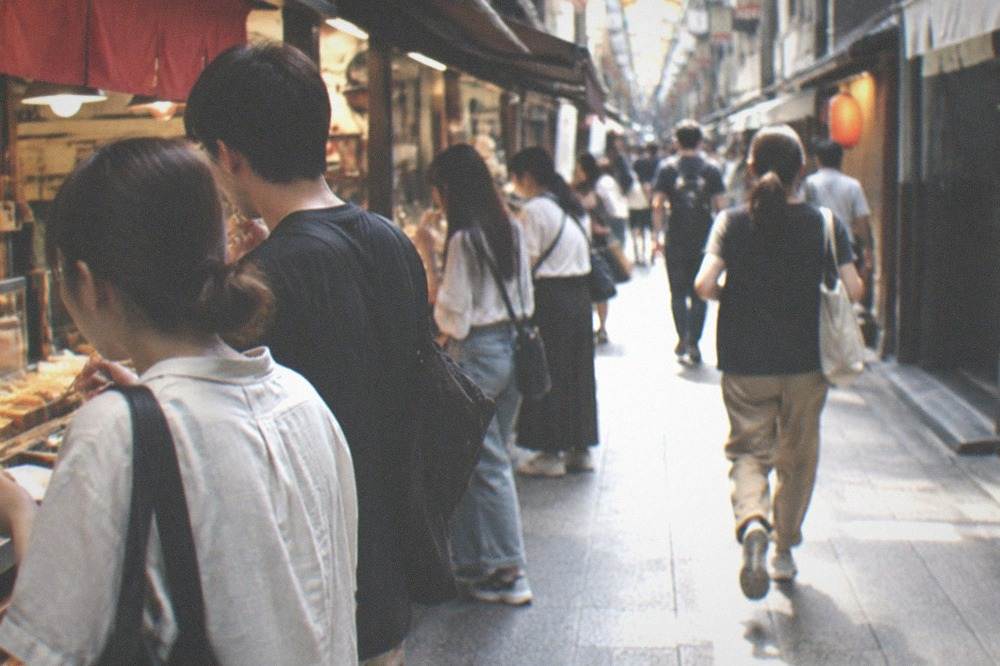
Three further habits keep the market workable. Pay where you buy, and do not carry an unpaid item three stalls down. Photograph the food, not the shopkeepers at work without a nod. And expect some stalls to close by mid-afternoon: the roughly 17 or 18:00 closing pattern means the last hours are thin, and the serious graze happens late morning through mid-afternoon.
The wider etiquette of the city, including the conduct guidelines around Gion's private alleys, is gathered in one place in the site's Kyoto etiquette coverage, and the market rules are the food-specific slice of it.
Which Kyoto Food Tours Are Worth Booking?
The strongest food tour for this page's purpose is the Nishiki Market Brunch Walking Tour with seven tastings plus brunch, from $74, rated 4.9 from 1,497 reviews over three hours, because it converts the market's guesswork into a guided sequence. For cooking rather than walking, the washoku bento small-group class, from $61 and rated 4.9 from 461 reviews, teaches the home version of what the market sells ready-made.
A tour solves a specific problem at Nishiki: the lane is dense, the signage is mostly Japanese, and the four foods named in the question sit at stalls you have to find. The brunch walk does that finding for you, seven tastings deep, with brunch at the end of it. It runs about three hours and starts in the morning, which matches the market's better-stocked hours.
The market's own page on this site, Nishiki Market brunch walking tour, carries the detail, and Check availability for the date you have in mind.
| Tour | Category | From | Rating | Length |
|---|---|---|---|---|
| Nishiki Market Brunch Walking Tour, 7 tastings | Food, sake & izakaya | $74 | 4.9 from 1,497 reviews | 3 hours |
| Washoku Bento Small Group Cooking Class | Cooking classes | $61 | 4.9 from 461 reviews | 2.5 hours |
| Kawaramachi Local Bar & Izakaya Crawl | Food, sake & izakaya | $37 | 4.9 from 1,042 reviews | 3 hours |
| Insider Sake Brewery Tour with Tastings | Food, sake & izakaya | $87 | 5 from 1,027 reviews | 3 hours |
The izakaya crawl is the evening counterpart: it covers the Kawaramachi bar lanes that the market does not, and it is the cheapest of the four. The sake brewery tour goes to Fushimi, the city's brewing district, where the water is soft and the labels are local.
What Kyoto Street Food Suits Vegetarians?
The vegetarian share of Kyoto street food is unusually large because the city's temple cooking, shojin ryori, built its cuisine on soy, dashi alternatives and pickles centuries ago. Yuba in every form, dashimaki when made without fish stock, the pickle barrels, sesame dumplings, soy milk doughnuts, yatsuhashi and most sweets at the tea houses are all plant-based or close to it. The one thing to check at the counter is the dashi, which is often fish-based.
That dashi caveat is the honest limit. Kyoto's cooking runs on the stock, and a vegetarian dashimaki is a different product from the standard one. Ask, in the market's case directly at the stall, whether the roll is made with kombu stock. Yuba, by contrast, is soy milk and nothing else, and the pickle barrels are vegetables, brine and time.
The full vegetarian picture, including the temple lunch tradition and where to book it, is its own subject at vegetarian Kyoto. For sweets, the matcha and tea culture pages cover the dessert end of the street.
When Is The Best Time To Visit Nishiki Market For Fewer Crowds?
No source, including the city's own materials, publishes a best hour or a queue length for Nishiki Market, so any specific time a guide promises is invented. What is documented is the scale: the city's 2025 survey counted 62.79 million visitors in 2025 against 56.06 million in 2024, with 46.20 million of them day visitors, and satisfaction above 90% for both Japanese and foreign visitors despite that volume.
The city's own answer to congestion is not a time slot but tools and dispersal. The Kyoto Tourism Comfort Forecast, run by the city's tourism association, publishes a five-level crowd comfort estimate for spots and time slots using location data, weather and machine learning, and the shrine and market pages link to it. Checking it the morning of a visit does more than any rule of thumb.
The city also runs active dispersal measures: morning and evening tourism campaigns, express buses on the busiest tourist corridors, and luggage delivery so visitors do not board crowded buses with suitcases. The pattern to plan around is simple and structural. Shops open roughly 9 or 10:00 and close roughly 17 or 18:00, so the lane is fullest in the middle of that window, and the shoulder hours at each end are thinner because fewer stalls have opened or many have closed.
| Measure from the 2025 survey | 2025 | 2024 |
|---|---|---|
| Total visitors | 62.79 million (record) | 56.06 million |
| Overnight guests | 16.59 million (record) | 16.30 million |
| Day visitors | 46.20 million | 39.76 million |
| Tourism spending | 2.0474 trillion yen (record) | 1.8839 trillion yen |
One more figure worth knowing: about half of Japanese visitors reported something disappointing about their trip, against about 20% of foreign visitors, with repeat rates of about 60% and 20% respectively. Crowding is the likeliest driver of that gap, and the market is where it is felt most.
How Does Kyoto Street Food Compare With Osaka's?
Kyoto's street food is the produce of a farm-ringed capital: pickles, tofu derivatives, tea sweets and small precise things eaten at the stall. Osaka, an hour away by train, is the merchant city of batter and heat: takoyaki, okonomiyaki and kushikatsu. Kyoto eats to taste the ingredient, Osaka eats to taste the technique, and both cities are close enough that a visitor can sample each in one trip.
The comparison matters for planning because the two are so often bracketed together. A day split between them is common and the transport between them is fast and frequent. The full head-to-head, including transport and which city suits which itinerary, is at Kyoto vs Osaka.
Within Kyoto, the street food identity holds to the basin. Yuba exists here because the temples needed protein without meat. Pickles exist because the farms were close and the summers humid. Yatsuhashi exists because a confectioner needed a sweet that kept. None of it was designed for tourists, which is why it survives them.
The tea ceremony tradition sits beside all of this rather than under it. The Maikoya kimono tea ceremony in Nishiki, from $53 and rated 4.9 from 1,114 reviews, is the one that shares the market's postcode, a ninety-minute sitting that pairs the market graze with the city's other food ritual.
And for the visitor who wants the market plus the headliners in one morning, the early morning tour with an English-speaking guide, from $82 and rated 4.9 from 1,998 reviews over five to six hours, starts before the lanes fill and finishes with the temples.
Common Questions About Kyoto Street Food
What Do You Eat At Nishiki Market: Tako Tamago, Yuba, Dashimaki, Pickles?
Tako tamago (candied baby octopus with a quail egg), yuba (soy milk skin, fresh or dried), dashimaki (dashi-bound rolled omelette) and pickles from the barrel stalls. Eat at the stall, not while walking, and expect each shop to keep its own hours, roughly 9 or 10:00 to 17 or 18:00.
Is eating while walking allowed at Nishiki Market?
Stalls ask you to eat at the stall. The lane is narrow and working, and the request comes from the market's own association. Finish at the counter or to the side, then move on.
Does Nishiki Market have official opening hours?
No. Each shop keeps its own hours, roughly 9 or 10:00 to 17 or 18:00, with individual closures. No unified schedule exists and no single opening time is official.
What is yuba?
The skin that forms on the surface of heated soy milk, lifted off in sheets. Kyoto produces it in density because of its temple cooking tradition, and it is sold fresh, dried and in broth at the market.
What is the most famous food street in Kyoto?
Nishiki Market is the answer most visitors give, with the Teramachi arcade running beside it. The comparison between them is covered at the most famous food street in Kyoto.
What sweets is Kyoto known for on the street?
Yatsuhashi, a soft mochi wrapper around red bean, in nama (raw) or baked form, plus matcha sweets, soy milk doughnuts and sesame dumplings on the Higashiyama slopes.
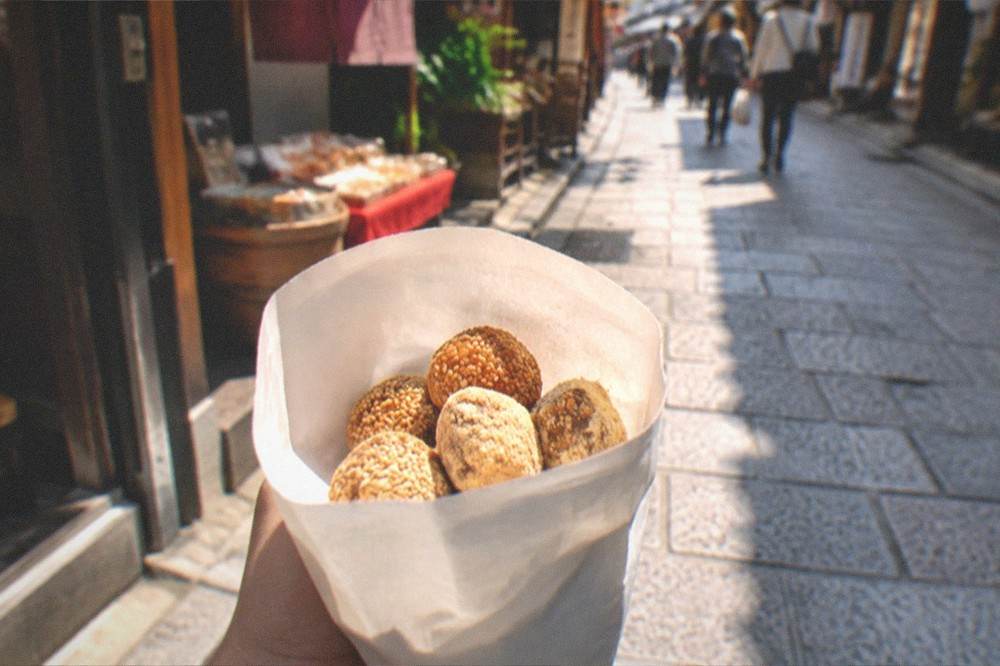
The four-food answer holds: tako tamago, yuba, dashimaki and the pickle barrels are what a Nishiki walk is for, and the rest of the city's grazing radiates out from that lane through the arcades, the temple slopes and the evening izakaya rows. Plan the graze for the hours the stalls are actually stocked, eat where you buy, and let the market's own association site, not a copied opening time, be the last word on any individual shop. For everything beyond the food lanes, the site's full Kyoto Travel Guide covers the temples, transport and seasons around the meal.