Ninenzaka And Sannenzaka: Kyoto's Most Famous Sloped Streets And The Falling Legend
Ninenzaka and Sannenzaka are the two stone-paved slopes that carry visitors down from Kiyomizu-dera into the Higashiyama hillside, and one of them carries a legend that has warned travellers for centuries.
Short answer
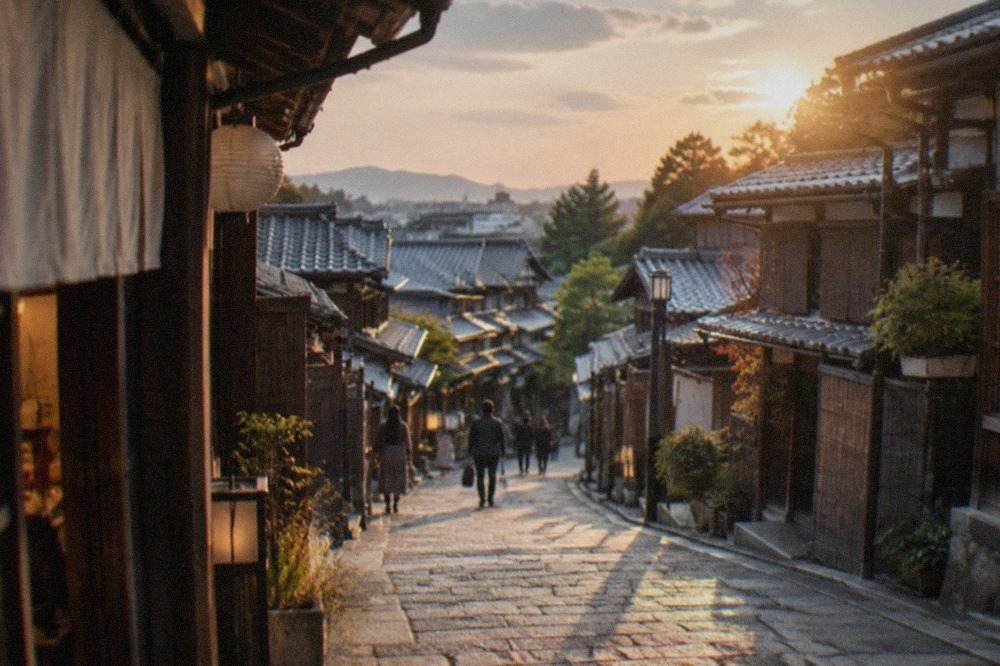
Ninenzaka and Sannenzaka are free, always-open preserved streets below Kiyomizu-dera in Higashiyama, Kyoto. Sannenzaka is the steeper upper slope; the legend says that if you fall on its steps you will die within three years.
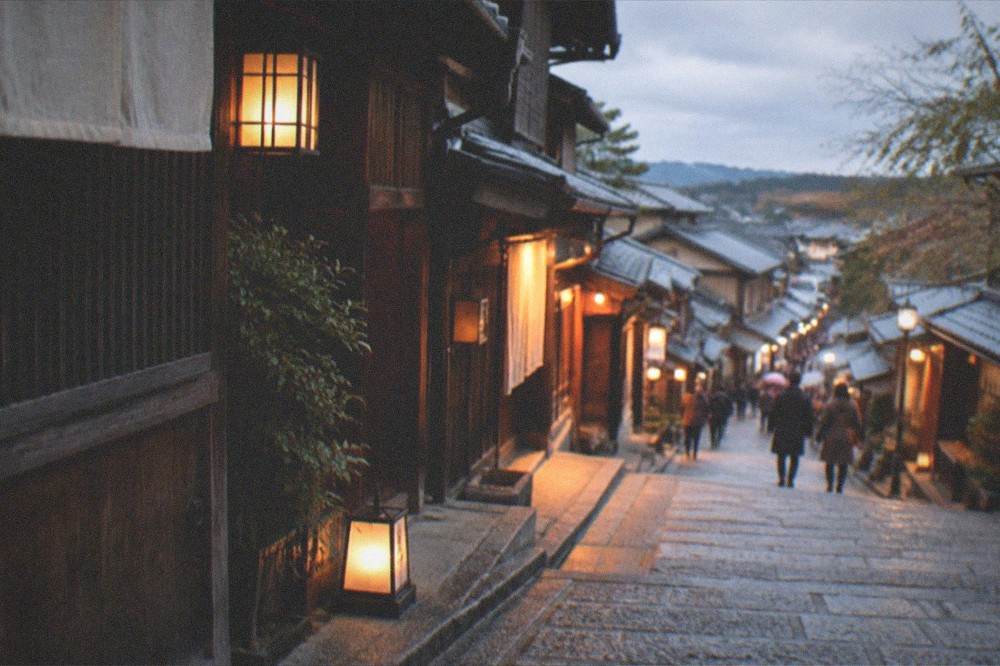
Two stone-paved lanes run down the Higashiyama hillside from the gates of Kiyomizu-dera, and together they carry more foot traffic than almost any other street in Kyoto outside the station district. Sannenzaka, the upper and steeper of the two, and Ninenzaka, which continues the descent toward Yasaka Shrine, are preserved machiya streets: wooden shopfronts, tiled roofs, teahouses and tea shops packed along slopes that have been walked, in some form, for centuries. The city's own 2025 tourism survey, released 12 June 2026, recorded a record 62.79 million visitors to Kyoto across the year, and a large share of them pass through these two lanes on the standard Kiyomizu-dera route. This page covers what the streets are, the legend attached to Sannenzaka's steps, what the surrounding temples charge, and how to plan the walk.
What Is The Legend About Falling On The Sannenzaka Steps?
The legend attached to Sannenzaka says that anyone who falls on its stone steps will die within three years. It is folklore, repeated and printed on local signage and in guidebooks for generations, not a documented event or a temple doctrine. No shrine, temple or city office publishes an origin story or a count of falls, and the streets themselves are free, public and open at any hour.
The story is one of Kyoto's most durable pieces of traveller folklore, and it does a specific job: it makes people walk carefully. Sannenzaka's steps are irregular, worn, and steep, and they are polished smooth by foot traffic. The three-year version is the one most often repeated, sometimes attached to Ninenzaka as well, sometimes only to Sannenzaka. Some tellings trace it to Edo-period superstition about sloped streets near temples, where the boundary between the sacred hillside and the ordinary town was marked physically by steps. None of that is verifiable on any official page, and this site will not dress it up as history.
What is verifiable is the physical setting. The lanes sit directly below Kiyomizu-dera, whose own FAQ and access pages give an opening time of 6:00 daily with seasonal closing, and an admission of 500 yen for adults and high school students. The slopes are public streets with no gate, no fee and no published closing time, which is why photographers work them before the shops open. The legend is a reason to watch your footing, not a reason to skip the street.
Where Are Ninenzaka And Sannenzaka In Kyoto?
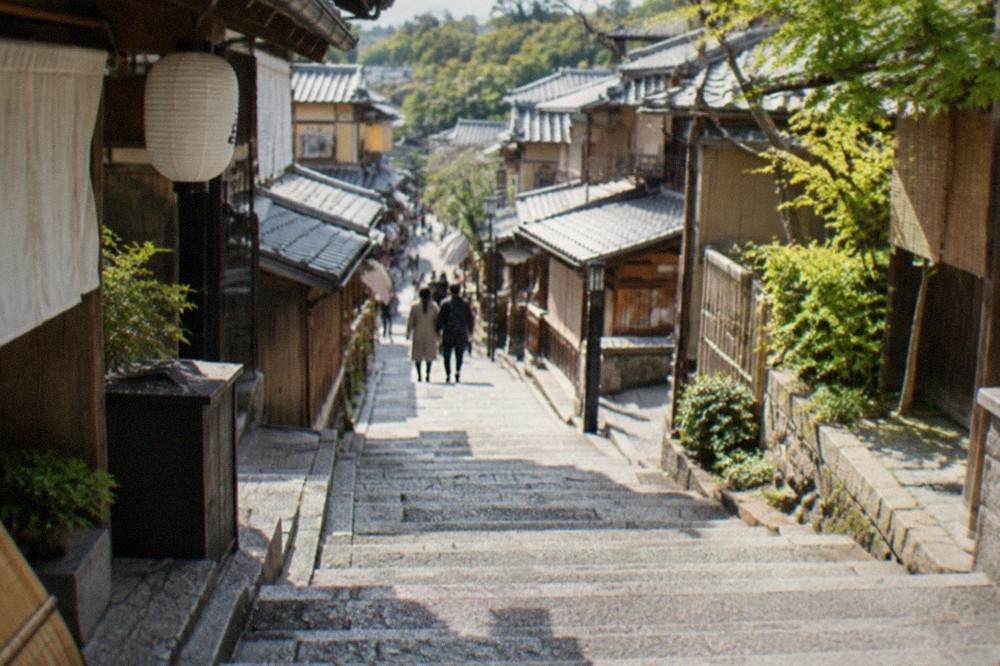
Both slopes sit in Higashiyama ward, on the hillside directly below Kiyomizu-dera. Sannenzaka is the upper lane, starting a short walk downhill from Kiyomizu-dera's gates and running down to a junction with Ninenzaka, which continues the descent toward Yasaka Shrine and the Maruyama Park side of the district. The two form one continuous pedestrian route.
The standard walk runs top to bottom: exit Kiyomizu-dera, descend Sannenzaka's steps, turn onto Ninenzaka, and continue toward Kodai-ji and Yasaka Shrine. Done at walking pace with stops, the slopes themselves take most visitors somewhere between thirty minutes and an hour, though on crowded days the crowd sets the pace, not you. The lanes are lined with preserved machiya buildings housing tea shops, pickle sellers, craft shops, ice cream counters and small restaurants, and the preservation rules that govern the streetscape are the reason the buildings look the way they do.
The surrounding district rewards a loop rather than a straight line. Kiyomizu-dera anchors the top, Kodai-ji sits just off Ninenzaka with its 800 yen adult admission and its autumn night illuminations running 23 October to 13 December 2026, and Yasaka Shrine and Maruyama Park sit at the bottom of the descent. From there, the Gion district and Pontocho Alley are a flat walk north. For a first visit, this corridor is the single most efficient half-day in the city, and our one day in Kyoto itinerary builds exactly this walk into it.
A few practical notes on the slopes themselves. The stone is uneven and can be slick in rain, and the JMA 1991-2020 normals for Kyoto station show July as the wettest month of the year at 223.6 mm, ahead of June at 199.7 mm, so summer rain is a real factor on polished steps. Footwear matters more here than anywhere else in the district. There are no public toilets on the slopes themselves, and the shops keep their own hours, so treat any single opening time you see quoted for the streets with caution: as with Nishiki Market, no unified hours exist.
How Do Ninenzaka And Sannenzaka Compare As Streets?
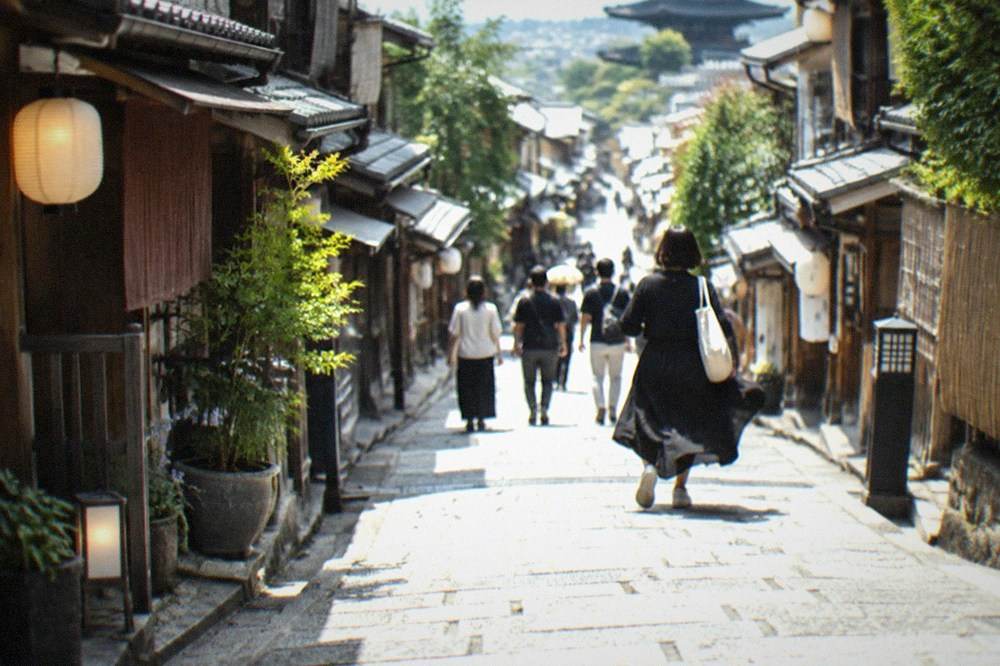
Sannenzaka is the steeper, narrower, more atmospheric upper slope, with continuous steps and tightly packed machiya on both sides. Ninenzaka is the gentler, wider lower lane, with a slightly more open feel and a mix of shops and small eateries. Both are pedestrian, both are free, and the difference is mostly gradient and mood rather than content.
The names themselves are descriptive: Sannenzaka means the slope of three years, and Ninenzaka the slope of two years, which is exactly where the falling legend attaches itself. The numbering refers to the years of the eras in which the slopes are traditionally said to have been laid out, though as with the legend, no primary document confirms the dating. What the visitor actually meets is a sequence: the steep, photogenic steps of Sannenzaka first, then the easier grade of Ninenzaka, then the modern streets at the bottom.
| Feature | Sannenzaka | Ninenzaka |
|---|---|---|
| Position on the route | Upper slope, below Kiyomizu-dera | Lower slope, running toward Kodai-ji and Yasaka Shrine |
| Gradient | Steeper, continuous stone steps | Gentler, wider lane |
| Character | Tightly packed machiya, most photographed section | Slightly more open, more food options |
| Admission | Free, public street | Free, public street |
| Best pairing | Kiyomizu-dera at the top | Kodai-ji and Maruyama Park at the bottom |
Neither street has any ticket, gate or published closing time, which is unusual for anything this photogenic in Kyoto. The shops open and shut on their own schedules, but the lanes themselves are simply public streets, and early morning and late evening walkers have them largely to themselves. That matters because of the numbers in the next section.
What Does It Cost To Visit Ninenzaka And Sannenzaka?
The streets themselves cost nothing: both slopes are free public lanes with no gate, hours or ticket. The costs around them are the temple admissions at either end, with Kiyomizu-dera at 500 yen for adults, Kodai-ji at 800 yen, and the combined Kodai-ji plus Entoku-in ticket at 1,200 yen, plus whatever you spend in the shops and tea houses along the way.
Budgeting the walk is really budgeting the temples. A realistic half-day on this hillside, doing Kiyomizu-dera, the two slopes and Kodai-ji, costs 1,300 yen per adult in admissions at current verified prices, plus food and shopping. Add transport, and note that Kyoto's flat city bus fare is 230 yen for adults and the Subway and Bus One-Day Pass is 1,100 yen, and the whole outing remains one of the cheaper substantial days in the city. For context on the wider budget, our Kyoto on a budget guide breaks down a full day's costs.
| Site on the walk | Adult admission | Notes |
|---|---|---|
| Ninenzaka and Sannenzaka | Free | Public streets, no closing time |
| Kiyomizu-dera | 500 yen | Opens 6:00 daily; closing varies by season |
| Kodai-ji | 800 yen | 9:00-17:30; combined ticket with Entoku-in 1,200 yen |
| Ryoan-ji (if extending) | 600 yen | 8:00-17:00 Mar-Nov |
| Sanjusangen-do (if extending) | 600 yen | 1,001 Kannon statues, stated by the temple |
One fee warning for 2026: two Kyoto temples changed their prices this year, so any guide printed before spring 2026 is unreliable on fees. Ginkaku-ji doubled to 1,000 yen for adults from 1 April 2026, the temple's own notice confirms, and Tofuku-ji revises its fees from 1 November 2026 with a new 1,000 yen combined ticket. Neither is on this particular walk, but if you are stringing together a longer temple day, check current fees rather than trusting a printed number. The rest of the planning pages sit on Kyoto Travel Guide.
What Should You Eat On The Slopes?
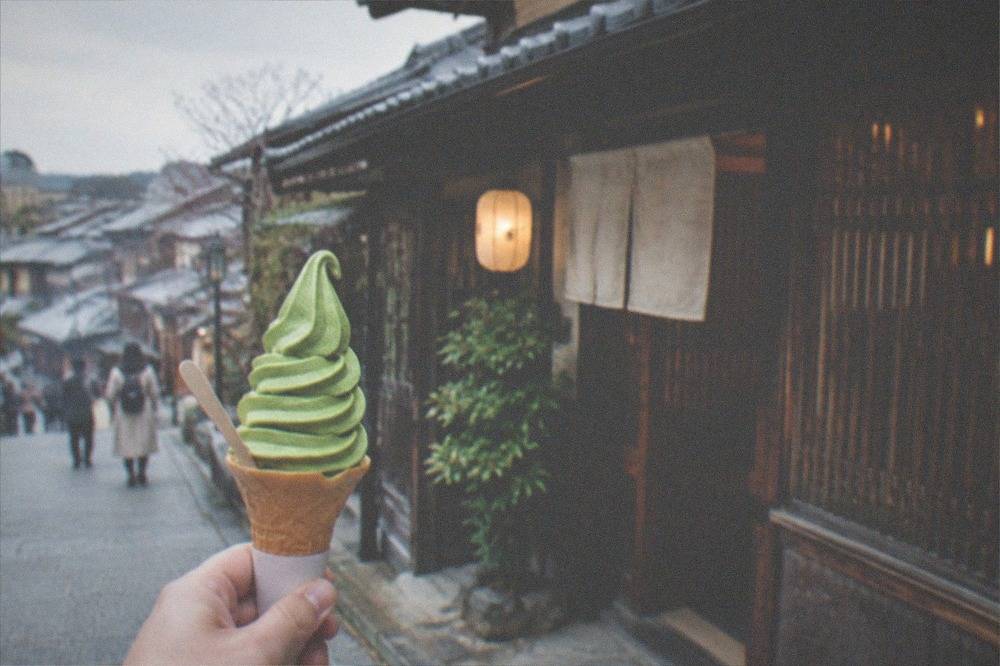
The two lanes are one of Kyoto's better snacking corridors, with matcha soft serve, yatsuhashi cinnamon sweets, pickles, taiyaki and small teahouses along both slopes. Prices are set by each shop individually and no unified price list exists, so treat any figure as shop-specific. The one firm rule from elsewhere in the city applies in spirit: eat at the stall or a designated spot rather than while walking.
The signature purchase is matcha in almost every form, and the slopes are dense with it. Our matcha in Kyoto guide covers the city's tea culture in depth, and the Uji growers behind much of it are covered in our Uji page. Yatsuhashi, the cinnamon-scented Kyoto sweet sold raw or baked, is the traditional souvenir of this district, and several long-established makers sit on or just off the slopes.
For a sit-down meal, the better value sits at the bottom of the descent, around Kodai-ji and the streets toward Gion, rather than on the slopes themselves, where rents push prices up. If you are building the whole day around food instead, the Nishiki Market brunch walking tour covers the market side of Kyoto's food scene with seven tastings, from $74, rated 4.9 from 1,497 reviews. The market's own rule, printed on its official site, is that eating while walking is not permitted, and the same courtesy serves the slopes well: the steps are narrow, and a stopped walker is a bottleneck.
How Crowded Are Ninenzaka And Sannenzaka?
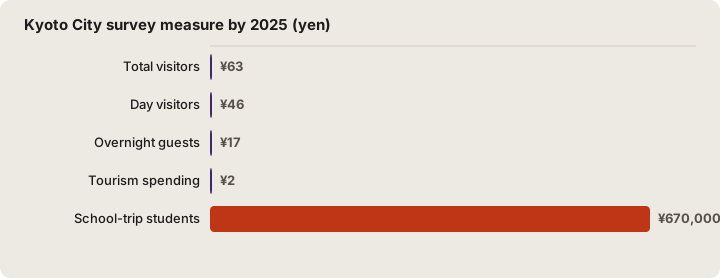
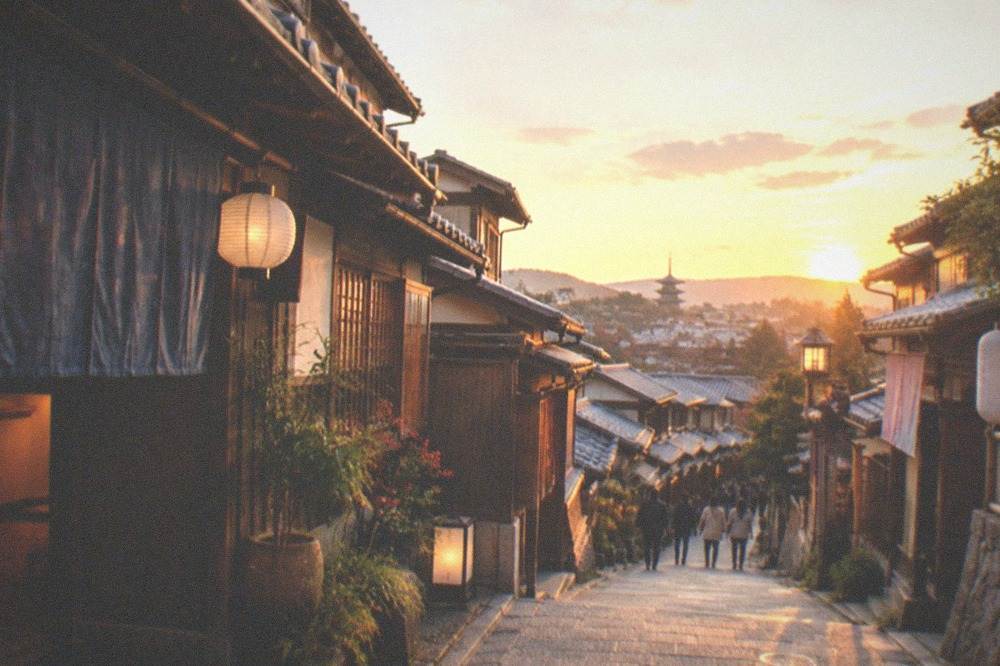
Kyoto drew a record 62.79 million visitors in 2025, up from 56.06 million in 2024, according to the city's own tourism survey released 12 June 2026, and the Higashiyama slopes absorb a large share of them. Day visitors, the category that includes most slope walkers, rose to 46.20 million from 39.76 million the year before, the single fastest-growing segment in the survey.
Those are the real numbers, and they explain what a midday visit feels like. The survey also recorded 16.59 million overnight guests and tourism spending of 2.0474 trillion yen, both records, and a satisfaction rate above 90 percent for both Japanese and foreign visitors. The interesting figure for planning is the disappointment one: about half of Japanese visitors reported something disappointing about their trip, against about 20 percent of foreign visitors, and crowding is the most commonly cited cause in the city's own commentary on the results.
| Kyoto City survey measure | 2025 | 2024 |
|---|---|---|
| Total visitors | 62.79 million (record) | 56.06 million |
| Day visitors | 46.20 million | 39.76 million |
| Overnight guests | 16.59 million (record) | 16.30 million |
| Tourism spending | 2.0474 trillion yen (record) | 1.8839 trillion yen |
| School-trip students | 670,000 | 750,000 |
The city's response is visible on this exact walk. The Kyoto Tourism Comfort Forecast, run by the city's tourism association, publishes a five-level crowd forecast for spots and time slots using location data and weather inputs, and it is the honest way to check conditions before you set out rather than trusting a fixed best-time claim. The city has also added tourist express buses on the east-side routes and promotes morning and off-peak visits as part of its dispersal programme. The slopes, being free and ungated, concentrate whatever the district is carrying that day, so the practical advice is structural: walk them early or late, and check the forecast.
Our Kyoto crowds guide covers the whole toolkit, including the comfort forecast, in more depth.
When Is The Best Time Of Year For The Slopes?
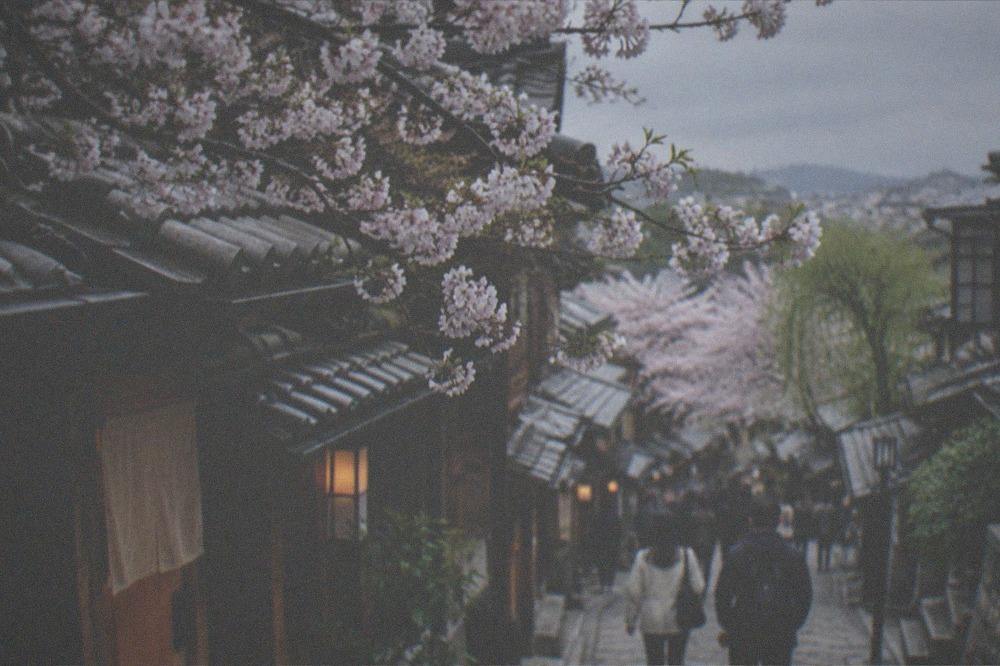
The lanes change character completely across the year: cherry blossom peaks around late March to early April, the summer brings heat and the year's heaviest rain in July, autumn foliage draws the biggest crowds of all from mid-November, and winter offers the emptiest, quietest slopes. The JMA's own phenology record for Kyoto gives the 1991-2020 normal full-bloom date for cherry as 4 April and the normal red-leaf date for maple as 5 December.
Those JMA normals are the official marker, and they are worth knowing precisely because most guides misstate them. The maple normal of 5 December is the observatory's specimen tree in central Kyoto, not the Arashiyama or Higashiyama display peak, which runs earlier, but it corrects the lazy mid-November claim. In 2026, cherry reached full bloom on 30 March, three days ahead of the normal, and in 2025 on 5 April. Our Kyoto cherry blossom and Kyoto autumn leaves guides carry the full year-by-year tables.
| Season | What the slopes are like | Official marker |
|---|---|---|
| Late March to early April | Cherry bloom, heavy crowds, shopfronts decorated | JMA normal full bloom 4 April |
| July to August | Hot and wet; July is the wettest month at 223.6 mm | JMA 1991-2020 normals |
| Mid-November onward | Foliage, night illuminations at Kodai-ji, peak crowds | Kodai-ji night viewing 23 Oct to 13 Dec 2026 |
| December to February | Quietest slopes, cold mornings, some shops close early | JMA normal maple red leaves 5 December |
The night illuminations change the calculus in autumn. Kodai-ji runs its autumn night viewing from 23 October to 13 December 2026, with reception until 21:30, and Kiyomizu-dera runs its own night-viewing periods with extended hours to 21:30. A late-afternoon arrival that catches the slopes in fading light and then an illuminated temple is one of the strongest versions of this walk, and it sidesteps the midday peak entirely.
What Etiquette Applies On The Slopes?
The rules that matter here are the district-wide ones: do not touch, chase or photograph geiko and maiko without permission, do not enter or photograph private property where prohibited, and walk, do not run, on worn stone. The geisha conduct rules are published by the Kyoto City Tourism Association as its four guidelines for the Gion and Higashiyama district, and they apply on these slopes because this is a working neighbourhood, not a theme park.
The slopes look like a stage set and function as a residential and commercial street. Private homes sit behind the shopfronts, deliveries come through the lanes, and the private alleys branching off the main slopes are exactly the kind of space the district's signage protects. In the neighbouring Gion district, signs posted by the local district council on private alleys off Hanamikoji threaten a 10,000 yen penalty for unauthorised photography or entry, and the same respect for private ground applies here. Our Kyoto etiquette guide covers the full set of local rules.
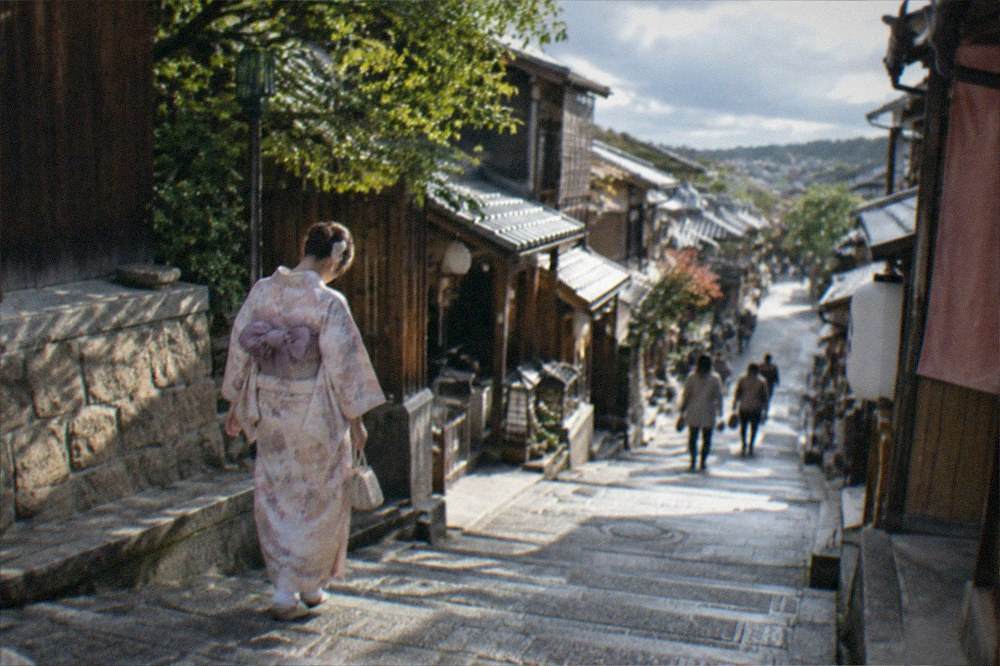
Two more practical points. Kimono rental is popular on this hillside because the streetscape rewards it, and our kimono rental in Kyoto guide covers what a rental includes, from $17.35 for a standard package. And if you are carrying luggage, the city's hands-free programme, which runs station counters and delivery services specifically to keep bags off crowded buses, is worth using before you attempt these steps: the city's own bus rules allow drivers to refuse large bags on crowded buses. Our Kyoto luggage storage guide lists the options.
Can You Visit The Slopes With Kids Or Limited Mobility?
The slopes are walkable with children and with care, but they are not accessible as a smooth route: Sannenzaka is a continuous flight of irregular stone steps with no ramp alternative, and Ninenzaka, though gentler, is still a pitched stone lane. Wheelchair users and anyone unsteady on steps should treat the slopes as a one-way descent problem, and the surrounding district offers flatter alternatives such as Maruyama Park and the modern streets toward Gion.
The falling legend earns its keep here in a practical sense. The steps are worn convex, they are slick when wet, and the July rain average of 223.6 mm means summer descents happen on wet stone more often than visitors expect. With small children, the top-to-bottom direction is the right one: descending Sannenzaka is easier than climbing it, and the exit lands you in the flat lower district rather than at the bottom of a staircase you must retrace.
For families building a wider Kyoto trip, the Kyoto with kids guide covers the city's more forgiving ground, and the slopes themselves are a good test of whether a child's stamina and footing suit the hillier east side before committing to a longer Higashiyama day.
What Else Should You Pair With The Slopes?
The strongest pairings are the ones within walking distance: Kiyomizu-dera above, Kodai-ji and Maruyama Park below, Yasaka Shrine at the bottom of the descent, and Gion beyond it. Done as a single morning, that circuit is the core of most first visits to Kyoto, and it is the segment most one-day tours build around.
If you would rather have a guide handle the routing, the Perfect 1-Day Bus Tour covers the headline sites, including the Kiyomizu-dera side of Higashiyama, in 8 to 9 hours from $102, rated 4.9 from 17,054 reviews. For a deeper cut of the east side's hillside paths, the Fushimi Inari Hidden Hike takes the same Higashiyama-to-temple logic up the torii mountain, 3 hours from $73, rated 5 from 1,931 reviews, with a private option available. And for a view over the whole district you just walked, the Nidec Kyoto Tower entry ticket, from $6.37, puts you 100 metres above the city centre for less than the price of a temple admission.
| Pairing | Distance from slopes | Admission |
|---|---|---|
| Kiyomizu-dera | Top of the route | 500 yen |
| Kodai-ji | Off Ninenzaka | 800 yen |
| Maruyama Park | Bottom of the descent | Free |
| Yasaka Shrine | Bottom of the descent | Free |
| Nidec Kyoto Tower | Short bus or subway ride | From 900 yen at the tower |
Beyond the immediate circuit, the slopes are also a sensible anchor for a wider east-Kyoto day, and the whole corridor is covered in our things to do in Kyoto roundup. If you are dividing days between cities, the comparison between the two Kansai capitals comes down to whether you want walkable historic districts like this one or Osaka's flatter, louder nightlife grid.
The hidden-hike option deserves its own word here because it solves the one problem this page cannot: the slopes are a descent through a crowd, while the Fushimi Inari mountain behind them is a climb through torii tunnels that most day visitors never get above. The same east-side logic, temple at the top and a route down through the neighbourhood, applies to both, and the guided version handles the timing so you are climbing before the crowds thicken rather than with them.
Common Questions About Ninenzaka And Sannenzaka
What is the legend about falling on the Sannenzaka steps?
The legend says that anyone who falls on the stone steps of Sannenzaka will die within three years. It is widely repeated local folklore, not a documented event, and no temple or city office publishes an origin for it. The practical use of the story is that it makes people walk carefully on worn, sometimes slick stone.
Are Ninenzaka and Sannenzaka free to visit?
Yes. Both are free public streets with no gate, ticket or published closing time. The costs around them are temple admissions: Kiyomizu-dera at 500 yen for adults and Kodai-ji at 800 yen, with a combined Kodai-ji plus Entoku-in ticket at 1,200 yen.
What is the difference between Ninenzaka and Sannenzaka?
Sannenzaka is the upper, steeper slope with continuous stone steps, directly below Kiyomizu-dera. Ninenzaka is the lower, gentler and wider lane that continues the descent toward Kodai-ji, Maruyama Park and Yasaka Shrine. Most visitors walk both in sequence, top to bottom.
How long does the walk take?
The slopes themselves take most visitors thirty minutes to an hour at a normal pace with stops, though crowds slow this considerably at peak times. The full circuit, including Kiyomizu-dera at the top and Yasaka Shrine at the bottom, is a realistic half day.
When are the slopes least crowded?
Early morning before the shops open, and late evening after they close, are the quietest periods, since the streets themselves have no closing time. The city's Kyoto Tourism Comfort Forecast publishes a five-level crowd forecast by spot and time slot, and it is the reliable way to check conditions on the day.
Can you eat while walking on the slopes?
The shops set their own rules, but the courteous and practical answer is to eat at the stall or a designated spot rather than while walking. The steps are narrow, and the city's wider guidance on crowded tourist streets, including the printed rule at Nishiki Market, discourages eating while walking.
The slopes are at their best treated the way the district built them: as a slow descent through a preserved streetscape, taken at the pace the stone allows. Walk down, not up. Watch the steps. The legend will look after itself.