What Is The Nara Deer Controversy? The Story Behind Nara Park's Sacred Deer
The Nara deer controversy explained: rising deer numbers, 140 deaths in FY2025, plastic litter, and how Nara Park is responding. What visitors from Kyoto should know before a day trip.
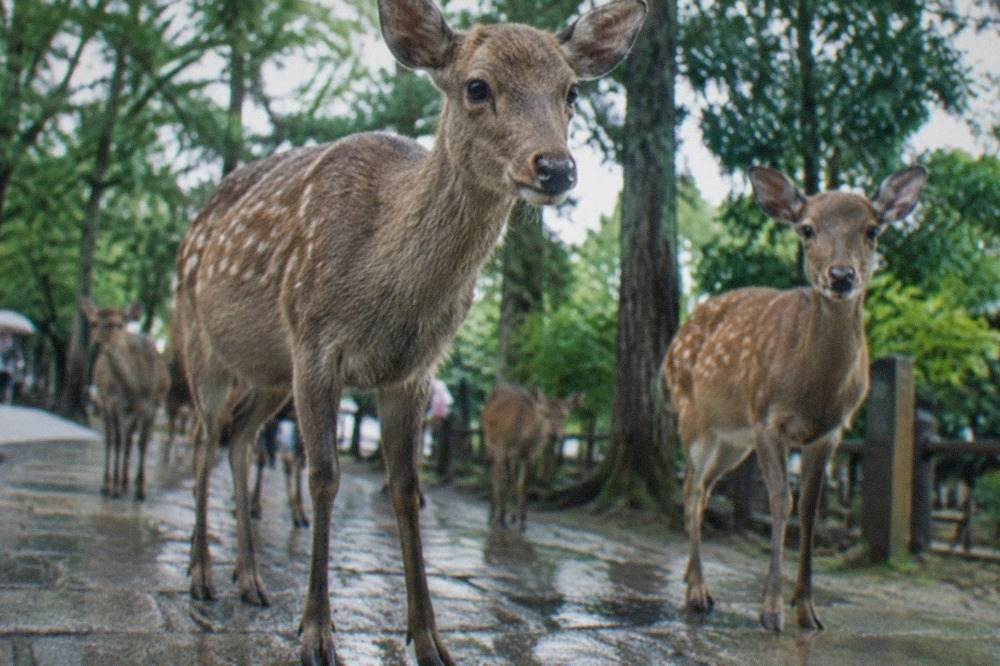
Nara Park's deer are classified as natural monuments of Japan, protected by law and treated as divine messengers in the local Shinto tradition, and the controversy around them is not about whether they should exist. It is about what happens when a protected, semi-wild population of 1,687 animals shares a small urban park with roughly 13 million annual visitors, a road network, and a snack-selling economy built around feeding them. The 2026 census counted 411 stags, 990 does and 286 fawns on 15 and 16 July 2026, up 222 animals on 2025, while FY2025 records show 140 deer deaths, 36 of them in road accidents. Those two numbers, growth and mortality side by side, are the controversy in miniature.
Visitors reach Nara easily from Kyoto, and the debate over how to treat the deer is something every day-tripper walks straight into. The basics of that trip, including how the two cities compare, are covered in Kyoto Versus Nara and our Nara day trip guide, and the wider question of what is so special about Nara is worth reading too.
Why Are The Nara Deer Controversial?
The controversy is that Nara's deer are simultaneously sacred, protected, dependent on tourist feeding and dying from the consequences of tourism itself. The animals are national natural monuments, so they cannot be culled or managed like ordinary wildlife, yet 140 died in FY2025, 36 of them in road accidents, and the population grew by 222 in a single year, which puts pressure on both the park and the deer.
Three threads run through the argument.
The first is litter. Deer are ruminants with a four-chambered stomach evolved for grass and leaves, and plastic bags, packaging and paper scraps that smell of food get swallowed and can block the digestive tract. Cases of deer found dead with plastic in their stomachs have driven repeated anti-litter campaigns in the park, and the problem is structural rather than accidental: the same crackers that visitors buy to feed the deer come wrapped, and the wrappers get dropped or scavenged.
The second is traffic. Thirty-six road deaths in a single fiscal year is not a marginal figure for a protected population, and it reflects a simple geography: the deer roam freely across roads that carry buses, taxis and private cars between the station, the temples and the park itself. Speed limits, signage and driver caution have all been tried, and the deaths continue.
The third is dependency. The deer crackers sold in the park are a regulated product, and the feeding economy is what keeps the animals approaching humans at all. Critics argue that a population sustained partly by tourist snacks is neither truly wild nor properly husbanded, while defenders point out that the arrangement has held for centuries and that the deer also graze the park's grasslands. The disagreement is genuinely unresolved, and it is why the word controversy fits rather than a simple problem-and-solution story.
| Measure | 2026 census figure |
|---|---|
| Total deer counted | 1,687 |
| Change on 2025 | up 222 |
| Stags | 411 |
| Does | 990 |
| Fawns | 286 |
| Census dates | 15 and 16 July 2026, 05:30 to 08:00 |
| Deaths in FY2025 | 140, of which 36 in road accidents |
Are The Nara Deer Overpopulated?
By the numbers, the herd is growing fast: 1,687 animals counted in July 2026 against a count 222 lower the year before, and the park's grasslands and the deer's own health indicators are the recognised pressure points. The counter-argument, held by the protectors, is that the population has historically run higher and fallen back, so a one-year rise is not by itself a crisis.
The census is a real count, not an estimate. Volunteers and officials fan out across the park and surrounding areas before dawn in mid-July, when the deer are easiest to see and the fawns of the year are distinguishable, and tally every animal by sex and age class. The 2026 result, 1,687, is the figure the Nara Deer Protection Foundation publishes on its own learning pages.
What makes the growth contentious is that nobody has a clean lever to pull if it becomes a problem. Because the deer are designated natural monuments, culling is off the table, and contraception has been discussed for years without becoming park policy. The practical responses are the ones already in place: traffic measures, litter enforcement, and rules around the crackers. For a visitor, the honest takeaway is that the herd is large, growing, and managed by constraint rather than control.
If you are planning a Kyoto stay with a Nara visit included, our four days in Kyoto itinerary and five days in Kyoto itinerary both leave room for the trip, and there are organised options as well.
What Are The Rules For Feeding Deer In Nara Park?
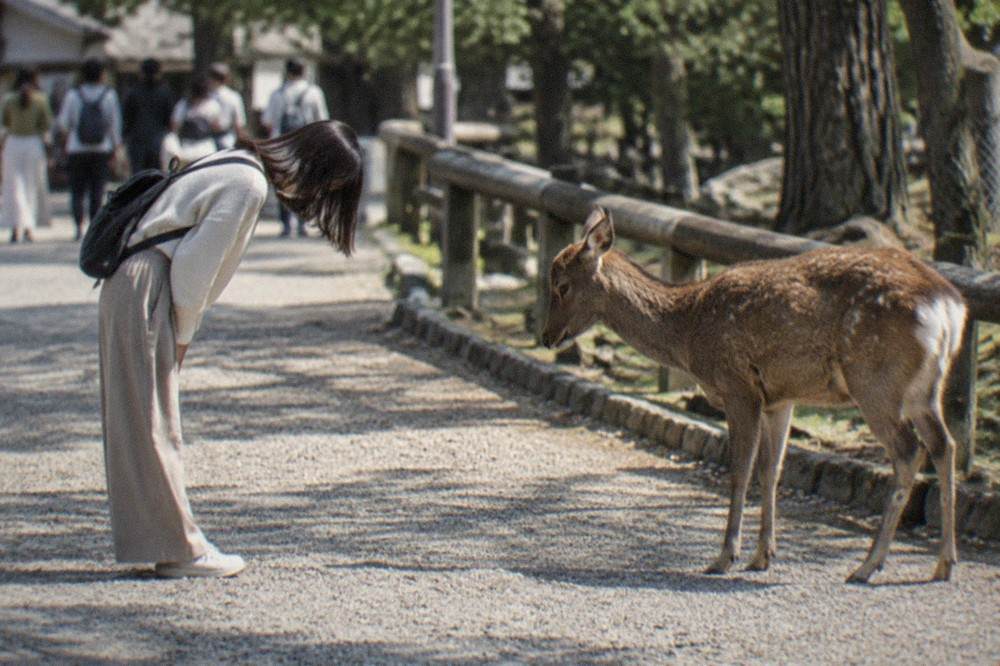
Feeding is only allowed with the official deer crackers sold inside the park, and the crackers must be finished or hidden before you walk away, because a deer that follows you for food it cannot get can headbutt, nip or rear up. Bowing deer are begging, not performing, and the park's guidance is to feed, then show your empty hands so the animal gives up and moves on.
The crackers are a controlled food, which is the point of the rule. Arbitrary snacks, human food and anything wrapped are bad for the animals and are the direct link to the plastic problem. The vendors and the protection foundation repeat the same set of instructions, and they exist because deer behaviour around food is predictable: an animal that sees food will pursue it, and an animal that is teased with food will get frustrated.
The rules visitors break most often are the quiet ones. Holding a cracker up for a photo while the deer waits is teasing. Walking away with crackers in a bag or a pocket invites following and nudging. Small children holding food at face height are the most common nipping incidents, which is why families are told to hand over the crackers quickly rather than let a child hold a stack of them. None of this is a reason to avoid the park, but it is the difference between the deer experience people imagine and the one they get.
How Do Deer Deaths And Litter Fit Into The Nara Deer Controversy?
The 140 deaths recorded in FY2025, 36 of them on the roads, plus recurring cases of deer found with swallowed plastic, are the evidence both sides of the argument cite. Critics say a protected population should not be losing animals to cars and litter at that rate, while the park's defenders point to the campaigns, the traffic measures and the census as proof the system is responding rather than failing.
The plastic issue is the one that reliably makes national news. A deer that scavenges a plastic bag does not digest it, and the accumulated mass in the rumen eventually kills the animal through starvation despite a full stomach. Post-mortem findings of plastic in dead deer have been reported by Japanese media for years, and each case restarts the same cycle: a cleanup drive, a campaign against dropped wrappers, and a return to baseline once attention moves on. The rest of the planning pages sit on Kyoto Travel Guide.
The traffic deaths are less photogenic and more persistent. The park is not a fenced enclosure; it blends into the town around Todai-ji, Kasuga Taisha and the approach roads, and the deer cross at will. Reduced speed limits and driver advisories exist, and 36 deaths in a year is the current measure of how well they work.
For visitors, the practical contribution is unglamorous: take every wrapper with you, use the bins outside the feeding areas rather than inside them, and never leave a bag on the ground even briefly. A deer can find and swallow a plastic bag in the time it takes to line up a photo.
Is It Safe To Visit Nara Park With The Deer?
For most visitors, yes, and the park's own guidance treats the deer as safe to be around if the feeding rules are followed. The risks that exist are food-related: nips, headbutts and knockdowns when a deer wants a cracker or thinks you are hiding one, with the autumn rut and the spring fawning season being the times when the animals are least predictable and most worth giving space.
The deer are not tame in the domesticated sense, and they are not dangerous in the predatory sense either. They are large wild animals that have learned humans carry food. A full-grown sika stag weighs considerably more than a toddler, and the antlers are real, which is why the standard advice during the rut, roughly September to November, is to keep a clear distance from stags displaying or clashing. In spring, a doe with a hidden fawn will defend it.
The park works as a family destination regardless, and the standard precautions are the ones you would take around any large animal: feed only with the official crackers, finish the interaction cleanly, and keep small children within arm's reach. Reading up on what is famous to eat in Nara is a good excuse to step away from the feeding areas entirely for a while, and the town's food streets are a few minutes' walk from the main park.
How Do You Get From Kyoto To Nara Park?
The two rail options are the JR Miyakoji Rapid from Kyoto Station, about 45 minutes at roughly 720 yen one way, and the Kintetsu line at about 760 yen, with a limited express supplement of 520 yen cutting the trip to around 35 minutes. These fares are reported figures rather than operator-published prices, so treat them as close approximations and check the fare display before boarding.
Kintetsu Nara Station sits closer to the park than JR Nara Station, which is the usual tiebreaker for day-trippers. From either station the walk to the edge of the deer range is ten to fifteen minutes, and the animals appear well before the main park gate. Todai-ji, with its Daibutsuden hall housing the Great Buddha, is inside the roaming area, and admission to the hall is 800 yen for adults and university students, 400 yen for elementary school children, open 7:30 to 17:30 from April to October and 8:00 to 17:00 from November to March, daily.
| Route from Kyoto | Approx. time | Approx. one-way fare | Notes |
|---|---|---|---|
| JR Miyakoji Rapid | about 45 minutes | about 720 yen | direct from Kyoto Station to JR Nara |
| Kintetsu express | about 35 minutes | about 760 yen plus 520 limited express | arrives closest to the park |
| Kintetsu express, standard | about 45 minutes | about 760 yen | no seat reservation needed |
| Todai-ji Daibutsuden | open daily | 800 yen adult, 400 elementary | Apr-Oct 7:30-17:30, Nov-Mar 8:00-17:00 |
A guided morning departure is one way to see both the deer range and the temples without working out the rail options at 8 a.m., and the day trips from Kyoto guide covers the full menu of destinations reachable in a morning.
What Is The Nara Deer Controversy?
In one sentence: the deer of Nara Park are legally protected sacred animals whose population grew to 1,687 in 2026 while 140 died in FY2025, 36 of them hit by cars, and the park has no culling option, a feeding economy it cannot remove, and a litter problem it cannot fully police. The controversy is the unresolved tension between protection and management.
That framing is worth restating near the end of the article because most coverage picks a side. Either the deer are a beloved, ancient coexistence being responsibly stewarded, or they are a captive population being slowly damaged by tourism. The verified numbers support neither caricature. A 222-animal rise in one year is real growth, and 36 road deaths in one fiscal year is real mortality, and both come from the same protection foundation's own records.
What a visitor can actually do about it is small and concrete. Buy the official crackers or buy none. Carry your rubbish out. Do not tease, do not chase, do not touch antlers, and keep your distance during the rut. The park is one of the few places on earth where this argument between reverence and management plays out on a public footpath, and walking through it aware of both sides is a better experience than walking through it unaware.
Common Questions About The Nara Deer Controversy
What Is The Nara Deer Controversy?
It is the ongoing dispute over how Nara Park's 1,687 protected, semi-wild deer should be managed. The population rose by 222 in a single year, 140 animals died in FY2025 including 36 in road accidents, and plastic litter has killed deer that swallowed it. Because the deer are designated natural monuments, they cannot be culled, so the park manages them through feeding rules, traffic measures and litter enforcement.
Are the Nara deer dangerous to visitors?
Not in the way wild large animals usually are. The real risks are food-related: nips, headbutts and knockdowns from deer expecting crackers. Feed only with the official crackers, show empty hands when finished, and give stags extra space during the autumn rut.
Why can't the deer population just be reduced?
The deer are classified as natural monuments of Japan, which rules out culling. Contraception has been discussed but is not park policy. Management therefore happens through constraint: traffic measures, feeding rules and litter control rather than population control.
Is it okay to feed the deer in Nara Park?
Yes, but only with the official deer crackers sold inside the park. Any other food, and anything wrapped in plastic, is harmful. Finish the crackers or hide them before walking away, because a deer that believes you still have food will follow and can nip.
How many deer are in Nara Park in 2026?
The July 2026 census counted 1,687 deer: 411 stags, 990 does and 286 fawns, up 222 on the 2025 count. The tally is a physical count taken before dawn on 15 and 16 July 2026.
Is Nara worth visiting given the controversy?
Yes. The controversy is a management debate, not a safety warning, and the park's own guidance treats the deer as safe when the feeding rules are followed. The Todai-ji Daibutsuden, the Kasuga shrine forest and the old town are all inside or beside the deer range, and the trip from Kyoto takes under an hour by train.
The deer are the reason most people make the trip, and the controversy is the reason the trip deserves a little preparation. Read the rules, buy the crackers or skip them, carry your rubbish, and the same animals at the centre of the argument become what they have been for centuries: the messengers of a shrine town an hour from Kyoto.