What Is The Coolest Neighbourhood In Kyoto?
Kawaramachi and Pontocho, the downtown strip along the Kamo river, make the strongest case for Kyoto's coolest neighbourhood, and here is why it beats the guidebook areas.
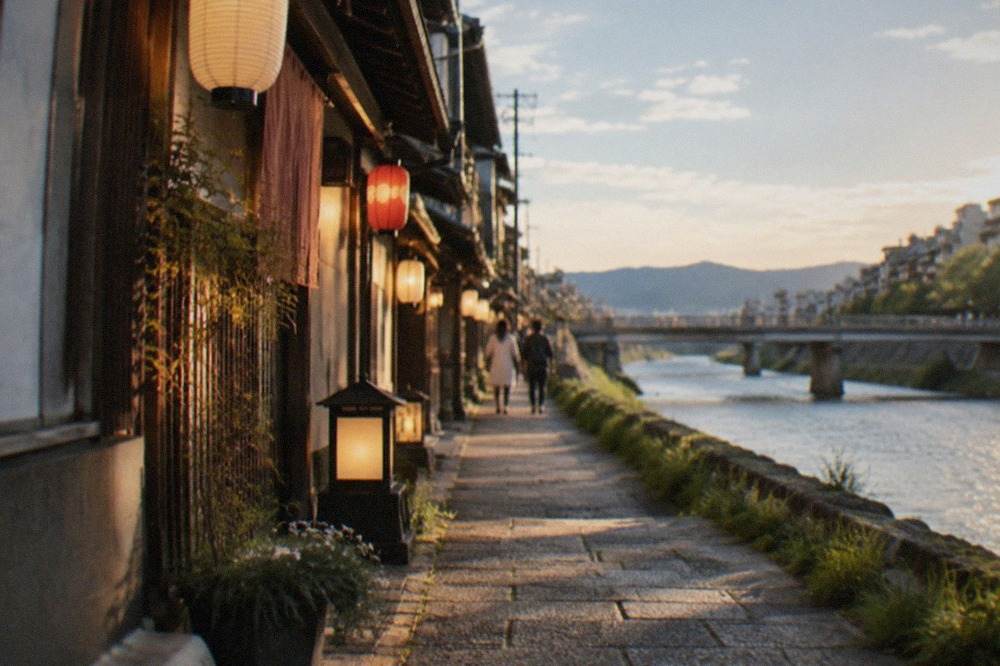
The honest answer is not Gion and it is not Higashiyama. The coolest neighbourhood in Kyoto is the downtown Kawaramachi strip: Pontocho alley running beside the Kamo river, the Teramachi and Shinkyogoku arcades one block west, and the dense web of izakaya and standing-bar streets that spreads out behind them. This is where the city eats, drinks and stays out late, in wooden machiya frontages that have survived centuries of fires and redevelopment. It is also the part of Kyoto that the city's own numbers say is under the most pressure: the 2025 tourism survey, released 12 June 2026, counted a record 62.79 million visitors against 56.06 million in 2024, and 46.20 million of them were day visitors who concentrate exactly here.
What Is The Coolest Neighbourhood In Kyoto?
Kawaramachi is the coolest neighbourhood in Kyoto for most visitors: the Pontocho alley and the bar streets around it concentrate the city's izakaya, cocktail bars, ramen counters and riverside dining in a walkable grid of preserved wooden buildings, all within ten minutes on foot of Nishiki Market and the Gion crossing. It is cool in the lived sense, food and atmosphere, rather than the postcard sense of temples and torii.
The judgement rests on what "coolest" has to mean in a city of 1,500 temples. If you want the most beautiful street, that is a different question, and one this site answers separately on the prettiest part of Kyoto. If you want the place where an evening turns into a night without a taxi, where a 400-year-old alley and a natural-wine bar share a wall, and where the food scene is dense enough that a bad meal takes genuine effort, the downtown grid between Shijo-dori and the river is the answer.
Pontocho itself is the emblem. It is one of Kyoto's narrowest licensed geisha and entertainment streets, a single lane so tight that two people passing shoulder to shoulder is a negotiation, running between Shijo and Sanjo along the west bank of the Kamo. In summer its restaurants build platforms out over the water, the kawadoko dining decks, and the alley glows from end to end. One street west, Teramachi and Shinkyogoku form the covered arcade spine where Kyoto actually shops, and behind them the smaller lanes hold the standing bars and tiny counters that make the area the city's default night out.
Why Does Kawaramachi Beat The Guidebook Areas?
Because the guidebook areas close at five o'clock and Kawaramachi starts at five o'clock. Gion's private alleys ban photography under signage from the local district council, Higashiyama's slopes empty after the temples shut, and Arashiyama is a morning place two train rides west. Downtown keeps going: the izakaya fill from six, the arcades stay lit into the evening, and the last trains from Kawaramachi and Kiyomizu-keage stations run late enough that the neighbourhood works without a car.
The contrast with Gion is worth spelling out, because many guides hand the "coolest" title to Gion on atmosphere alone. The city's tourism association now publishes four conduct guidelines for the district: do not touch, chase or photograph geiko and maiko without permission, and do not enter or photograph private property where prohibited. Signs on the private alleys off Hanamikoji threaten a 10,000 yen penalty for unauthorised photography or entry, set by the Gion South Side district council rather than by city police. A neighbourhood you can only look at from the main road is a beautiful museum district, not a cool one.
Kawaramachi has none of that friction. You walk in, you eat, you drink, you cross the river to Gion when you want the postcard version, and you cross back. The downtown or Gion comparison is one this site treats in full, but the short version is that downtown is where Kyoto behaves like a real city.
There is also a practical cool that the day-visitor statistics make plain. With 46.20 million day visitors flowing through a year, the areas built around a single photo spot saturate by mid-morning. A grid of a hundred small restaurants absorbs crowds the way a single alley cannot, which is exactly why the city's dispersal campaigns push visitors toward downtown dining and away from the morning bottlenecks at Kiyomizu-dera and Fushimi Inari.
How Does Kawaramachi Compare To Kyoto's Other Neighbourhoods?
Kawaramachi wins on food, nightlife and walkable density; Gion wins on atmosphere and geisha culture; Higashiyama wins on temples and views; Arashiyama wins on landscape but sits furthest out; and the Kyoto Station area wins on transport and prices while offering the least character. None of the others combines eating, drinking, shopping and riverbank atmosphere in one walkable grid the way downtown does.
| Neighbourhood | Strongest suit | Weakest point | Best time of day |
|---|---|---|---|
| Kawaramachi / Pontocho | Izakaya, bars, arcades, riverside dining | Little traditional sightseeing | Evening |
| Gion | Geisha culture, preserved streets | Conduct rules, private-alley bans | Dusk |
| Higashiyama | Kiyomizu-dera, Ninenzaka, Sannenzaka | Empties after temple closing | Morning |
| Arashiyama | Bamboo grove, river, monkey park | 20 minutes by train from downtown | Early morning |
| Kyoto Station area | Transport, hotel prices, views from the tower | Corporate, few old buildings | Any |
The table is the honest shorthand, but the evening column is the decider. Higashiyama and Arashiyama are morning places; Gion is a dusk place; Kawaramachi is the only one of the five whose best hours are after dark, which is the working definition of a cool neighbourhood for most travellers.
A guided evening walk is the efficient way to see the contrast if you have only one night. The Gion Magical Night Walking Tour, from $22 and rated 4.9 from 4,616 reviews, covers the geisha district side of the river, and pairs naturally with a downtown dinner afterwards.
What Can You Actually Do Around Kawaramachi?
The core loop takes in Nishiki Market's food stalls, the Teramachi arcade's knife and tea shops, Pontocho's kawadoko riverside dining in summer, the Kamo riverbank where crowds sit with convenience-store drinks at dusk, and the izakaya lanes behind Kiya-machi for the late hours. Nishiki keeps no unified hours, each shop sets its own, roughly 9 or 10:00 to 17 or 18:00, so the market is a daytime stop and the bars take over after.
Nishiki deserves its morning slot and nothing more: the market association's own site prints no unified opening hours because each of the roughly 130 shops keeps its own, and the eat-while-walking rule asks you to eat at the stall rather than walk with food. By late afternoon the market winds down and the weight of the neighbourhood shifts to the river. The wider set of guides lives on Kyoto Travel Guide.
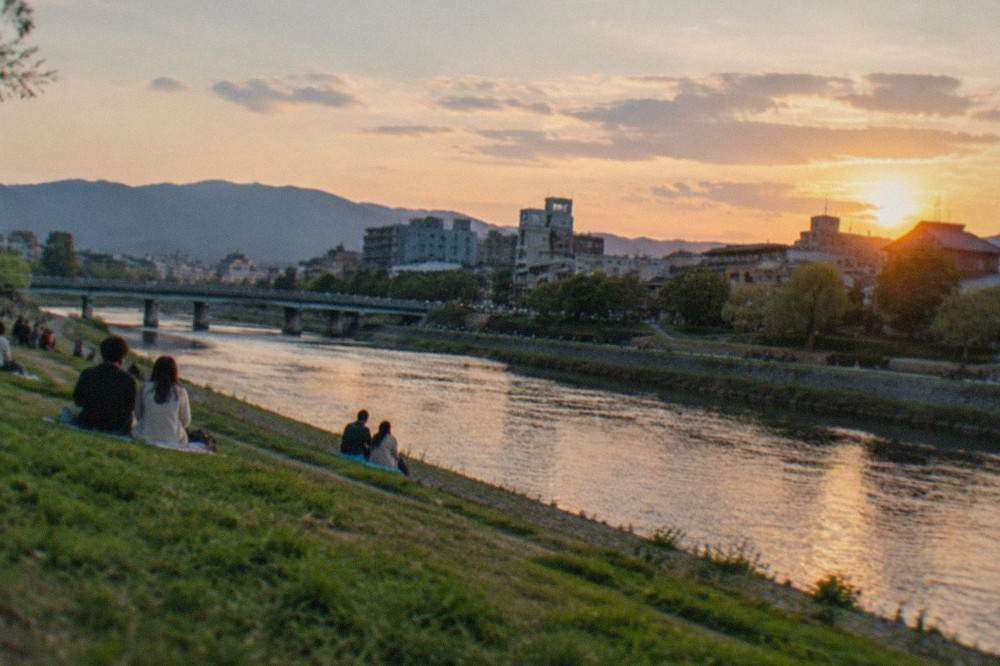
The Kamo riverbank between Shijo and Sanjo is the closest thing Kyoto has to a public living room. On a dry evening the stone steps fill with groups eating and drinking, and nobody charges you for the seat. It is also the single best free answer to the question of what Kyoto is known for that most first-time visitors miss, because it costs nothing and needs no ticket.
For the food itself, the numbers are on your side. The Kawaramachi Local Bar and Izakaya Crawl Tour runs 3 hours from $37, rated 4.9 from 1,042 reviews, and the Nishiki Market Brunch Walking Tour covers 7 tastings plus brunch from $74, rated 4.9 from 1,497 reviews. A guided crawl solves the one real problem downtown has: with hundreds of doors and almost no English signage outside the arcades, the best counters are invisible unless someone introduces you.
Where Do Locals Say To Eat And Drink In Downtown Kyoto?
Locals point to the lanes behind the arcades rather than the riverfront itself: the Kiya-machi and Kiyamachi bar streets, the standing bars around Karasuma, and the ramen counters on Shijo-dori, where queues move fast and prices stay low. The city's own survey gives the backdrop, about 60 percent of Japanese visitors are repeat visitors against about 20 percent of foreign visitors, and the repeat crowd eats where the locals eat, not on the postcard streets.
The economics matter here. The 2025 survey put tourism spending at a record 2.0474 trillion yen, and a rising share of it lands in central restaurants, which is why the bar streets keep multiplying. A useful anchor for what dinner can cost at the top end: Hyotei, the famous kaiseki house by Nanzen-ji, prints its own lunch kaiseki from 31,625 yen, while its annex serves the same kitchen's porridge from 5,445 yen and a bento from 7,260 yen. Those are Hyotei's prices, not a Kyoto average, but they frame the range honestly. Downtown izakaya sit far below that ceiling, and the where locals eat question has its own full answer on this site.
Two rules make the evening work. First, cash still matters: small counters and some market stalls prefer it. Second, the last trains matter more than the last orders, because the subway's Karasuma and Tozai lines close around midnight and taxis thin out fast after that.
When Is The Best Season To Enjoy Kyoto's Coolest Streets?
Summer evenings are the peak of the downtown experience, because the kawadoko riverside decks open from May through September and the riverbank fills after dark, but summer also brings Kyoto's heaviest rain: the JMA 1991-2020 normals put July at 223.6 mm of rain, the wettest month of the year, ahead of June at 199.7 mm. May, October and November are the comfortable compromise, with the arcades making rain irrelevant.
| Month | Mean temperature | Rain | Downtown character |
|---|---|---|---|
| April | 14.4 C | 117.0 mm | Cherry blossom crowds on the riverbank |
| May | 19.5 C | 151.4 mm | Kawadoko decks open, warm evenings |
| July | 27.3 C | 223.6 mm | Peak decks, peak rain, festival month |
| August | 28.5 C | 153.8 mm | Hottest month, Gozan no Okuribi on 16 August |
| October | 18.4 C | 143.2 mm | Dry, mild, best all-round month |
| November | 12.5 C | 73.9 mm | Cool evenings, late-autumn dining season |
The counterintuitive part is worth repeating because most guides get it wrong: July, not June, is Kyoto's wettest month. Plan a July evening around the covered arcades and the indoor counters, and the rain stops mattering. August adds the city's most dramatic night of the year, Gozan no Okuribi on 16 August, when five mountainside bonfires are lit one after another and the hills are closed to walkers that day.
If your evening is the last of a full day, the smart structure is a morning on Inariyama and a night downtown. The Fushimi Inari Hidden Hiking Tour, from $73 and rated 5 from 1,931 reviews, takes the back trails of the shrine mountain in 3 hours and finishes you back in the city with the afternoon free.
The pairing is deliberate: Inariyama is the one major Kyoto sight whose paths have no closing time, so an early guided hike beats both the heat and the crowds, and the tour's 3-hour length leaves the whole afternoon for the arcades before the evening starts. Bookings for the guided version can be checked against your own dates, and the free cancellation terms on the operator's live listing make it a low-risk addition to a first itinerary.
Common Questions About Kyoto's Coolest Neighbourhood
What Is The Coolest Neighbourhood In Kyoto?
The downtown Kawaramachi strip: Pontocho alley, the Teramachi arcades and the izakaya lanes behind them, along the west bank of the Kamo river between Shijo and Sanjo. It is the area where Kyoto's food, nightlife and preserved wooden streets overlap in one walkable grid.
Is Gion Or Kawaramachi Better For A First Visit?
Kawaramachi for the evening, Gion for an hour at dusk. Gion's private alleys carry council signage banning photography and entry, with a 10,000 yen penalty on the signs, so it rewards a respectful walk rather than a night out. Downtown is where you eat and drink afterwards.
How Many Days Do You Need To Cover Downtown Kyoto?
Two evenings is enough to see Pontocho, the riverbank and one bar street properly. The fuller question of how many days Kyoto needs overall has its own answer on this site, and most first visits work best with at least three.
What Is The Famous Alley In Kyoto?
Pontocho, the narrow licensed entertainment lane on the Kamo riverbank, is the one most visitors mean. This site covers the [famous alley question](/answers/famous-alley-in-kyoto/) in detail, including the smaller lanes worth seeking out.
Is Downtown Kyoto Good At Night?
Yes, and it is the city's strongest night district. The izakaya and bars run late, the riverbank fills on dry evenings, and the Gion crossing is a ten-minute walk away. The city's 2025 survey recorded above 90 percent satisfaction among both Japanese and foreign visitors, and the evening economy downtown is a large part of why.
When Do The Kawadoko Riverside Decks Open?
The restaurants along Pontocho build their over-water dining platforms for the warm months, typically from May through September. Book ahead for weekend seats, because the decks are small and the demand is not.
Kawaramachi's case is simple in the end: every other Kyoto neighbourhood does one thing supremely well, while downtown does the most things well at the hour most travellers actually have free. Spend your mornings on the temple slopes and your evenings on the riverbank, and the coolest neighbourhood question answers itself.