Downtown Kawaramachi: Where Kawaramachi, Shijo, Karasuma And Teramachi Meet In Kyoto
Downtown Kyoto is the rectangle where Kawaramachi, Shijo, Karasuma and Teramachi cross, and the city's own 2025 survey counted 62.79 million visitors across the year. Here is what each street actually does, what it costs to get there, and how to use the district without fighting its crowds.
Short answer
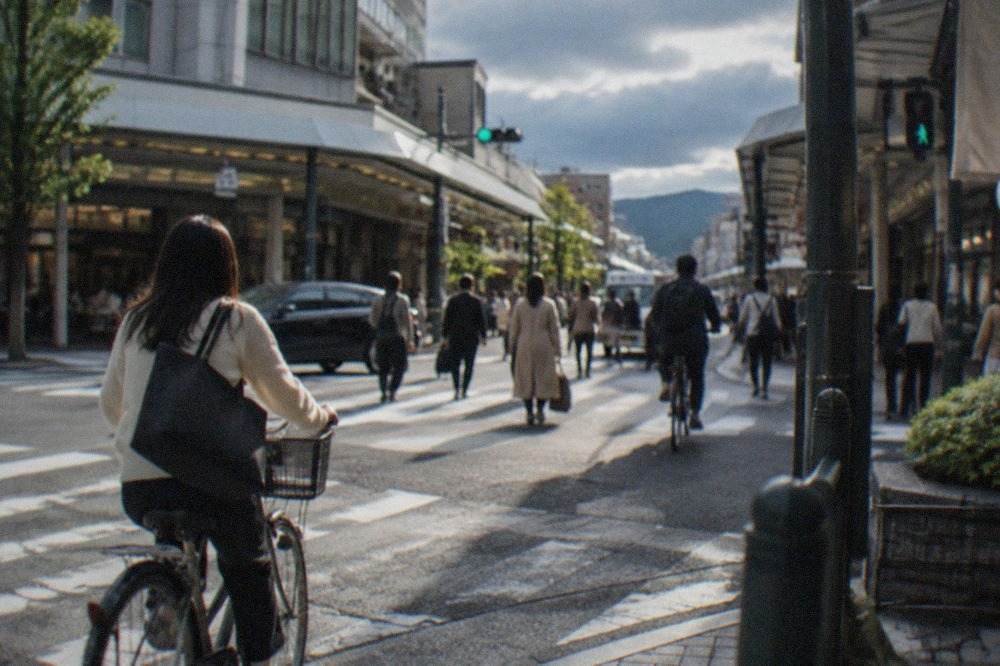
Downtown Kyoto means the grid around the Shijo-Kawaramachi crossing: Kawaramachi is the north-south entertainment and eating street, Shijo-dori is the main east-west axis, Karasuma-dori is the business and subway spine, and Teramachi and Shinkyogoku are the covered shopping arcades one block east. City buses cost a flat 230 yen, the subway runs 220 to 360 yen, and the Subway and Bus One-Day Pass is 1,100 yen.
Downtown Kyoto is smaller than its reputation suggests. The whole district fits inside a rectangle you can walk across in twenty minutes, bounded roughly by Oike-dori to the north, Gojo-dori to the south, the Kamo River to the east and Karasuma-dori to the west. Yet the city's own 2025 tourism survey, released 12 June 2026, counted a record 62.79 million visitors across Kyoto in the calendar year, 46.20 million of them day visitors, and a large share of that movement passes through this one rectangle because it holds the main shopping, eating and transfer points between the temple districts.
The confusion visitors bring with them is real: four street names get used almost interchangeably for the same area, hotel listings say "Kawaramachi" for buildings three blocks from it, and the question of what downtown actually is has an answer worth getting right before you book anything. This page on Kyoto Travel Guide works through it street by street, with the verified fares, the eating geography and the crowd numbers the city itself publishes.
What Counts As Downtown Kyoto: Kawaramachi, Shijo, Karasuma And Teramachi?
Downtown Kyoto is the grid centred on the Shijo-Kawaramachi crossing, where four streets do four different jobs. Kawaramachi-dori runs north-south and carries the eating and entertainment; Shijo-dori runs east-west and is the main axis from the river to the station side; Karasuma-dori is the wider business boulevard with the subway underneath; and Teramachi and Shinkyogoku are the covered pedestrian arcades one block east of Kawaramachi. Locals say Kawaramachi and mean the crossing.
The naming is genuinely messy, and it is messy for a historical reason. The modern grid grew around the intersection rather than being planned as a single district, so each street kept its own identity. Shijo-dori is the old processional route heading toward Yasaka Shrine, which is why it is wide and straight. Kawaramachi-dori, the "river town street", was the merchant spine of the city for centuries and still behaves like one. Karasuma-dori was cut and widened in the modern era, which is why it feels like Tokyo: the Karasuma Line subway runs directly beneath it, and the Kyoto International Manga Museum sits on it at the former school site. Teramachi, "temple town", was where temples were relocated in the 16th century, and the arcade that carries its name today is the covered shopping version of that street.
If a hotel or a listing says "downtown Kyoto" or "Shijo area", check the actual address against the crossing at Shijo-Kawaramachi. Anything within about 600 metres of that crossing is genuinely downtown; anything described as downtown but sitting near Kyoto Station is a different district entirely, covered in our Kyoto Station area guide.
Where Should You Stay In Downtown Kyoto Versus Gion?
For most first-time visitors, downtown Kawaramachi is the more practical base and Gion is the more atmospheric one, and the honest trade-off is convenience against mood. Downtown puts the Karasuma subway Line, the Hankyu railway, Nishiki Market, the Teramachi arcades and several hundred restaurants within a five-minute walk, while Gion is quieter at night, closer to Yasaka Shrine and the Higashiyama temple slopes, and thinner on late food and shopping. Prices in both run the full range.
The decision usually comes down to what your evenings look like. Downtown stays busy past 22:00, the arcades close around 20:00 to 21:00 but the side streets off Kiyamachi and Pontocho do not, and the last trains from the Hankyu Karasuma and Kawaramachi stations keep the whole Kansai region reachable. Gion empties noticeably after the evening walking tours finish, and the private alleys off Hanamikoji are closed to photography and entry under signage posted by the Gion South Side district council, which threatens a 10,000 yen penalty for unauthorized entry or photography on those private roads. The city's tourism association publishes conduct guidelines for the whole district: do not touch, chase or photograph geiko and maiko without permission, and do not enter private property.
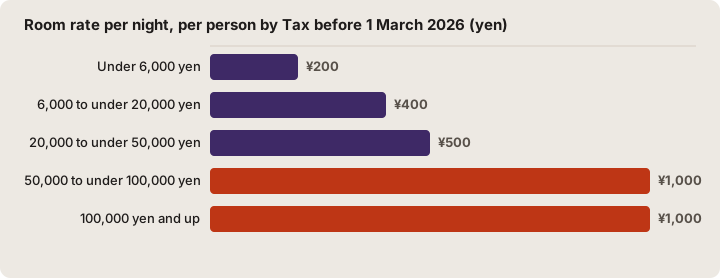
Budget matters too, and not only the room rate. Kyoto's accommodation tax changed on 1 March 2026, and the top tier went from 1,000 to 10,000 yen per person per night for rooms priced at 100,000 yen and up. The full ladder now runs 200 yen on a room under 6,000 yen, 400 yen from 6,000 to under 20,000, 1,000 yen from 20,000 to under 50,000, 4,000 yen from 50,000 to under 100,000, and 10,000 yen at the top. The tax is charged on the room-only rate, excluding meals and consumption tax. Our where to stay in Kyoto guide works through the districts in more detail, and the best hotels in Kyoto page covers the properties themselves.
| Room rate per night, per person | Tax before 1 March 2026 | Tax from 1 March 2026 |
|---|---|---|
| Under 6,000 yen | 200 yen | 200 yen |
| 6,000 to under 20,000 yen | 400 yen | 400 yen |
| 20,000 to under 50,000 yen | 500 yen | 1,000 yen |
| 50,000 to under 100,000 yen | 1,000 yen | 4,000 yen |
| 100,000 yen and up | 1,000 yen | 10,000 yen |
How Do You Get Around Downtown Kyoto Without A Car?
Nobody drives downtown Kyoto, and the verified fares make the alternatives cheap. The city bus charges a flat 230 yen per adult ride and 120 yen per child anywhere in the city, the subway runs 220 to 360 yen by zone, and the Subway and Bus One-Day Pass costs 1,100 yen for adults and 550 yen for children. The old bus-only one-day pass no longer exists: sales ended in September 2023 and it stopped being usable on 31 March 2024.
The one-day pass replaced it deliberately. The city's transport bureau said 90 per cent of bus-pass buyers were non-residents and the pass concentrated tourists on exactly the buses that were already full, so the product was withdrawn in favour of the combined subway-and-bus version that spreads riders across both networks. That is the number to remember when an older guide tells you to buy a 700 yen bus pass: that product has not existed for over two years.
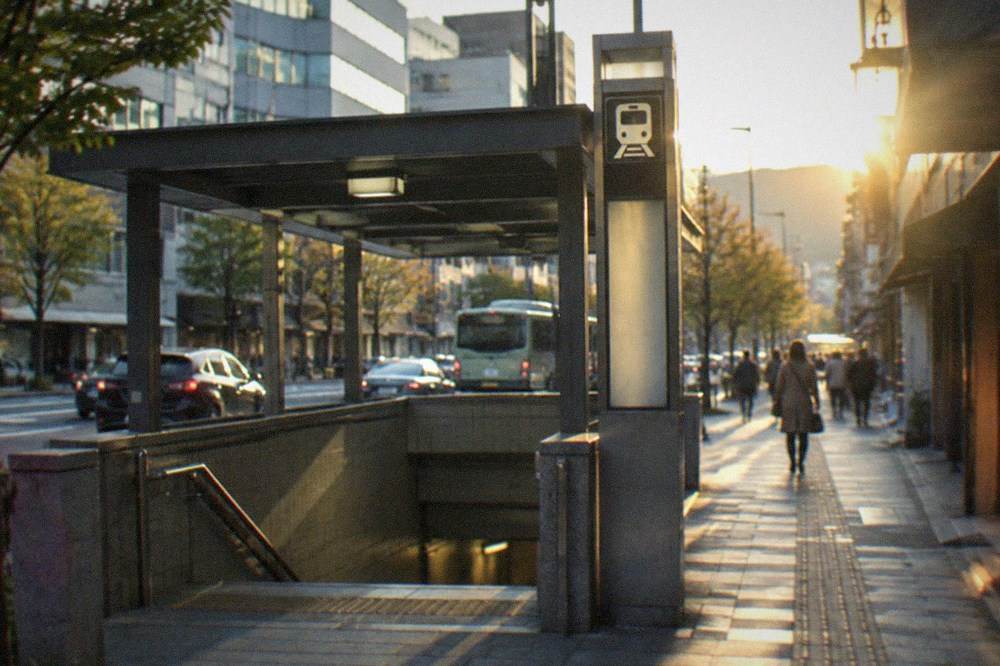
The subway is the underrated option downtown. The Karasuma Line runs north-south under Karasuma-dori with stops at Shijo and Kyoto-kokusaikan, and the Tozai Line crosses it, with Karasuma Oike as the interchange. For the temple districts east of the river, the Keihan railway from Gion-Shijo and the Hankyu from Karasuma or Kawaramachi both put you within walking distance of the Higashiyama slopes and the Arashiyama Line connections respectively. The tourist express buses EX100 and EX101 run from Kyoto Station to the Kiyomizu side, with EX100 continuing to Gion, the Okazaki museum quarter and Ginkaku-ji; a ride costs 500 yen for adults and 250 for children, and the passes above are accepted on them.
| Option | Adult fare | Child fare | Notes |
|---|---|---|---|
| City bus, flat fare | 230 yen | 120 yen | Any single ride within the city network |
| Subway, zone 1 to 5 | 220 to 360 yen | 110 to 180 yen | Karasuma and Tozai Lines |
| Subway and Bus One-Day Pass | 1,100 yen | 550 yen | Replaced the abolished bus-only pass |
| Tourist express EX100 / EX101 | 500 yen | 250 yen | Kyoto Station to Kiyomizu, Gion, Ginkaku-ji |
| ICOCA card purchase | 2,000 yen | (includes 500 yen deposit) | Load and tap across all networks |
Our Kyoto subway guide and the Kyoto buses page cover the networks in detail, and the ICOCA card guide explains the stored-value card.
What Is There To Eat Around Kawaramachi And Kiyamachi?
Kawaramachi and the parallel Kiyamachi and Pontocho streets hold the densest concentration of eating in the city, running from standing bars under the railway arches to full kaiseki service by the river. Nishiki Market, the covered food street one block north of Shijo, has shops keeping their own hours, roughly 9 or 10:00 to 17 or 18:00, with no unified opening time published. The market's own rule is that eating while walking is not permitted: eat at the stall or in a designated area.
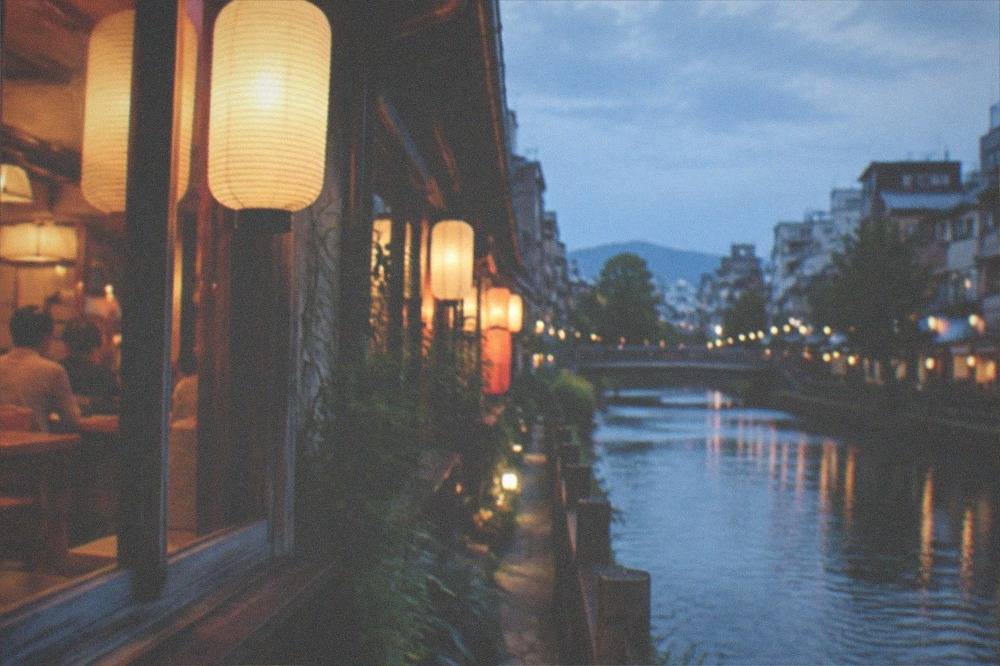
The geography is easy to learn. Pontocho, the narrow lane between Shijo and Sanjo on the river's west bank, is the atmospheric one, a single lane of restaurants with river platforms in summer. Kiyamachi, one block west of the river, is younger and louder, with the bars clustered at the south end. Kawaramachi-dori itself carries the mid-range and chain dining plus the department-store basement food halls, which are the honest budget answer downtown: Daimaru's basement at Shijo-Karazuma and Takashimaya's at Shijo-Kawaramachi both sell full meals at counter prices.
For the top end, the reference point is Hyotei by Nanzen-ji, a short subway ride east, whose own site prints kaiseki from 31,625 yen at lunch and 37,950 at dinner, tax and service included, while the same house's annex serves asa-gayu rice porridge at 5,445 yen and a shokado bento at 7,260. Those are Hyotei's prices and Hyotei's alone; they are not a Kyoto average, but they show the honest spread within a single famous kitchen. Our best restaurants in Kyoto and Kyoto ramen guides work through the options by budget and neighbourhood.
How Crowded Is Downtown Kyoto, Really?
The city's own 2025 survey, released 12 June 2026, counted a record 62.79 million visitors to Kyoto in the year, up from 56.06 million in 2024, with 46.20 million of them day visitors and a record 16.59 million overnight guests. Tourism spending reached a record 2.0474 trillion yen. Satisfaction stayed above 90 per cent for both Japanese and foreign visitors, yet about half of Japanese visitors reported something disappointing, against about 20 per cent of foreign visitors.
Those numbers deserve a careful read. Downtown is where the day-visitor pressure lands hardest, because the arcades, Nishiki Market and the Shijo crossing are the default stops for a day trip from Osaka. The city's response has been infrastructural rather than rhetorical: the tourist express buses, the hands-free luggage delivery counters at the stations, and the Kyoto Tourism Comfort forecast, a five-level crowd index the city's tourism association runs from smartphone location data, weather and day of week, published for individual spots and time slots. The Fushimi Inari shrine itself links to that forecast from its own homepage, which tells you how mainstream it has become.
The practical version for downtown: the arcades are busiest from late morning to late afternoon, and the survey's own satisfaction split, half of Japanese visitors finding something disappointing against a fifth of foreign visitors, is usually read as a crowding signal by residents rather than by tourists. The repeat rate, about 60 per cent for Japanese visitors and about 20 per cent for foreign, shapes the same picture.
Is Teramachi Street Worth Visiting, And What Is In The Arcades?
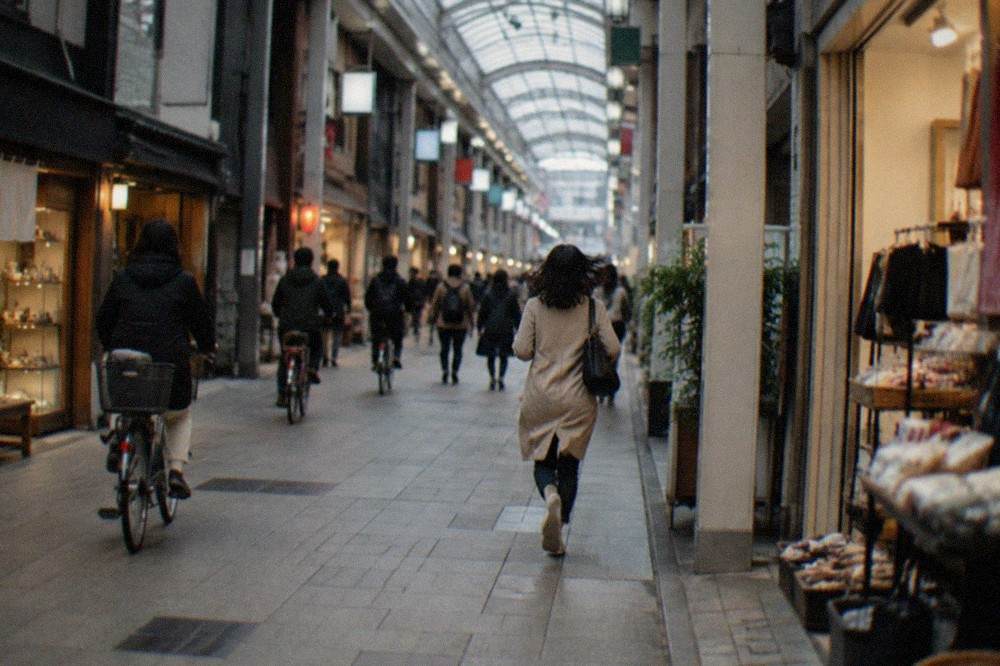
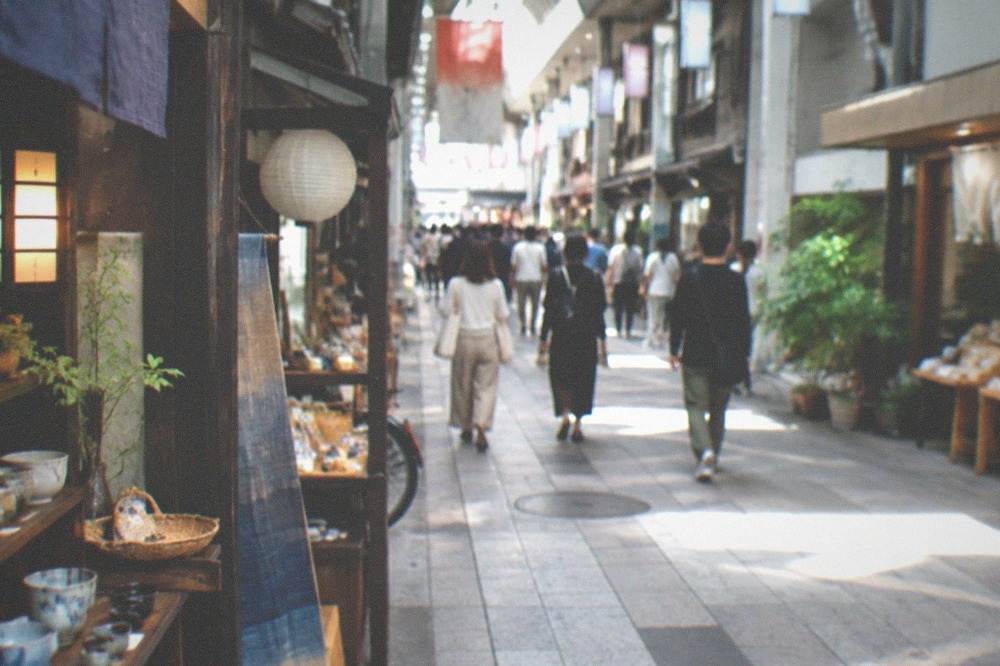
Teramachi and the parallel Shinkyogoku arcades, one and two blocks east of Kawaramachi, are worth an hour or two for any visitor, and longer for shoppers. Teramachi runs from Shijo-dori north past Nishiki Market's entrance to the City Hall and Manga Museum end, and holds incense shops, tea sellers, shrine goods, stationery and a dense cluster of small fashion and sneaker stores. Shinkyogoku, one block further east, is the younger, cheaper arcade with the game centres and fast food.
The name is literal. Teramachi means "temple town", and the street exists because temples and monasteries were relocated into this block in the late 16th century to consolidate and control them; several small temples still sit between the shopfronts, which is the arcade's real character. The arcades are covered, which makes them the standard rainy-day answer, and our Kyoto rainy day guide leans on them heavily. Nishiki Market is technically a continuation of the same covered stretch, running east from Teramachi, though the market shops and the arcade shops keep entirely different hours and the market's own association publishes no unified opening time.
Shopping-wise, the arcades plus the department stores plus the river-side boutiques of Pontocho make downtown the city's retail core. Our Kyoto shopping guide covers what is actually worth buying, and the Teramachi street guide goes street-level through the arcade block by block.
How Does Downtown Connect To Kyoto's Other Districts?
Downtown Kawaramachi is the hub every other district radiates from. East across the Kamo River and up the slopes is Gion and Higashiyama; north along the river are the Okazaki museum quarter and Ginkaku-ji; west on the Hankyu Line is Arashiyama; south on the Karasuma subway is Kyoto Station in about eight minutes; and the Nishijin weaving district sits northwest. Nothing in central Kyoto is more than about thirty minutes away by rail or bus.
The eastward walk is the one most visitors do first: cross Shijo Bridge over the Kamo River and you are in Gion within two blocks, with Yasaka Shrine straight ahead and the Higashiyama temple slope, Kiyomizu-dera included, rising beyond it. The Gion and Higashiyama guides cover those. North along the river, the Philosopher's Path and the Okazaki canal quarter make an easy half-day. West, the Hankyu Line from Kawaramachi station connects toward Arashiyama with one change at Katsura, and our Arashiyama guide takes over there.
South is the practical direction: the Karasuma subway from Shijo to Kyoto Station runs in minutes and is the answer to most "how do I get to the Shinkansen" questions, covered in Tokyo to Kyoto and Osaka to Kyoto. And for the day trips, the Fushimi sake district south of the station and the northern mountains both start from downtown's stations; the Fushimi guide covers the brewery quarter.
| Direction | District | Typical route from Shijo-Kawaramachi | Rough time |
|---|---|---|---|
| East | Gion, Higashiyama | Walk across Shijo Bridge | 5 to 20 min on foot |
| North | Okazaki, Ginkaku-ji | Bus or riverside walk | 15 to 30 min |
| West | Arashiyama | Hankyu Line, change at Katsura | 30 to 40 min |
| South | Kyoto Station | Karasuma subway Line | About 8 min |
| Southeast | Fushimi sake district | Keihan Line to Chushojima | 20 to 25 min |
When Is The Best Time Of Day To Be Downtown?
The honest answer, grounded in the city's own data rather than invented best hours, is that downtown rewards the early morning and the late evening, and the arcades reward the shoulder hours on either side of midday. The city publishes no official best-arrival time, and any guide printing one is estimating. What is verifiable: 46.20 million of 2025's 62.79 million visitors were day visitors, and day visitors concentrate between late morning and late afternoon, so the quiet hours downtown are the ones before and after that window.
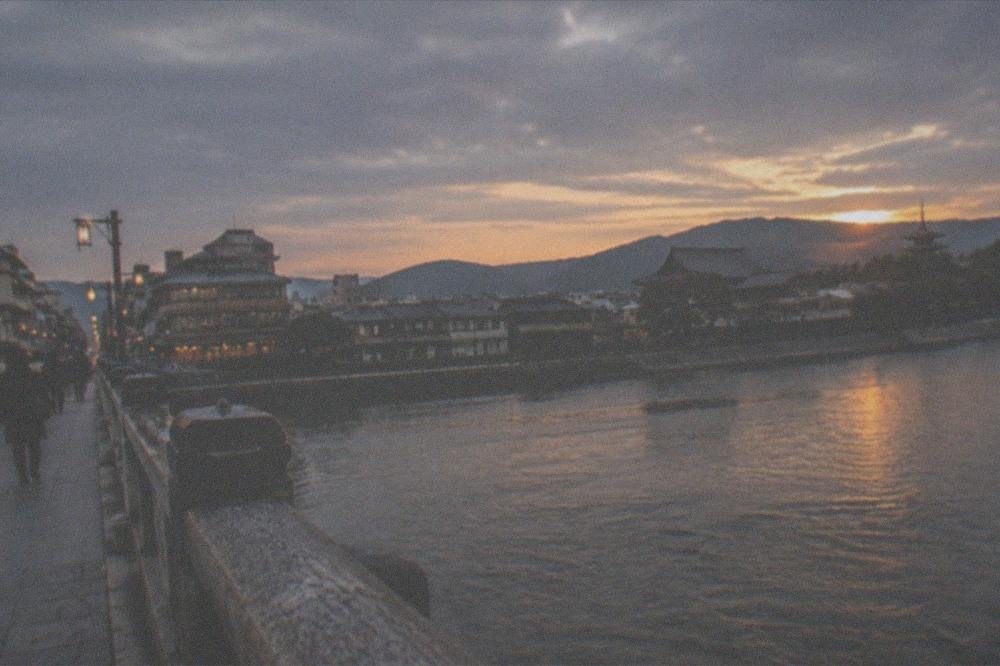
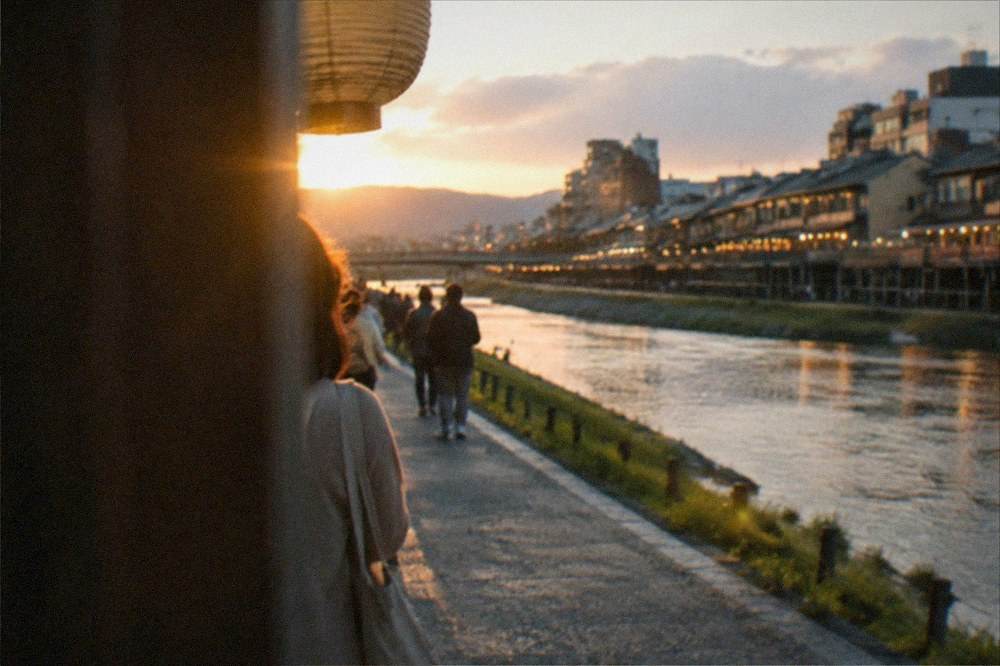
Early morning downtown is a different place. Nishiki Market's shops open progressively from around 9 or 10:00, the department stores open at 10:00, and the streets between are commuter-quiet. The riverbanks of the Kamo are at their best before the heat builds, and the JMA 1991-2020 normals put July as Kyoto's wettest month at 223.6 mm against June's 199.7, with August the hottest at a mean 28.5 C and a mean daily high of 33.7, so summer mornings are the sane walking hours. Evening is the other quiet window: after 20:00 the arcades empty, Kiyamachi and Pontocho fill, and the river crossings become the postcard version of the city.
The evening food-and-bar economy is genuinely strong. The Kawaramachi izakaya crawls and the Gion night walks both run into the late evening, and the evening streets east of the river hold their own against any district in the city. Weather-wise, our Kyoto weather page carries the full monthly table, and the best time to visit Kyoto page weighs crowds against climate.
Can You Escape The City From Downtown Kyoto In A Day?
Yes, and the Kurama and Kibune valley is the classic escape, reached by the Eizan railway from Demachiyanagi at the north end of the downtown grid in about 30 minutes. The guided Kurama-Kibune hike covers the cedar forest trail between the two villages, the mountain shrines and the thatched restaurant setting of Kibune, runs about 8 hours door to door, and is rated 5 from 82 reviews on the operator's live listing, from $210 per person.
The Eizan Line is the quiet secret of the northern escape: Demachiyanagi station sits at the Kamo River delta where downtown's grid ends, and the line runs up the valley through maple country to Kurama. The trail between Kurama and Kibune climbs through cedar to the Yuki Shrine torii and descends into the Kifune valley, where the riverside restaurants build platforms over the stream in summer. The independent version of the same route is covered in our Kurama-Kibune guide, and the city's less-visited quarters reward the same kind of detour.
For a shorter downtown-adjacent reset, the free walking tours are worth naming honestly because they are not this site's products: the free historic centre walk on GuruWalk, tip-based, rated 4.67 from 597 reviews, runs 2 hours and 30 minutes through the downtown core, and the free Gion-Higashiyama walk, also GuruWalk and tip-based, rated 4.86 from 557 reviews, covers the geisha district east of the river. Both are booked through GuruWalk with the individual guru leading each departure.
Common Questions About Downtown Kawaramachi
What Counts As Downtown Kyoto: Kawaramachi, Shijo, Karasuma And Teramachi?
Downtown Kyoto is the grid around the Shijo-Kawaramachi crossing. Kawaramachi-dori is the north-south eating and entertainment street, Shijo-dori is the main east-west axis, Karasuma-dori is the business boulevard with the subway beneath it, and Teramachi and Shinkyogoku are the covered shopping arcades one and two blocks east of Kawaramachi. Locals saying "Kawaramachi" almost always mean the crossing itself.
Is Downtown Kyoto Or Gion Better For Visitors?
Downtown is more practical: subway and Hankyu access, hundreds of restaurants, the arcades and Nishiki Market within a short walk. Gion is more atmospheric and closer to the Higashiyama temples, but thinner on late dining and shopping, and its private alleys carry council signage threatening a 10,000 yen penalty for unauthorized photography or entry. Many visitors split the difference by staying near the Shijo Bridge end of downtown.
How Much Does Transport Cost In Downtown Kyoto?
The city bus charges a flat 230 yen per adult ride and 120 yen per child. The subway runs 220 to 360 yen by zone. The Subway and Bus One-Day Pass costs 1,100 yen for adults and 550 yen for children, and it replaced the bus-only pass, which stopped being usable on 31 March 2024. The tourist express buses EX100 and EX101 cost 500 yen per adult ride.
When Are The Downtown Kyoto Arcades Open?
Teramachi and Shinkyogoku arcade shops generally open around 10:00 or 11:00 and close around 20:00, varying by individual shop. Nishiki Market's shops keep their own hours, roughly 9 or 10:00 to 17 or 18:00, and the market association publishes no unified opening time, so treat any single printed hour as approximate and check ahead for a specific shop.
How Crowded Is Downtown Kyoto Compared With The Rest Of The City?
Kyoto drew a record 62.79 million visitors in 2025, of which 46.20 million were day visitors, and downtown absorbs a large share of that day traffic because the arcades, Nishiki Market and the Shijo crossing are default stops. The city runs a five-level Kyoto Tourism Comfort forecast from location data, weather and day of week, published for individual spots and time slots, which is the most reliable way to time a visit.
What Is The Cheapest Way To Eat Around Kawaramachi?
The department-store basement food halls at Daimaru and Takashimaya near the Shijo crossing sell full meals at counter prices through the evening, and the standing bars under the railway arches west of Karasuma are cheaper still. For a reference point at the other end of the scale, Hyotei's own site prints kaiseki from 31,625 yen at lunch, while the same house's annex serves rice porridge at 5,445 yen: the spread within one kitchen is the honest picture of the range downtown and nearby.
Downtown Kawaramachi is the working heart of the city, the rectangle where four differently-named streets do four different jobs, and the hub every other Kyoto district radiates from. Learn the crossing, buy the 1,100 yen pass, eat in the basement food halls when the budget pinches and on the river platforms when it does not, and use the city's own comfort forecast to dodge the day-visitor peak. The rest of Kyoto is thirty minutes away in every direction.