What Does The Kyoto Botanical Garden Cost And Is The Conservatory Extra?
Kyoto's botanical garden is the city's one major green space built for plants rather than for temples, and it sits on the Kamo River in the city's north, a short subway ride from the centre. This guide sets out what it costs, how the conservatory fits into the ticketing, and how to plan a visit around the seasons.
Short answer
The Kyoto Botanical Garden charges a modest admission, and the conservatory is a separate, higher-priced ticket on top of it; the garden's own site is the place to read both current figures, because Kyoto attraction pricing has been moving, with Ginkaku-ji doubling its fee in April 2026. The garden sits beside the Kamo River in Sakyo-ku, reached by subway to Kitayama Station in about 20 minutes from the centre.
What Does The Kyoto Botanical Garden Cost And Is The Conservatory Extra?
Kyoto drew a record 62.79 million visitors in 2025, according to the city's own tourism survey released in June 2026, and almost all of them funnelled into the same temple corridors in Higashiyama and Arashiyama. The Kyoto Botanical Garden is the counterweight: a working public garden in the city's north, on the Kamo River, where the crowds thin out and the planting does the talking. It is also one of the few major Kyoto attractions whose headline question is about money rather than history, because the ticket has two layers, a general admission and a separate conservatory charge.
This guide does what the rest of this site does: it prints only figures the research verified, and where a price lives on the venue's own site rather than in our verified fact base, it says so plainly instead of guessing. That matters more than usual here, because 2026 has already proven that copied-forward Kyoto prices go stale. Ginkaku-ji doubled its admission from 500 to 1,000 yen on 1 April 2026, its first rise in 32 years, and Tofuku-ji revises its fees on 1 November 2026. A garden fee quoted from a two-year-old forum post deserves the same suspicion.
What Does The Kyoto Botanical Garden Cost And Is The Conservatory Extra?
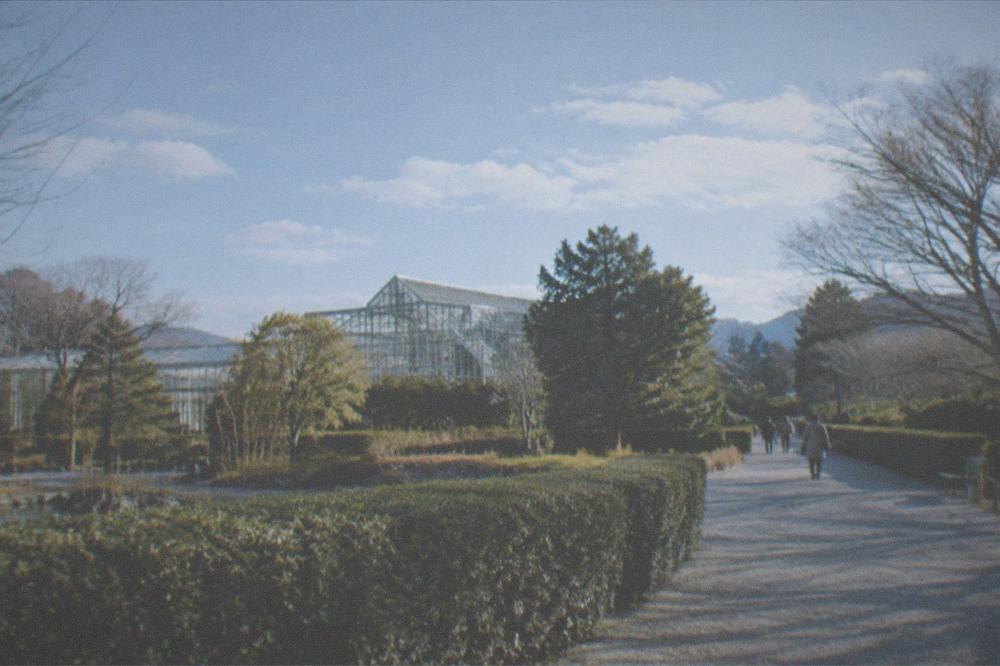
The garden charges a general admission, and the conservatory, the large glasshouse by the main gate, is a separate and higher ticket layered on top of it rather than folded in. The garden's own site publishes both current figures, and this guide deliberately does not reprint them, because the verified fact base behind this site does not carry them and Kyoto attraction pricing has moved twice in 2026 already. Read the two prices on the garden's official page on the day you plan to visit.
The honest framing is this: the fact base used across this site, the same one that verifies every temple fee and train fare quoted in these pages, does not include the botanical garden's admission, so no number appears here. What can be said with confidence is the structure of the ticketing, which is stable and simple. You pay once to walk the outdoor grounds, and the conservatory, which holds the tropical and subtropical collections, carries its own charge. Visitors who only want the outdoor garden, the lawns, the cherry hill, the rose beds and the river walk along the Kamo, pay the lower figure only.
That structure actually suits most visitors well. The outdoor garden is the larger part of the experience by far, and in the cherry season or the autumn colour weeks it is the reason to come. The conservatory earns its extra charge on rainy days and in winter, when the outdoor beds are dormant and the glasshouse is the one place in Kyoto where it feels like the tropics. If you are visiting between late March and early April, or between mid-November and early December, buy the outdoor ticket and spend your time outside.
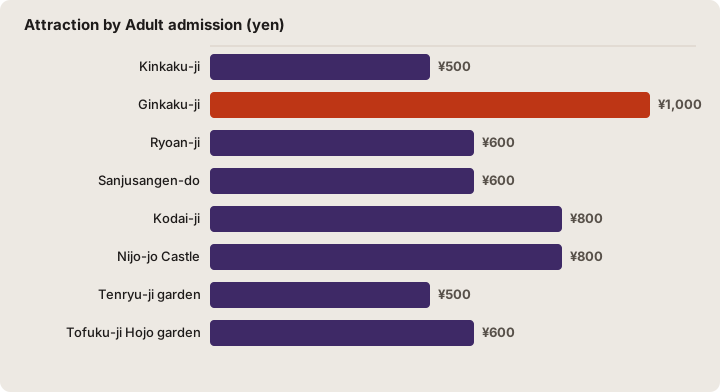
One comparison is worth making with money that is verified. Among Kyoto's paid attractions, 500 yen at Kinkaku-ji and 600 yen at Ryoan-ji are the current benchmarks for a single temple garden, while Nijo-jo Castle charges 800 yen for the grounds alone and 1,300 yen with the Ninomaru-goten Palace. The botanical garden's admission sits in the same modest band, and unlike the temples it buys you a full afternoon of space rather than a single compressed viewpoint. The value argument is straightforward: on a per-hour basis, few paid sites in Kyoto stretch further.
Where Is The Kyoto Botanical Garden And How Do You Get There?
The garden sits on the left bank of the Kamo River in Kyoto's north, in Sakyo-ku, with its own subway station, Kitayama, on the Karasuma Line roughly 20 minutes from Kyoto Station. A one-way subway fare runs between 220 and 360 yen depending on zone, the city bus flat fare is 230 yen, and the Subway and Bus One-Day Pass at 1,100 yen covers unlimited rides on both networks for a day.
The Karasuma Line is the practical answer for almost everyone staying in the centre. Kyoto's subway is zoned in five bands, with adult fares from 220 yen for the shortest hop up to 360 yen for the full length of the network, and children at half those figures. The city's own transport bureau publishes the full fare table, and the same page confirms the one-day pass price of 1,100 yen for adults and 550 yen for children. That pass is the successor product to the old bus-only one-day pass, which the bureau withdrew: sales ended in September 2023 and the last day of use was 31 March 2024. Any guide still recommending a 700 yen bus pass is describing a product that no longer exists.
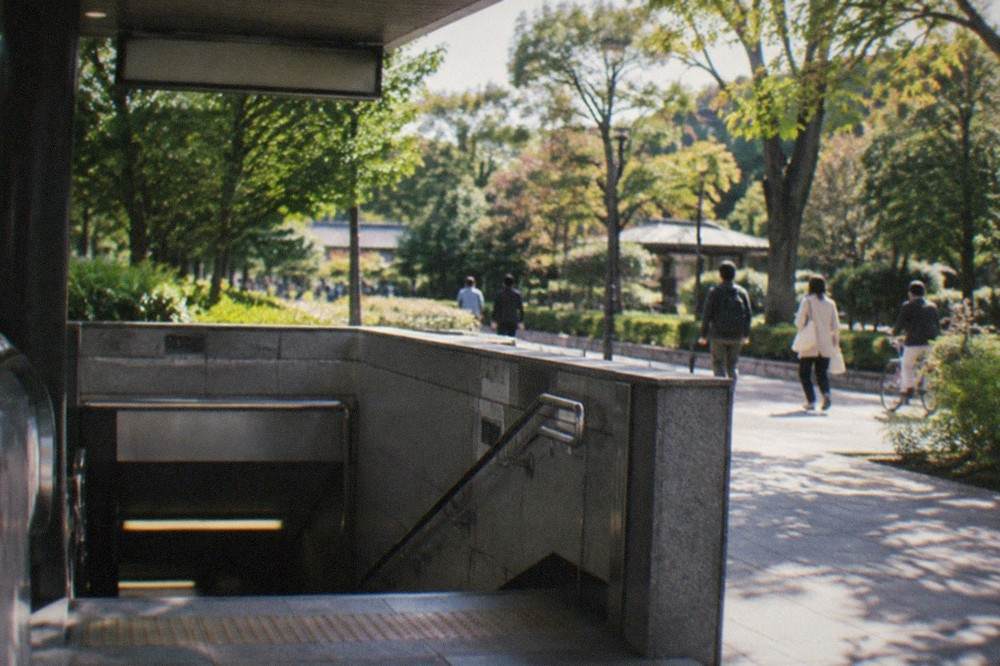
The bus works too, but with a caveat the city is increasingly vocal about. Kyoto's overtourism measures for 2025 and 2026, published on the city's own transport pages, include express tourist buses and luggage policies aimed at thinning the crush on the most popular routes, and drivers may refuse bulky luggage on crowded buses. With 62.79 million visitors in 2025 against 56.06 million in 2024, the pressure is real. The subway to Kitayama avoids all of it, and the station exits within a short walk of the garden's main gate.
For anyone building a day around the garden, the geography is generous. The garden's northern edge runs along the Kamo River, and the riverside path connects south toward the Shimogamo area, one of the city's more relaxed green corridors. Cyclists should note that this city rewards bikes almost everywhere, and our Kyoto bike rental guide covers the practicalities; the river path from the centre to the garden is one of the flattest and pleasantest rides in the city.
| Transport option | Adult fare | Child fare | Notes |
|---|---|---|---|
| Subway, zone 1 (shortest) | 220 yen | 110 yen | Karasuma Line to Kitayama Station |
| Subway, longest zone | 360 yen | 180 yen | Full network length |
| City bus, flat fare | 230 yen | 120 yen | Child band is ages 6 to 11 |
| Subway and Bus One-Day Pass | 1,100 yen | 550 yen | Unlimited subway and city bus for one day |
| ICOCA card purchase | 2,000 yen | (includes 500 yen deposit) | Refundable deposit, usable on subway and bus |
What Can You See At The Kyoto Botanical Garden Through The Year?
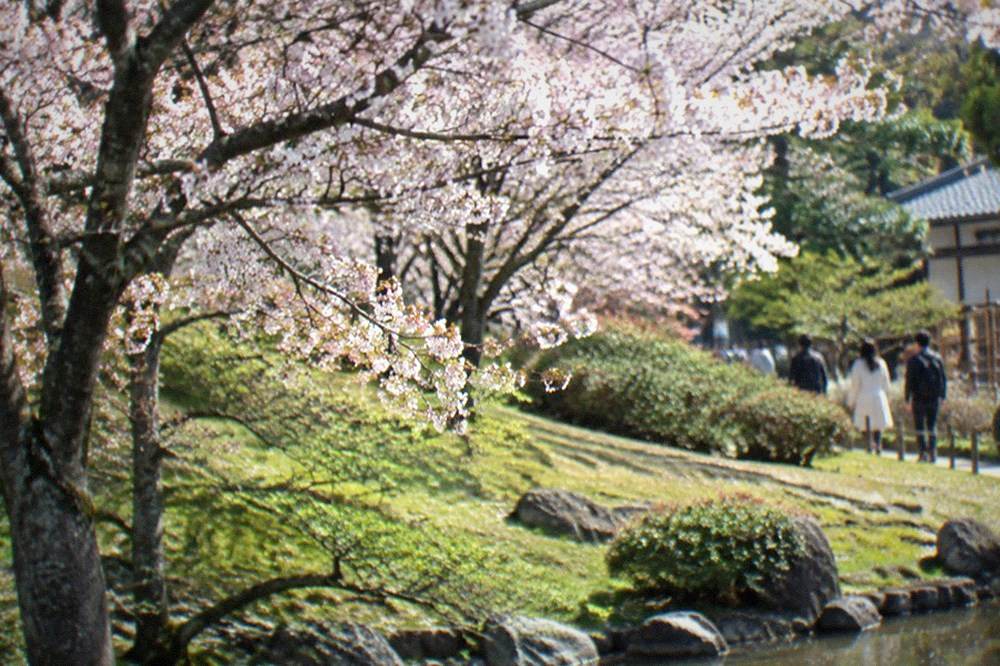
The garden's year is anchored by the same phenology the whole city runs on: cherry flowering in Kyoto has a 1991-2020 normal of 26 March with full bloom around 4 April, and the maple red-leaf marker falls on 5 December, far later than the mid-November peak most guides claim. In 2026 the cherries flowered on 23 March and hit full bloom on 30 March, both slightly ahead of normal, so the garden's cherry areas peak in the last week of March in a typical year.
Those dates come from the Japan Meteorological Agency's Kyoto observatory, which has tracked the same specimen trees for over a century and publishes the 1991-2020 normals alongside each year's observations. For a garden visit they are the single most useful planning numbers on this page. The cherry collection in a botanical garden spreads the bloom across early and late varieties, which widens the window compared with the famous single-species avenues elsewhere in the city, but the peak still lands on that last-March to first-April span.
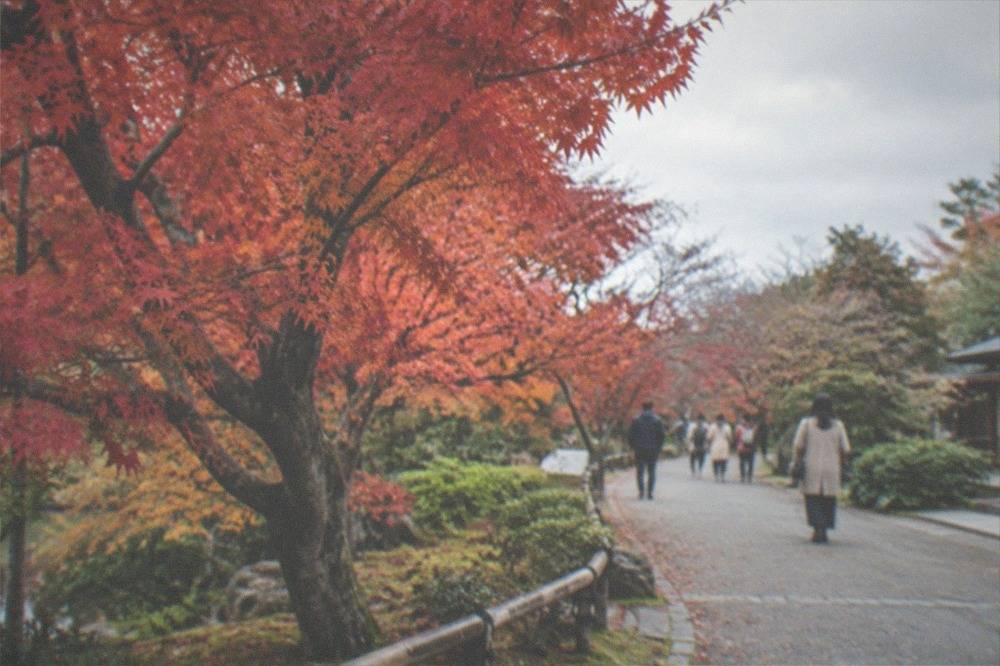
Autumn is the garden's second act, and the JMA dates deserve their own paragraph because they contradict most of what is written about Kyoto's foliage. The observatory's normal for kaede maple red leaves is 5 December, with 2025 observed on 10 December and the record range running from 10 November to 20 December. The commercial foliage forecasts, which target famous viewing spots rather than the observatory's specimen tree, put the Arashiyama-area peak in late November for 2026. A botanical garden, with dozens of maple and ginkgo varieties planted side by side, effectively guarantees colour somewhere between mid-November and early December, which makes it one of the most forgiving foliage destinations in the city. The ginkgo yellow-leaf normal is 24 November, and 2025 observed on 25 November, almost exactly on schedule.
Between those two peaks the garden does not shut down the way the temple-viewing calendar does. The conservatory carries the tropical collections year-round, and the outdoor collections rotate: roses in late spring, the hydrangea beds in the June rain, and the herbaceous borders through summer. Summer is the honest weak spot. The JMA 1991-2020 normals put July as Kyoto's wettest month at 223.6 mm, ahead of June at 199.7 mm, and August as the hottest with a mean of 28.5 C and a mean daily high of 33.7 C. Three of Kyoto's six hottest days on record fell in the summers of 2024, 2025 and 2026. A summer garden visit is a morning activity, full stop.
| Season | JMA normal (1991-2020) | 2026 observed | 2025 observed | What it means for the garden |
|---|---|---|---|---|
| Cherry flowering | 26 March | 23 March | 27 March | Cherry areas begin around the equinox |
| Cherry full bloom | 4 April | 30 March | 5 April | Peak week lands late March to early April |
| Ginkgo yellow leaves | 24 November | not yet observed | 25 November | Golden colour in the last week of November |
| Maple red leaves | 5 December | not yet observed | 10 December | Garden maples run late November into December |
The phenology table above is the kind of thing a first page of search results will not give you, because most foliage content in English is written around the famous temple spots and their crowd calendars rather than the official observatory record. The JMA dates are the marker for the city's specimen trees, not a promise for any single hillside, but they are the only dated, century-long series Kyoto has, and the botanical garden's mixed plantings track them more loosely and more forgivingly than any single-species avenue will.
If plants are the reason you travel, the garden also makes a good base for a bigger claim: Kyoto's plant life does not stop at the city limits. The Kurama and Kibune hills to the north hold old forest, shrine groves and a river valley that the trains reach in under an hour, and a guided hike through that country pairs naturally with a garden day, one cultivated and one wild.
Is The Kyoto Botanical Garden Good For Families And Casual Visitors?
For families, the garden is one of the easiest major attractions in Kyoto: it is flat, stroller-friendly, has open lawns that temples never offer, and its two-layer ticket means you can skip the conservatory with children who mainly want to run. The trade-off is distance, about 20 minutes by subway from the centre, and the fact that the outdoor garden offers no historic buildings, so visitors who want architecture alongside nature should pair it with a temple or shrine.
The comparison with the temple circuit is where the decision gets made. Kyoto's temples are extraordinary but they are also narrow: gates, viewing platforms, roped-off verandas and constant reminders not to touch. A botanical garden inverts every one of those rules. Children can move, picnic and burn energy, and the conservatory, with its dense tropical planting, tends to hold young attention better than a rock garden ever will. The practical family arithmetic also works on cost, since child admission at Kyoto's attractions is typically half or less of the adult figure, and the garden follows that pattern. The full index of guides sits on Kyoto Travel Guide.
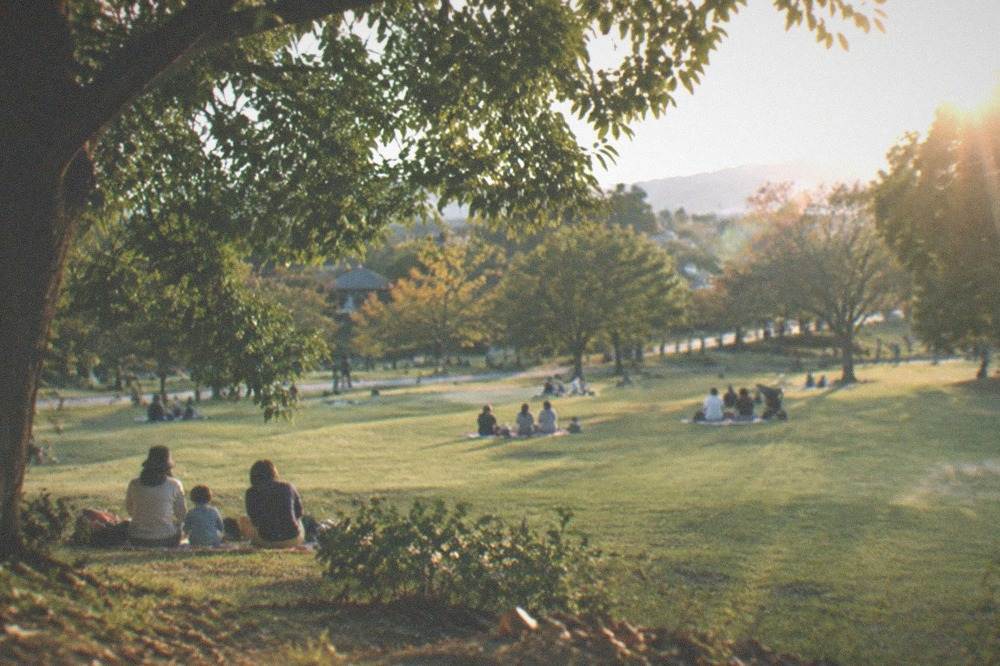
Casual visitors should calibrate expectations honestly. This is a plants-first attraction. Nobody should arrive expecting Kinkaku-ji, where a gilded pavilion does the visual work, or the stage view at Kiyomizu-dera. The garden rewards slow walking, and it rewards repeat visits across seasons more than any single marathon one. If your Kyoto time is short and this is a first visit, the honest advice on this site has always been to see the headline temples first and treat the garden as a second-visit or recovery-day destination, a rainy-day option, or a morning for anyone whose feet have given out on Higashiyama's slopes.
Accessibility is a genuine strength worth naming. The paths are wide and paved, the terrain is flat by Kyoto standards, and the conservatory puts a substantial tropical collection on one level. Our general Kyoto accessibility guidance covers the city-wide picture, but among individual attractions the garden ranks among the least demanding in the city for wheelchairs and slow walkers alike.
If you would rather hand the day to someone else and see the famous sights without planning a single bus connection, a guided day tour is the alternative, and the most-reviewed one in the city covers the headline temples in a single loop from Kyoto Station.
How Does The Garden Compare With Kyoto's Temple Gardens On Price?
Against the temple fee table this site has verified, the botanical garden sits at the affordable end: Kinkaku-ji charges 500 yen, Ryoan-ji 600, Sanjusangen-do 600, Kodai-ji 800, and Nijo-jo Castle 800 for the grounds or 1,300 with the palace, while Ginkaku-ji doubled to 1,000 yen in April 2026.
The garden's admission is in the same band or below it, and unlike the temples it sells an entire afternoon of space, with the conservatory as an optional extra rather than a compulsory second charge.
The table below is drawn entirely from the verified fee base behind this site, re-read on each venue's own page. It is the honest answer to "what does a garden or temple cost in Kyoto right now", and it doubles as a warning: two of these figures changed in 2026, and one changes again on 1 November.
| Attraction | Adult admission | Child admission | Verified change |
|---|---|---|---|
| Kinkaku-ji | 500 yen | 300 yen (primary and middle school) | Last revised 1 April 2023 |
| Ginkaku-ji | 1,000 yen | 500 yen | Doubled from 500 on 1 April 2026 |
| Ryoan-ji | 600 yen | 300 yen (elementary and junior high) | None announced |
| Sanjusangen-do | 600 yen | 300 yen (elementary) | None announced |
| Kodai-ji | 800 yen | Free with an adult (elementary and under) | None announced |
| Nijo-jo Castle | 800 yen | 300 yen (elementary) | 1,300 yen with Ninomaru-goten Palace |
| Tenryu-ji garden | 500 yen | 300 yen (elementary and junior high) | Buildings plus 300 yen, Hatto 500 yen separately |
| Tofuku-ji Hojo garden | 600 yen from 1 Nov 2026 | 300 yen | Rises from 500 on 1 November 2026 |
Two things stand out from that table. The first is that Ginkaku-ji at 1,000 yen is now twice Kinkaku-ji's 500, and for a first visit Kinkaku-ji remains the better use of the fee; the second is that Tofuku-ji's autumn-season Tsutenkyo bridge ticket rises to 1,000 yen during the foliage period from November 2026, which makes the botanical garden's flat, unchanged pricing a quietly good deal in the same season. Kyoto's temple fees are not collapsing toward zero, they are climbing, and a garden that charges once for a large space ages well against that trend.
For visitors who want garden design rather than plant collections, the temple circuit still wins: the dry landscape at Ryoan-ji, the borrowed-scenery composition at Tenryu-ji and the pond garden at Nanzen-ji are art objects in a way a botanical collection is not trying to be. The botanical garden's argument is breadth and room, not composition. The strongest Kyoto itinerary uses both: temples for the designed views, the garden for the living collection and the lawn.
When Is The Best Time To Visit The Kyoto Botanical Garden?
The two peak windows are late March to early April for the cherry areas, whose JMA normals run 26 March for flowering and 4 April for full bloom, and late November into early December for autumn colour, with the ginkgo normal at 24 November and the maple marker at 5 December. May and late October are the quiet shoulder picks, and July and August should be morning-only: July is Kyoto's wettest month at 223.6 mm and August its hottest at a 28.5 C mean.
The monthly picture below comes from the JMA 1991-2020 normals for Kyoto station, the same series used across this site. Read the rain column with the temperature columns together: the garden is an outdoor attraction, so the month you choose is the experience you get.
| Month | Rain mm | Mean C | Mean daily max C | Sunshine h | Garden verdict |
|---|---|---|---|---|---|
| March | 106.2 | 8.8 | 14.1 | 155.4 | Cherry season opens, cool and bright |
| April | 117.0 | 14.4 | 20.1 | 177.3 | Peak bloom window, most popular |
| May | 151.4 | 19.5 | 25.1 | 182.4 | Roses, green and warm |
| July | 223.6 | 27.3 | 32.0 | 142.7 | Wettest month, humid, go early |
| August | 153.8 | 28.5 | 33.7 | 182.7 | Hottest month, morning only |
| October | 143.2 | 18.4 | 23.4 | 156.0 | Pleasant, pre-colour quiet |
| November | 73.9 | 12.5 | 17.3 | 140.7 | Foliage builds through the month |
| December | 57.3 | 7.2 | 11.6 | 134.4 | Late maples, cold and uncrowded |
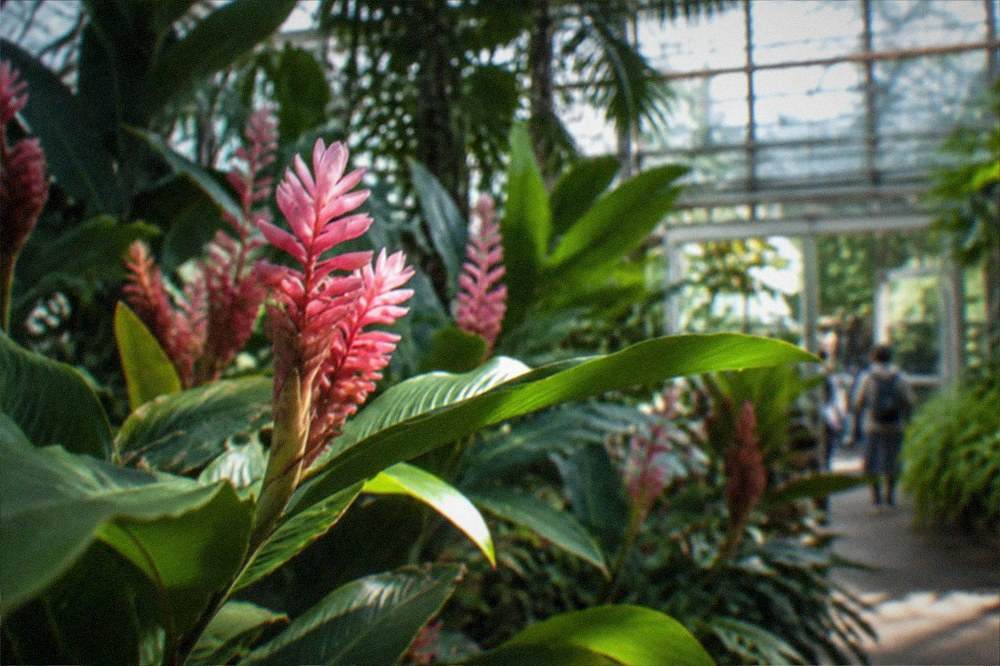
The counterintuitive pick is December. The maple normal of 5 December means the garden still holds red leaves in the first week of a typical December, the month is dry at 57.3 mm, and the crowds have moved on to Christmas illuminations elsewhere. The conservatory earns its extra ticket in exactly this window, and in January and February, when the outdoor garden is at its barest and the mean daily minimum sits near 1.5 C. Anyone pairing the visit with the city's winter character should read our Kyoto in winter guide, which makes the same case for the season as a whole.
Rain planning matters more here than at the temples, because there is no roof over the lawns. The city's tourism association publishes a live crowd-comfort forecast that blends smartphone location data with weather and time of day, and it covers individual spots and time slots; it is the tool to check the night before any garden visit during a peak week. The same association's hands-free luggage counters, promoted citywide, matter less for a garden trip than for a temple day, since the subway to Kitayama is luggage-tolerant in a way the Higashiyama buses are not.
For travellers whose whole trip is built around plants, the strongest pairing in the region is not another garden at all but the Kurama to Kibune hills, where old cedar forest and shrine groves continue what the botanical collection starts. The guided hike below covers that country with a local guide, hot springs at the end, and no navigation to manage.
What Else Can You Pair With The Kyoto Botanical Garden?
The garden pairs most naturally with the Kitayama and Shimogamo river corridor: the Kamo River path south toward Shimogamo, the riverside walk back toward the centre, and, for museum-minded visitors, the Kyoto Railway Museum or Nidec Kyoto Tower on the way back through the city. A realistic half-day is two to three hours in the garden plus the river walk; a full day adds one temple or one museum rather than more gardens.
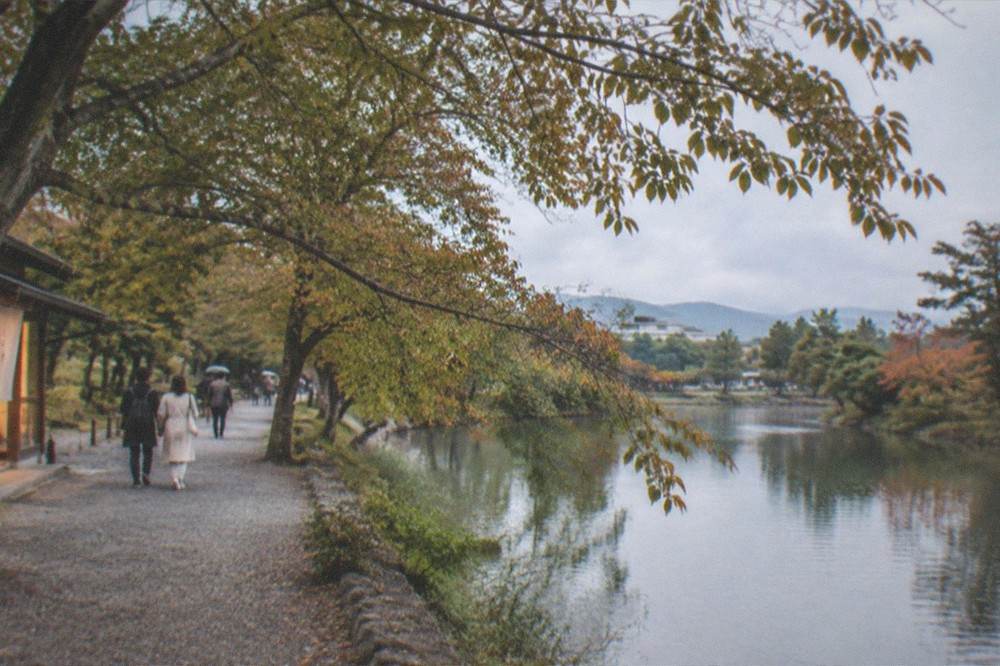
Kitayama Station puts you in one of Kyoto's calmer commercial streets, and the river path from the garden's edge south is flat, shaded and almost empty by Higashiyama standards. Heading the other way, the northern hills hold Kurama and Kibune, a train ride up the Eizan line from Demachiyanagi, which makes a plants-and-forest day trip that fits inside a single morning departure. Cyclists can string the whole thing together; the river path is the spine.
For a contrast programme, the return subway ride through the city centre passes within a short transfer of several of the sites covered elsewhere on this site: the observation deck at Nidec Kyoto Tower, which charges a verified 900 yen for adults and stays open until 21:00 with last admission at 20:30, or the Kyoto Railway Museum, where general admission is 1,500 yen for adults and 200 yen for children from age 3. Both work as the indoor half of a garden-plus-museum day, and both are verified in this site's fee base, which is more than can be said for every attraction in the city: Toei Kyoto Studio Park's admission, for instance, is not readable on its official ticket page, and this site prints no fee for it.
The tower ticket below is the cheap, quick version of that pairing, bookable in advance and valid for the observation deck.
A final word on the practicalities of the day. The garden's own site is the authority on opening hours, admission and the conservatory charge, and those are the only two numbers you cannot take from this page. Everything around the visit, the subway fare, the one-day pass maths, the bloom dates, the temple fees for comparison, is verified and current. Plan the morning in the garden, the afternoon along the river or at one temple, and let the season decide the order: cherries in late March, foliage from late November, and the conservatory whenever the sky opens.
Common Questions About The Kyoto Botanical Garden
These are the questions visitors ask most about the garden, answered with the same verified figures used throughout this guide: the subway fare from the centre runs 220 to 360 yen, the Subway and Bus One-Day Pass costs 1,100 yen, and the bloom windows follow the JMA normals of 26 March for cherry flowering and 5 December for the maple marker.
Where an answer depends on the garden's own current pricing, the answer says so and points to the official site rather than printing a number this site has not verified.
What Does The Kyoto Botanical Garden Cost And Is The Conservatory Extra?
Yes, the conservatory is a separate, higher ticket on top of the general admission. The garden's own site publishes both current figures, and this guide does not reprint them because they are not in this site's verified fact base; read them on the official page on the day you visit, especially given that two Kyoto attractions changed their fees during 2026.
How Do I Get To The Kyoto Botanical Garden?
Take the Karasuma subway Line to Kitayama Station, about 20 minutes from Kyoto Station, with a one-way fare between 220 and 360 yen depending on zone. The city bus flat fare is 230 yen for adults and 120 yen for children aged 6 to 11, and the Subway and Bus One-Day Pass at 1,100 yen covers unlimited rides on both for a day.
When Is The Best Month To Visit The Kyoto Botanical Garden?
Late March to early April for the cherry areas, whose JMA 1991-2020 normals are 26 March for flowering and 4 April for full bloom, and late November into early December for autumn colour, with the ginkgo normal at 24 November and the maple marker at 5 December. December is the underrated pick: dry at 57.3 mm on average, cold, and still holding late maples.
Is The Kyoto Botanical Garden Good For Children?
It is one of the most child-friendly major attractions in Kyoto: flat, stroller-accessible paths, open lawns that temples do not offer, and a two-layer ticket that lets families skip the conservatory charge if the children mainly want to run. The tropical glasshouse tends to hold young attention well on rainy days.
How Does The Garden Compare With Kyoto's Temple Gardens?
On price it sits in the same band or below: Kinkaku-ji charges 500 yen, Ryoan-ji 600, Kodai-ji 800 and Nijo-jo Castle 800, while Ginkaku-ji doubled to 1,000 yen in April 2026. On character they are different products: temple gardens are designed compositions, the botanical garden is a living collection with room to walk, so the strongest itineraries use both.
Is The Kyoto Botanical Garden Worth Visiting In Winter?
Yes, with the conservatory as the centrepiece. The outdoor garden is at its barest from January onward, with a mean daily minimum near 1.5 C, but the glasshouse holds the tropical collections year-round, and the first week of December often still carries red maple leaves against the JMA normal of 5 December for the marker.
The garden will not replace Kinkaku-ji or the Higashiyama slopes on a first visit, and it does not try to. What it offers is the thing those places cannot: room, a living collection that changes every month, and a ticket structure that lets you pay only for the part of it you want, with the conservatory held back as an option rather than bundled in. Check the two prices on the garden's own page, take the Karasuma Line north, and let the season do the rest.