Kyoto In Winter
Kyoto has a real winter: the JMA normals give January a mean of 4.8 C, the record low is -11.9 C and the deepest snow on record is 41 cm. Here is how to plan around it, with verified hours, fees and fares.
Short answer
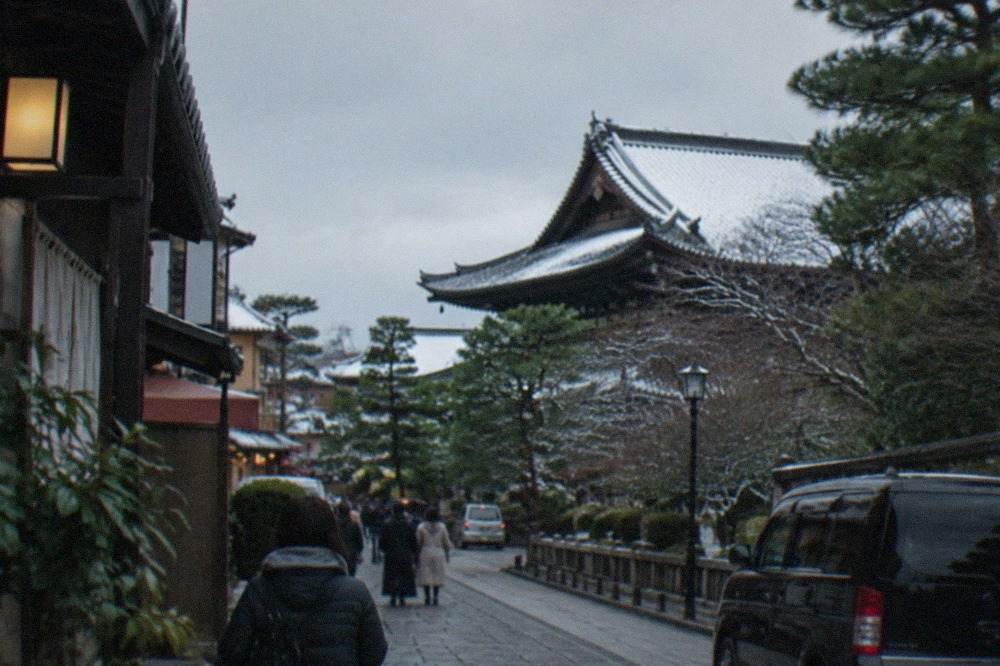
Kyoto's winter is cold but usually dry: January averages 4.8 C with only 53.3 mm of rain, the driest month of the year. Snow falls some days, rarely settles for long, and when it does, Kinkaku-ji, Fushimi Inari and the Arashiyama district are the classic destinations.
Kyoto In Winter
Kyoto in January is the coldest and driest month of the city's year at once: the JMA 1991-2020 normals for station 47759 put the mean temperature at 4.8 C, the mean daily minimum at 1.5 C, and the rainfall at just 53.3 mm. The station's record low, measured on 16 January 1891, sits at -11.9 C, and its deepest snow, 41 cm, fell on 26 January 1954. So the first thing to say is that Kyoto has a genuine winter, not a token one, and the second is that it is a dry winter, which is why many travellers who come between December and February find the city clearer, calmer and easier to walk than at almost any other time of year.
This page is built entirely on figures the site has verified against the publishers' own pages: the Japan Meteorological Agency's normals and records, the temples' own fee notices, the city's own transport fare tables, and the city's 2025 tourism survey, released 12 June 2026. Where a figure was not verified, it does not appear. That matters more in winter than in any other season, because winter hours are shorter and a plan built on summer closing times simply fails: Ginkaku-ji closes at 16:30 from December, Nijo-jo Castle stops admitting at 16:00, and Sanjusangen-do closes at 16:00 from 16 November. The rest of the Kyoto Travel Guide site follows the same rule.
How Often Does It Snow In Kyoto And Where Do You Go When It Does?
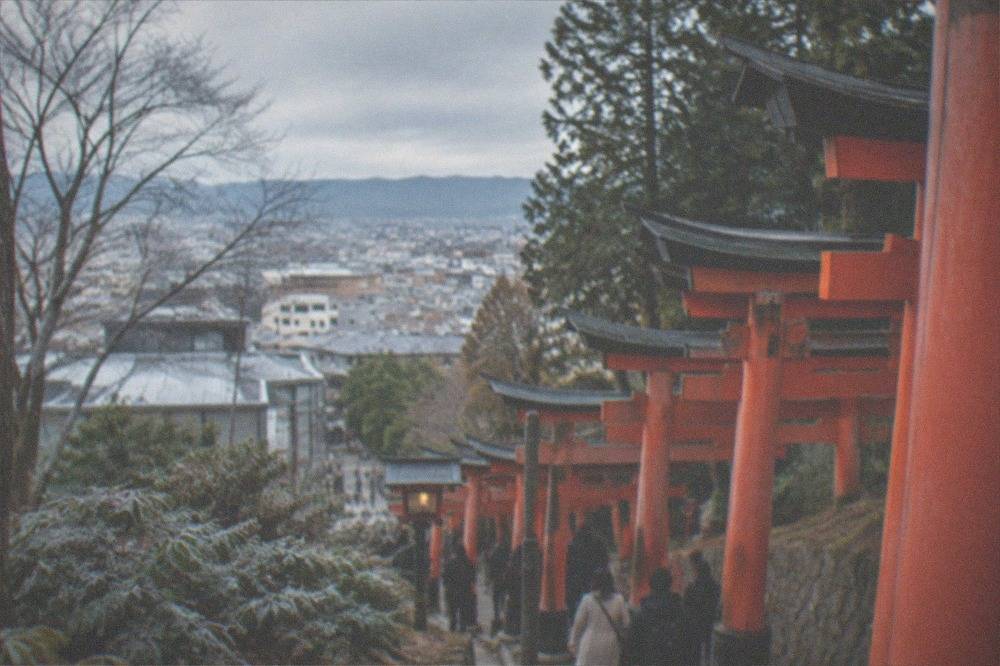
Snow falls in Kyoto on some winter days but rarely settles for long, because the city's winters are its driest season: January averages just 53.3 mm of rain equivalent against 223.6 mm in July. When snow does stick, the classic destinations are Kinkaku-ji, whose gold leaf reads sharply against white ground, the Fushimi Inari torii paths, and the Arashiyama bamboo grove, all of which stay open in snow. The shrine's paths have no closing time at all.
The honest framing is that Kyoto is not a snow-sure city. The JMA normals show December at 57.3 mm and February at 65.1 mm of precipitation, and much of that arrives as rain on days hovering above freezing. The mean daily maximum in January is 9.1 C, which melts a shallow cover quickly once the sun is up. What Kyoto does deliver, a few times each winter, is a short window in the hours after a snowfall when the temples look the way they do in woodblock prints, and that window is measured in hours, not days.
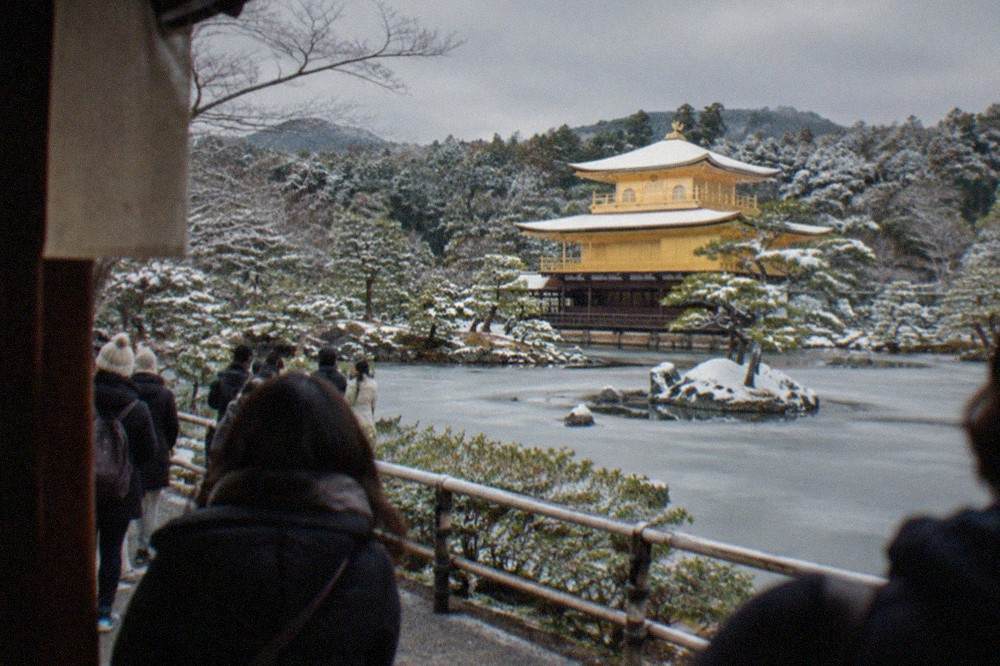
When it snows, go early and go west or north. Kinkaku-ji opens at 9:00 year-round and charges 500 yen, and its pond-and-gold composition is the single most photographed snow scene in the city. Fushimi Inari Taisha is free, open around the clock on its paths, and the shrine's own FAQ describes about 10,000 torii of all sizes across the whole mountain; snow on the upper trails is common precisely because Inariyama, at 233 m, holds the cold. In Arashiyama, the bamboo grove is a free public path with 24-hour access, and the Sagano Romantic Train, at 880 yen one way for an adult, does not run in late December through February, so a snowy Arashiyama day is a walking day.
What Are Kyoto's Winter Temperatures And Rainfall, Month By Month?
December, January and February average means of 7.2, 4.8 and 5.4 C respectively, with mean daily minimums of 3.5, 1.5 and 1.6 C, and each month is drier than any month from March through October. January is the coldest and driest of the twelve at 4.8 C and 53.3 mm. The mean daily maximum never leaves single figures all winter: 11.6, 9.1 and 10.0 C.
Here is the verified winter block of the JMA 1991-2020 normals for station 47759, the same table the rest of this site's climate coverage is built on. The full monthly set, including the summer months, is in the site's Kyoto weather guide.
| Month | Rain mm | Mean C | Mean daily max C | Mean daily min C | Sunshine h |
|---|---|---|---|---|---|
| December | 57.3 | 7.2 | 11.6 | 3.5 | 134.4 |
| January | 53.3 | 4.8 | 9.1 | 1.5 | 123.5 |
| February | 65.1 | 5.4 | 10.0 | 1.6 | 122.2 |
Two readings of that table matter for planning. First, February is the dullest month of the year at 122.2 hours of sunshine, so a February week can feel grey even when it is dry; pack for overcast, not just for cold. Second, the daily minimums sit barely above freezing, which means mornings at exposed sites like the Philosopher's Path or the Kamo River banks are genuinely cold, and the same spots warm noticeably by early afternoon under a mean daily maximum near 10 C. Layers, not a single heavy coat, are the practical answer.
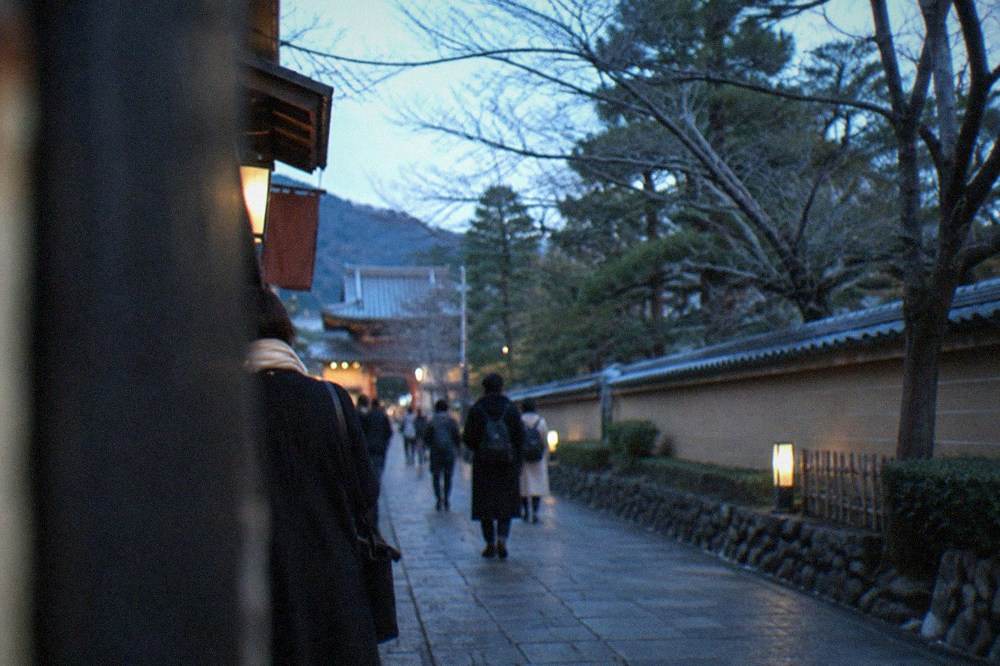
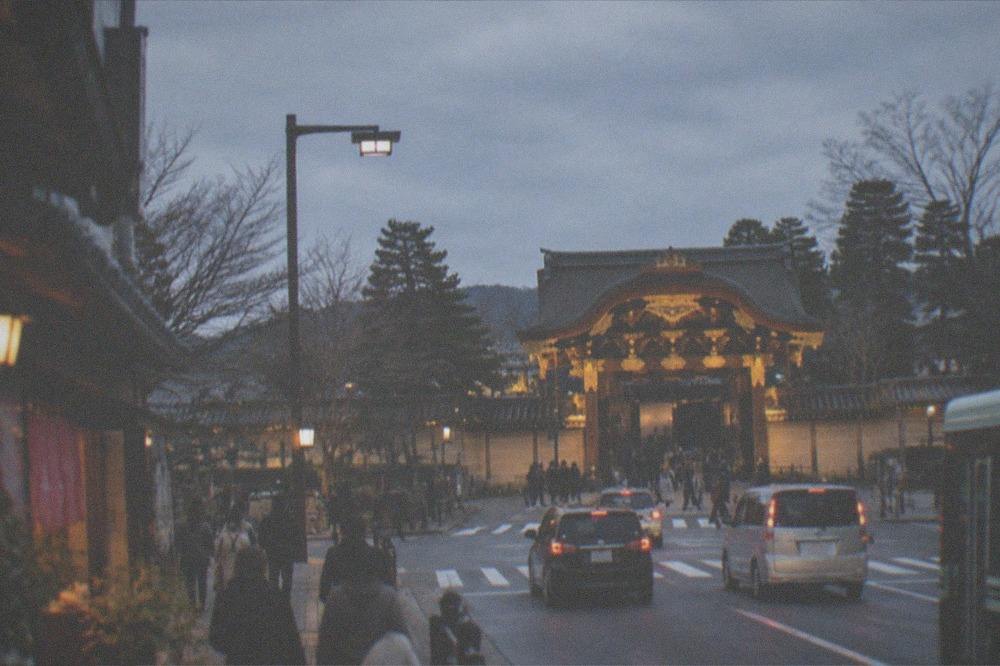
Winter is also the season with the least daylight to spend. Sunset in Kyoto in late December falls around 16:45, and several major temples close at or before 16:30, so the effective sightseeing day ends earlier than the calendar suggests. A sensible winter rhythm is a 9:00 start, one major sight before lunch, a warm indoor stop such as a tea ceremony or a museum in the early afternoon, and a second outdoor sight before 15:30, leaving the evening for food and the lit streets of Gion or Pontocho, both covered in the site's Kyoto at night itinerary.
For travellers weighing winter against other seasons, the Kyoto cherry blossom itinerary spells out the opposite trade-off; the short version is that winter trades daylight and warmth for dryness, low crowds and the lowest odds of a washed-out day.
What Are The Winter Hours And Fees At Kyoto's Main Temples?
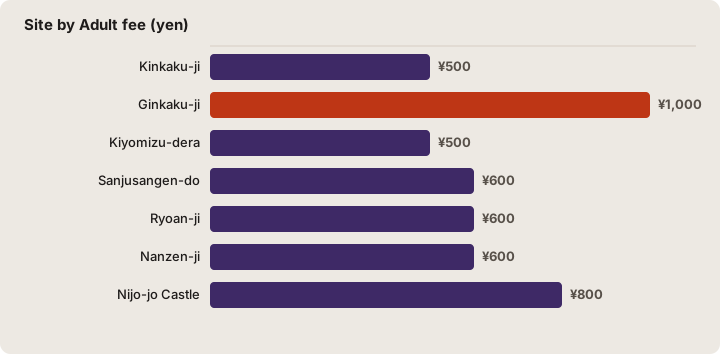
The winter hours to build around are: Ginkaku-ji 9:00 to 16:30 from 1 December, Ryoan-ji 8:30 to 16:30 from December, Sanjusangen-do 9:00 to 16:00 from 16 November, Nanzen-ji 8:40 to 16:30 from 1 December, and Nijo-jo Castle stopping admission at 16:00. Ginkaku-ji now charges 1,000 yen after doubling its fee on 1 April 2026, while Kinkaku-ji remains at 500 yen.
The Ginkaku-ji change is the one most likely to catch out a visitor working from an older guide. The temple's own notice, dated 18 January 2026, raised the adult fee from 500 to 1,000 yen and the child fee from 300 to 500, effective 1 April 2026, its first revision in 32 years. Tofuku-ji revises its own fees on 1 November 2026, with its combined ticket rising to 1,000 yen and the foliage-period Tsutenkyo ticket set at 1,000 yen. Any fee list copied from a 2024 or 2025 guide is therefore wrong for at least one Kyoto temple.
| Site | Winter hours | Adult fee | Notes |
|---|---|---|---|
| Kinkaku-ji | 9:00-17:00 year-round | 500 yen | Fee set 1 April 2023 |
| Ginkaku-ji | 9:00-16:30 (1 Dec-end Feb) | 1,000 yen | Doubled 1 April 2026 |
| Kiyomizu-dera | Opens 6:00 daily; December closes 18:00 | 500 yen | Single-source fee, not on temple site |
| Sanjusangen-do | 9:00-16:00 (16 Nov-31 Mar) | 600 yen | Open every day |
| Ryoan-ji | 8:30-16:30 (Dec-Feb) | 600 yen | |
| Nanzen-ji | 8:40-16:30 (1 Dec-28 Feb) | 600 yen (Hojo garden) | No visits 28-31 Dec |
| Nijo-jo Castle | Admission 8:45-16:00 | 800 yen, or 1,300 with Ninomaru Palace | Closed 29-31 Dec |
| Fushimi Inari Taisha | Paths have no closing time | Free | Desk and prayer hours only are published |
Two practical consequences follow. A plan that has a reader arriving at Ginkaku-ji at 16:15 in January is simply wrong; the gates shut at 16:30 and the walk in from the road eats most of the margin. And the free sites earn their place in a winter plan: Fushimi Inari's paths cost nothing and never close, which makes the shrine the single most flexible item on any cold-day list, early or late.
The indoor counterweights are strong in winter. A tea ceremony runs to about 70 minutes indoors regardless of the weather; the tea ceremony at Jotokuji Temple starts from $29 and is rated 4.9 from 3,758 reviews. Museums hold steady hours: the Kyoto Railway Museum is open 10:00 to 17:00, last entry 16:30, closed Wednesdays and 30 December to 1 January, at 1,500 yen for adults. A fuller indoor playbook for cold afternoons is in the Kyoto rainy day itinerary, which doubles as a winter plan.
How Do You Get Around Kyoto In Winter?
The city bus flat fare is 230 yen for adults and 120 yen for children, the subway runs 220 to 360 yen by zone, and the Subway and Bus One-Day Pass costs 1,100 yen, or 550 for a child. The old bus-only one-day pass no longer exists: sales ended in September 2023 and its last day of use was 31 March 2024. The tourist express buses EX100 and EX101 charge 500 yen a ride and the pass covers them.
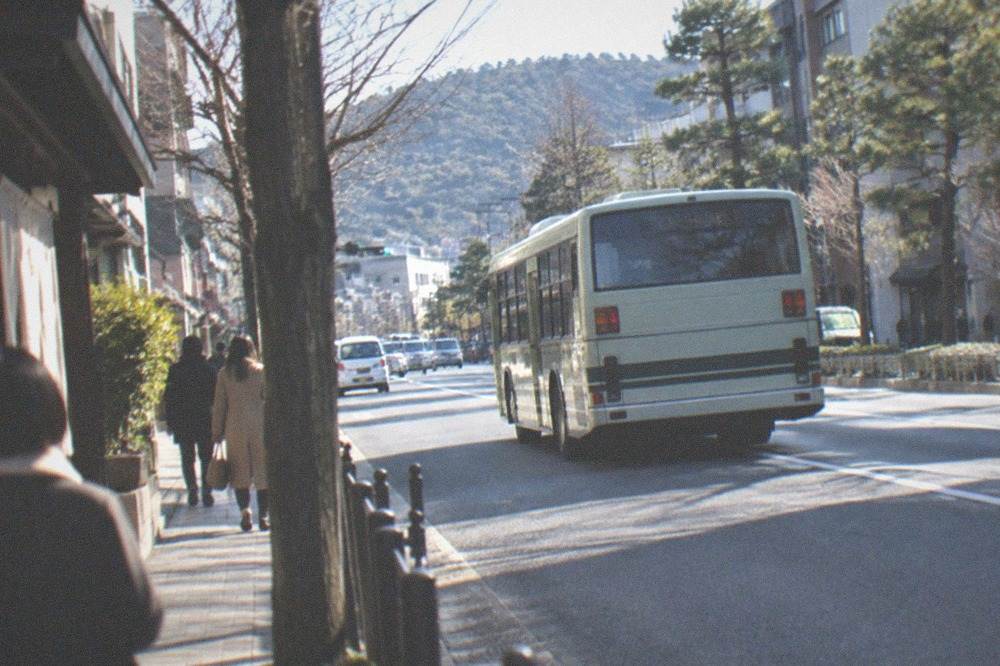
The pass arithmetic is the winter traveller's friend, because cold days push everyone onto vehicles. A day with four bus or subway rides at 230 to 360 yen each already brushes the 1,100 yen pass price, and a day combining Kiyomizu-dera, Ginkaku-ji and Arashiyama will clear it. The EX100 runs Kyoto Station to Gojo-zaka, Gion, Okazaki and Ginkaku-ji with fewer stops, and the EX101 runs direct to the Kiyomizu side, with EX101 departures every 7 to 8 minutes in the morning on operating days, per the city's transport bureau.
| Ticket | Adult | Child | Notes |
|---|---|---|---|
| City bus, flat fare | 230 yen | 120 yen | Child 6-11 |
| Subway, zones 1-5 | 220-360 yen | 110-180 yen | |
| Subway and Bus One-Day Pass | 1,100 yen | 550 yen | Covers EX100/EX101 |
| Subway One-Day Pass | 800 yen | 400 yen | |
| EX100 / EX101 tourist express | 500 yen | 250 yen | Cash or IC accepted |
| HARUKA, Kansai Airport to Kyoto (visitor ticket) | 2,200 yen | 1,100 yen | Foreign-visitor one-way product |
One warning carried over from the city's own measures: drivers may refuse large or bulky luggage on crowded buses, and the city actively promotes hands-free travel with station counters and delivery services. Winter buses are less crowded than July buses, but a suitcase on a cold morning is still the wrong plan. Travellers arriving from the capital should also check the site's Tokyo to Kyoto guide for the rail options into the city before any of this local arithmetic matters.
For a warm indoor stop with a view, the observation deck at Nidec Kyoto Tower is open 10:00 to 21:00 with last admission 20:30, at 900 yen for an adult, and the entry ticket can be booked ahead through the operator's live listing.
What Does A Three-Day Kyoto Winter Itinerary Look Like?
A workable winter framework is one major outdoor sight per morning, an indoor stop each early afternoon, and everything outdoors finished by 15:30, because Ginkaku-ji closes at 16:30, Nijo-jo stops admitting at 16:00 and sunset falls near 16:45. Day one covers Kiyomizu-dera and Gion, day two the west side with Kinkaku-ji and Ryoan-ji, and day three Arashiyama on foot, since the Sagano train does not run late December through February.
The site's full three days in Kyoto itinerary carries the general shape; what follows is the winter-adjusted version, with the closing windows respected rather than estimated.
Day one, Higashiyama. Start at Kiyomizu-dera when it opens at 6:00, which in January means walking up in the dark and watching the city lighten from the stage; the temple closes at 18:00 in December. Walk down through Ninenzaka and Sannenzaka as the shops open, then take the EX101 back toward the station or continue through Gion. The afternoon belongs indoors: a tea ceremony, or the samurai and ninja museum. In the evening, Gion's Hanamikoji is public road where photography is allowed, but the private alleys off it carry council signage threatening a 10,000 yen penalty for unauthorized entry or photography, and the city's tourism association asks visitors not to touch, chase or photograph geiko and maiko without permission.
Day two, the west and north. Nijo-jo Castle first, admission 8:45 to 16:00, at 800 yen or 1,300 with the Ninomaru-goten Palace; the palace itself closes every Tuesday in January, July, August and December. Then Kinkaku-ji, 9:00 to 17:00 at 500 yen, and Ryoan-ji before its 16:30 winter close. The evening can end back at Nidec Kyoto Tower, a warm place to see the city after dark.
Day three, Arashiyama. The bamboo grove is free and open around the clock, and Iwatayama Monkey Park is open 9:00 to 16:00 at 800 yen for those 16 and over, cash only, weather permitting; the park closes early if the monkeys head back up the hill. Tenryu-ji's garden is 500 yen, 8:30 to 17:00. The Hozugawa Kudari boats run a reduced winter timetable, 6,000 yen for an adult, on a season that runs to 13 December and restarts 10 March, so midwinter visitors walk the district instead.
What Should You Eat And Where Should You Stay In Kyoto In Winter?
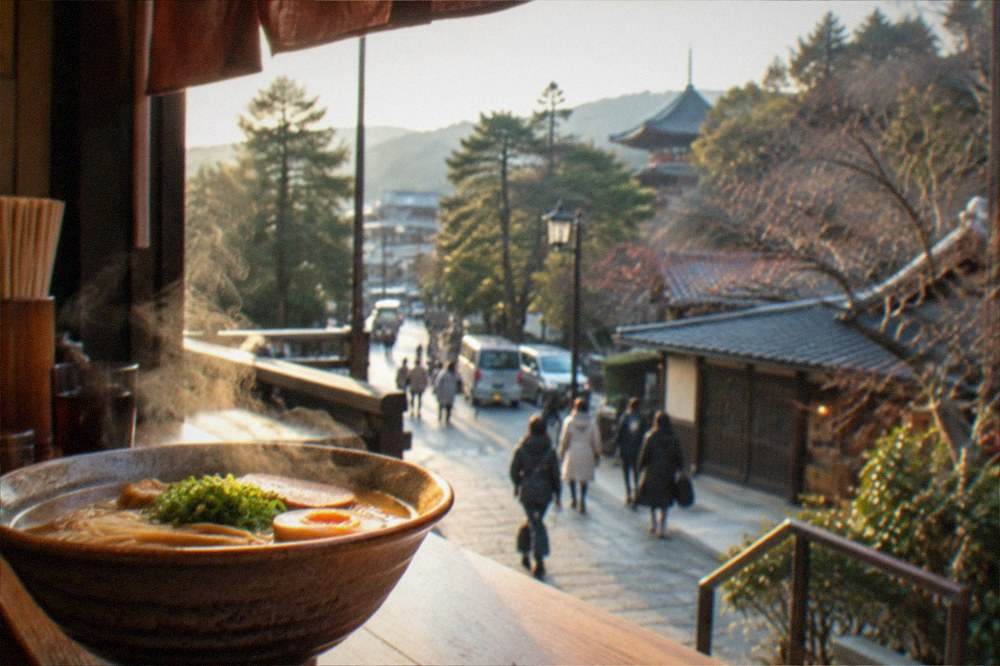
Winter is the season for hot food: ramen, nabe hot pots, and yudofu, the tofu simmered in kombu broth that Kyoto's temple restaurants are known for. For a benchmark at the top end, Hyotei by Nanzen-ji prints kaiseki from 31,625 yen at lunch and 37,950 yen at dinner on its own site, while the same house's annex serves asa-gayu at 5,445 yen and a bento at 7,260 yen. Those are Hyotei's prices, not a citywide norm.
The honest way to spend a cold evening is at counter height. The site's Kyoto ramen guide maps the warm, cheap options, and the best restaurants in Kyoto page sorts the sit-down end of the spectrum; a guided crawl of the Kawaramachi local bars runs from $37 and is rated 4.9 from 1,042 reviews. For tofu specifically, yudofu is at its most logical in January, when a simmering pot is the correct answer to a 1.5 C morning.
Lodging in winter carries one trap that has nothing to do with the weather: the accommodation tax changed on 1 March 2026, and most competing guides still quote the old tiers. The new five-tier schedule, per person per night on the room-only charge, is below. A 20,000 yen room now carries 1,000 yen, not 500, and a 100,000 yen room carries 10,000.
| Room charge per night | Tax before 1 Mar 2026 | Tax from 1 Mar 2026 |
|---|---|---|
| Under 6,000 yen | 200 yen | 200 yen |
| 6,000 to under 20,000 yen | 400 yen | 400 yen |
| 20,000 to under 50,000 yen | 500 yen | 1,000 yen |
| 50,000 to under 100,000 yen | 1,000 yen | 4,000 yen |
| 100,000 yen and up | 1,000 yen | 10,000 yen |
For where to sleep, the site's best hotels in Kyoto and Kyoto ryokan pages do the sorting; the winter-specific advice is simply that a ryokan with a private bath and a kaiseki dinner is the format the season was built for, and that older wooden buildings heat unevenly compared with a modern hotel, which is either charm or misery depending on the traveller.
What Winter Events And Dates Shape A Kyoto Visit?
The winter calendar has three anchors: the New Year shrine visits in early January, the plum flowering normal of 22 February, and the maple red-leaf normal of 5 December, which means early December can hold both late colour and the first cold. Kodai-ji's night illumination runs 23 October to 13 December 2026, and Arashiyama's December lantern event is listed for December 2026. Aoi Matsuri on 15 May and Jidai Matsuri on 22 October sit outside the season itself.
The phenology dates deserve care because they are widely misreported. The JMA's 1991-2020 normal for its Kyoto specimen tree puts maple red leaves at 5 December and ginkgo yellow at 24 November, and in 2025 the maple marker fell on 10 December. Those are the observatory's specimen dates, not a promise about Arashiyama's peak, but they do mean the first week of December regularly delivers both late foliage and genuinely cold mornings, a combination travellers often assume is impossible. The Kyoto autumn leaves itinerary covers the foliage season proper.
| Marker | Normal (1991-2020) | 2025 | 2026 |
|---|---|---|---|
| Maple red leaves | 5 Dec | 10 Dec | not yet observed |
| Ginkgo yellow | 24 Nov | 25 Nov | not yet observed |
| Plum flowering | 22 Feb | 11 Mar | 22 Feb |
| Cherry flowering | 26 Mar | 27 Mar | 23 Mar |
New Year is the other structural fact. Many businesses close between roughly 29 December and 3 January; Nijo-jo Castle is closed 29 to 31 December, the Kyoto Railway Museum closes 30 December to 1 January, and Iwatayama Monkey Park closes 1 January. Against that, shrines are at their liveliest: Yasaka Shrine and the city's other major shrines fill with hatsumode first-visit crowds in the first days of January, and Fushimi Inari's paths, which never close, are busy around the clock.
A tea ceremony is the single best indoor slot on a short December day, because the 70-minute format fits neatly between the 16:30 temple closes and dinner, and the Jotokuji Temple session is held in a warmed tatami room whatever the weather outside.
Is Winter A Good Time To Visit Kyoto?
Winter is the best-value season in the city's calendar: January and February are the driest and least crowded months, the city's 2025 survey recorded a record 62.79 million visitors across the year with 46.20 million of them day visitors, and the winter months sit well outside that pressure. The trade-offs are real: the shortest daylight of the year, temple closes at 16:00 to 16:30, February's 122.2 sunshine hours, and mean daily minimums near 1.5 C.
The judgement, grounded in those numbers: for a traveller who dresses for the cold and plans around the closing windows, winter is the strongest season for temple-going, because the dry weather makes the outdoor circuit reliable in a way the June-to-October half of the year cannot. For a traveller whose priority is atmosphere over access, the same trade reads the other way, and the Kyoto weather guide sorts the seasons honestly.
A final practical note on scale. The city's tourism association and the shrine both point to the Kyoto Tourism Comfort Forecast, a five-level crowd index built from smartphone location data, weather and weekday, published for specific spots and time slots; it is the tool to check the night before any winter temple morning. And the site's one day in Kyoto and two days in Kyoto itineraries compress the same verified hours into shorter frames, for travellers working with a winter stopover rather than a full week.
Common Questions About Kyoto In Winter
How Often Does It Snow In Kyoto And Where Do You Go When It Does?
Snow falls on some winter days but rarely settles for long, because winter is Kyoto's driest season: January averages 53.3 mm. When it does stick, go to Kinkaku-ji, which opens 9:00 year-round at 500 yen, the free and always-open Fushimi Inari paths, or the free bamboo grove in Arashiyama.
How Cold Does Kyoto Get In Winter?
The JMA 1991-2020 normals give January a mean of 4.8 C with a mean daily minimum of 1.5 C, and February a mean of 5.4 C. The station's record low is -11.9 C, and its deepest snow on record is 41 cm, so the cold is real but typical winter days sit a few degrees above freezing.
Do Kyoto Temples Close Earlier In Winter?
Yes. Ginkaku-ji closes at 16:30 from 1 December, Ryoan-ji at 16:30, Sanjusangen-do at 16:00 from 16 November, Nanzen-ji at 16:30, and Nijo-jo Castle stops admitting at 16:00. Kinkaku-ji keeps 9:00 to 17:00 year-round, and Kiyomizu-dera opens at 6:00 daily.
Does The Sagano Romantic Train Run In Winter?
No. The operator's own pages show the train running roughly March to December, with no service from late December through February. A winter Arashiyama visit is a walking visit; the bamboo grove itself is a free public path with 24-hour access.
What Should You Wear For Kyoto In Winter?
Layers, gloves and shoes with grip. Mean daily maximums run 9.1 to 11.6 C across December to February, with minimums near 1.5 C, and mornings at exposed sites like the Kamo River banks or the Fushimi Inari upper trails are the coldest part of the day. February is the dullest month at 122.2 sunshine hours, so plan for grey as well as cold.
Is The Kyoto Accommodation Tax Different Now?
Yes, from 1 March 2026 the top tier rose from 1,000 to 10,000 yen per person per night. A room charged at 20,000 yen or more but under 50,000 yen now carries 1,000 yen per person per night, double the old 500 yen rate, on the room-only charge excluding meals and consumption tax.