Why Do The Omuro Cherry Trees At Ninna-ji Bloom Later Than The Rest Of Kyoto?
Ninna-ji's Omuro cherries are Kyoto's second act: short, shrub-like trees that flower after the city's main cherry crop has already peaked. The JMA Kyoto observatory's own records put the city's full-bloom normal at 4 April, and the Omuro grove follows behind it. This page explains why, using the official phenology data, and covers everything else you need to plan a visit.
Short answer
The Omuro cherry trees at Ninna-ji bloom later than the rest of Kyoto because they are a distinct, compact variety that flowers on its own schedule, roughly a week to ten days after the city's Somei Yoshino crop peaks. The JMA 1991-2020 normals put Kyoto's full bloom at 4 April, so the Omuro grove at Ninna-ji is the place to catch blossom after the main event has faded elsewhere.
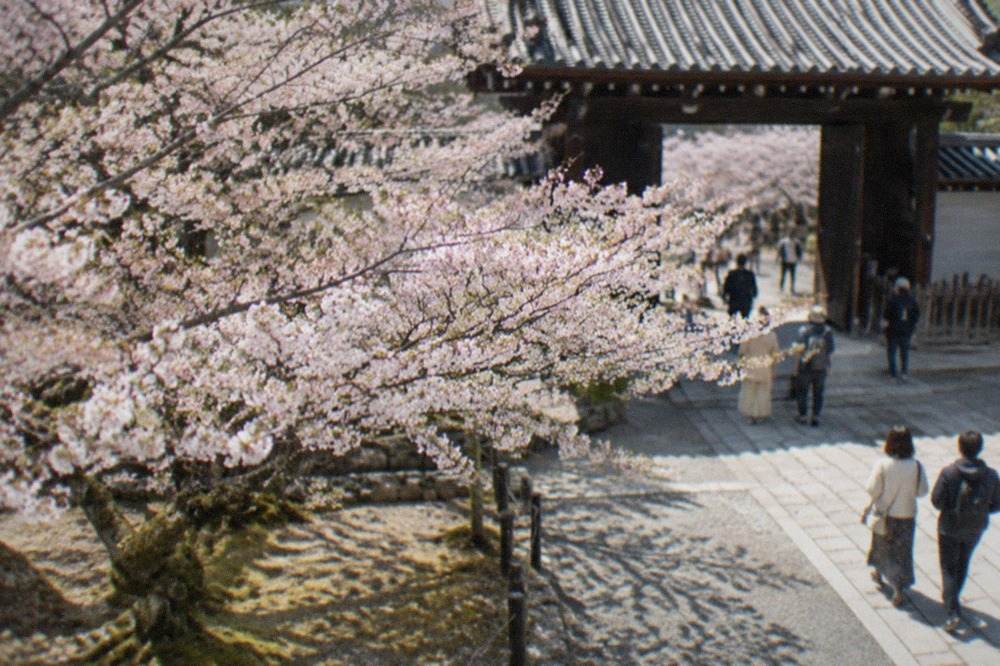
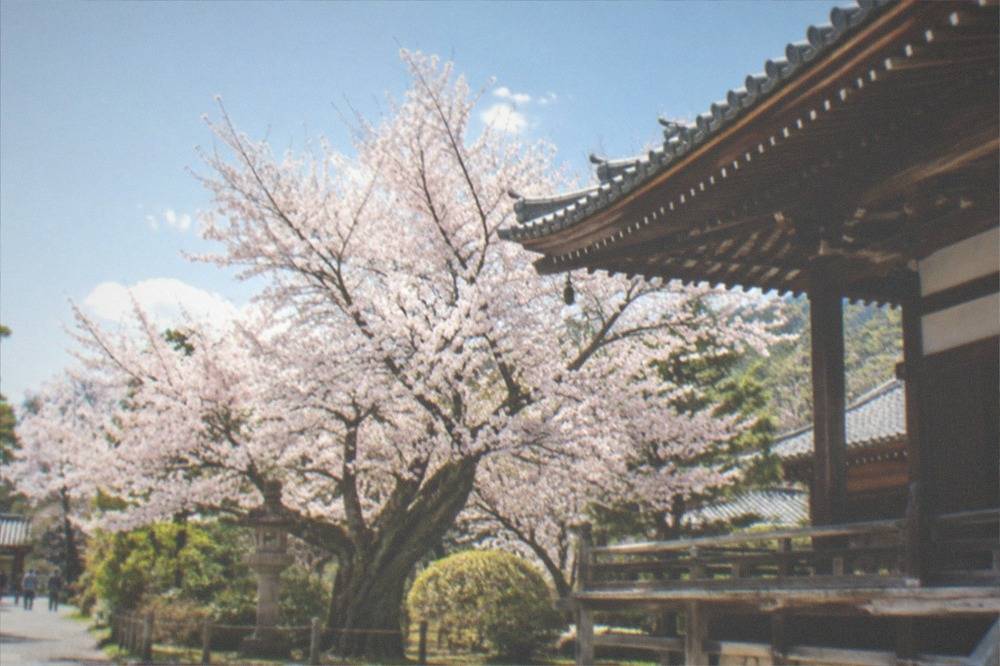
Kyoto's cherry season has a second act, and it plays out at Ninna-ji. While the rest of the city watches its tall Somei Yoshino trees shed petals in the first days of April, the temple's Omuro grove is often only just getting started. The trees there are short, wide and shrub-like, closer to a hedge of blossom than a canopy, and they flower on a later clock than almost anything else in the city. The JMA Kyoto observatory, whose phenology records are the official reference for the whole basin, puts the city's full-bloom normal at 4 April; the Omuro grove follows behind that marker, which is exactly why late-arriving visitors make the trip west.
The practical effect is simple. If you arrive in Kyoto in mid-April expecting cherry blossom, the riverside and park trees will likely be green, but the Omuro grove can still be in flower. The city's own tourism machine leans into this: the blossom calendar and the temple calendar overlap only briefly, and Ninna-ji sits in the overlap. This page covers why the trees behave the way they do, what the official records actually say about bloom timing, what the surrounding temples charge, and how to fit the visit into a wider Kyoto plan.
Why Do The Omuro Cherry Trees At Ninna-ji Bloom Later Than The Rest Of Kyoto?
The Omuro cherries bloom later because they are a different variety, not the same tree on a delayed clock. The grove is made up of compact, shrub-like cherries that flower roughly a week to ten days after the Somei Yoshino crop that defines the city's official season, and because the trees are so short, the blossom sits at eye level and holds longer once out. The JMA normals put Kyoto's full bloom at 4 April, so the Omuro grove is the city's reliable second week.
The distinction matters because most of what you read about "Kyoto cherry blossom season" is really about one tree. The Somei Yoshino, the tall pale-pink hybrid planted along rivers, in park edges and along the Philosopher's Path, is the tree the Japan Meteorological Agency actually watches. Its flowering and full-bloom dates at the Kyoto observatory are the numbers the whole country quotes. The Omuro cherry at Ninna-ji is a different plant entirely: a low, spreading variety that was cultivated to stay compact, with dense blossom that opens later and, because the trees rarely grow much taller than a person, can be viewed from inside the grove rather than from below it.
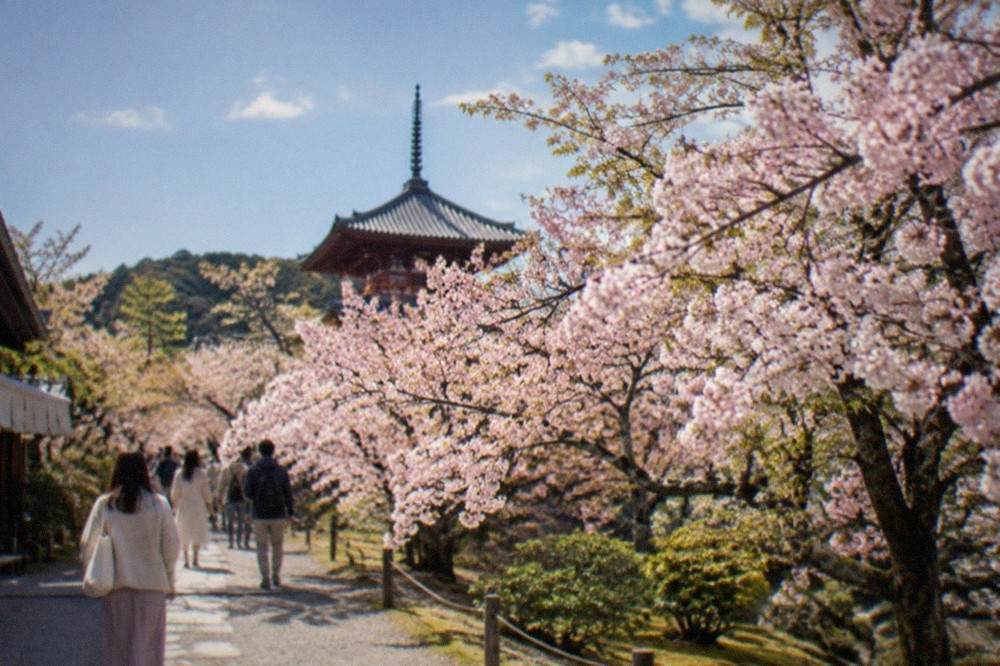
The name tells you where the credit belongs. "Omuro" is the old name for the temple's neighbourhood, and the trees are so strongly identified with the site that the variety and the place share a word. The grove is the reason the temple draws crowds in a week when most other blossom spots are finished, and the temple leans on it, opening the grove as a paying seasonal attraction with lanterns and food stalls during the flower window.
One caution, and it applies to every date on this page. A normal is an average of the 1991 to 2020 period, not a forecast. The JMA's own records show the city's full bloom has landed as early as 24 March (2023) and as late as 17 April (1965). Never plan a trip around a single promised date, and treat any guide that guarantees a week as unreliable. What the Omuro grove offers is a margin: it extends the blossom window on the back end, which is the useful end for travellers who cannot time a trip to the day.
What Kind Of Cherry Tree Is The Omuro Sakura In Kyoto?
The Omuro cherry is a compact, late-flowering ornamental variety, not the Somei Yoshino that defines the official season. It grows low and wide, often no taller than an adult, with dense blossom that opens after the main crop has peaked, and it is planted as a grove rather than as avenue trees. That shape and that schedule are why Ninna-ji keeps a blossom season after the rest of the city has moved on to fresh green.
The contrast with the city's standard cherry is the whole point. Somei Yoshino trees are bred for height and a single dramatic flush: a bare tree that fills with pale blossom over days and then drops it all. They line the Kamo River, fill Maruyama Park's famous spaces and frame the canal along the Philosopher's Path, and because they were planted as specimens and avenues, you view them from underneath or from across the water. The Omuro cherry does the opposite. It stays low, spreads sideways, and produces a dense mass of blossom you can stand inside, which is why photographers value the grove: the frame fills with flower at any height.
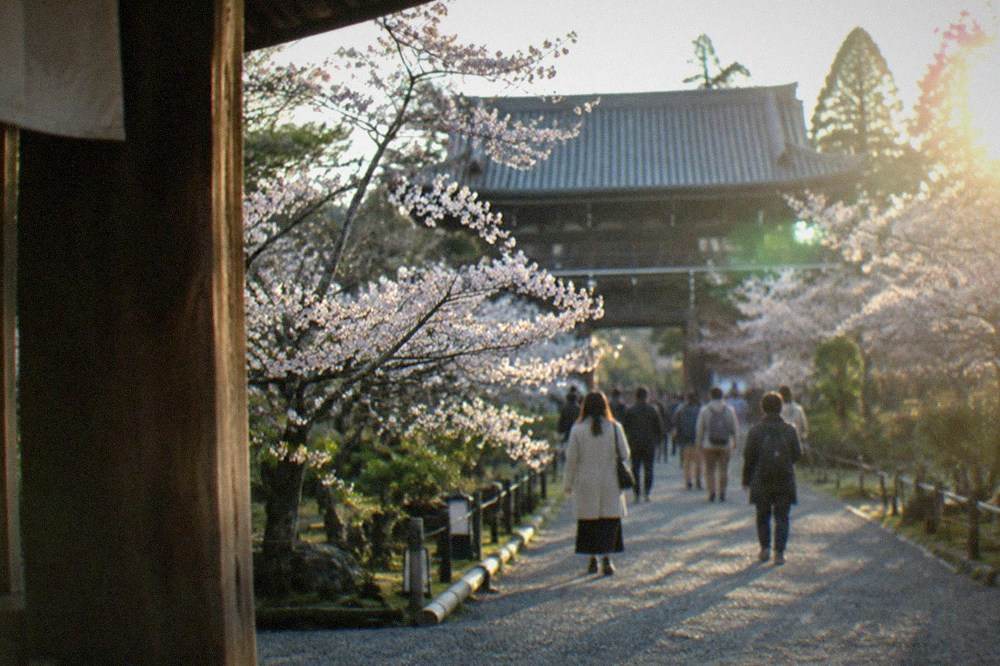
The late schedule is a property of the variety, and it interacts with the tree's shape. Compact trees with dense canopies warm and wake on their own rhythm, and a grove of genetically similar individuals tends to flower together, which is what makes the display read as a single event. The practical consequence for a visitor is a blossom window that starts after the JMA's citywide full-bloom date and can run well into the second week of April in a normal year.
There is a second, quieter reason the grove matters. Kyoto's cherry infrastructure, the riverside banks, the park lawns, the temple approaches, is built around a single week of peak Somei Yoshino, and the city's own 2025 tourism survey recorded 62.79 million visitors across the year, with the blossom weeks among the most concentrated. A late-blooming grove is one of the few pressure valves the calendar offers. Visiting Ninna-ji in the second week of April spreads your trip away from the peak, which the city's tourism association explicitly encourages through its off-peak and time-shifting campaigns.
If you want the blossom without doing all the planning yourself, a guided day that covers the city's headline sites is one option, and the Perfect 1-Day Bus Tour from $102 per person, rated 4.9 across 17,054 reviews over 8 to 9 hours, handles the logistics of moving between the spread-out sights.
When Is Cherry Blossom Season In Kyoto, By The Official Numbers?
The JMA 1991-2020 normals put Kyoto's cherry flowering at 26 March and full bloom at 4 April. In 2026 the city flowered on 23 March and reached full bloom on 30 March; in 2025 it was 27 March and 5 April. The recorded range is wide, from 16 March to 9 April for flowering, so the Omuro grove's late window is the safest part of the season to bet on, never a specific date.
These are the observatory's numbers, not a tour operator's marketing calendar, and they are the same figures the national sakura tables publish for Kyoto. The table below is the full official picture for the two cherry events plus the autumn markers, which are worth having in the same place because the same logic, a normal is an average, not a promise, governs both seasons.
| Event | Normal (1991-2020) | 2026 | 2025 | Earliest on record | Latest on record |
|---|---|---|---|---|---|
| Cherry flowering | 26 March | 23 March | 27 March | 16 March 2021 | 9 April 1984 |
| Cherry full bloom | 4 April | 30 March | 5 April | 24 March 2023 | 17 April 1965 |
| Maple red leaves | 5 December | not yet observed | 10 December | 10 Nov 1976 | 20 Dec 2024 |
| Ginkgo yellow leaves | 24 November | not yet observed | 25 November | 7 Nov 1976 | 7 Dec 1982 |
| Plum flowering | 22 February | 22 February | 11 March | 27 Jan 1979 | 15 Mar 1963 |
Two things follow from that table. First, the Omuro grove's value is structural: whatever the main season does, the grove trails it, so a mid-April visit that misses the Somei Yoshino peak still has a target. Second, the maple normal of 5 December is far later than the mid-November peak most competing guides claim, and the JMA date is the observatory's own specimen tree turning rather than the Arashiyama peak, so treat it as the official marker, not as the best week. The same caution applies in reverse to the cherry numbers: the normal is a 30-year average, and the last few years have run early.
Weather shapes the margin too, and Kyoto's spring climate is part of the story. The JMA 1991-2020 normals for station 47759 show March averaging 106.2 mm of rain and April 117.0 mm, with April's mean temperature at 14.4 C against March's 8.8 C. That fast warm-up is what compresses the blossom window: the city moves from flowering to full bloom in about nine days on the normal, and a warm spell can collapse it further. A late variety like the Omuro cherry buys back some of that lost margin.
| Month | Rain mm | Mean C | Mean daily max C | Mean daily min C | Sunshine h |
|---|---|---|---|---|---|
| February | 65.1 | 5.4 | 10.0 | 1.6 | 122.2 |
| March | 106.2 | 8.8 | 14.1 | 4.3 | 155.4 |
| April | 117.0 | 14.4 | 20.1 | 9.2 | 177.3 |
| May | 151.4 | 19.5 | 25.1 | 14.5 | 182.4 |
The blossom calendar also collides with the crowd calendar. Kyoto drew a record 62.79 million visitors in 2025, including 12.68 million from abroad, per the city's own June 2026 survey release, and the cherry weeks concentrate that flow onto a handful of famous sites. The city's response has been dispersal: the Kyoto Tourism Comfort Forecast publishes a five-level crowd estimate for spots and time slots using location data and weather, and the shrine and temple pages increasingly link to it. Checking it on the morning of a Ninna-ji visit costs nothing and can move your day by an hour or two.
How Much Do Kyoto's Temples Charge For Admission?
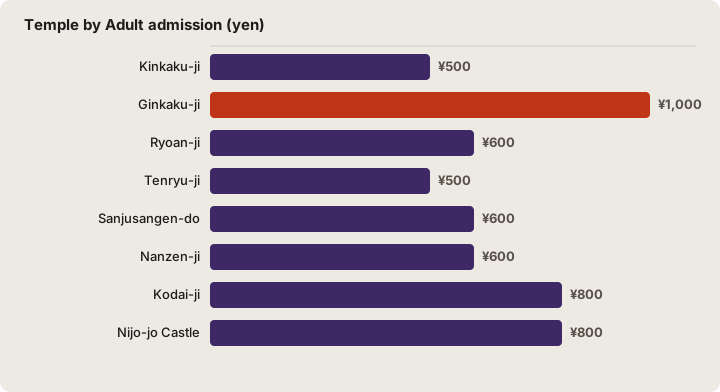
Kyoto's major temples charge admission, and the verified current figures run from 500 yen at Kinkaku-ji to 1,000 yen at Ginkaku-ji, which doubled from 500 on 1 April 2026. Ryoan-ji is 600 yen, Tenryu-ji's garden 500 with buildings plus 300, Sanjusangen-do 600, Nanzen-ji's Hojo garden and Sanmon each 600, and Kodai-ji 800. Tofuku-ji revises its fees on 1 November 2026, so older figures for it are already wrong.
Ninna-ji itself charges for its main halls and, separately, for the Omuro grove during the blossom period, and the grove's seasonal ticket is the one most visitors come for. Because this site prints only figures it has verified from the venue's own pages, and the temple's current fee schedule was not among them, check the temple's own notice at the entrance or its official site before you go rather than trusting a number copied from an older guide. What we can state with confidence is the pattern: Kyoto's temple fees are modest, mostly in the 500 to 1,000 yen band, and they change more often than most guides admit. The full index of guides sits on Kyoto Travel Guide.
| Temple | Adult admission | Notes |
|---|---|---|
| Kinkaku-ji | 500 yen | School age 300; hours 9:00-17:00 |
| Ginkaku-ji | 1,000 yen | Doubled from 500 on 1 April 2026; child 500 |
| Ryoan-ji | 600 yen | High school 500, elementary and junior high 300 |
| Tenryu-ji | Garden 500 yen | Buildings plus 300; Hatto ceiling 500 separately |
| Sanjusangen-do | 600 yen | Junior high and high school 400, elementary 300 |
| Nanzen-ji | Hojo garden 600 yen | Sanmon gate 600 separately |
| Kodai-ji | 800 yen | 1,200 combined with Entoku-in |
| Nijo-jo Castle | 800 yen | 1,300 with Ninomaru-goten Palace |
The two fee changes worth knowing about are recent. Ginkaku-ji's doubling to 1,000 yen from 1 April 2026 was the temple's first rise in 32 years, and it makes the Silver Pavilion twice the Golden Pavilion's price for the first time. Tofuku-ji's revision lands on 1 November 2026: the Hojo garden rises from 500 to 600 yen, a new 1,000 yen combined ticket appears, and the Tsutenkyo bridge rises from 600 to 1,000 yen during the autumn foliage period. Any guide quoting out-of-date prices for either temple is wrong.
What is genuinely free is worth knowing too, because it balances the budget. Fushimi Inari Taisha publishes no fee anywhere on its site, the Kyoto Imperial Palace states it is open to all visitors with no advance application, and the Arashiyama bamboo path, Nishiki Market and the walks through Gion, Pontocho and the Philosopher's Path cost nothing. A day that pairs a free morning with one or two paid temples lands around 1,000 to 2,000 yen in admissions, before food and transport.
If you would rather fold several of these sites into one ticketed outing, the Samurai Ninja Museum basic ticket from $23 per person, rated 4.6 across 729 reviews for about an hour, is one of the cheaper bookable entries in the city centre.
What Else Is There To See At Ninna-ji And Western Kyoto?
Ninna-ji anchors a cluster of western Kyoto sights that share the same rail corridor: the temple's own five-storey pagoda and palace buildings, Ryoan-ji's rock garden 600 yen, Kinkaku-ji 500 yen a short bus hop away, and the Arashiyama bamboo district beyond them. A full western-Kyoto day is realistic on public transport, and the Omuro grove slots in as either the first stop of a blossom day or the last stop of a temple circuit.
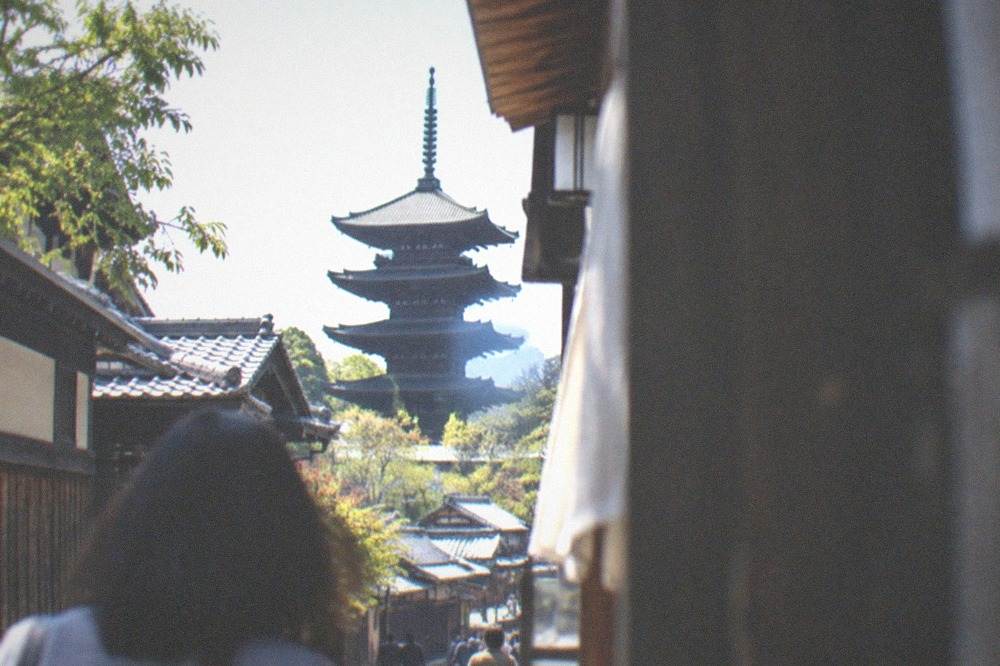
The temple's own draw beyond the cherries is scale. Ninna-ji is a head temple with a long history as an imperial-monastic institution, and its grounds hold the pagoda, palace buildings and gardens typical of the great Kyoto establishments. The pagoda in particular is one of the west side's landmarks, visible on the approach and a standard photo stop. The site is large enough that even on a busy blossom day the crowd thins once you move past the grove itself.
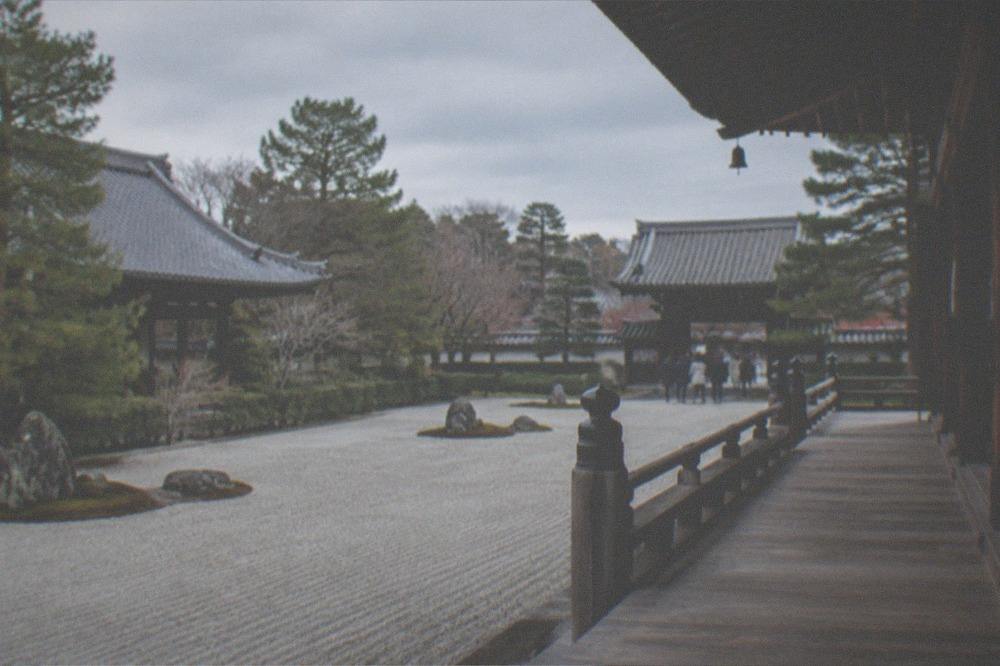
The neighbours are the reason to make a day of it. Ryoan-ji with its famous rock garden is a short bus or taxi ride east, then Kinkaku-ji beyond it, and the whole chain connects onward to the Arashiyama bamboo grove at the end of the line. Going the other direction, the corridor runs back toward central Kyoto and To-ji Temple in the south. The classic mistake is trying to do all of it in one morning; the realistic version is two anchor temples plus the grove, with lunch between.
For travellers who want a deeper cut than the standard circuit, the mountain temples north of the city are the other half of the story. The Kurama and Kibune hike from $210 per person, rated 5 from 82 reviews over a full 8 hours, covers the forest trail between two mountain villages with a guide, and it makes a strong contrast day after the flat temple circuit of the west. Check availability
How Do You Get To Ninna-ji In Kyoto?
Ninna-ji sits in western Kyoto, reached on the JR San-in Line to Ninna-ji Station, a few minutes' walk from the gate, or on the Randen tram to Omuro Ninnaji Station right outside. City buses also serve the area at the flat 230 yen adult fare, and the Subway and Bus One-Day Pass at 1,100 yen covers unlimited subway and bus travel for a day, which usually wins for a multi-stop western-Kyoto temple day.
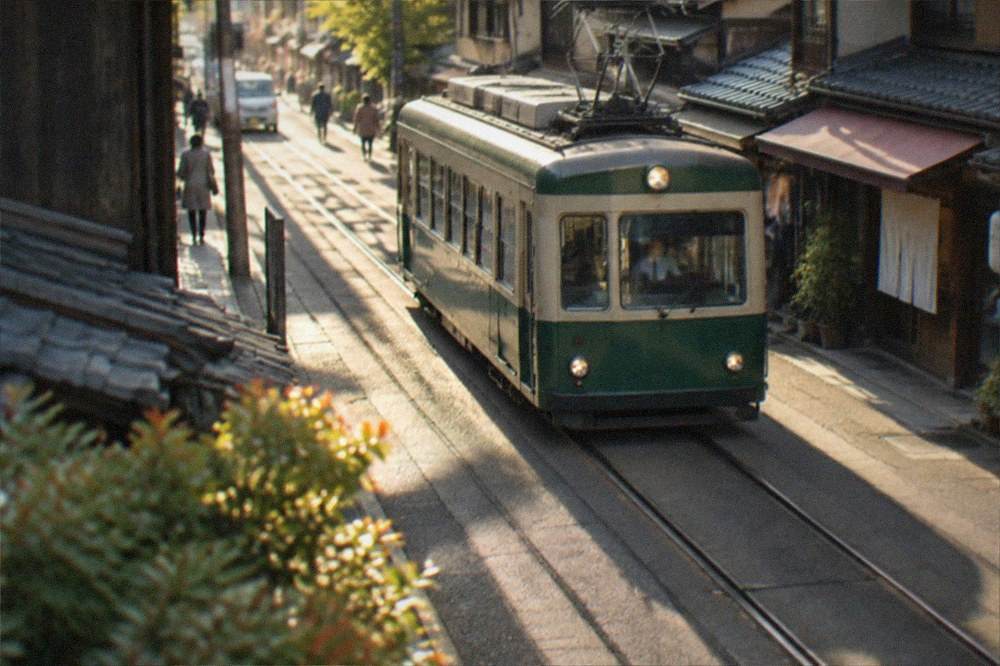
The tram deserves a specific mention because it is the more interesting ride. The Randen line is a small street-running tram network that terminates at Omuro Ninnaji, and its stops name the neighbourhood the cherries are named for. Coming from the Arashiyama end, the tram drops you at the temple's district and continues to be the natural link between the bamboo area and the Omuro grove, which is exactly the pairing a second-week-of-April blossom day wants.
| Option | Adult fare | Notes |
|---|---|---|
| City bus, flat fare | 230 yen | Child (6-11) 120 yen |
| Subway, by zone | 220 to 360 yen | Five zones; child 110 to 180 |
| Subway and Bus One-Day Pass | 1,100 yen | Child 550; unlimited subway and bus for one day |
| Tourist express EX100 / EX101 | 500 yen | Child 250; runs Kyoto Station toward Gion and Ginkaku-ji |
Two transport facts catch out visitors with older guides. The bus-only one-day pass no longer exists: sales ended in September 2023 and the last day of use was 31 March 2024, because the transport bureau found 90% of buyers were non-residents and the pass concentrated tourists on the buses. The replacement is the Subway and Bus One-Day Pass at 1,100 yen, which the city designed precisely to push visitors onto the less crowded subway lines. The second is the EX100 and EX101 tourist expresses, which run from Kyoto Station toward the Kiyomizu side for a flat 500 yen and are accepted with the one-day pass.
Luggage is the other practical issue. The city's bus drivers may refuse large or bulky bags on crowded buses, and the city's tourism association runs a hands-free programme with station counters, delivery services and lockers specifically to keep bags off the buses. If you are moving hotels on a blossom day, ship the bags and travel light; the Kyoto luggage storage options are covered in detail on their own page.
Where Should The Omuro Blossoms Sit In A Kyoto Itinerary?
Put the Omuro grove in the second week of April if your dates allow it, treating it as the blossom season's extension rather than its main event. For a first visit of three days or fewer, pair Ninna-ji with Ryoan-ji and Kinkaku-ji on a western day, and save the eastern sights, Kiyomizu-dera, Gion and the Philosopher's Path, for a separate day. The grove is a morning or late-afternoon stop, not a full day.
The sequencing logic is about light and crowds. The grove's low trees mean the best photographs come when the sun is low enough to rake through the blossom rather than flatten it, and the blossom-day crowds at any famous Kyoto site thin markedly before 9:00 and after 16:00. The city's own dispersal campaigns, which promote off-peak times, seasons and locations, exist because the peak hours at peak sites are genuinely unpleasant: 62.79 million visitors in 2025 is the backdrop to every decision about when to stand where.
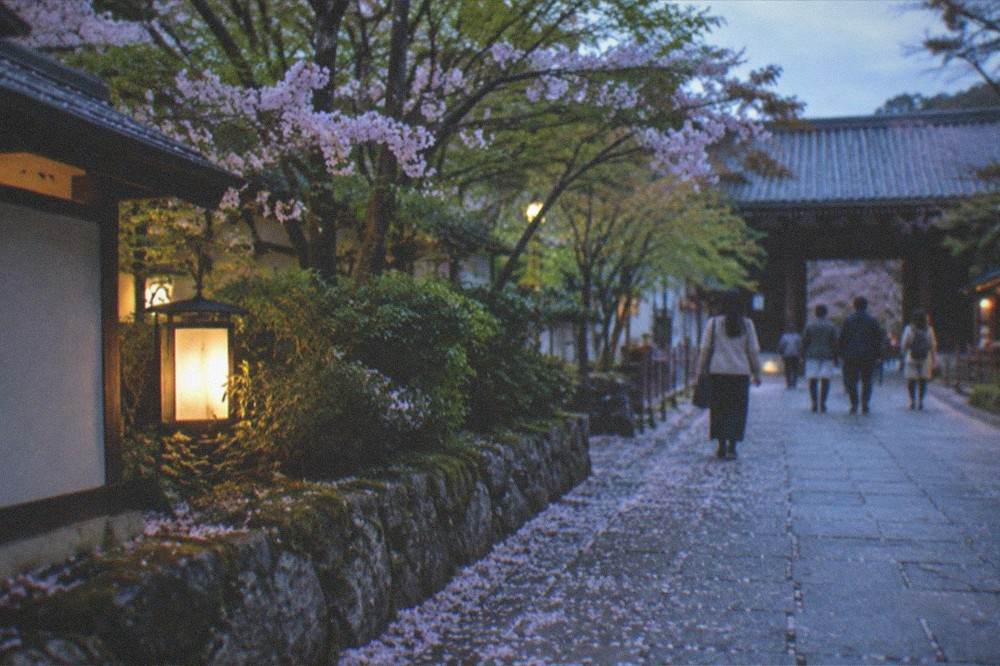
For a longer stay, the blossom calendar maps onto the city's geography. The Kyoto cherry blossom guide covers the main sites and the JMA records in depth, and the one day in Kyoto and three days in Kyoto itineraries give the framework a first or second visit wants. The Omuro grove earns its place in those plans specifically on the years when the main season runs early: if the city hits full bloom in late March, as it did in 2026 on 30 March, mid-April visitors have the grove as their best remaining blossom option, and it is a good one.
A note on expectations, because it is the honest close to the timing question. The grove is small, the trees are short, and the experience is intimate rather than sweeping. Visitors expecting the riverside scale of a Somei Yoshino bank sometimes come away underwhelmed; visitors who want to stand inside the blossom, at eye level with the flower, rate it among the city's best. Go for the second reason, in the second week, and it delivers.
Common Questions About Ninna-ji And The Omuro Cherry Trees
Why do the Omuro cherry trees at Ninna-ji bloom later than the rest of Kyoto?
They are a distinct compact variety, not the Somei Yoshino cherry that defines the official season, and that variety flowers roughly a week to ten days after the citywide peak. The JMA normals put Kyoto's full bloom at 4 April, so the Omuro grove holds blossom into the second week of April after the main crop has fallen.
When do the Omuro cherries at Ninna-ji usually bloom?
The grove follows the city's main season, which the JMA 1991-2020 normals place at flowering 26 March and full bloom 4 April. In practice the Omuro grove is at its best in the second week of April, but the recorded range for the citywide season runs from 24 March to 17 April for full bloom, so no date is guaranteed.
How tall are the Omuro cherry trees?
They are compact, shrub-like trees that stay low and spread wide, typically no taller than an adult, which is why the blossom can be viewed at eye level from inside the grove rather than from below tall avenue trees.
How do I get to Ninna-ji from Kyoto Station?
Take the JR San-in Line to Ninna-ji Station, a few minutes' walk from the temple, or the Randen tram to Omuro Ninnaji Station by the gate. City buses serve the area at the flat 230 yen fare, and the Subway and Bus One-Day Pass at 1,100 yen covers a full day of subway and bus travel.
Is Ninna-ji worth visiting outside cherry blossom season?
Yes. The temple is a major head temple with a five-storey pagoda, palace buildings and gardens, and it pairs naturally with Ryoan-ji and Kinkaku-ji on a western-Kyoto day at any time of year. The grove is the seasonal draw, not the only one.
Does Ninna-ji charge admission?
The temple charges for its main halls and separately for the Omuro grove during the blossom period. This site prints only verified figures, and the temple's current fee schedule was not among them, so check the temple's own notice or official site for the current amounts.
The Omuro grove is Kyoto's answer to the traveller who arrives a week late: a different tree, on a later clock, planted as a grove you can stand inside. Check the JMA's current-season dates before you book, give the blossom its second week, and the western side of the city will still be in flower when the riverside has gone green.