How Tall Is The To-ji Pagoda In Kyoto And Is It The Tallest Wooden Tower In Japan?
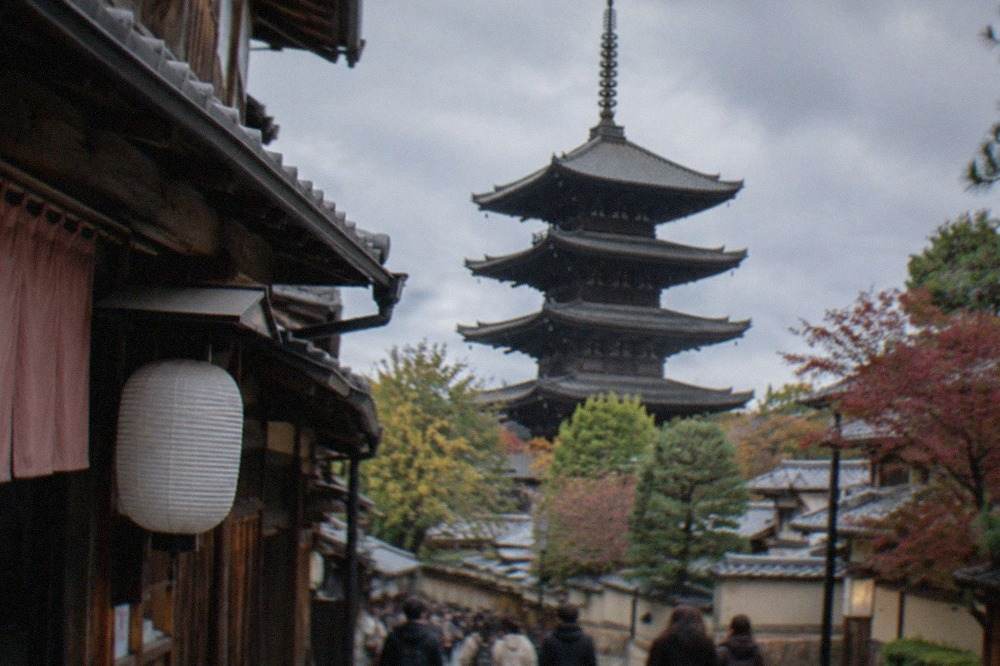
To-ji's five-story pagoda is the tallest wooden pagoda in Japan, and it stands fifteen minutes' walk from Kyoto Station. This page separates what is verified from what older guides get wrong.
Short answer
To-ji's pagoda is widely described as the tallest wooden pagoda in Japan. The temple sits just southeast of Kyoto Station, hosts a famous monthly market on the 21st, and its Kodo hall holds a celebrated assembly of Buddhist statues.
To-ji Temple sits directly southeast of Kyoto Station, close enough that the pagoda is the first landmark many visitors see on leaving the shinkansen gates. The temple is the surviving half of a pair of guardian temples that once flanked the Rashomon gate of Heian-kyo, the imperial capital founded at the close of the eighth century, and its five-story pagoda has become one of Kyoto's defining silhouettes. The city's 2025 tourism survey counted 62.79 million visitors across the year, and a large share of them pass within a few hundred metres of this temple without realising how close it is.
This page is the honest version of the To-ji guide. Where a figure is verified on a primary source, it says so. Where the internet repeats a number that no official page prints, it says that instead of copying the number. The pagoda's height is the clearest example, and it is where the page starts.
How Tall Is The To-ji Pagoda And Is It The Tallest Wooden Tower In Japan?
The To-ji pagoda is widely described as the tallest wooden pagoda in Japan, and no taller wooden pagoda stands anywhere in the country. This site could not verify an exact measurement on the temple's own pages, so no figure in metres is printed here. The "tallest in Japan" claim itself is consistent across every reference this research found.
That is a deliberately careful answer, and it deserves an explanation. A precise height in metres is quoted for the To-ji pagoda across guidebooks, encyclopedias and tourism write-ups, repeated for decades. The temple's own English materials describe the pagoda as the tallest wooden pagoda in Japan, which is the claim that matters most to visitors, but the precise measurement is not something this site could read on a primary page. A guide that prints an exact height without a source is doing what the worst of the 2024-era Kyoto guides did with temple fees: copying a number forward because it has always been copied forward.
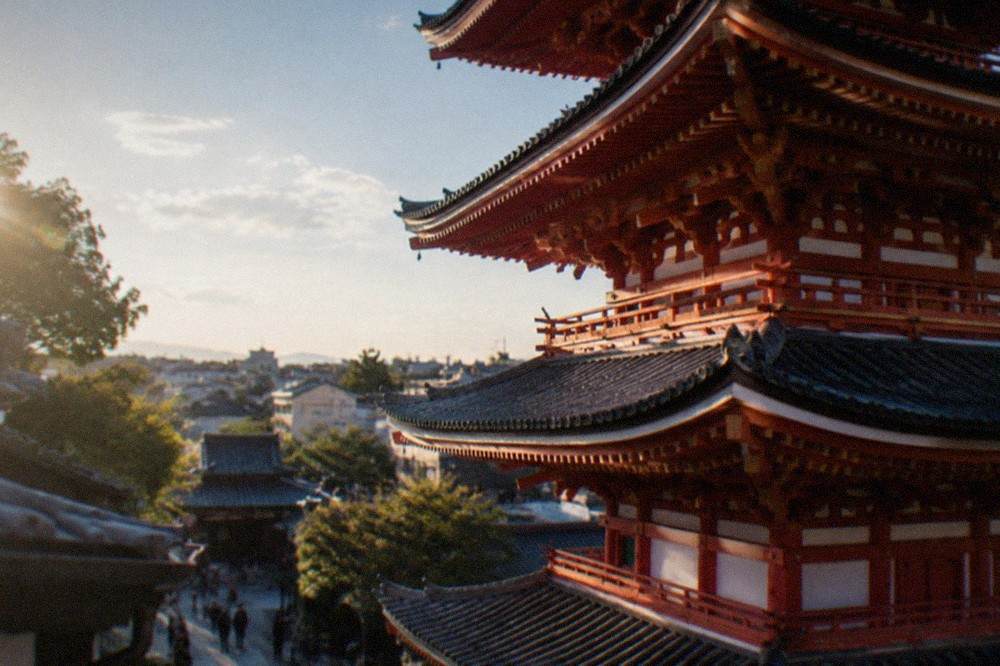
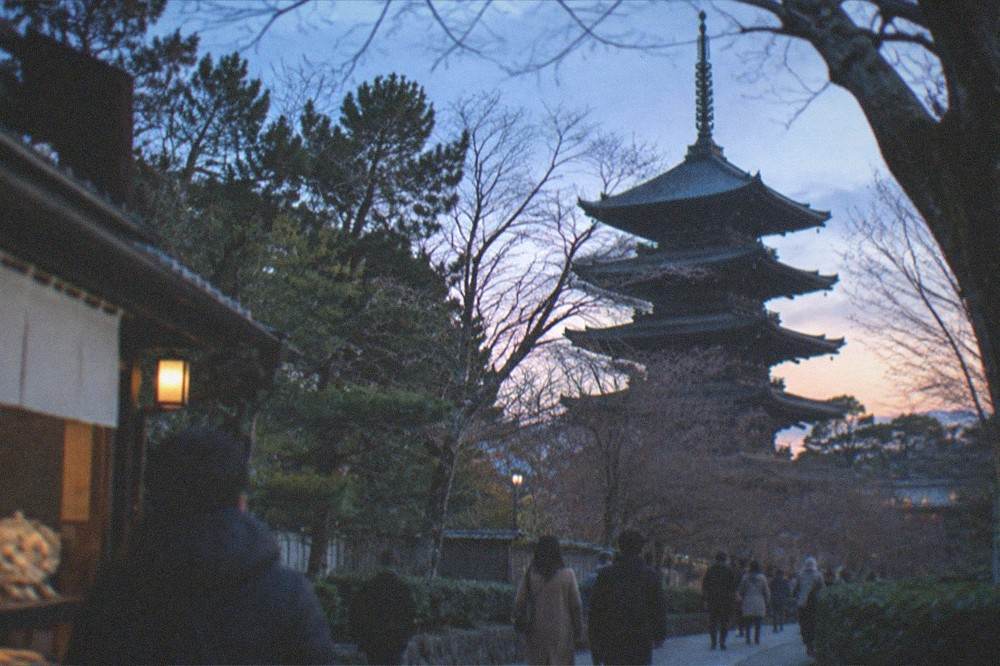
Two things about the pagoda are safe to state plainly. First, it is a five-story structure, and it has burned down and been rebuilt repeatedly across its history, with the current tower being an Edo-period reconstruction. Second, the "tallest wooden pagoda in Japan" title is not contested by any other structure: the other great pagodas, at Horyu-ji near Nara or the five-story towers of Kyoto's own temples, are all shorter. The pagoda's proportions are also part of its fame. Japanese pagodas are engineered to flex, with the central pillar and the stacked tiers allowed to move against each other in earthquakes and typhoons, which is why wooden towers of this scale survive at all.
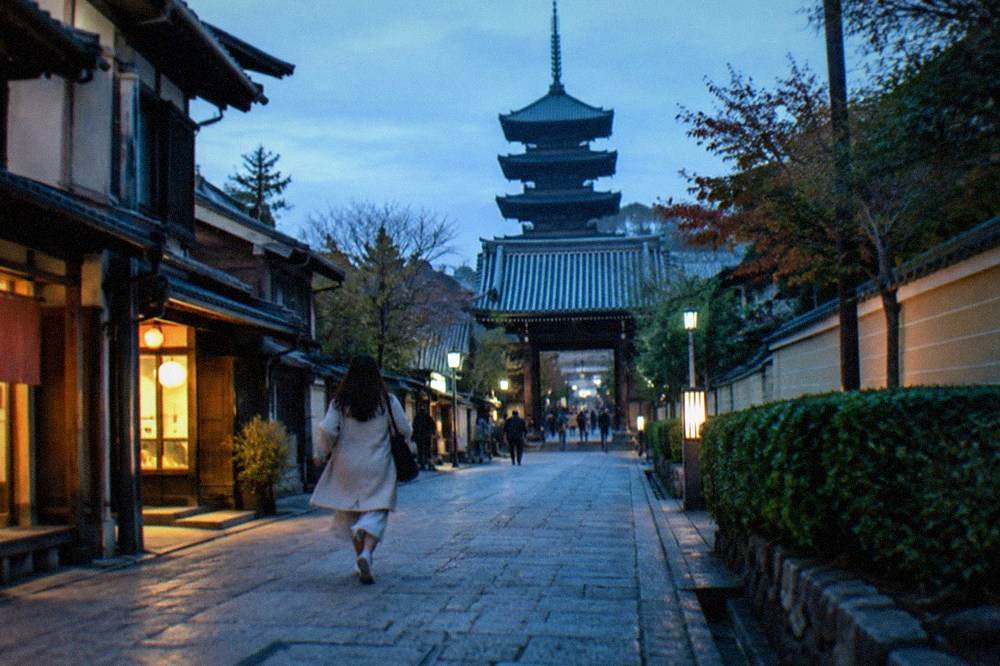
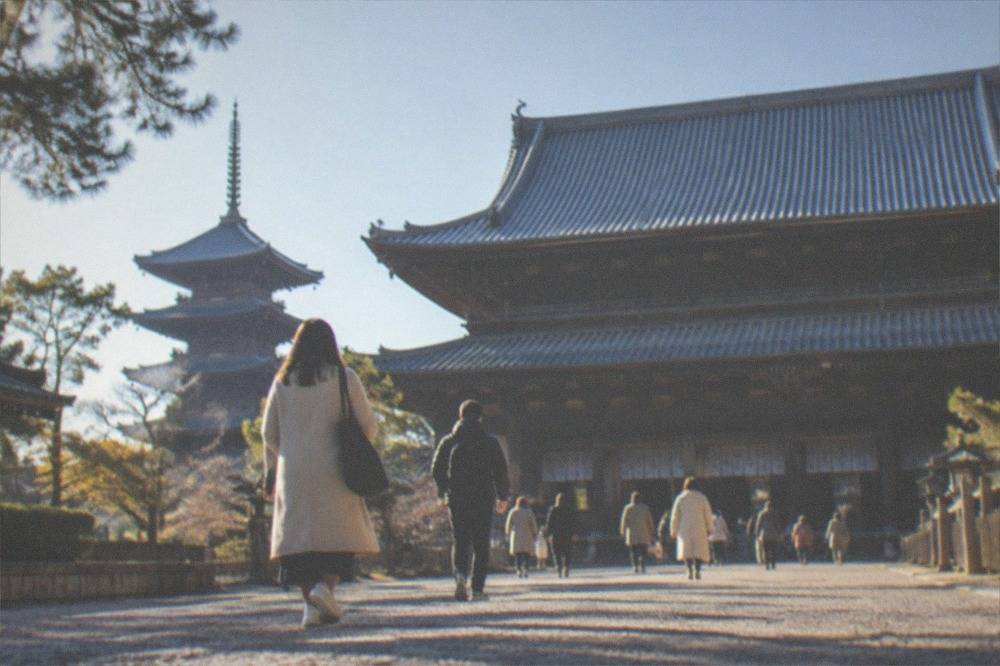
The pagoda is not generally open to climb. Visitors see it from the temple grounds, and the best-known viewing angles are from the approach through the gate and from the west side in the late afternoon, when the sun lights the painted tiers. Photographers aiming at the classic shot of the pagoda with Kyoto Station's modernist glass tower in the same frame should walk a few blocks northwest of the temple entrance.
What Is To-ji Temple And Why Does It Matter In Kyoto's History?
To-ji was founded at the end of the eighth century as one of two temples guarding Heian-kyo's southern gate, and a few decades later Emperor Saga handed it to the monk Kukai, who made it the head temple of Japanese esoteric Shingon Buddhism. The pagoda, the Kondo main hall and the Kodo lecture hall form one of Kyoto's oldest surviving temple complexes, and the site is on the UNESCO World Heritage list as part of the Historic Monuments of Ancient Kyoto.
The founding story explains the temple's odd name. "To-ji" simply means the East Temple, because it stood east of the Rashomon gate, paired with a West Temple, Sai-ji, that has long since vanished. When the capital moved to Kyoto, Buddhist doctrine of the time called for temples to protect the city's southern approach, and To-ji kept that role for the entire Heian period.
The handover to Kukai, known posthumously as Kobo Daishi, is the event that made the temple's reputation. Kukai had studied esoteric Buddhism in Tang China, and under him To-ji became the centre of Shingon teaching in Japan, a seminary, a translation bureau and a national institution at once. The Kodo lecture hall still enshrines the celebrated arrangement of statues he is credited with planning: a three-dimensional mandala of carved Buddhas, bodhisattvas and guardian deities arranged around a central Dainichi Nyorai, with the figures placed in precise positional relationships that encode the doctrine. The temple describes this assembly as a mandala you walk into, and it is the single best reason to enter the paid halls rather than only viewing the pagoda from outside.
One verified date connects the wider religious landscape. The Fushimi Inari Taisha chronology, printed on the shrine's own history page, records that in 827 timber associated with Toji was used in shrine works, a reminder that the great religious institutions of early Heian-kyo drew on the same imperial resources. Fushimi Inari itself dates its founding to 711, when, in the shrine's own words, Inari Okami was enshrined on Inariyama by Irogu no Hatanokimi acting on an imperial order from Empress Genmei. To-ji is the younger institution by more than a century, but both were operating in and around the same capital within a generation of each other.
Kukai's legacy also drives the temple's monthly rhythm. The 21st of each month is associated with his memorial, and the temple grounds host a large flea market on that day, a tradition of centuries' standing that the temple's event calendar carries forward. The market, known as Kobo-san, fills the grounds with antiques, ceramics, plants and food stalls, and it is one of the few days when the temple feels more like a festival ground than a place of worship. Arrive early: the market's popularity means the grounds fill well before noon.
How Much Does To-ji Temple Cost To Visit In Kyoto?
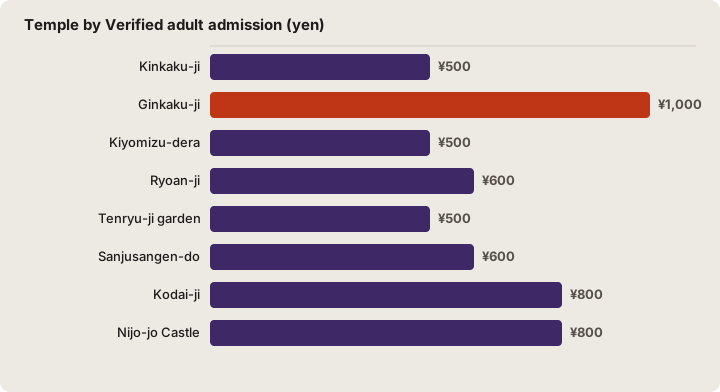
This site could not verify a current To-ji admission fee on a primary page, so no figure is printed here. The temple does charge for entering the halls, and the fee structure has changed over the years, which means any number copied from an older guide may be wrong. Check the temple's own visitor page before visiting, and budget using Kyoto's verified temple range of 500 to 1,000 yen for the major temples.
That answer follows this site's honesty rules exactly. Kyoto's temple fees moved twice in 2026 alone: Ginkaku-ji doubled its adult admission from 500 to 1,000 yen from 1 April 2026, the temple's own notice states, and Tofuku-ji revises its fees on 1 November 2026, with the Hojo garden rising from 500 to 600 yen and a new 1,000 yen combined ticket appearing. Any guide that prints a To-ji fee without a date is one revision away from being wrong, and this site would rather tell you to check than to guess.
For planning purposes, the verified Kyoto temple fee landscape looks like this:
| Temple | Verified adult admission | Notes |
|---|---|---|
| Kinkaku-ji | 500 yen | Set 1 April 2023 per the temple's notice |
| Ginkaku-ji | 1,000 yen | Doubled from 500, effective 1 April 2026 |
| Kiyomizu-dera | 500 yen | Single source: the temple does not print it |
| Ryoan-ji | 600 yen | High school 500, elementary and junior high 300 |
| Tenryu-ji garden | 500 yen | Buildings plus 300, Hatto ceiling 500 separately |
| Sanjusangen-do | 600 yen | Junior high and high school 400, elementary 300 |
| Kodai-ji | 800 yen | 1,200 combined with Entoku-in |
| Nijo-jo Castle | 800 yen | 1,300 with Ninomaru-goten Palace |
To-ji's fee, whatever its current value, sits inside this range. The practical difference between the temples is not the fee but what you get for it. At To-ji the paid area is the point: the Kodo hall's statue mandala and the Kondo's Yakushi Nyorai triad are the temple's treasures, and skipping them to save the equivalent of a bus fare misses the reason the temple matters.
A word on the pagoda itself: it is viewed from outside at all times, and no separate pagoda ticket exists. The fee covers the halls and grounds. Photography rules inside the halls follow the temple's posted notices, and flash and tripod use is generally discouraged in the statue halls, as at most Japanese temples.
When Is The Best Time To Visit To-ji In Kyoto?
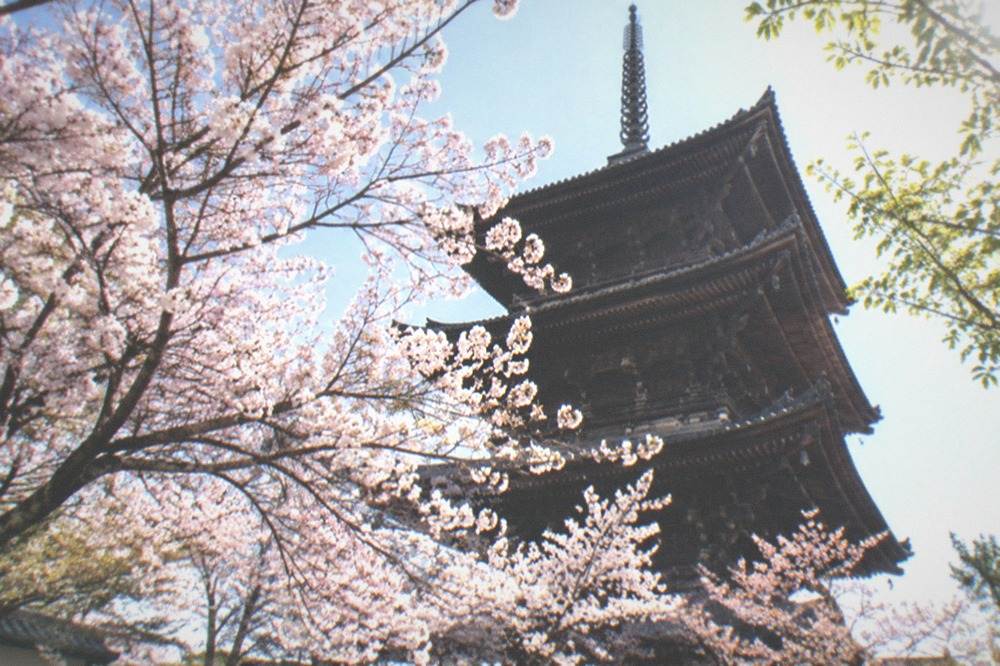
The temple grounds are quietest on weekday mornings shortly after opening, the 21st of each month brings the Kobo-san flea market and the biggest crowds, and the pagoda is at its most photogenic in late afternoon light. Spring cherry blossoms and late-autumn maples are the seasonal peaks, with the JMA normals putting full bloom around 4 April and the official red-leaf marker at 5 December.
The timing logic for To-ji differs from most Kyoto temples because of the market. On a normal day the grounds are among the calmer major temple spaces in central Kyoto, partly because the site is a short walk from, but not on, the main tourist circuits between Kyoto Station and Higashiyama. On the 21st the equation inverts: the market draws collectors, locals and tour groups, and the temple takes on a completely different character. Both versions are worth seeing, but they are different visits and should not be confused.
The seasonal data this site verified, from the Japan Meteorological Agency's Kyoto observatory records, is worth carrying into any timing decision:
| Event | 2026 actual | 1991-2020 normal | 2025 actual |
|---|---|---|---|
| Cherry flowering | 23 March | 26 March | 27 March |
| Cherry full bloom | 30 March | 4 April | 5 April |
| Ginkgo yellow leaves | not yet observed | 24 November | 25 November |
| Maple red leaves | not yet observed | 5 December | 10 December |
Note what the maple normal actually says. The JMA's 5 December date is the observatory's specimen tree turning, not the Arashiyama or Higashiyama foliage peak, which runs earlier, in the second half of November. For To-ji specifically, the temple's own grounds hold maples and ginkgos that colour through late November, and the pagoda framed in red leaves is a well-known November composition. Weathernews' 2026 foliage outlook for the Kyoto area, including Arashiyama, put peak colour around 24 November 2026, which is consistent with that window.
Weather matters less at To-ji than at garden temples like Saiho-ji, the moss temple, because the pagoda and the halls are the draw and both photograph well in overcast conditions. The one weather trap is summer. The JMA 1991-2020 normals show July as Kyoto's wettest month at 223.6 mm, ahead of June at 199.7 mm, a fact most guides get backwards, and August as the hottest at a mean of 28.5 C with mean daily highs of 33.7 C. Three of Kyoto's six hottest days on record fell in the summers of 2024, 2025 and 2026, so a July or August visit should target the morning hours.
How Do You Get To To-ji Temple From Kyoto Station?
To-ji is a flat fifteen-minute walk due south of Kyoto Station's central exit, or one stop on the Kintetsu Kyoto Line to Toji Station. The temple has no subway station of its own, the city bus flat fare is 230 yen, and the subway fare range is 220 to 360 yen depending on zone, so walking is usually the fastest and cheapest option from the station.
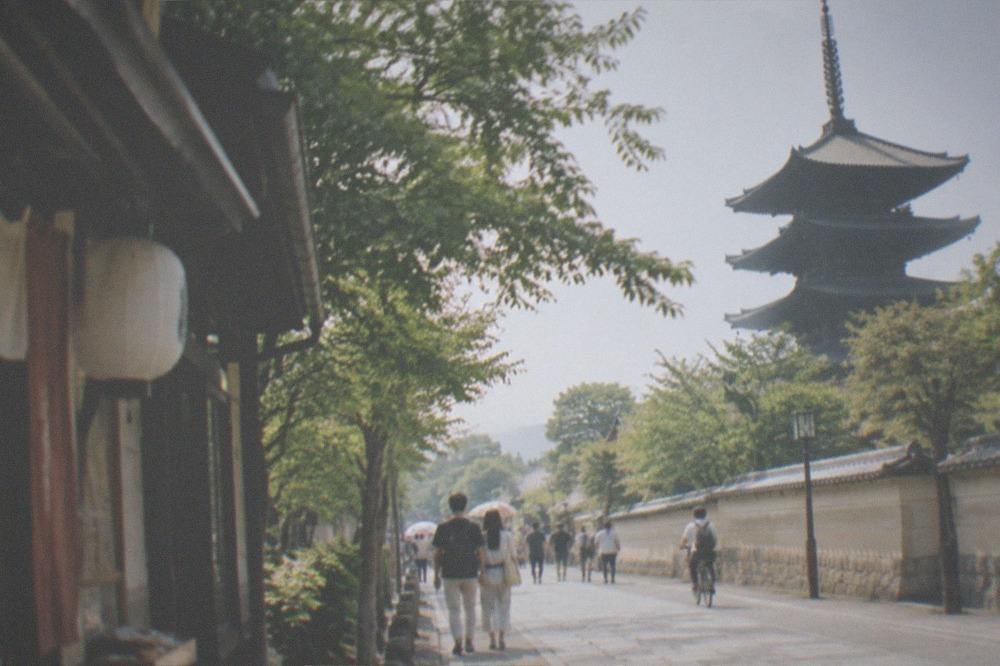
The walk is simple and worth doing. Leaving the station's central exit, the route runs south along the wide boulevard, crossing the Kamo River's Takase channel tributary, with the pagoda visible ahead for most of the way. The total distance is roughly one kilometre, flat the whole way, and it passes through an unglamorous but genuine Kyoto neighbourhood of small workshops and lunch spots that most visitors never see.
For the fare picture across the city's transport:
| Option | Verified fare | Notes |
|---|---|---|
| City bus, flat fare | 230 yen adult, 120 yen child | Child is ages 6 to 11 |
| Subway, zones 1 to 5 | 220 to 360 yen adult | Child 110 to 180 yen |
| Subway and Bus One-Day Pass | 1,100 yen adult, 550 yen child | The bus-only pass was abolished, last usable 31 March 2024 |
| EX100 / EX101 tourist express | 500 yen adult, 250 yen child | Runs Kyoto Station toward Kiyomizu and Gion, not To-ji |
| ICOCA card | 2,000 yen including a 500 yen deposit | Standard card sales are running normally |
The one-day pass deserves a warning. Older guides still recommend a "bus one-day pass" that no longer exists: sales ended in September 2023 and the pass was usable for the last time on 31 March 2024, the city transport bureau's own page states. The current product is the Subway and Bus One-Day Pass at 1,100 yen, which pays off only if you plan three or more bus or subway rides in a day. For a To-ji visit paired with walking, it usually does not.
If To-ji is your first stop on a longer itinerary, the geography works in your favour. The temple is the southern anchor of a route that runs north through Higashiyama and Kiyomizu-dera, and a full circuit of the city's headline temples fits comfortably in a day with a tour bus. For visitors who prefer to move under their own steam, the Kyoto subway guide covers the two-line network that links the station area to the north of the city.
What Should You Actually Look At Inside To-ji Temple?
The three buildings to see are the Kondo main hall, which houses a Yakushi Nyorai triad, the Kodo lecture hall with its celebrated three-dimensional mandala of carved statues, and the pagoda viewed from the grounds. The five-story Dai-to pagoda, the Nandaimon great south gate and the Miei-do hall, associated with Kukai himself, complete the core of the visit.
The Kodo is the reason to pay the admission. Inside, the statues are arranged as a mandala: the Dainichi Nyorai at the centre, surrounded by the five wisdom kings, the bodhisattvas and the guardian deities, each carved and placed to encode Shingon doctrine in physical space. The arrangement is dark, incense-perfumed and genuinely unlike any other hall in Kyoto. Visitors who have seen the 1,001 Kannon statues at Sanjusangen-do will recognise the impulse, but To-ji's version is architectural rather than processional: you stand inside the doctrine rather than walking past it.
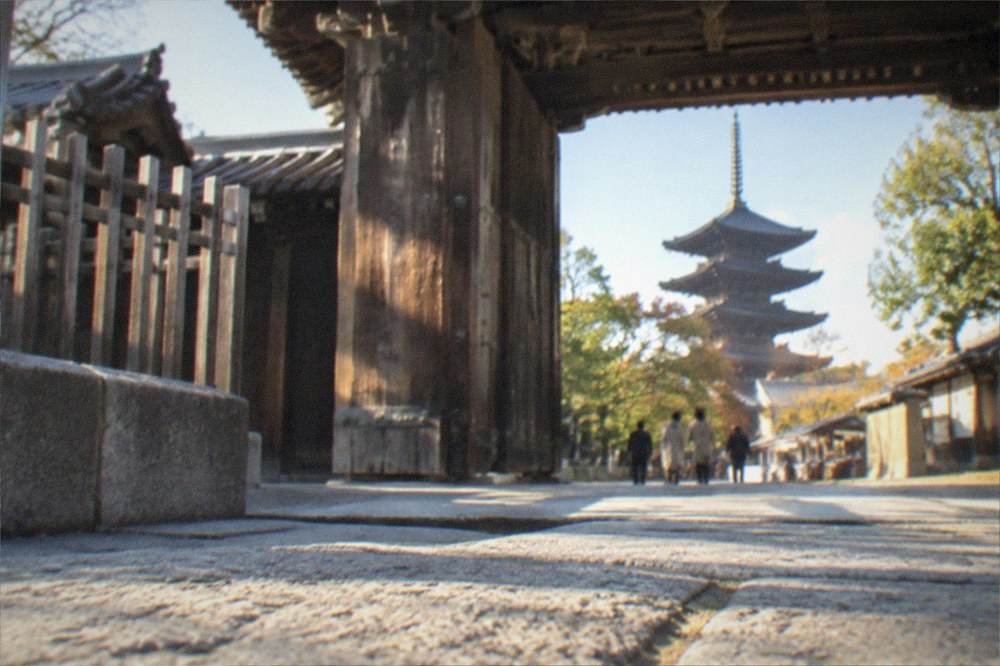
The Kondo, rebuilt after fire in the early Edo period, is a stately structure holding the Yakushi Nyorai, the Medicine Buddha, flanked by attendants. The Miei-do, the hall associated with Kukai's residence, preserves the worship space of the Shingon lineage. The Nandaimon great gate at the south entrance frames the approach, and the pagoda completes the axis. Give the grounds ninety minutes on a normal day, more if the 21st-day market is running.
For visitors building a temple itinerary, To-ji's statue halls sit in a different category from Kyoto's garden temples. The zen garden circuit around Ryoan-ji and Nanzen-ji rewards slow looking at raked gravel and borrowed scenery; To-ji rewards standing still in a dark hall surrounded by carved deities. A first-time visitor with two temple slots in the south of the city should pair To-ji with either Ninna-ji to the west or the Higashiyama slope to the east, not with another statue hall on the same morning.
How Does To-ji Compare With Kyoto's Other Headline Temples?
To-ji is Kyoto's best temple for carved Buddhist statuary in a single dark hall, it is the only one with Japan's tallest wooden pagoda, and it is the closest major temple to Kyoto Station. It lacks the garden spaces of Tenryu-ji or Nanzen-ji and the golden spectacle of Kinkaku-ji, so it suits visitors who want sculpture, history and convenience over landscapes.
The comparison matters because Kyoto has seventeen World Heritage sites and no visitor sees them all. The honest sorting:
| If you want | Best verified fit | Why |
|---|---|---|
| Japan's tallest wooden pagoda | To-ji | Unique claim, no rival |
| Dark halls of carved statuary | To-ji, Sanjusangen-do | Mandala arrangement vs 1,001 Kannon |
| A golden pavilion | Kinkaku-ji | 500 yen, 9:00 to 17:00 |
| A raked-gravel zen garden | Ryoan-ji | 600 yen adult |
| A garden with borrowed scenery | Tenryu-ji | Garden 500 yen, in Arashiyama |
| A hillside temple with city views | Kiyomizu-dera | Opens 6:00 daily |
| Walk-from-station convenience | To-ji | Fifteen minutes on foot |
To-ji's weakness is honest to state: it is not beautiful in the way the postcard temples are. The grounds are plain, the surrounding neighbourhood is commercial, and the pagoda is the only exterior element with real visual drama. What the temple offers instead is depth. This is the institution that anchored Japanese esoteric Buddhism, and the Kodo hall is the closest thing in the country to standing inside that doctrine.
Visitors travelling with children should know that To-ji is a contemplative stop rather than an interactive one. The family angle on Kyoto is better served elsewhere, though the 21st-day market, with its food stalls and antiques, is the exception that children tend to enjoy.
Common Questions About To-ji Temple
How Tall Is The To-ji Pagoda And Is It The Tallest Wooden Tower In Japan?
The To-ji pagoda is widely described as the tallest wooden pagoda in Japan. This site could not verify an exact measurement on the temple's own pages, so no figure in metres is printed here. The "tallest wooden pagoda in Japan" claim is consistent across every reference this research found.
Can You Go Inside The To-ji Pagoda?
No. The pagoda is viewed from the temple grounds only, and there is no separate pagoda ticket. The paid admission covers the Kondo and Kodo halls, where the temple's celebrated statue collections are housed.
What Day Is The To-ji Flea Market Held?
The Kobo-san market is traditionally held on the 21st of each month, the day associated with Kobo Daishi's memorial. The market fills the temple grounds with antiques, ceramics, plants and food stalls, and it draws the temple's biggest crowds of the month, so arrive early.
How Do I Get To To-ji From Kyoto Station?
Walk. The temple is roughly one kilometre due south of Kyoto Station's central exit, a flat fifteen-minute walk with the pagoda visible for most of the route. Alternatively, take the Kintetsu Kyoto Line one stop to Toji Station.
Is To-ji Worth Visiting Compared With Kinkaku-ji Or Kiyomizu-dera?
It depends on what you want. To-ji offers carved statuary, esoteric Buddhist history and Japan's tallest wooden pagoda, and it is the closest major temple to Kyoto Station. Kinkaku-ji offers the golden pavilion and Kiyomizu-dera the hillside views. Visitors with time for two or more temples should include To-ji for the Kodo hall alone.
Who Founded To-ji Temple?
The temple was founded at the end of the eighth century as the East Temple guarding Heian-kyo's southern gate, and a few decades later Emperor Saga granted it to the monk Kukai, Kobo Daishi, who made it the head temple of Japanese Shingon Buddhism. The site is part of the UNESCO World Heritage listing of the Historic Monuments of Ancient Kyoto.
For travellers who want a guided structure around the city rather than working the city out alone, the headline bus tour below covers the major sites in a single day with an English-speaking guide, and it pairs well with a morning spent at To-ji before departure.
To-ji rewards the visitor who treats it as more than a pagoda photo. The temple is the southern anchor of Heian-kyo's religious geography, the institution that carried Kukai's Shingon teaching into Japanese history, and a fifteen-minute walk from the platforms most visitors arrive on. Pair it with the 21st-day market if the calendar allows, give the Kodo hall the time it deserves, and the temple earns its place beside Kyoto's more photographed sites. For the wider picture of what the city holds, start with the complete things-to-do overview on Kyoto Travel Guide.