How Many Kannon Statues Stand Inside Sanjusangen-do, And Are They Really All Different?
Sanjusangen-do, formally Rengeo-in, is a single hall in eastern Kyoto holding 1,001 Kannon statues, and the temple's own site is the source for that count.
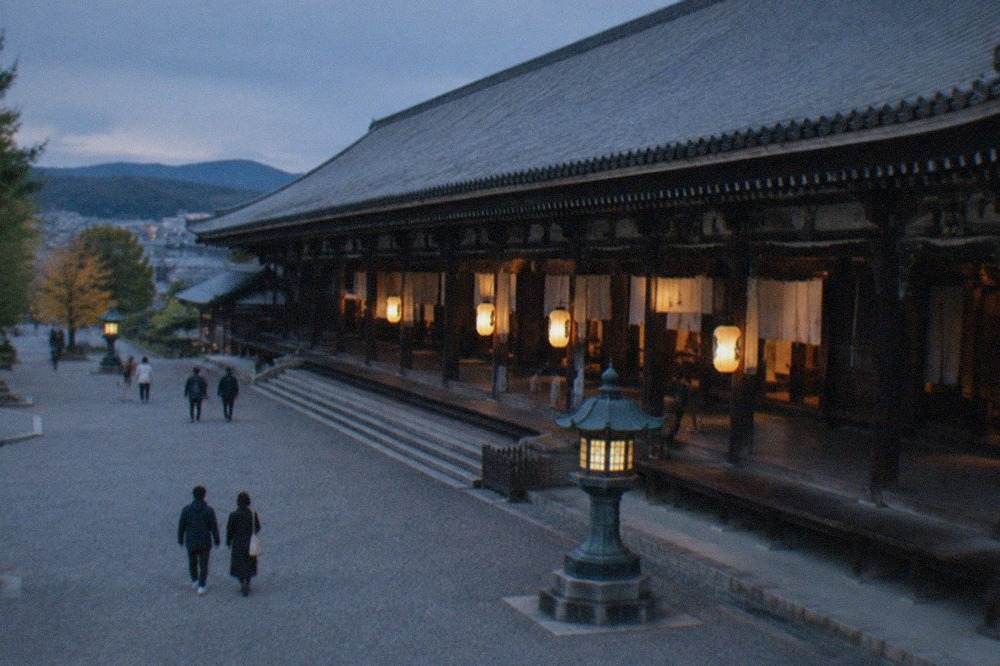
Short answer
1,001 Kannon statues stand in the hall, a figure the temple itself states. Admission is 600 yen for adults, and the hall is open every day of the year.
Sanjusangen-do, formally Rengeo-in, packs more carved wood into one room than almost any building on earth. The temple's own site states the number plainly: 1,001 Kannon statues standing in the hall, an arrangement the temple itself calls a forest of statues. The hall was founded inside Emperor Go-Shirakawa's detached palace, which places its origin in the late Heian court world of twelfth-century Kyoto, and the building you walk into today sits a short distance east of Kyoto Station and the Kyoto National Museum.
Photography inside the hall is restricted, so what most visitors carry away is memory rather than images: rows of gilded figures receding into the dark, ranked on stepped platforms, facing you in silence. This page sets out what the temple itself publishes about the statues, the fees, the hours and the practical visit, in the temple's own words wherever the temple has words on the matter.
What Is Sanjusangen-do And Why Is Its Main Hall So Famous?
Sanjusangen-do is a Tendai-school temple in Kyoto's Higashiyama ward whose main hall holds 1,001 Kannon statues, a count the temple itself prints. The hall was founded inside Emperor Go-Shirakawa's detached palace, and the temple's formal name is Rengeo-in. The name Sanjusangen-do, meaning thirty-three bays, comes from the number of bays between the hall's pillars, a measurement that gives the building its extraordinary length.
The temple's own history section is the source for the detached-palace origin, and it is worth taking seriously because the site is a single-page application that serves the same content at several addresses. What it states is that the hall was established within the grounds of a retired emperor's residence, a common pattern in medieval Kyoto, where cloistered emperors patronised temples inside their own compounds. The thirty-three bays are not an accident of construction. The number thirty-three carries meaning in Kannon devotion, tied to the idea that the bodhisattva manifests in thirty-three different forms to save beings, so the bay count and the statue program reinforce each other.
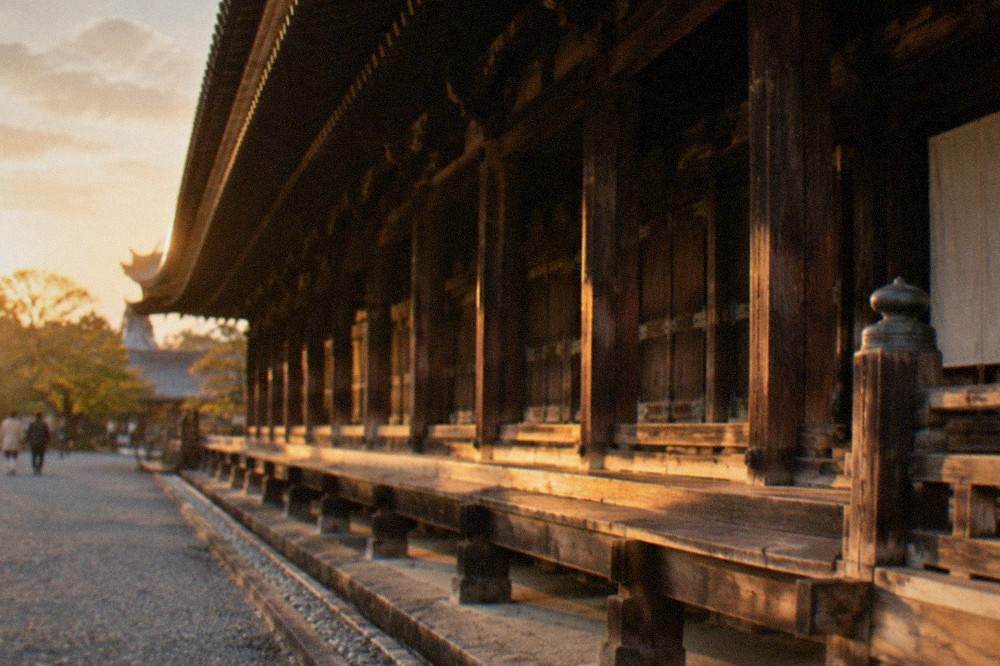
The hall's scale is the reason people remember it. One hundred and one of the statues are ranked in the central and flanking positions, with the remaining nine hundred filling the stepped rows behind them, and the effect, in the dim light the temple keeps, is less like a museum and more like standing inside a crowd. The temple does not permit photography of the interior, which protects the statues and, incidentally, keeps the experience from being reduced to a phone screen.
How Many Kannon Statues Stand Inside Sanjusangen-do, And Are They Really All Different?
The temple states that 1,001 Kannon statues stand in the hall, and it describes them as a forest of statues. Each statue is an individual carving, and a widely repeated tradition holds that somewhere among the faces you can find one that resembles your own, though the temple does not assert this itself, so treat it as folklore rather than doctrine. The count of 1,001 is the temple's own published figure, not an estimate.
The number matters in the iconography. The principal image is a seated Senju Kannon, the thousand-armed form of the bodhisattva, flanked by one thousand standing Senju Kannon figures arranged in ranks, with an additional group of guardian figures positioned in front of them. The temple's site does not break the 1,001 down by era, and this page will not either: how many are Heian-period originals and how many are Kamakura-period replacements is a question the temple's own English material does not settle, and printing a split the source does not print would be guesswork dressed as scholarship.
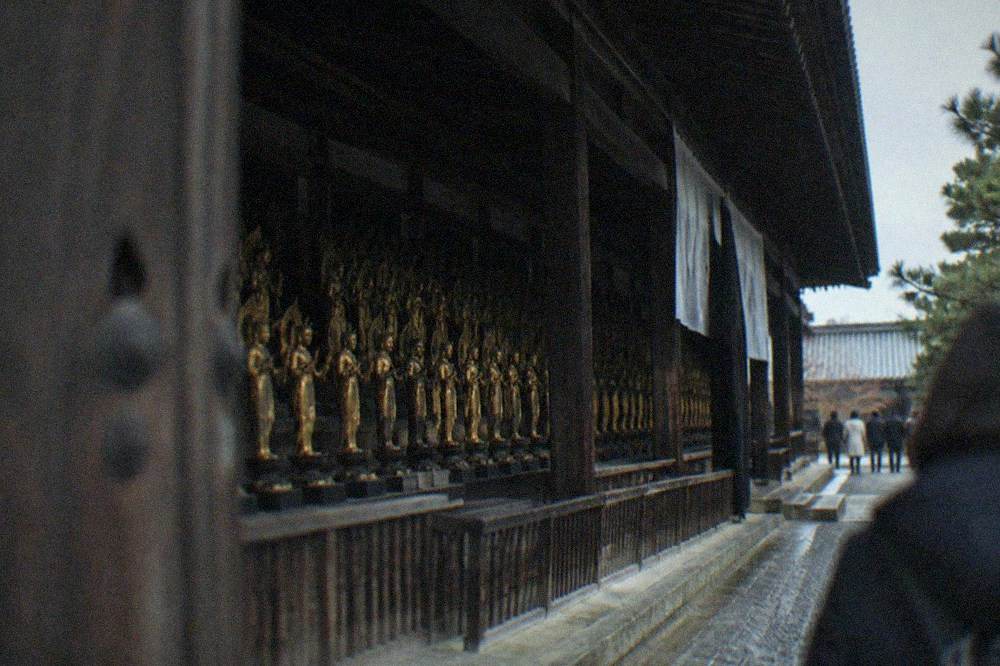
Are they really all different? Each statue is a separate carving, made by separate hands, and the tradition of finding your own face among them has circulated for generations. The honest framing is this: the temple calls its hall a forest of statues, and like any forest the trees are individually distinct even when the overall pattern repeats. Visitors who want a deeper read on the guardian figures and the central image can absorb the temple's own display material inside, which explains the iconography in Japanese and English.
For travellers building a temple itinerary around statue halls and gardens, the temple with 1000 faces in Kyoto question on this site covers how this hall compares with the other famous sculptural ensembles in the city, and the must-see temple in Kyoto answer weighs it against the golden and silver pavilions for a first visit.
The hall rewards slow looking. Ten minutes gets you the scale; half an hour gets you the differences, the small variations in posture and crown and expression that separate one thousand carvings made by human hands from one thousand copies made by a machine.
What Are The Sanjusangen-do Admission Fees And Opening Hours?
Admission is 600 yen for general visitors, 400 yen for junior high and high school students, and 300 yen for elementary school children, with group rates of 550, 350 and 250 yen. The hall is open every day of the year. From 1 April to 15 November it opens 8:30 to 17:00, and from 16 November to 31 March it opens 9:00 to 16:00, with reception ending 30 minutes before closing in both seasons.
Those figures come from the temple's own visit page, and the seasonal split is worth noting because the winter hours catch out visitors who arrive at 15:30 in December expecting an hour inside. The hall is unusual among Kyoto's major temples in having no closed days at all, which makes it a reliable fallback when other sites shut for year-end maintenance or New Year closures. Ryoan-ji and Tenryu-ji keep seasonal hours too, but Sanjusangen-do's every-day schedule is the most forgiving in the eastern temple belt.
| Visitor category | Standard fee | Group fee (30+) |
|---|---|---|
| General (adult) | 600 yen | 550 yen |
| Junior high and high school | 400 yen | 350 yen |
| Elementary | 300 yen | 250 yen |
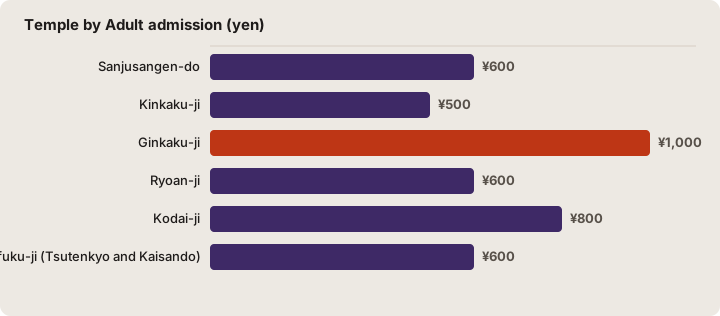
For context, here is how that 600 yen sits against other verified temple admissions in the city. Note that two of these changed recently: Ginkaku-ji doubled to 1,000 yen from 1 April 2026, and Tofuku-ji revises its fees on 1 November 2026, so older guides are already wrong on both.
| Temple | Adult admission | Note |
|---|---|---|
| Sanjusangen-do | 600 yen | Open every day |
| Kinkaku-ji | 500 yen | Set on 1 April 2023 |
| Ginkaku-ji | 1,000 yen | Doubled from 500 on 1 April 2026 |
| Ryoan-ji | 600 yen | Hours shorten in winter |
| Kodai-ji | 800 yen | 1,200 yen combined with Entoku-in |
| Tofuku-ji (Tsutenkyo and Kaisando) | 600 yen | 1,000 yen during autumn foliage from 1 Nov 2026 |
The fee is a flat single ticket: there is no combined option, no separate garden charge and no interior supplement of the kind Byodo-in applies to its Phoenix Hall. You pay once, you see the whole hall, and you can stay as long as the reception schedule allows.
If you are pairing the hall with a guided visit elsewhere in the city, the Nijo Castle World Heritage guided tour with admission bundles the castle's 1,300 yen combined ticket with a guide, which suits travellers who want the political history explained rather than read off placards. Sanjusangen-do itself needs no guide; the display material inside does the work.
How Do You Get To Sanjusangen-do From Kyoto Station?
Sanjusangen-do sits about a kilometre east of Kyoto Station, and the cheapest verified options are the city bus at a flat 230 yen per adult ride or the subway at 220 to 360 yen depending on zone. The Subway and Bus One-Day Pass at 1,100 yen covers unlimited travel on both networks and pays for itself after roughly four bus rides, and the tourist express buses EX100 and EX101 charge a flat 500 yen per adult ride.
The bus-only one-day pass no longer exists; sales ended in September 2023 and the last day of use was 31 March 2024, so any guide still recommending it is steering you toward a product you cannot buy. The current product is the Subway and Bus One-Day Pass at 1,100 yen for adults and 550 yen for children, which the city's transport bureau prices on its own pages. The EX100 and EX101 expresses, which run from Kyoto Station toward the Kiyomizu side with fewer stops, cost 500 yen for adults and 250 yen for children, payable in cash or by IC card.
| Option | Adult fare | Notes |
|---|---|---|
| Kyoto City Bus | 230 yen flat | Child (6-11) 120 yen |
| Subway (zones 1-5) | 220 to 360 yen | Child half fare by zone |
| Subway and Bus One-Day Pass | 1,100 yen | Child 550 yen |
| Tourist express EX100 / EX101 | 500 yen | Child 250 yen; fewer stops |
| ICOCA card | 2,000 yen incl. 500 yen deposit | Refundable deposit |
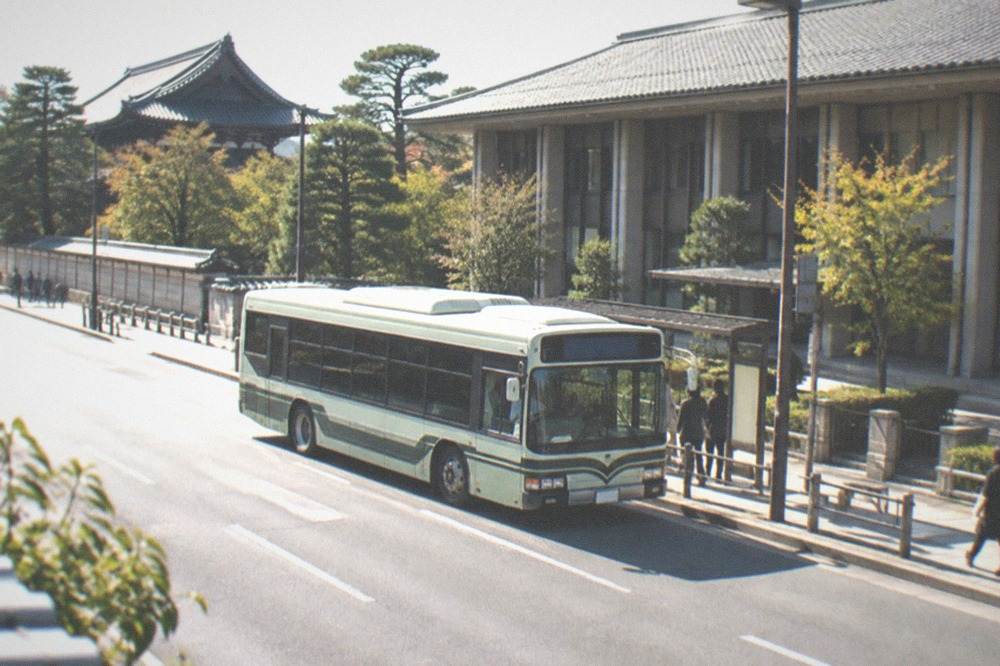
Walking from Kyoto Station is also reasonable: the route runs straight along Shichijo-dori past the Kyoto National Museum, and the museum makes a natural pairing because the two face each other across the street. Travellers using rail passes for wider Kansai travel should check the JR Pass for Kyoto guide, though for this particular trip the pass is irrelevant since the temple is a city bus or subway ride away.
What Else Can You See Near Sanjusangen-do In Higashiyama?
The temple sits in a walkable cluster that includes the Kyoto National Museum across the street, and a 20 to 30 minute walk north through the Higashiyama slopes reaches Kiyomizu-dera, Kodai-ji and the Chion-in grounds. Combining Sanjusangen-do with the museum and one hillside temple makes a full half day without any transport beyond your own feet.
The classic pairing is Sanjusangen-do in the morning, the museum at midday, then the walk north. Kiyomizu-dera opens at 6:00 daily, with a closing time that moves by season, and its 500 yen admission is single source, meaning the temple does not print the figure itself, so treat it as widely reported rather than official. Kodai-ji charges 800 yen, or 1,200 yen combined with Entoku-in, and runs night illuminations in autumn from 23 October to 13 December 2026. Chion-in's vast gate and grounds anchor the top of the slope. More of these guides are collected on Kyoto Travel Guide.
| Nearby site | Admission | Walking time from Sanjusangen-do |
|---|---|---|
| Kyoto National Museum | Varies by exhibition | Across the street |
| Kiyomizu-dera | 500 yen (single source) | 20 to 25 minutes uphill |
| Kodai-ji | 800 yen | 25 minutes uphill |
| Chion-in grounds | Free to walk the grounds | 25 to 30 minutes uphill |
| Nidec Kyoto Tower | 900 yen adult | 15 minutes west |
Going the other direction, the Nanzen-ji and Eikan-do area is a subway ride north and makes a strong afternoon after the statue hall, particularly in late November when Eikan-do's maples turn. For a full eastern-Kyoto plan, the things to do in Kyoto page sequences the whole belt.
An early start solves the crowd problem better than any route choice. The city's 2025 tourism survey recorded 62.79 million visitors, a record, and the statue hall's narrow interior feels that number most in the middle of the day. An early morning tour with an English-speaking guide approach, or simply arriving for the 8:30 opening, buys you the hall closer to the way it is meant to be experienced: quiet enough to hear the floorboards.
When Is The Best Time Of Year To Visit Sanjusangen-do?
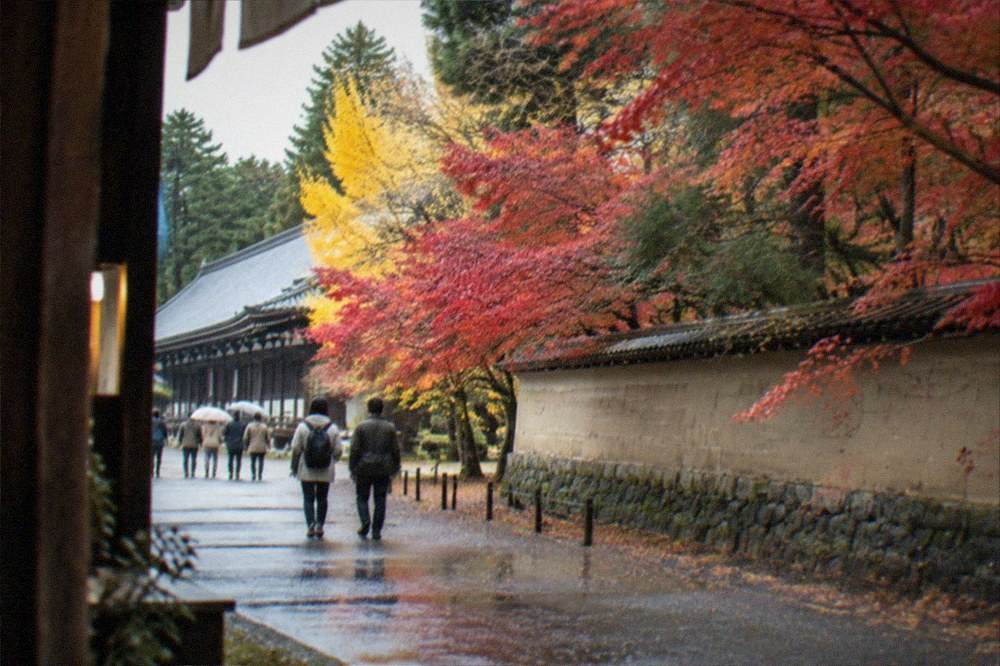
The hall itself is identical in every season, so the timing question is really about the surrounding walk and the crowds. Spring cherry bloom in Kyoto has averaged 26 March for flowering and 4 April for full bloom across the 1991 to 2020 normals, and maple red leaves at the observatory's specimen tree have averaged 5 December, later than the mid-November peak most guides claim, so late November into early December is the strongest window for combining the hall with autumn colour.
Those phenology figures come from the Japan Meteorological Agency's Kyoto observatory, which has recorded the same specimen trees for over a century. In 2026, flowering was observed on 23 March and full bloom on 30 March, both slightly ahead of the normals. In 2025, red leaves on the maple were observed on 10 December against a normal of 5 December. The JMA date is the observatory's own tree turning, not the Arashiyama or Eikan-do peak, so use it as the official marker rather than a promise about any particular garden.
| Event | 1991-2020 normal | 2026 observed | 2025 observed |
|---|---|---|---|
| Cherry flowering | 26 March | 23 March | 27 March |
| Cherry full bloom | 4 April | 30 March | 5 April |
| Maple red leaves | 5 December | Not yet observed | 10 December |
| Ginkgo yellow | 24 November | Not yet observed | 25 November |
Summer is the honest weak spot. July is Kyoto's wettest month at 223.6 mm against June's 199.7 mm in the 1991 to 2020 normals, a reversal of the common assumption, and August is the hottest month with a mean daily maximum of 33.7 C. The hall is unheated and uncooled, so a July afternoon visit is a humid one. Winter, by contrast, is underrated: the hall is open every day, the 9:00 to 16:00 hours still give a full afternoon, and January is both the coldest month, mean 4.8 C, and the driest, 53.3 mm.
Is Sanjusangen-do Worth Visiting Compared With Kyoto's Other Temples?
For a first visit to Kyoto, Sanjusangen-do is one of the strongest 600 yen you can spend, because it delivers something no other temple in the city can: a thousand carved figures in a single view. Where Kinkaku-ji offers one perfect exterior and Ryoan-ji offers fifteen stones, this hall offers sheer multiplicity, and the emotional register is awe rather than calm. Travellers short on time should rank it behind Kinkaku-ji and Kiyomizu-dera but ahead of most garden temples.
The comparison is not really about quality. The three experiences are different species. The Kinkaku-ji golden pavilion is an exterior, viewed across a pond in a circuit that takes most visitors under an hour at 500 yen. The Ryoan-ji rock garden is an interior of the mind, fifteen stones you can never see all at once, at the same 600 yen. Sanjusangen-do is an interior of the body: you stand inside a room built to hold a thousand deities, and the architecture exists to serve that single effect.
What the hall does not offer is a garden, a stroll or a view. You enter, you look, you leave, and the whole visit can run 30 to 45 minutes at an unhurried pace. That makes it a poor sole destination for a morning but an excellent component, and its position beside the Kyoto National Museum and on the walking line to Higashiyama means it slots into almost any eastern-Kyoto day without detour.
For visitors who want temples plus landscape rather than temples plus more temples, the hidden mountains of Kurama and Kibune guided hike trades the city's carved interiors for cedar forests and a river valley an hour north, and pairs well with a statue-hall day as a contrast. The Tofuku-ji bridge and gardens, ten minutes west by rail, are the natural same-morning companion if you are here in late November.
What Should You Know Before You Go To Sanjusangen-do?
Photography inside the hall is not permitted, so plan to leave the camera in your bag. The hall is open every day with no closed days, reception ends 30 minutes before closing, and the winter season runs shorter hours, 9:00 to 16:00 from 16 November to 31 March. Allow 30 to 45 minutes for the visit itself, more if you want to study the guardian figures, and combine it with the Kyoto National Museum across the street for a half day.
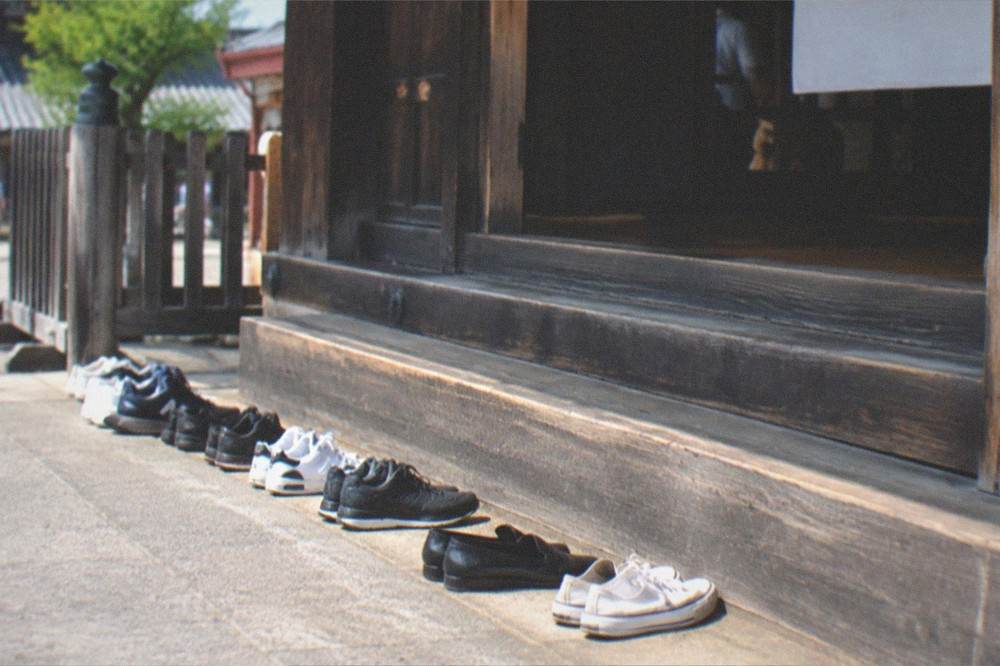
A few practical notes round out the picture. The hall's floor is raised wood, and visitors remove their shoes at the entrance, so socks without holes are a small kindness to yourself. The interior is kept dim to protect the gilding and lacquer, which is part of why the statues read as they do: your eyes adjust, and the ranks of figures seem to multiply in the gloom. There is no fee beyond the single admission, no timed entry and no reservation system, so the visit is as simple as Kyoto temple-going gets.
Crowds concentrate between 10:00 and 15:00, especially when tour buses from the cruise terminals and Kyoto Station disgorge in waves. The temple's every-day schedule means you can also come late: in the summer season, reception runs to 16:30, and the last half hour before closing is often the quietest. The city's Tourism Comfort Forecast, run by the Kyoto City Tourism Association, publishes crowd predictions for major spots using smartphone location data, and it is worth a look the night before.
Common Questions About Sanjusangen-do
How Many Kannon Statues Stand Inside Sanjusangen-do, And Are They Really All Different?
The temple states that 1,001 Kannon statues stand in the hall. Each is an individual carving, and a widely repeated tradition says you can find a face resembling your own among them, though the temple does not assert this itself.
Can You Take Photos Inside Sanjusangen-do?
No, photography inside the hall is not permitted. The restriction protects the gilded statues, and the exterior gates and forecourt are the usual spots for pictures.
How Much Does Sanjusangen-do Cost?
Admission is 600 yen for general visitors, 400 yen for junior high and high school students, and 300 yen for elementary school children, with group rates of 550, 350 and 250 yen. There is no additional charge inside.
Is Sanjusangen-do Open Every Day?
Yes, the hall is open every day of the year. Hours are 8:30 to 17:00 from 1 April to 15 November and 9:00 to 16:00 from 16 November to 31 March, with reception ending 30 minutes before closing.
How Long Does A Visit To Sanjusangen-do Take?
Most visitors spend 30 to 45 minutes inside the hall. Allow more time if you want to study the individual guardian figures, and consider pairing the temple with the Kyoto National Museum across the street for a half day.
How Do You Get To Sanjusangen-do From Kyoto Station?
The temple sits about a kilometre east of Kyoto Station. A city bus costs a flat 230 yen, the subway runs 220 to 360 yen by zone, and the walk along Shichijo-dori past the Kyoto National Museum takes roughly 15 minutes.
Sanjusangen-do rewards the visitor who arrives early, walks slowly and lets the number do its work. One thousand and one statues, counted by the temple that keeps them, in a hall that has stood on this ground since a retired emperor first built his palace here: that is the whole pitch, and it is enough.