When Does The Tofuku-ji Tsutenkyo Bridge Reach Peak Autumn Colour?
Tofuku-ji's Tsutenkyo bridge is Kyoto's most photographed single autumn view, and its colour arrives on a schedule most guides get wrong. The JMA maple normal for Kyoto is 5 December, the temple raises its bridge ticket during the foliage period, and the city's own crowd data says late November is the busiest corridor in town. Here is what is verified, what is not, and how to plan around both.
Short answer
The Tsutenkyo bridge at Tofuku-ji typically reaches peak red in late November, roughly the last week of the month into the first days of December. The official JMA marker for Kyoto maple red leaves is 5 December, and in 2025 the observatory recorded the turn on 10 December. The temple charges more for the bridge during the foliage period, 1,000 yen from 1 November 2026, and the nearest station is Tofuku-ji on the Keihan and JR Nara lines.
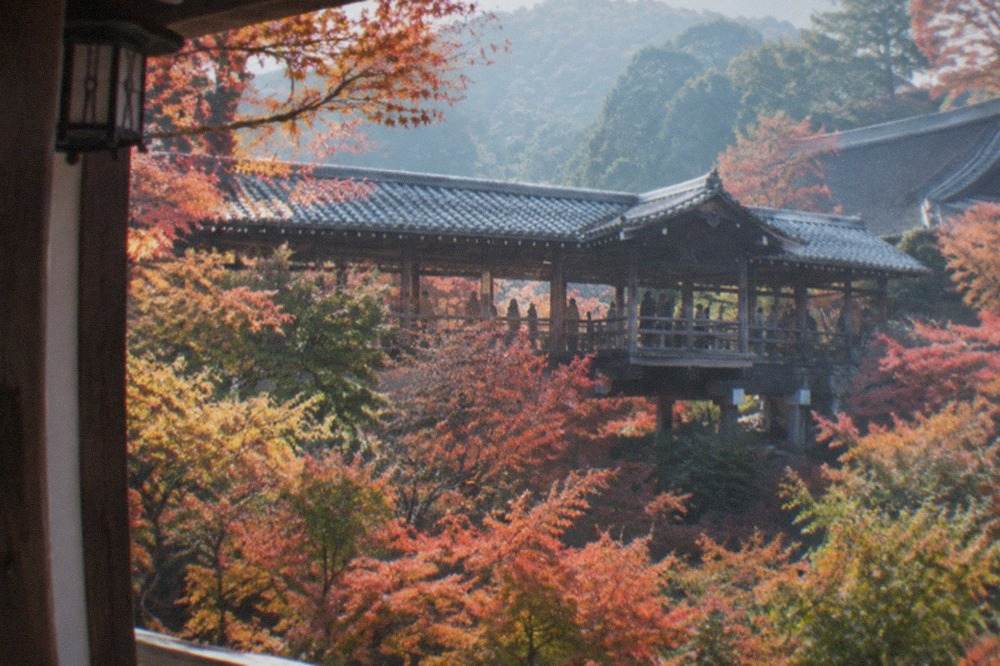
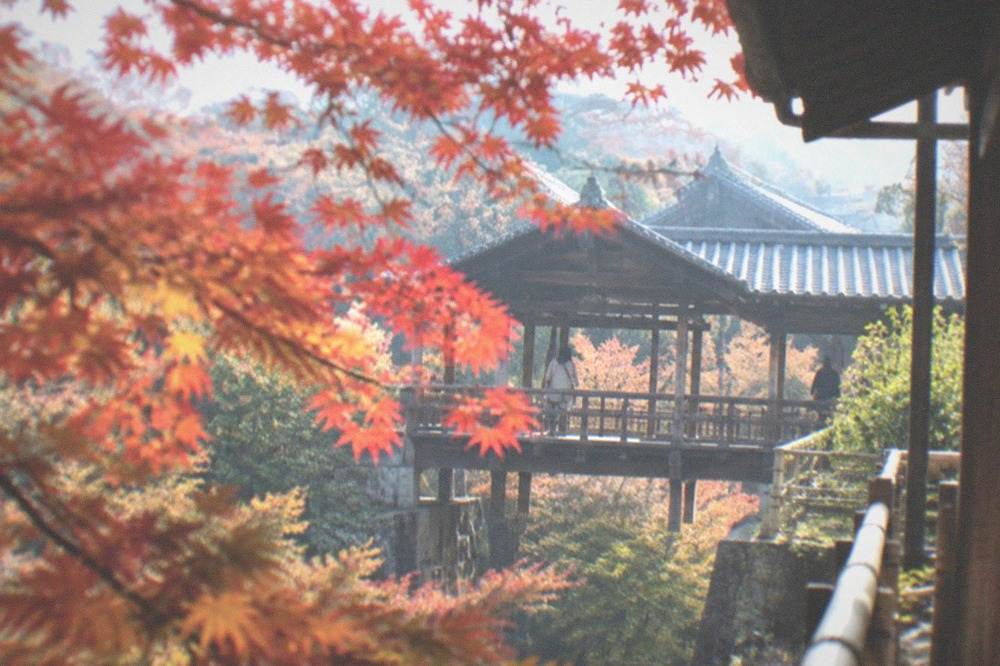
Tofuku-ji is the temple people visit for one reason: the Tsutenkyo bridge, a covered wooden walkway that crosses a valley of roughly two thousand maples, with the Hozo river running below and the Kaisando hall beyond. When the leaves turn, the view down from the bridge is the single most reproduced autumn image in Kyoto. The temple's own fee notice, dated for revision on 1 November 2026, treats the foliage period as a distinct product with a distinct price, which tells you how seriously the temple itself takes the season. This page assembles the verified dates, the fee structure, the transport and the crowd picture, and separates what the official sources say from what guidebooks repeat.
When Does The Tofuku-ji Tsutenkyo Bridge Reach Peak Autumn Colour?
The Tsutenkyo bridge at Tofuku-ji normally reaches peak red in late November, in the final week of the month running into the first days of December. The Japan Meteorological Agency's 1991-2020 normal for maple red leaves at its Kyoto observatory is 5 December, and in 2025 the observatory recorded the turn on 10 December. Those dates are later than the mid-November peak most competing guides claim, and the JMA figure is the official marker rather than a promise about any single tree.
The reason the guides are wrong is worth understanding, because it changes how you plan. The JMA date comes from one specimen tree at the Kyoto observatory, watched since 1880, and it records the day that tree's leaves are judged fully red. It is not the Arashiyama peak and it is not the Tofuku-ji peak; it is a consistent official marker you can compare across years. In 2025 that marker fell on 10 December, five days behind the normal. In 2026 the observatory had not yet recorded the maple turn as of mid-September, which is expected, but two private forecasters had already published outlooks: Weathernews put the Arashiyama area peak around 24 November 2026, and the JMC forecast put Kyoto red leaves at 11 December 2026.
For the Tsutenkyo bridge specifically, the practical reading is this: the temple's valley is planted with a mix of cultivars that turn at different rates, so the view is layered from mid-November, at its most saturated around the last week of November, and gone brown by early December in a warm year. The bridge itself is worth crossing in any season, but if the colour is the point, the last ten days of November are the window the temple's own pricing implicitly endorses.
How Much Does Tofuku-ji Cost After The November 2026 Fee Revision?
From 1 November 2026 the Tsutenkyo bridge and Kaisando circuit costs 600 yen for adults and 300 for children, rising to 1,000 and 300 during the autumn foliage period. The Hojo garden rises from 500 to 600 yen, and a new combined ticket covering both areas is introduced at 1,000 yen adult and 500 child. Before that date the bridge is 600 and the Hojo garden 500, with no combined option.
The temple's own notice sets all of this out, and it is the most consequential fee change at any Kyoto temple in 2026 alongside Ginkaku-ji's doubling to 1,000 yen. The foliage surcharge on the bridge is not new in kind, but the new combined ticket is: for the price of the old bridge-plus-nothing, you now get the bridge, the Kaisando and the Hojo garden in one entry. For a leaf-season visit the combined ticket is the obvious buy, since the two areas sit at opposite ends of the same crossing.
| Area | Until 31 Oct 2026 | From 1 Nov 2026 | Foliage period (from 1 Nov rule) |
|---|---|---|---|
| Tsutenkyo bridge + Kaisando | 600 / 300 | 600 / 300 | 1,000 / 300 |
| Hojo garden (Honbo) | 500 / 300 | 600 / 300 | 600 / 300 |
| Combined ticket (both) | none | 1,000 / 500 | 1,000 / 500 |
A note on what this page will not do: several secondary sources reported "no fee changes" at Tofuku-ji in their 2026 sweeps. The temple's own notice says otherwise, and the temple wins. Any guide quoting 600 yen flat for the foliage season is quoting the pre-revision card.
What Are The Verified Hours And How Do You Reach Tofuku-ji?
Tofuku-ji sits at Tofukuji Station, served by both the Keihan main line and the JR Nara line, one stop from Kyoto Station on the JR side and two stops from Gion-Shijo on the Keihan side. The temple is roughly 15 minutes on foot from the station through a residential approach. Verified opening hours for the paid areas are not published in a form this site treats as reliable outside the fee notice's season structure, so check the temple's own site before a dawn visit.
The station pairing is the practical fact. The JR Nara line from Kyoto Station reaches Tofukuji in about two minutes; the Keihan line from Gion-Shijo takes about four. That double connection is why the temple gets crush-loaded in leaf season: it is the easiest major maple site to reach from both the station hotels and the Gion hotels, and every autumn-leaves bus tour in the city stops within walking distance. The Keihan approach from the east is the quieter of the two walks.
For context on the surrounding corridor, the temple anchors the eastern side of a leaf route that runs west to Arashiyama's bamboo grove and north to the Philosopher's Path. If you are building the whole season around colour, our Kyoto autumn leaves guide and the autumn leaves itinerary cover the full sequence.
How Bad Are The Crowds On The Tsutenkyo Bridge In Leaf Season?
Kyoto drew a record 62.79 million visitors in 2025, up from 56.06 million in 2024, and day visitors rose to 46.20 million, which is the number that hits Tofuku-ji hardest because the temple is a short hop from two stations. The city's own survey, released 12 June 2026, also reports that about half of Japanese visitors found something disappointing about their trip against about 20 percent of foreign visitors, and crowding is the leading candidate for that gap.
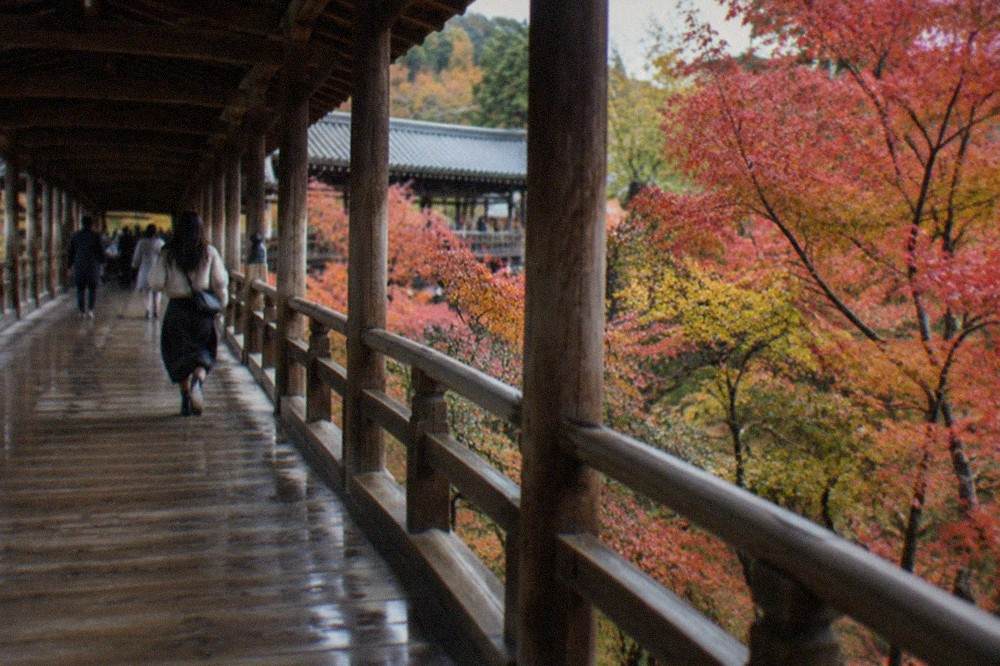
The bridge is the bottleneck. It is a covered walkway wide enough for two streams of people, and in peak foliage the temple manages flow onto it in a way that no source quantifies with a number, so this site will not invent one. What is verifiable is the mechanism: the bridge is the only way to see the valley from above, the view from the middle is the one everyone wants, and the foliage-period surcharge has never reduced demand, which is why the temple felt able to raise the price.
The honest timing advice is structural rather than numerical. The city's tourism association runs a Kyoto Tourism Comfort Forecast that uses smartphone location data, weather and day-of-week modelling to grade crowd comfort by spot and time slot, and Fushimi Inari links to it from its own site; the same tool covers the Tofuku-ji area. Weekday mornings in the last week of November are the least contested window the data pattern supports, and the first days of December trade thinner colour for far thinner crowds.
What Makes The Tsutenkyo Bridge View Different From Other Kyoto Maple Spots?
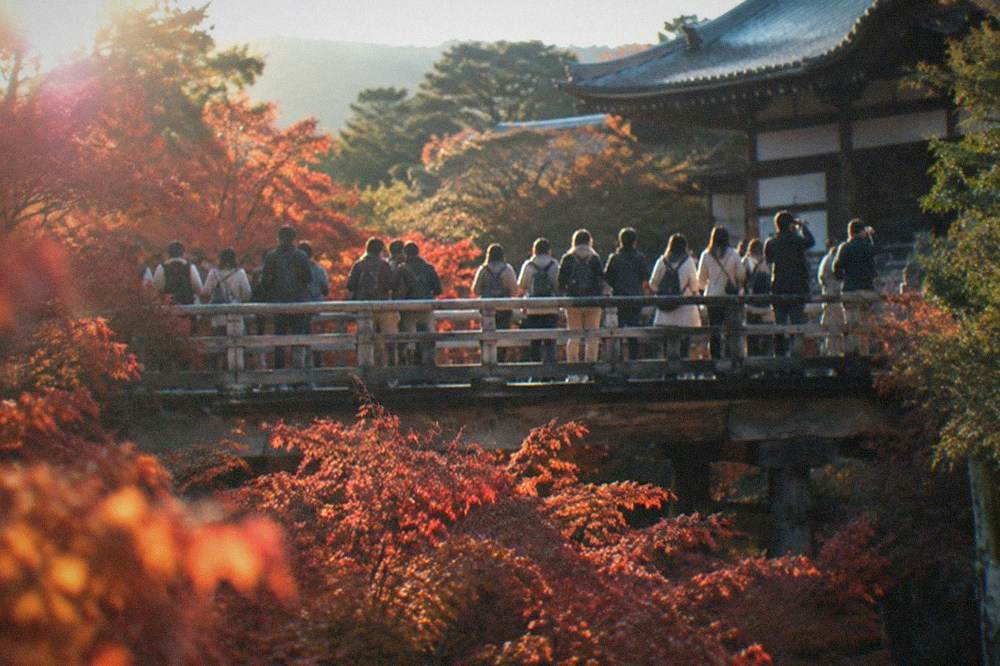
The Tsutenkyo crosses a steep valley the temple has planted with about two thousand maples of mixed cultivars, so the colour arrives in layers rather than all at once, and the view is downward into the canopy rather than across at it. Every other famous Kyoto maple view, from Eikan-do's pond to the Hozugawa gorge, is a horizontal prospect; the bridge is the one place you stand inside the top of the colour.
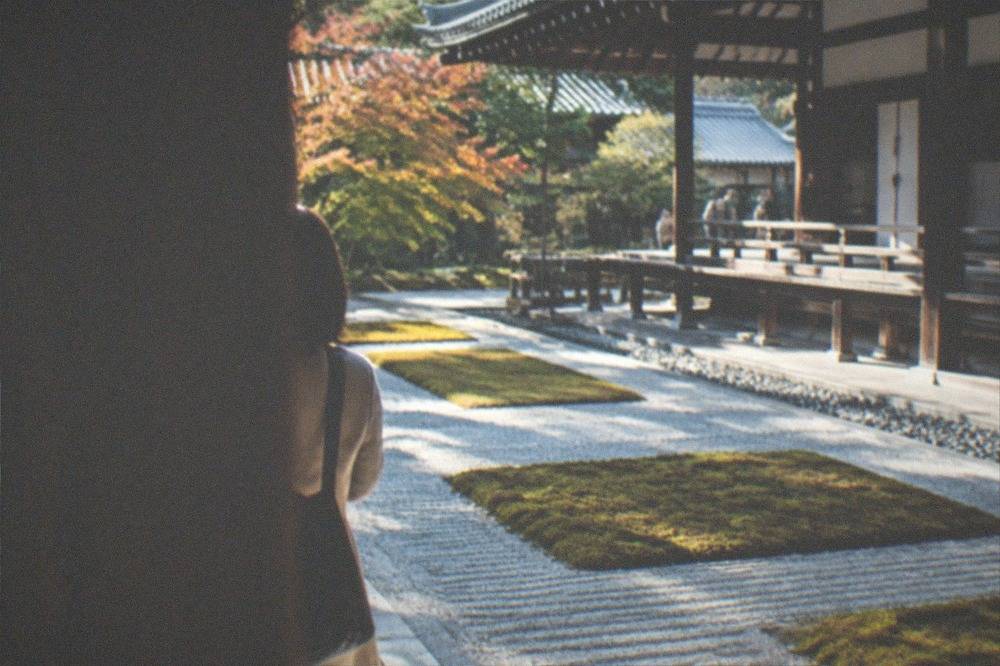
That structural difference is why the bridge out-photographs sites with arguably better individual trees. The Kaisando hall at the far end gives the classic reverse composition, the bridge framed by foliage, and the Hozo river below the span adds movement to long exposures. The Hojo garden at the other end of the complex is a dry landscape garden by the modern master Shigemori Mirei, whose checkered moss panels are a separate reason to visit and a natural pairing with the zen gardens of Kyoto.
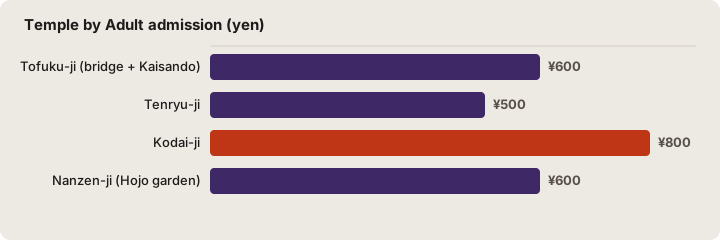
For comparison shopping among the temples, the fee table below puts Tofuku-ji's post-revision pricing against its neighbours.
| Temple | Adult admission | Leaf-season note |
|---|---|---|
| Tofuku-ji (bridge + Kaisando) | 600 yen, 1,000 in foliage period from 1 Nov 2026 | New 1,000/500 combined ticket |
| Eikan-do | see our Eikan-do page | Night illumination in season |
| Tenryu-ji | garden 500 yen, buildings plus 300 | Arashiyama pairing |
| Kodai-ji | 800 yen | Night viewing 23 Oct to 13 Dec 2026 |
| Nanzen-ji (Hojo garden) | 600 yen | Sanmon gate 600 separately |
What Is The Best Time Of Day To Photograph The Bridge?
Mid-morning to early afternoon gives the best light on the valley, because the sun clears the eastern ridge and lights the maple canopy from above while the bridge interior stays evenly diffused by its roof. Late afternoon puts the valley in shadow and the western ridge backlit, which suits silhouette work but flattens the reds. No source publishes a best-hour number, and this site will not invent one.
The bridge's roof is the underappreciated asset. Because the walkway is covered, the shooting position is always in open shade, which means no harsh shadows on faces and no blown highlights on the boards, whatever the sky does. The valley below carries the light. On overcast days, frequent in late November when the JMA normals show 73.9 mm of rain across the month, the canopy colours actually saturate better than in direct sun, and the covered deck keeps you dry while you work. The rest of the planning pages sit on Kyoto Travel Guide.
A tripod on the bridge deck is impractical in foliage season simply from foot traffic; a monopod or a stabilised body is the workable kit. The Kaisando end of the bridge, looking back along the span, is the composition that survives crowds best, because the people on the deck read as scale rather than obstruction.
How Does Tofuku-ji Fit Into A One-Day Kyoto Autumn Route?
The strongest one-day autumn route pairs Tofuku-ji in the morning with Eikan-do or the Philosopher's Path in the afternoon, because the temple's eastern location means you finish walking west-to-north as the light softens. Kyoto Station to Tofukuji is two minutes on the JR Nara line, the bridge circuit takes about an hour at foliage pace, and the Keihan line from Tofukuji to Jingu-Marutamachi puts you at the start of the canal-side walk within 20 minutes.
The sequencing logic is light and crowds together. Tofuku-ji's crowd pressure is worst through the middle of the day, so an early bridge crossing beats both the queue and the flat midday light on the valley. The Philosopher's Path and Eikan-do hold their colour later into December than the Tofuku-ji valley, so if the season is running late, the JMC 2026 forecast of red leaves on 11 December favours the northern sites as the safer bet.
For the full day planned hour by hour, the one day in Kyoto itinerary and the dedicated autumn leaves itinerary carry the detail. If rain arrives, and the November normal says it will on roughly one day in three, the rainy day itinerary keeps the covered bridge on the list, since the deck stays usable in anything short of a typhoon.
What Else Is At Tofuku-ji Besides The Bridge?
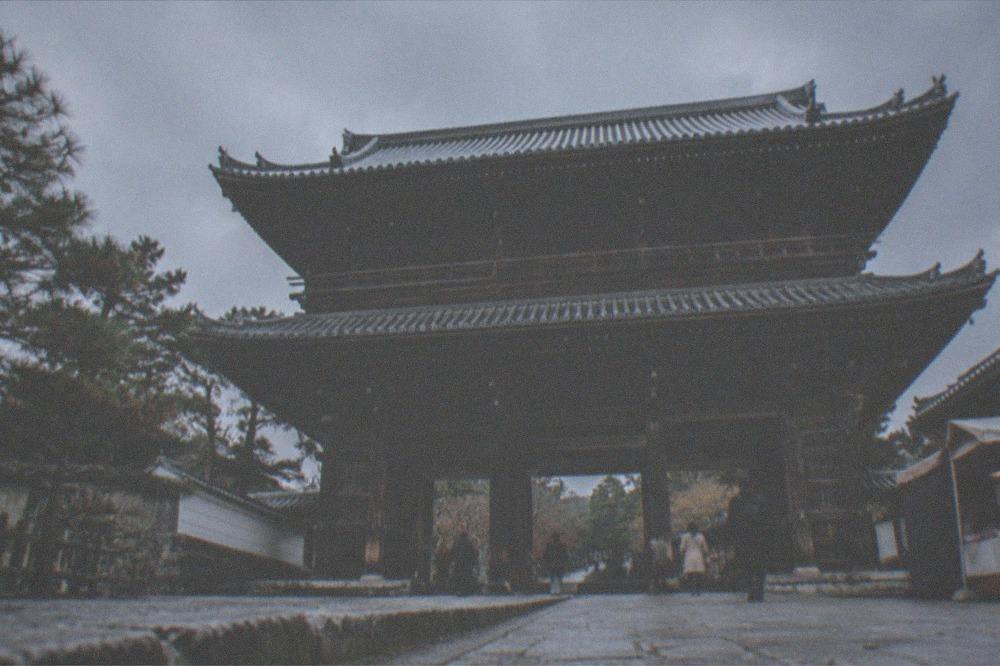
Tofuku-ji is the head temple of the Tofuku-ji school of Rinzai Zen and one of the five great Zen temples of Kyoto, and its grounds hold 25 sub-temples, most closed to the public, plus the Sanmon gate, one of the oldest and largest Zen gates in Japan. The two paid areas are the bridge and Kaisando circuit and the Hojo garden; the gate and the approach are free to walk.
The complex's scale explains why the foliage period feels like a festival: the maple valley was planted deliberately as a garden feature in the modern era, with cultivars chosen to stagger the turn. The Daitoku-ji complex in the north is its structural sibling, another head temple with sub-temples and gardens, and the two make a good contrast pair across a two-day visit. The To-ji temple across the valley belongs to the same medieval founding era of Kyoto's great religious foundations.
What Does The Weather Actually Do In Kyoto In Late November?
The JMA 1991-2020 normals for Kyoto station show November with a mean temperature of 12.5 C, a mean daily maximum of 17.3 C, a mean daily minimum of 8.4 C, and 73.9 mm of rain across the month, with 140.7 hours of sunshine. December drops to a 7.2 C mean, 11.6 C mean daily maximum and 3.5 C mean daily minimum, with 57.3 mm of rain.
That is jacket weather by any standard, and the mornings of a leaf-season visit can sit close to single digits. The normals also correct a common assumption: November is not Kyoto's wettest period by a wide margin. July holds that title at 223.6 mm against June's 199.7 mm, and the late-autumn months are among the drier and clearer of the year, which is part of why the season is so reliable for photography.
| Month | Rain mm | Mean C | Mean daily max C | Mean daily min C | Sunshine h |
|---|---|---|---|---|---|
| Oct | 143.2 | 18.4 | 23.4 | 14.4 | 156.0 |
| Nov | 73.9 | 12.5 | 17.3 | 8.4 | 140.7 |
| Dec | 57.3 | 7.2 | 11.6 | 3.5 | 134.4 |
Kyoto has a real winter, for the record: the station's record low is -11.9 C and its deepest snow 41 cm. A late-November visit is not that, but pack for 8 C mornings with wind on the exposed bridge deck.
Which Other Kyoto Temples Hold Their Colour Into December?
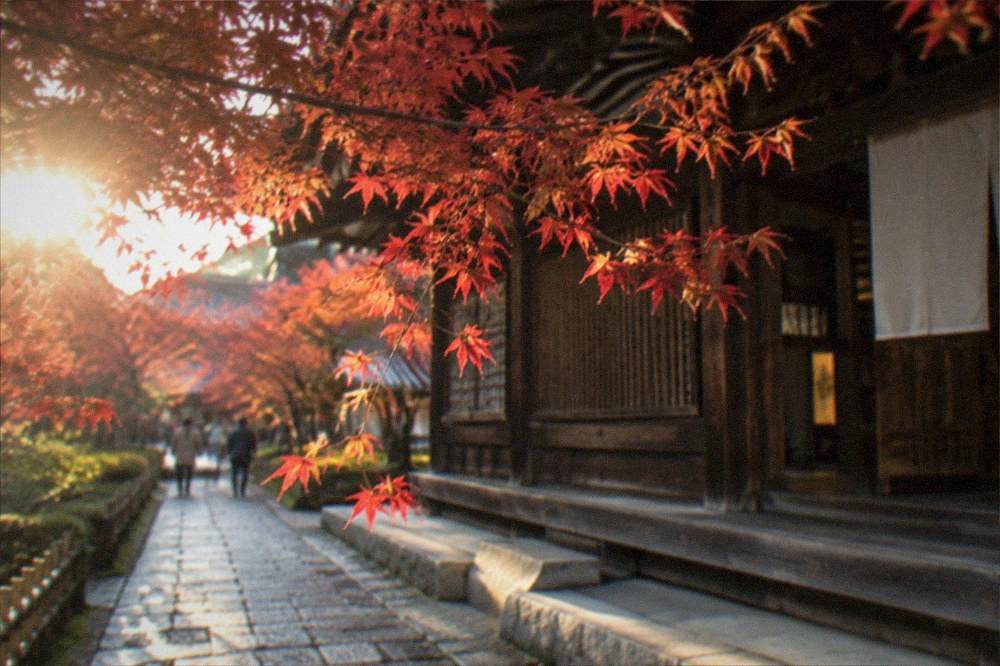
The JMA normals put maple red leaves at 5 December and ginkgo yellow at 24 November, so the northern and eastern temple gardens, which sit colder than the city basin, commonly hold colour into the first week of December. Eikan-do, the Philosopher's Path and the Nanzen-ji grounds are the classic late holds, while the Tofuku-ji valley is usually past its best by then.
The stagger is the planning tool. If you arrive in the last days of November and the Tofuku-ji valley has already browned, the odds favour colour still standing at elevation and along the canal. The 2025 observatory record, maple red on 10 December, shows how far the season can run in a warm year, and the 2026 private forecasts split between late November and mid-December, which is itself the honest picture: a two-to-three week spread depending on which forecaster and which site. For the late holds, our pages on Nanzen-ji and the Kyoto autumn leaves guide carry the detail.
Should You Visit Tofuku-ji With A Guide Or On Your Own?
The bridge, the Kaisando and the Hojo garden are fully walkable on your own with English signage, and the fee notice prices a self-guided visit identically whether you arrive alone or with forty others. A guided visit adds value mainly on the Zen history and the sub-temples, where context is everything and the English material on site is thin. The stronger case for a guide is pairing the temple with the surrounding Fushimi district, which is otherwise easy to mis-plan.
The surrounding area is the argument. Tofuku-ji sits on the edge of Fushimi, Kyoto's sake brewery district, and the Keihan line runs straight down to the Fushimi Inari side in minutes. An afternoon of maples followed by an evening in the brewery quarter is one of the best full days the eastern half of the city offers, and the Fushimi sake district guide covers the detail. The three-hour insider sake brewery tour with tastings and pairings is the natural bookend to a morning at the bridge, and it runs from the district itself.
Common Questions About Tofuku-ji Autumn Colour
When does the Tofuku-ji Tsutenkyo bridge reach peak autumn colour?
Typically in the last week of November, running into the first days of December. The JMA normal for Kyoto maple red leaves is 5 December, and the 2025 observatory record was 10 December, but the temple's mixed-cultivar valley is usually at its most saturated slightly earlier than the official marker.
How much does the Tsutenkyo bridge cost?
600 yen for adults and 300 for children until 31 October 2026. From 1 November 2026 the foliage-period price is 1,000 and 300, and a new combined ticket covering the bridge circuit and the Hojo garden costs 1,000 and 500.
How do I get to Tofuku-ji from Kyoto Station?
Take the JR Nara line one stop to Tofukuji Station, about two minutes, then walk roughly 15 minutes. The Keihan main line also serves Tofukuji Station from Gion-Shijo in about four minutes.
Is the bridge crowded in November?
Yes, heavily, in the peak foliage window. Kyoto drew a record 62.79 million visitors in 2025 and day visitors rose to 46.20 million, and the temple's position one stop from Kyoto Station makes it one of the easiest leaf spots to reach. Weekday mornings are the least contested time.
Can I see the maples from the bridge without paying?
No. The bridge and valley are inside the paid circuit, and the only view of the maple valley from outside the ticket is partial, from the free approach around the Sanmon gate.
What if I miss peak colour?
The northern and eastern gardens, including Eikan-do and the Philosopher's Path, commonly hold red later than the Tofuku-ji valley, and the JMA normal of 5 December means colour in Kyoto can run well into the month. A late arrival is better spent on those sites than on a browned valley.
The Tsutenkyo bridge earns its reputation honestly: a covered wooden deck suspended inside the top of two thousand turning maples is a view no other Kyoto temple offers, and the temple's own fee notice now prices it as the premium product it is. Time the last week of November, cross the bridge before the midday crush, buy the combined ticket, and let the afternoon run downhill toward Fushimi. That is a day the colour rarely ruins, and in a city that recorded three of its six hottest days ever in the summers of 2024 through 2026, the maples turning on schedule at all is worth appreciating.