Which Kyoto Zen Gardens Are Essential: Ryoan-ji, Daisen-in, Tofuku-ji Hojo, Ginkaku-ji?
Kyoto's zen gardens are not flower beds and not parks. They are compositions of gravel, rock and moss, built to be sat with rather than walked through, and four of them, at Ryoan-ji, Daisen-in, Tofuku-ji and Ginkaku-ji, carry the whole tradition between them.
Short answer
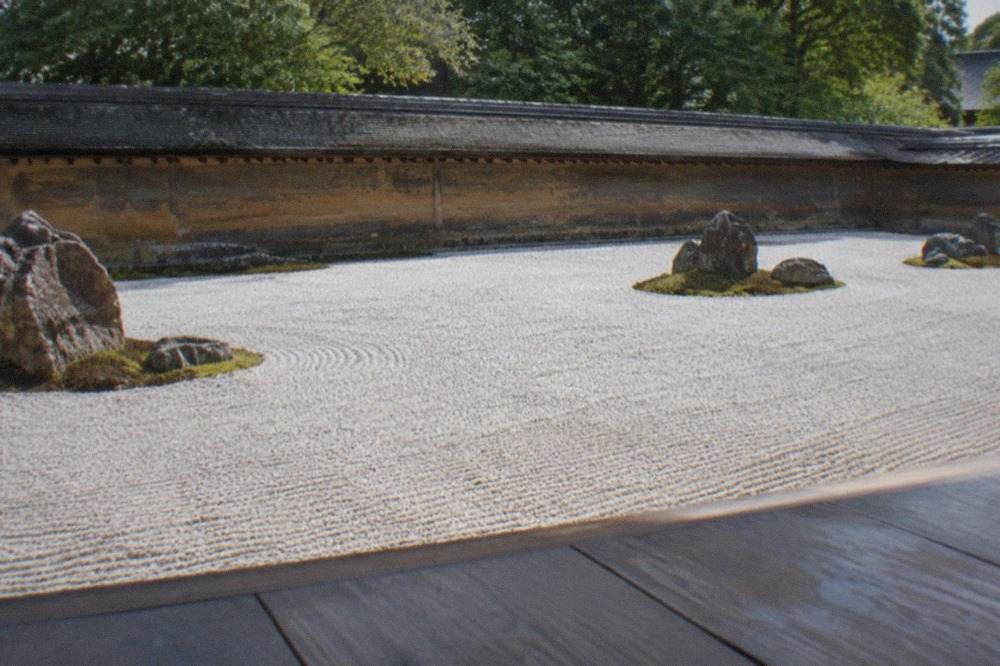
The four essential Kyoto zen gardens are Ryoan-ji's fifteen-rock gravel garden, the tight Daisen-in compositions at Daitoku-ji, the boldly modern Tofuku-ji Hojo garden by Shigemori Mirei, and the Ginkaku-ji garden with its sand cone and upper stroll. Ryoan-ji charges 600 yen, Ginkaku-ji 1,000 yen since April 2026, and Tofuku-ji revises its fees on 1 November 2026.
Kyoto's zen gardens are not flower beds and not parks. They are compositions of gravel, rock and moss, built to be sat with rather than walked through, and four of them, at Ryoan-ji, Daisen-in, Tofuku-ji and Ginkaku-ji, carry the whole tradition between them. The city's 2025 tourism survey, released in June 2026, counted 62.79 million visitors across the year, and a large share of them funnel into the same handful of garden verandas, which makes knowing which gardens actually hold the tradition, and what each one now costs, the difference between a good morning and a queue.
This page covers the four gardens that matter most, with every fee and opening hour checked against the temples' own notices. Two of those fees changed recently: Ginkaku-ji doubled to 1,000 yen in April 2026, and Tofuku-ji revises its garden fees on 1 November 2026. A guide copied from a 2024 page will get both wrong. For the wider picture of the city's temples, see the Kyoto temples overview.
Why Do Kyoto's Zen Gardens Look So Different From Western Gardens?
Zen gardens in Kyoto are dry landscape compositions, called karesansui, built from raked gravel, stones and moss with no pond and almost no planting, designed to be viewed from a single seated position rather than walked through. The form matured in the Muromachi period around zen monasteries in the north of the city, and it encodes mountains, islands and rivers in stone rather than imitating them with water and flowers.
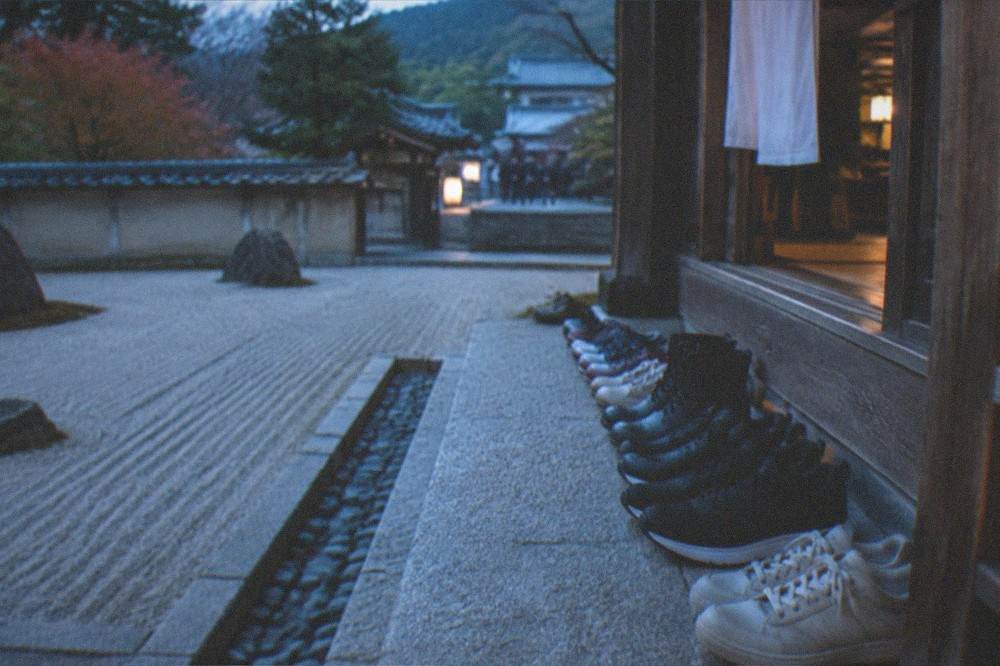
The difference is one of purpose. A Western garden rewards movement and seasonal change; a karesansui rewards stillness. The viewer sits on a veranda, the hojo flanking the abbot's quarters, and the garden holds its composition from that one fixed angle. Nothing blooms for you. The gravel is raked in patterns that suggest water, the stones stand for islands or mountains, and the whole thing is complete without a visitor at all.
That austerity has a practical root. The zen complexes of Murayama, the northern hills where Daitoku-ji and its neighbours sit, had limited water for ornamental ponds, and the dry style let a garden exist where a stream could not. Later, in the 20th century, designers took the vocabulary somewhere new: Shigemori Mirei's checkerboard moss and stone garden at the Tofuku-ji Hojo kept the materials of karesansui but abandoned the pretence of hidden meaning, which is why that garden belongs on any essential list alongside the medieval ones.
The four gardens on this page span that whole arc: Ryoan-ji from the late 15th century, Daisen-in from the early 16th century, the Tofuku-ji Hojo from the 20th century, and Ginkaku-ji from the late 15th century with its famous sand cone. Between them they cover roughly five hundred years of the same argument about how much a garden can say with nothing but stone.
Is Ryoan-ji's Rock Garden Worth The 600 Yen Admission?
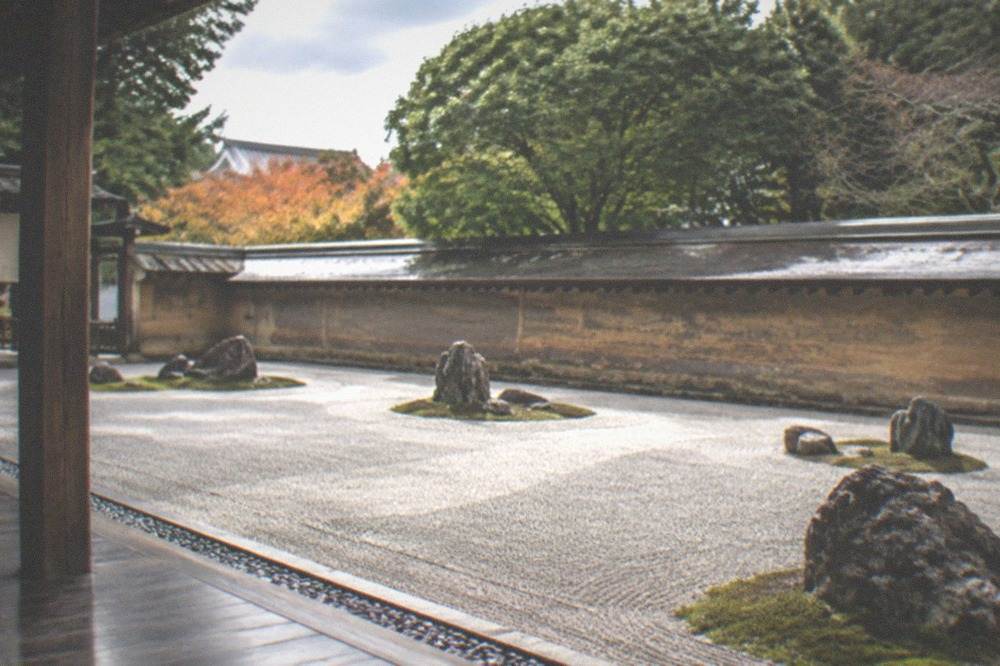
Ryoan-ji's rock garden is the most famous zen garden in the world and remains the best use of 600 yen in Kyoto's temple circuit. Fifteen stones sit in white raked gravel in groups of five, two, three, two and three, arranged so that from any ordinary seated position on the veranda at least one stone is always hidden.
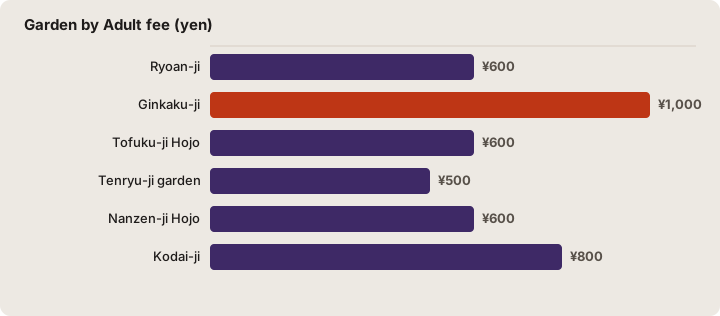
The temple charges 600 yen for adults, 500 for high school students and 300 for elementary and junior high, and it is open 8:00 to 17:00 from March to November.
The garden measures about twenty-five metres by ten, and its entire content is those fifteen stones and the moss that patches their bases. No tree interrupts the rectangle. The wall behind it, clay fired with oil that has stained it amber over the centuries, is as much a part of the composition as the stones. The temple's own materials describe the arrangement as a riddle with no published answer: some readings see islands in a sea, some see a tiger crossing with cubs, and the temple endorses none of them.
What the fee actually buys is the veranda. The garden cannot be photographed from anywhere else, and it cannot be understood from a photograph, because the hidden-fifteenth-stone effect only works with your own eyes moving along the wooden edge. Arrive at the 8:00 opening in high season and you may share the veranda with a dozen people; arrive at 11:00 and you will share it with tour groups from the Golden Pavilion route two kilometres away, which is the standard pairing since both sit in northwest Kyoto.
The temple publishes its winter hours too: 8:30 to 16:30 from December to February. There is more to the grounds than the rock garden, including a pond garden that most visitors skip entirely, and that stroll, free with the same admission, is where Ryoan-ji quietly outclasses its reputation. For the full picture of the temple, see the Ryoan-ji guide.
A word on timing your whole day: the city's tourism association runs the Kyoto Tourism Comfort Forecast, a five-level crowd prediction built from smartphone location data, weather and calendar, published for individual spots and time slots. It is the only crowd tool in Japan that works at the level of a single temple, and checking it the night before a Ryoan-ji morning is the single highest-value minute of planning a garden route can include.
What Makes The Daisen-in Garden At Daitoku-ji So Famous?
Daisen-in, a sub-temple of the Daitoku-ji complex in northern Kyoto, holds some of the tightest and most celebrated dry gardens in Japan, built in the early 16th century, in which a narrow strip of raked gravel becomes a river running under stone bridges past a gravel boat and a sea of sand. The gardens are small enough to cross in a minute and dense enough to study for an hour, and they sit inside a working zen monastery whose main halls are ticketed separately.
The genius of Daisen-in is compression. Where Ryoan-ji gives you one large rectangle and one idea, Daisen-in runs its composition along the north and east edges of the abbot's hall, so the "river" of gravel flows past you as you move, and the scale keeps shrinking: a stone mountain, a waterfall suggested by a vertical slab, a boat of gravel riding the sand sea, and finally a rectangle of pure raked emptiness that the temple literature leaves uninterpreted. It is the closest thing medieval Japan produced to a sequence of haiku in stone.
Daitoku-ji itself is a walled monastery town of more than twenty sub-temples, most of them closed to the public and most of those open charging their own small admission. Daisen-in is the one that draws the crowds, and it is the reason to make the trip to the Daitoku-ji area, but the complex rewards wandering even where the gates are shut: the lanes between the walls are quiet in a way central Kyoto no longer is.
Practical notes. The temples of the complex keep their own hours and fees, and this site prints no figure for Daisen-in's admission because the temple's own page was not readable at research time; budget a few hundred yen and check the gate. Photography inside Daisen-in's garden rooms is restricted, and the rule is enforced. The nearest bus stop serves the complex's south gate, and the whole visit, garden plus wander, fits comfortably inside ninety minutes, which makes Daisen-in the best morning pairing with Ryoan-ji if you would rather not double back.
Why Is The Tofuku-ji Hojo Garden Kyoto's Boldest Modern Design?
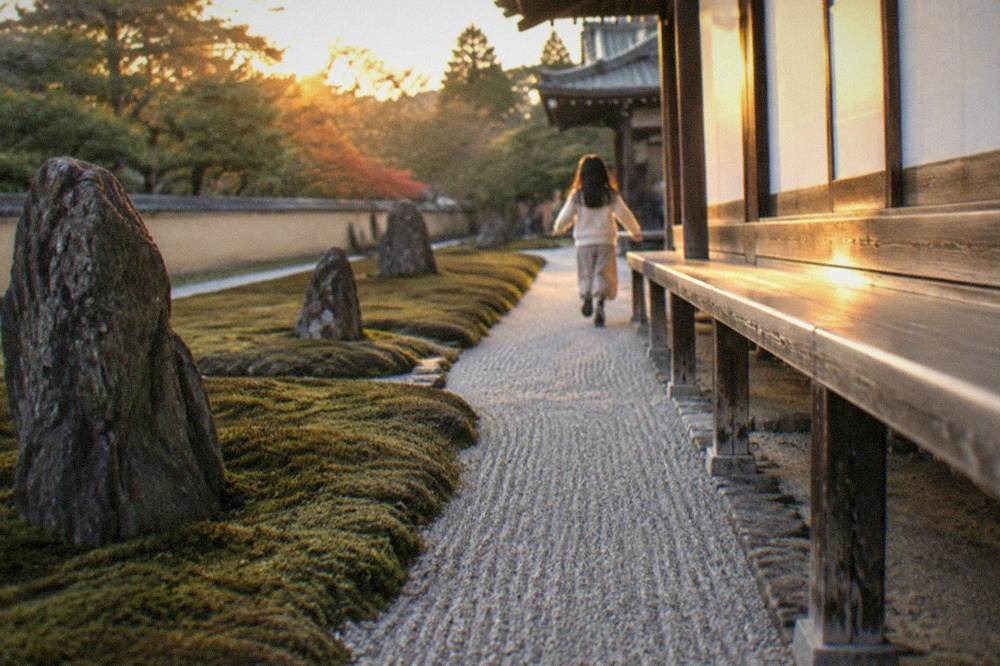
The Tofuku-ji Hojo garden, rebuilt by the designer Shigemori Mirei in the 20th century, replaces medieval suggestion with brutal geometry: four compositions of moss, stone and raked gravel that include a giant checkerboard of stone and green extending into the distance. The temple revises its admission on 1 November 2026, when the Hojo garden rises from 500 to 600 yen, a new 1,000 yen combined ticket appears, and the Tsutenkyo bridge crossing rises to 1,000 yen during the autumn foliage period.
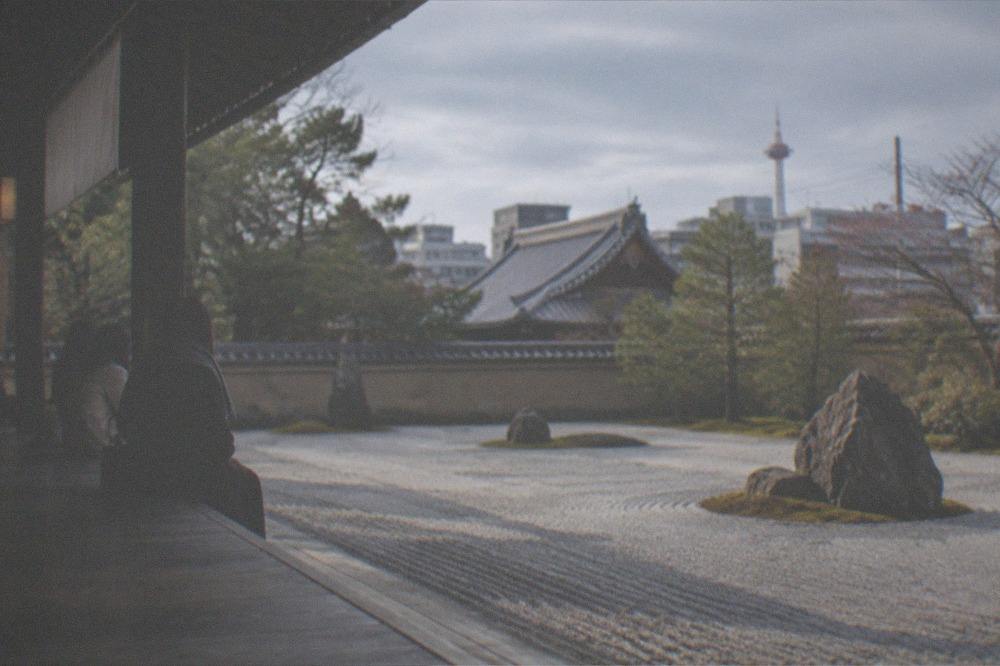
Shigemori took the karesansui vocabulary, the same gravel, the same moss, the same stones that Ryoan-ji uses quietly, and made it loud. The northern garden is the checkerboard: squares of stone and moss in alternating ranks, running from the building outwards until the squares stretch and the pattern dissolves. The eastern garden reuses foundation stones from the temple's old latrine and bathhouse as its "stars" in a gravel cosmos, a joke about the Big Dipper that a 15th-century monk would never have made. Critics called it vandalism when it opened; it is now a designated place of scenic beauty, and it is the reason garden historians make the trip to southeastern Kyoto.
The temple is also the city's foliage capital. The Tsutenkyo, a covered bridge crossing a maple ravine, is the single most photographed corridor of red in Kyoto every late November, and the temple prices it accordingly from this November. The fee notice published by the temple itself sets the new structure precisely:
| Tofuku-ji area | Until 31 Oct 2026 | From 1 Nov 2026 | Autumn foliage period (from 1 Nov rule) |
|---|---|---|---|
| Tsutenkyo bridge and Kaisando, adult | 600 yen | 600 yen | 1,000 yen |
| Tsutenkyo bridge and Kaisando, child | 300 yen | 300 yen | 300 yen |
| Hojo garden (Honbo), adult | 500 yen | 600 yen | 600 yen |
| Hojo garden, child | 300 yen | 300 yen | 300 yen |
| Combined ticket, both | none | 1,000 / 500 yen | 1,000 / 500 yen |
Two consequences for planning. First, the combined ticket is genuinely new and is the right buy from November 2026 onwards, since bridge plus Hojo bought separately costs more. Second, the foliage-period bridge price means the temple is telling you, with its own fee structure, that late November mornings are its crush hour. The JMA phenology record gives the official maple red-leaf marker for Kyoto as 5 December on the 1991 to 2020 normal, with 2025 observed on 10 December, and the commercial forecasts for the Arashiyama side cluster around late November. The temple's own marker runs late, but the visual peak in the Tofuku-ji ravine lands earlier, which is why the bridge fee spikes when it does. For a full route built around the colour, see the Kyoto autumn leaves itinerary, and for the temple's wider story, the Tofuku-ji guide.
Is Ginkaku-ji Still Worth Visiting After The 2026 Price Doubling?
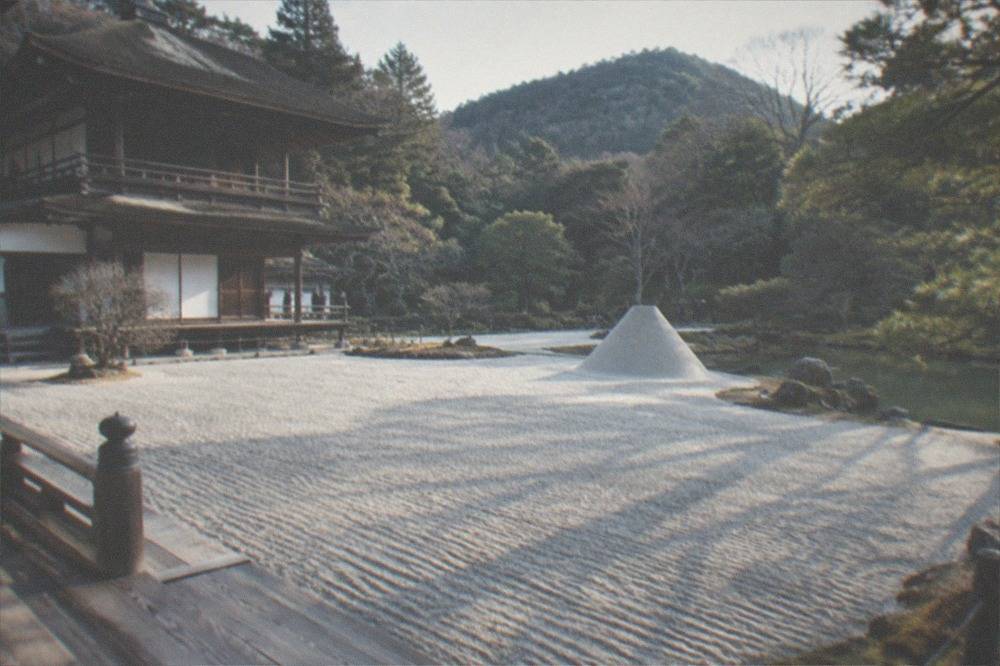
Ginkaku-ji, the Silver Pavilion, doubled its admission on 1 April 2026 from 500 to 1,000 yen for adults, the temple's first rise in 32 years, and the honest answer is that the garden still earns it. The two-storey pavilion by the eastern hills is framed by a pond garden, a flat sea of raked silver sand, and a tall sand cone, with an upper stroll path looking back over the whole composition.
It is now the most expensive temple garden on the standard circuit, and it is also one of the best.
The doubling matters for budgets, not for the verdict. The temple's notice, dated January 2026, sets adults at 1,000 yen, elementary and junior high children at 500, under school age free. That makes Ginkaku-ji exactly twice Kinkaku-ji's 500 yen across the city, and for a first visit to Kyoto the Golden Pavilion remains the better use of a single fee if you must choose. But the Ginkaku-ji garden is the more interesting piece of ground: where Kinkaku-ji is a single dazzling view, Ginkaku-ji is a sequence, and the sand works are the point.
The "Silver Pavilion" name is a misnomer the temple does not claim. The pavilion was never sheathed in silver; the plan is recorded as intended and never executed. What you actually get is a 15th-century retreat building, the Higashiyama culture centrepiece, and a garden that plays two registers: the lower pond-and-sand composition built to be seen from the hall, and the climb through planted slopes to a viewpoint over the whole estate and the city beyond. The sand cone and the silver sea are maintenance artefacts, raked and re-formed constantly, and they are best read as a standing meditation exercise rather than a medieval relic.
Hours run 8:30 to 17:00 from 1 March to 30 November, and 9:00 to 16:30 from 1 December to the end of February. The approach is shared with the northern end of the Philosopher's Path, and the natural route walks south from Ginkaku-ji along the canal towards Nanzen-ji, which is covered in the Ginkaku-ji guide. Morning is quieter; the approach lane is one of the most crowded streets in Kyoto by 10:00 from March to May.
Which Other Kyoto Zen Gardens Deserve A Place On Your List?
Four further gardens complete the serious list: the Tenryu-ji garden in Arashiyama, a 14th-century pond design with a borrowed mountain backdrop and a 500 yen entry; the Nanzen-ji Hojo garden at 600 yen; the Kodai-ji garden at 800 yen with its night illuminations; and the moss sea at Saiho-ji, which requires advance reservation. Each adds a mode the essential four do not cover: borrowed scenery, pond architecture, night viewing and a garden you walk through in socks.
Tenryu-ji is the pond counterweight. Its Sogenchi garden dates to the 14th century and uses shakkei, borrowed scenery, framing the hills of Arashiyama behind the pond as part of the composition, and it charges 500 yen for the garden alone with the buildings at plus 300 and the Cloud Dragon ceiling hall at 500 separately. It is the garden to pair with the bamboo grove, and it is covered in the Tenryu-ji guide.
Nanzen-ji, at the end of the Philosopher's Path, sells its Hojo garden and its great Sanmon gate as separate 600 yen tickets, and the small dry garden behind the abbot's hall is a quiet answer to Ryoan-ji two valleys east. The brick aqueduct in its grounds belongs to no garden tradition at all and is the site's most photographed object. Full details are in the Nanzen-ji guide.
Kodai-ji in Higashiyama charges 800 yen, or 1,200 combined with the neighbouring Entoku-in, and it runs seasonal night illuminations from 17:00 to 22:00, with its autumn night viewing in 2026 running 23 October to 13 December. A lit zen garden after dark is a modern invention and a good one. Saiho-ji, the moss temple in the far west, is the strictest booking in the city, reservation-only, and its carpet of more than a hundred moss species is the closest thing Kyoto has to a garden you experience with your feet. The Saiho-ji moss temple guide covers the application process.
Here is the full fee picture for the gardens named on this page, all from the temples' own notices:
| Garden | Adult fee | Child / student | Notes |
|---|---|---|---|
| Ryoan-ji | 600 yen | 500 high school, 300 elementary and junior high | Hours 8:00-17:00 in season |
| Ginkaku-ji | 1,000 yen | 500 elementary and junior high | Doubled 1 April 2026 |
| Tofuku-ji Hojo | 600 yen from 1 Nov 2026 | 300 | Was 500; combined ticket new |
| Tenryu-ji garden | 500 yen | 300 elementary and junior high | Buildings plus 300, Hatto 500 |
| Nanzen-ji Hojo | 600 yen | 500 high school, 400 elementary and junior high | Sanmon gate separate, 600 |
| Kodai-ji | 800 yen | 400 junior high and high school | 1,200 combined with Entoku-in |
| Daisen-in | fee set at the gate | fee set at the gate | No readable official figure |
When Is The Best Time Of Day And Year To Visit Kyoto's Zen Gardens?
The best hour for Kyoto's zen gardens is the first hour after opening, between 8:00 and 9:30, when the light is low, the gravel raking is fresh and the tour groups have not landed. The best months are late November for the maples framing the gardens and late March to early April for cherry, with the JMA 2026 full-bloom date recorded as 30 March against a 4 April normal.
Winter mornings are the quietest of all and cost nothing in experience for the dry gardens, which are built to look their best bare.
The reasoning is arithmetic as much as aesthetics. Kyoto drew 62.79 million visitors in 2025, the city's survey records, of whom 46.20 million were day visitors, and day visitors arrive late. A garden that opens at 8:00 has a genuine quiet window that a garden that opens at 9:00 does not, and Ryoan-ji, Daitoku-ji and Ginkaku-ji all open at or near 8:00 to 8:30 in season. The comfort forecast operated by the tourism association confirms the same curve: comfort levels at the major temples drop from mid-morning and recover after 16:00, when the day-trip traffic drains back to the station.
Seasonally, the climate record argues for shoulder months. The JMA 1991 to 2020 normals put July as the wettest month at 223.6 mm, ahead of June at 199.7 mm, a fact most guides get backwards, and August as the hottest with a mean daily maximum of 33.7 C. Three of Kyoto's six hottest days on record fell in the summers of 2024, 2025 and 2026. A dry garden in August is an oven of white gravel; the same garden in December, with frost on the moss and the raking sharp in low light, is the form at its purest.
| Month | Rain (mm) | Mean daily max (C) | Garden verdict |
|---|---|---|---|
| March | 106.2 | 14.1 | Cherry approach, 2026 bloom 30 March |
| April | 117.0 | 20.1 | Peak season crowds, peak blossom |
| July | 223.6 | 32.0 | Wettest month, hot, avoid midday |
| August | 153.8 | 33.7 | Hottest, mean high 33.7 C |
| November | 73.9 | 17.3 | Maple season, Tofuku-ji bridge at 1,000 yen |
| December | 57.3 | 11.6 | Quietest, maple marker 5 December normal |
How Do You Plan A Kyoto Zen Garden Route Without Losing Half A Day To Buses?
Plan zen garden routes by geography, not by fame: Ryoan-ji, Daitoku-ji and Kinkaku-ji cluster in the northwest and make one morning; Ginkaku-ji, Nanzen-ji and the Philosopher's Path form a walkable eastern line; Tofuku-ji sits alone on the Keihan line southeast. City buses cost a flat 230 yen per adult ride, the subway runs 220 to 360 yen by zone, and the Subway and Bus One-Day Pass at 1,100 yen pays for itself on the fourth ride.
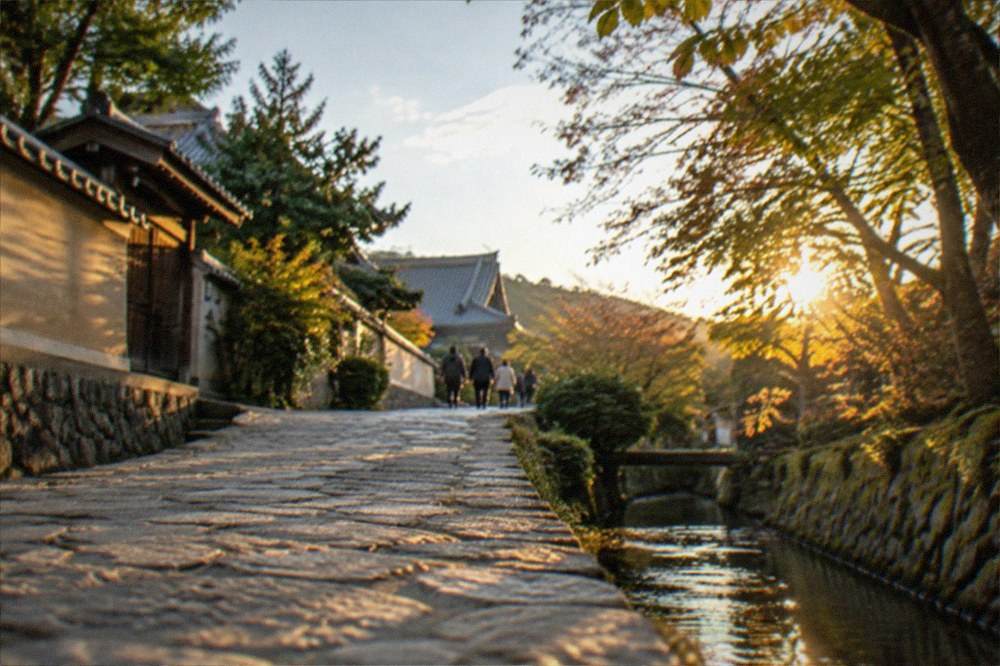
The mistake is mixing clusters. Ryoan-ji to Ginkaku-ji is a cross-town bus ride of close to an hour in traffic, and doing it twice in a day is how a garden itinerary collapses. The northwest morning, Ryoan-ji at 8:00 then a bus to Daitoku-ji for Daisen-in, ends near noon and leaves the afternoon free. The eastern line needs no bus at all: Ginkaku-ji at opening, then the canal path south through the Philosopher's Path to Nanzen-ji, which is roughly two kilometres of walking and the best garden-to-garden connection in the city. Tofuku-ji, with its Shigemori garden and its maple ravine, deserves its own half day in autumn or a short Keihan hop from Gion at any time.
The transport arithmetic, with the city's own fares:
| Option | Fare | When it wins |
|---|---|---|
| City bus, single ride | 230 yen adult, 120 yen child | One or two hops |
| Subway, by zone | 220 to 360 yen adult | Cross-town, avoids traffic |
| Subway and Bus One-Day Pass | 1,100 yen adult, 550 child | Four or more rides |
| Tourist express EX100 | 500 yen adult | Kyoto Station to Gion or Ginkaku-ji directly |
One warning carried over from the transport bureau: the old bus-only one-day pass no longer exists, its sales ended in September 2023 and its last usable day was 31 March 2024, and the bureau's own explanation was that 90 per cent of its buyers were visitors whose pass use concentrated them on the buses. The product now is the combined subway and bus pass. Large luggage may be refused on crowded buses, and the city's hands-free delivery counters exist precisely to keep suitcases off the morning garden run. If rain interrupts a garden day, the rainy day itinerary keeps the covered verandas in play, since a wet Ryoan-ji, with the gravel darkened and the wall running with colour, is arguably better than a dry one.
For travellers who would rather trade the bus arithmetic for a guide, a small-group food walk through the Kawaramachi lanes pairs naturally with an evening after a garden day, and the Kawaramachi bar and izakaya crawl covers the streets between the Kamo River and the temple districts. Check availability
What Should You Know About Garden Etiquette Before You Go?
Zen garden etiquette comes down to sitting, silence and shoes: view from the veranda, keep the gravel untouched, photograph where it is allowed and never where a sign forbids it, and remove shoes at every temple building. The Gion conduct guidelines published by the city's tourism association, which govern behaviour around geiko and maiko citywide, set the tone for temple districts too: no entering private property, no photographing where prohibited, and no touching or chasing anyone you encounter.
The gravel is not furniture. Stepping onto the raked surface at any garden on this page is the fastest way to be removed from it, and at Daisen-in the rooms are small enough that a single person leaning over the edge disturbs everyone's view. Shoes come off at hojo entrances, so slip-ons beat boots on a garden day. Tripods are unwelcome at most sub-temples, and Daisen-in restricts interior photography outright. The temples are working religious institutions first and attractions second, and the ones on this page have held their composure through five centuries of visitors, which is exactly the patience they ask of you.
Money is the other etiquette. The fee boxes at zen temples are called sanpai, worship contributions, and the temples themselves frame the admission that way. When Ginkaku-ji doubled its fee, the temple framed the rise as funding preservation of buildings that had gone 32 years without one. Whether or not that reading moves you, the practical effect is the same: the gardens cost what they cost, the fees are posted at the gates, and the figures in the tables above are the temples' own.
Common Questions About Kyoto Zen Gardens
Which Kyoto Zen Gardens Are Essential: Ryoan-ji, Daisen-in, Tofuku-ji Hojo, Ginkaku-ji?
Those four are the essential set. Ryoan-ji for the classical riddle garden at 600 yen, Daisen-in for the compressed narrative strips at Daitoku-ji, the Tofuku-ji Hojo for Shigemori Mirei's modernist break at 600 yen from November 2026, and Ginkaku-ji for the sand cone and pavilion composition at 1,000 yen since April 2026. Together they cover the whole arc of the form from the Muromachi period to the 20th century.
Can you visit all four essential zen gardens in one day?
You can, but it is the wrong shape for the experience. Ryoan-ji and Daitoku-ji cluster in the northwest and make one morning; Ginkaku-ji sits in the far east on the Philosopher's Path; Tofuku-ji is southeast on the Keihan line. Two days, one cluster each, with Tofuku-ji folded into either, gives every garden the seated time it is built for.
Is Ryoan-ji really impossible to see all fifteen stones at once?
From the ordinary viewing positions on the veranda, at least one of the fifteen stones is always hidden, which is the garden's most repeated observation and is easily checked with your own eyes. The temple publishes no interpretation of the arrangement, and the readings you will hear, islands in a sea, a tiger carrying cubs, are tradition rather than doctrine.
Why did Ginkaku-ji double its price?
The temple's own notice, dated January 2026, raised the adult fee from 500 to 1,000 yen effective 1 April 2026, its first revision in 32 years, with children rising from 300 to 500. The temple frames the rise as funding preservation. It makes Ginkaku-ji the most expensive standard temple garden in the city, twice Kinkaku-ji's 500 yen.
Are Kyoto's zen gardens worth visiting in winter?
Yes, and for the dry gardens winter is arguably the best season. The compositions are built from gravel, stone and moss rather than flowers, so nothing is missing, the crowds are a fraction of spring and autumn, and the low December light on the raked gravel is sharper than summer's. Hours shorten, for example Ryoan-ji runs 8:30 to 16:30 from December to February.
Do you need to book any of these gardens in advance?
None of the four essential gardens requires booking; you pay at the gate. The one strict advance reservation among Kyoto's serious gardens is Saiho-ji, the moss temple, which must be applied for ahead. Katsura Imperial Villa, a different tradition but often mentioned alongside, also requires advance application, though same-day numbered tickets are sometimes available with ID.
The four essential gardens earn their status differently: Ryoan-ji by silence, Daisen-in by density, the Tofuku-ji Hojo by nerve, and Ginkaku-ji by scale. Visit them in that spirit, at opening, in shoulder season where you can, and the tradition they carry will do the rest. For everything else the city holds beyond its garden walls, start with the things to do in Kyoto overview, or let Kyoto Travel Guide plan the wider route around them.