Kyoto And Osaka Itinerary: How Many Days For Each City?
The honest split for a Kyoto and Osaka trip is two to one in Kyoto's favour, and the reason is structural: Kyoto's temples stop admitting visitors between 16:00 and 17:00 while Osaka's food streets and neon districts only wake up after dark.
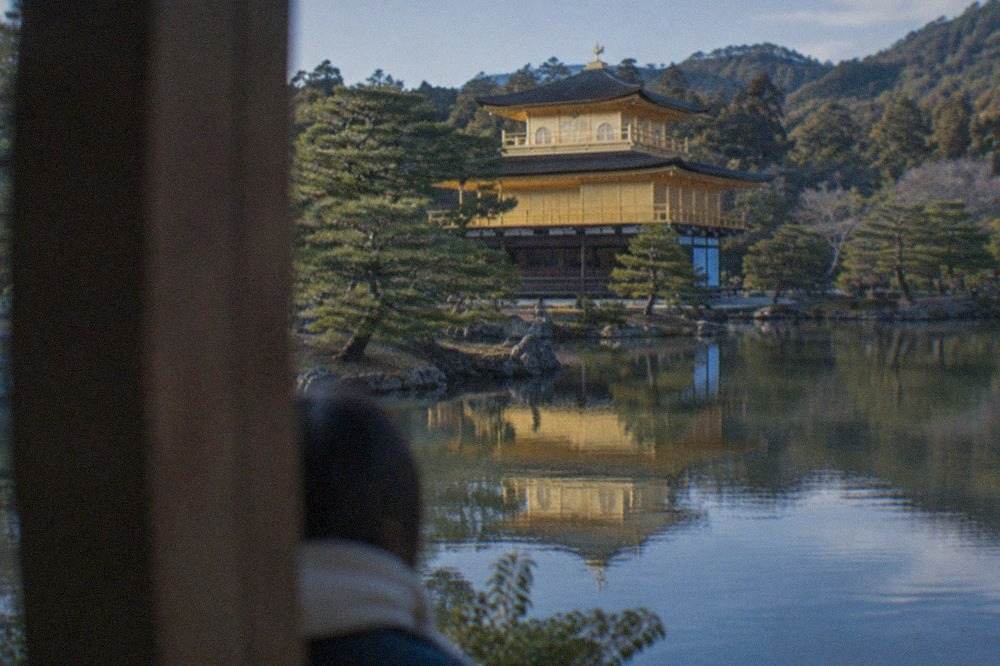
Short answer
Split a five-day trip as three days in Kyoto and two in Osaka. Kyoto needs the extra day because its temples close early and its twelve activity kinds spread across a wide city, while Osaka's core draws, Dotonbori, the food streets and the castle, pack into evenings and one full day.
Kyoto And Osaka Itinerary: How Many Days For Each City?
The honest split for a Kyoto and Osaka trip is two to one in Kyoto's favour, and the reason is structural: Kyoto's temples stop admitting visitors between 16:00 and 17:00 while Osaka's food streets and neon districts only wake up after dark. The city's 2025 tourism survey, released in June 2026, counted a record 62.79 million visitors across the year, and most of them made the same two-city loop you are considering. The plan below is built only on fees, hours and fares this site has verified on the venues' and operators' own pages, including two temple fee changes that most older itineraries still get wrong.
How Many Days Do You Split Between Kyoto And Osaka?
For a five-day trip, give Kyoto three days and Osaka two, and travel between them once rather than hopping back and forth. Kyoto rewards the extra day because its sites close early and sit far apart, while Osaka's headline district, Dotonbori and the surrounding food streets, is essentially an evening experience that costs nothing to enter. A four-day trip drops one Kyoto day before it drops Osaka entirely, and anything shorter than four days should stay in one city.
The arithmetic behind that split is about closing times more than sight count. Nijo-jo Castle stops admitting at 16:00 and closes at 17:00. Ginkaku-ji, which doubled its admission to 1,000 yen on 1 April 2026, closes at 17:00 in summer but 16:30 in winter. Sanjusangen-do closes its doors at 16:00 from 16 November. A Kyoto day therefore has a hard stop in the late afternoon, and packing more sites into it means earlier starts, not later finishes. Osaka inverts that rhythm: the castle grounds fill a morning, and the food streets of Dotonbori and the bars around them are the point after dark.
There is also a distance penalty in Kyoto that Osaka does not have. Arashiyama in the west, Fushimi Inari in the south-east and Kurama in the north are each a separate transit commitment, while Osaka's core attractions sit inside a walkable belt around Namba and Osaka Castle. The Kyoto itinerary guide breaks the city into workable days; this page bolts Osaka onto the end of them.
What Does A Five-Day Kyoto And Osaka Itinerary Look Like?
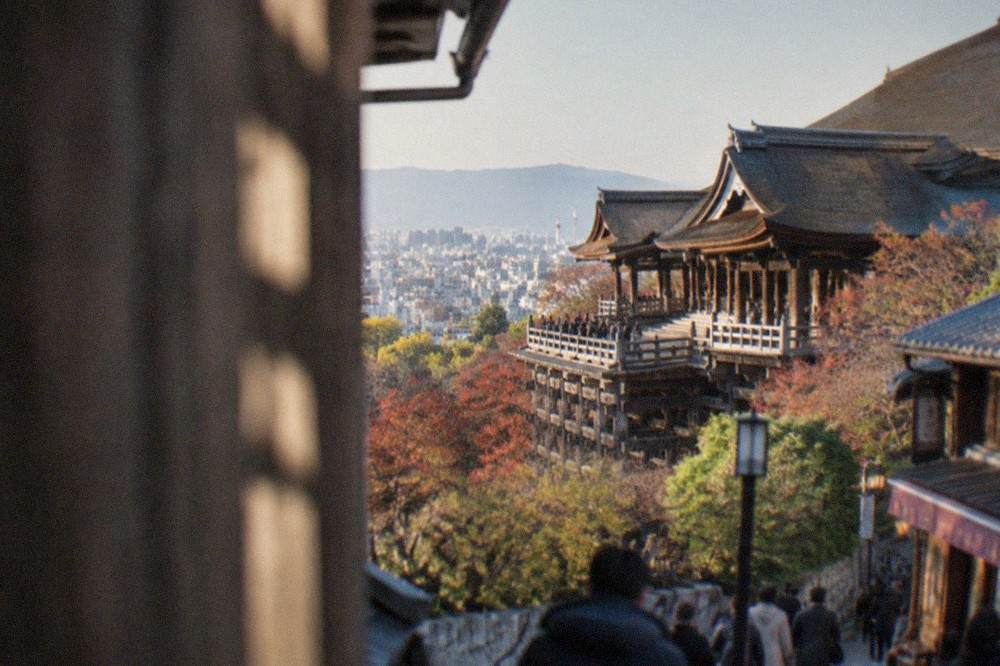
Day one covers Kiyomizu-dera and the Higashiyama slopes, day two the Arashiyama side, day three the north-east temples and Gion at night, then day four moves to Osaka for the castle and Dotonbori, and day five gives Osaka a second full day or a Hiroshima extension. The sequence front-loads Kyoto while legs are fresh, puts the hotel move in the middle of the trip only once, and leaves the flexible day last so weather cannot wreck the plan.
The shape below assumes you sleep in Kyoto for three nights, then Osaka for two. One hotel change, on the morning of day four, is the whole cost of the two-city structure.
| Day | City | Morning | Afternoon | Evening |
|---|---|---|---|---|
| 1 | Kyoto | Kiyomizu-dera from opening at 6:00 | Ninenzaka, Sannenzaka slopes | Gion walk, early |
| 2 | Kyoto | Arashiyama bamboo grove and Tenryu-ji | Iwatayama Monkey Park or the Sagano Romantic Train | Kamo river banks |
| 3 | Kyoto | Nijo-jo Castle from 8:45 | Kinkaku-ji, then Ryoan-ji | Night illumination in season |
| 4 | Osaka | Train to Osaka, bags dropped | Osaka Castle grounds | Dotonbori food streets |
| 5 | Osaka or extension | Kuromon market or Osaka Museum of Housing | Umeda Sky Building | Last night in Namba |
Two warnings on that grid. First, Kodai-ji closes reception at 17:00 and its night illumination runs 17:00 to 22:00 in season, so it can swap into the evening column in autumn. Second, day three is the tightest: Nijo-jo Castle admits until 16:00, Kinkaku-ji opens 9:00 to 17:00 year-round, and Ryoan-ji runs 8:00 to 17:00 in summer, 8:30 to 16:30 in winter. In December through February, that afternoon holds two temples at most.
If you would rather not self-drive the Kyoto days, a guided bus day is the efficient alternative for day three's spread of sites. The Perfect 1-Day Bus Tour covers the headline temples and gardens in one moving day, from $102 per person and rated 4.9 across 17,054 reviews, and the Fushimi Inari, Kinkakuji, Bamboo Grove 1-Day Bus Tour does the same loop with the shrine included.
Which City Should You Visit First, Kyoto Or Osaka?
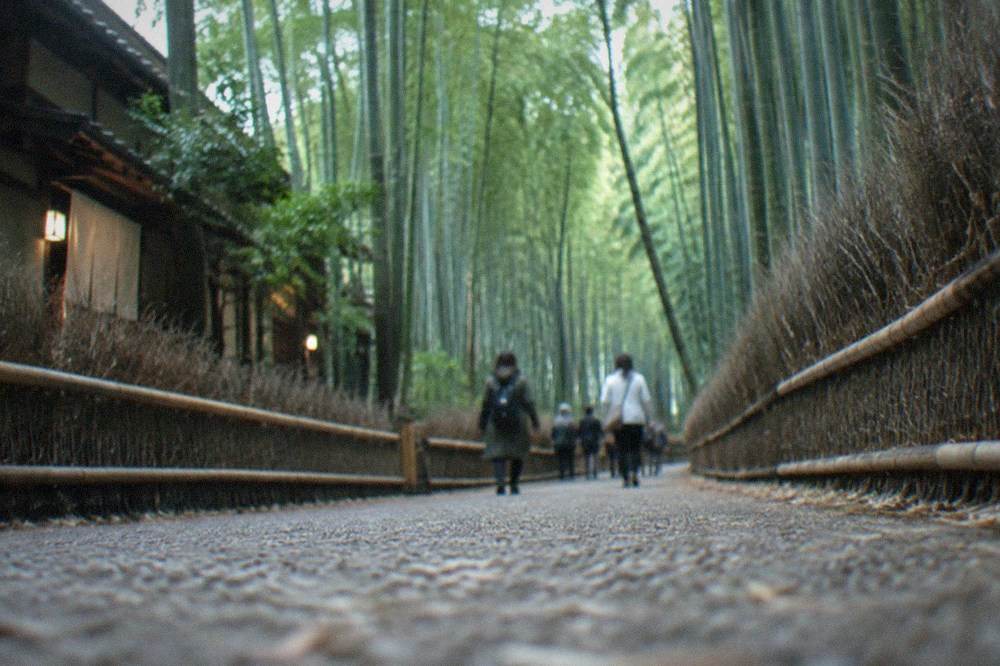
Start in Kyoto, and the reason is fatigue and flight geometry rather than preference. Kyoto's days start at 6:00, when Kiyomizu-dera opens, and end at 17:00, so they need the fresh legs of a trip's first half, while Osaka is a city that rewards late nights and low-effort evenings. Kansai International Airport also connects directly to Kyoto on the JR HARUKA, so the arrival transfer lands you in the city that needs the early mornings.
The airport logic is worth spelling out because it saves a hotel change. The JR West HARUKA One-way Ticket for foreign visitors costs 2,200 yen to Kyoto, 1,100 yen for a child, with the journey taking about 80 minutes. If you fly into Itami instead, the Hankyu Kanko limousine bus runs to Kyoto Station's Hachijo exit for 1,500 yen adult and 750 child, in about 50 to 55 minutes, with contactless card payment accepted since 1 March 2026. Either way, you arrive in the city where the next morning starts earliest.
Leaving from Osaka at the end works in reverse: both airports are reachable from Osaka, and the last two nights in Osaka are the low-energy ones. The deeper comparison of what each city does best is in the Kyoto vs Osaka guide, and the question of which base suits a first trip is answered on the stay in Kyoto or Osaka page.
One planning shortcut for the Kyoto half: if your dates fall in a crowded week, the city's own Tourism Comfort Forecast publishes a five-level crowd prediction for major spots by time slot, built from location data and weather. Checking it the night before each Kyoto day is the cheapest itinerary tool that exists, and it costs nothing.
What Should Each Kyoto Day Contain?
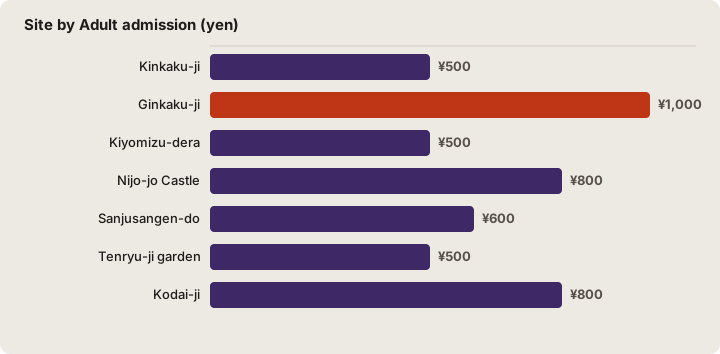
Each Kyoto day should pair one early temple, one garden or castle, and one evening district, because the fees are small but the closing times are hard. Kiyomizu-dera opens at 6:00, Nijo-jo Castle admits until 16:00, and Ginkaku-ji now charges 1,000 yen after doubling its fee in April 2026. A day built around one anchor per half-day survives; a day built around five temples does not.
The fee table below is where older itineraries fail. Two of these numbers changed recently: Ginkaku-ji doubled on 1 April 2026, its first rise in 32 years, and Tofuku-ji revises its fees on 1 November 2026 with a new 1,000 yen combined ticket and a 1,000 yen foliage-period bridge ticket.
| Site | Adult admission | Child admission | Last admission |
|---|---|---|---|
| Kinkaku-ji | 500 yen | 300 yen (primary, middle) | 17:00 close |
| Ginkaku-ji | 1,000 yen | 500 yen | 17:00 summer, 16:30 winter |
| Kiyomizu-dera | 500 yen | 500 yen (high school) | 18:00 regular close |
| Nijo-jo Castle | 800 yen | 300 yen (elementary) | 16:00 |
| Sanjusangen-do | 600 yen | 300 yen (elementary) | 17:00 summer, 16:00 winter |
| Tenryu-ji garden | 500 yen | 300 yen | 16:50 |
| Kodai-ji | 800 yen | free with adult | 17:00 |
| Fushimi Inari Taisha | free | free | no closing time on paths |
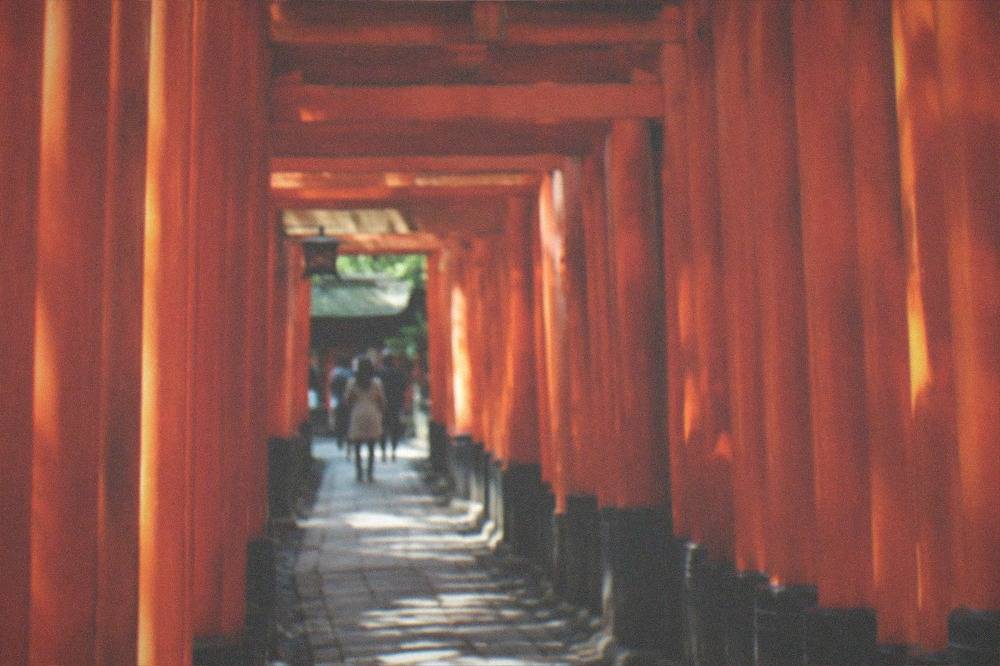
Note what is missing from that table: the Fushimi Inari row is free, and the shrine publishes no closing time for its mountain paths at all. That makes it the single best early-morning or late-evening site in the city, and the shrine links to approach cameras and the city's comfort forecast so you can check conditions before heading out.
For the second Kyoto day, the Arashiyama walk is the strongest guided option: the Arashiyama Walking Tour covers the bamboo grove, the monkey park and a temple garden in five hours from $50 per person, rated 5 across 1,781 reviews. The monkey park itself charges 800 yen for ages 16 and up and 400 yen for ages 4 to 15, cash only.
How Do You Travel Between Kyoto And Osaka?
The Kyoto to Osaka leg is a single shinkansen ride between Kyoto and Shin-Osaka stations, with local JR and private railways as the cheaper alternative, and the whole move takes one morning if you leave after breakfast. Inside each city the practical base is an IC card: an ICOCA costs 2,000 yen including a 500 yen deposit and works on Kyoto's buses, subways and Osaka's network alike, so you never need to buy a paper ticket twice.
In Kyoto, the fares are flat and small: the city bus charges 230 yen per adult ride and 120 yen per child, and the subway runs 220 to 360 yen by zone. The product that matters for itinerary planning is the Subway and Bus One-Day Pass at 1,100 yen adult and 550 yen child. The bus-only one-day pass no longer exists: sales ended in September 2023 and the last day of use was 31 March 2024, so any guide still recommending it is at least two years stale. The full index of guides sits on Kyoto Travel Guide.
| Ticket | Adult | Child | Notes |
|---|---|---|---|
| Kyoto City Bus, one ride | 230 yen | 120 yen | flat fare |
| Kyoto subway, by zone | 220-360 yen | 110-180 yen | zones 1 to 5 |
| Subway and Bus One-Day Pass | 1,100 yen | 550 yen | replaces the abolished bus pass |
| Subway One-Day Pass | 800 yen | 400 yen | subway only |
| EX100 / EX101 tourist express | 500 yen | 250 yen | cash or IC, to Kiyomizu and Ginkaku-ji |
| ICOCA card | 2,000 yen | 500 yen deposit | refundable deposit |
The EX100 and EX101 tourist express buses are worth knowing on temple days: they run from Kyoto Station to the Gojo-zaka stop for Kiyomizu, then Gion and on toward Ginkaku-ji, with fewer stops than the regular lines, at 500 yen per adult ride. For the wider region, the JR West Kansai Area Pass is 2,800 yen for one day, though for a simple Kyoto-Osaka round trip the ordinary fares are usually the better arithmetic.
What Does Osaka Add That Kyoto Cannot?
Osaka adds a night city, a food culture built around street eating and standing bars, and a modern skyline, none of which Kyoto's early-closing temple schedule can supply. Kyoto's evening options are lantern-lit alleys, the Kamo river banks and a handful of illuminated temples in season, while Osaka runs Dotonbori's food streets, the Umeda Sky Building's observation deck and izakaya culture deep into the night. The two cities do not compete, they finish each other.
The practical read: budget your evening energy for Osaka. Kyoto's riverside alleys and the Gion geisha district are beautiful at dusk, and Gion has its own conduct rules worth knowing before dark, but the sheer density of late food in Osaka is a different product. The city's own guidance asks visitors not to touch, chase or photograph geiko and maiko without permission, and signs on Gion's private alleys off Hanamikoji threaten a 10,000 yen penalty for unauthorized entry or photography.
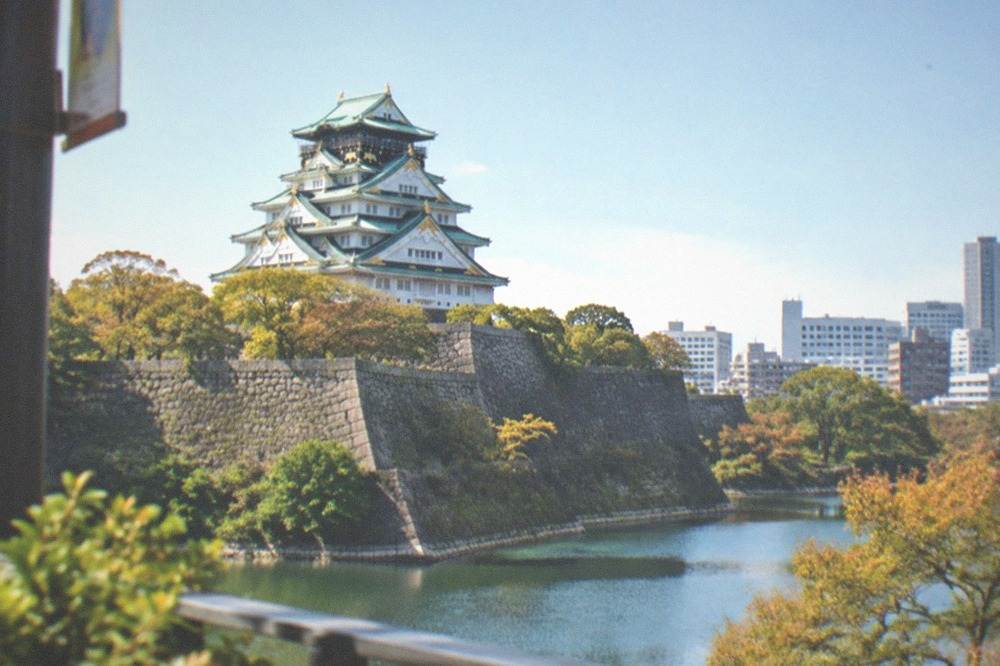
Daytime Osaka holds its own too. Osaka Castle's grounds are free to walk and the keep sits at the centre of a large park, and the Kuromon market gives a food-street morning that pairs with Kyoto's covered-market experience, where the official rule is to eat at the stall rather than while walking. If you are weighing a Nara insertion instead, the is Nara closer to Kyoto or Osaka question has a clean answer that affects which end of the trip it belongs on.
How Much Does A Kyoto And Osaka Itinerary Cost?
The fixed costs of a five-day Kyoto and Osaka trip, temple admissions, city transit and the accommodation tax, are modest per person, and the single biggest variable by far is where you sleep. Kyoto's accommodation tax changed on 1 March 2026 and the top tier went from 1,000 to 10,000 yen per person per night, a change most guides still do not reflect, so the room price band you choose now carries a real tax consequence.
The tax is charged per person per night on the room-only rate, and the tiers are steep at the top.
| Room rate per night (excl. meals, tax) | Tax per person per night | Before 1 March 2026 |
|---|---|---|
| Under 6,000 yen | 200 yen | 200 yen |
| 6,000 to under 20,000 yen | 400 yen | 400 yen |
| 20,000 to under 50,000 yen | 1,000 yen | 500 yen |
| 50,000 to under 100,000 yen | 4,000 yen | 1,000 yen |
| 100,000 yen and up | 10,000 yen | 1,000 yen |
On the food side, the honest ceiling is instructive rather than scary: at Hyotei, one of Kyoto's most famous kaiseki houses by Nanzen-ji, the kaiseki course starts at 31,625 yen at lunch and 37,950 at dinner on the restaurant's own page, while the same house's annex serves porridge and bento from 5,445 to 7,260 yen. Those are Hyotei's prices, not a city norm, but they frame the choice: the famous splurge and the same kitchen's affordable annex are in the same building group.
For the full budget picture, the Kyoto trip cost and Kyoto on a budget guides break the numbers down, and the best hotels in Kyoto page sorts the sleep options by neighbourhood.
What If You Only Have Four Days?
With four days, run two in Kyoto and two in Osaka, and cut the third Kyoto day rather than the Osaka half, because the two remaining Kyoto days can absorb their best content. Day one takes Kiyomizu-dera and the Higashiyama slopes, day two the north-west cluster of Nijo-jo Castle, Kinkaku-ji and Ryoan-ji, then Osaka gets the castle-and-Dotonbori day plus a free morning. The cut hurts in Arashiyama, so fold the bamboo grove into day two's early start if you can.
The tighter the trip, the more the closing times matter. A four-day winter version cannot hold three temples in one afternoon: Ginkaku-ji closes at 16:30 from December, Sanjusangen-do at 16:00 from mid-November, and Nanzen-ji stops reception 20 minutes before its 16:30 winter close. The two days in Kyoto and one day in Kyoto pages show exactly how much fits when the clock is short.
If your fourth or fifth day could stretch, the strongest single extension from this loop is the Hiroshima run: the Hiroshima Miyajima Bus Tour covers the Peace Memorial and Miyajima in a full day from 115 per person, rated 4.7 across 1,239 reviews, and it removes the hardest logistics of that route from your plate.
When Should You Time The Split For Festivals And Weather?
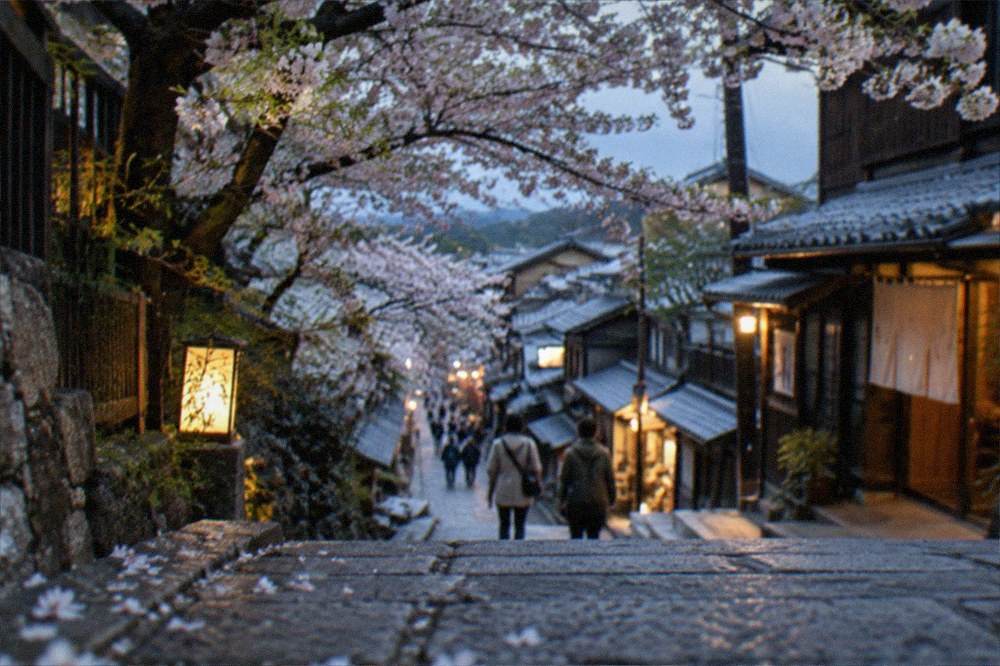
Time the Kyoto half for late March to early April for cherry blossom or late November to early December for maple colour, and let the festival calendar override everything else if your dates hit it: Gion Matsuri runs all of July, Aoi Matsuri falls on 15 May, Jidai Matsuri on 22 October, and Gozan no Okuribi lights five mountains on 16 August. July is Kyoto's wettest month at 223.6 mm against June's 199.7 mm, a fact most guides get backwards.
Those climate figures come from the JMA 1991-2020 normals for the Kyoto station, and they reshape the summer plan: August, not July, is the hottest month with a mean of 28.5 C and a mean daily high of 33.7 C, and three of Kyoto's six hottest days on record fell in the summers of 2024, 2025 and 2026. The bloom dates are equally precise: in 2026 the cherries flowered on 23 March and reached full bloom on 30 March, against normals of 26 March and 4 April.
| Marker | 2026 actual | 1991-2020 normal | 2025 |
|---|---|---|---|
| Cherry flowering | 23 March | 26 March | 27 March |
| Cherry full bloom | 30 March | 4 April | 5 April |
| Maple red leaves | not yet observed | 5 December | 10 December |
| Ginkgo yellow | not yet observed | 24 November | 25 November |
Note the maple normal carefully: 5 December is the observatory's specimen-tree marker, later than the mid-November peak most guides claim for Arashiyama. Treat it as the official season-extender, not the best week. If you are building the trip around either bloom, the cherry blossom itinerary and autumn leaves itinerary pages do the day-by-day work, and the best time to visit Kyoto guide weighs the whole calendar.
One festival warning for the split: during Gion Matsuri's parade days, 17 and 24 July, central Kyoto is reshaped by the Yamaboko Junko processions, which start at 9:00 and 9:30 respectively. That is a reason to be in Kyoto on those dates, not to avoid it, but it is not a day for the Osaka leg.
Common Questions About A Kyoto And Osaka Itinerary
How many days do you split between Kyoto and Osaka?
Three for Kyoto and two for Osaka on a five-day trip, dropping to two and two on four days. Kyoto needs the larger share because its temples stop admitting between 16:00 and 17:00 and its districts sit far apart, while Osaka's core evening districts cost nothing to enter and pack tightly together.
Is it better to stay in Kyoto or Osaka?
Stay in Kyoto for the early starts, since Kiyomizu-dera opens at 6:00 and the temple day ends by 17:00, and finish in Osaka for the nights. The full comparison, including cost differences, is on the site's stay-in-Kyoto-or-Osaka answer page.
How do you get from Kyoto to Osaka?
The shinkansen links Kyoto and Shin-Osaka stations directly, with local JR and private railway lines as cheaper alternatives. Inside both cities an ICOCA card, 2,000 yen including a 500 yen refundable deposit, covers buses, subways and railways on one balance.
Can you do Kyoto and Osaka in three days?
You can, but you should not split it. Three days is a single-city trip: Kyoto alone fills three full days with its headline temples, Arashiyama and Fushimi Inari, and splitting it means two half-days in each city with a hotel change in the middle.
Which temples in Kyoto changed their fees in 2026?
Ginkaku-ji doubled to 1,000 yen for adults on 1 April 2026, its first rise in 32 years, and Tofuku-ji revises its fees on 1 November 2026, with a new 1,000 yen combined ticket and a 1,000 yen foliage-period ticket for its bridge and Kaisando. Kinkaku-ji remains 500 yen, set in April 2023.
When is the best month for this itinerary?
Late March to early April for cherry blossom, or late November to early December for maple colour, both verified against the JMA normals and the 2026 observations. Avoid July if rain matters most: at 223.6 mm it is Kyoto's wettest month, wetter than June.
The five-day shape, three Kyoto days and two Osaka days, holds up across seasons because it is built on closing times and transit geometry rather than on any single must-see. Adjust the anchor temples for the season you land in, keep the single hotel move on day four, and let the comfort forecast and the shrine's approach cameras make the final hour-by-hour calls for you.