When Is Jidai Matsuri in Kyoto And What Time Does The Procession Leave The Imperial Palace?
Jidai Matsuri, the Festival of the Ages, is held on 22 October every year in Kyoto, and the great procession leaves the Kyoto Imperial Palace at 9:00 sharp, arriving at Heian Shrine later the same morning. Here is everything verified about dates, rites, viewing and planning.
Short answer
Jidai Matsuri is held on 22 October every year, postponed in case of rain. The eve rite is held at 10:00 on 21 October, the festival rite at 7:00 on the 22nd, the Shinko-sai at 8:00, and the procession departs the Kyoto Imperial Palace at 9:00.
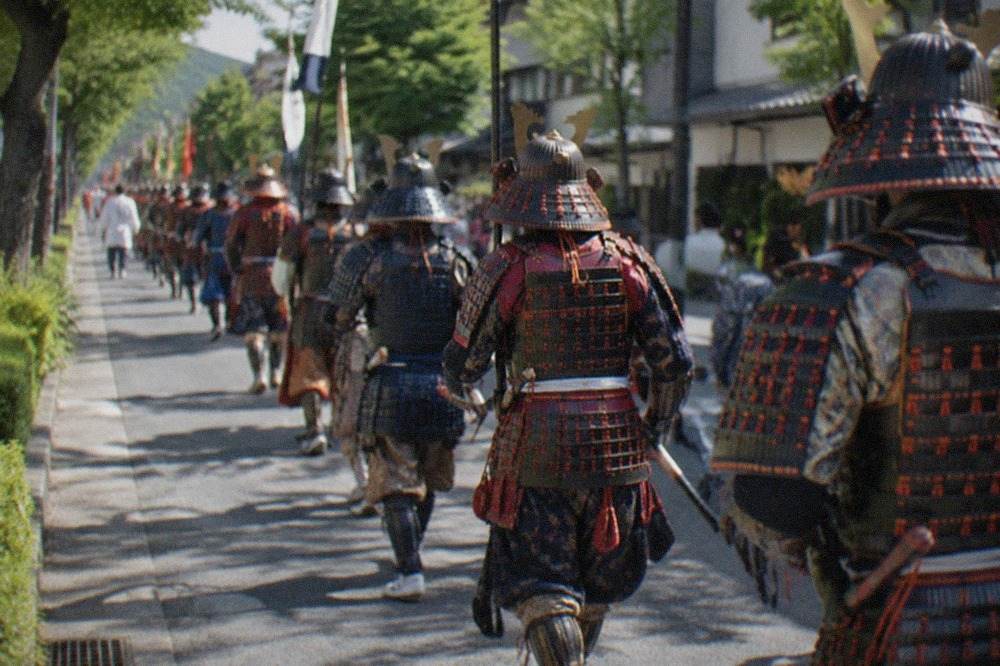
Every 22 October, Kyoto empties its museums, costume stores and wardrobes into the street. Jidai Matsuri, the Festival of the Ages, sends a procession of costumed marchers from the Kyoto Imperial Palace to Heian Shrine, each group dressed for a different era of the city's thousand years as Japan's capital. Heian Shrine's own ritual page sets the schedule plainly: the eve rite at 10:00 on 21 October, the festival rite at 7:00 on the 22nd, the Shinko-sai at 8:00, and the procession's departure at 9:00. Rain postpones the whole thing, so the date on your calendar is a plan, not a promise.
This guide lays out the verified timetable, where the crowds actually stand, what late October weather does to your clothing choices, and how to build the rest of the day around two hours of marching history. It is one of Kyoto's three great festivals, alongside Gion Matsuri in July and Aoi Matsuri in May, and it is the only one of the three built entirely as a costume pageant rather than a religious rite that grew a parade. For the wider festival calendar, see Kyoto's festival year; for whether October suits you at all, start with the best time to visit Kyoto.
When Is Jidai Matsuri And What Time Does The Procession Leave The Imperial Palace?
Jidai Matsuri is held on 22 October every year and is postponed if it rains. The eve rite takes place at 10:00 on 21 October, the festival rite at 7:00 on the 22nd, the Shinko-sai at 8:00, and the procession departs the Kyoto Imperial Palace at 9:00, making its way to Heian Shrine. Heian Shrine's own ritual calendar is the source for every one of these times.
The 9:00 departure is the number most visitors get wrong, usually by assuming the parade starts later and strolling up at half past ten to find the street already swept clean. The procession forms at the Kyoto Imperial Palace, which the Imperial Household Agency describes as open to all visitors with no advance application, and it finishes at Heian Shrine, where the shrine's own ritual page lists the full sequence of rites for the two days.
The rain rule matters more than it sounds. The festival is postponed in the event of rain, and late October in Kyoto averages 143.2 mm across the month on the JMA 1991-2020 normals, so a washout is a real possibility rather than a footnote. If the sky looks heavy the night before, check Heian Shrine's announcements before committing to a spot.
The two-day schedule, exactly as the shrine publishes it:
| Day | Time | Event |
|---|---|---|
| 21 October | 10:00 | Eve rite at Heian Shrine |
| 22 October | 7:00 | Festival rite |
| 22 October | 8:00 | Shinko-sai |
| 22 October | 9:00 | Procession departs the Kyoto Imperial Palace |
What Is Jidai Matsuri And Why Does Kyoto Hold It?
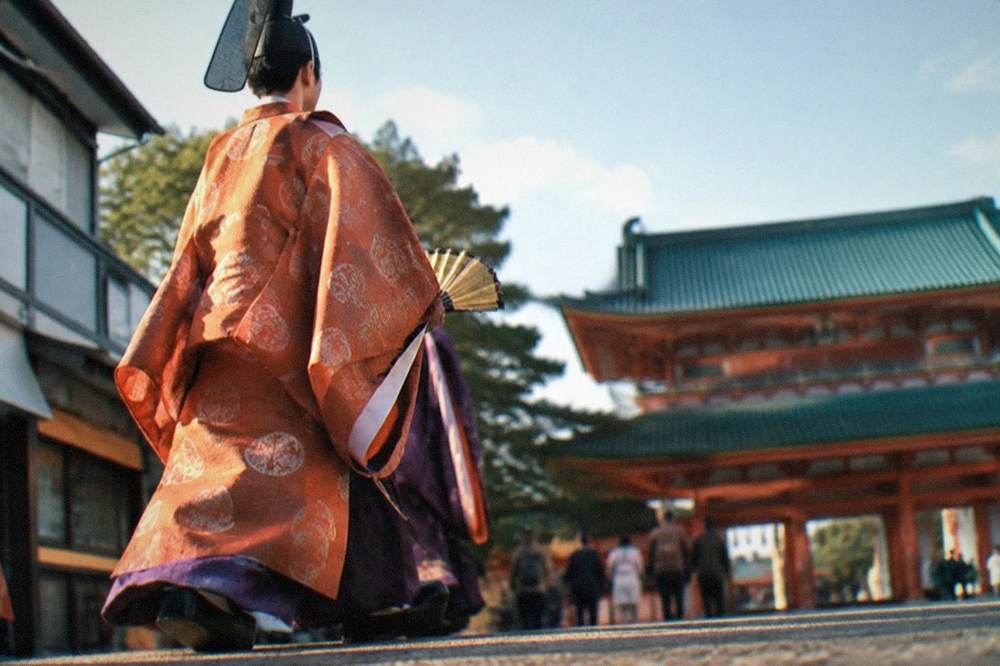
Jidai Matsuri is a costume procession that marches through roughly a thousand years of Kyoto's history, era by era, from the Kyoto Imperial Palace to Heian Shrine. It is one of the city's three great festivals, but unlike Gion Matsuri or Aoi Matsuri it is a commemorative pageant rather than an ancient rite, and every marcher's costume is tied to a documented period of the capital's past.
The festival belongs to Heian Shrine, the large vermilion complex east of the city centre, and the procession's destination is the shrine itself, where the palanquins at the head of the column are received. The shrine's ritual page frames the day as its own grand rite, with the Shinko-sai at 8:00 marking the formal movement of the deity in procession, which is why the costumed column that follows is not mere theatre but the visible half of a shrine festival.
What makes the pageant distinctive is the structure. Rather than one era's costume repeated by the thousand, the procession is organised chronologically, so a spectator watching the whole column pass sees the city's history arrive in sequence. The marchers represent periods from the capital's founding through to the modern era, and the costumes are the product of serious research by the organisers, which is why the festival draws costume historians as well as tourists.
For context on the other two great festivals: Gion Matsuri runs the whole of July, with its Yamaboko Junko parades on 17 and 24 July, while Aoi Matsuri is held on 15 May with its own morning procession. Jidai Matsuri is the youngest of the three and the most compact, a single morning rather than a month of events, which is precisely why it suits a visitor with only a few days in the city.
| Festival | Date | Character |
|---|---|---|
| Aoi Matsuri | 15 May | Morning procession, Heian and Kamakura era costume, postponed in rain |
| Gion Matsuri | All of July | Month-long, two float parades on 17 and 24 July |
| Jidai Matsuri | 22 October | Chronological costume procession, 9:00 departure, postponed in rain |
If you are choosing between festival dates for a first trip, October has a strong case: the October climate table shows a mean of 18.4 C and 156 hours of sunshine, comfortable standing weather compared with July's 27.3 C mean and 223.6 mm of rain, which is Kyoto's wettest month on the JMA normals.
Visitors often pair the festival with a wider loop of the city's headline sights, and a guided option such as the Perfect 1-Day Bus Tour covers Kinkaku-ji, Fushimi Inari and the Arashiyama bamboo grove in one organised day, which is a sensible structure for the days before or after the festival.
Where Are The Best Places To Watch The Jidai Matsuri Procession?
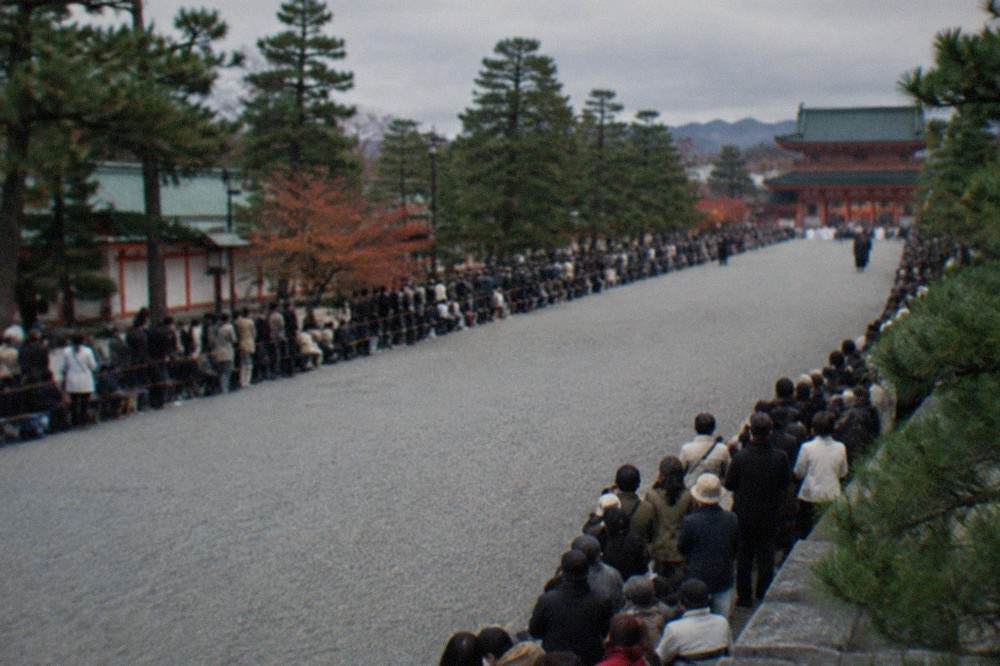
The strongest viewing is along the early stretches near the Kyoto Imperial Palace, where the procession forms and the 9:00 departure means the marchers pass in fresh order, and along the final approach to Heian Shrine, where the column arrives and the reception rites follow. The middle of the route is less crowded but the spectacle is identical.
The logic is simple. Near the palace, you see the procession assemble and step off, and the surrounding park gives you room to move. Near Heian Shrine, you get the arrival, the shrine's enormous vermilion gate as a backdrop, and the sense of an ending. In between, the procession passes along ordinary city streets, and any spot with a clear kerb works, but the order of the eras is easiest to read when the column is still tight and fresh rather than stretched and tired.
Arrive early for any of it. The city's own 2025 tourism survey recorded 62.79 million visitors across the year, a record, and festival mornings concentrate that pressure onto a few kilometres of pavement. A spot claimed by 8:00 for a 9:00 departure is not excessive. Bring something to sit on, water, and patience for the standing wait.
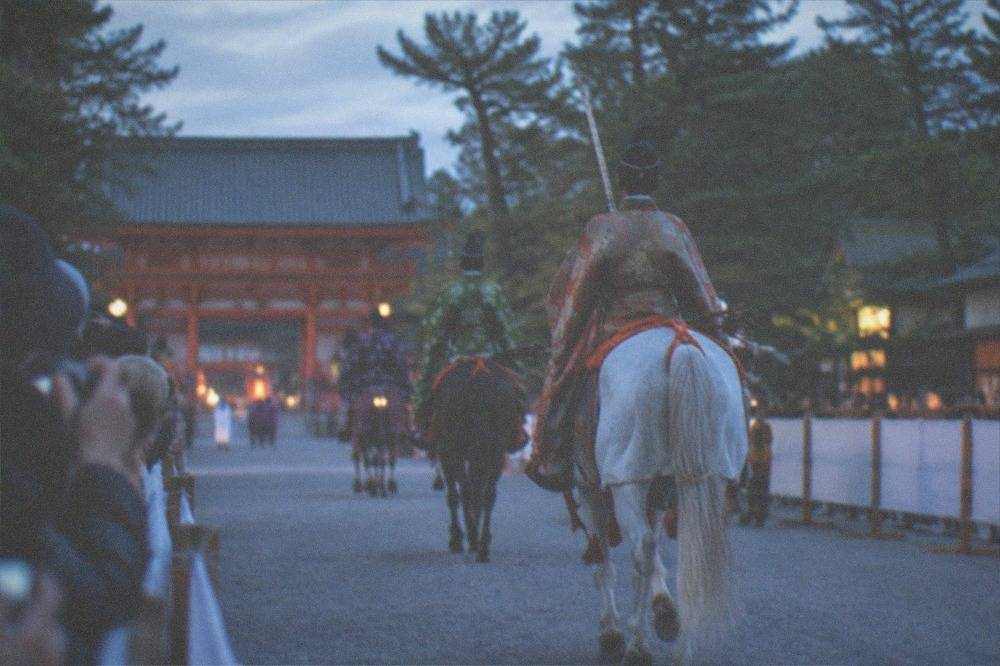
A practical warning about the palace end: the Kyoto Imperial Palace is open to all visitors with no advance application, but the shrine and palace authorities control the immediate procession assembly area on the day, so treat the published grounds access as your baseline and expect barriers near the formation point. Do not plan on wandering freely through the staging area.
For the shrine end, the approach to Heian Shrine is wide and torii-framed, and the surrounding Okazaki district has museums and open space to retreat into, which makes it the better choice if you are travelling with children or anyone who cannot stand for two hours. The first-time visitor itinerary places Okazaki in a sensible east-side day.
One more honest note: this is a free public festival on public streets. There is no ticket to buy and nothing this or any site can sell you for the procession itself, so treat any offer of festival seating with suspicion. What you can book is everything around it: transport, guided walks, and the city's permanent attractions.
What Is The Weather Like In Kyoto In Late October?
Late October in Kyoto is mild and mostly dry, with a monthly mean of 18.4 C, a mean daily maximum of 23.4 C and 143.2 mm of rain across the whole month on the JMA 1991-2020 normals, so a light jacket for the morning and sun protection for midday is the right kit for standing outdoors through a 9:00 procession.
The JMA normals for station 47759 give the full picture for the month around the festival:
| Month | Rain mm | Mean C | Mean daily max C | Mean daily min C | Sunshine h |
|---|---|---|---|---|---|
| September | 178.5 | 24.4 | 29.2 | 20.7 | 142.7 |
| October | 143.2 | 18.4 | 23.4 | 14.4 | 156.0 |
| November | 73.9 | 12.5 | 17.3 | 8.4 | 140.7 |
October sits in a sweet spot. The September rain is fading, the November chill has not arrived, and sunshine hours actually rise from September to October. The mean daily minimum of 14.4 C tells you the 9:00 start will feel cool in the shade, while a 23.4 C mean high means the walk to lunch afterward can be in shirt sleeves.
The rain-postponement rule is the one weather interaction that can wreck a plan. With 143.2 mm falling across the month on average, a rainy 22 October is entirely plausible, and the festival moves rather than runs wet. Build a flex day into your trip if the procession is the centrepiece, and keep a museum-heavy backup plan in your back pocket for a washed-out morning.
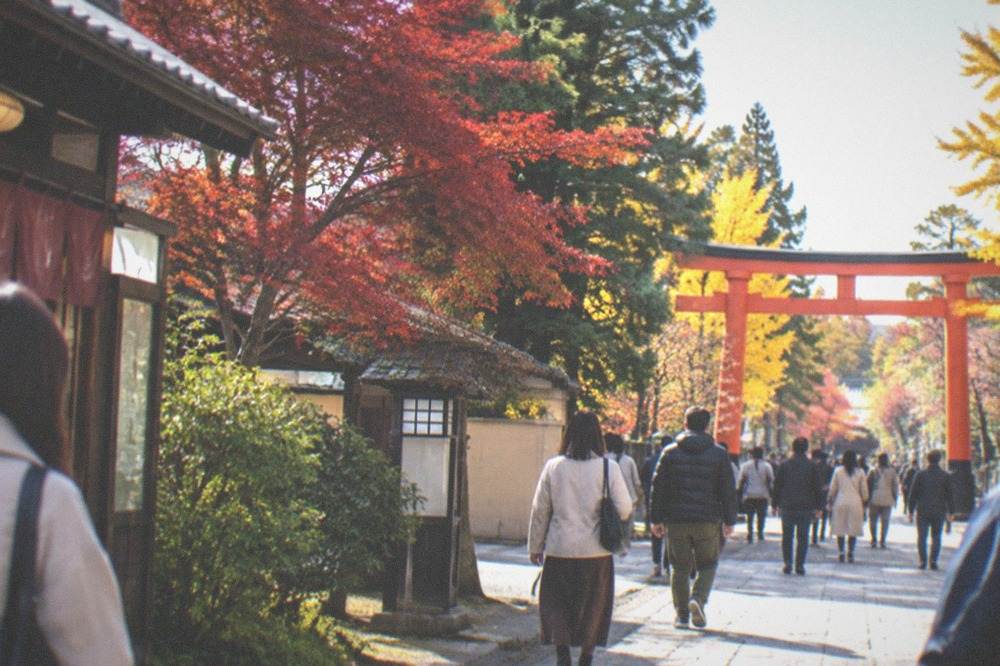
Late October also brushes the start of the autumn foliage season, though the official JMA marker is later than most guides claim. The observatory's normal date for kaede momiji red leaves is 5 December, with 2025's observed date on 10 December, so the "mid-November peak" you will read elsewhere refers to the famous viewing spots, not the official botanical marker. The 2026 forecasts gathered by this site point to Arashiyama colour around late November. See the autumn leaves guide for the full picture.
How Do You Get To The Procession Route On Festival Morning?
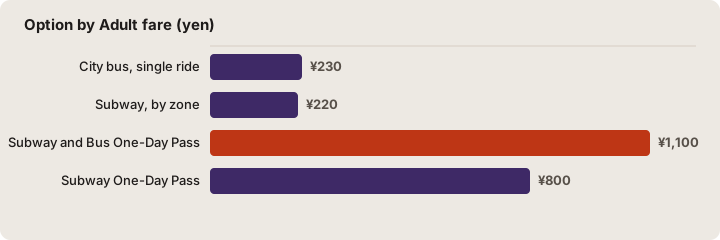
A Kyoto city bus costs a flat 230 yen per adult ride, the subway runs 220 to 360 yen by zone, and the Subway and Bus One-Day Pass at 1,100 yen covers unlimited travel on both for the day, which is the better buy once you add a second ride to reach the palace and return from Heian Shrine.
The city's transport bureau publishes all of these fares directly. The bus flat fare is 230 yen adult and 120 yen child, the subway charges by zone from 220 to 360 yen, and the one-day pass is 1,100 yen adult and 550 yen child. Note that the old bus-only one-day pass no longer exists: sales ended in September 2023 and its last day of use was 31 March 2024, so any guide still recommending it is out of date.
| Option | Adult fare | Notes |
|---|---|---|
| City bus, single ride | 230 yen | Flat fare, child 120 yen |
| Subway, by zone | 220-360 yen | Child fares 110 to 180 yen |
| Subway and Bus One-Day Pass | 1,100 yen | Child 550 yen, covers both networks |
| Subway One-Day Pass | 800 yen | Subway only |
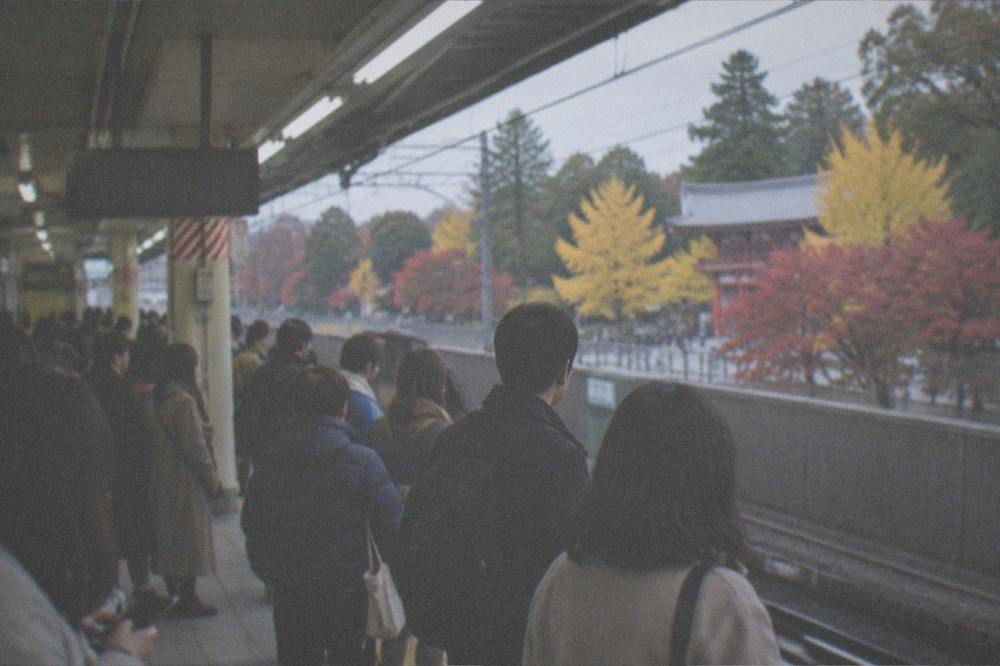
On festival morning the buses around the Imperial Palace and Heian Shrine will be packed, and the city's own overtourism measures have pushed visitors toward the subway and away from luggage-laden bus rides. The subway is the more reliable choice for the 8:00 arrival a 9:00 departure demands, and the fares and pass options in the table above are all you need to plan the morning.
If you are arriving in the city that week, the HARUKA airport express is the verified rail option worth knowing about: the operator's visitor ticket from Kansai Airport is 2,200 yen, and the run into Kyoto takes about 80 minutes. Arriving from Tokyo or Osaka by rail is straightforward on the day before, and staying somewhere within walking distance of the east side saves you the festival-morning scramble entirely.
How Should You Plan The Rest Of The Day Around The Procession?
The procession's 9:00 departure and midday arrival at Heian Shrine leave the whole afternoon free, and the strongest plan pairs the festival morning with the east-side cluster around Heian Shrine, the Kyoto Imperial Palace grounds and the Okazaki museums, all walkable from the procession's endpoints, before finishing with an evening in Gion or downtown Kawaramachi.
A sample day built around the verified times:
| Time | Plan |
|---|---|
| 7:30-8:00 | Arrive at your chosen spot near the Kyoto Imperial Palace |
| 9:00-10:30 | Watch the procession depart and pass |
| 11:00-12:30 | Follow the tail to Heian Shrine, see the arrival |
| 13:00-15:00 | Okazaki museums or the shrine's garden |
| 15:00-17:00 | Kyoto Imperial Palace grounds, open to all, no application |
| Evening | Gion or downtown Kawaramachi for dinner |
The palace-to-shrine geography is the festival's gift to planners. Both endpoints sit on the east side of the city, the walk between them passes through interesting neighbourhoods, and the Nishiki Market food stalls, roughly 9 or 10:00 to 17 or 18:00 with no unified hours since each shop keeps its own, make a late-afternoon stop easy on the way back west.
For the evening, the Gion guide covers the geisha district's rules plainly: the city's tourism association asks visitors not to touch, chase or photograph geiko and maiko without permission, and signs on the private alleys off Hanamikoji threaten a 10,000 yen penalty for unauthorised photography or entry. Know the rules before you go, and the evening is one of the best in Japan.
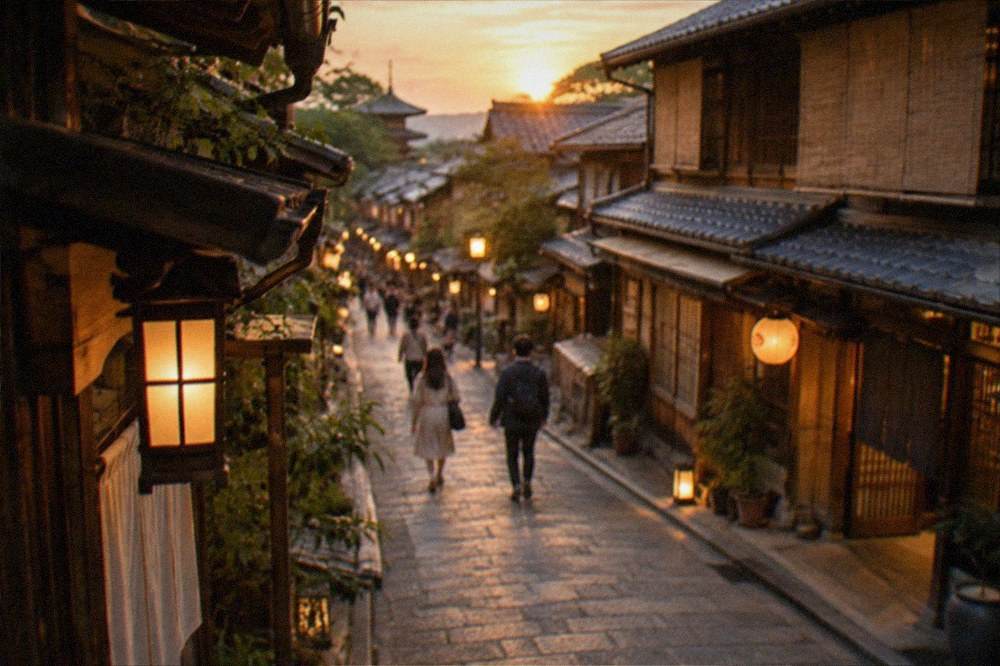
If you would rather hand the logistics to someone else for the surrounding days, a food walk is the natural complement to a festival morning. The Nishiki brunch walking tour runs seven tastings through the market, and the Gion magical night walking tour covers the geisha district in the evening with a guide who knows the photography rules.
What Does A Jidai Matsuri Trip Cost To Plan?
A festival day itself costs almost nothing beyond transport, since the procession is free to watch, but the surrounding trip carries Kyoto's real costs: temple admissions of 500 to 1,000 yen per site, a 230 yen bus fare or 1,100 yen day pass, and an accommodation tax that changed on 1 March 2026, with the top tier rising from 1,000 to 10,000 yen per person per night on rooms of 100,000 yen and up.
The accommodation tax change is the one most 2024 and 2025 guides still get wrong. The city's five tiers now run 200 yen per person per night on rooms under 6,000 yen, 400 yen from 6,000 to under 20,000, 1,000 yen from 20,000 to under 50,000, 4,000 yen from 50,000 to under 100,000, and 10,000 yen at 100,000 and up, with the room-only charge as the base. The accommodation tax guide has the full table.
Temple fees moved too. Ginkaku-ji doubled its admission to 1,000 yen for adults from 1 April 2026, the temple's own notice states, while Kinkaku-ji holds at 500 yen and Kiyomizu-dera at 500 yen. Tofuku-ji revises its fees on 1 November 2026, days after the festival, with a new 1,000 yen combined ticket and a 1,000 yen foliage-period ticket for the Tsutenkyo bridge. The temples guide carries the verified fee table.
For the full budget picture, including what a mid-range day of eating costs and where the money actually goes, the trip cost guide breaks it down. October is shoulder season with festival-day pressure on rooms near the route, so book early if you want to stay within walking distance of the palace or Heian Shrine.
Around the festival, three kinds of experience round out a Kyoto week well: a highlights day tour if you want the famous sites handled for you, a guided hike in the Kurama and Kibune mountains north of the city if the October air puts you in the mood for trails, and a tea ceremony class if you want an hour of stillness after a morning of crowds. All three are bookable with free cancellation, which matters when a rain-postponed festival can reshuffle a day.
For everything else the city holds beyond festival week, the master list is the things to do in Kyoto page, and this site, Kyoto Travel Guide, keeps the whole verified fact base behind every recommendation on it.
Common Questions About Jidai Matsuri In Kyoto
When Is Jidai Matsuri And What Time Does The Procession Leave The Imperial Palace?
Jidai Matsuri is held on 22 October every year and is postponed if it rains. The eve rite is at 10:00 on 21 October, the festival rite at 7:00 on the 22nd, the Shinko-sai at 8:00, and the procession departs the Kyoto Imperial Palace at 9:00, ending at Heian Shrine.
Is Jidai Matsuri free to watch?
Yes. The procession takes place on public streets and there is no ticket, seating product or entry fee. Any offer of paid festival seating should be treated with suspicion, and nothing about the festival is bookable through this site.
What happens if it rains on 22 October?
The festival is postponed. Heian Shrine's own ritual calendar states the rain rule, and with October averaging 143.2 mm of rain on the JMA 1991-2020 normals, a postponement is a genuine possibility, so keep a flex day in your itinerary.
How long does the procession take to pass a given spot?
The column passes any single point over roughly two hours after the 9:00 departure, though the exact duration varies with pacing and crowd conditions. Claiming a spot by 8:00 is the standard advice for a front-row kerb.
How is Jidai Matsuri different from Gion Matsuri and Aoi Matsuri?
Jidai Matsuri is a single-morning chronological costume pageant on 22 October. Gion Matsuri runs the whole of July with float parades on 17 and 24 July, and Aoi Matsuri is a morning procession on 15 May. All three are counted among Kyoto's great festivals.
Where does the procession start and end?
It forms at the Kyoto Imperial Palace, which is open to all visitors with no advance application, and ends at Heian Shrine, where the reception rites follow the arrival. Both endpoints sit on Kyoto's east side and are connected by walkable streets.