Which Kyoto Shrines Are Essential: Fushimi Inari, Yasaka, Heian, Shimogamo, Kamigamo?
Kyoto holds thousands of shrines, but five of them carry most of the city's religious history: Fushimi Inari Taisha, Yasaka Shrine, Heian Shrine, and the twin Kamo shrines of Shimogamo and Kamigamo. Here is what each one actually is, what it costs, and how to order them in a visit.
Short answer
Fushimi Inari Taisha is the essential one: free entry, no closing time on the paths, and about 10,000 torii across the whole mountain. Pair it with Yasaka Shrine in Gion, Heian Shrine's giant torii in Okazaki, and the Shimogamo and Kamigamo pair, the city's oldest shrines and the stage of the Aoi Matsuri every 15 May.
Kyoto's shrine count is not a marketing figure. Fushimi Inari Taisha, the head shrine, describes Inari shrines nationwide as "said to be some thirty thousand", and a meaningful share of them sit inside this one city and its surrounding hills. Most visitors have time for three or four at most, which makes the choice matter. The five shrines in this guide are the ones that keep appearing on every serious Kyoto list for a reason: they span thirteen centuries, they anchor the city's three biggest festivals, and only one of them charges anything at all for the privilege of standing inside. This guide, from the editorial desk at Kyoto Travel Guide, sets out what each shrine is, what it costs, when to go, and how to fit them together.
Why Is Fushimi Inari the Most Essential Kyoto Shrine?
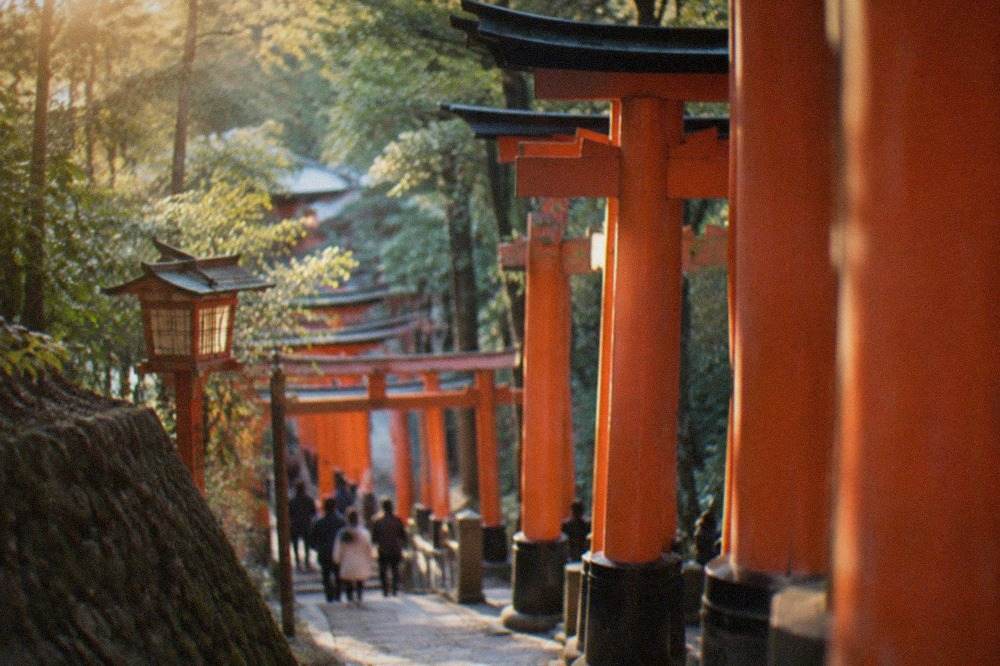
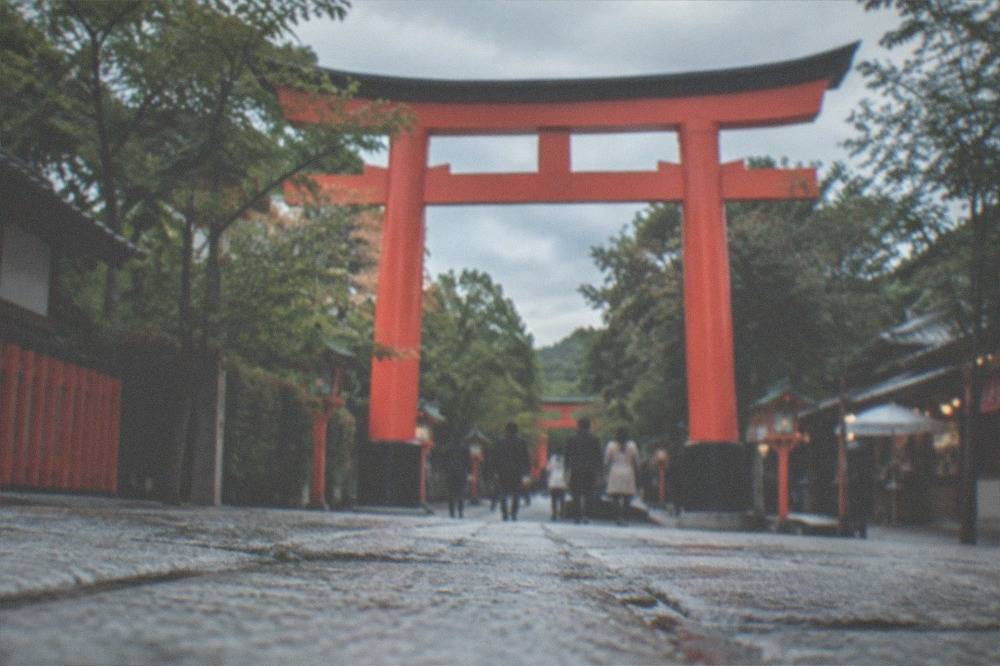
Fushimi Inari Taisha is the head shrine of about 30,000 Inari shrines across Japan, it charges no admission, and the paths up Inariyama have no closing time, so it is the one shrine in Kyoto that fits any schedule and any budget. The shrine dates the enshrinement of Inari Okami on the mountain to 711, making it older than every temple on the standard tourist route. Its torii, about 10,000 of them across the whole mountain, are the image most visitors have of Kyoto before they arrive.
The shrine's own history page is careful with its claims, and this guide keeps that care. Inari Okami was, in the shrine's words, enshrined on Inariyama on the first Day of the Horse of the second month of 711, by Irogu no Hatanokimi, an ancestor of the Hata clan, acting on an imperial order from Empress Genmei. The shrine counted 2011 as the 1300th anniversary. Write "enshrined in 711", never "built in 711", because the shrine itself hedges with "is said to be" and notes its faith may date back even further.
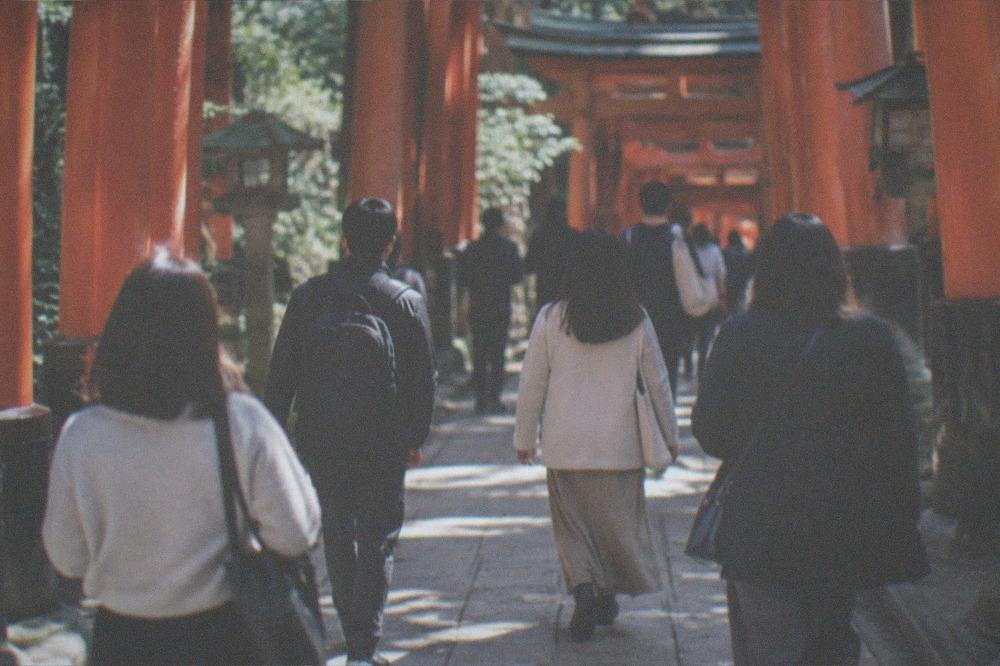
The famous gates need the same precision. The shrine's FAQ says there are "about 10,000 torii of all sizes" across the whole mountain, not 10,000 packed into the Senbon Torii tunnel, which is the error most competing guides make. The tunnel is the dense, photogenic stretch near the base; the full circuit to the summit of Inariyama, all 233 m of it, passes through a constantly shifting landscape of small shrines and otsuka, worship stones bearing deity names. Nobody is buried on the mountain, a point the who is buried at Fushimi Inari question answers at length.
The dated chronology on the shrine's history page is worth knowing because it explains why this mountain mattered long before Instagram. In 827 the shrine received timber for Toji and the junior fifth rank. In 908 Fujiwara Tokihira carried out repairs. The Engishiki listing came in 927, the highest shrine rank in 942, and around the year 1000 Sei Shonagon climbed the mountain and wrote about it in the Pillow Book. Very few tourist sights anywhere can trace an unbroken written record across twelve centuries.
Practicalities are unusually simple. Entry is free, and the shrine publishes no fee anywhere on its site. The shrine itself publishes desk and prayer hours only, so the honest phrasing is that the paths have no closing time, not that the shrine is "open 24 hours". For the climb itself, the how long does it take to walk up Fushimi Inari question covers the timing in detail, and the deeper background is in why Fushimi Inari is so famous.
How Do You Visit Fushimi Inari Without the Crowds?
Go before 8:00 in the morning or after 17:00 in the evening, because the shrine's own crowd tools show the Senbon Torii tunnel at its densest between 10:00 and 15:00, and the city's 2025 survey recorded 62.79 million visitors across Kyoto, a record. The paths have no closing time, so an evening visit is legal, quiet and cooler in summer. The full mountain circuit takes about two to three hours at a steady pace.
The crowd argument is arithmetic, not opinion. With 62.79 million visitors in 2025, of whom 12.68 million were foreign, the pressure on the single most-photographed site in the city is relentless. The shrine responds by linking the Kyoto Tourism Comfort Forecast, a five-level crowd prediction the city tourism association runs on smartphone location data, weather and time of day, plus its own approach cameras showing the entrance in near-real time. Checking both before you leave costs a minute and can save an hour.
The shrine's dispersal measures, published by the city in February 2026, push visitors toward area-specific routes and off-peak slots rather than caps. That is why timing beats every other tactic here. A 7:00 arrival in July also dodges the worst of the heat: the JMA 1991-2020 normals put July's mean daily maximum at 32.0 C, and three of Kyoto's six hottest days on record fell in the summers of 2024, 2025 and 2026.
If you would rather have a guide handle the mountain, two options stand out. The Fushimi Inari Hidden Hike takes the quieter back routes up the mountain with a local guide, three hours, from $73. And a structured day that strings the shrine together with the city's other headline sights works well for a first visit:
What Makes Yasaka Shrine the Heart of Gion?
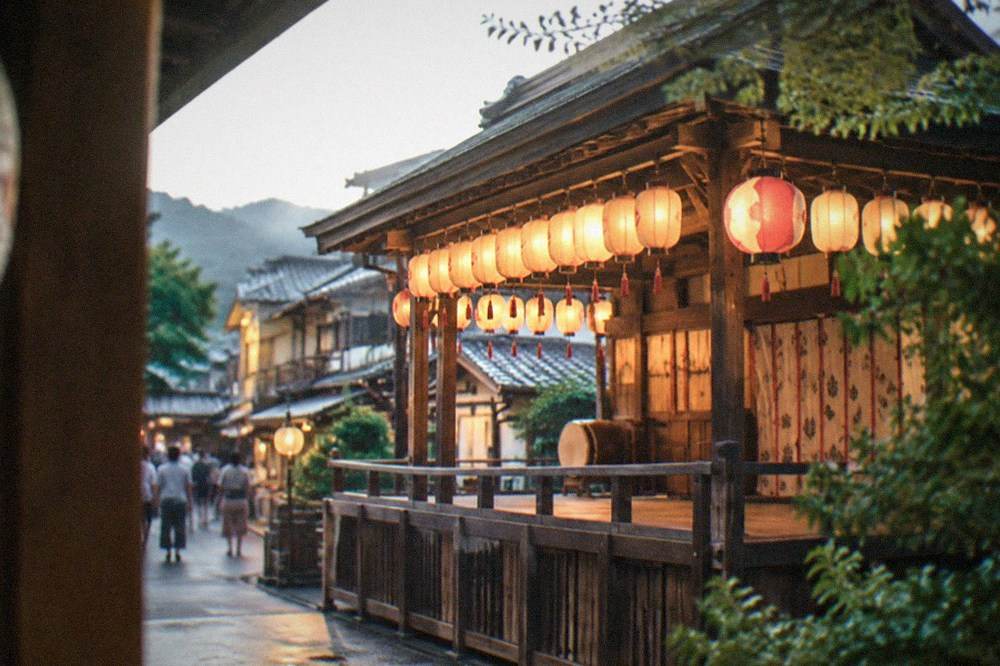
Yasaka Shrine is the free, always-open shrine at the eastern end of Shijo-dori that gives the Gion district its name and hosts the Gion Matsuri, Kyoto's entire month of July festival, with the grand processions on 17 and 24 July. No admission is charged, no gate closes at night, and its stage of lanterns is one of the city's most photographed free sights. It is the natural anchor for any walk through Gion and Higashiyama.
The shrine's festival role is what puts it on the essential list. The Gion Matsuri runs from Kippu-iri on 1 July to Nagoshi-sai at the end of the month, per Yasaka Shrine's own event page. The mikoshi leave the shrine on the evening of 17 July and return late on 24 July, and the two Yamaboko Junko processions roll those floats through the centre of the city on those two mornings. The parades were merged in 1966 and re-split later, which is why there are two again.
For the rest of the year, Yasaka works as a thoroughfare. You enter from Shijo-dori, pass the stage hung with lanterns bearing sponsor names, and exit into Maruyama Park behind, which flows on into the lanes of Higashiyama. Because nothing is ticketed, it pairs naturally with the Gion and Higashiyama area guide and with an evening walk, when the lanterns are lit and the day crowds have gone. The shrine's own pages carry the festival schedule, and the full month of processions, float viewings and street nights deserves its own planning session if your trip touches July.
One rule matters more here than anywhere else in the city. The Kyoto City Tourism Association's conduct guidelines, published on its visitor site, ask visitors not to touch, chase or photograph geiko and maiko without permission, and not to enter or photograph private property where prohibited. Signs maintained by the Gion South Side district council on the private alleys off Hanamikoji threaten a 10,000 yen penalty for unauthorised photography or entry. The main Hanamikoji road remains public and photographable.
Why Visit Heian Shrine and the Okazaki Museums Together?
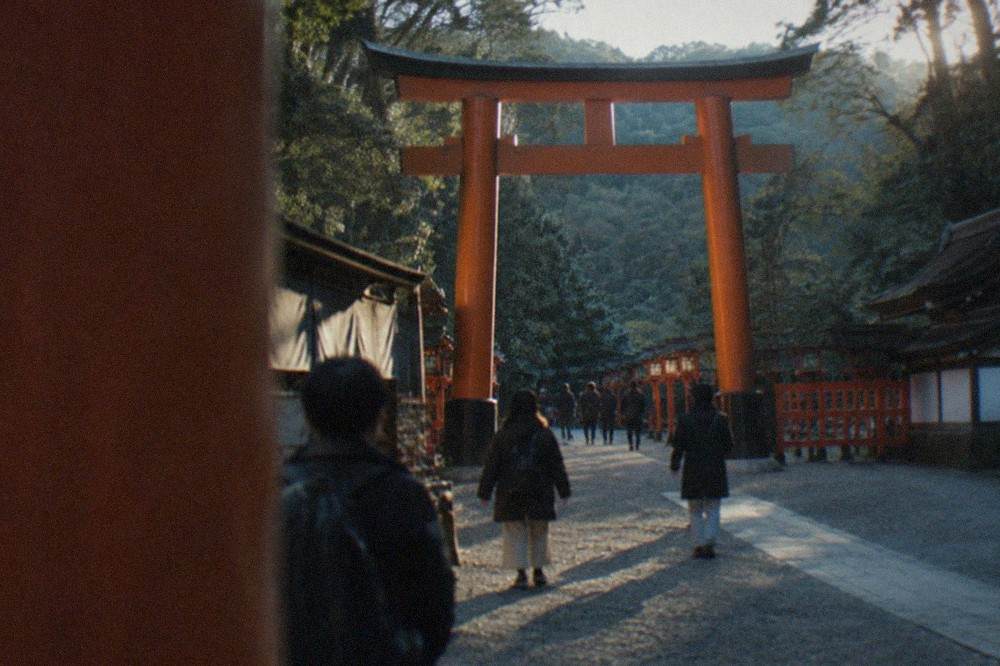
Heian Shrine is the vast, relatively young shrine east of the city centre, built for the 1100th anniversary of Kyoto's founding, and its giant vermillion torii on Jingu-michi is one of the largest in Japan. Entry to the grounds is free, and it sits inside the Okazaki cultural district, so it pairs naturally with museums, the zoo and the canal in a single half-day loop. It is the shrine to visit when you want space rather than atmosphere.
Heian Shrine is the counterweight to Fushimi Inari's crowds. The grounds are enormous, the approach is grand rather than intimate, and the surrounding Okazaki area holds the National Museum of Modern Art, the Kyoto Municipal Museum and the zoo along the Lake Biwa Canal. A morning here is quiet even in peak season, and the shrine's wide gravel courtyards absorb tour groups without ever feeling packed.
The shrine also carries the Jidai Matsuri, one of Kyoto's three great festivals, on 22 October every year. Heian Shrine's own ritual page gives the sequence: an eve rite on 21 October at 10:00, the festival rite at 7:00 on the 22nd, the Shinko-sai at 8:00, and the departure of the great costume procession at 9:00, when thousands of participants walk from the Imperial Palace to the shrine dressed in a millennium of historical costume. The festival is postponed in rain, which is worth knowing before you commit a day.
For a half-day plan that strings Heian Shrine together with the Philosopher's Path and Ginkaku-ji, see the half-day itinerary. For first-time visitors deciding how the east side fits the whole trip, the first-timers itinerary is the better starting frame.
What Are Shimogamo and Kamigamo, Kyoto's Oldest Shrines?
Shimogamo and Kamigamo are the two Kamo shrines at the north end of the city, guardians of Kyoto since before the city existed, and together they stage the Aoi Matsuri on 15 May every year. Shimogamo sits inside the Tadasu no Mori, an old-growth forest that feels like another prefecture, while Kamagamo sits upstream with its two sand cones, and both are free to enter. They are the quiet, local half of the essential five.
The Kamo shrines predate Kyoto itself. Before the imperial capital was established here, the Kamo clan worshipped at these sites, and when the capital arrived the shrines became its ritual protectors, a role they have held for well over a thousand years. The Aoi Matsuri, formally the Kamo Festival per Kamigamo Shrine's own page, sends a procession from the Imperial Palace to both shrines on 15 May, and the shrine's schedule postpones it to 16 May if it rains on the 15th. It is the most restrained of the big three festivals: no floats, no fires, just hundreds of participants in Heian court dress on horseback and on foot.
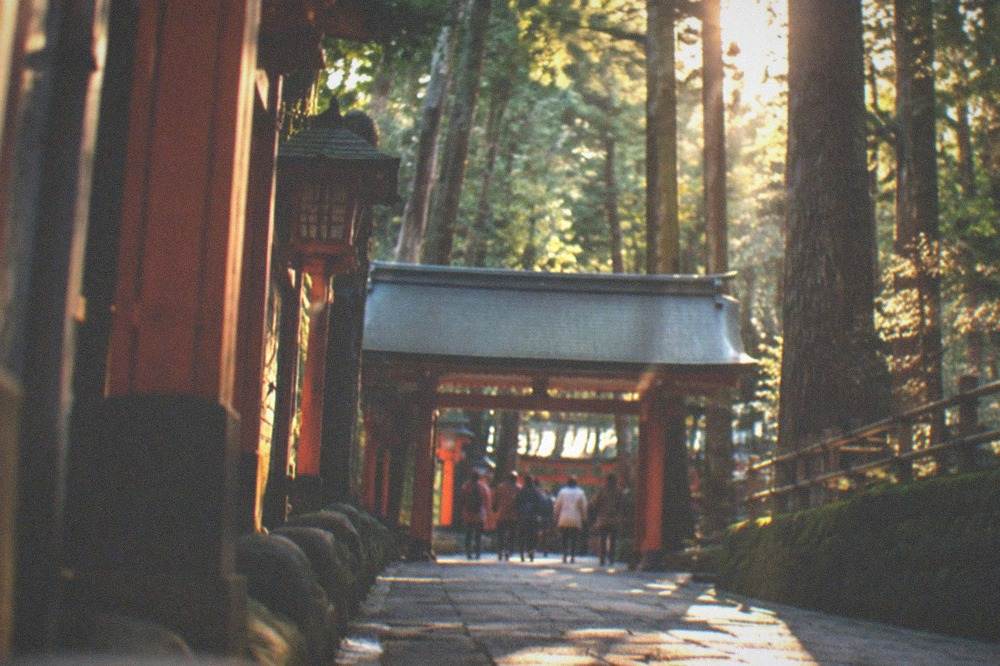
Shimogamo's forest is the reason to go out of your way. Tadasu no Mori is a remnant of primary riverside forest, cool in summer and almost silent even when the shrine itself is busy, and its gravel paths lead from the city streets to the shrine's romon gate in a few minutes' walk. The Kyoto neighborhoods guide places the surrounding Sakyo area in context for anyone deciding where to base.
Kamigamo has one rule worth flagging before you point a camera: the shrine's own site states that photography of its rites and any drone flight require advance permission. The two sand cones, Kamo no Yonashiro, standing in front of the main hall, renew an ancient purification ritual and are the shrine's signature sight.
Which Kyoto Shrines Are Essential: Fushimi Inari, Yasaka, Heian, Shimogamo, Kamigamo?
The essential five, in one line: Fushimi Inari Taisha for the torii and the climb, Yasaka Shrine for Gion and the Gion Matsuri, Heian Shrine for scale and the Jidai Matsuri, and Shimogamo and Kamigamo for the city's oldest worship and the Aoi Matsuri. All five are free to enter. If you only have one day, do Fushimi Inari at dawn, Yasaka and Gion in the evening, and save the Kamo pair for a second visit.
That ordering is deliberate. Fushimi Inari rewards an early start more than any other sight in Kyoto, because the tunnel thins out dramatically before 8:00 and the climb is punishing in the July heat. Yasaka rewards the opposite, since its lantern stage is at its best after dark and Gion's evening atmosphere is the point. Heian Shrine and the Kamo pair are flexible, mid-morning stops that tolerate crowds well because their grounds are large.
The table below puts the five side by side for planning.
| Shrine | Area | Entry | Festival | Best Time to Visit |
|---|---|---|---|---|
| Fushimi Inari Taisha | Fushimi, south | Free | No single festival; year-round worship | Before 8:00 or after 17:00 |
| Yasaka Shrine | Gion, east | Free | Gion Matsuri, all of July | Evening, lanterns lit |
| Heian Shrine | Okazaki, east | Grounds free | Jidai Matsuri, 22 October | Morning, with museums |
| Shimogamo | Sakyo, north | Free | Aoi Matsuri, 15 May | Any daylight hour, forest walk |
| Kamigamo | Kita, north | Free | Aoi Matsuri, 15 May | Morning, quiet grounds |
A note on what "essential" leaves out. Kyoto has dozens of worthwhile shrines beyond these five, and the wider religious landscape includes the temple half of the city, where admission fees do apply and where the 2026 fee changes at Ginkaku-ji and Tofuku-ji have made older guides unreliable. If your interest is specifically in garden design rather than festival life, the zen gardens guide overlaps usefully.
How Much Does a Kyoto Shrine Crawl Actually Cost?
All five essential shrines are free to enter, so the shrine crawl itself can cost nothing beyond transport. The costs come from getting between them: city buses are a flat 230 yen per adult ride, the subway runs 220 to 360 yen by zone, and the Subway and Bus One-Day Pass at 1,100 yen breaks even on roughly four bus rides. A full day hitting all five costs more in shoe leather than in yen.
The transport math is where the money goes. Kyoto City Bus charges a flat 230 yen for adults and 120 yen for children aged 6 to 11, per the city's fare pages. The subway runs 220 to 360 yen for adults across its five zones. The Subway and Bus One-Day Pass, at 1,100 yen for adults and 550 for children, is the product that replaced the old bus-only pass, which ended sales in September 2023 and expired for use on 31 March 2024. Any guide still recommending the old 700 yen bus pass is three years out of date.
| Transport Option | Adult Price | Notes |
|---|---|---|
| City bus, single ride | 230 yen | Flat fare citywide |
| Subway, single ride | 220 to 360 yen | By zone, 5 zones |
| Subway and Bus One-Day Pass | 1,100 yen | Child 550 yen |
| Tourist express EX100 / EX101 | 500 yen | Station to Kiyomizu, Gion, Ginkaku-ji |
| ICOCA card | 2,000 yen with 500 deposit | Rechargeable IC |
The EX100 and EX101 tourist express buses, per the city transport bureau's page, run 500 yen a ride for adults and connect Kyoto Station to the Kiyomizu side, Gion and Ginkaku-ji with fewer stops, mainly on weekends and holidays. For the shrine crawl specifically, the subway and the Keihan Line do most of the work: the JR Nara Line stops at Inari Station for Fushimi Inari, and the Keihan Line links the Fushimi, Gion-Shijo and Shimogamo sides efficiently, which is why rail beats the bus map for this particular itinerary.
For combining shrines with the free side of the city, the free things to do in Kyoto guide is built on the same fact base: the shrine crawl is the single biggest cluster of genuinely free sights in the city.
When Should You Visit Kyoto's Shrines?
The best shrine months are March to May and October to November, when the JMA normals put mean temperatures at 8.8 to 19.5 C and 12.5 to 18.4 C respectively, but the festival calendar matters more than the weather: 15 May for the Aoi Matsuri, all of July for the Gion Matsuri, and 22 October for the Jidai Matsuri. Avoid late July and August unless heat is the point, since August's mean daily maximum is 33.7 C.
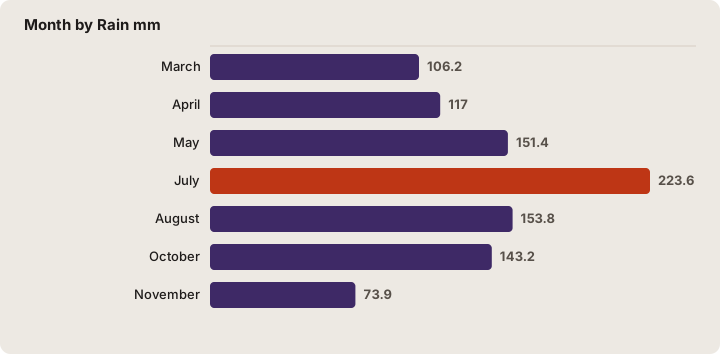
The climate record is unambiguous. The JMA 1991-2020 normals for station 47759 show July as Kyoto's wettest month at 223.6 mm, ahead of June's 199.7 mm, a fact that surprises most visitors who plan around a "June rainy season" assumption. August is the hottest month, mean 28.5 C and mean daily high 33.7 C, and January is both coldest and driest, 4.8 C and 53.3 mm. For shrine walking, which is outdoor walking, the shoulder seasons win.
| Month | Rain mm | Mean C | Mean Daily Max C | Verdict for Shrine Visits |
|---|---|---|---|---|
| March | 106.2 | 8.8 | 14.1 | Good, plum and early cherry |
| April | 117.0 | 14.4 | 20.1 | Excellent, cherry season |
| May | 151.4 | 19.5 | 25.1 | Excellent, Aoi Matsuri on the 15th |
| July | 223.6 | 27.3 | 32.0 | Wettest month, Gion Matsuri |
| August | 153.8 | 28.5 | 33.7 | Hottest, evening visits only |
| October | 143.2 | 18.4 | 23.4 | Excellent, Jidai Matsuri on the 22nd |
| November | 73.9 | 12.5 | 17.3 | Excellent, autumn colour |
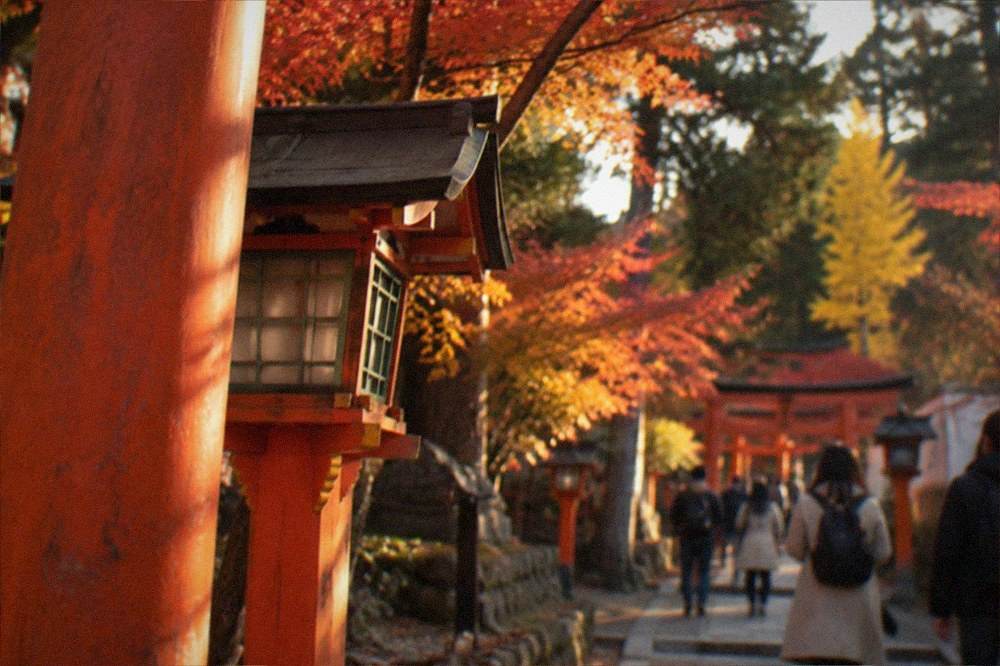
Cherry timing is drifting earlier. The JMA Kyoto observatory recorded flowering on 23 March 2026 and full bloom on 30 March, against 1991-2020 normals of 26 March and 4 April, and 2025 ran later at 27 March and 5 April. For a blossom-focused shrine itinerary built on those dates, the cherry blossom itinerary does the planning. The maple marker is later than most guides claim: the JMA normal for the observatory's kaede turning red is 5 December, with 2025 observed on 10 December, so treat mid-November as the Arashiyama and Tofuku-ji foliage window rather than a citywide official date.
Festival weeks flip the arithmetic. During Gion Matsuri's Yoiyama nights and the two procession days, central Kyoto is transformed and crowded, and hotel prices reflect it. The Kyoto crowds guide has the month-by-month density picture drawn from the city's own comfort forecast.
How Do You Fit the Five Shrines Into One Day?
It is possible but rushed: start at Fushimi Inari by 7:00, take the Keihan Line north to Gion for Yasaka Shrine by late morning, walk the Higashiyama lanes to Okazaki for Heian Shrine after lunch, then subway and bus north to Shimogamo and finish at Kamigamo before 17:00. A saner plan splits it: Fushimi Inari plus Yasaka on day one, Heian and the Kamo pair on day two.
The one-day version works because the geography cooperates. Fushimi Inari sits at the southern end of the Keihan Line, Gion-Shijo station serves Yasaka, and the same line continues north toward Demachiyanagi, the junction between the Shimogamo and Kamigamo branches. Heian Shrine is the one outlier, a 15-minute walk east of Higashiyama station on the Tozai subway line, which is why slotting it between Gion and the Kamo shrines costs the least backtracking.
For the full framework, with the temples and districts folded in, the one day in Kyoto itinerary is the site's flagship plan, and the things to do in Kyoto page indexes everything by area. If the one-day squeeze sounds punishing, the honest answer is that it is, and anyone torn between cramming and cutting should settle the question of trip length before committing to a shrine schedule at all.
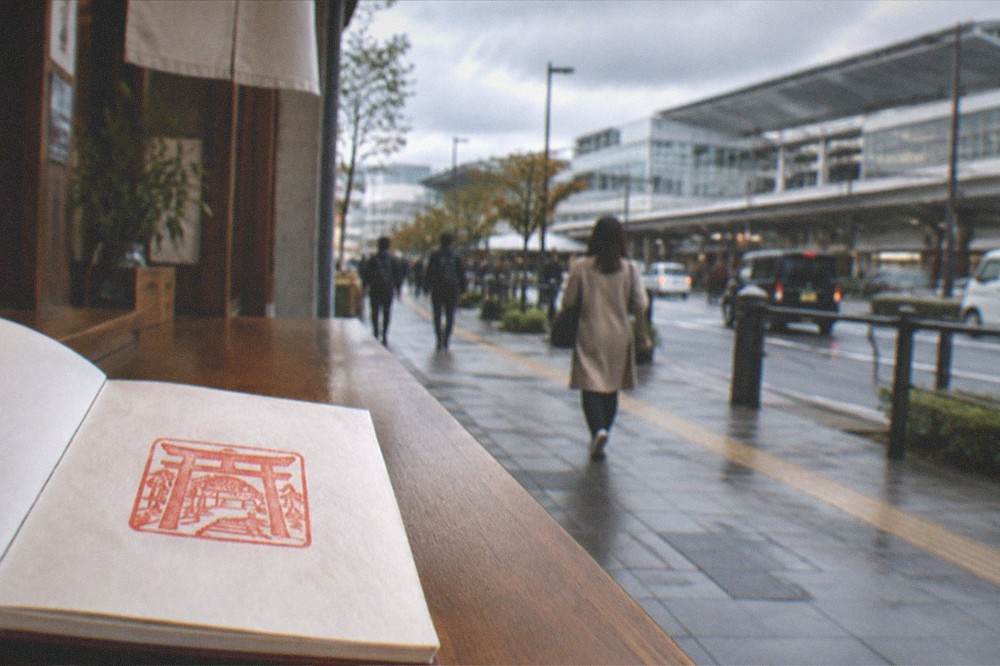
Two practical notes for the one-day runner. First, luggage: the city promotes hands-free tourism with station counters and delivery services precisely because large bags may be refused on crowded buses, so leave them at the hotel. Second, money: carry coins for the small offering boxes and shrine stamps, because none of the five shrines charges admission but all five will tempt you with goshuin, the hand-inked seal stamps that typically run a few hundred yen each, priced by each shrine's own notice.
What Should You Know About Shrine Etiquette in Kyoto?
The basics carry you everywhere: bow once at the torii, purify hands and mouth at the temizuya, bow twice, clap twice, pray and bow once at the main hall, and never photograph rites, priests or geiko without permission. Kyoto's specific rules are stricter than most cities': the Gion council signage threatens a 10,000 yen penalty on private alleys, and Kamigamo Shrine requires advance permission for photography of rites and any drone flight.
The etiquette of entry is simple and universal. Walk to the side of the torii path rather than its centre, which is traditionally reserved for the deities. At the water pavilion, rinse your left hand, then your right, then pour a little water into your left palm to rinse your mouth, and tip the ladle up to rinse its handle. At the hall, the standard pattern is two bows, two claps, a moment of prayer, one bow. None of this is policed, but it is noticed.
Kyoto's local rules are the part that is policed, softly or otherwise. The tourism association's four guidelines for Gion ask visitors not to touch, chase or photograph geiko and maiko without permission and to stay off private property, and the Gion South Side district council's signs on the private alleys off Hanamikoji carry the 10,000 yen warning. At Kamigamo, the shrine's own site requires advance permission for photographing rites and for any drone. At Fushimi Inari, the otsuka stones on the mountainside are worship stones bearing deity names, not grave markers, and they should be treated as objects of devotion rather than photo props.
The reward for getting this right is access. The five shrines in this guide are living places of worship that stay free and open precisely because visitor behaviour has, on the whole, stayed within bounds. That is a fragile equilibrium in a city drawing 62.79 million visitors a year, and the full rulebook, from temple visits to onsen manners, is worth a read before arrival rather than after an awkward moment.
Common Questions About Kyoto Shrines
Which Kyoto shrines are essential: Fushimi Inari, Yasaka, Heian, Shimogamo, Kamigamo?
Those five are the essential set. Fushimi Inari Taisha is the head shrine of about 30,000 Inari shrines and the most visited. Yasaka Shrine anchors Gion and the Gion Matsuri. Heian Shrine holds the Jidai Matsuri and the city's grandest torii. Shimogamo and Kamigamo are the oldest shrines in the city and the stage of the Aoi Matsuri. All five are free to enter.
Is Fushimi Inari free to enter?
Yes. The shrine publishes no admission fee anywhere on its site, and the paths up Inariyama have no closing time, though the shrine itself publishes only desk and prayer hours. The full circuit to the 233 m summit takes about two to three hours.
Are there 10,000 torii at Fushimi Inari?
The shrine's own FAQ says there are about 10,000 torii of all sizes across the whole mountain, not 10,000 in the Senbon Torii tunnel. The tunnel is the dense, famous stretch near the base, and the rest are scattered along the mountain paths and around subsidiary shrines.
When is the Aoi Matsuri?
15 May every year, with a postponement to 16 May if it rains on the 15th, per the Kamigamo Shrine schedule. The procession leaves the Imperial Palace in the morning and visits Shimogamo before continuing to Kamagamo.
Can you take photos of geisha in Gion?
Not without permission. The Kyoto City Tourism Association's guidelines prohibit touching, chasing or photographing geiko and maiko without consent, and signs maintained by the Gion South Side district council on the private alleys off Hanamikoji threaten a 10,000 yen penalty for unauthorised photography or entry. The main Hanamikoji road remains public.
What is the best month to visit Kyoto's shrines?
April and May, followed by October and November. The JMA 1991-2020 normals put April's mean temperature at 14.4 C and October's at 18.4 C, comfortable for the outdoor walking a shrine crawl involves. July is the wettest month at 223.6 mm, and August's mean daily maximum of 33.7 C makes the Fushimi Inari climb genuinely hard.
The five shrines in this guide cost nothing to enter, span thirteen centuries of worship, and carry the city's three great festivals between them. Pick Fushimi Inari for the dawn climb, Yasaka for the evening lanterns, and let the Kamo pair reward whatever time you have left over.